If your bird isn't eating, the first thing to know is this: blank" rel="noopener noreferrer">do not force food into their beak. If you’re specifically trying to get a wild bird to start eating, the next step is to focus on species-appropriate foods and safe offering methods rather than forcing anything into its mouth how to get a wild bird to eat.
How to Make a Bird Eat: Humane Troubleshooting Guide
Maya Harris
22 Apr 2026
Forcing a bird to eat is one of the most common well-intentioned mistakes, and it can cause aspiration pneumonia, a broken trust bond, or serious injury. What actually works is a calm, step-by-step approach that addresses why the bird isn't eating and removes those barriers one at a time.
Whether you're working with a new pet parrot, a hand-raised chick, or a wild bird in your care, this guide walks you through the whole process from immediate first steps to long-term diet management.
Why your bird won't eat
Appetite refusal is almost always communicating something. Before you change anything about the food itself, it helps to figure out which category your situation falls into, because the fix is completely different depending on the cause.
Stress and environmental change
This is the most common reason a pet bird won't eat, especially after a move, a new cage, a new household member, or even a rearranged room. Birds are creatures of routine and territory. A brand-new environment can suppress eating for 24 to 72 hours in otherwise healthy birds. New wild birds brought into a rehab situation almost always refuse food initially for the same reason.
Illness or injury
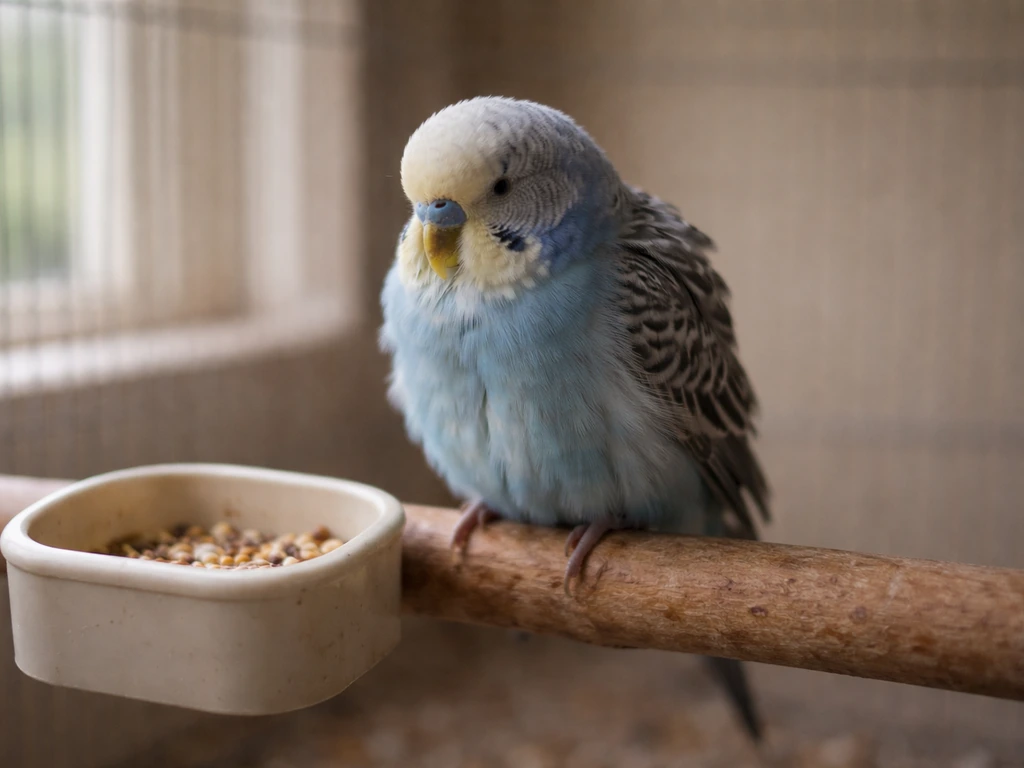
Birds are prey animals and instinctively hide signs of weakness. By the time a bird looks obviously sick, the situation may have been building for days. Reduced or absent appetite paired with other changes (fluffed feathers, lethargy, abnormal droppings, labored breathing, or a crop that doesn't empty) points strongly toward illness. This combination is a red flag, not a wait-and-see situation.
Improper food or presentation
A bird offered unfamiliar food, food in an unfamiliar container, or food at the wrong temperature will simply ignore it. A cockatiel that grew up on seed will not immediately recognize a bowl of pellets as food. A baby bird fed formula that is too cool or too thick will turn away even when hungry. Presentation matters as much as the food itself.
Wrong timing, temperature, or lighting
Most birds are most willing to eat at dawn and in the late afternoon, mirroring their natural feeding windows. Dim lighting, cold ambient temperatures, or irregular schedules can all suppress appetite. For hand-feeding situations specifically, formula that is too hot can burn a bird's crop, while formula that is too cool gets rejected or causes digestive issues.
Fear of hands or people
A bird that has had negative handling experiences may associate a human hand reaching into the cage with danger, which overrides the eating instinct entirely. This is especially common with rescue birds, imported birds, or any bird that has experienced coercive handling.
What to do right now to encourage safe eating
These are the immediate steps to take when a bird is refusing food. They apply to both pet birds and birds in a rehab situation. Go through them in order before trying anything more involved.
- Reduce stimulation. Move the bird to a quiet, dimly lit, warm space away from foot traffic, other pets, and loud sounds. For a sick or recovering bird, the environment should be at least 85°F (29°C) to support energy conservation.
- Check the basics. Is fresh water available? Is the food bowl in a reachable, visible spot? Is the food actually the bird's normal diet, or something new?
- Offer the highest-value food you know this bird accepts. For a parrot, this might be a favorite fruit piece or a millet spray. For a rehabilitating songbird, live mealworms often work when nothing else does.
- Do not hover. Place the food and step back. Birds are far more likely to approach food when they feel unobserved. Using a hide or positioning yourself out of direct line of sight is especially helpful with wild or fearful birds.
- Document what you see. Note whether the bird is perching normally, its droppings (color, consistency, frequency), and any other behavioral changes. This information is critical if you end up calling a vet.
- Never attempt to force food into the beak, hold the bird down to syringe-feed, or use a dropper without specific veterinary guidance. This risk of aspiration pneumonia is real and serious.
If the bird has not eaten anything within 24 hours, or if you see any of the red-flag signs listed later in this guide, move to veterinary contact rather than continuing to troubleshoot on your own.
Humane trust-building for hand-feeding
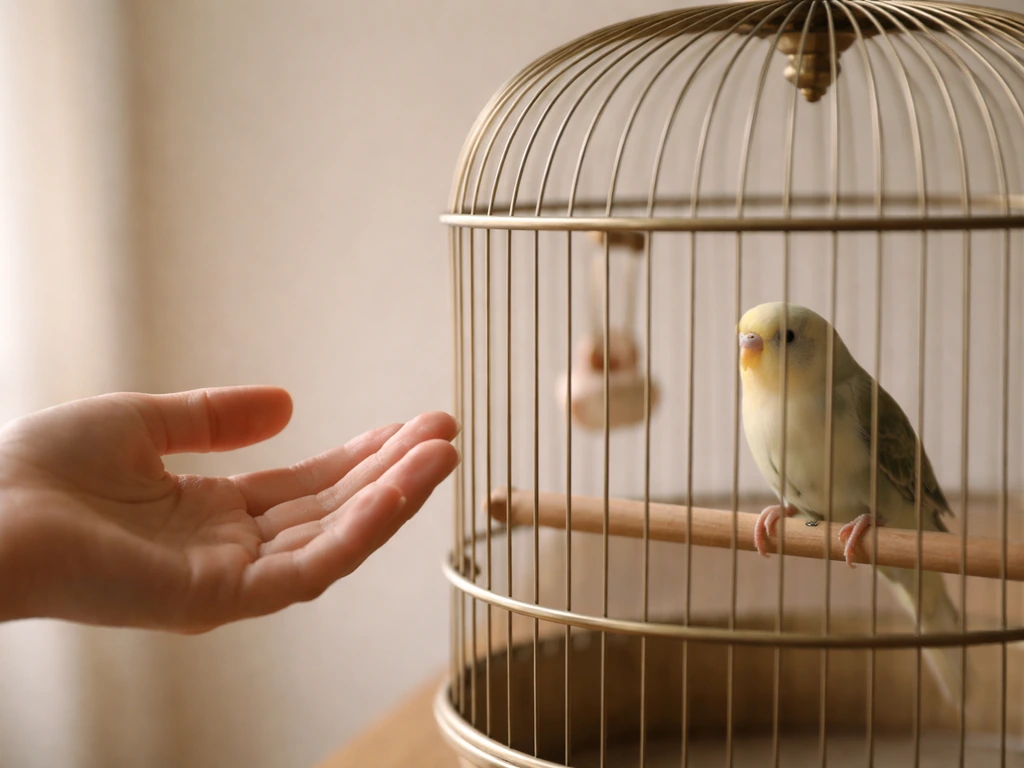
If your goal is to hand-feed a bird (whether a baby bird, a rescue, or a taming project), the trust piece comes before the food piece. A bird that is afraid of your hand will not take food from it, no matter how appealing the food is. This process takes patience but it works.
Step-by-step trust-building
- Start with presence, not contact. Sit near the bird's space at calm, predictable times each day. Read, work quietly, or just be still. The goal is for the bird to learn that your presence predicts calm, not danger.
- Move slowly and avoid direct eye contact at first, especially with small or wild birds. Direct staring is a predator behavior. Look slightly to the side, blink slowly, and keep your movements gentle.
- Introduce your hand at a distance. Rest your hand near the outside of the cage or enclosure without reaching in. Let the bird observe it at their own pace over several sessions.
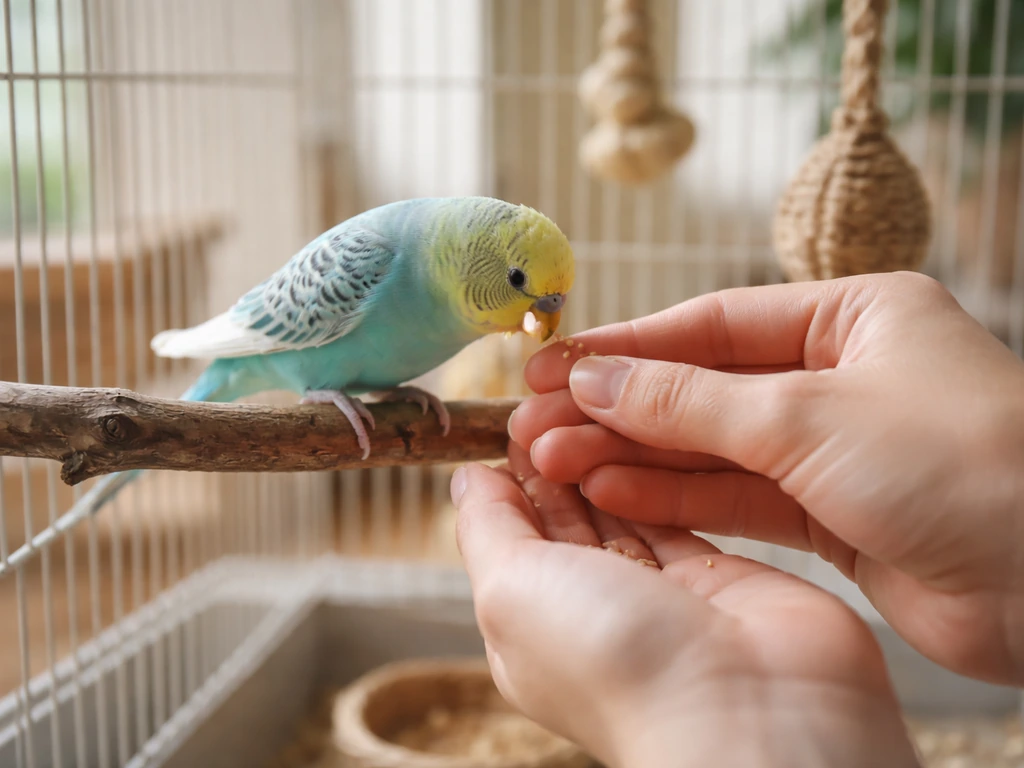
- Place high-value food near your hand, then touching your hand, then on your palm. Allow the bird to approach and take the food without any reaching, grabbing, or sudden movement from you.
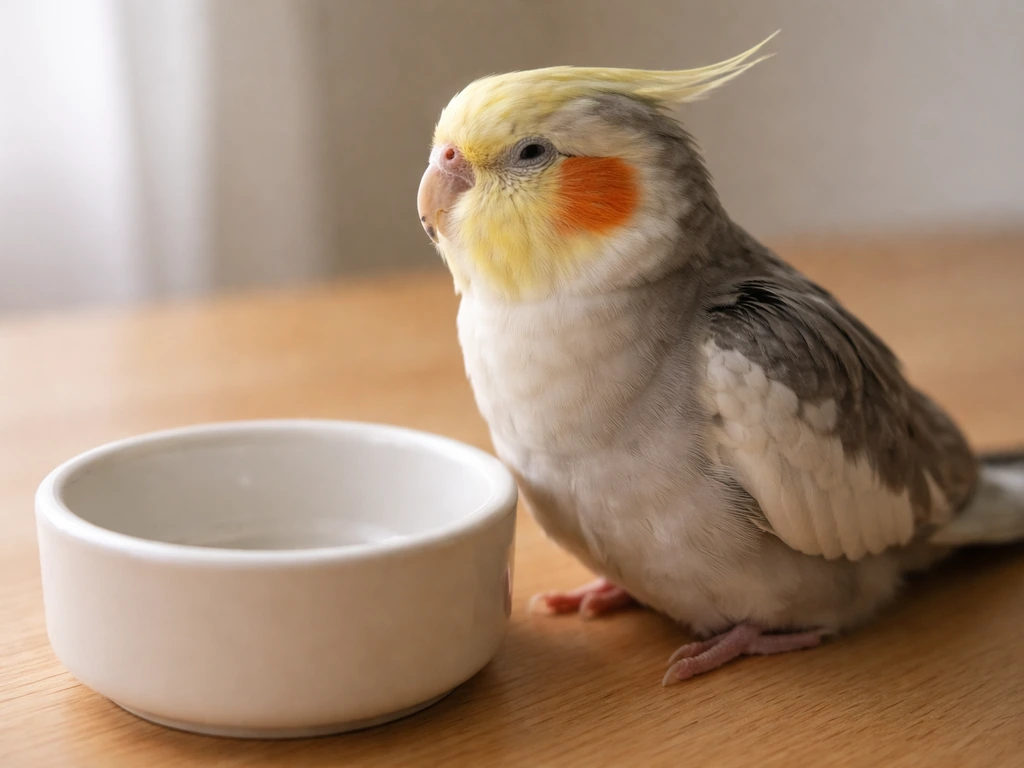
- Use consistent body language cues. Watch crest position (raised crest on a cockatiel signals alertness or agitation; a flattened crest suggests calm or submission), posture, and vocalizations to read whether the bird is comfortable progressing.
- Reward every small step. Even a bird leaning toward your hand slightly is progress. Reinforce with the food item immediately. This shaping approach, rewarding incremental progress toward the target behavior, is far more effective than trying to rush the process.
- Never punish a refusal. If the bird backs away or bites, simply withdraw calmly and try again later at an easier step. Forcing interaction erodes trust and can make the problem significantly worse.
For baby birds or birds requiring nutritional support under veterinary guidance, syringe or gavage feeding may be appropriate, but only with proper instruction. The syringe tip placement, angle, formula temperature (warm, not hot), and volume per feeding all matter enormously. Done incorrectly, formula can enter the airway instead of the crop, which is fatal. If you have not been trained in this technique by a vet or experienced rehabilitator, do not attempt it alone.
Species-appropriate foods and how to offer them
What you offer matters enormously, and a bird's refusal is often simply a mismatch between what they're used to and what's in front of them. Here's a practical breakdown by broad species category.
| Bird Type | Good Starting Foods | Avoid | Presentation Tips |
|---|---|---|---|
| Parrots (parakeets, cockatiels, conures, African greys, macaws) | Species-appropriate pellets, fresh leafy greens, apple, carrot, berries, scrambled egg (plain), millet spray (as a treat) | Avocado, chocolate, onion, caffeine, salty or processed foods | Try food on a flat dish, skewered on a kabob, or clipped to cage bars; mimic foraging by hiding pieces in paper cups |
| Softbills and finches | Commercial finch/canary seed mix, sprouted seeds, small berries, egg food | High-fat human snacks, avocado, onion | Keep portions small and fresh; scatter feed on the cage floor to mimic natural foraging |
| Baby birds (altricial chicks) | Species-specific commercial hand-feeding formula (e.g., Harrison's Recovery Formula mixed warm with water until soupy) | Cow's milk, bread, worms given dry, any human baby food with additives | Syringe or spoon feed only under vet or rehabilitator guidance; formula must be warm, not hot |
| Wild songbirds (rehab situations) | Insectivore diet, live mealworms, berries appropriate to species | Bread, milk, generic birdseed for an insectivorous species | Minimal human contact; leave food and step away; contact a licensed wildlife rehabilitator |
| Raptors (hawks, owls, in rehab) | Whole prey items (mice, chicks) appropriate to species | Processed meat, anything seasoned | Contact a licensed wildlife rehabilitator immediately; do not feed independently |
A note on transitioning foods: if a bird has been eating seed-only and you want to move to a healthier pellet-based diet, do not switch cold turkey. Birds can starve rather than accept an unfamiliar food. Instead, offer both side by side, then gradually reduce the seed portion over several weeks while increasing the pellet access. Mixing small amounts of the new food with the familiar food can also help the bird recognize it as edible.
For wild birds, the guidance from wildlife authorities is clear: do not attempt to feed an injured or sick wild bird without contacting a licensed wildlife rehabilitator first. Well-intentioned food offerings can cause additional harm, particularly for young birds with sensitive digestive systems.
Feeding technique troubleshooting
Sometimes the food is right but the approach is off. These are the most common technique problems and how to fix them.
Timing
Offer food first thing in the morning and again in the late afternoon. These are peak feeding windows for most bird species. Leaving food out all day is fine for some birds (pellet-fed parrots, finches), but fresh foods should not sit more than a couple of hours, especially in warm weather, as they spoil quickly and can cause illness.
Temperature
For hand-feeding formula, the target temperature is warm to the touch, roughly 103 to 106°F (39 to 41°C). Too cool and the bird won't accept it or may develop crop problems. Too hot and you can cause serious crop burns. Always test a drop on your inner wrist before offering. For regular food, room temperature or slightly warm is generally fine; cold food straight from the refrigerator is often rejected.
Routine
Birds thrive on predictability. Feed at the same times, in the same bowls, in the same locations. If you've recently changed anything in the feeding setup, consider reverting to the previous arrangement and reintroducing changes gradually. Even something as small as a new bowl color or a relocated water dish can put a cautious bird off eating.
Presentation and enrichment
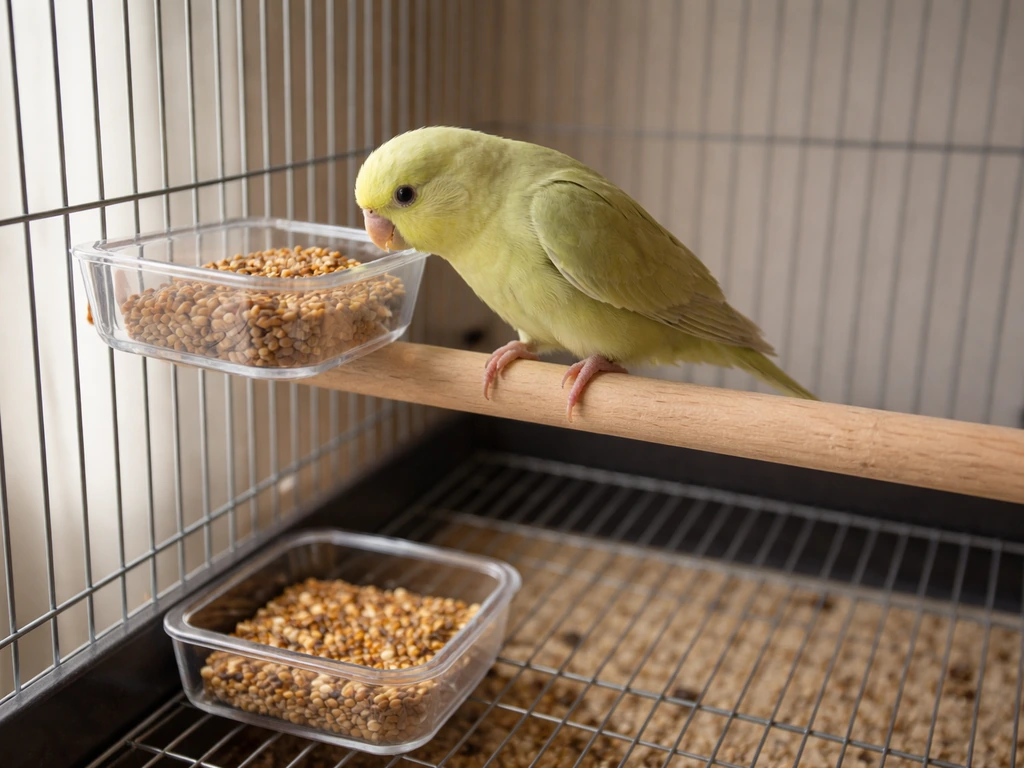
Birds are neophobic by nature (they're cautious about new things), but they're also curious. Using foraging-style presentation, hiding food in paper cups, tucking it into a puzzle toy, or skewering it on a kabob holder, can trigger exploratory behavior that gets hesitant birds eating. Some birds need to see you eat the same food first; pick up a piece, mime eating it, and offer it to the bird. This social feeding cue works surprisingly well with parrots.
Dish placement
In the wild, most birds don't eat from ground level (that's where predators lurk). If food is placed at the bottom of a cage, many birds will be reluctant to step down to reach it. Clip bowls or position food at perch height whenever possible.
When not to wait: red flags that need professional help
This is the most important section of this guide. Behavior and technique adjustments are appropriate when a healthy bird is being picky or adjusting to a new situation. They are not appropriate when the bird is actually sick or injured. Know the difference.
Contact an avian vet or licensed wildlife rehabilitator immediately (within hours, not days) if you observe any of the following:
- The bird is sitting on the cage floor, huddled or fluffed, and not responding normally to your presence
- Open-mouth breathing or labored breathing at rest
- Discharge from the eyes or nostrils
- Vomiting or regurgitation that is not linked to a clear social behavior (parrots sometimes regurgitate affectionately, but this looks purposeful and food-focused, not distressed)
- The crop is still full or hard hours after the bird's last feeding
- Abnormal droppings: black, bloody, watery, or drastically reduced in volume
- Straining without producing droppings
- The bird cannot perch and is refusing all food and water
- Any visible injury, bleeding, or wounds
- Signs of toxin exposure (sudden weakness, tremors, or collapse after potential contact with a toxic food or substance)
The key decision rule is this: if a bird is unable to perch and refusing to eat or drink, that is a veterinary emergency. Don't wait until morning. Don't try another food. Call an avian vet now.
For wild birds showing these signs, the guidance is equally clear: contact a licensed wildlife rehabilitator before doing anything else. Do not attempt to trap, transport, or force-feed an injured wild bird on your own. Stress from handling can be fatal to already-compromised wild birds, and most jurisdictions legally restrict keeping or treating wild birds without proper licensing.
If you suspect your bird has eaten something toxic, like chocolate, avocado, onion, or caffeine, contact a vet or avian poison hotline even if the bird seems fine. Theobromine poisoning from chocolate, for example, can have delayed effects lasting 24 to 48 hours, and early intervention improves outcomes dramatically.
Monitoring intake and moving toward a balanced diet
Once a bird is eating again, don't just breathe a sigh of relief and move on. The quality and consistency of what they're eating matters as much as whether they're eating at all.
How to monitor food intake
The simplest method is weighing food before and after each feeding session. A basic kitchen scale works fine. Alternatively, photograph the bowl before and after to track rough consumption visually. For birds recovering from illness or injury, tracking weight directly (using a small postal or kitchen scale with a perch attached) tells you much more than bowl observation alone. Weight loss of more than 10 percent of body weight over a few days is a concerning sign.
What normal eating looks like
A healthy bird eats actively during morning and late afternoon feeding windows, produces regular droppings (appropriate color and consistency for the species), maintains body weight, and shows alert, engaged behavior between feedings. Some selective eating is normal; a parrot that picks out its favorite items and tosses the rest is not the same as a bird that isn't eating.
Transitioning to a balanced diet
If the goal is to shift a bird from a poor diet (seed-only, for example) to a more balanced one, work in stages over four to eight weeks. In week one, introduce a small portion of the target food alongside the familiar food. In weeks two and three, increase the ratio of new to familiar. By week four, the new food should be primary. Throughout the transition, watch for weight loss or increased stress behaviors, and slow the pace if either appears. Getting medicine into a reluctant bird during a diet transition adds another layer of complexity, which is worth addressing as a separate challenge.
Teaching independent eating skills
For hand-raised birds or those that have been syringe-fed, transitioning to independent eating is a separate skill. This involves gradually introducing solid foods alongside formula, reducing formula frequency, and allowing the bird to explore food at their own pace. Rushing this transition, or stopping formula before the bird is reliably eating independently, is a common cause of weight loss in fledglings. If you're navigating this process, the practical steps for teaching a bird to eat on its own deserve dedicated attention. If you're wondering how to teach a bird to eat on its own, the next section breaks down the process step by step.
The broader goal is a bird that eats a varied, species-appropriate diet with enthusiasm and without anxiety around feeding time. That outcome is entirely achievable with patience, the right food choices, a predictable routine, and a calm approach to trust-building. If you're hitting specific walls, such as a bird that accepts nothing but seeds, a bird that only eats from your hand, or one that uses a cuttlebone inconsistently, each of those has its own practical solution set worth exploring separately. If your bird is having trouble with a cuttlebone, the same trust, presentation, and gradual diet approach can help you get it to use one consistently uses a cuttlebone inconsistently.
FAQ
My bird is pecking around the food but not eating. Is that still appetite refusal?
A bird that ignores food but is still alert, able to perch normally, and has no red-flag symptoms may be responding to routine changes, temperature, or food presentation. If there is still no intake after 24 hours, treat it as an urgent troubleshooting moment and contact an avian vet or wildlife rehabilitator rather than trying progressively different foods at home.
How can I tell if my bird is actually digesting even if it takes tiny bites?
Yes, but use a safer check than guessing. You can look at crop status and droppings, however the key risk is missing illness signs, especially if the crop does not empty. If you suspect the bird is not digesting, or you see fluffed feathers, lethargy, labored breathing, abnormal droppings, or trouble perching, stop troubleshooting and seek veterinary help.
What’s the maximum time I can leave fresh food out before it becomes unsafe?
For fresh foods, the “couple of hours” limit assumes typical indoor temperatures. If your room is warm or the bird is in direct sun near the cage, shorten the window and remove leftovers promptly. Spoiled food can cause gastrointestinal illness, which then worsens refusal behavior.
My bird refuses one food. Should I keep changing foods to find what works?
Do not try to “train” a sick bird by switching foods repeatedly. If the bird might be ill or injured, repeated changes can delay diagnosis and worsen stress. Focus on ruling out red flags first, and only adjust food type or presentation after illness risk is addressed.
How do I transition if I do not know what diet my bird was on before?
If the bird is from a breeder or previous owner, ask for the exact brand, formulation, and transition schedule they were using. When you change anything, keep one variable consistent at a time, bowl location and time included, so you can tell whether the bird is reacting to temperature, container type, or ingredients.
What can I do if my bird only eats when you are not in the room?
If you need to offer food when a bird is still untrusting, you can make handling less threatening by placing food where the bird can reach comfortably at perch height, keeping your movements slow, and using foraging-style presentation. Avoid touching the bird or forcing anything into the mouth.
My bird eats only favorites and leaves the rest. When does selective eating become a problem?
If your bird is dropping food on the floor or throwing it away, it may be selective feeding or texture preference, but not necessarily refusal. Compare behavior during peak windows, offer a consistent presentation, and watch overall weight and droppings. If appetite is trending down or weight loss appears, contact a vet.
How much change in droppings is acceptable while I transition diets?
A change in droppings can be normal during a mild transition, but it should not come with reduced intake, weakness, or abnormal breathing. If droppings become dramatically different for the species, or the crop is not emptying properly, treat that as a red flag and seek veterinary guidance.
Can I syringe-feed at home if my bird seems hungry but won’t eat on its own?
It depends on the bird type and what “syringe feeding” means in your context. For baby birds or birds requiring nutritional support, syringe or gavage should only be done with training because angle, placement, and volume matter. If you have not been taught, get instruction before attempting it, and do not rely on formula temperature alone to make it safe.
What should I do if a wild bird won’t eat, but I think it’s just scared?
For wild birds, regular feeding can worsen outcomes, especially for young birds with sensitive digestive systems or if the bird is injured. If you see refusal plus injury, illness signs, or inability to perch, contact a licensed wildlife rehabilitator first and follow their directions for what, if anything, to offer.
Next Articles
How to Teach a Bird to Fetch Step by Step Guide
Humane, step-by-step training to teach your bird to fetch safely, with targets, rewards, troubleshooting, and gradual re
How to Teach Your Bird: Calm, Positive Training Steps
Step-by-step humane training to bond, reduce stress, and teach behaviors with positive reinforcement for parrots and sma
How to Teach a Bird to Wave: Step-by-Step Training
Humane step-by-step training to teach your bird to wave on cue, with shaping, safety, troubleshooting, and proofing tips