You can train a dove to step up onto your hand, perch calmly near you, and follow simple voluntary cues using short daily sessions built around food rewards and patience. Most pet doves show real progress within one to three weeks when you work consistently and keep sessions under ten minutes. The core goal is not obedience, it's trust. A dove that is not afraid of you is a dove you can train.
How to Train a Dove Bird: Humane Step-by-Step Guide
Maya Harris
4 May 2026
Understanding dove behavior and training goals
Doves are prey animals, which means their first instinct when something new or large moves toward them is to flee. That instinct shapes everything about how you approach training. Unlike parrots, doves are not natural problem-solvers who seek novelty, they are creatures of routine who reward calm, predictable handlers. The good news is that once a dove decides you are safe, it tends to stay bonded and can become remarkably relaxed in your presence.
Before you start any training, it helps to understand what doves are actually communicating with their bodies. A relaxed dove sits tall, holds its feathers smooth and close to the body, and coos softly. A stressed dove may pant, fan its tail, hold its wings slightly away from its body, or raise the feathers on its head. Hissing is a clear 'back off' signal. If you see any of those signs during a session, the session ends, that is not failure, it is good training. You are teaching the dove that interacting with you is never something to panic about.
It is also worth knowing that doves have some natural display behaviors that can look alarming to new owners. Rock doves and ringneck doves, for example, do a bowing display where the male fluffs his breast and neck feathers and circles or bobs. That is courtship behavior, not aggression. Knowing the difference between display, stress, and injury saves you from misreading your bird and accidentally reinforcing fear.
Set realistic training goals based on the species and individual bird. For most pet doves, the realistic target behaviors are: accepting your hand near the cage without alarm, stepping up onto your finger or hand voluntarily, perching calmly while you move around the room, and returning to a familiar perch on cue. More advanced goals, like free-flight recall or learning a target stick, are achievable with time, but trust always comes first.
Humane setup: cage, aviary, safety, and supplies
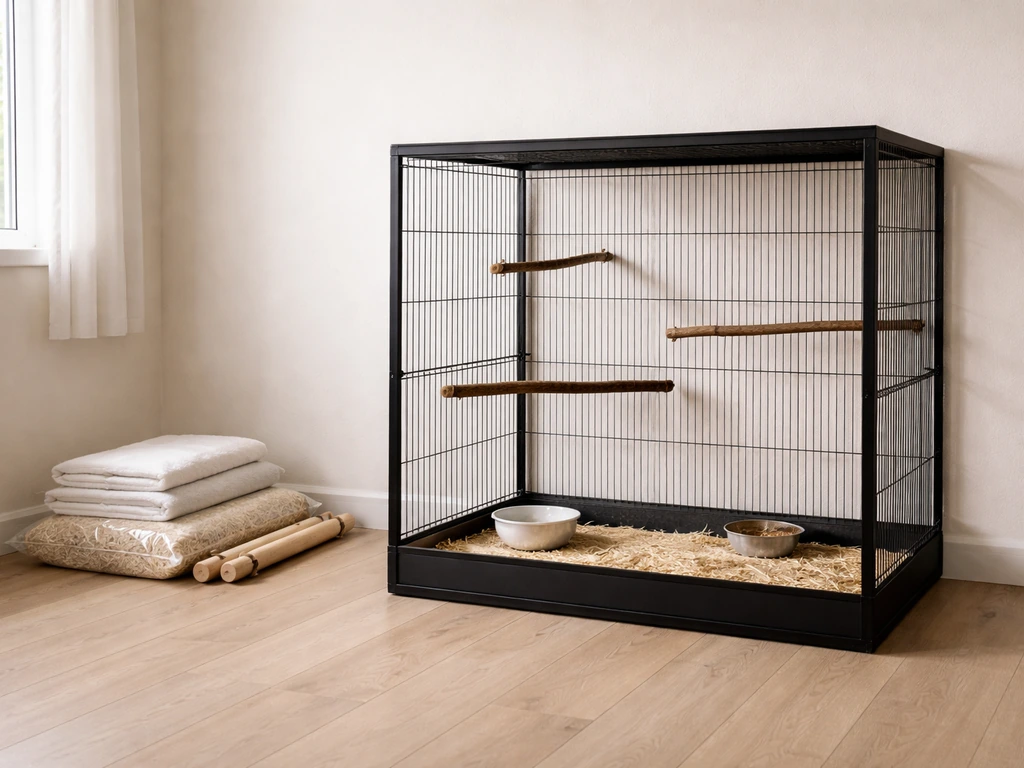
The environment you create directly affects how quickly a dove trusts you. A dove that feels unsafe in its cage will be harder to train because it is already operating at a low-level stress baseline. Getting the setup right is not optional, it is the foundation of the whole process.
Cage size and placement
Doves need more horizontal space than vertical height because they move by flying level rather than climbing. A minimum cage size for one or two doves is around 24 inches wide by 24 inches deep by 24 inches tall, though bigger is always better. Place the cage at or slightly below your eye level, cages on the floor feel exposed and predatory, while cages above your head put the dove in a position where it cannot easily watch approaching humans. Position the cage against a wall so the dove has a solid 'safe side,' and place it in a room where the family spends time so the dove gets used to normal household activity without direct handling pressure.
What you will need
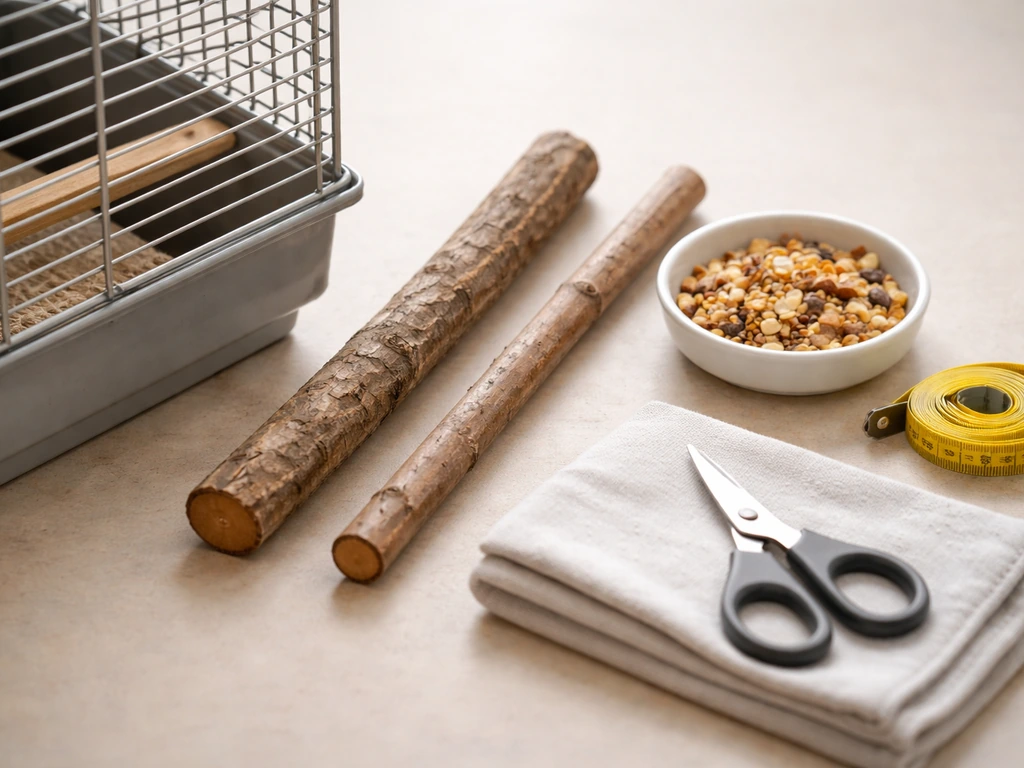
- An appropriately sized cage with horizontal bar spacing no wider than half an inch for smaller dove species (to prevent head trapping)
- Natural wood perches in varying diameters (half an inch to one inch suits most doves) to keep feet healthy
- Millet spray, safflower seeds, or small dove pellets as high-value training treats—use something the dove does not get free-choice all day
- A small target stick (a chopstick or pencil works fine as a low-cost alternative)
- A perch stand or T-stand you can place outside the cage for training sessions
- A shallow dish for bathing, changed daily—doves bathe often and a clean bird is a more relaxed bird
- A quiet timer or phone to keep sessions honest and short
Safety checks before you begin
Before any out-of-cage session, do a quick room sweep: close windows and doors, cover mirrors (doves can fly into them), turn off ceiling fans, and remove other pets. Keep cats and dogs completely out of the training space, even a calm dog sitting across the room activates a dove's prey-animal alarm system and makes every session less effective. Check that the dove looks healthy before each session too. A bird sitting on the cage floor for an extended period, breathing with visible effort, or holding a wing at an unusual drooping angle is not a bird ready to train, it is a bird that may need veterinary attention first.
Building trust fast: desensitization and first handling steps
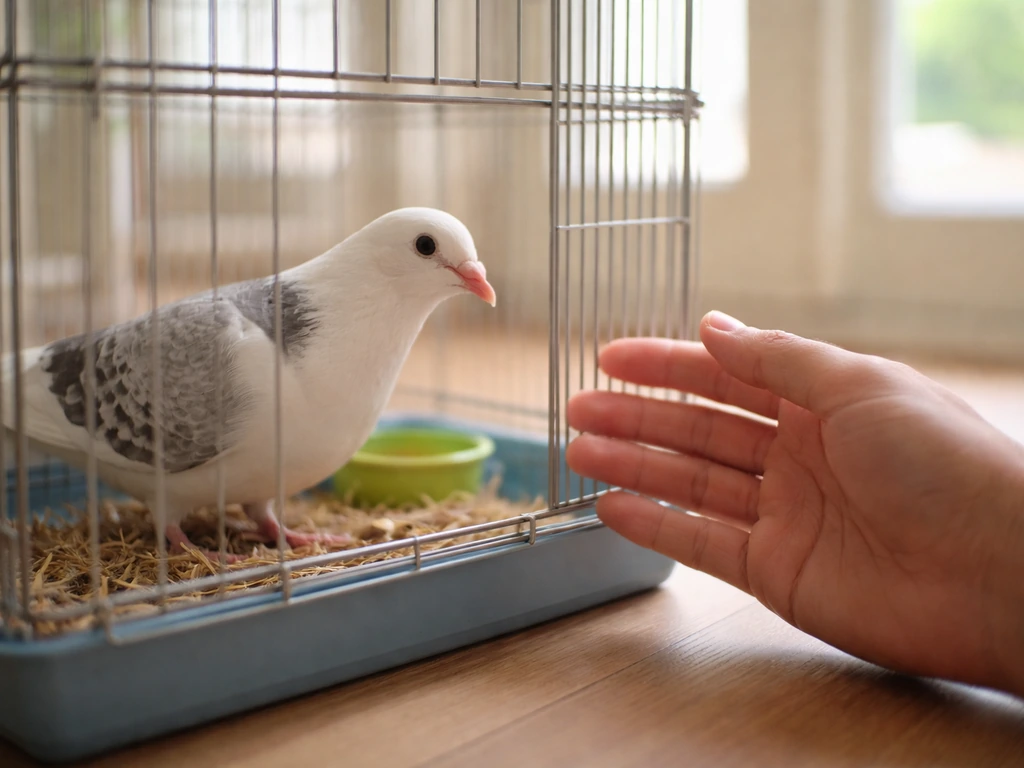
Desensitization is the process of slowly exposing the dove to things that currently scare it, your hand, your face, movement near the cage, at a level that does not trigger a full stress response. Done correctly, each short exposure chips away at the fear until the 'scary thing' becomes neutral or even positive.
- Spend the first two to three days simply sitting near the cage without reaching in. Read a book, talk softly, let the dove observe you as a non-threat.
- On days three to five, place your hand flat against the outside of the cage bars for thirty to sixty seconds at a time. Do not move suddenly. If the dove stays calm, reward with a treat pressed through the bars.
- Once the dove no longer moves away from your hand on the outside, open the cage door and rest your hand just inside the opening—not reaching toward the bird, just present. Do this for a few sessions before moving deeper into the cage.
- Slowly move your flat, open hand closer to the dove over several sessions, always stopping if you see stress signals. The dove should stay perched and relatively calm before you progress.
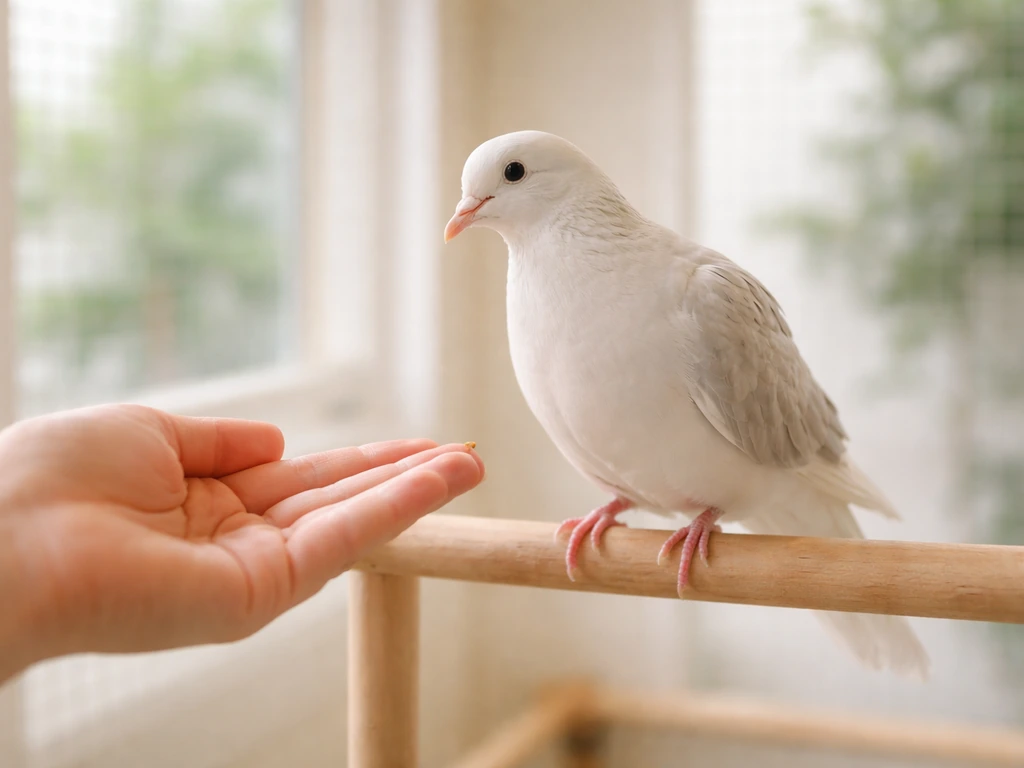
- Offer a high-value treat (millet spray works well) from your open palm while your hand is inside the cage. Let the dove choose to approach. Do not chase or corner it.
- Once the dove is eating from your hand reliably, you are ready to work on the step-up cue.
This whole desensitization phase takes anywhere from a few days to a few weeks depending on the individual bird. A hand-raised dove may skip several steps entirely. A rehomed adult dove or a bird that had a bad previous experience may need much more time on each step. Do not rush it. Rushing creates setbacks that cost more time than patience does.
Positive reinforcement training basics
Positive reinforcement means you add something the dove wants (a treat, gentle praise, or the chance to move to a preferred spot) immediately after it does the behavior you want. The timing matters enormously, reward within two seconds of the correct behavior so the dove can connect what it did with what it got. Punishment, startle-based methods, or forcing the bird to accept handling do not work with doves. They produce a bird that tolerates you out of learned helplessness, not one that voluntarily engages with you.
How to structure a training session
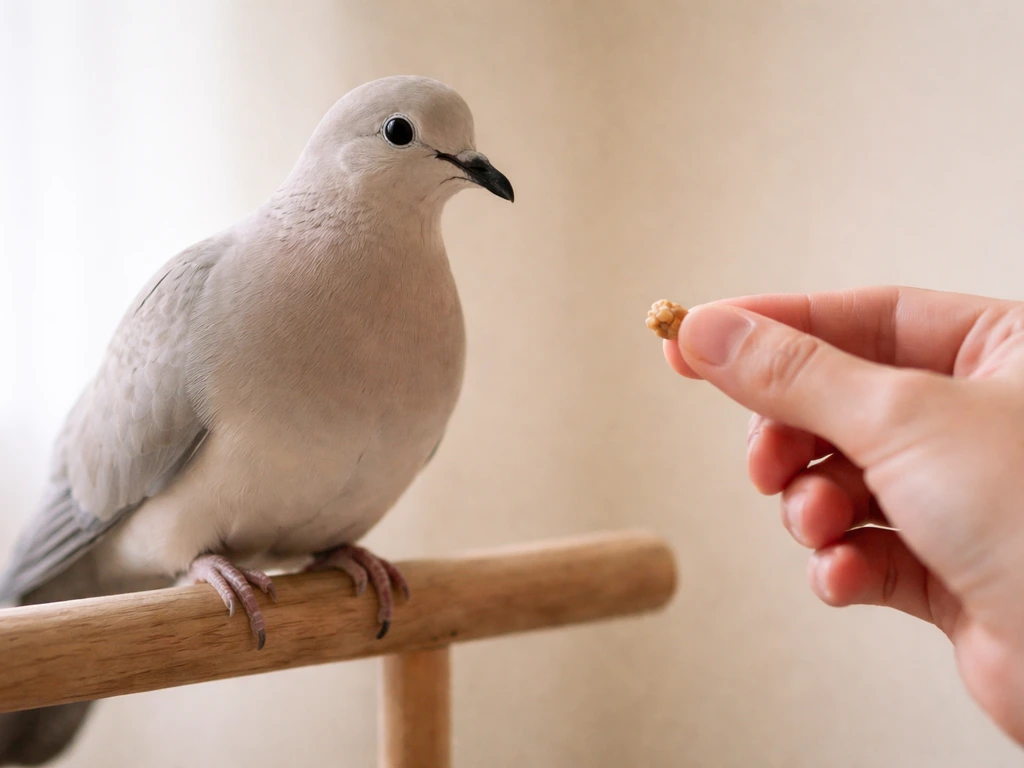
- Keep sessions to five to ten minutes maximum—doves lose focus and tire quickly, and short sessions prevent the bird from associating training with exhaustion
- Train before a meal, not right after, so the dove is motivated by food rewards
- Start each session with something the dove already does well to build confidence before asking for something harder
- End every session on a success—even a tiny one—so the bird's last association with the session is positive
- Aim for two to three short sessions per day rather than one long one
- Keep a simple log (even just a note on your phone) of what you worked on and how the bird responded so you can track real progress
For treat selection, use something the dove genuinely loves but does not get all day. Millet spray is a classic choice, most doves go wild for it. Safflower seeds, small pieces of leafy greens, or a favored pellet variety also work well. Keep treat portions tiny so you can deliver many rewards in a short session without filling the bird up. The treat size should be just a nibble, not a whole seed head.
Core skills to teach your dove
Step-up
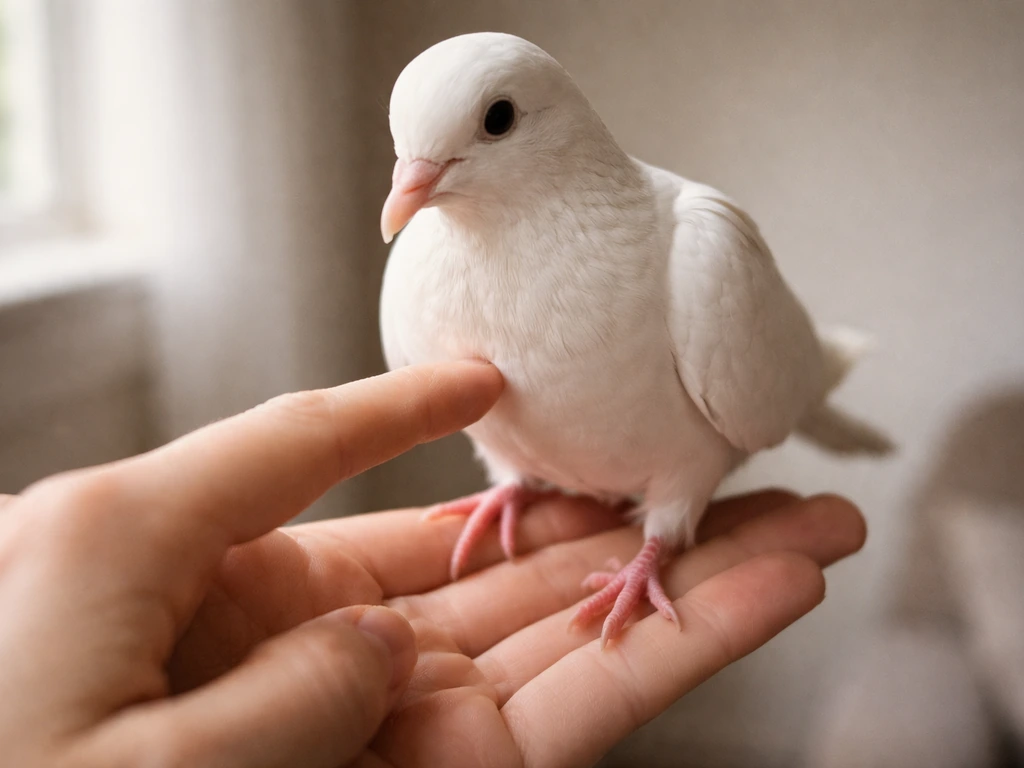
[Step-up is the most important behavior you can train a dove. ](https://www. petco. com/content/content-hub/home/articlePages/01/basic-bird-training-how-to-train-your-bird-to-step-up.
html) Once the bird is eating from your hand reliably, press your index finger gently against its lower chest just above the legs. Most birds will naturally shift their weight forward and step onto your finger to keep their balance.
A common veterinary/behavior-consistent way to set this up is to present your finger or a perch at the lower chest or upper leg area while pairing it with a consistent calm “step up” cue present a finger or perch at the lower chest or upper leg area with a consistent calm “step up” cue. The moment their foot touches your finger, say 'step up' in a calm, consistent tone and immediately reward.
Repeat this in very short bursts, five to eight repetitions per session, until the bird steps up on the verbal cue alone without needing the physical pressure prompt.
Target training
Target training means teaching the dove to touch its beak to the end of a stick on cue. Hold the target stick (a chopstick or pencil) a few inches from the dove's face. Most doves will investigate it out of curiosity. The instant the beak touches the tip, reward. Once the dove is reliably touching the target, you can use it to guide the bird to different perches, to move it away from something without chasing, or as the foundation for more complex behaviors. Target training is especially useful for moving a bird that has not yet mastered step-up.
Staying calm during handling
Once the dove steps up willingly, the next goal is duration, keeping the bird perched on your hand calmly for longer and longer periods before returning it to its cage. Do this by moving slowly, speaking softly, and rewarding calm posture (smooth feathers, no wing spreading) with occasional treats and a gentle tone. Never grip the bird. A dove on your hand should feel that it can leave whenever it chooses, ironically, that freedom is what makes it want to stay. Gradually increase how far you move around the room with the bird perched, and introduce mild distractions so the dove builds confidence across different contexts.
Perch recall (intermediate to advanced)
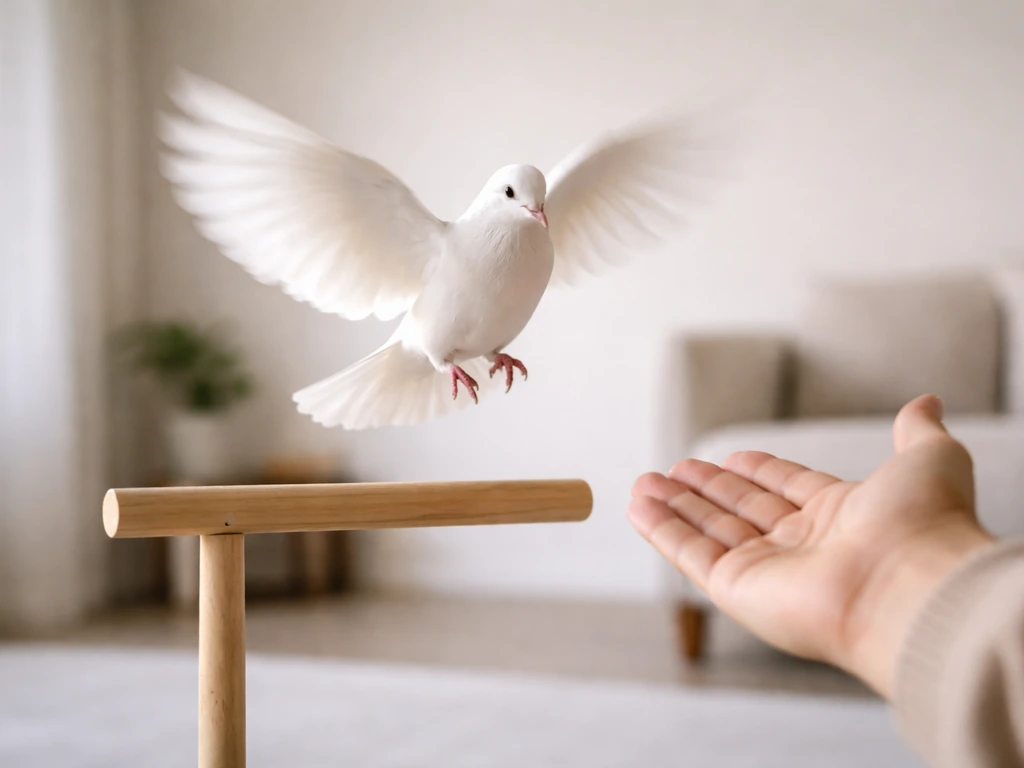
Recall means training the dove to fly from a perch to your hand on cue. Messenger birds also benefit from clear perch recall cues so they can move on command instead of panicking. Start with the T-stand or perch stand placed just two to three feet from where you are standing. Hold out your hand with a treat visible, say your recall word (keep it short and consistent, like 'come' or the bird's name), and wait. Most doves will hop or flutter to you for the reward. Over many sessions, gradually increase the distance. Only move to free-flight recall in a fully enclosed, bird-safe room, and only once the step-up and short-distance recall are rock-solid.
Training wild or rescued doves: what is legal and what is ethical
This section matters a great deal, so please read it carefully before handling any dove you did not purchase or adopt from a breeder or rescue.
In the United States, most wild dove species, including mourning doves, are protected under the Migratory Bird Treaty Act. It is illegal to keep them without a federal and often a state permit, even if you found one injured. The correct action if you find an injured wild dove is to contact a licensed wildlife rehabilitator immediately. Do not attempt to tame or train a protected wild dove.
That said, some dove species commonly kept as pets, ringneck doves and diamond doves, for example, are domesticated species not protected under that law, and feral rock doves (pigeons) exist in a legal gray zone that varies by location. Always check your local and federal regulations before doing anything beyond providing emergency first aid and getting the bird to a professional.
If you are a licensed rehabilitator working with a wild dove, the training approach shifts significantly. The goal is not taming, it is supporting the bird through recovery and releasing it with as little human imprinting as possible. Limit handling to necessary medical care, use visual barriers to reduce the bird's exposure to humans, and work toward a clean release rather than bonding. A wild dove that becomes too comfortable with humans loses survival instincts that it genuinely needs.
Rescued pet doves, ringnecks, diamonds, or white domestic doves that were abandoned or surrendered, are a different situation entirely. These birds are domesticated, legally kept as pets, and often benefit from the full training approach described throughout this article. They may be more fearful than a hand-raised bird, so you will spend more time on desensitization, but the techniques are identical. Lovebirds often need the same trust-building and positive reinforcement approach, just adapted to their smaller temperament and social needs how to train a love bird. Go slower, be more patient, and celebrate small wins.
| Dove Type | Legal Status (US) | Training Goal | Approach |
|---|---|---|---|
| Pet/domesticated dove (ringneck, diamond) | Legal to keep as pet | Trust, step-up, calm handling | Full positive reinforcement program as described |
| White domestic dove (released/found) | Legal to keep as pet | Trust, rehoming, gentle taming | Slow desensitization, patience with fearful birds |
| Feral rock dove (pigeon) | Varies by state/locality | Trust and handling if kept legally | Check local laws; training approach same as pet dove |
| Wild mourning dove or other migratory species | Protected—illegal to keep without permit | Emergency first aid only | Contact a licensed wildlife rehabilitator immediately |
Troubleshooting fear, pecking, and stress
Even with the best approach, you will hit walls. Here is how to diagnose what is going wrong and what to change.
The dove panics and flies at the cage every time you approach
You are moving too fast. Go back to the earliest desensitization step where the bird stayed calm, even if that is just sitting across the room, and rebuild from there. Some birds need a full week of you simply existing near the cage before any direct interaction. That is completely normal. Do not interpret repeated panicking as a sign the bird cannot be trained. It is a sign you need a slower gradient.
The dove pecks or bites when you reach in
Dove pecks usually mean 'you are too close and I feel cornered.' Unlike parrot bites, dove pecks rarely break skin, but they are still a clear communication that you are moving faster than the bird is ready for. Never pull your hand back sharply when pecked, that teaches the bird that pecking works to make scary things disappear, which reinforces the behavior. Instead, hold still briefly, let the bird settle, then slowly and calmly withdraw your hand. Next session, go back to a step where no pecking occurred and progress more gradually.
The dove will not take treats from your hand
Either the treat is not high-value enough, the bird is full, or you are too close for it to feel safe eating. Try a different treat, switch from pellets to fresh millet spray and see if you get a different response. Train before meals rather than after. And try placing the treat on the cage floor or on a perch just beyond your fingertips rather than on your palm, so the bird gets the reward without having to physically approach your hand yet.
The dove seemed fine and suddenly regressed
Regression happens and it almost always has a cause. Common triggers include a change in the room (new furniture, new pet, loud event), a change in your appearance (a hat, glasses, a new coat), illness, or a bad experience during a previous session. Rule out illness first, a dove sitting on the cage floor, panting, or showing abnormal breathing needs a vet visit before you resume any training. If the bird appears healthy, identify what changed in the environment, minimize it if possible, and go back two or three steps in your training progression to rebuild confidence.
The dove is stressed during handling but steps up fine
Watch for subtle stress signs during out-of-cage time: panting, rapid breathing, fanned tail feathers, or wings held slightly out from the body. If you see these, the session is too long or the environment is too stimulating. Shorten sessions to just two or three minutes, reduce distractions in the room, and focus purely on calm duration on the hand rather than asking for any new behaviors. Calm handling is itself the behavior you are training at this stage.
Training doves shares some principles with training other species. If you are wondering how to train a bird of prey instead, the safety, handling, and reinforcement approach will differ significantly from dove training. If you want to know how to train a robin bird, start by using the same trust-building, gentle desensitization, and reward timing principles that work for doves training other species. The patience-first, desensitization-based approach you use with doves applies similarly to other gentle bird species. The specifics differ by species, doves are generally less vocal and less tool-oriented than parrots, and more flock-oriented than solitary raptors, but the welfare-first mindset stays constant no matter what bird you are working with.
Stick with it. The moment a dove that once panicked at your presence chooses to walk across your hand and settle there quietly, that is one of the genuinely satisfying things about working with these birds. They are not fast learners, but they are loyal ones.
FAQ
How do I know my dove is ready to start step-up, not just tolerating my hand?
A good readiness sign is that the dove approaches or leans forward to eat from your hand, then remains calm when your finger lightly touches its lower chest. If the dove only freezes or stays distant but does not commit to eating and foot placement, keep doing desensitization and hand-adjacent perching first.
My dove steps up, then immediately hops off. Should I keep pushing for longer duration?
Not yet. Use that short success as the baseline, return the bird to its cage, then repeat the next session at a shorter distance or for fewer seconds. Build duration gradually, only adding time when the dove shows relaxed posture (smooth feathers, no wing opening, steady breathing).
What should I do if my dove refuses treats on some days?
Treat refusal usually means timing, stress level, or a treat that stopped being motivating. Train before the dove is hungry, keep portions tiny, and make sure you are not too close. Also check basics like temperature and health, since lethargy, abnormal breathing, or sitting low can suppress appetite and make training stall.
Can I use my hand to grab my dove if it will not step up?
No, avoid forcing or gripping. If step-up stalls, go back to hand-near acceptance, then resume gentle physical support-free prompts only if the dove is already choosing to shift weight forward. With prey animals, forcing contact teaches fear and often delays voluntary behavior.
Are millet spray treats always the best option?
Millet spray works well for many doves, but rotate options if your bird loses interest. Try small leafy greens, small pellet pieces, or another favored seed. The key is consistency and freshness, and giving nibble-sized rewards so you can repeat quickly without filling the crop.
How long should sessions be when my dove is still fearful?
When fear is still active, keep sessions very short, often two to three minutes, and stop while the bird is still managing calm. Ending on a controlled, non-stress win helps prevent the dove from learning that training always escalates into panic.
Why does my dove peck sometimes even when I am being slow?
Pecking can happen if your position is creating a cornering effect, even unintentionally, or if the approach is too close for the bird to feel safe eating. If pecking occurs, hold still, let the dove settle, withdraw gradually, and restart from the last step with no pecking. Also watch your own movement speed, sudden head bobs, and face position.
Can I train multiple doves together, or should I do one-on-one sessions?
One-on-one sessions are usually easier because competition and distraction can keep each bird in a heightened state. If you must train together, ensure separate out-of-cage space and only progress when each dove can step up and perch calmly without the others causing stress or blocking access to treats.
What if my dove flaps and throws itself around during recall?
Flapping can be excitement, but if it looks frantic, that indicates the bird is not yet confident at that distance or setup. Shorten distance back to the closest perch, reduce distractions, and make recall rely on clear perching and treating rather than asking for fast flight. Only progress when hops or controlled moves are consistent.
Can I train a wild or feral dove the same way as a pet dove?
Do not attempt taming or training wild, protected doves. Focus on getting the bird to a licensed wildlife rehabilitator and follow their guidance. Training goals and handling for recovery releases are different, and imprinting risk is a major reason the approach changes.
Is it okay to cover mirrors and windows every time, or is it only for the first session?
Keep covers on whenever you are training out of the cage, not only at the beginning. Reflections and visual surprises can trigger flight responses at any stage, and doves learn by repeated calm experiences, so stable visual conditions help reduce setbacks.
How do I prevent regressions when my house changes (guests, new furniture, holidays)?
Expect setbacks after major changes, then treat it like a normal training plateau. Minimize exposure in the training room, resume at a step where your dove previously stayed calm, and shorten sessions. Rebuild confidence before asking for step-up or recall.