To whoa break a bird dog, you teach a reliable stop-and-stand cue ('whoa') from the ground up in low-distraction settings, then systematically add birds, shot, and field conditions until the dog holds steady without creeping, breaking point, or chasing. The word 'break' here means your dog is leaving the point or launching before you release it, and the fix is a foundation-first approach: clean up the whoa cue in the yard before you ever put a bird down, then build steadiness through progressive exposure so the dog is holding because it understands the criteria, not just because a leash is in your hand.
How to Whoa Break a Bird Dog: Humane Step by Step Guide
Maya Harris
5 May 2026
What 'break' and 'whoa' actually mean for your dog
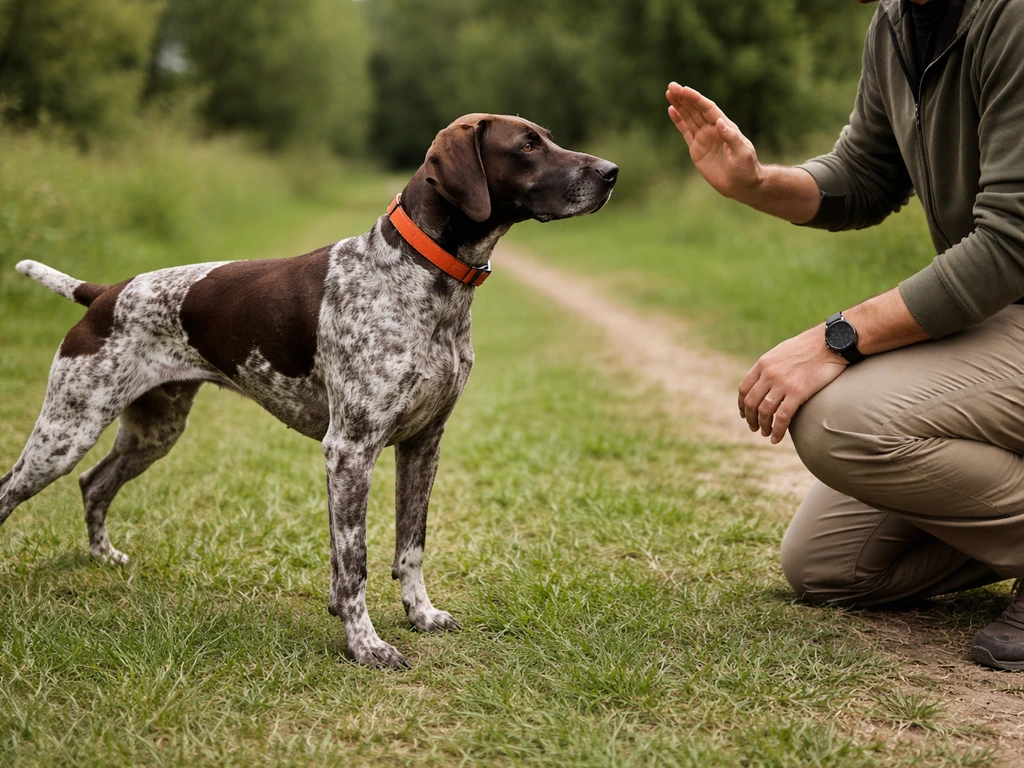
Before you can fix anything, it helps to name what you are actually seeing. 'Whoa' is the handler's verbal cue that means stop moving, plant your feet, and hold that position until I release you. 'Breaking' is when the dog leaves the point or the line before being commanded to do so, showing clear intent to get to the bird or the fall. It is not the same as creeping, which is a fault but a smaller one: creeping is moving a step or a few steps closer to the bird or mark without full commitment to chase. Once a dog moves several feet with forward momentum and intent, most trainers and testing organizations call that a break. Understanding which problem you have matters because they need slightly different fixes.
Here are the most common breaking scenarios you will run into with a pointing breed:
- Breaking at the flush: the dog charges in the moment the bird goes up, before you fire or release
- Breaking at the shot: the dog holds for the flush but launches when it hears the gunshot
- Creeping on point: the dog inches forward while on point, often when you are walking in to flush
- Leaving point early: the dog self-releases and either bumps the bird or just quits the point
- Ignoring 'whoa' in the field: the dog responds in the yard but locks up or blows past you when bird scent or excitement spikes
- Breaking on the retrieve command for another dog: relevant in brace work or hunt tests
Steadiness is a trained and maintained behavior, not a personality trait. If you want the full roadmap, use this as part of a complete guide on how to train a lab to be a bird dog. A well-trained bird dog waits for the handler to arrive, flush the bird, shoot, and release before moving. That level of control is what gives hunters safe shot positioning and what testing organizations like NAVHDA and NAHRA score heavily. But it does not happen by accident, and it can erode under real hunting excitement even after years of training. That is why reclaim work is a permanent part of the job.
Safety, ethics, and setup before you start
Welfare-first training is not just good ethics, it also produces better results. Dogs trained primarily through physical punishment or aversive electronic methods can develop anxiety, avoidance, and reactive behaviors that actively work against steadiness. Multiple veterinary and regulatory bodies, including the New Zealand Veterinary Association and the Scottish Government, have flagged e-collars as high-risk tools with real potential for fear, aggression, and injury when used without proper knowledge. Animal welfare codes note they should never be used on dogs with anxiety issues, heart conditions, or during pregnancy and nursing. For the purposes of this guide, we are using reward-based methods and check cord pressure-and-release mechanics as the primary tools.
That said, here is the practical setup checklist before your first session:
- A 20- to 30-foot check cord, preferably a stiffer rope that holds its shape so it does not tangle underfoot. Hold it with about 3 feet between your hands in an inverted U shape so you maintain light contact without constant pressure.
- A flat collar or slip lead (not a prong collar for steadiness work)
- A training bench or low platform for early indoor/yard sessions
- Treats your dog actually wants: small, high-value, and fast to deliver
- A planting bag and a few training birds (pigeons work well) once you reach bird work. Pigeons are safe, durable, and legal to use in training in most regions. Check your local wildlife regulations before using any game birds.
- A helper if you can get one: having someone flush the bird while you manage the dog is much easier than doing both at once
- A quiet yard or field with minimal distractions for early sessions. Add distractions deliberately, not accidentally.
One important safety note about live or planted birds: handle training birds calmly and confidently to minimize their stress. Use a dark cloth bag for transport, keep sessions short, and never leave a planted bird in heat or in a spot where a dog can repeatedly flush and re-find it until the bird is exhausted. The goal of live bird work is controlled, brief exposure, not a free-for-all. If you are working with quail, chukars, or pigeons, keep a cooler or breathable carrier nearby and rotate birds to keep them calm.
Building the 'whoa' cue: from yard to field
Step 1: Teach the physical stop first, then label it
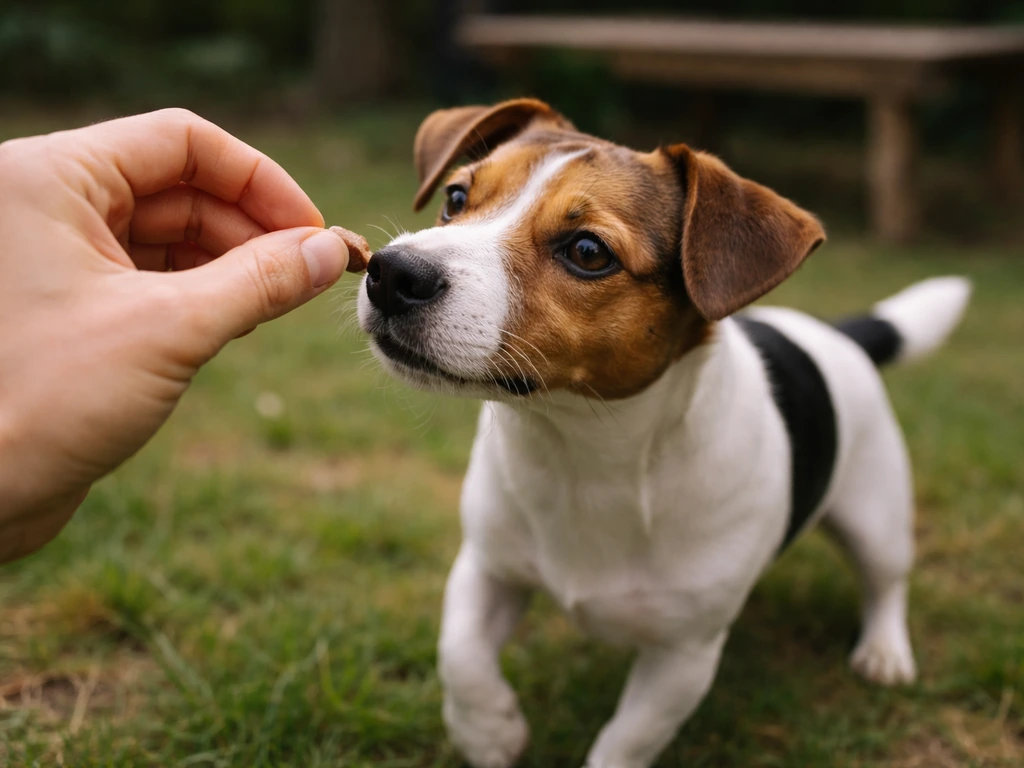
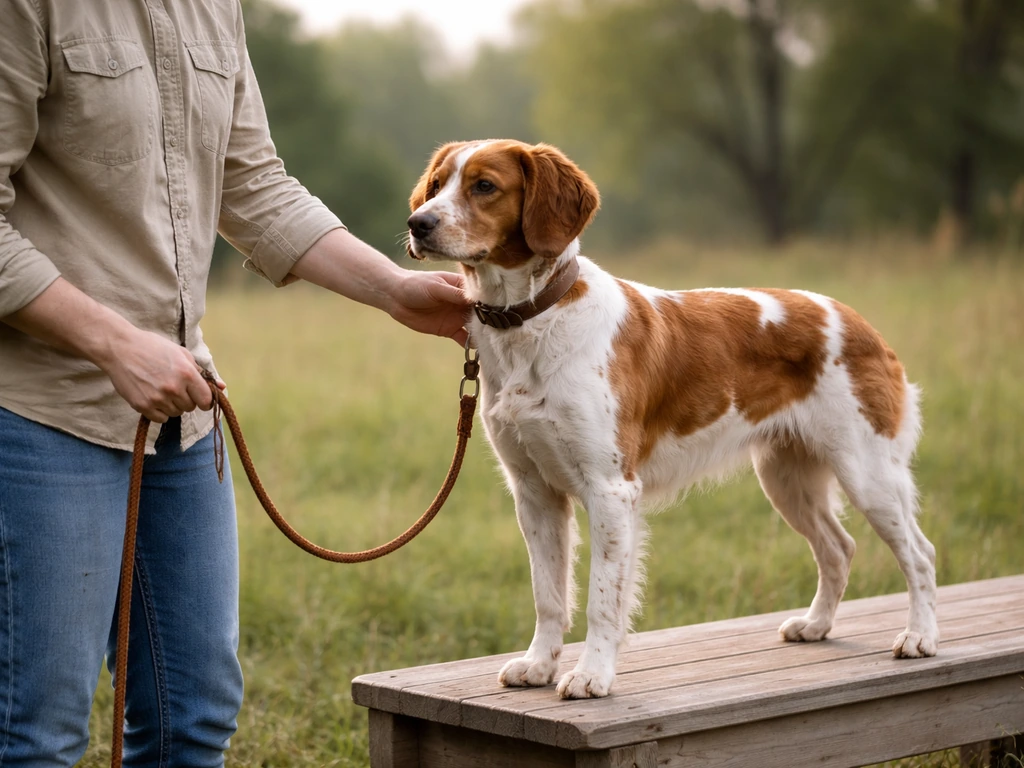
One of the most common handler mistakes is saying 'whoa' before the dog has any idea what it means. The word becomes noise. Instead, teach the stopping behavior first, then attach the label. Start on a training bench or low platform. Walk the dog onto it, let it settle, then gently place your hand on its flank with light pressure as you stop forward motion. The moment the dog stops moving, release the pressure and mark the moment with a calm 'yes' and a treat. You are teaching the dog that stopping earns good things and that the pressure stops when the dog stops. That release of pressure is the core learning event.
Once the dog is stopping reliably when it feels flank contact, begin saying 'whoa' the instant its feet plant. Say it once, calmly. Do not repeat it. Repetition of the cue before the behavior is learned trains the dog to wait for the third or fourth 'whoa' before complying. If paws start to move, gently pick the dog up and replace it at the original spot. Most dogs get this phase in under a week of short sessions. Sessions should be 5 to 10 minutes maximum at this stage.
Step 2: Add distance and duration in the yard
Once the dog plants its feet on 'whoa' reliably on the bench, move to the ground. Say 'whoa,' wait for the stop, then take one step back. Return and reward. Build to two steps, five steps, then walking a full circle around the dog while it holds position. Do not add duration and distance at the same time. Add one variable at a time. If the dog follows you, calmly bring it back to the exact spot where it was standing, say 'whoa' again, and try with less distance. The benchmark before moving on: the dog stops on one verbal cue and stands without moving while you walk away and return, at least 15 to 20 feet in both directions.
Step 3: Add the check cord and moving distractions
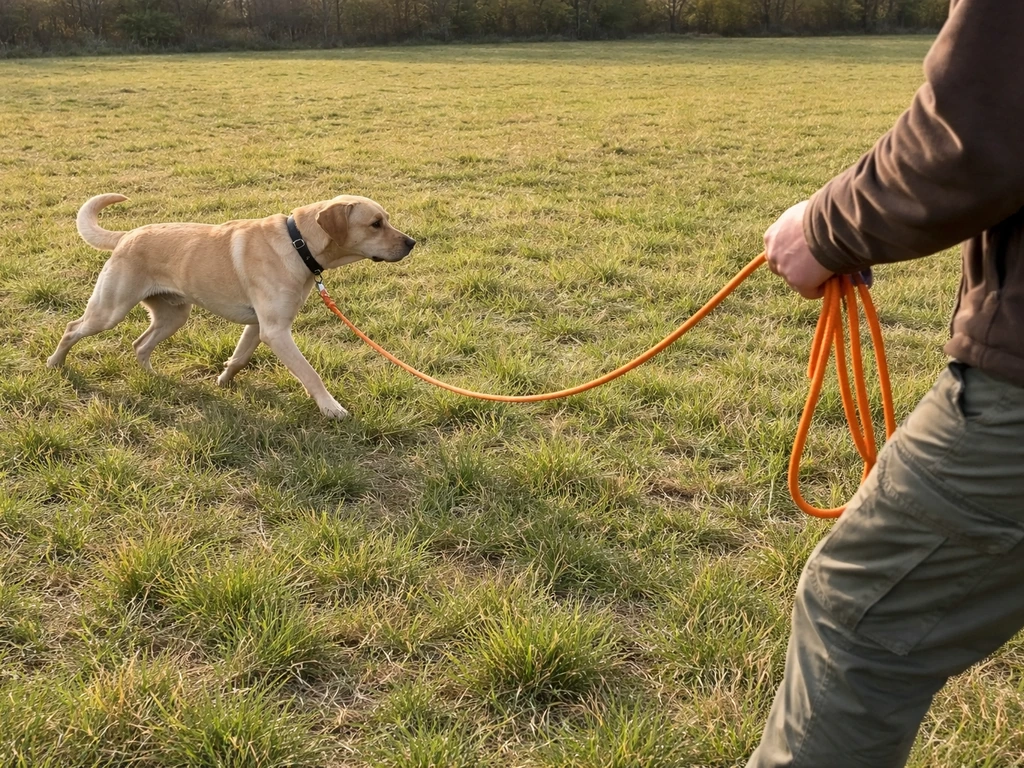
Clip the check cord to the collar before any distraction work. Walk the dog through a field on the cord, then cue 'whoa' mid-stride. The cord gives you a gentle way to reinforce the stop if the dog drifts or continues forward. Once it stops, give it a moment to settle. Look for calming signals like licking, yawning, or a deliberate exhale. These tell you the dog is acknowledging the position, not just frozen in confusion. Reward that settled stillness, then release with a consistent word like 'okay' or 'hunt.' Practice this across different terrain, near other dogs, near the truck, and in areas with interesting smells. You are proofing the cue before birds ever enter the picture.
Teaching steadiness on birds: planted birds and live bird progression
Steadiness on birds builds in phases. The old rule of thumb from NAVHDA training circles applies here: Go before Whoa. That means your dog should have a strong hunting drive and natural pointing instinct before you put the brakes on it. You are not suppressing the point, you are adding a hold-and-wait requirement onto something the dog already wants to do.
- Steady to flush: the dog finds and points, you walk in and flush the bird, the dog holds on the point through the flush. No shot, no retrieve yet. Reward the hold with a calm verbal marker and treat after the bird is well away.
- Steady to wing: repeat the flush, but now add a wing shot (or a blank pistol fired away). The dog holds through sound and movement. This is where many dogs break for the first time. If the dog creeps or starts to move, say 'whoa' once firmly and use the check cord to stop forward motion. Do not chase or shout.
- Steady to shot: the dog holds through flush, wing, and shot. Still no retrieve command yet.
- Steady to fall: the bird goes down, the dog watches it fall and holds until you send it. This is the full sequence, and it takes the most repetitions to make reliable.
Keep early bird sessions short and successful. One or two planted pigeons per session is plenty. Plant the bird in a spot where the dog is likely to point it naturally, so the approach is clean and the point is genuine. A helper walking in from the opposite side to flush keeps your hands free to manage the check cord. After the flush and any shot, pause, let the dog settle completely on 'whoa,' then release and let it hunt back to the area as a reward. You are reinforcing the full chain: find, point, hold, release, go.
As the dog becomes reliable at each phase, increase the realism: use different bird species, different cover types, vary the time between the flush and the shot, and occasionally withhold the shot entirely so the dog does not anticipate it. Anticipation of the shot is one of the most common triggers for breaking.
Fixing specific problems: creeping, breaking point, and launching
Dog is creeping on point
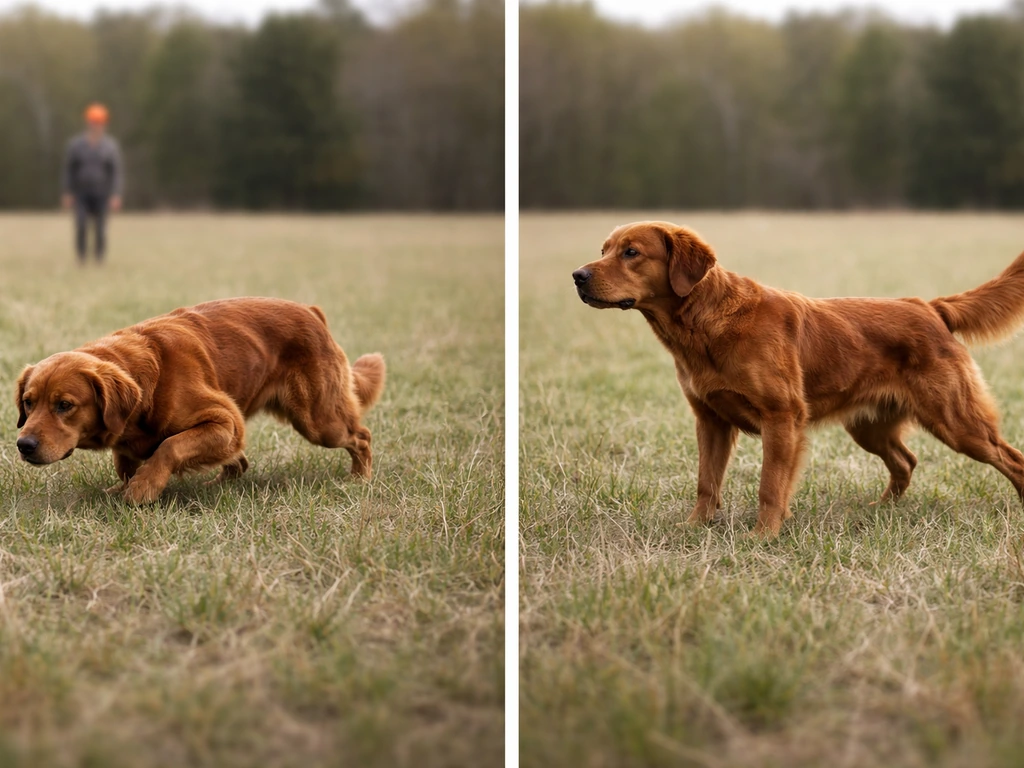
Creeping is usually a sign that the dog's 'whoa' foundation under bird excitement is not solid yet, or that the dog has learned it can inch forward without consequence. Go back to the check cord. When the dog points, cue 'whoa' once and use very light cord tension from behind or at the flank to hold the position. The moment the dog plants and relaxes into the point, release that tension as your reward signal. Do not let creeping sessions continue. Walk in calmly, get the dog back to its original spot, and try again with a shorter approach distance so success is easier.
Dog breaks at the flush or shot
If the dog consistently launches at the flush or at the shot, you have moved too fast through the steadiness phases. Go back to steady-to-flush only, with no shot, and build that rock solid before re-introducing gunfire. When a break happens during a session, say 'whoa' immediately and use the check cord to stop forward motion. Do not let the dog complete the chase. Walk the dog back to the original pointing spot, say 'whoa,' and stand it there for 30 to 60 seconds before releasing. The goal is to mark the breaking location as the standing-still location in the dog's memory. This is not punishment, it is simply resetting the picture.
Dog launches and cannot be stopped verbally
If your verbal 'whoa' has no stopping power once bird interest spikes, the cue has not been trained to that level of distraction yet. It is not a stubbornness problem, it is a training gap. The fix is to drop back to a distraction level where 'whoa' does work, build reliability there, and raise distraction in small steps. You may also need to evaluate whether the check cord is being used as the actual cue instead of the verbal, because many dogs learn to respond to cord pressure but tune out the word. Practice 'whoa' with the cord slack or dragging so the dog learns the word itself means stop, not the tug.
Dog quits or self-releases from point
A dog that breaks point before you arrive is usually experiencing a combination of low confidence, insufficient reward history for holding, or bird planting positions that allow the bird to relocate and the point to collapse naturally. Make sure you are rewarding the hold itself, not just the retrieve. Walk in, let the dog hold a moment after you arrive, say 'good' and give a treat before flushing. You are teaching the dog that your arrival at the point is a good event, not the starting gun.
Troubleshooting timing, consistency, and handler mistakes
Most steadiness failures trace back to handler timing or consistency issues, not dog problems. Here are the ones that come up most often:
| Handler mistake | What it looks like | Fix |
|---|---|---|
| Repeating 'whoa' multiple times | Dog waits for the third or fourth cue before stopping | Say it once, then follow through with cord or body position. Never nag with the cue. |
| Rewarding after the dog has already moved | Dog creeps, then gets a treat when it finally stops two steps later | Mark and reward the exact position you want, not wherever the dog happens to stop |
| Inconsistent release word | Dog is unsure when it is allowed to go and breaks unpredictably | Pick one release word and use it every single time. 'Okay' and 'hunt' are both fine, but pick one. |
| Pushing too fast to live birds | Dog holds in yard but breaks every time on real birds | Build more planted-bird sessions at lower distraction before adding wild bird hunting |
| Skipping the regress step after a break | Breaking gets worse over sessions because the dog practices the behavior | Immediately reduce difficulty after a break. Drop back to a phase you know the dog can do successfully. |
| Positioning the dog by physical manipulation at the point | Dog learns it can drift and be repositioned, not that it must hold | Use the verbal cue and cord only. Avoid patting, collar grabs, or steering by the head. |
Timing of your marker (the 'yes' or click) is critical. If you are marking the reward half a second late, you are reinforcing whatever the dog is doing in that half second, which might be shuffling a foot or glancing away. Practice marking the exact moment of stillness, not the moment you reach for the treat.
One pattern worth watching: a dog that performs perfectly in one session and appears to have forgotten everything in the next. This is usually a cue clarity issue. The dog learned to respond to a combination of cues, including your body language, the check cord tension, and the specific yard location, rather than the word 'whoa' alone. The fix is to vary your position, the cord setup, and the environment regularly so the verbal cue stays the consistent signal.
Practice plan and keeping steadiness reliable in the field
Steadiness is not a box you check once and move on from. It erodes under excitement, seasonal breaks from training, and any session where the dog practices breaking without consequence. Think of it as a behavior that needs regular maintenance the way a working dog's heel needs maintenance. Here is a practical structure to build from:
Weeks 1 to 2: foundation only
Five to ten minutes per day on the bench or in the yard. No birds. Focus entirely on the verbal 'whoa' cue, duration, and handler movement. By the end of week two, the dog should stop on one cue and hold while you walk a 20-foot circle. If you have not hit that benchmark, stay here. There is no timeline penalty for a solid foundation.
Weeks 3 to 4: check cord and moving distractions
Add the check cord and practice 'whoa' mid-stride in varied locations. Add a helper jogging past, a thrown dummy, or another dog walking nearby. The dog holds while distractions happen. Reward heavily for staying put. Three to four sessions per week of 15 minutes each.
Weeks 5 to 8: planted birds, one phase at a time
Introduce birds using the phase progression above: steady to flush first, then to shot, then to fall. Do not rush through phases. Spend at least two to three sessions on each phase before adding the next variable. Keep sessions to two or three bird contacts per session. End on success every time.
Ongoing: field maintenance and reclaim
Once you are hunting or running field work regularly, plan at least one structured steadiness session per month in the off-season, and a focused reclaim session at the start of each new hunting season. A reclaim session starts back at the check cord phase, runs a few successful planted bird contacts at lower excitement, confirms 'whoa' is working cleanly, and then returns to field conditions. Remote steadiness drills, where you position the dog, walk away 30 to 40 feet, toss a dummy or bird, and require the dog to hold, are excellent maintenance tools that take only 10 minutes.
Safety is the real reason to maintain steadiness over a lifetime. A steady dog gives the shooter time to set up, reduces flushed birds from accidental bumping, and keeps the dog out of the shooting lane. It is also simply more enjoyable to hunt behind a dog that holds its ground and waits for you. The work is real, but so is the payoff. If you are also building general hunting dog skills alongside this, working on upland bird dog training fundamentals and retriever steadiness work will give you complementary concepts that reinforce everything you are doing here. If you want more structured bird taming tips, apply the same progression and reward-based steadiness approach to your handling sessions upland bird dog training fundamentals. If you want more practical guidance, review these bird training tips alongside your steadiness practice plan. If you are aiming for how to train an upland bird dog, use this same steadiness foundation so your dog can point, hold, and wait through real bird opportunities.
FAQ
What should I do if my bird dog breaks specifically at the flush, not at the shot?
If your dog breaks every time the bird flushes, do not immediately add more cord tension or keep pushing. Regress to steadiness-to-flush only (no shot, no fall), then reward the exact moment the dog remains planted for a short, calm pause. Only after flush reliability is consistent should you reintroduce gunfire, and even then vary the timing so the dog cannot anticipate the next event.
How can I tell whether my dog is responding to the word “whoa” or to the check cord pressure?
A helpful cue test is to practice “whoa” in the same spot and at the same handler distance, with the cord slack or dragging so you are not relying on pressure. If the dog still stops cleanly with no meaningful cord reinforcement, the verbal cue is likely taking the lead. If it only works when the cord is tight, keep proofing the word at lower distraction levels until the dog responds to the label itself.
What’s the correct way to release after “whoa,” and how do I avoid creating creeping back into the behavior?
Teach your release as a clear, final event, not a casual change in body language. Use a consistent release word (like “okay” or “hunt”) and timing, release only when the dog is settled and not actively creeping. If you release too early or with a delay, the dog may interpret it as permission to inch, or it may blow past the point because it learned “release is random.”
My dog creeps a step or two. Do I keep training through it, or regress?
If your dog is creeping, treat it as a “whoa foundation” problem until proven otherwise. Go back to the check cord phase with shorter approach distance, cue “whoa” once, and use very light reinforcement to stop forward motion. The moment the dog plants and relaxes into the point, release the tension as your reward. Then end the session early on success so creeping does not become rehearsed.
Why does my dog sometimes nail “whoa” in one session and completely fail in the next?
A common fix for “it worked yesterday but not today” is to reset cue clarity. Change only one variable at a time (your position, your stance, the cord setup, or the environment), and do short sessions that re-confirm verbal control. If you also had a break from training, start back at the benchmark of stopping on one cue with handler movement, before adding any bird exposure.
What’s the best way to handle a full break (running the bird) during a session?
If your dog launches after the flush or shot, first stop the chase immediately, then walk back to the original pointing location and hold for 30 to 60 seconds before releasing. That hold-time helps the dog learn that the “wrong moment” is tied to stillness, not movement. Also reduce the approach distance and the bird’s realism for the next attempt so success is easier.
How do I know if my bird placement or bird behavior is causing “breaks” that are not really a training problem?
If you cannot get reliable steadiness, check for mismatches between bird placement and what the dog naturally wants to do. Planting the bird where it will relocate easily can collapse the point, leading to breaks that look like disrespect but are actually mechanical failure. Try spots that encourage a clean, natural point and keep the approach quiet and controlled with birds that stay put until you flush.
My dog ignores the first “whoa” cue and only stops after I say it again. How do I correct this?
During bench and yard work, keep sessions short and avoid repeating “whoa” multiple times. If the dog does not respond to the first cue, do not escalate by habit. Instead, lower distraction, re-establish that “stop forward motion earns the marker and treat,” then reattach the verbal label at the instant feet plant. This prevents the dog from learning that it can wait for the second or third cue.
How often should I practice steadiness if my dog already performs well in the field?
Yes, maintenance is usually the missing piece. Even when steadiness is strong, schedule a brief off-season check and, during hunting season, do periodic short sessions that re-confirm verbal control at low-to-moderate excitement. A steady dog can erode after seasonal breaks or after practicing only “go find” behaviors without the hold requirement.
Do distractions like other dogs or activity near the truck make steadiness harder, and how should I proof around them?
If you are using distractions like other dogs or truck noise, start with proofing where “whoa” is easy, then gradually increase distance and intensity. A practical choice is to reward heavily for the first reliable holds during the distraction, then shorten the distraction window if the dog starts to drift. If you push too hard too early, the dog may generalize “whoa means something bad or pointless” and become inconsistent.