Becoming a bird trainer is genuinely achievable, whether you want to train your own parrot at home or build toward a professional role working with birds in wildlife, education, or rehabilitation contexts. The path looks different depending on your goal, but it always starts in the same place: understanding how birds think, communicate, and learn. Start there, and everything else builds naturally.
How to Become a Bird Trainer: Step-by-Step Guide

Maya Harris
15 Apr 2026
What a bird trainer actually does (and doesn't do)
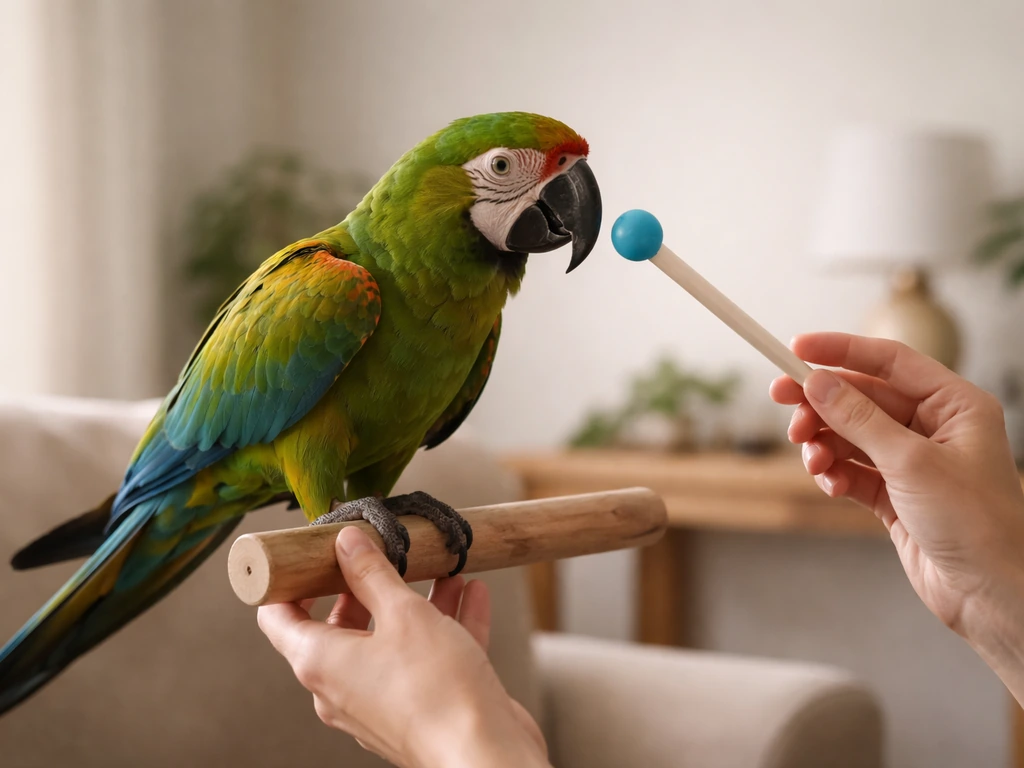
A bird trainer teaches birds specific behaviors using reinforcement-based methods. In a pet context, that means working with companion parrots, finches, canaries, or other species to build cooperative behaviors like stepping up, targeting, entering a carrier willingly, and reducing fear responses. In a professional or wildlife context, trainers may work within educational programs, sanctuary or zoo settings, or supervised rehabilitation environments. What a trainer does not do is force, restrain, or intimidate birds into compliance. That distinction matters more in bird training than almost any other discipline, because birds under stress can deteriorate quickly and coerced behavior is not reliable behavior.
It's also worth being clear about the boundaries between different bird-related roles. A trainer focuses on behavior. A bird handler manages the physical movement and care of birds, often in professional environments. A rehabilitator is specifically licensed to receive, care for, and release injured wild birds. These roles overlap but they are not interchangeable, and jumping into wildlife work without understanding those boundaries can have real legal consequences (more on that below).
Learn bird behavior basics and humane training principles

Before you touch a bird with training in mind, spend serious time learning how birds perceive the world. Birds are prey animals with extremely fast stress responses, wide-angle vision, and a strong instinct to hide illness or fear. What looks like calm to a new trainer is sometimes a freeze response. What looks like aggression is often redirected fear. Recognizing the difference changes everything about how you work.
The science behind bird training is the same operant and classical conditioning framework used for all animal training. Positive reinforcement (adding something the bird values to increase a behavior) is your primary tool. This means finding what each individual bird finds genuinely rewarding, which varies enormously by species and individual. For most parrots, small food treats work well in short sessions.
For some finches or canaries, preferred seeds, proximity to a flock mate, or even brief access to a favorite perch can serve as reinforcers. The IAABC's published standards explicitly oppose the use of aversive methods involving pain, fear, or intimidation, and for good reason: aversive approaches damage trust, create fallout behaviors, and simply don't produce the reliable, welfare-positive results that positive reinforcement does.
Learn to read body language fluently. Feather position, eye pinning, tail fanning, foot shifting, and wing posture all communicate what a bird is feeling in real time. This is your feedback loop during every training session. If you can't read these signals yet, that's your starting homework. Watch videos of birds with knowledgeable commentary, study species-specific guides, and spend time simply observing birds without any training agenda.
Pick your bird-training track: pet birds, working birds, or rehab
The three main tracks are quite different in terms of what knowledge you need, what experience opportunities look like, and what legal requirements apply. Choosing your track early helps you focus your learning.
Pet bird and companion parrot training
This is the most accessible starting point and where most trainers begin. You're working with captive-bred, domestically kept birds, primarily parrots (from budgies and cockatiels to African greys and macaws), but also doves, softbills, and other companion species. No special permits are required to train your own legally owned pet birds. The skills you build here, reading behavior, shaping new behaviors, and reducing problem behaviors, transfer directly to more advanced work. If your goal is eventually to help other pet bird owners as a trainer or consultant, this track is your foundation.
Working birds and birds of prey
If raptors and falconry-style handling interest you, this is a specialized path with its own licensing framework and apprenticeship tradition. Working with birds in educational or demonstration settings often falls under institutional permits. If you're drawn to this area, learning how to become a bird of prey handler is a logical next step, since raptor work involves unique equipment, specific handling techniques, and regulatory requirements that differ significantly from companion parrot training.
Wildlife rehabilitation
Rehabilitation is its own specialized field. Wild birds, especially migratory species, are protected under federal law in the U. S. (the Migratory Bird Treaty Act), and you cannot legally receive or hold them for rehabilitation purposes without both a federal permit from the U.
S. Fish and Wildlife Service and, in most states, a separate state permit. Florida is a clear example: Florida FWC requires a state permit for all wildlife rehabilitation, and an additional federal permit is required specifically for migratory birds. Florida FWC administrative rule 68A-9.
006 also states that you cannot possess sick, injured, orphaned, or otherwise impaired Florida native wildlife for rehabilitation without a permit from the Commission, with limited exceptions Florida FWC requires a state permit for all wildlife rehabilitation.
If you're considering this path, read up on how to become a bird rehabilitator so you understand the full licensing and training pathway before you start.
| Track | Permits Required | Best Starting Point | Key Skills |
|---|---|---|---|
| Pet/Companion Bird Training | None for own birds | Train your own birds at home | Positive reinforcement, body language, behavior shaping |
| Birds of Prey / Working Birds | Falconry license, institutional permits | Apprenticeship under licensed falconer or educator | Raptor-specific handling, equipment use, flight recall |
| Wildlife Rehabilitation | Federal + state rehab permits | Volunteer at a licensed rehab facility | Triage, stress-free handling, release conditioning, legal compliance |
Start safely: handling, consent-based cooperation, and foundational cues
The first thing to internalize is that safe handling starts with the bird's choice, not your grip. Consent-based training means you teach the bird to actively participate in interactions rather than enduring them. This isn't just a feel-good concept. It produces genuinely safer handling, because a bird that has learned to step up willingly is far less likely to bite, thrash, or injure itself than one that has been grabbed repeatedly.
The RSPCA puts it plainly: if you have to use force to handle a bird, you're doing it wrong. The Merck Veterinary Manual adds a critical safety note for when restraint is unavoidable: any physical restraint must leave the bird's thorax and abdomen free to expand for breathing, because birds cannot breathe if their chest is compressed. This is a genuine welfare and safety issue, not a minor footnote.
For most beginners working with companion birds, here's the practical starting sequence. First, establish a calm, predictable presence near the bird without any agenda. Sit near the cage, talk quietly, offer treats through the bars. Do this for several days before any deliberate training begins. The RSPCA recommends introducing new objects near the cage gradually over several days so the bird habituates at its own pace. Once the bird is relaxed around you, you can begin the foundational cues.
- Targeting: teach the bird to touch a target stick (or your fingertip) with its beak on cue. This is the foundation for almost every other trained behavior.
- Step-up: using the target or a gentle hand presentation, teach the bird to step onto your hand or a handheld perch when asked. Practice on/off repeatedly in short sessions.
- Station: teach the bird to go to and stay at a specific perch or mat. This gives you control during interactions without physical restraint.
- Carrier entry: shape the bird to enter its travel carrier voluntarily. This reduces stress at vet visits and transport significantly.
Keep sessions short: two to five minutes for smaller birds, up to ten minutes for larger parrots. End every session while the bird is still engaged and before it shows disinterest or stress. Always end on a successful repetition.
Build skills step-by-step: taming and training exercises by goal
Beginner: taming an untamed or fearful bird
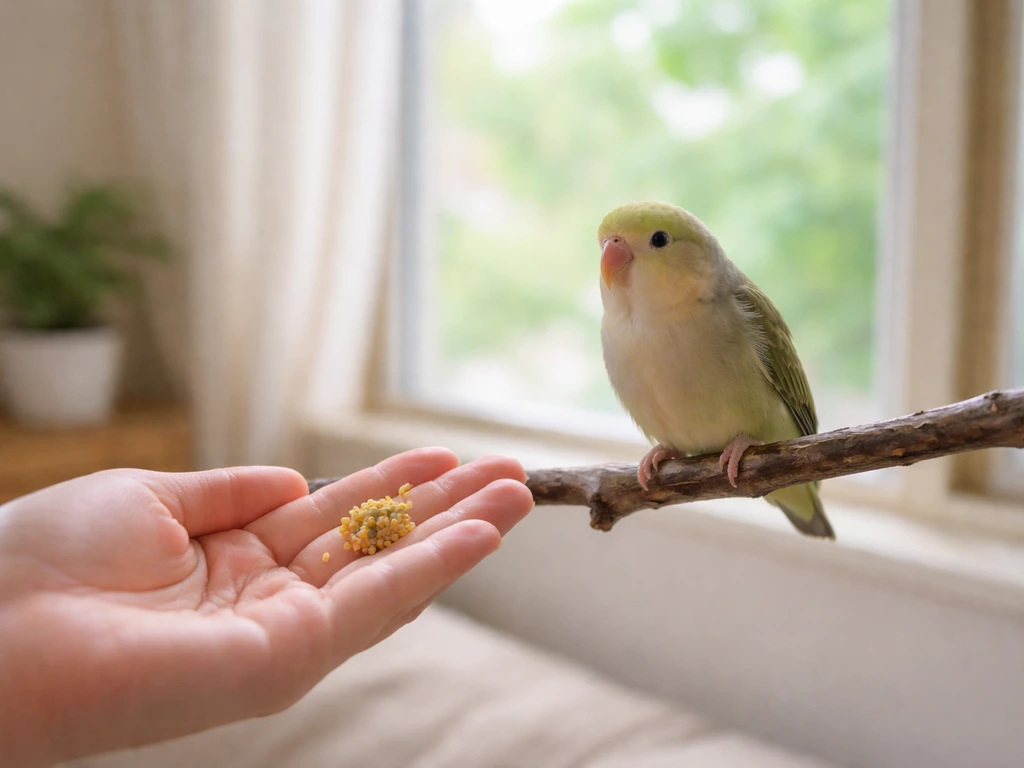
Taming is about trust-building, not domination. Start at the bird's comfortable distance and use food to create positive associations with your presence. Gradually reduce the distance over multiple sessions only when the bird is eating calmly, not lunging or retreating. Never flood a fearful bird by forcing it to accept proximity it hasn't agreed to. This is the classical conditioning phase: you want the bird to associate you with good things before you ask for anything.
Intermediate: shaping practical behaviors
Once targeting and step-up are solid, you can shape more complex behaviors using chaining (linking behaviors in sequence) and free-shaping (reinforcing successive approximations toward the final behavior without physical guidance). Recall training (teaching the bird to fly to you on cue) is a particularly important skill. It requires a solid reinforcement history and, for free-flight work, a controlled environment before you attempt it outdoors. At this stage, introducing enrichment-based learning, foraging activities, puzzle feeders, and environmental complexity, makes a big difference to the bird's welfare and keeps training sessions motivating.
Advanced: cooperative husbandry and working with multiple birds
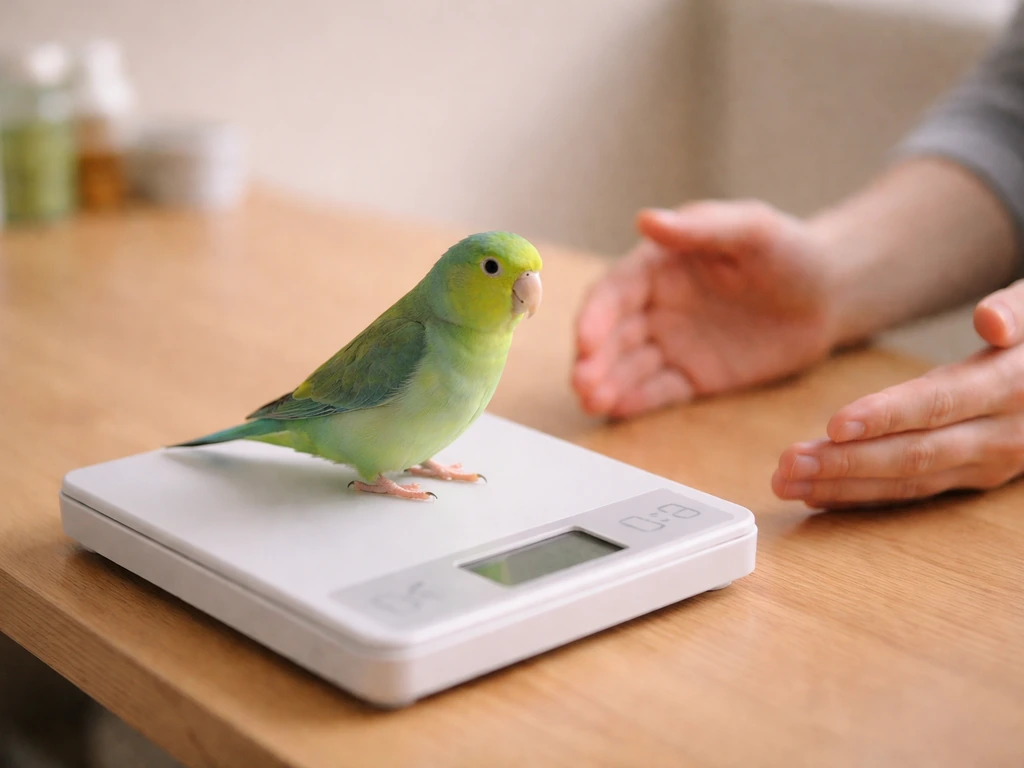
Advanced training includes cooperative veterinary behaviors (voluntarily presenting a foot for examination, accepting a scale, tolerating medication delivery), working with multiple birds in the same space, and training birds to perform demonstration or educational behaviors reliably under varying environmental conditions. At this level, your documentation and session notes become critical tools. Video your sessions, review them, and track what's working. This practice also builds your training portfolio, which matters if you're moving toward professional work.
Troubleshooting common behavior problems and training plateaus
The most common training plateau is a behavior that worked before suddenly becoming inconsistent or stopping. Before assuming the bird is being difficult, audit your training conditions: has the reinforcer lost value (try a higher-value treat or a different reward), has the cue drifted (are you presenting it the same way each time), or has something in the environment changed that's increasing the bird's stress level? Most plateaus are trainer problems, not bird problems.
Biting is the behavior problem new trainers encounter most often. Biting almost always has a communicative function: the bird is saying 'I'm scared,' 'I'm overstimulated,' or 'I tried softer signals and you didn't listen.' Review your session recordings and look for the early warning signs you may have missed (feather slicking, leaning away, eye pinning, foot shifting). Respond to those early signals by giving the bird more space, not by pushing through. Over time, you'll interrupt the escalation before it reaches biting.
Screaming, feather-destructive behavior, and refusal to eat treats during training are all signs worth investigating carefully. Some are training issues; others are welfare or health issues that need veterinary attention before any training intervention. The Association of Avian Veterinarians' low-stress handling guidelines emphasize the importance of reinforcement after veterinary exams and returning birds safely to familiar environments to help them recover from stressful events. If a bird's behavior problem appears to have a medical component, a vet visit comes before any training plan.
If your bird is progressing well in training but you're finding the relationship unusually difficult to build, it may be worth exploring whether a deeper emotional support dynamic is part of what you're working with. Reading about how to get an emotional support bird can help you understand how that human-bird bond works and how training intersects with it.
Safety, legal and ethical requirements, and welfare guidelines
For pet bird trainers working with their own legally acquired companion birds, the legal requirements are minimal. If you’re wondering how to make your bird a service animal, the safest approach is to focus on reliable cooperative training first and then confirm the specific legal requirements where you live. That changes significantly the moment you work with wild birds, migratory species, or raptors. Under the Migratory Bird Treaty Act, virtually all native North American wild birds are federally protected.
If you find an injured wild bird, federal rules do allow you to take temporary possession for immediate transport to a permitted rehabilitator or licensed vet, but you cannot provide ongoing care or training without the appropriate permits. A federal migratory bird rehabilitation permit from the USFWS Migratory Bird Permit Program is required, and in most states (including Florida, as a clear example), a matching state permit is also required.
Both layers must be in place for your activities to be legal.
For birds that fall under CITES (the Convention on International Trade in Endangered Species), import, export, and re-export generally require permits or certificates. Appendix I species require both an export permit from the country of origin and an import permit from the receiving country. If you're ever acquiring, moving, or working with birds across international borders, CITES compliance is non-negotiable. Similarly, if you're bringing a pet bird into the United States, USDA APHIS requirements apply and non-compliance can result in the bird being refused entry. Apply for any required import permits at least seven business days before shipping.
On the training ethics side, the standard is clear: humane, science-based, welfare-first methods only. The IAABC's Joint Standards of Practice explicitly oppose intentional use of aversive methods involving pain, fear, or intimidation. Beyond being the right thing to do, this is also increasingly the professional standard in animal training broadly. If someone claims a training method is effective but it relies on causing fear or pain, it doesn't belong in your toolkit, full stop.
Get experience and credibility: mentorship, portfolio, and next steps
Experience with your own birds is foundational, but it has limits. To develop real breadth as a trainer, you need to work with many different individual birds, ideally across multiple species and temperaments. The fastest way to get that is through mentorship and volunteering.
Look for volunteer opportunities at parrot rescues, bird sanctuaries, aviaries, or zoological facilities that use positive reinforcement training. Even a few hours a week handling and working with birds you haven't met before will accelerate your skills faster than months of solo work. Ask experienced trainers if you can observe their sessions, and be direct about wanting to learn. Most trainers who care about the field are happy to mentor someone who is serious and humble about it.
Document your work from the beginning. Short training videos, session notes, and before-and-after behavioral comparisons form the basis of a credible portfolio. Potential employers, clients, or supervising rehabilitators want to see evidence that you can produce results using humane methods, and a portfolio is how you show that. Even if you're only working with one bird at home right now, start recording your sessions and noting what you did, what the bird's responses were, and what you adjusted.
Certifications are worth considering once you have a foundation. Organizations like the IAABC offer credentials for animal behavior consultants, and there are avian-specific training programs and courses available online and in person. Fear Free's avian certification program, for example, addresses cooperative handling and reducing fear responses specifically in the context of bird behavior, which is directly applicable to training work. Credentials don't replace hands-on experience, but they signal to others that you've engaged seriously with the science and ethics of the field.
If you're thinking about professional roles beyond private training, there are several directions worth exploring. Getting a job working with birds professionally can take many forms, from sanctuary work to zoo positions to educational program roles. If you enjoy the care and companionship side more than the formal training side, becoming a bird sitter is a lower-barrier entry point that still builds real handling experience and a client network. And if your birds are deeply integrated into your daily life and emotional wellbeing, it's worth understanding how to make your bird a service animal and whether that pathway is appropriate for your situation.
The honest answer to 'am I ready to train others?' is that you're ready when you can reliably read body language in real time, adjust your approach based on what the individual bird is communicating, document your results clearly, and explain your methods in terms of reinforcement science rather than intuition alone. Most trainers reach that point after working with a meaningful variety of birds over at least one to two years of consistent practice. Start today with what you have, build methodically, and the credibility follows the competence.
FAQ
How do I know when I’m truly ready to train other birds, not just my own?
Start with the bird you can legally and safely work with in your home, then add supervised experience via volunteering where positive reinforcement is used. Before training anything “public-facing” (like recall or carrier entry), set a goal behavior and practice it for multiple sessions across different distractions, because generalization is where many beginners get stuck.
What should I do if my bird stops taking treats or suddenly won’t work for the reward?
Use a reinforcer “test” rather than assuming food still works. Offer the same cue and see whether the bird approaches to take the reward within a few seconds, if not, switch to a higher-value option (often small favorites, not larger pieces) or shorten the distance and increase the reward rate for that step.
My bird gets worse during sessions, are they just “learning,” or is it too much stimulation?
Distinguish overstimulation from fear by watching escalation timing, if the bird ramps quickly with tail fanning, wing fluffing, or frantic shifting, reduce arousal by ending the session sooner and returning to a calmer baseline routine (short presence near the cage, treat delivery, slower approach).
How can I troubleshoot inconsistent behavior that changes from day to day?
Record three things each session, the cue you used, the exact reinforcer, and the body-language signals before the bird committed to the behavior. If the bird only performs at certain times or with certain rewards, you likely have an environmental or reinforcer dependence issue, and you should vary context gradually while keeping sessions short.
What is the safest way to train recall, and when is it okay to try outside?
Do not start recall outdoors if the bird can’t reliably do the full sequence in a controlled space and under mild distractions. Build by progressing from step-up to targeting to recall at very short distances first, then add one distraction at a time, using a secure indoor or aviary setup until you get consistent returns.
What should I do immediately after a bird bites during training?
If a bird bites, look for what happened immediately before the bite, was the cue too far from the bird, was you holding steady when the bird wanted more distance, or did the bird show early signals you missed. Your next session should start one or two steps easier at the point where the bird can succeed without escalation.
My bird refuses and retreats, how do I handle it without forcing progress?
Shorten the session and lower the criteria, for example, practice the “first inch” of a desired movement instead of the full behavior. “Flooding” often happens when trainers keep repeating the cue despite refusal, to fix it, pause the cue, reset to a non-demand interaction, then resume only once the bird is choosing engagement.
How can I use training to make veterinary nail, wing, or foot checks less stressful?
Treat grooming or husbandry behaviors like cooperative choices, you can condition the bird to present a body part by reinforcing voluntary approaches to a target surface first, then gradually shape the exact posture needed for the exam. Always stop at a successful point and avoid repeating the demand through protest.
Why does my cue stop working even though the bird knows the behavior?
Choose one primary cue form and keep it consistent for that behavior, for example, the same hand signal and timing. If you use multiple cues or change your body angle, birds may respond to your presence rather than the cue, and that cue drift becomes obvious when you try to generalize to new settings.
When should I assume a behavior problem might be medical, not training-related?
A good rule is to address health before behavior changes become training “projects.” If you see refusal to eat, feather destruction that’s new or worsening, persistent screaming, abnormal posture, sudden aggression, or sleep disruption, schedule an avian vet evaluation before continuing training plans.
What should I document if I want a portfolio that impresses potential employers or mentors?
Keep your portfolio credible by including baseline difficulty, what you changed, and the measurable outcome (time to step-up, number of successful repetitions, latency to approach the carrier). Avoid only posting “wins,” employers and supervising professionals want to see how you adjusted and restored welfare-first progress.
Can I combine being a bird sitter with training skills, and still stay within ethical standards?
Yes, but only if you can keep the same humane, reinforcement-based workflow and never rely on intimidation. A trainer mindset is still about reading signals and preventing stress spikes, you can set humane safety boundaries around timing, distance, and handling tools so “care” and “training” reinforce each other rather than compete.
Next Articles
How to Become a Bird Rehabilitator: Licensing and Steps
Step-by-step path to become a licensed bird rehabilitator: permits, humane skills, intake workflow, records, and next ac
How to Teach a Bird to Fetch Step by Step Guide
Humane, step-by-step training to teach your bird to fetch safely, with targets, rewards, troubleshooting, and gradual re
How to Teach Your Bird: Calm, Positive Training Steps
Step-by-step humane training to bond, reduce stress, and teach behaviors with positive reinforcement for parrots and sma