You can absolutely introduce a dog to a bird safely, but it takes patience, a clear plan, and a firm commitment to never rushing the process. The goal is not to get them 'friends' overnight. The goal is to build a calm, predictable environment where your bird feels secure and your dog learns that the bird is simply a normal, boring part of the household. Done right, most dogs and birds can eventually share space without stress. Done wrong, a single bad interaction can set you back weeks or cause serious injury. Here is how to do it right.
How to Introduce a Dog to a Bird Safely Step by Step
Maya Harris
21 Apr 2026
Why this is genuinely risky (and not just a precaution)
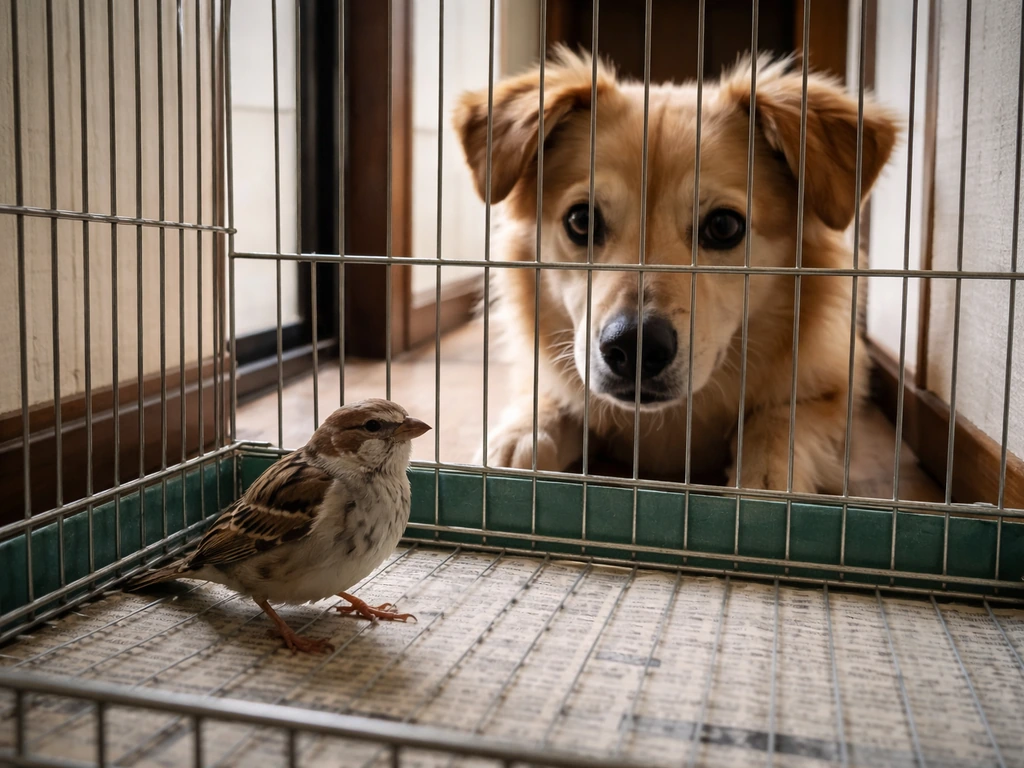
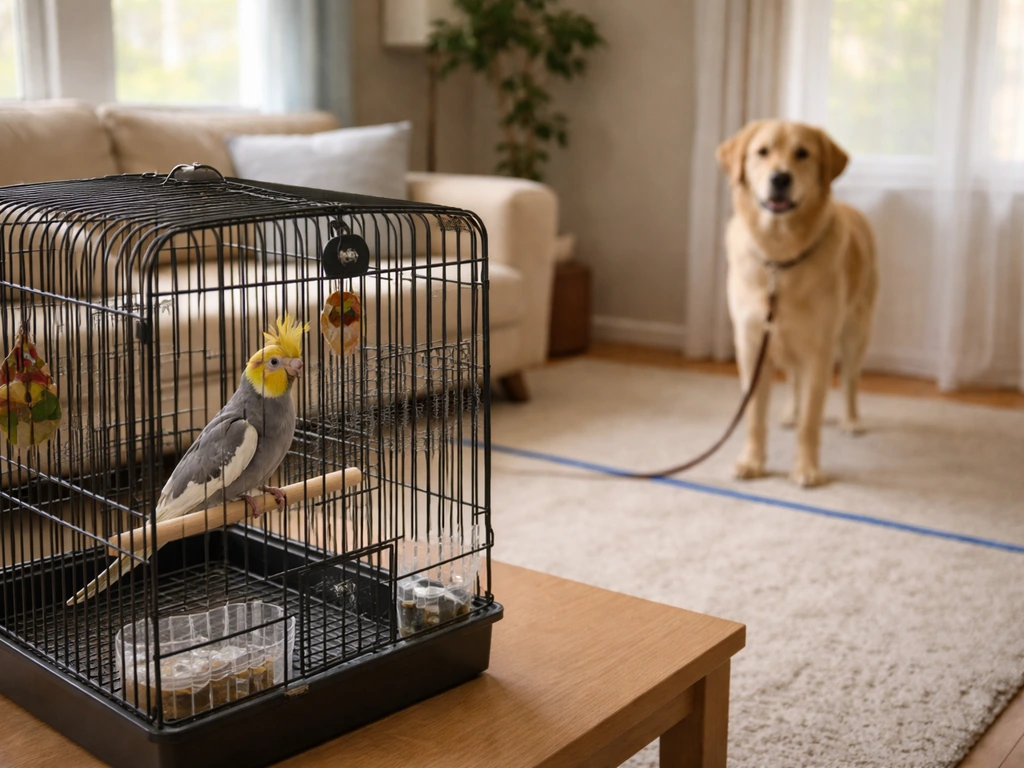
This is not fearmongering. A dog's predatory sequence, even in the friendliest family pet, can activate instantly around a small, fast-moving, fluttering animal. That sequence does not require the dog to be 'mean.' It is hardwired, and many dogs who have never shown aggression in their lives will still lunge, snap, or freeze and stalk when they first encounter a bird. Even a single swipe from a medium-sized dog can kill a small parrot or finch. A panicked bird that flaps against cage bars or crash-lands on a hard floor can break a leg or wing. Stress alone, without any physical contact, can suppress a bird's immune system, trigger feather-destructive behavior, or cause a bird to stop eating.
For wildlife rehabilitators or anyone housing wild birds in a home with dogs, the risk compounds: wild birds in care are already stressed, have no experience reading domestic dog body language, and have no conditioned coping skills. The stakes are higher, and the margin for error is smaller. All of the guidance here applies equally to pet parrots, finches, cockatiels, canaries, and to wild birds in temporary rehabilitation housing.
High prey drive is not trainable out of a dog in a weekend. If your dog has a history of chasing and catching small animals, the PDSA's guidance is blunt and worth heeding: for some dogs with very high prey drive, introduction to prey-type animals may simply not be appropriate. Be honest with yourself about your dog before you start. A professional assessment from a certified applied animal behaviorist or a credentialed trainer is worth pursuing before any introduction if you have real doubts.
Get your setup right before any meeting happens
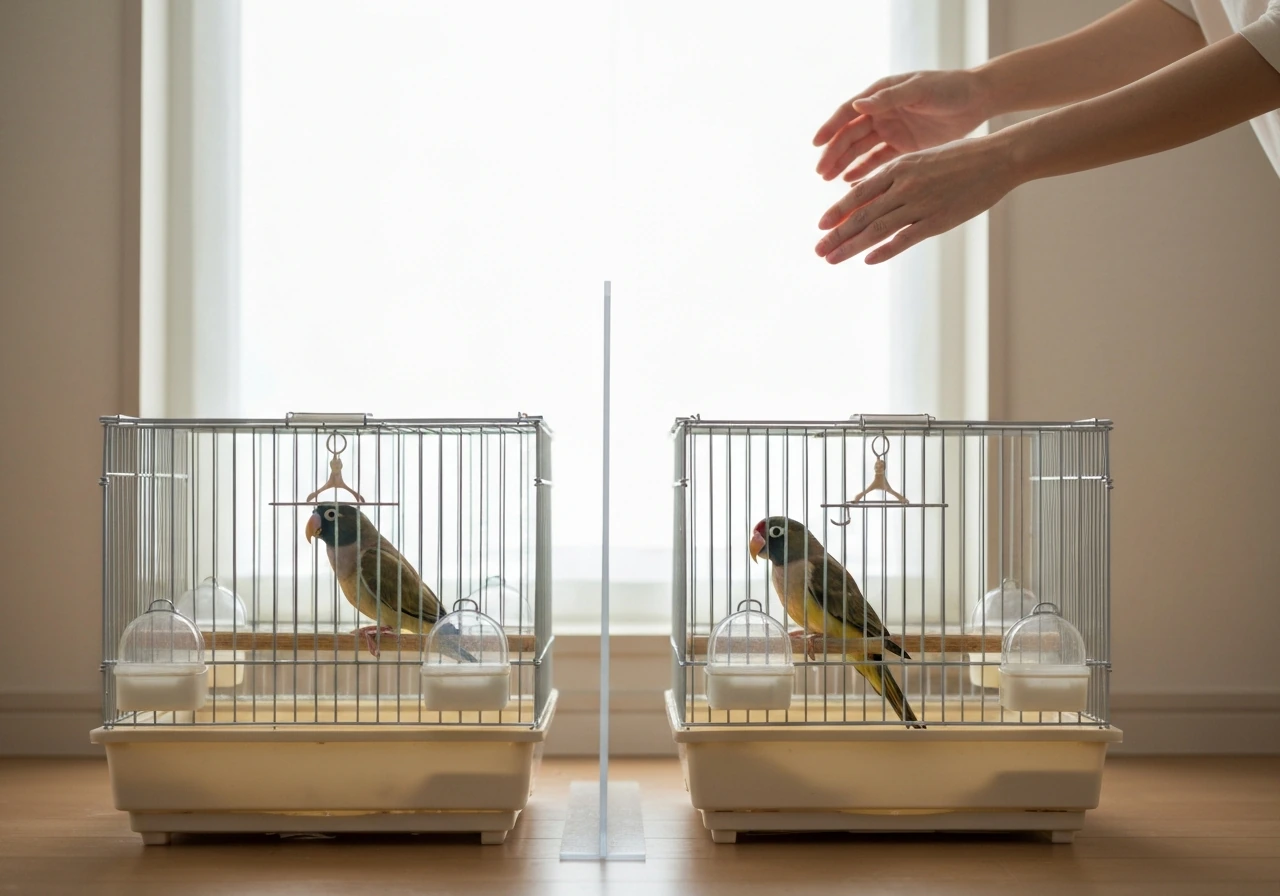
The physical environment does more work than any single training session. Before your dog ever sees or smells your bird up close, make sure your bird's housing is genuinely secure, not just 'probably fine. ' That means a cage or aviary with a latching door your dog cannot nudge open, ideally with a secondary safety latch or porch entry so there is no direct route in.
The RSPCA recommends placing the back of the cage against a solid wall and covering the top to help the bird feel protected from above, which also removes a visual angle that can trigger a dog's predatory focus. If you have a flight aviary, check that all seams, joins, and hardware cloth edges are flush and cannot be pushed in.
- Cage door: locking latch the dog cannot manipulate, ideally with a double-door or safety porch entry
- Cage position: back against a wall, top covered or against a ceiling-height shelf so the bird cannot be seen from above
- Floor around the cage: clear of loose objects the dog could use as a launching pad to reach the cage
- Room access: use a baby gate or closed door so the dog's access to the bird's room is always under your control
- Leash and harness for the dog: ready before you enter any room together, every single time
Before the first visual introduction, do a scent introduction over several days. Let your dog sniff a cloth or perch that carries your bird's scent, and reward calm behavior with treats. Do the same in reverse if your bird is handleable: let it investigate a cloth that smells of the dog from a distance. This is low-stakes desensitization that costs you almost nothing and primes both animals before any face-to-face meeting.
Stage 1: First visual introductions at a safe distance
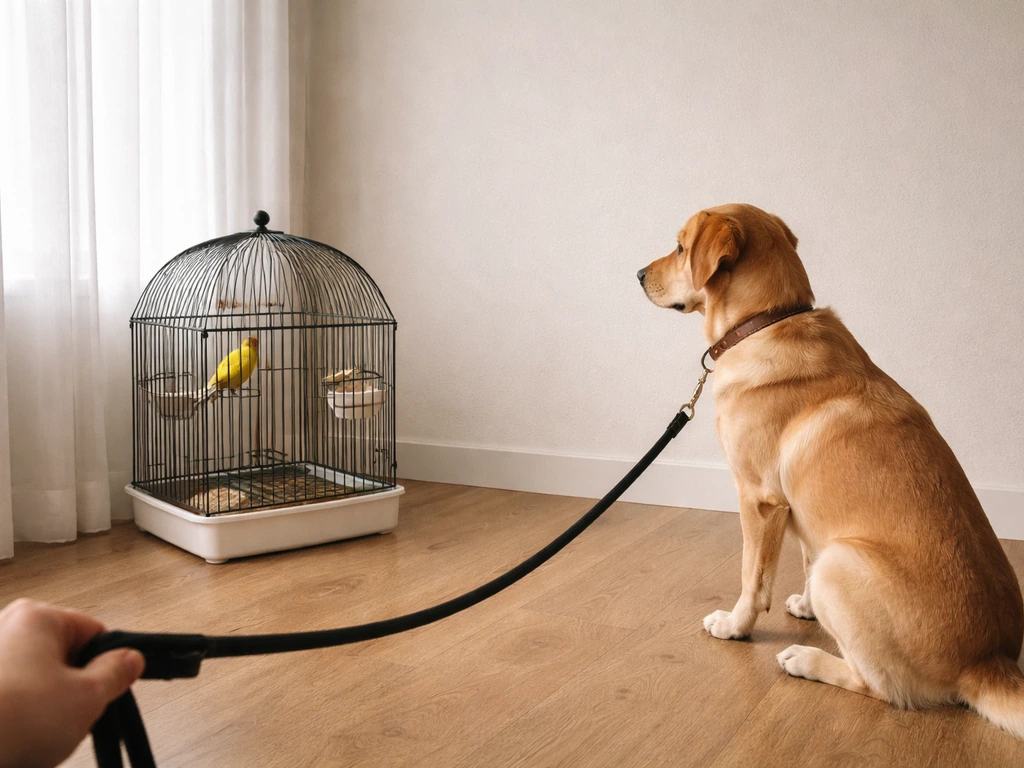
For the first actual meeting, your bird should be inside its cage with the door securely closed and your dog should be on a leash held by you or a second person. Start at the maximum distance the room allows. The AKC's guidance on desensitization and counterconditioning is clear: keep the dog below threshold, meaning calm enough to take food and look away, and only reduce distance when the dog is reliably doing that. If your dog cannot take a treat or look away from the bird at any given distance, you are too close.
Session length at this stage: 3 to 5 minutes maximum. End every session on a calm moment, not on excitement or alarm. Repeat daily at the same starting distance until your dog's default response to seeing the bird is to look at you for a treat rather than fixate on the cage. That shift in orientation is the green light to move slightly closer, not before.
Watch your dog's body language the entire time. Stiff posture, a low slow wag, hard staring, crouching, lip licking from stress (not food anticipation), or any forward weight shift toward the cage are all signs you are at or over threshold. Back up. Do not try to correct or punish fixation with a leash pop or a 'no.' Punishment at this stage creates negative associations that can increase anxiety and make the situation less predictable for both animals. Use management and distance instead.
Stage 2: Desensitization and counterconditioning up close
Once your dog can sit or stand calmly at a comfortable distance from the cage, making eye contact with you and taking treats, you can begin systematic desensitization: gradually decreasing the distance in small increments over multiple sessions. Pair each step closer with high-value rewards (real meat, cheese, or whatever your dog finds most motivating) delivered the moment your dog orients calmly toward the cage. The AAHA describes counterconditioning as changing the animal's emotional response to the stimulus so it becomes accepting rather than reactive. You are not just teaching a behavior here; you are changing how the dog feels about the bird being present.
Introduce specific cues during this stage. 'Watch me' or 'leave it' are practical tools that redirect attention to you. Practice these cues in neutral contexts first (away from the bird) so they are reliable before you add the distraction of the bird. Then begin using them near the cage, rewarding heavily when your dog responds. Over time, your dog learns that the presence of the bird predicts good things happening with you, not a chase opportunity.
If your dog barks, lunges, or fixates at any point during Stage 2, calmly increase distance immediately. Do not repeat the exposure at that distance in the same session. The Wisconsin Humane Society recommends attaching a light leash and allowing it to trail so you can gently guide the dog back without grabbing or creating conflict. Ending a session after a lunge and immediately returning the next day at a shorter distance is not failure; it is the correct response.
Only after consistent, relaxed behavior at cage-side (we are talking multiple weeks of daily sessions, not days) should you consider allowing the dog into the room while the bird is free-roaming, and only with the dog on leash. This is the Maddies Fund protocol: caged introduction first, then leashed in the same room with the bird out of the cage as the final supervised step. Direct, unsupervised contact is not a goal. It is a risk, full stop.
Keeping your bird comfortable and safe throughout
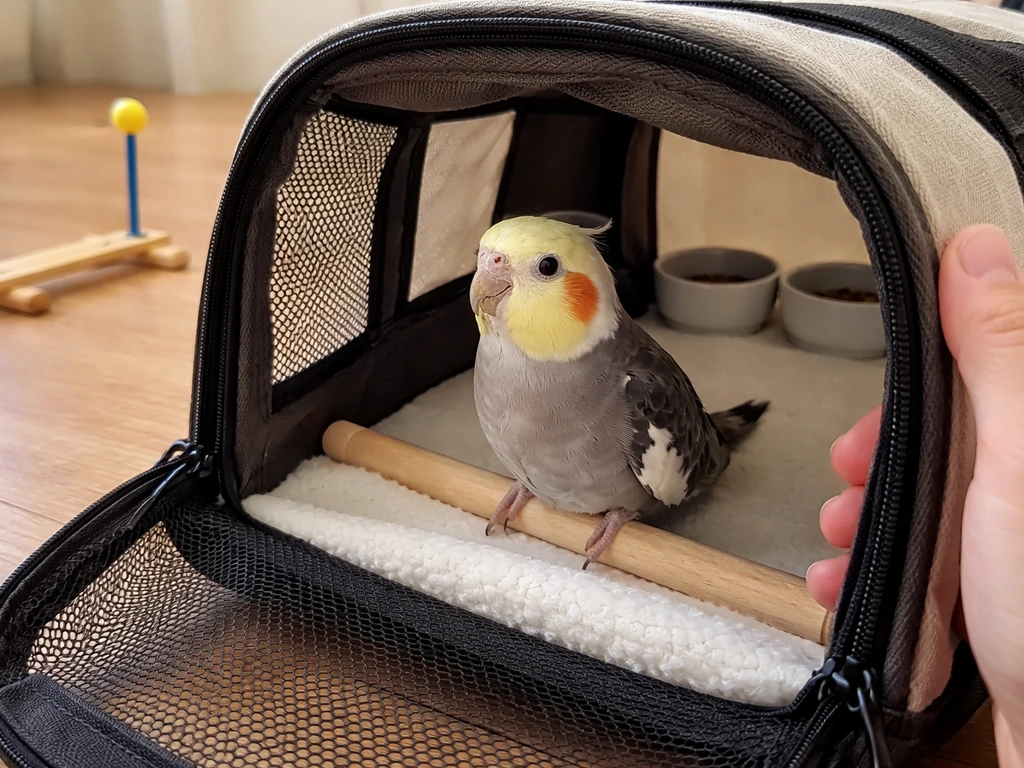
Your bird's welfare is not a secondary concern while you train the dog. It is the whole point. Every introduction session should be evaluated from the bird's side too. A bird that is frozen, pressed against the back wall of its cage, puffed up, or blank" rel="noopener noreferrer">breathing with its mouth open and tail bobbing is in significant distress. blank" rel="noopener noreferrer">Open-mouth breathing and tail bobbing in birds are red-flag signs of respiratory stress noted by both LafeberVet and VCA, and in the context of a dog introduction they mean the session needs to end and the dog needs to leave the room immediately.
Other stress signals to watch for in your bird during and after sessions include repeated screaming, sudden frantic flapping against cage walls, pacing or repetitive movements, and any changes in eating, drinking, or droppings in the hours after a session. If your bird shows these signs consistently after introductions, you are moving too fast. Go back to scent-only desensitization for a week before resuming visual introductions at maximum distance.
For birds that need handling during this process, such as moving them to a carrier before the dog enters the room, use calm, practiced restraint. Improper restraint, especially grabbing at legs or wings, can cause fractures in even medium-sized parrots. If your bird is not yet comfortable being handled, work on that separately and build that skill before any dog introductions begin. The RSPCA's guidance emphasizes that the bird must always have the ability to move away from the situation if it wants to; your housing setup should make that possible even within the cage.
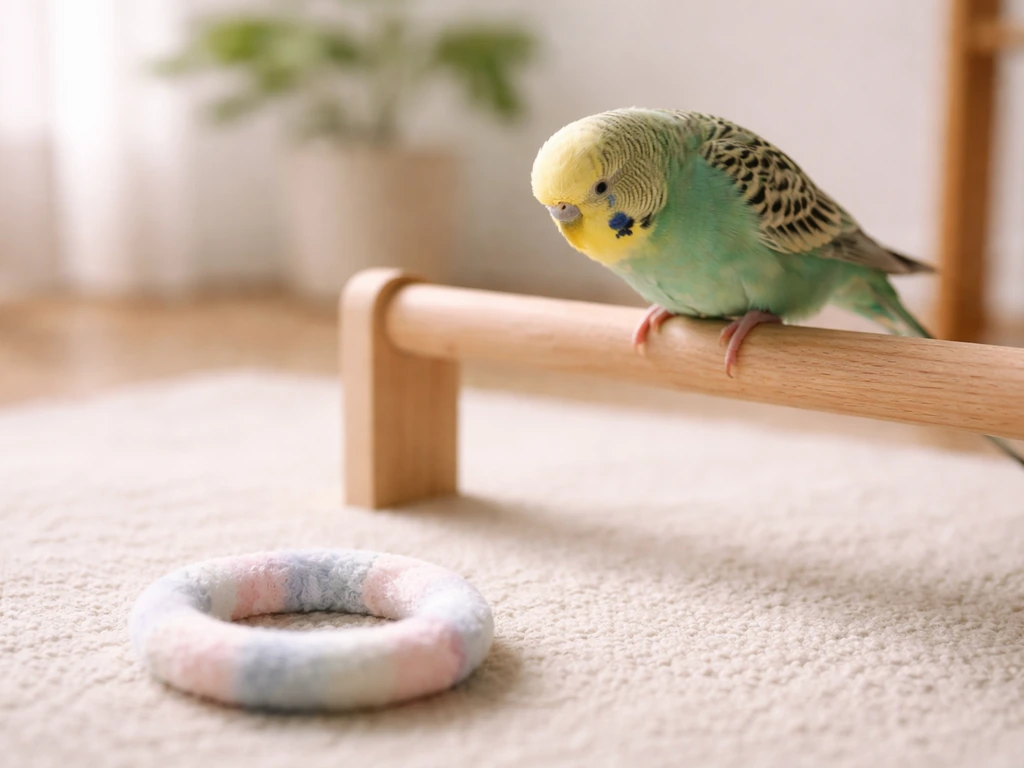
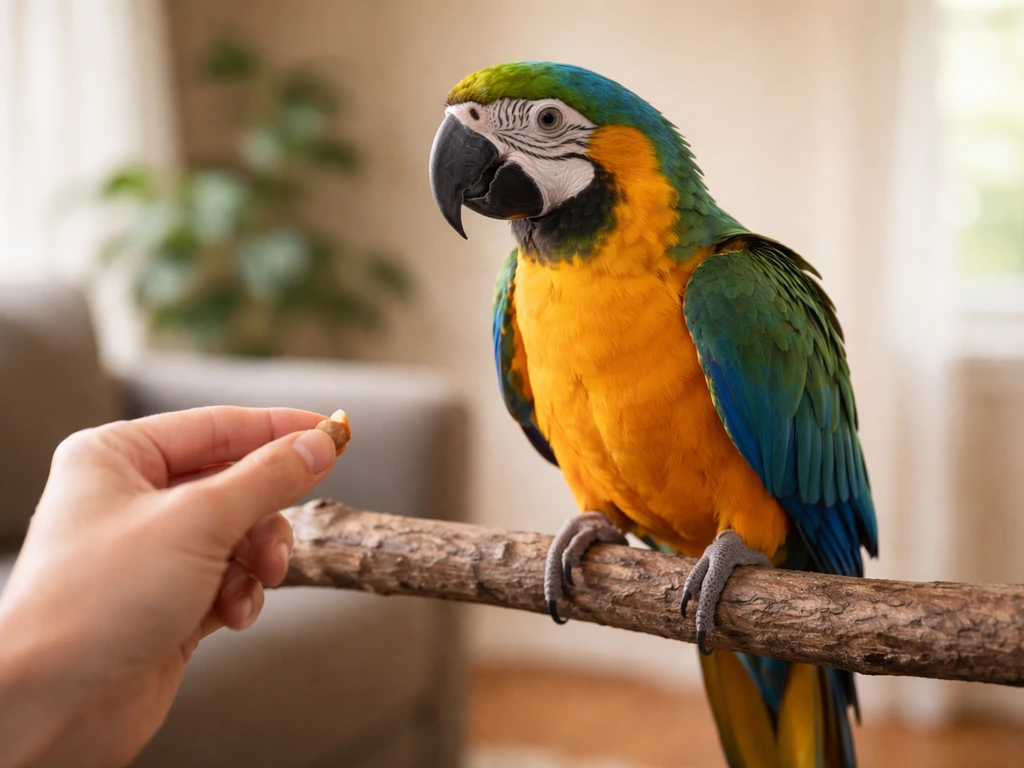
For species context: larger parrots (macaws, African greys, cockatoos) may vocalize loudly during early sessions, which can spike a dog's arousal fast. Small birds like finches, canaries, and budgies are visually more 'prey-like' due to their quick movements and may require a longer, slower Stage 1 phase. Wild birds in rehabilitation should be screened off from dog visibility entirely whenever possible, with only brief, carefully managed exposures if absolutely necessary.
When things go sideways: troubleshooting real problems
Dog is too excited or fixating through the cage
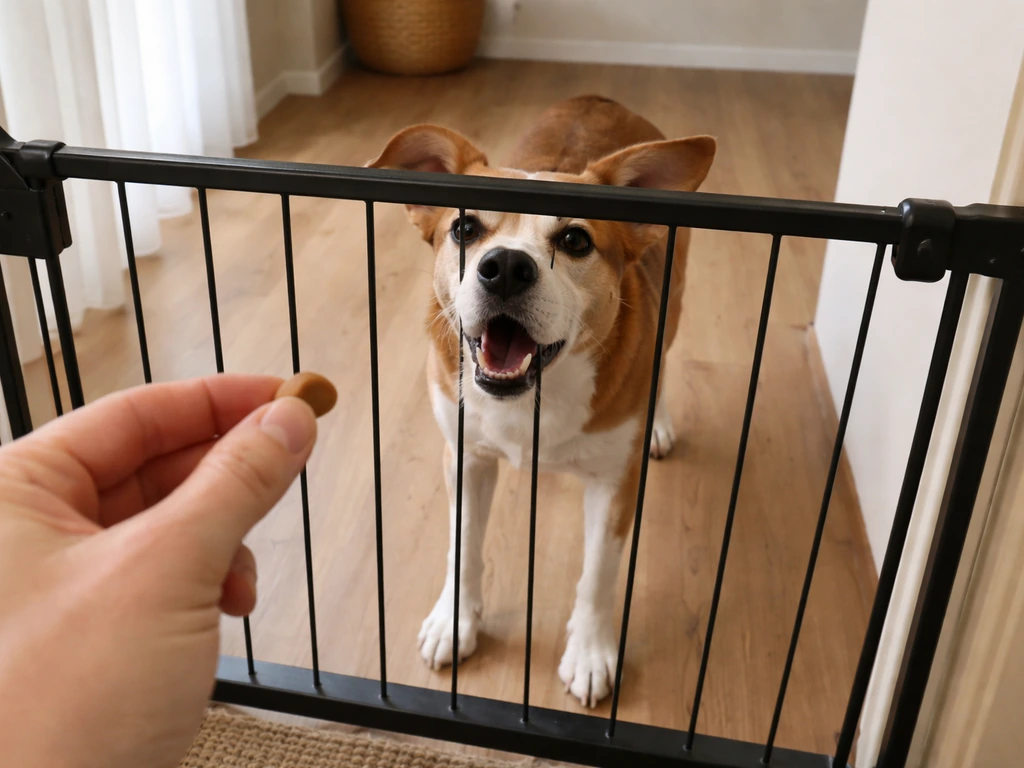
This is the most common early problem. The fix is almost always more distance and shorter sessions, not more corrections. Increase your starting distance until you find the point where your dog can take food and look at you. If that point is outside the room with the door barely cracked, start there. Build duration and proximity slowly. Overstimulation during early exposures can create long-term over-arousal that becomes much harder to undo, so do not push through it hoping the dog 'gets used to it.'
Dog is barking at the cage
Barking at the cage signals the dog is over threshold at that distance. Back up immediately and do not reward the bark with attention or correction. Once the dog is quiet and calm, mark and reward that quiet. Practice 'watch me' at that farther distance until it is automatic, then approach again more slowly over several more sessions.
Bird is panicking every session
If your bird is consistently distressed despite maximum distance, consider whether the dog's smell alone is enough to cause panic. In that case, go back to scent desensitization more systematically and keep visual sessions much shorter (under 2 minutes) with the dog barely visible. Some birds, especially previously traumatized or wild birds, may need weeks of scent-only exposure before visual introductions are appropriate at all.
Setbacks after a bad incident
If the dog got loose, lunged at the cage, or made physical contact with the bird at any point, stop all introductions and separate completely. Let the bird recover in a quiet, dog-free environment for at least several days before assessing whether it is eating, moving, and behaving normally. Then restart the entire process from the beginning, at maximum distance, as though it is the first session. The RSPCA's guidance here is straightforward: if the relationship is rocky, separate and restart with a slower technique, not a faster one.
Your training plan and when to call in a professional
Here is a realistic timeline framework. Treat it as a minimum, not a target to race through.
| Phase | Activity | Duration | Green Light to Progress |
|---|---|---|---|
| Scent only | Dog investigates bird-scented cloth; calm reward | 3 to 7 days | Dog sniffs and disengages without fixating |
| Stage 1 visual (max distance) | Dog leashed, bird in cage, across the room; reward calm orienting | 1 to 3 weeks | Dog looks at cage then looks back at you reliably |
| Stage 2 closer distance | Decrease distance in small steps; add 'watch me' and 'leave it' cues | 2 to 6 weeks | Dog relaxed at cage-side, takes treats easily |
| Free-roam with leash | Bird out of cage, dog on leash in same room, no direct contact | Ongoing supervised only | Both animals calm; no fixation, no panic |
Supervision rules that are non-negotiable: never leave them in the same space unsupervised, ever. Even after months of calm sessions. The dog's door to the bird's room should have a physical barrier (a closed door, a baby gate with a pet door the dog cannot fit through) as a default, not something you only use 'when worried.' This is not a temporary precaution; it is a permanent management tool.
When to get a professional involved: if your dog is showing any of the following, contact a certified applied animal behaviorist (CAAB) or a veterinary behaviorist before continuing introductions.
- Intense, sustained stalking behavior (slow approach, hard stare, low body) that does not decrease with distance
- Barrier frustration, meaning the dog is scratching, throwing itself at, or attempting to dismantle the cage
- Any history of predatory chase and catch with small animals
- Inability to take food or disengage from the bird at any distance within the room
- Escalating arousal that spills into other areas of the dog's behavior at home
A qualified professional can assess your specific dog, recommend whether a basket muzzle (used as a safety tool during sessions, never as a substitute for management) might be appropriate, and design a more individualized behavior modification plan. Humane, evidence-based approaches backed by organizations like the AVSAB and IAABC give you real tools to work with. Aversive corrections in this context are not just ineffective; they add stress to an already charged situation and can suppress warning signals in the dog that you actually need to see.
If you are also navigating the introduction of a new bird to other birds in the household, or working on building general comfort and confidence in a newly acquired bird, those dynamics layer on top of the dog introduction process. If you are also learning how to introduce a new bird to your bird, keep the same slow pacing and safety-first approach so your birds can settle without extra stress introducing a new bird.
If you are also managing the introduction of a new bird to other birds, the pacing and safety steps should match that species behavior and bonding process. If you are introducing a new bird to other birds in the household, follow pacing and safety steps that match the birds' species behavior and bonding process introduction of a new bird to other birds.
It is usually best to stabilize your bird's comfort in its own space first before introducing the dog variable. Getting a new bird settled and building trust with you is its own project, and the calmer and more confident your bird is in general, the better it will handle the stress of dog introductions when that time comes.
Getting a new bird settled and building trust with you is its own project, and you can use the same calm, predictable approach to help a new bird feel comfortable as it adjusts comfortable and confident.
The short version: go slow, reward calm, never skip stages, always manage the environment, and let both animals tell you the pace. Rushing is the only real mistake you can make here.
FAQ
How far away should my dog be during the first visual introduction?
Use the distance where your dog can reliably take treats and briefly look away from the bird. If the dog cannot eat, the fix is not “try harder”, it is to increase distance and shorten the session, then rebuild with repeated daily exposures at that new starting point.
Can I use a basket muzzle or barrier to make the introduction easier?
A muzzle can be a safety layer during training sessions, but it must be paired with continued management (leash, barriers, closed doors). It does not replace distance-based desensitization, and it can fail if the dog is allowed to rehearse intense lunging and fixation.
Is it okay to let my dog sniff the bird’s cage or perch?
Only in a controlled, brief way where your dog is below threshold and the bird remains calm. If you notice stiff posture, prolonged staring, or the dog’s attention locking, switch back to scent-only work or “watch me” practice from a farther distance.
What should I do if my dog barks at the bird even when treats are available?
Treat barking as a sign you are over threshold. End or pause that session immediately, back up to the last distance where the dog could take food, and resume later with shorter sessions (often under 3 minutes) rather than trying again right away.
How can I tell the difference between curiosity and predatory focus in my dog?
Curiosity often looks like loose posture, quick glances, and the ability to reorient to you. Predatory focus usually shows hard staring, forward weight shift toward the bird, freezing, crouching, or stress-related licking when the bird is visible, even if your dog is not barking.
Should I reward my dog when the bird makes noise or flaps?
Yes, but only if your dog stays calm enough to perform the behavior you want (for example, taking a treat, sitting, or checking in). If the bird’s reaction spikes the dog into fixation, reward should come after the dog returns to calm, and you should reduce exposure intensity the next time.
How long does the process usually take before I can let my dog be in the same room?
There is no one timeline, but a reliable sign is consistent, relaxed cage-side behavior over multiple weeks. If you cannot keep sessions short, calm, and repeatable with the bird inside the cage, do not progress to room access yet.
What if my bird is the one that seems “too scared” even at maximum distance?
Go back a step. Reduce visual time drastically (brief, under-2-minute exposures) or return to scent-only desensitization for a week. If the bird still shows persistent distress, consider professional guidance because some birds require longer conditioning before visual meetings are appropriate.
Is it safe to introduce the dog when the bird is out of its cage for play?
Prefer not until the dog is consistently calm at cage-side and room transitions are well-controlled. When birds are free-roaming, the bird can be harder to predict, and a single sudden flap or panic flight can create a chase opportunity. Keep the dog leashed and supervise every second if you attempt it.
What should I check in my bird’s environment before any meeting starts?
Confirm the cage door latch is dog-proof, add secondary barriers if there is any chance the dog can nudge or push access points, and ensure there are no gaps or hardware issues in an aviary where a paw or nose could reach. Also consider positioning (back against a solid wall, top covered) to reduce overhead stress signals.
What signs mean I should stop immediately and separate?
If the dog makes physical contact, lunges in a way that breaks threshold control, or you lose leash control, stop all introductions. For the bird, end the session if you see open-mouth breathing, tail bobbing with respiratory distress, repeated frantic flapping, or major changes in eating, drinking, or droppings afterward.
If my dog is already trained to ‘leave it’ or ‘watch me,’ can I introduce faster?
Those cues help, but they do not override species-specific prey triggers. Use the cues to keep the dog under threshold, but progress still depends on calm physiology and reorientation, not on whether the dog can perform the cue in perfect conditions.
Can I introduce a dog to a wild bird in rehabilitation the same way as a pet bird?
Management should be even stricter for wild birds. Whenever possible, screen off dog visibility and use only brief, carefully controlled exposures. Many rehabilitated wild birds are more stressed and less practiced at reading domestic body language, so start with scent and very low-intensity visual exposure.
What should I do if introductions go well, then suddenly my dog regresses?
Regression usually means you accidentally increased intensity (distance, duration, bird behavior, noise) or the dog’s arousal built up. Reduce distance, shorten sessions, re-run scent or short visual steps, and reintroduce cues in neutral settings before returning to the prior level.