Introducing a new bird to a resident bird is one of those things that looks simple but can go sideways fast if you skip steps. Done right, it takes weeks of patience and careful management. Done wrong, it can result in injuries, chronic stress, or disease spread that harms both birds. The good news: with a clear plan, the right setup, and an eye for body language, most introductions go smoothly. Here is exactly how to do it.
How to Introduce a New Bird to Another Bird Safely
Maya Harris
12 Apr 2026
First, get clear on your situation
Before you do anything, decide what kind of introduction you are actually dealing with. The two most common situations are: two pet birds being introduced to each other (the most common scenario for parrot, finch, or canary owners), or a rehabilitated or previously wild bird being introduced to a resident pet bird. These situations have meaningfully different risk profiles and require different levels of caution.
For pet-to-pet introductions, the main concerns are disease transmission, territorial aggression, and stress compatibility. For rehab or wild-to-pet introductions, you add serious infectious disease risk into the mix. Wild birds can carry pathogens that your pet bird has never been exposed to, including avian influenza, psittacosis, and polyomavirus. It is also worth knowing that legally, many migratory bird species are protected under the Migratory Bird Treaty Act and are excluded from the standard "pet bird" category under USDA animal welfare rules, so placing a wild bird with a pet bird is not a casual decision. If you are a rehabilitator, follow your permit requirements closely and consult your supervising wildlife vet before any contact between wild and domestic birds.
Also think about your goal. Are you hoping the birds will become cage-mates? Companions who share out-of-cage time? Or simply cohabitants in the same room who will tolerate each other? The answer changes how aggressive (pun intended) your introduction timeline needs to be. Two budgies you hope to house together need a much more thorough bonding process than two cockatiels who will just share the same living room from separate cages. Knowing what to do when you get a new bird before the introduction process even starts will save you a lot of backtracking later.
Health and safety before anything else: quarantine, vet checks, and hygiene
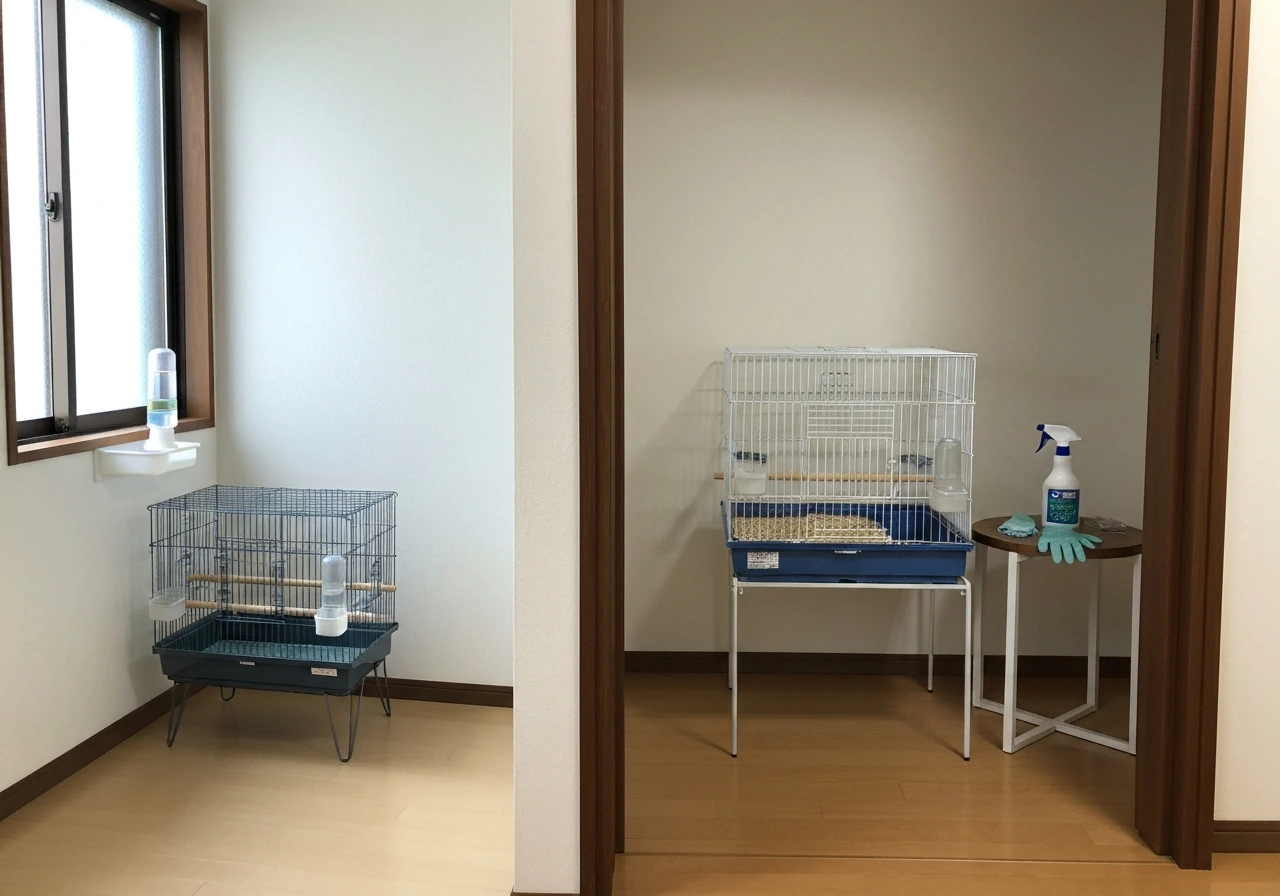
This is the step most people skip or rush, and it is also the most important. A minimum 30-day quarantine is the standard recommendation for any new bird before it has contact with your resident bird. That means completely separate airspace if possible, separate food and water dishes, and no shared equipment. If your new bird shows any signs of illness during those 30 days, the quarantine clock resets to day one. You need 30 consecutive days free of illness before the quarantine period is considered complete.
During quarantine, get your new bird to an avian vet. At minimum, request a fecal analysis, a Gram stain, and ask about PCR testing for psittacosis (Chlamydia psittaci) and psittacine beak and feather disease (PBFD). Depending on your bird's origin and species, your vet may also recommend testing for polyomavirus using a blood or cloacal swab sample.
The University of Georgia Infectious Diseases Laboratory provides molecular diagnostic testing guidance for avian submissions, including polyomavirus testing using blood or cloacal swab samples testing for polyomavirus using a blood or cloacal swab sample.
Cornell's avian diagnostic lab and similar university-based labs offer comprehensive avian test panels including fecal flotation, avian influenza PCR, and multiple other assays if your local vet wants to send samples out. Do not assume a bird that "looks healthy" is healthy. Penn State’s Animal Diagnostic Laboratory also describes [avian serology testing services](https://vbs. psu.
edu/adl/services/serology/avian-serology-tests) and highlights the need for appropriate, uncontaminated sera, with special arrangements for export or sale samples and holidays. Many avian diseases are asymptomatic in carriers.
If you are handling a bird of unknown health status, especially a wild or recently rehabilitated bird, use appropriate personal protective equipment: at minimum, disposable gloves and a well-fitted mask. N95 respirators plus eye protection are recommended when handling birds that could potentially be carrying avian influenza or other respiratory pathogens. This is not alarmist advice; it is standard hygiene practice that protects both you and your resident bird.
For hygiene between birds during quarantine: wash your hands thoroughly between handling the new bird and your resident bird, change your shirt if you have been handling the new bird closely, and use separate sets of tools (perches, food bowls, toys) that never cross between the two birds' spaces. This is basic biosecurity, and it matters.
Setting up the space for first contact
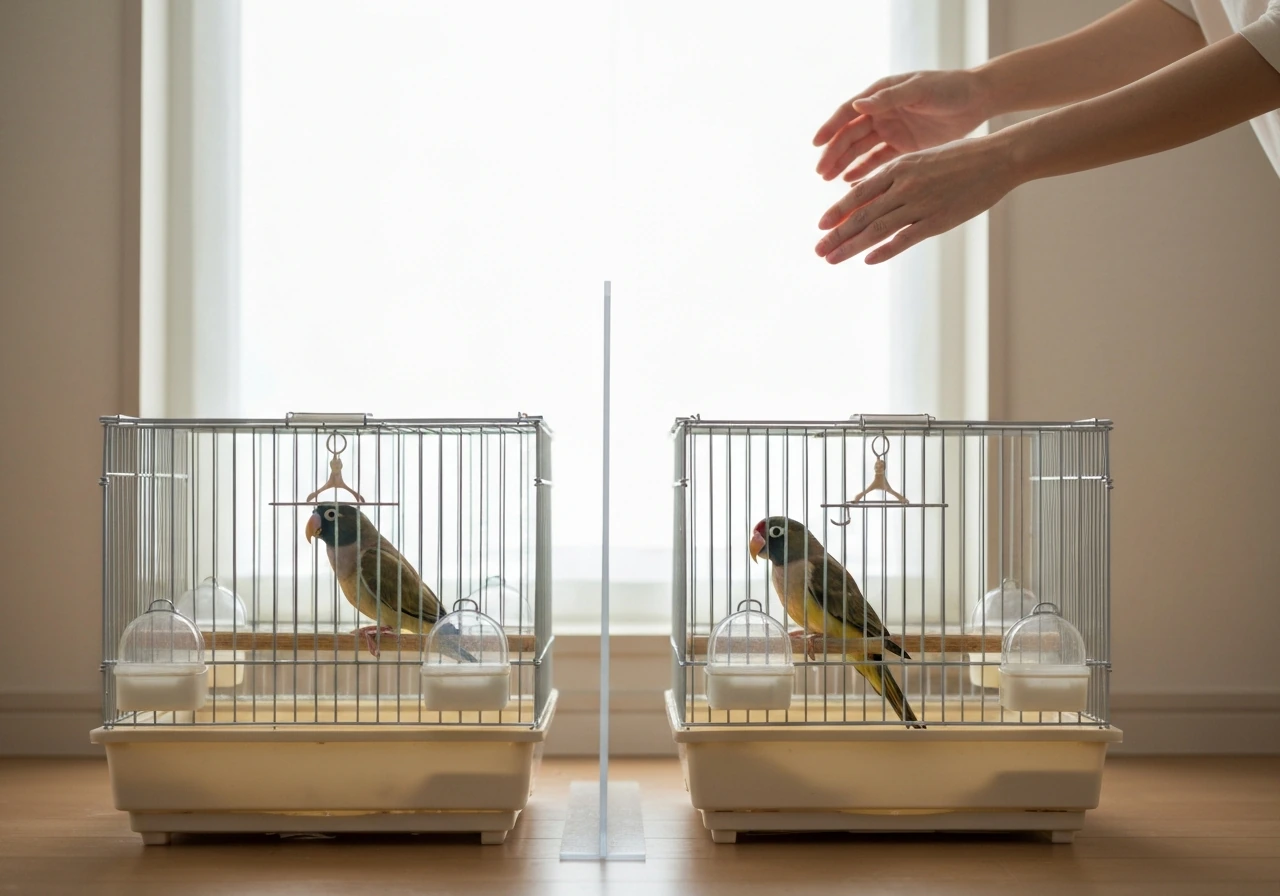
Once quarantine is complete and both birds have a clean bill of health, it is time to set up the environment for controlled meetings. The key principle here is: no direct physical access between the birds until they have demonstrated calm, curious behavior through a barrier. Start by placing the two birds' cages on opposite sides of the same room. This lets them see, hear, and smell each other without any possibility of physical contact. Watch their reactions carefully for the first few days.
After a few days of distant cage placement with no major stress signs (more on what to watch for below), you can gradually move the cages closer, eventually to within a few feet of each other but never touching or close enough that a bird can reach through the bars and injure the other. Make sure each bird has its own food, water, and perches and that neither cage is in a position where one bird can "lord over" the other by being higher up. Perceived height dominance is a real trigger for territorial behavior in many species, especially parrots.
For face-to-face meetings outside the cage, choose a neutral space that neither bird has claimed as its territory. A bathroom or spare room that your resident bird does not usually spend time in works well. Have two separate perch stands or T-perches available so the birds are not forced to share a single landing point. Supervision is non-negotiable for every single meeting at this stage. Never leave two birds together unsupervised until you are completely confident they are compatible, and even then, exercise caution.
The step-by-step introduction timeline
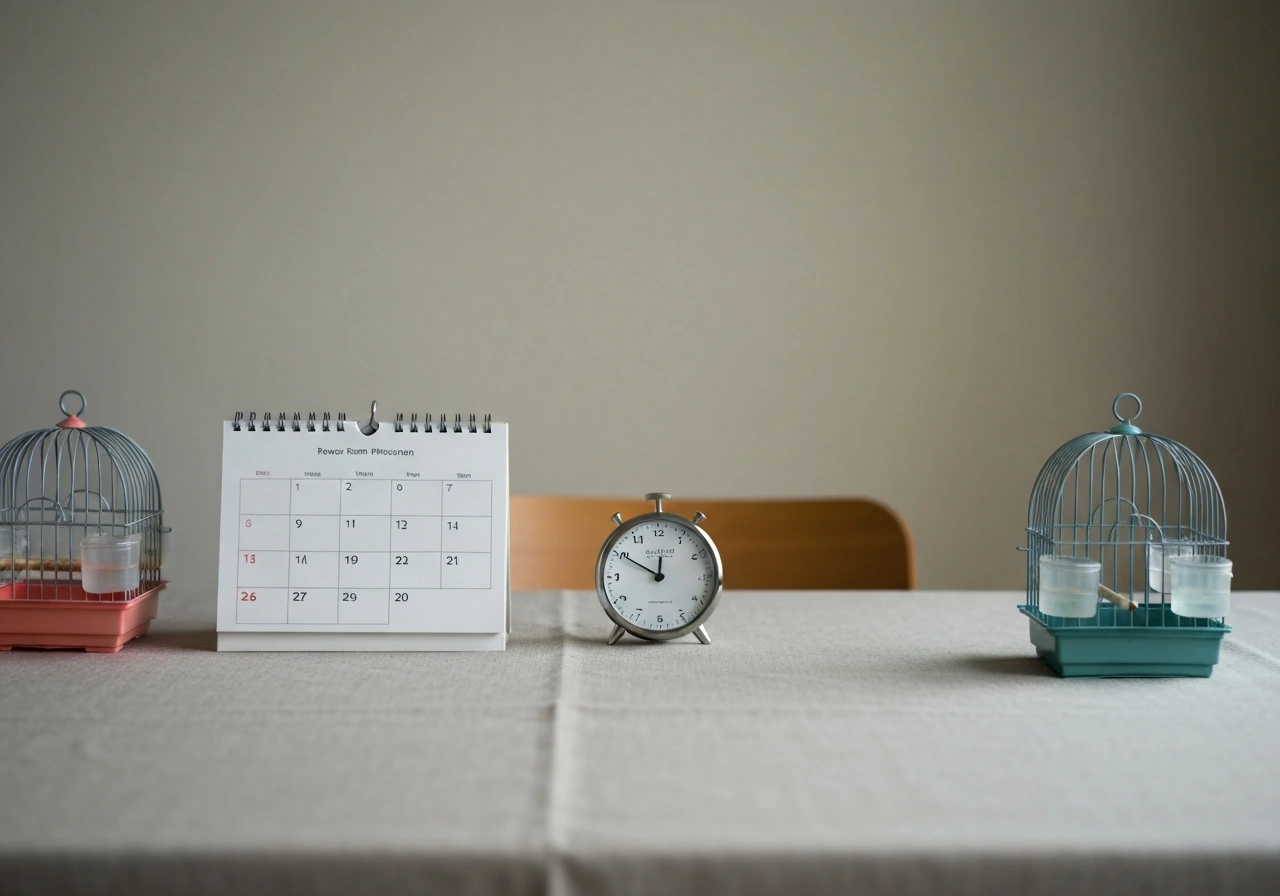
This timeline is a framework. Some bird pairs move faster, some slower. Follow the birds' signals, not the calendar.
- Days 1 to 30 (quarantine): New bird in a completely separate room. Vet check completed. No contact with resident bird or its equipment.
- Days 31 to 37 (same room, maximum distance): Move new bird's cage into the same room as the resident bird, placed across the room. Observe both birds' reactions for at least a week. Look for curiosity (head tilting, leaning toward the other bird) rather than stress or aggression.
- Days 38 to 44 (closer proximity): Gradually move the cages to within 3 to 4 feet of each other. Continue monitoring body language daily. Both birds should be eating, drinking, and behaving normally.
- Days 45 to 52 (neutral space meetings): Bring both birds into a neutral room on separate perch stands for short 10 to 15 minute sessions. Stay in the room the entire time. End the session before any stress or aggression appears.
- Days 53 and onward (extended meetings and shared space trials): Gradually extend neutral-space time together. Only consider shared cage or play-area time once both birds are consistently calm and non-aggressive during meetings. This phase can take weeks to months depending on the pair.
If at any point either bird shows sustained stress, aggression, or fear, go back one step. There is no shame in slowing down. Rushing is the single most common mistake people make during introductions, and it can permanently damage the relationship between two birds that might otherwise have been great companions. A detailed breakdown of how to introduce a new bird to your bird can help you fine-tune each phase depending on your specific species pairing.
Reading body language and stress signals
This is the skill that ties everything else together. You cannot manage an introduction well if you cannot read what the birds are telling you. Here are the key signals to watch for.
Signs of aggression or threat
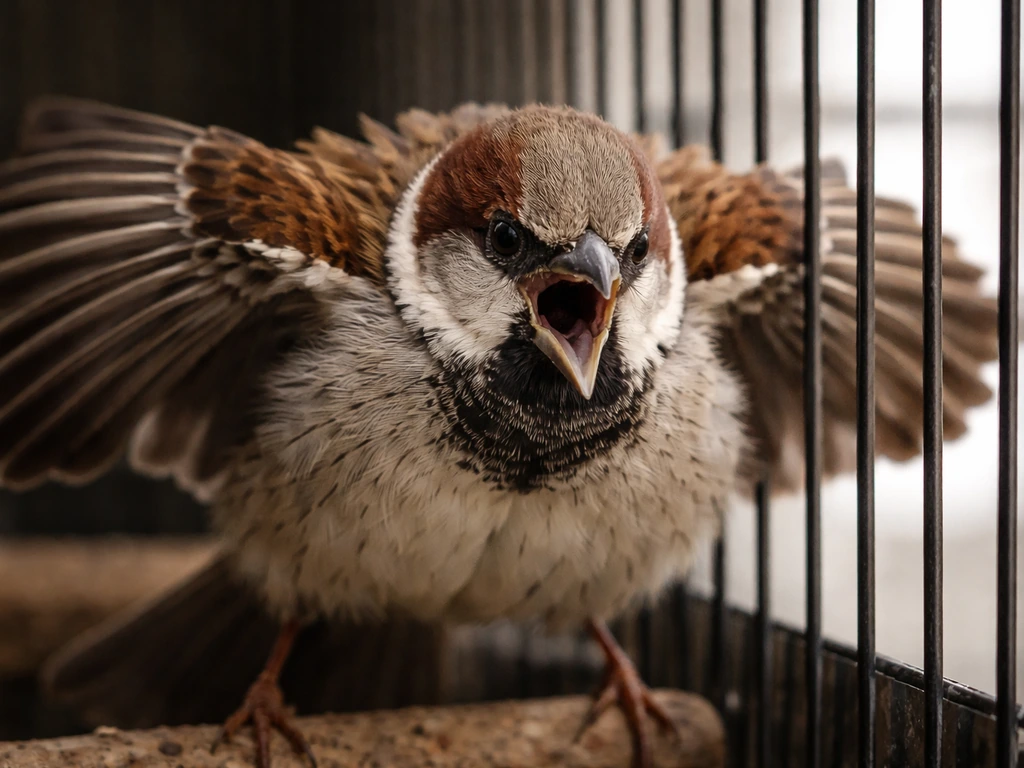
- Wings held out and away from the body (threat display)
- Tail fanning (spreading the tail feathers wide, often combined with wing display)
- Feathers puffed around the head and shoulders while standing tall
- Eye pinning (rapid dilation and contraction of the pupils), especially in parrots
- Beak open in a fixed, forward-facing position
- Crouching low with beak forward, ready to lunge or bite
- Hissing or spitting (common in cockatoos and some other species)
- Aggressive lunging at cage bars when the other bird approaches
Signs of fear or stress
- Excessive flapping or thrashing against cage bars
- Feathers tightly slicked down against the body
- Constant alarm calls or unusual vocalizations
- Refusal to eat or drink when the other bird is nearby
- Hiding in a corner of the cage or behind objects
- Rapid, shallow breathing not related to exercise
Signs of curiosity and compatibility
- Head tilting toward the other bird
- Soft contact calls or mirroring vocalizations
- Relaxed feather posture (slightly fluffed in a comfortable way, not a threat posture)
- Preening themselves calmly when near the other bird
- Moving toward, rather than away from, the other bird
- Attempting mutual preening through bars (a very positive sign)
Learning to tell the difference between a "relaxed fluff" and an "aggressive puff" takes practice, but the context usually makes it clear. A bird that is calmly resting will have smooth, slightly loosened feathers and a relaxed body. An aggressively puffed bird will be taller, stiffer, and often combining the feather display with other postures like eye pinning or wing spreading. Making sure your new bird feels at home and settled before meetings begin also makes body language easier to read, since a stressed bird from an unfamiliar environment will be harder to assess. Helping a new bird feel comfortable in your home before introductions start gives you a clearer behavioral baseline.
Using positive reinforcement to encourage calm behavior
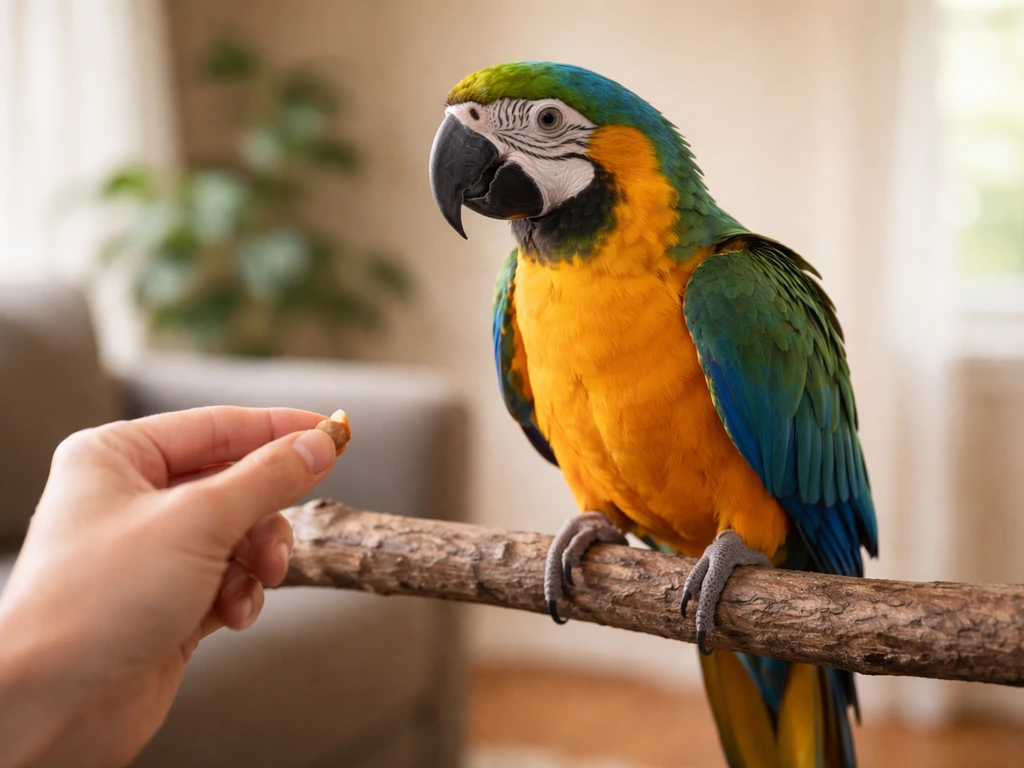
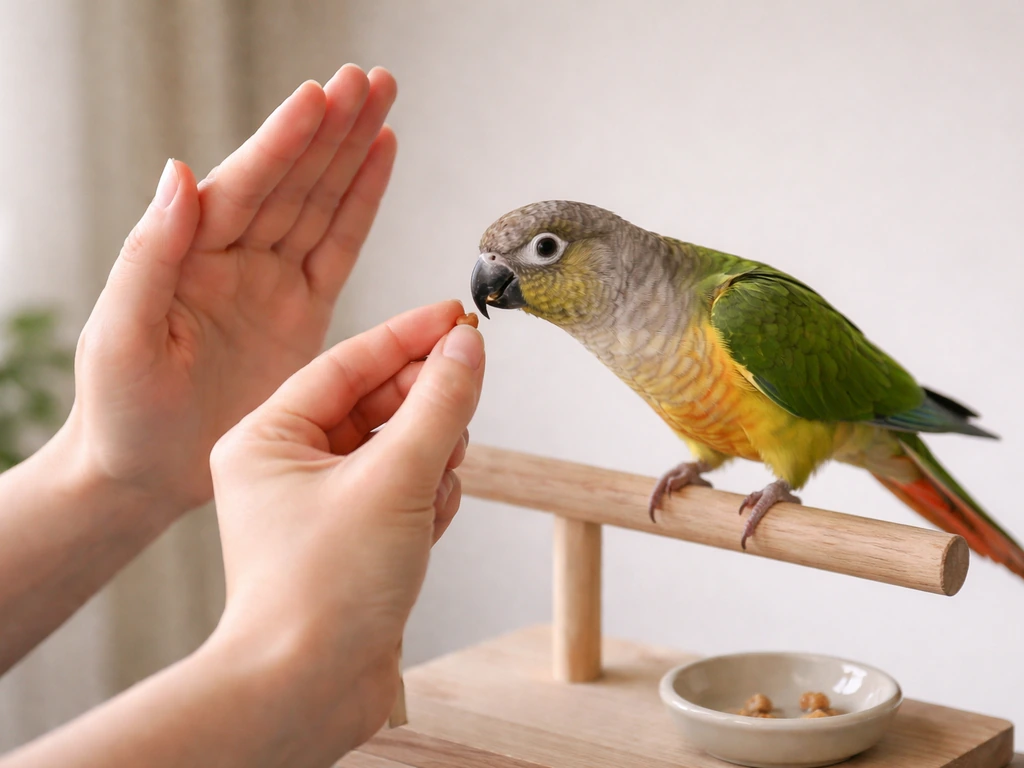
Positive reinforcement is your best tool for making introductions go more smoothly, and it is simpler to apply than most people think. The core idea: when a bird does something you want (stays calm near the other bird, orients toward them without aggression, ignores a provocative display), you immediately mark that behavior and follow it with something the bird values, usually a small food treat.
Clicker training works especially well here because the click gives you a precise, consistent marker that tells the bird exactly which behavior earned the reward. You press the clicker the instant the bird demonstrates calm behavior near its new companion, then immediately deliver a treat. Over time, the bird learns that the presence of the other bird predicts good things, which helps shift its emotional response from territorial or fearful to neutral or positive.
Target training is another tool worth adding to your toolkit. Teaching each bird individually to touch a target stick with its beak gives you a way to redirect attention, guide birds to specific positions on a perch, and interrupt brewing tension without physically intervening. If both birds know how to target, you can use the target stick to move one bird away from the other when a situation starts to escalate, without anyone getting bitten. This kind of structured, cooperative training builds trust between you and each bird and makes the whole introduction process easier to manage.
Keep training sessions short (5 to 10 minutes maximum) and always end on a positive note. Never use punishment or force during introductions. Spraying a bird with water, shouting, or physically separating them roughly will increase stress and can create negative associations with the other bird, making the problem worse. If you need to intervene, use your target stick to redirect, or simply calmly end the session.
Comparison: pet-to-pet vs. rehab/wild-to-pet introductions
| Factor | Pet-to-Pet Introduction | Rehab/Wild-to-Pet Introduction |
|---|---|---|
| Quarantine length | 30 days minimum | 30 days minimum; often longer recommended |
| Disease risk level | Moderate (vet check recommended) | High (full pathogen panel strongly advised) |
| PPE needed during handling | Standard hygiene (handwashing) | N95/mask, gloves, eye protection advised |
| Legal considerations | Generally straightforward | Migratory bird species have permit requirements |
| Likelihood of successful cohabitation | Good with proper introduction | Lower; wild birds often do better with own species |
| Shared housing as a goal | Achievable for compatible species | Usually not appropriate long-term |
| Who should guide the process | Experienced bird owner or avian vet | Licensed rehabilitator and avian/wildlife vet |
The honest recommendation for rehab-to-pet introductions: in most cases, the goal should not be permanent cohabitation. Rehabilitated wild birds typically do best when released back to the wild or, if non-releasable, housed with their own species under the care of a licensed facility. If you are a rehabilitator working through this question, connect with your supervising wildlife vet before any direct contact between a wild or rehab bird and a resident pet bird.
When things go wrong: troubleshooting aggression, fear, and stalled bonding
Even with the best preparation, some introductions hit walls. Here is how to troubleshoot the most common problems.
One bird is chasing or repeatedly lunging at the other
Go back to cage-only meetings through a barrier. This is non-negotiable. Repeated chasing or lunging means you moved too fast. Rebuild from the step where both birds were calm, and spend more time at that stage before advancing again. Use positive reinforcement to reward calm behavior near the other bird's cage before attempting any face-to-face time again. Some birds simply need more weeks at the barrier stage than you expect.
One bird is frozen with fear or refusing to eat near the other
Increase the physical distance between the cages. A bird that is so stressed it stops eating is in genuine distress and needs relief immediately. Move the cages back across the room and give the fearful bird several days to return to normal eating, drinking, and behavior before trying again. Consider whether the birds are compatible species or whether the size and personality difference between them is simply too significant. A large, dominant parrot sharing a room with a small finch or canary, for example, may never be a workable pairing for shared space.
The birds seem indifferent to each other but never warm up
Indifference is not necessarily a problem. Not all birds become bonded companions, and that is fine. If both birds are calm, eating well, and behaving normally in each other's presence, they have achieved a functional level of coexistence even without actively seeking each other out. Do not force interaction. Continue supervised shared time and let the relationship develop (or not) at its own pace.
Introducing a bird to an existing multi-bird household with a dog
If you have other pets in the home, particularly dogs, the introduction complexity increases significantly. A bird that has just met another bird for the first time is already under stress, and adding a predator species to the equation can tip that into crisis. Keep dog and bird introductions completely separate from bird-to-bird introductions. Handle them one at a time. If you need guidance on the canine side of things, a practical walkthrough on how to introduce a dog to a bird safely covers that process step by step.
When to call in a professional
Seek help from a certified avian behaviorist or avian vet if: you have been working at the introduction for more than three months with no meaningful progress, either bird has been injured, one bird is showing chronic stress symptoms (feather destructive behavior, persistent loss of appetite, abnormal vocalizations), or you are dealing with a rehab or wild bird situation that is beyond your experience level. These are not failure scenarios; they are signals that you need expert eyes on the situation. An avian vet can also rule out underlying health issues that might be making one bird unusually reactive or fearful, which is a more common cause of stalled introductions than most people realize.
The takeaway is straightforward: go slow, observe carefully, reward the behavior you want, and never skip the quarantine. Most birds can learn to coexist and many will genuinely bond given enough time and a thoughtful introduction process. The weeks you invest in doing this right are far shorter and easier than recovering from an introduction gone wrong.
FAQ
How soon can I move from quarantine to letting the birds meet in the same room?
Do the first day with cage-only, barrier meetings. If either bird shows injury risk behaviors (loud sustained screeching, repeated lunging, sustained freezing, or inability to eat), do not proceed to closer spacing, return to the previous step, and book an avian vet check. A “quick introduction” attempt on day one is one of the fastest ways to lock in fear or aggression.
What should I do to prevent cross-contamination between the quarantined bird and the resident bird?
Quarantine includes airspace separation, but it also includes you as a potential carrier. Handle the quarantined bird first, then change clothing or at least thoroughly wash hands and avoid reusing the same towels, perches, or toys between areas. If you must touch both birds the same day, keep a strict “new bird then resident bird” order.
Can I let the resident bird watch the new bird from near the quarantine area before quarantine is over?
Yes, but only for a specific purpose and only with protection. You can position cages on opposite sides of the same room, but if you open doors, even briefly, assume the birds can seize the moment. Also avoid letting the resident bird investigate the quarantined bird’s cage from the resident side, since it can transfer saliva or droppings between environments.
What are reliable signs that the barrier stage is going well (and when should I slow down)?
For first barrier meetings, use the same “rules” you would use during face-to-face sessions: calm body language is the goal, and any escalation means backing up. A good sign is normal appetite, relaxed posture, and curiosity without frantic lunging. A bad sign is sustained distress even if the bird is not physically attacking yet, because that indicates fear learning.
Do I need completely separate food and toy items, or is cleaning enough?
Use separate supplies plus a change-of-environment habit. If you use the same room, clean and disinfect high-contact areas between bird handling sessions, and keep a dedicated set of bowls, perches, and toys for each bird that never swap. Even with clean-looking gear, shared grooming cloths and shared towels can spread microbes.
Can I briefly let them have direct contact if I am standing right there?
Avoid it. Even if you can physically separate them in time, the moment of surprise creates a strong negative association and can increase biting or chasing in future meetings. The article approach is to prevent direct access until you have seen calm behavior through barriers, and to supervise every interaction after that.
What should I do if one bird starts escalating during a supervised meeting?
Make sure you can intervene without creating chaos. Target training is the safest tool because it gives you a predetermined “off switch” that moves a bird’s body position without grabbing. If you still need to end the session, calmly end the out-of-cage time or revert to cage-only rather than rushing physical separation.
How do I choose a neutral space for out-of-cage meetings if my resident bird loves one area?
Start with a neutral space only if you can confirm your resident bird does not already claim it. If your resident bird already spends time there, it is rarely neutral, and territorial triggers (including height-related dominance) increase. If you notice “guarding” behavior, switch to a room your resident bird avoids.
Do perch placement and height really affect aggression, or is it mostly about temperament?
If you already have a strong height or perch-based dominance pattern with your resident bird, remove the advantage. Use separate perch stands and avoid positioning that puts one bird higher or closer to your hands. Height dominance is less about “who looks tough” and more about predictable territorial access, so consistent placement matters.
Is it a problem if my birds do not seem bonded or affectionate after introductions?
Not always. Some birds coexist without bonding tightly, and that can be perfectly functional if both are eating, resting, and not showing persistent fear or harassment. What matters is day-to-day wellbeing during shared presence, not whether they seek each other out.
Can changes like molting, hormones, or starting medication affect how I should manage the introduction timeline?
Yes. Even if cage-only progress seems fine, medication, hormonal cycles, and recent stressors can change behavior quickly. If either bird is on new meds, has a molt that is stressing them, or is experiencing major routine changes, pause advancement and reassess after stability returns.
Why is it harder to introduce birds when I also have a dog at home?
For dog-owning homes, keep bird-to-dog introductions separate and do not use your dog as a “supervision helper.” Dogs can escalate the bird’s stress level even when they are calm, which can stall introductions between birds or create fear associations with the room. Use physical barriers and separate handling routines to reduce overall stress exposure.
When should I stop troubleshooting at home and get a vet or behaviorist involved?
If you are stuck, treat the lack of progress as a signal, not a personal failure. The article recommends seeking expert help if you have worked for more than three months without meaningful progress, if an injury occurs, or if chronic stress signs persist. An avian vet can also rule out underlying health issues that make one bird unusually reactive.