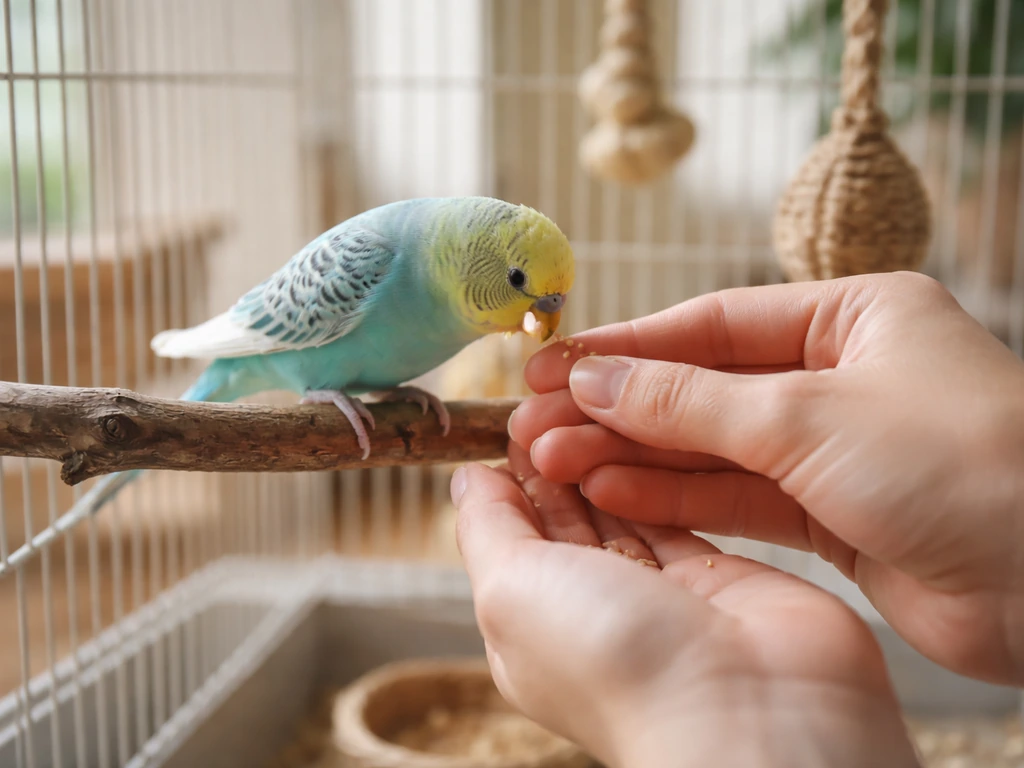
Teaching a bird to eat on its own comes down to three things: making sure it's physically ready, reducing its dependence on you gradually rather than all at once, and presenting food in a way that triggers its natural feeding instincts. Most birds transition successfully with patience and a consistent routine, whether you're weaning a hand-fed parrot chick, helping a rescued songbird regain independence, or coaxing an adult bird out of a learned helplessness pattern.
How to Teach a Bird to Eat on Its Own: A Step-by-Step Guide
Maya Harris
23 Apr 2026
Why birds won't eat on their own
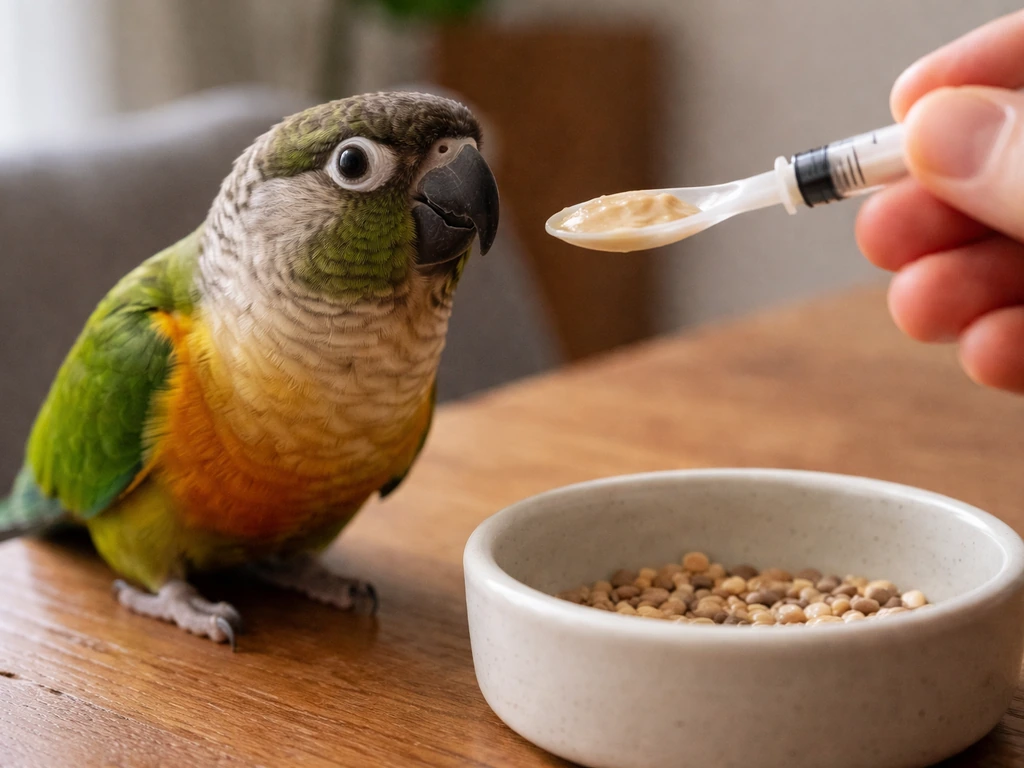
Before you try any training, it helps to understand what's actually going on. A bird that refuses to self-feed isn't being stubborn. There's almost always a real reason behind it, and identifying that reason determines your whole approach.
The most common culprit is learned dependence. Hand-fed birds, especially parrots raised by well-meaning owners or breeders, learn very early that food comes from a human. The formula arrives warm, at the right consistency, and with social reinforcement. They simply have no reason to peck around a food dish on their own. This is normal developmental behavior that just needs structured redirection.
Age and developmental stage matter too. Baby birds have a feeding reflex that gradually gives way to independent curiosity, but the timing varies significantly by species. A baby budgerigar may be ready to try solid food at around 4 to 6 weeks, while a macaw chick's weaning window can stretch past 3 to 4 months. Pushing the process too early causes stress and can lead to dangerous weight loss.
Health issues are another major factor. Crop stasis (when the crop stops emptying properly) can make a bird stop eating entirely. Signs include a visibly distended crop, regurgitation, lethargy, and poor feeding response. This is a medical problem, not a training problem, and it needs veterinary attention before you attempt any feeding transitions. Similarly, dehydration, infections, or internal injuries in wild birds can suppress the urge to eat. Always rule out illness first.
Stress and fear can also shut down eating behavior fast. A bird that's been recently moved, handled by strangers, or placed in an unfamiliar environment may refuse food for hours or even days. This is especially common in wild birds being rehabilitated. To do this safely, focus on creating a calm, predictable feeding setup and offer foods that match what the bird naturally eats in the wild while you reduce human help gradually wild birds being rehabilitated. The environment needs to feel safe before the bird will show any interest in food.
Humane readiness checklist: health, age, and species needs
Run through this checklist before starting any independent feeding training. Skipping these steps is the most common reason the process stalls or becomes harmful.
- The bird has a clean bill of health. If you have any doubt, weigh the bird daily and watch for dropping body weight, labored breathing, or a crop that stays full for more than a few hours after feeding. These are signs to pause training and see a vet.
- The bird is at the right developmental stage. Baby birds should show signs of natural curiosity: pecking at surfaces, mouthing objects, and showing interest in watching you eat. Forcing the transition before these behaviors appear tends to backfire.
- The bird is adequately hydrated. Tacky mucous membranes inside the beak or visible lethargy are red flags. Dehydration makes a bird too weak and disoriented to learn anything new. Address fluids first.
- You know the species' natural diet. A finch needs seeds and small insects. A lorikeet needs nectar-based foods. A red-tailed hawk eats whole prey. Offering the wrong food type teaches nothing and can cause nutritional harm.
- The bird's gut is functioning. It should be producing droppings that look normal for its species. A bird that isn't digesting properly should not be offered new foods or a new feeding method.
- The environment is calm and consistent. Noise, sudden movements, and new people in the space all suppress feeding behavior. Set up a quiet, stable feeding area before you begin.
- For wild birds: confirm the bird truly cannot be released immediately and that intervention is warranted. In many regions, caring for migratory birds without proper permits is illegal (more on that below).
Step-by-step: moving from hand-feeding to independent eating
This progression works for most species, though the timeline will vary. If you want the bird to take food from the dish instead of waiting for you, focus on how to make a bird eat on its own step by step. Move to the next step only when the bird is eating confidently and maintaining weight at the current stage.
Step 1: Introduce food while still hand-feeding
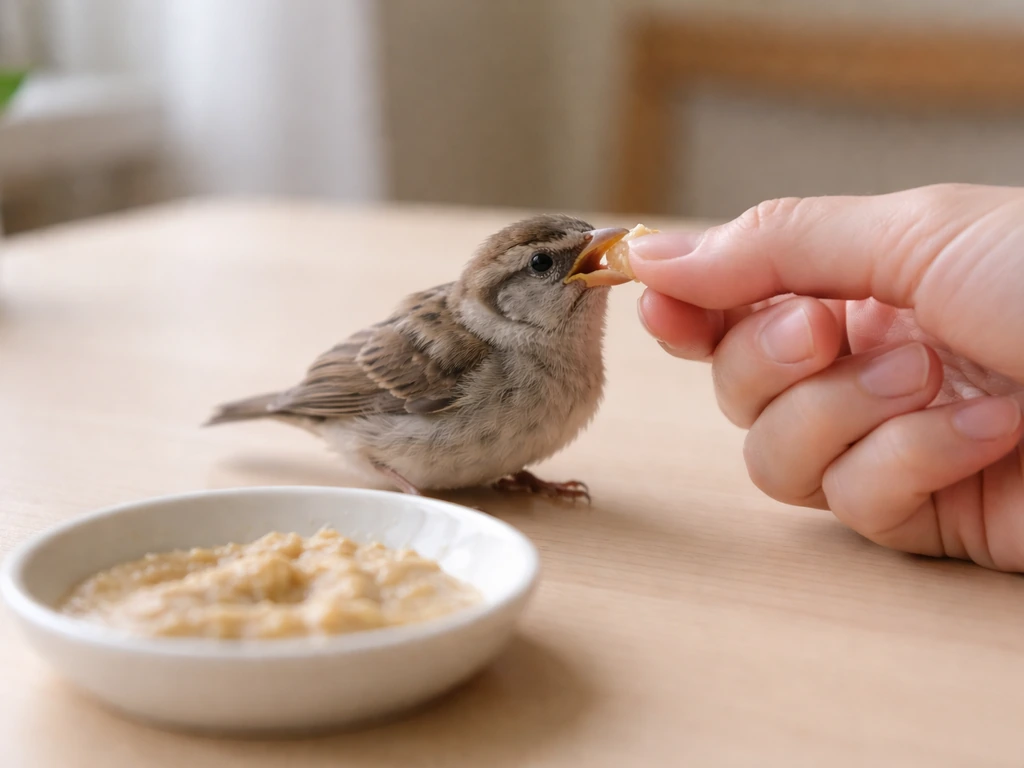
Place age-appropriate solid or semi-solid food in a shallow dish near the bird during hand-feeding sessions. Don't make a big deal of it. Just let the bird see and smell the food while it's already in a positive, relaxed feeding state. At this stage you're building familiarity, not expecting the bird to eat from the dish.
Step 2: Delay one feeding and observe
Once the bird is showing regular curiosity about the dish, start delaying one hand-feeding session by 20 to 30 minutes. During that window, place the dish directly in front of the bird and step back. Many birds will start mouthing or pecking at food purely out of hunger and curiosity. If the bird eats even a small amount, that's a win. Follow up with a smaller-than-usual hand-feeding portion so it's not going hungry.
Step 3: Reduce hand-feeding volume, not frequency
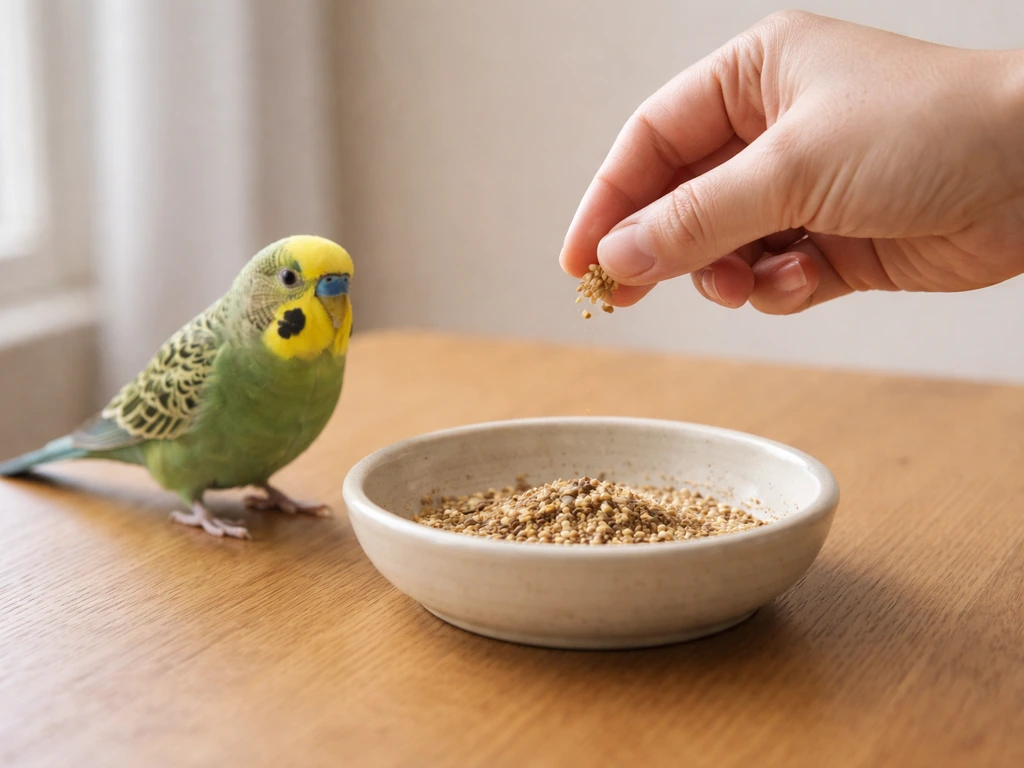
Cut the amount you offer per hand-feeding session by about 25 percent while keeping the food dish available. The bird should start making up the difference on its own. Watch body weight closely during this phase. A small drop (1 to 3 percent of body weight) is normal. A consistent downward trend is a sign to slow down.
Step 4: Reduce hand-feeding frequency
Once the bird is regularly eating from the dish, start dropping hand-feedings one at a time. If you've been feeding four times a day, go to three, then two, then one, with solid food always available in between. The last hand-feeding to eliminate is usually the morning one, as birds tend to be hungriest then and most motivated to self-feed.
Step 5: Full independent feeding with monitoring
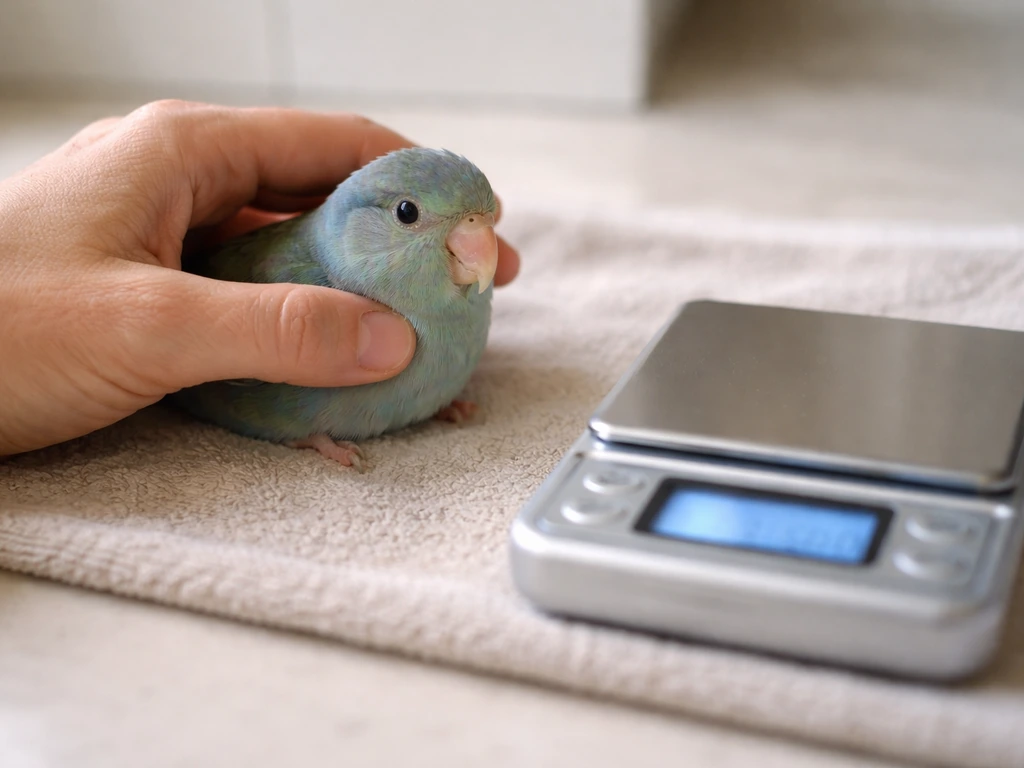
Once hand-feeding is stopped, don't just disappear. Keep weighing the bird daily for at least one to two weeks to confirm it's eating enough. A healthy bird at maintenance weight that's active, alert, and producing normal droppings has successfully made the transition.
Food choices, presentation, and feeding routines that actually work
The right food presented the wrong way will still get ignored. Presentation matters more than most people expect.
Picking the right food
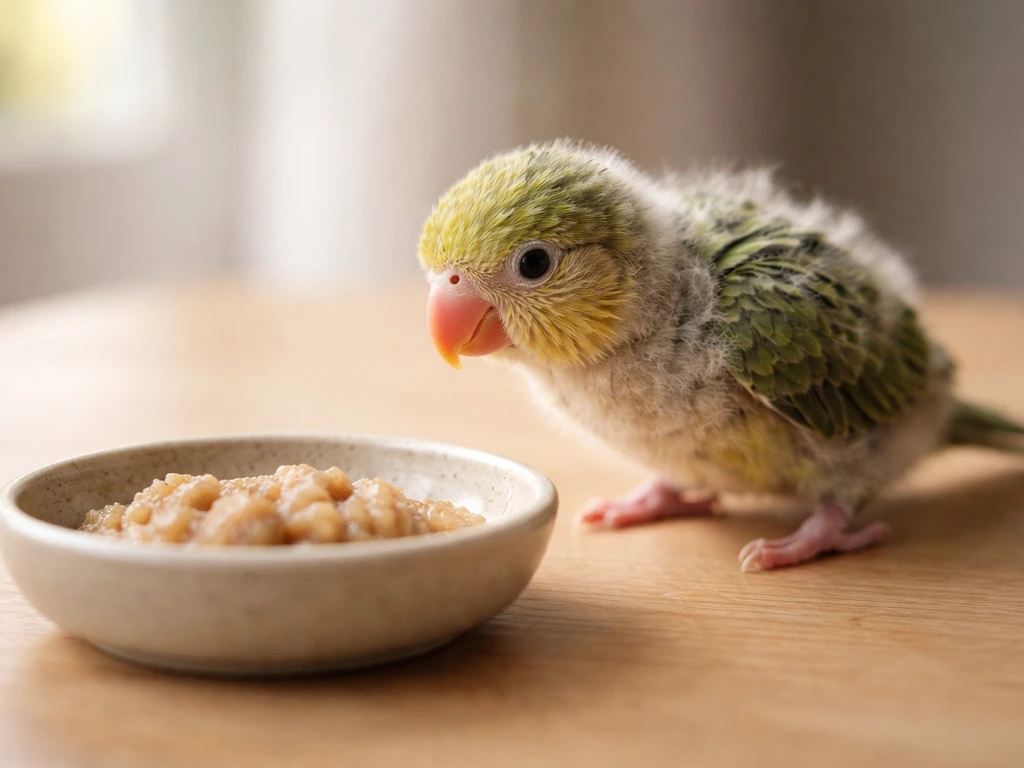
Match the food to what the species would naturally eat and to what the bird's digestive system can currently handle. For chicks transitioning off formula, offer soft, moist versions of adult foods first: cooked grain, softened pellets, finely chopped fruit and vegetables, or small insects depending on species. Hard seeds are fine for adult seed-eating birds but can be a challenge for a chick whose beak muscles are still developing.
| Bird Type | Transition Foods to Start With | Adult Independent Diet |
|---|---|---|
| Parrots (small: budgie, lovebird) | Softened pellets, mashed fruit, soaked seeds | Pellets, fresh vegetables, seeds |
| Parrots (large: macaw, cockatoo) | Warm softened pellets, cooked grains, soft fruit | Pellets, nuts, fresh produce, cooked legumes |
| Finches and canaries | Finely milled seed, soft egg food, tiny insects | Mixed seed, greens, occasional live food |
| Lorikeets | Diluted wet nectar mix, soft fruit puree | Nectar mix, fresh fruit, pollen |
| Raptors (rehab only) | Pinky mice, small prey pieces offered in dish | Whole prey items appropriate to species |
| Songbirds (rehab only) | Mealworms, softened berries, appropriate insect mix | Species-specific natural diet |
How to present food
Shallow dishes work better than deep bowls, especially for young birds. The food should be easy to see and reach. Brightly colored foods (red, orange, yellow) often attract more initial attention from curious birds. For birds transitioning off formula, warming the food slightly can help, but never hot, as formula or food that's too warm can cause crop burns. Aim for around body temperature or just slightly above.
Position the dish at a comfortable height. A dish placed on the cage floor may be ignored by a bird that's used to perching while eating. Try attaching a small dish to a perch at the bird's natural resting height. For wild birds in rehabilitation, placing food near cover (a branch, a hide, some leaves) makes it feel less exposed and more natural.
Building a feeding routine
Consistency is one of the most underrated tools here. Offer food at the same times every day. Birds are highly routine-driven, and a predictable schedule helps them anticipate and prepare for meals rather than feeling uncertain. Refresh food at each meal so it's always clean and appealing. Stale or soiled food is often the real reason a bird stops approaching the dish.
Troubleshooting common barriers
Fear and avoidance
If the bird refuses to approach the dish at all, fear is likely the issue. Shrink the distance between the bird and food gradually. Start with the dish further away, then move it closer over several sessions. Eating in front of the bird yourself (or pretending to eat from the dish) can help, as many species are social eaters that take cues from others. For very fearful birds, covering three sides of the cage with a light cloth to reduce visual stimulation can help them relax enough to eat.
Learned dependence
Birds that have been hand-fed for a long time may beg loudly and persistently when you try to reduce feedings. This is normal and doesn't mean they're starving. Stay calm and consistent. Don't give in to begging by reverting to full hand-feedings or you'll reset the process. The bird needs to discover that food comes from the dish now, and that discovery only happens when hunger drives it to explore.
Picky eating
Some birds, especially parrots, will enthusiastically reject anything unfamiliar. Try offering new foods alongside foods the bird already accepts. Eat the new food yourself in front of the bird. Chop unfamiliar items very finely and mix them into a food the bird already likes. Persistence over weeks rather than days is usually what works. Rotating through a variety keeps birds from locking onto one food and refusing everything else.
Stress-related refusal
A bird that suddenly stops eating after being moved, introduced to a new bird, or handled by a stranger needs environmental stabilization before any feeding work. Give it 24 to 48 hours in a quiet space with minimal interaction. If eating doesn't resume within 48 hours, consult a vet. Wild birds in rehabilitation are especially prone to this and may need several days of very low-stimulus care before they show any interest in food.
Regression
Regression (the bird going back to begging or refusing the dish after making progress) usually signals you moved too fast, or that something in the environment changed. Step back one stage in the progression, stabilize the environment, and try again more slowly. Regression is not failure; it's useful feedback about the pace.
Safety, welfare, and when to call a vet or rehabber
Independent feeding training should never compromise the bird's health. These are the lines you should not cross on your own.
Weight and hydration monitoring
Weigh the bird every day, at the same time, using a gram scale. A consistent weight loss of more than 10 percent of body weight is a veterinary emergency in most small birds. Check the mucous membranes inside the beak periodically. They should be moist and shiny. Tacky or dry membranes indicate dehydration, which needs to be corrected before any self-feeding work continues. A dehydrated bird is too stressed and weak to learn.
Signs that training must stop immediately
- Crop is visibly distended hours after the last feeding (possible crop stasis)
- Regurgitation or vomiting
- Bird is lethargic or unresponsive
- Droppings are absent, discolored, or watery in a way that's abnormal for the species
- Weight loss is rapid or continuous over more than two days
- Breathing is labored or audible
- Mucous membranes appear tacky, dry, or discolored
Any of these signs means stop training, keep the bird warm, and get to an avian vet as soon as possible. Complete crop stasis with lethargy and anorexia together often requires hospitalization and around-the-clock care, so don't wait and see.
Wild birds and the law
If you're dealing with a wild bird rather than a pet, the legal picture changes significantly. In the United States, most wild birds including raptors, songbirds, and waterfowl are protected under the Migratory Bird Treaty Act. Under 50 CFR § 21.76, a federal migratory bird rehabilitation permit is required to legally take, transport, or temporarily possess these birds for rehabilitation purposes. That means most members of the public cannot legally hold and feed a wild migratory bird, even with the best intentions.
If you find an injured or orphaned wild bird, the right move is to contact a licensed wildlife rehabilitator in your area. State wildlife agencies and organizations like the National Wildlife Rehabilitators Association can help you find one quickly. Licensed rehabilitators have the permits, training, and species-specific knowledge to safely manage the feeding transition without habituating the bird to humans, which is critical for eventual release. Before any feeding is attempted with a wild bird, the species must be correctly identified and the bird's digestive system must be confirmed to be functioning. Feeding the wrong food or feeding a bird whose gut isn't working can cause serious, sometimes fatal harm.
If professional help is not immediately available and the bird is in immediate danger, keep it warm, calm, and contained, and seek guidance from a wildlife hotline rather than improvising a feeding plan. This is not the place to experiment.
A note on related feeding challenges
Teaching independent eating is one piece of a larger picture. A cuttlebone is a useful supplement, and the same independent-feeding cues can help you get your bird to investigate and start using it independent eating. If your bird is eating on its own but still refusing certain foods or supplements, or if you're trying to get a wild bird to eat in an outdoor setting, those are different problems with their own approaches. Getting a bird to accept medication mixed into food, or encouraging a wild bird to return to a feeding station, each call for different strategies and are worth addressing separately once the core independent eating behavior is established. If you need to figure out how to get a bird to take medicine, you can use medication-specific training steps that won’t derail the bird’s trust or health.
FAQ
What should I do if my bird eats a little from the dish but not enough to replace the hand-feedings yet?
In most cases, choose the smallest, safest meal portion that still encourages the bird to eat from the dish, then reduce hand-feeding only when weights are steady and droppings are normal. If the bird stops eating for more than a few feedings or weight is trending down, pause the reduction and go back one step rather than pushing forward. For baby birds, even short gaps can be risky, so set a daily minimum feeding target with your avian vet if you are unsure.
Can I use warm food to encourage self-feeding, and how warm is too warm?
Yes, but keep it species-appropriate. Offer wet or softened foods first for chicks, and only use warming to bring food close to body temperature. Avoid heating formula or any food that could overheat, because too-warm food can damage the crop and worsen refusal. If the bird is still ignoring the dish, don’t rely on temperature alone, adjust dish height, dish type (shallow), and placement near cover or at natural perching height.
My bird begs loudly when I delay feedings. How do I know if it is truly not eating?
Do not treat begging as proof the bird is not eating. Begging usually means the bird expects you to deliver food based on past routine. The rule of thumb is to check objective signs first: body weight trend, normal droppings, and alertness. If those are stable, keep the dish available and stay consistent rather than reverting to full hand-feeding, which can reset the learned independence.
What if the bird refuses to approach the dish at all, even when it sees and smells the food?
If the bird refuses the dish entirely, shrink the “distance” between the bird and food. Start with the dish farther away, then move it closer over several sessions, and keep the feeding area calm and predictable. For very fearful birds, reduce visual stimulation (for example, dim or lightly cover parts of the cage) and consider social cues, eating from the dish yourself nearby. If refusal follows a recent move, handling by strangers, or environmental changes, stabilize the environment first before training.
How much weight loss is acceptable during weaning, and when should I stop the transition?
Weight and droppings should guide your pace. A small drop (around 1 to 3 percent) can happen during the transition, but a steady downward trend means the bird cannot yet compensate. Slow down immediately by increasing hand-feedings slightly or stepping back one stage, then reassess after 24 to 48 hours. If weight loss exceeds about 10 percent of body weight, treat it as urgent and contact an avian vet.
Could changing the feeding schedule or environment cause self-feeding regression, and what should I keep consistent?
Often, yes. Birds learn from patterns, so if you delay feedings longer than the schedule they expect, you can trigger stress or refusal. Use consistent mealtimes, refresh food each meal, and keep the dish position and setup stable during the transition. Also check for “hidden” issues, stale or soiled food, a dish that is too deep or too low, or foods that are not yet digestible for the bird’s current stage.
My bird looks at the food but doesn’t eat from the dish. What “setup” factors should I troubleshoot first?
Prefer shallow dishes over deep bowls because young birds need easy visibility and reach. Also confirm the dish is at the correct height for the bird’s normal posture, a dish on the cage floor can be ignored by perching birds. Bright, naturally attractive food colors may help initial attention. If the bird is formula-reared, provide soft foods and ensure the beak can handle the texture.
How do I choose the right food texture when transitioning from formula to solids?
For birds that must eat on their own to avoid aspiration risk, food texture is critical. Use soft, moist, bite-size options that match what the bird’s digestive system can handle right now, such as softened pellets or finely chopped foods for many species when transitioning off formula. If you give hard seeds or dry items too early, the bird may lack the coordination or digestion to eat comfortably, leading to refusal. When in doubt, consult an avian vet for stage-specific diet timing.
What if my bird is self-feeding on its own but keeps refusing a specific supplement or essential item?
If self-feeding is established but a bird refuses specific supplements, don’t mix them blindly with foods they already reject. Introduce the supplement alongside a known-acceptable food, then gradually increase reliance on the supplement over time. For medication or supplements that can be essential, ask an avian vet about safe delivery methods, because some compounds should not be offered on a random schedule or with inappropriate foods.
I found a wild bird. Can I start feeding it to help it regain independence?
For wild birds, do not improvise a feeding plan unless you have confirmed the bird is being managed under the proper authority. In the U.S., most wild migratory birds require a federal rehabilitation permit for possession and transport, so members of the public generally should contact a licensed wildlife rehabilitator instead of attempting feeding transitions. Also, the correct species ID and confirmation that the gut is functioning matter, feeding the wrong food or an unsuitable gut stage can cause serious harm.
Next Article
How to Make a Bird Eat: Humane Troubleshooting Guide
Humane, step by step troubleshooting to get a bird eating, identify causes, and know when to see an avian vet.