Technically, yes, you can train a bird to pick up and carry objects, including paper currency. Corvids, cockatoos, and several parrot species are smart enough to learn retrieval and transfer behaviors in just a few sessions. But training a bird to steal money is a genuinely bad idea, and not just for the obvious reasons. Coins are a leading cause of metal toxicosis in pet birds. Even paper notes carry ink, dyes, and surface contaminants that are hazardous if mouthed repeatedly. The behavior you are actually curious about, object manipulation, retrieval, and transferring items on cue, is absolutely teachable with safe substitutes. That is exactly what this guide covers.
Can You Train a Bird to Steal Money? Safe Alternatives

Maya Harris
3 May 2026
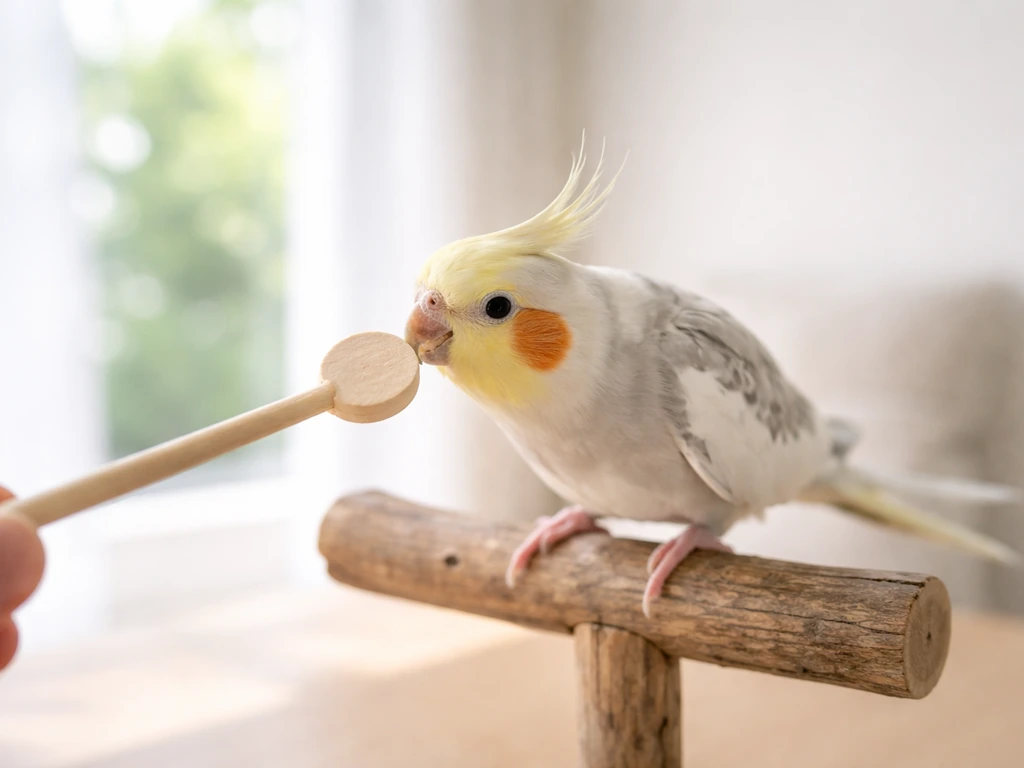
Is this possible, and why 'stealing' is a goal worth ditching
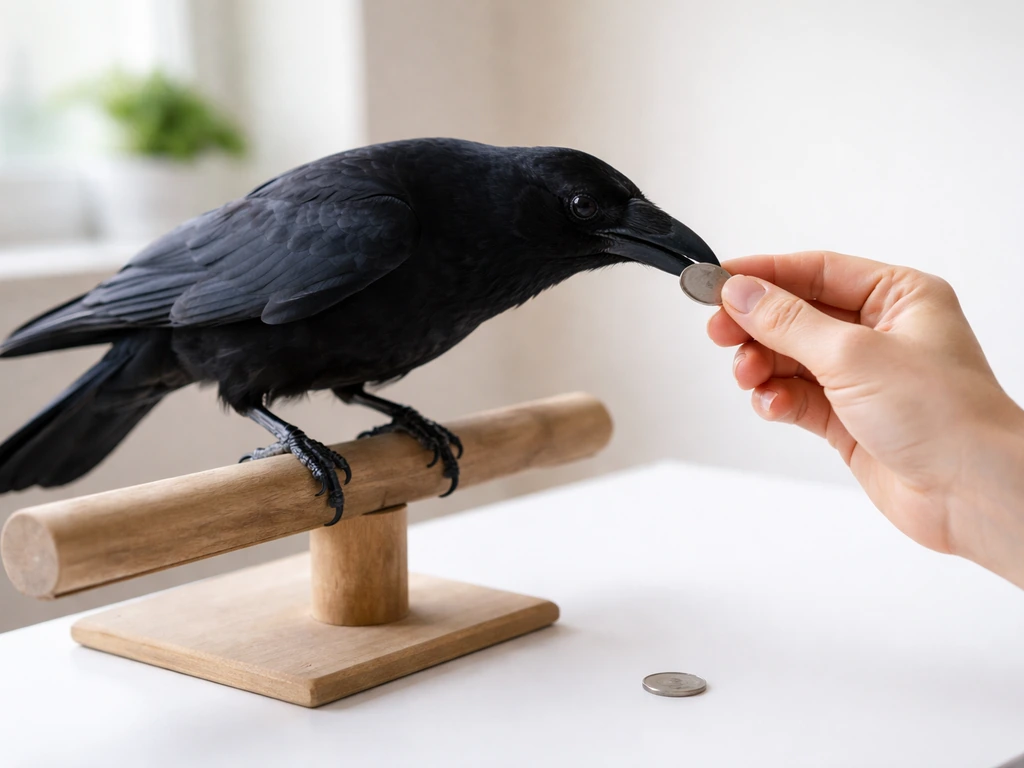
Research on carrion crows and azure-winged magpies shows that corvids can be trained to transport and transfer tokens to a human within a single session, with some birds completing 10 token transfers in under 10 minutes after as few as 4 training sessions. Goffin's cockatoos have been trained to pick up objects and place them into a dish on a 'give me' cue, rewarded with sunflower seeds.
A peer-reviewed PMC study on Goffin’s cockatoos describes training that uses a pre-trained “give me” command and sunflower seed rewards for object placement behaviors [Goffin’s cockatoos trained on a “give me” cue with sunflower seed rewards](https://pmc. ncbi. nlm. nih.
gov/articles/PMC11576884/). So the underlying mechanics are real and well-documented. The problem is not the bird's ability. The problem is what you are asking it to pick up.
Coins are radiopaque foreign bodies, meaning they show up clearly on X-rays precisely because they are dense and do not belong inside a body. The Merck Veterinary Manual notes that metal ingestion is one of the most common causes of toxicosis in pet birds. Lead degrades in the ventriculus and releases slowly into the bloodstream, competing with calcium and disrupting enzyme function across multiple body systems. Depending on how much is ingested, lead poisoning can require endoscopic retrieval or surgery, and in large doses it can cause sudden death. Training your bird to handle coins repeatedly increases the chance of accidental ingestion with every single repetition.
Beyond the toxicity risk, 'stealing' as a trained concept is imprecise and hard to put on cue. Birds do not understand ownership the way humans do. What you end up teaching is 'grab anything shiny and bring it to me, or hide it.' That creates a bird that is difficult to manage around guests, jewelry, keys, and anything else within beak reach. It is a reinforcement problem that is genuinely hard to undo.
Humane alternatives that scratch the same itch
The underlying interest here is almost always one of three things: you want a bird that does impressive object-based tricks, you want to show off your bird's intelligence, or you want a deeper interactive bond through training. All of those are completely achievable without touching a single coin. The behaviors that make 'money stealing' look cool, picking up an object, carrying it across a distance, dropping it on cue into a container, are teachable with safe props like wooden discs, plastic poker chips, soft cork pieces, or purpose-made bird training tokens.
- Targeting: touching a colored stick or ball with the beak on cue, a foundational skill that makes all other training easier
- Retrieving: picking up a specific safe object and returning it to your hand
- Holding: gripping an object without chewing or swallowing it
- Drop: releasing an object into a cup, box, or your palm on a verbal or visual cue
- Transfer: moving an object from point A to point B, the exact behavior studied in corvid token-transfer research
If the appeal is specifically the 'give me something valuable' dynamic, you can build a coin-shaped wooden token and paint it. Your bird does not know the difference, and neither does anyone watching. These behaviors are also a natural bridge to other enrichment activities like mail delivery, which is a closely related skill worth exploring once your bird has solid retrieve and drop behaviors down. Once your bird can reliably retrieve and drop, you can apply the same chain to teach it to deliver small items on cue mail delivery.
Know your bird before you start: species, temperament, and safety
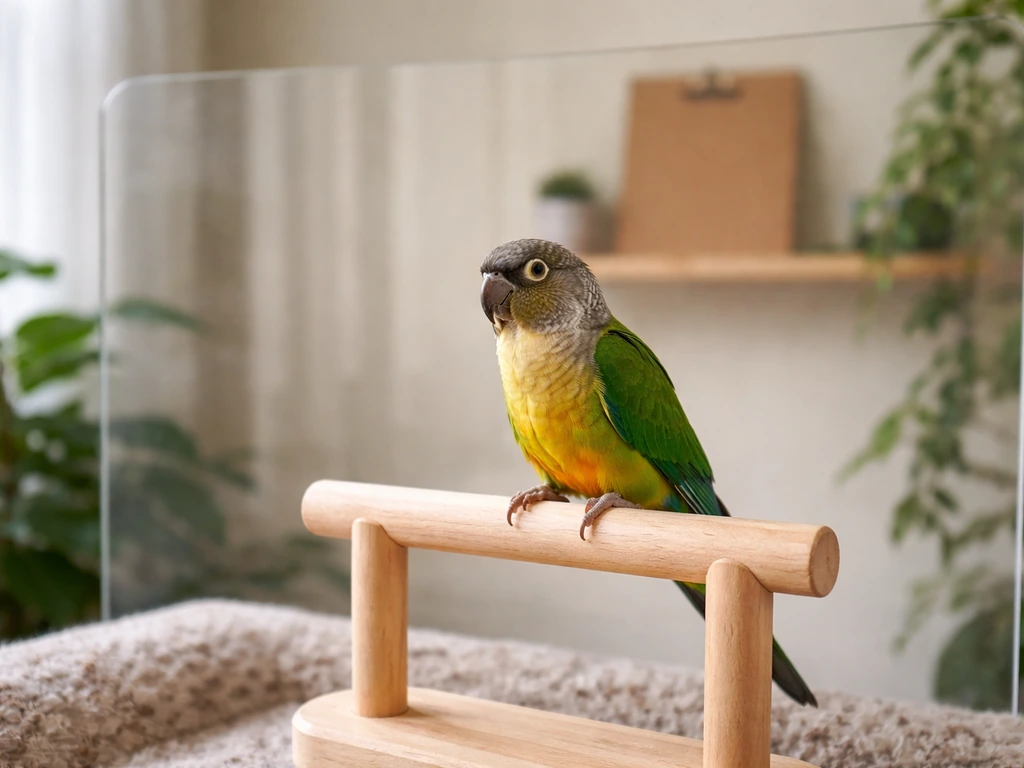
Not every bird is a good candidate for object-handling training, and the species matters a lot. House training a bird uses many of the same principles, like rewarding the right behavior at the right time and staying consistent during practice good candidate for object-handling training. Here is a practical breakdown of what to expect across common bird types.
| Species / Type | Object-Handling Aptitude | Key Safety Notes | Skill Level Suggested |
|---|---|---|---|
| African Grey Parrot | Excellent, high problem-solving drive | Avoid all metal; monitor for resource guarding | Beginner to intermediate |
| Cockatoo (Goffin's, Umbrella, etc.) | Excellent, strong tool/object curiosity | Chewing risk is high; use only thick, non-splintering items | Intermediate |
| Macaw | Good, but can be forceful with beak | Only use large, sturdy items; small tokens are a choking risk | Intermediate to advanced |
| Cockatiel / Budgerigar | Moderate; smaller items require very fine motor steps | Use only bird-safe, appropriately sized items; paper is risky | Beginner (simple targets only) |
| Corvids (crows, jays, magpies) | Exceptional, natural token-transfer behavior | Wild corvids are protected under the Migratory Bird Treaty Act; only work with licensed birds | Advanced (requires experience) |
| Softbills / Canaries / Finches | Low suitability for object retrieval | Not recommended for this training type | N/A |
Temperament within a species matters just as much as the species itself. A fearful, untamed bird should not be in object-handling training yet. Start by assessing whether your bird steps up calmly, eats from your hand without hesitation, and stays relaxed during a 5-minute session near you. If the answer to any of those is no, bonding and trust-building come first, always.
For rehabilitated or wild-caught birds, a completely separate set of rules applies. The Migratory Bird Treaty Act prohibits possessing wild birds without the appropriate permits, and training wild birds in your home is not a legal path forward. If you are a licensed rehabilitator working with a corvid or similar species, check with your state wildlife agency before introducing any object-based training protocols.
The real training plan: targeting, retrieving, and the 'drop' cue
This is a three-behavior chain built in sequence. Do not skip ahead. Each behavior needs to be reliable before you link it to the next.
Step 1: Targeting (the foundation)
- Hold a target stick (a pencil with a colored eraser works fine) about 2 inches from your bird's beak.
- The moment your bird touches it with its beak, click or say your marker word ('yes') and deliver a small, high-value treat immediately.
- Repeat 5 to 8 times per session, keeping sessions under 5 minutes for beginners.
- Gradually move the target to different positions so the bird has to lean or move slightly to touch it.
- When your bird is touching the target reliably in 8 out of 10 tries, move to Step 2.
Step 2: Retrieve (picking up a safe object)
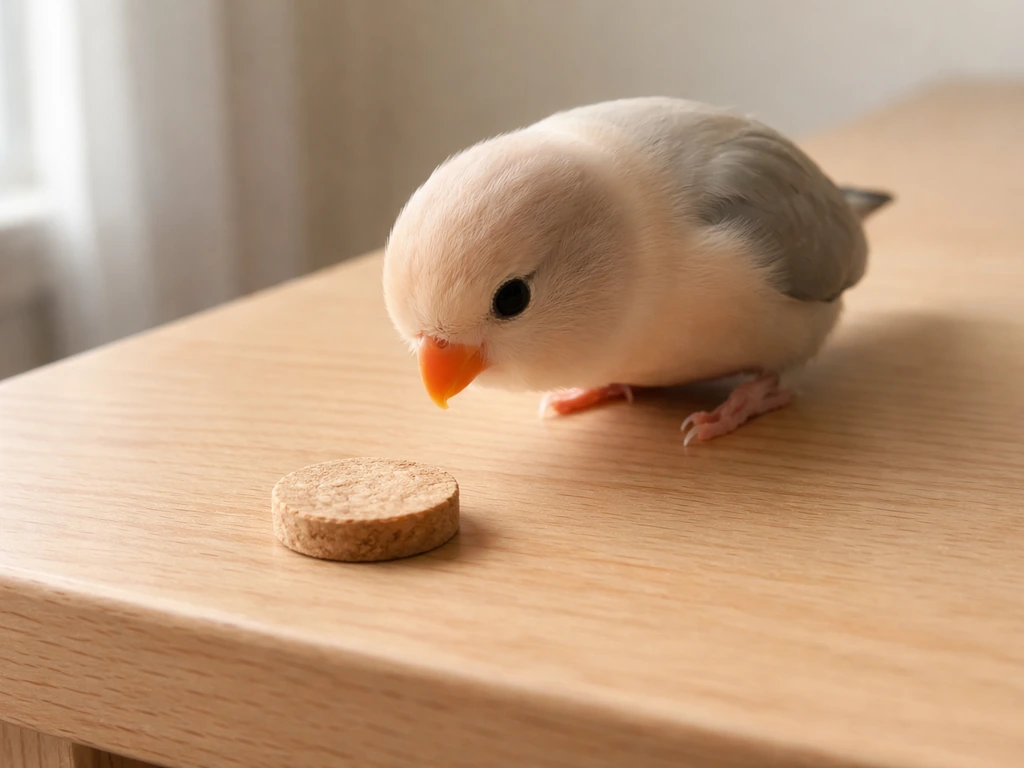
- Place your training token (wooden disc, large plastic poker chip, cork piece) on a flat surface in front of your bird.
- Wait. Many birds will investigate and mouth a new object naturally. Mark and treat the moment the beak contacts the token.
- Gradually raise the criteria: mark only when the bird picks the token up off the surface, even briefly.
- Once the bird picks it up consistently, extend your hand nearby. Mark and treat if the bird moves even slightly toward your hand while holding the token.
- Build toward the bird carrying the token to your open palm before receiving the treat.
Step 3: Drop (the cue that completes the chain)
- Hold a small cup or dish just below your bird's beak while it is holding the token.
- The moment the token falls into the cup (even accidentally), mark and treat enthusiastically.
- Add your verbal cue ('drop' or 'give') just before the behavior happens once the bird is doing it consistently.
- Fade the cup over sessions until your bird will drop the token into your open hand on cue.
- Once all three steps are reliable individually, chain them: token on surface, bird picks it up, carries it to you, drops on cue.
Reinforcement, timing, and your practice schedule
Positive reinforcement is the only approach worth using here. The AVSAB is clear that clicker and marker training enhances animal welfare when done correctly, and it works because the marker (a click or a word) precisely bridges the moment of correct behavior and the delivery of the reward. Timing is everything. If your marker comes 3 seconds after the behavior, you are reinforcing whatever the bird happened to be doing 3 seconds after the thing you wanted. Aim for a marker within half a second of the behavior.
Keep treats small enough that your bird eats them in one or two seconds. This lets you get more repetitions into a single session before your bird hits satiation and loses interest. A piece of nutrient-dense food roughly the size of a pea works well for most parrots. For smaller birds like cockatiels, a single millet seed is plenty.
- Session length: 3 to 7 minutes for beginners, 10 to 15 minutes max for experienced birds
- Frequency: once or twice daily is ideal; more than three sessions a day can cause frustration and burnout
- End every session on a success, even if you have to lower the criteria temporarily to get one
- Take a break and try again the next day if your bird disengages or shows stress signals (feather fluffing, turning away, biting at the token instead of holding it)
Shaping, the process of reinforcing successive approximations toward the final behavior, is the key technique here. You are not waiting for perfection. You are rewarding each small step that gets closer to the goal, then gradually raising the bar as the bird meets each criterion. This is exactly the approach described in applied behavior analysis for birds, and it is the same framework used in the corvid and cockatoo research studies.
When things go sideways: troubleshooting and preventing unsafe access
The bird chews the token instead of holding it
This is the most common issue, especially with cockatoos and macaws. Switch to a thicker, harder token that is genuinely difficult to chew through. Cork and hardwood discs work well. Remove any token that shows chew damage immediately, the same way you would remove a destroyed toy. The moment the token becomes small enough to swallow, it is a hazard.
The bird grabs the token and flies away with it
This is a natural corvid and parrot behavior, and it is actually a sign the retrieve instinct is strong. Practice in a smaller space, or clip one wing temporarily if your avian vet recommends it for safety during training. Make returning to you more rewarding than hoarding by using your highest-value treat only for the drop behavior.
The bird loses interest quickly
Shorten your sessions. Check that your treats are high-value enough. If your bird will eat the treat but walks away from training anyway, you may be pushing criteria too fast. Drop back one step and rebuild.
The bird gets aggressive around the token
Resource guarding of training props is a real problem in some birds, particularly cockatoos and African Greys. If your bird is lunging, biting, or guarding the token, stop the session and consult an avian behavior specialist before continuing. Pushing through aggression in this context is likely to make the problem worse, not better.
Preventing accidental access to real coins or paper money
If you have been training retrieval behaviors, your bird will generalize them to other similar objects. Keep wallets, purses, loose change, and paper currency out of your bird's environment entirely during the training period. This is not just about protecting your money. It is about preventing an emergency vet visit. Any metal ingestion by a pet bird should be treated as urgent. Contact your avian vet immediately if you suspect your bird has swallowed a coin or any metal object.
Legal and ethical lines you need to know
Training a bird to steal from other people is not a legal gray area. It is theft. Using an animal as a tool to take property from others could expose you to criminal liability in most U.S. jurisdictions, and encouraging behavior that causes harm to the animal itself can fall under animal cruelty statutes, including federal regulations that treat cruel neglect and endangerment as offenses.
For wild birds, the Migratory Bird Treaty Act is explicit: possessing, training, or otherwise handling most wild bird species without a federal and state permit is illegal. This includes corvids like crows, ravens, and magpies, which happen to be the species most naturally suited to token-transfer behaviors. If you encounter an injured wild corvid and want to help, your legal and ethical path is to contact a licensed wildlife rehabilitator, not to begin training it.
Even within the bounds of legal pet ownership, there is an ethical responsibility to ensure that any trained behavior does not put the animal at risk. Training a behavior that increases a bird's exposure to toxic materials, reduces its flight response to household hazards, or creates conditions for injury is a welfare issue, regardless of whether it was your intention.
When to call in a professional
If your bird is showing aggression during training, has already ingested a foreign object, or has behavioral problems that are not improving with consistent positive reinforcement work, it is time to get help. Your first call should be to an avian veterinarian, who can rule out medical causes and refer you onward if needed. For behavior-specific support, look for a Certified Applied Animal Behaviorist through the Animal Behavior Society, or an IAABC-certified bird behaviorist through the myBird directory. Best Friends Animal Society also recommends consulting an avian vet as your first step for any training challenge. These professionals exist precisely for situations where home training has hit a wall.
Your practical next steps, starting today
You do not need special equipment or an experienced bird to start. Here is what to do right now.
- Remove any loose coins, paper currency, or metal objects from your bird's accessible environment.
- Pick a safe training token: a large wooden disc, thick cork piece, or oversized plastic poker chip that cannot be swallowed.
- Identify your marker (a clicker, or a short word like 'yes') and your treat (a tiny piece of your bird's favorite food).
- Run your first targeting session today: 5 minutes, targeting stick, 8 to 10 repetitions, end on success.
- Once targeting is solid over 3 to 5 sessions, introduce the token and begin Step 2 of the retrieve chain.
- Keep a simple log: date, behavior practiced, how many repetitions, and whether the bird seemed engaged or frustrated. This helps you spot patterns.
- If anything goes wrong, including any suspected metal ingestion, call your avian vet before continuing.
The retrieve-and-drop chain you build with safe tokens is genuinely impressive to watch and deeply satisfying to train. It satisfies every underlying goal behind the original question, demonstrating your bird's intelligence, creating interactive enrichment, and deepening your bond, without a single coin in sight. AVSAB position statements and public handouts provide general guidance that aligns with welfare-positive training principles.
If you specifically want cage potty training, the key is consistent schedules, clear cues, and immediate rewards for correct elimination coin in sight. If you enjoy this kind of object-based training, exploring related behaviors like delivering small items on cue is a natural next step once your bird has a solid drop behavior.
If you want more ideas for “can you brush a bird” style hands-on enrichment, explore delivering small items on cue as another adjacent option related behaviors like delivering small items on cue. You can also train some birds to use a litter box, using the same kind of positive reinforcement and careful shaping techniques train a bird to use a litter box.
FAQ
Can I use real coins or paper money just at the start to see if my bird is interested?
No, and you should treat money as a permanent “off-limits” category during training. Even if you use a coin-shaped wooden token, generalization is strong in many birds, so store wallets, loose change, and paper bills out of reach (including pockets and open purses) and clean any area where metal or ink residue may be present.
What should I do if I want the “valuable item” vibe of money training without the risks?
If your goal is impressive “value” behavior, swap the goalpost instead of the currency. Use a token that is visually similar (for example, a coin-shaped wooden disc painted with bird-safe paint) and only reward touches, retrieval, and the drop. You avoid poisoning and also prevent training the bird to target human property.
My bird will pick up objects, but it will not drop them on cue. What’s the next step?
Start by defining the chain as retrieve, carry, and drop, then reward each step until reliable. If your bird grabs but refuses to drop, you can back up to earlier criteria and practice the drop cue with a dish or container that is consistently positioned and rewarded immediately for releasing.
How do I tell whether my bird is not learning versus just getting bored or stressed?
Use session limits and cue discipline. Keep practice brief and end on a win, then reduce difficulty (smaller distance, easier token, slower timing) when errors increase. If your bird gets slower or more anxious, it often means criteria rose too fast, not that the bird “learned wrong.”
Is it safe to use soft tokens, and what if my bird starts chewing them?
Yes, for many birds the hardest part is preventing chewing. Offer a thicker token (cork or hardwood discs), inspect after every session, and remove any item with bite marks or thinning. If your bird chews aggressively, pause object-handling and have an avian vet check for oral pain or problem behaviors before restarting training.
Can I start object retrieval training with a shy or fearful bird?
Not unless you already have strong trust, calm body language, and reliable steps-up behavior. For fearful birds, prioritize bonding and hand-feeding first, then only attempt object work near calm, low-stimulation environments with distance that prevents lunging or freezing.
How can I stop my bird from grabbing shiny items even if I’m not training money?
Do not train or encourage “theft” as a goal, but you can reduce unwanted grab behavior by controlling access. Remove jewelry and keys from the bird’s reach, keep countertops and floors free of small shiny items, and reinforce alternative behaviors, for example stepping onto a perch or targeting to your hand, so the bird learns what to do instead.
What should I do if I think my bird swallowed a coin or another metal object?
If you suspect ingestion, treat it as urgent regardless of whether the object was a coin, button, or other metal. Contact an avian veterinarian right away, and bring any details you can (approximate time, size, and whether the bird is acting normally). Do not “wait and see” because symptoms can lag behind harm.
What if the bird is a wild or rehabilitated corvid, can I still train it to retrieve objects?
For wild birds, you generally should not train them in a home setting. Migratory protections and permit rules apply to most wild species, including corvids. The safest next step if you found an injured wild corvid is to contact a licensed wildlife rehabilitator, not to begin any object-transfer training.
My bird guards the token or becomes aggressive when I get close. Should I continue training to fix it?
If you see guarding (lunging, biting, freezing while holding the token), stop immediately. Switch to a supervised management plan (separate, reduce access to tokens), and consult an avian behavior specialist before continuing, because repeated pressure can escalate the guarding into a long-term safety issue.
Next Article
Can You Train a Bird to Use a Litter Box? How To
Humane step by step guide to train select birds to use a litter box, with setup, rewards, troubleshooting, and health ch