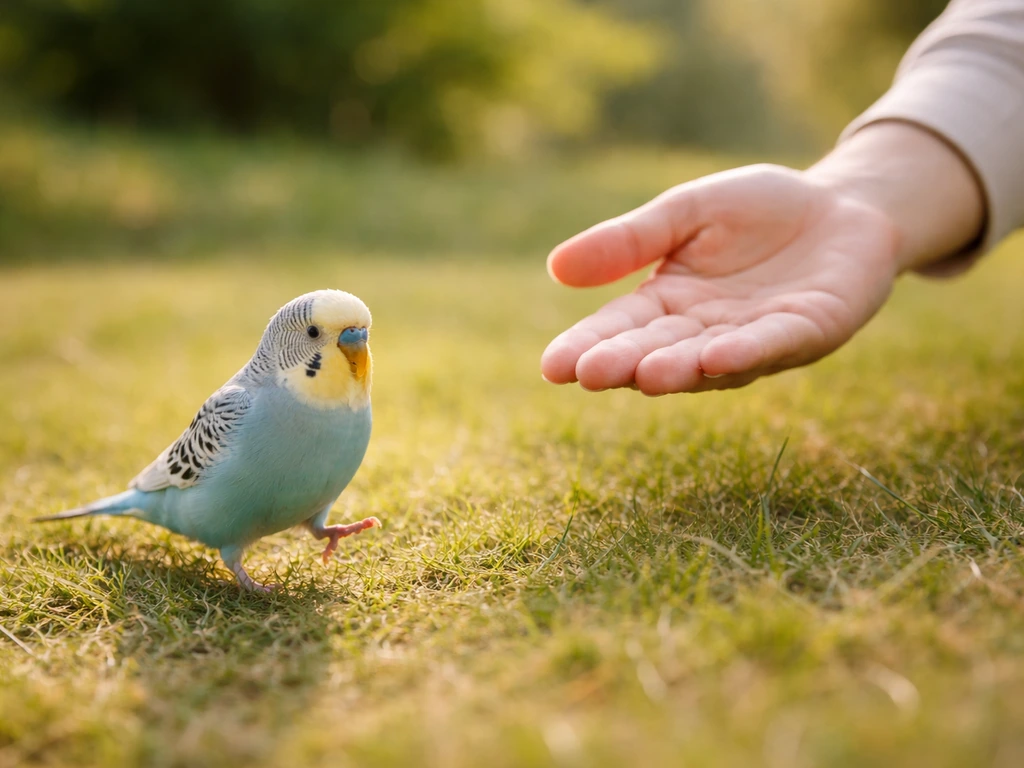
Clicker training a bird works, and it works faster than most people expect. The short version: you use a small clicking sound to mark the exact moment your bird does something right, then immediately follow that click with a treat. Over time, your bird learns that the click means "yes, that's it" and starts repeating the behavior on purpose. That's the whole system. Everything else is just refinement.
How to Clicker Train a Bird Step by Step (Bird-Safe)

Maya Harris
16 Apr 2026
Clicker training basics for birds
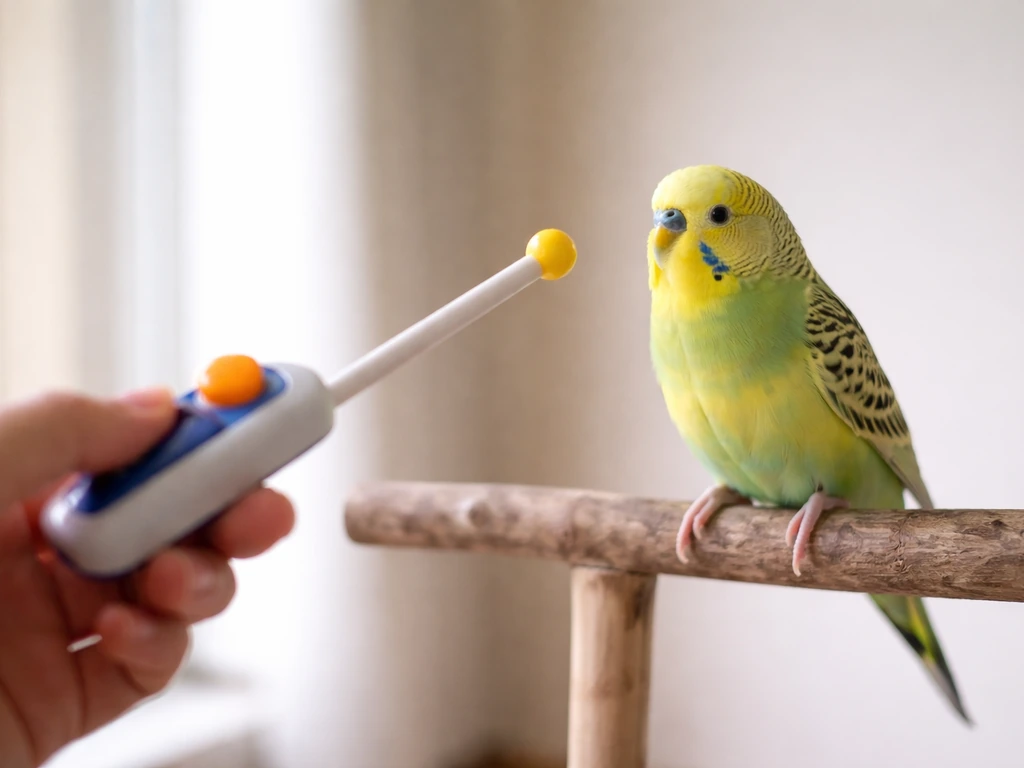
Clicker training is built on two layers of learning. First, your bird learns through classical conditioning that the click sound predicts something good. Then, as training progresses, it shifts into operant conditioning: your bird figures out that it can make the click happen by doing a specific behavior. That shift from "the click happens to me" to "I can make the click happen" is the moment training really takes off.
The clicker itself is what trainers call a "bridge marker" or just a "marker." A marker is a precise signal that tells your bird exactly which moment a desired behavior is happening, not a second before, not a second after. Without that precision, your bird genuinely doesn't know what it's being rewarded for. The click bridges the gap between the behavior and the treat, especially when there's a half-second delay while you reach into a treat pouch. A verbal marker like "yes" works too if you prefer it, but the clicker is more consistent because your voice changes with your mood.
Before you train a single behavior, you need to "charge" the clicker. That means repeatedly pairing the click with a high-value treat so your bird learns the sound is meaningful. Click, treat. Click, treat. Ten to fifteen repetitions spread over a couple of short sessions is usually enough. After that, the sound itself carries reward value, and you can start using it to mark real behaviors.
Setting up your training kit
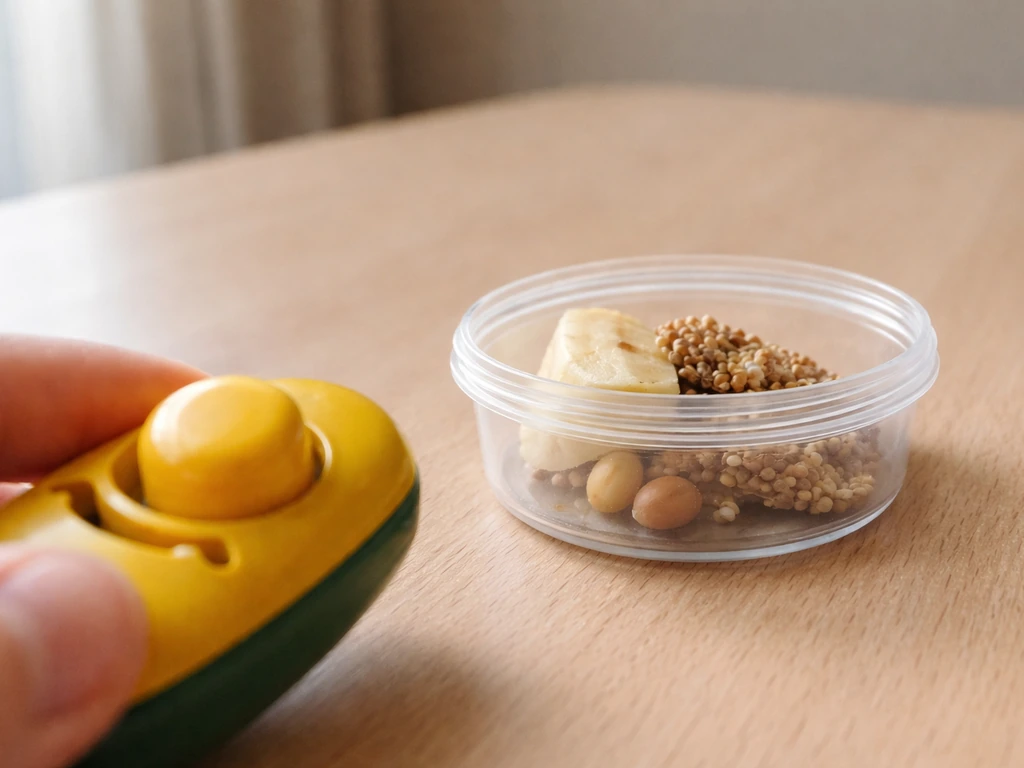
You don't need much to get started. A basic box clicker costs under two dollars, but any consistent sound source works. What matters more is having the right treats and a calm, distraction-free space.
Choosing treats
Treats need to be small, quick to eat, and genuinely motivating to your bird. A sunflower seed, a thin sliver of banana, a tiny piece of millet, or a single pine nut all work well depending on the species. The key is that each treat should be eaten in two to three seconds so your bird stays engaged. Don't hand over a whole walnut and wait while it takes five minutes to crack it open. Break everything into pea-sized pieces or smaller. Parrots generally won't overeat if their nutritional needs are met at regular meals, but you should keep training treats small and not let them displace a balanced diet. Think of treats as communication tools, not snacks.
Setting up the space
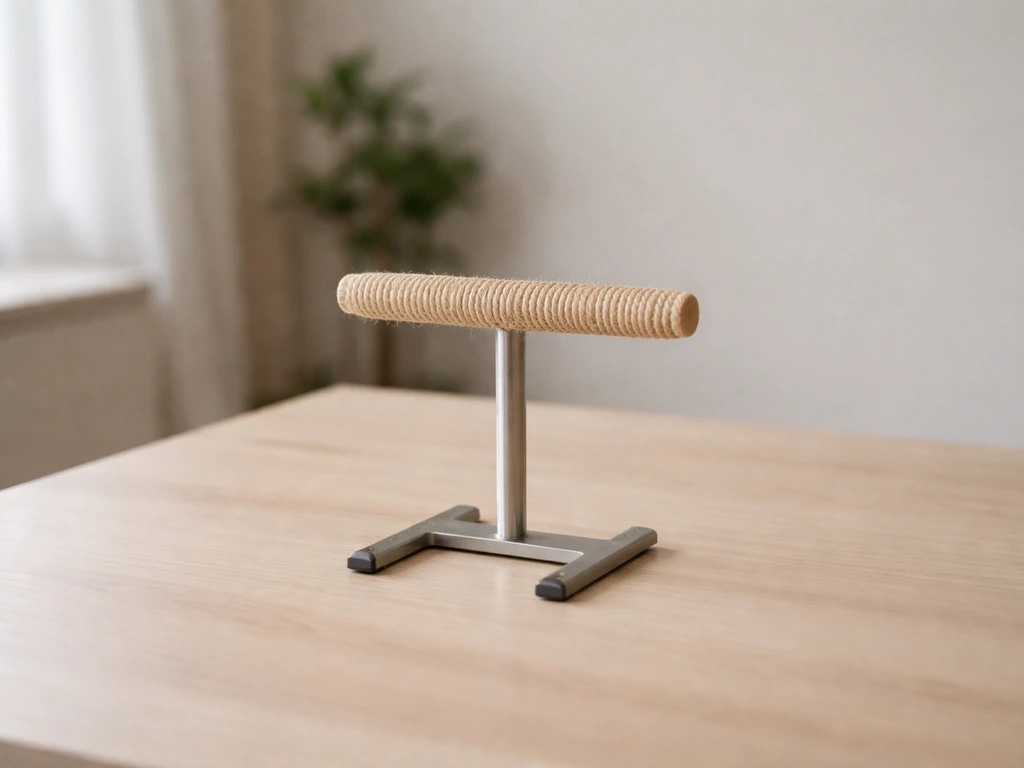
Train in a quiet room with no televisions, loud fans, or other pets moving around. Put your bird on a neutral surface, like a T-stand or a separate training perch, rather than on top of its cage where it may feel territorial. Short sessions in a consistent spot help your bird recognize "this is training time." Aim for sessions of about three to five minutes, one to three times a day, and always stop while your bird is still interested and engaged, not when it's clearly done. Ending on a positive note keeps motivation high for the next session.
Teaching core cues: target training and step-up
Target training is the single best first behavior to teach any bird. A target is just an object, usually the tip of a stick or a colored ball on a dowel, that you train your bird to touch with its beak. It sounds simple because it is, but it becomes the building block for almost every other behavior you'll ever teach: movement cues, recall, stationing, and cooperative husbandry. If you want to understand how this connects to a broader skill set, target training for birds is worth a full read once you have the basics down.
How to introduce the target
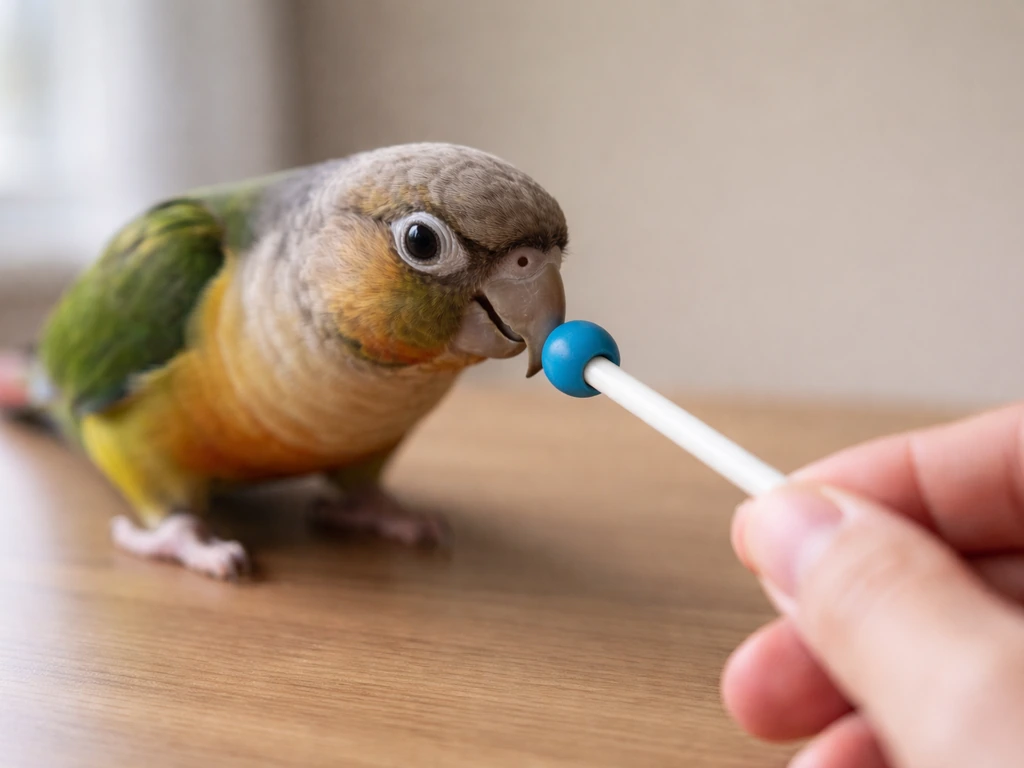
- Hold the target stick about two to three inches from your bird's beak. Most birds will naturally investigate it by leaning toward it or touching it.
- The instant your bird's beak makes contact with the tip, click and immediately deliver a treat.
- Move the stick to a slightly different position and repeat. You want your bird chasing the target, not just waiting for it to appear at the same spot.
- Keep the session to about five minutes. You can do more than one session per day as long as your bird is still enthusiastic.
- Once your bird is reliably touching the target on the first or second presentation, start adding a verbal cue like "touch" just before you present the stick.
Once target training is solid, teaching step-up becomes much easier. One approach, described well by experienced parrot trainers, is that after a bird has been target-trained, teaching it to step onto a hand or handheld perch is a natural next step: you simply use the target to guide the bird's movement toward your hand or a stick, then click and treat when it steps on. If your bird is reluctant to step directly onto a hand, gradual approximation works well. Start with the target pulling its weight toward your hand, reward each small movement closer, and only ask for the actual step-up once the bird is comfortable at close range.
For birds with a biting history or that haven't yet bonded with hands, stick training is a safer bridge. Getting a bird comfortable standing on a handheld perch or stick before moving to direct hand contact removes the bite risk and builds confidence without forcing physical contact.
Adding stationing
Station training means teaching your bird to go to and stay on a specific spot, like a marked perch or a small platform. It's enormously useful for vet visits, cage cleaning, and safety management. To teach it, guide your bird to the station using the target, then wait approximately one second after it lands before delivering the click and treat. That brief delay is what teaches the bird that staying on the spot is what earns the reward, not just arriving. Before starting stationing work, make sure your bird already recognizes both the clicker and a verbal recall cue, so those tools are already in your shared vocabulary.
Starter plans by species
No two species approach training the same way. Here's a practical starting framework for the most common pet birds.
| Species | Temperament notes | Best first behaviors | Session length | Treat suggestions |
|---|---|---|---|---|
| Parrot (Amazon, African Grey, Eclectus) | Highly intelligent, can be cautious or mouthy; responds well to routine | Target touch, step-up, station | 3–5 min, 1–3x daily | Pine nut, walnut piece, nutriberry bit |
| Cockatiel | Gentle, social, often food-motivated; may be timid at first | Target touch, step-up, wave | 3–5 min, 1–2x daily | Millet spray, small seed, thin fruit slice |
| Conure | Energetic, playful, can be nippy; keeps sessions short and dynamic | Target touch, recall, spin | 3–5 min, up to 3x daily | Nutriberry bit, pine nut, small grape piece |
| Budgerigar (Budgie) | Quick learner but easily startled; needs very low-pressure introduction | Target touch, station | 2–3 min, 1–2x daily | Millet, small seed piece |
| Finch / Canary | Generally not hands-on birds; clicker training works but goals differ | Station at a feeding spot, voluntary perch approach | 1–2 min, once daily | Small seed, millet strand |
| Cockatoo | Extremely social and emotionally sensitive; trust-building first | Target touch, step-up, cooperative handling | 3–5 min, 1–2x daily | Almond sliver, nutriberry, apple piece |
For finches and canaries, the goal isn't usually direct handling but building comfort with your presence and voluntary approach. Training is still valuable for reducing stress during necessary care, but adjust your expectations: success looks like a bird that doesn't flee when you enter the room and will approach a familiar spot on cue.
If you're working with a wild or rehabilitating bird, the approach is fundamentally different. Wild birds protected under the Migratory Bird Treaty Act have strict legal constraints around possession and handling in the United States, including felony-level provisions in certain situations. Rehabilitation work requires permits, and training goals are welfare-focused, like reducing handling stress, not behavioral compliance. Always check your legal obligations before working with any non-domestic bird.
Common problems and how to fix them
The bird won't engage or shows no interest in treats
If your bird ignores both the clicker and every treat you offer, the most common cause is that the environment is too stimulating or stressful for learning to happen. Move to a quieter space and try a different, higher-value treat. Sometimes the issue is timing: if you're training right after a big meal, your bird simply isn't motivated. Try a short session before the morning feeding when motivation is naturally higher. Never withhold meals to the point of distress, but a slightly empty stomach usually sharpens interest.
Biting during training
A bird that bites during training is telling you something: the distance is too close, the session is too long, or you moved too fast. Don't push through biting. Instead, back up a step in your training plan, add more distance between you and the bird, and slow the approximations down. Cooperative, consent-based training means your bird always has a way to say "I'm not comfortable" without being overridden. Forcing compliance through restraint or pressure is not just ineffective, it actively damages trust and creates more behavioral problems over time.
Avoidance and fear responses
If your bird is turning away, flattening its feathers, panting, or showing signs of panic, you've moved too fast in the desensitization process. The rule is to work at a level where the bird notices the trigger but shows no extreme stress response. Scale back the intensity: use a quieter click, increase physical distance, or work with a target stick before introducing your hand. Progress should always feel comfortable to the bird, not just manageable.
Timing mistakes
Sloppy timing is the most common technical error in clicker training. If you click a half-second too late, you've marked whatever your bird did after the behavior you wanted. Click a half-second too early, and you've marked the anticipation, not the action. Practicing your click timing away from the bird, for example by clicking the moment a ball bounces on the floor, helps build the reflexive precision you need. One clear goal per session also makes timing easier: you're only watching for one specific behavior, not scanning for several at once.
Accidentally reinforcing the wrong behavior
If your bird learns to scream, lunge, or bite and then immediately gets a treat because you clicked something else at the wrong moment, you've accidentally taught that behavior. If this happens, just stop the session calmly and try again later. Don't correct, punish, or react dramatically. Simply withhold the click and treat, and reset. Consistency is your most powerful tool here.
Safety, handling, and welfare first
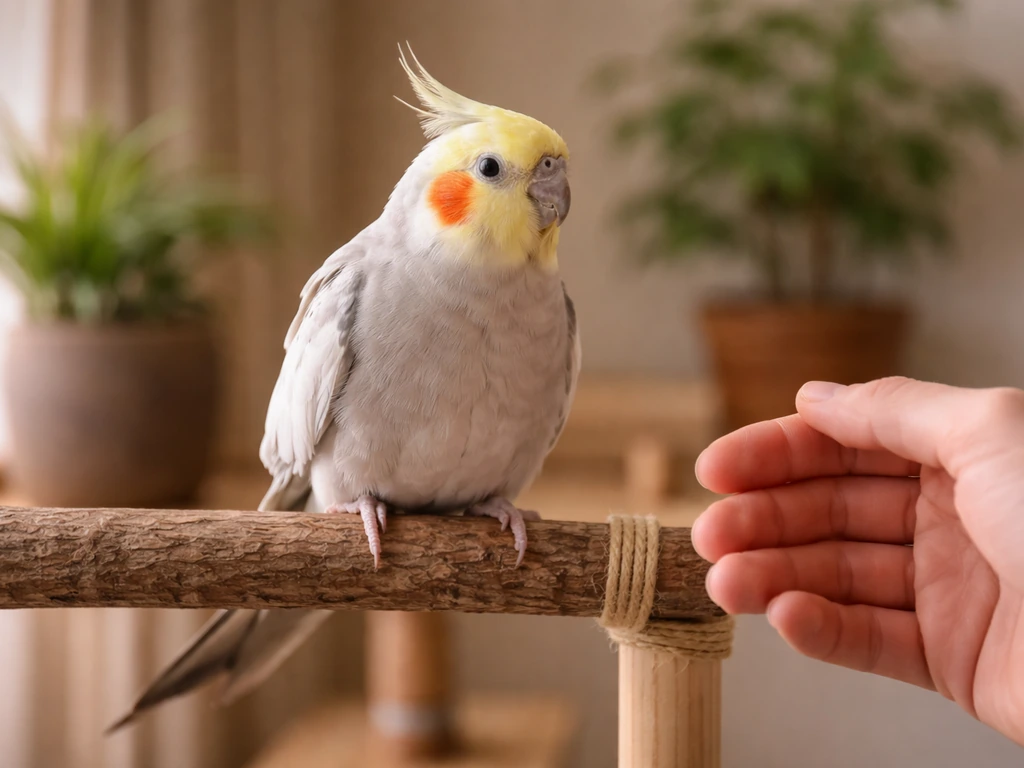
Welfare-first training is not just a philosophy, it's practical. A bird trained through force, domination, or punishment doesn't generalize well, develops fear responses, and often regresses. Cooperation built on trust and positive reinforcement is more durable, more flexible, and more humane. Rejecting the idea of forcing birds into 100% compliance isn't soft: it's the approach that actually produces reliable, repeatable behaviors over the long term.
Learn your bird's stress signals and take them seriously. Early warning signs include feather slicking, wide eyes, rapid blinking, leaning away, or crouching. More serious signals are panting, wing spreading, screaming, and attempting to flee. If you see any of these, stop training immediately. Take a break, let your bird settle, and revisit the session with smaller steps next time.
For handling, always prioritize voluntary cooperation over physical control. Step-up should be a behavior the bird chooses, not something you grab for. This is especially important for husbandry behaviors like nail trims or toweling, where cooperative training, built slowly over multiple sessions, results in a bird that tolerates or even participates in necessary care without extreme stress.
Moving from basics to everyday behaviors
Once your bird has a reliable target touch and a solid step-up, you have the foundation for almost everything else. The progression is logical: target training teaches your bird to move toward a cue, which feeds directly into recall and flight work. Recall training is the natural next step after target training because you're essentially asking the bird to target you from a distance. From there, adding a verbal or visual cue turns recall into a dependable safety behavior.
If your goal is free-flight or outdoor training, flight training builds on the same marker-and-reward mechanics but adds the complexity of distance and environmental distractions. Build that gradually, starting with short flights indoors before moving outside, and always work in a controlled space until your bird's recall is bulletproof.
For birds that need to come reliably on a verbal cue in daily life, like moving between rooms or returning to the cage, training a bird to come when called walks through the cue-building process in detail. It's one of the most practically useful behaviors for everyday bird ownership.
Harness training is another natural progression from stationing and cooperative handling. If you want to take your bird outside safely, harness training requires significant desensitization work first, but birds that go through it at their own pace usually adapt well and often enjoy outdoor time.
Your practice schedule and how to know it's working
Consistency beats intensity every time. Three five-minute sessions spread across a day will produce faster results than one thirty-minute marathon that ends with a stressed, disengaged bird. Here's a simple weekly framework to start with:
| Week | Focus | Session structure | Success looks like |
|---|---|---|---|
| Week 1 | Charge the clicker + introduce the target | 3–5 min, 2x daily | Bird approaches target on first or second presentation |
| Week 2 | Reliable target touch from multiple positions | 3–5 min, 2–3x daily | Bird touches target 8 out of 10 times without hesitation |
| Week 3 | Introduce step-up or station cue | 3–5 min, 2x daily | Bird steps up or stations with one cue, no target needed |
| Week 4 | Add verbal cue, begin fading target | 3–5 min, 1–2x daily | Bird responds to verbal cue alone 7 out of 10 trials |
| Week 5+ | Build on foundation: recall, stationing, cooperative handling | 3–5 min, 1–2x daily | Behaviors generalize to new locations and people |
Keep a simple training log. It doesn't need to be fancy: a note in your phone after each session works. Record the date, what behavior you worked on, how many correct responses you got out of ten trials, and any notable reactions. This lets you spot plateaus early and recognize real progress when it happens. If your bird's success rate drops below 70% on a behavior it previously performed reliably, that's a signal to simplify the task or check for environmental stressors.
Fading prompts is the final step in any trained behavior. A prompt is anything extra you're using to help the behavior happen, like the target stick or luring with a treat. Once your bird performs the behavior reliably with the prompt, start presenting the verbal or visual cue alone before the prompt, and gradually phase the prompt out over several sessions. If the behavior falls apart, bring the prompt back briefly and thin it out more slowly. There's no rush.
The measure of whether clicker training is working isn't just whether your bird performs behaviors. It's whether your bird comes eagerly to training sessions, stays engaged for the full session, and shows relaxed body language throughout. A bird that's happy to train is a bird that trusts you. That relationship is worth more than any individual trick.
FAQ
What should I do if I accidentally click at the wrong time and already fed the bird?
If you click but the bird does not eat right away, wait a beat and then re-present the treat after the bird has stayed calm. Click-only moments teach your bird to expect a reward that has to be consistent, so long gaps usually reduce learning speed. Also avoid changing treat types mid-session, since that can shift motivation.
How do I know the best time of day to train, and how long should sessions really be?
Aim for multiple short sessions, but also match the training window to your bird’s body state. If your bird is sleepy, freshly woken, just ate a large meal, or coming out of a stressful event, learning often drops. A practical rule is to start when the bird is curious, then stop while it is still seeking more trials.
My bird ignores the clicker. How can I tell if it’s the timing, the treat choice, or the environment?
Some birds take longer to “catch on” because they are not yet linking the marker to reward, or because the treat is not valuable enough. Before troubleshooting timing or behaviors, confirm the charging step with 10 to 15 clean click-treat pairings in a calm room. If it still ignores everything, switch to smaller, higher-value treats your bird already prefers.
What if my bird grabs treats slowly, drops them, or caches them instead of eating quickly?
Treats can become stale, too large, or slow to eat, which breaks the reward rate. Use pea-sized pieces, and test a few options to find what your bird consumes in about 2 to 3 seconds. If your bird caches food instead of eating, offer the treat in a way that encourages immediate consumption (for example, from your hand near the target), or choose faster-eaten treats.
Can I use a verbal marker instead of a clicker, and will it work the same way?
Yes, but be deliberate. If you switch from clicker to a verbal marker, keep the word identical in tone and speed every time, and rehearse charging the new marker the same way you did for the clicker. If your voice changes with emotion, you may get inconsistent learning, so many people pair a clicker with “yes” only during the transition, then phase out the voice.
Is it okay to start clicker training before my bird is comfortable being handled?
You can, but expect longer training and more careful pacing. During marker training, keep the distance and your posture stable, and use target-based setups so the bird can choose how close it gets. If your bird has a history of biting or is bonded poorly, general handling too early often increases fear, so prioritize cooperative, consent-based steps first.
What’s the best way to handle it if my bird shows stress signs during training?
Use body and setup changes as your “off switch.” If you see early stress signs, lower the difficulty (more distance, smaller steps, shorter sessions), and end before the bird escalates. A common mistake is to keep clicking to “prove” yourself right, which accidentally trains the bird to tolerate more stress than it should.
My bird starts to regress after it bites or panics. What should I do next?
If the bird is avoiding eye contact, flattening, or leaning away, you should move the training farther from the trigger rather than repeating the same step. Back up to the last behavior it could do comfortably, like a target touch from a greater distance, then rebuild proximity gradually. Never speed up approximations after a fear response, speed is what often causes regression.
How do I fade the target stick or lure without breaking the behavior?
When a behavior is reliably performed with the target or lure, you can fade prompts by changing one thing at a time. Present the cue first, then shorten the prompt’s presence until the bird performs with only the cue. If accuracy drops sharply, return to the previous success level and thin the prompt more slowly over several sessions.
What does it mean if accuracy drops below my usual level, and how should I troubleshoot?
Look at success rate, not effort. If the bird is doing the behavior fewer than about 70% of the time on trials it previously handled well, simplify immediately by reducing distance, using a clearer prompt, or lowering the difficulty of the criteria. Timing changes also matter, so ensure you are clicking at the exact desired moment before changing other variables.
Next Article
How to Train a Bird to Come When Called Step by Step
Humane step by step bird recall training: teach cue response safely, build trust, reward timing, and fix distractions.