
Training a falcon is absolutely doable, but it requires permits, the right equipment, a clear understanding of falcon behavior, and a commitment to going at the bird's pace, not yours. Whether you're working with a kestrel for the first time or conditioning a saker or peregrine for falconry, the foundation is the same: earn trust through consistent, low-stress interactions and reward cooperation with food. Everything else builds from there.
How to Train a Falcon Bird Step by Step for Welfare-First Care

Maya Harris
19 Apr 2026
Legal and welfare basics before you do anything else
In the United States, falcons are migratory birds protected under the Migratory Bird Treaty Act (MBTA). That means you need a valid federal falconry permit through the U.S. Fish and Wildlife Service (USFWS) under 50 CFR Part 21 before you can legally possess, train, or fly a falcon. You'll also need a state permit in virtually every state, and some states, like Florida and Maryland, require facility and equipment inspections before your permit is even issued. If you're in California, your raptors must be used primarily for falconry-related activity and only under valid federal and state permits. The rules vary by jurisdiction, so the first step is always contacting your state wildlife agency and USFWS regional migratory bird office.
Some species, like peregrine falcons and gyrfalcons, have additional requirements including seamless metal banding under federal standards. If you're rehabilitating a falcon rather than practicing falconry, you'll need a separate rehabilitation permit. The International Association for Falconry (IAF) summarizes it well: falconry legislation typically regulates obtaining raptors, possessing them, welfare, transport, hunting, and release. There is no shortcut around this, and there shouldn't be.
On the welfare side, federal regulations define humane and healthful conditions as using methods supported by the best available science that minimize fear, pain, stress, and suffering. The IAF and Raptor Welfare guidelines both state clearly that successful falconry practice is based on positive reinforcement alone and the active avoidance of stress. That's not just an ethical guideline, it's a practical one. A bird trained under fear or force does not perform reliably, and it will show you that through injury, feather damage, refusal, or breakdown in trust. Everything in this guide is built around that principle.
Falcon setup, equipment, and handling safety
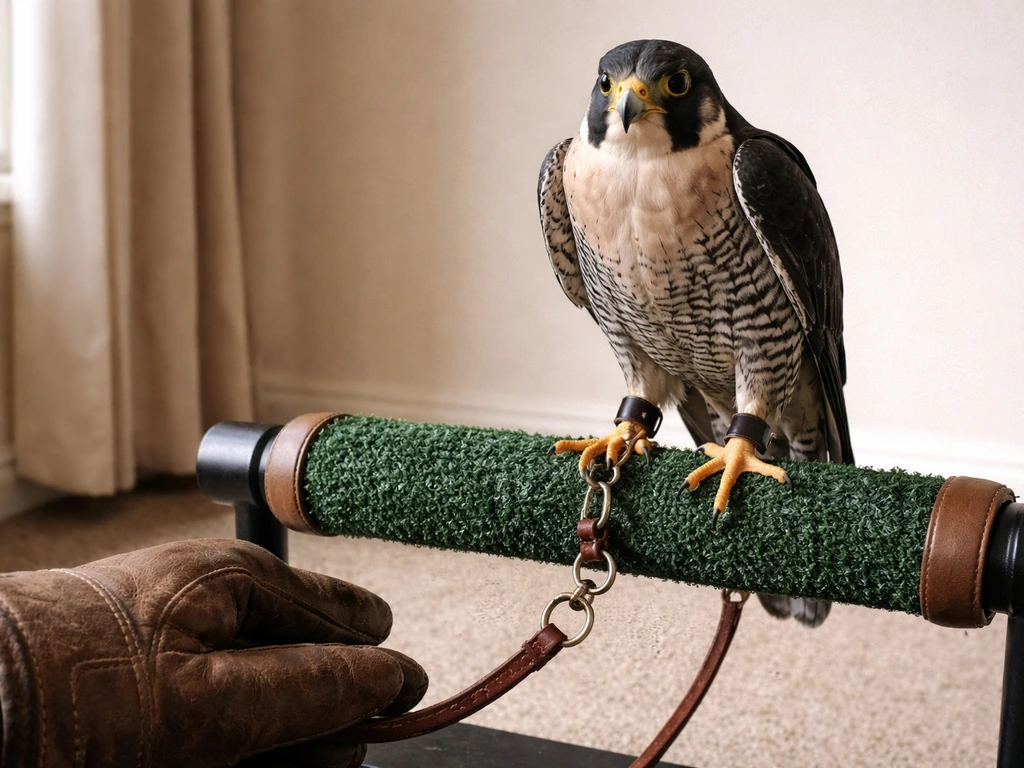
Before your falcon arrives, your housing and equipment need to be ready. Federal falconry standards require that housing facilities protect raptors from the environment, predators, and undue disturbance. The weathering area (the outdoor enclosure where the bird is tethered and kept) must be totally enclosed, predator-secure, covered, and large enough to prevent strike and bating injuries. Each bird needs its own pan of clean water large enough for bathing. This isn't optional, it's a permit condition in most states.
Your core equipment list for a beginning falconer includes a good falconry glove (gauntlet), at least one pair of Alymeri jesses made from pliable, high-quality leather or approved synthetic material, a bewit and bell for tracking, a swivel and leash, a block perch or bow perch appropriate to the species, a hood, a lure, a weighing scale accurate to at least 2 grams, and a transport box or giant hood for travel. The scale is non-negotiable. Weight management is central to training, and you cannot do it by eye.
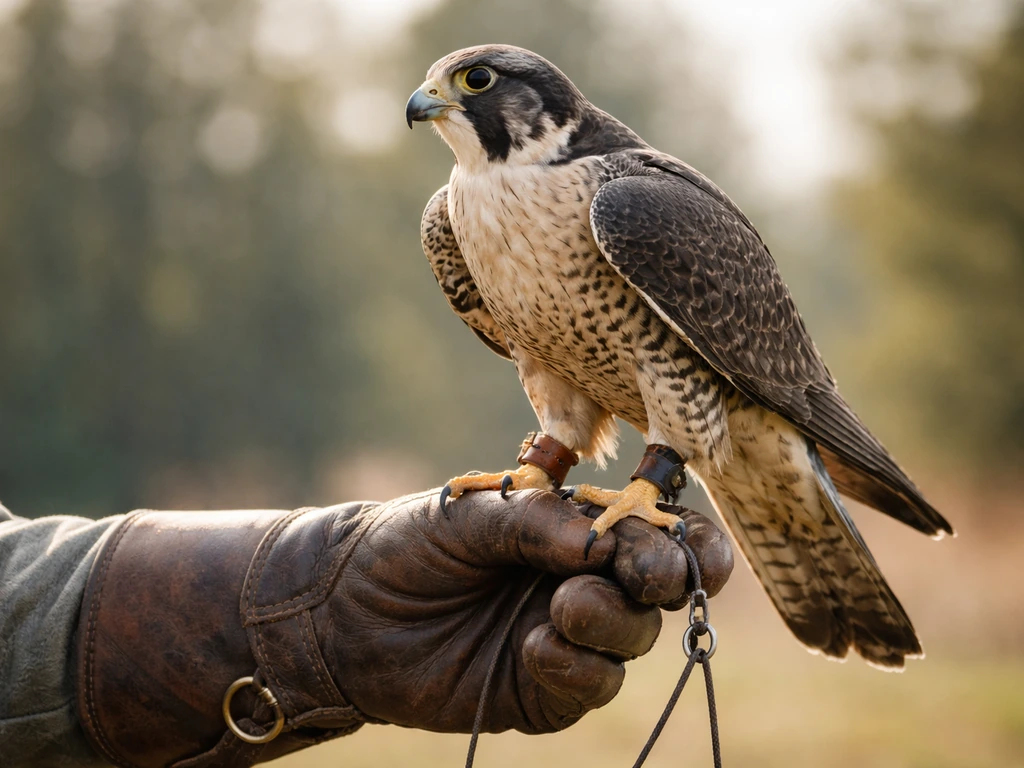
When handling, the glove goes on your non-dominant hand. The bird stands on the glove, jesses held between your index and middle fingers with just enough tension to prevent bating without causing the bird to feel trapped. Keep your arm steady and low, not raised high. Sudden movements, eye contact (especially direct staring), and looming posture all read as threats to falcons. Move slowly, speak quietly, and keep early sessions very short, five to ten minutes maximum at first.
A hood is one of your most important tools and often underused by beginners. Hoods reduce stress in unfamiliar environments, prevent bating off the glove or perch, and help you control what the bird is exposed to before it's ready. Hooding should be introduced early and paired with calm, positive experiences so the bird learns the hood means a neutral or safe event, not a threat.
Building trust and bonding routines
Trust is not built in a day and cannot be rushed. The early bonding phase, often called manning in falconry, is the process of getting your falcon comfortable with your presence, voice, movement, and handling. You are essentially teaching the bird that you are not a predator and that interacting with you leads to good things, specifically food.
Start by simply sitting near the bird's perch without approaching, letting it observe you from a safe distance. Speak in a calm, low tone. Do this for short sessions multiple times a day. Gradually decrease the distance over several days. When the bird is no longer bating (attempting to fly while tethered) every time you approach, you can begin picking it up on the glove, rewarding with a small food piece the moment it steps or stands calmly.
Consistency is the key ingredient here. Same person, same routine, same calm energy every session. Falcons are highly observant animals and they pick up on your posture, pace, and breathing. If you're rushed or anxious, the bird will reflect that. Build the routine around the bird's natural active periods, typically early morning and late afternoon, and keep early sessions under fifteen minutes to avoid exhaustion and stress.
Species note: kestrels are generally more tolerant of close human interaction and tend to man relatively quickly. Peregrines and sakers can be more intense in early handling and may require more patient, methodical manning. Wild-caught or rehab birds almost always require significantly more time and patience than captive-bred birds. Adjust your expectations accordingly.
Core training foundations: step-up, tether tolerance, and recall
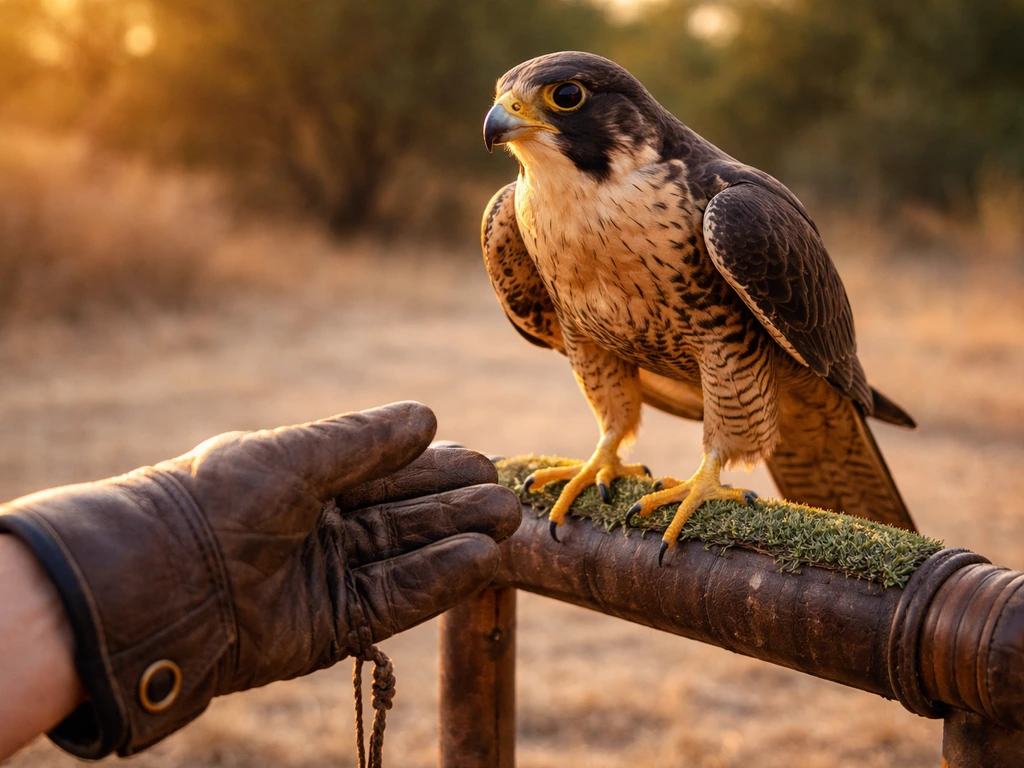
Once your falcon is comfortable stepping onto the glove from its perch, you can begin building the core behaviors that form the foundation of all falconry training. These are: reliable step-up (stepping onto the glove on cue), tether and perch tolerance, and recall to the glove (coming to you when called). Each one is built through the same mechanism: a clear cue, a correct response, and an immediate food reward.
Step-up and handling tolerance
Hold the glove just against the bird's lower legs and say a consistent verbal cue, something short like 'up' or 'come.' Most birds will step on for food held visible in the glove fingers. Click or use a consistent marker sound at the exact moment the foot touches the glove, then deliver the food reward. Practice this from the perch first, then from increasing distances. The goal is a bird that steps onto the glove calmly and without bating when asked.
Tether and perch tolerance
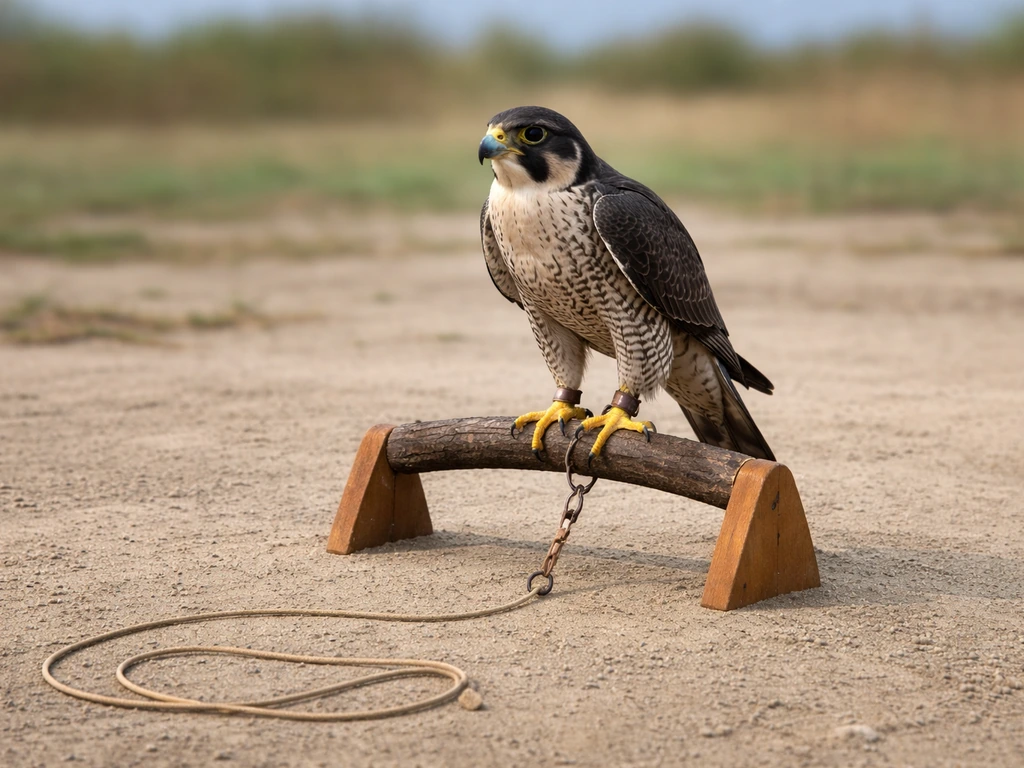
Your falcon needs to stand calmly on a block or bow perch while tethered. Early on, some bating is normal. The important thing is not to reward bating by immediately picking the bird up or offering food mid-bate. Wait for a moment of stillness, then reward. Over time, the bird learns that calm behavior is what earns good things. Make sure the perch surface is appropriate for the species, with enough grip to prevent foot injuries, and that the tether length prevents the bird from hitting the ground or striking the perch structure during a bate.
Recall to the glove
Recall training starts on a creance (a long light line) before you ever fly the bird free. Begin with the bird on a perch or bow perch a very short distance away, one meter or less. Call the bird's name or use your recall cue, show the food on the glove, and let it fly or step to you. Reward immediately. Increase distance in small increments only once the bird is reliably coming at the current distance. The creance ensures the bird cannot fly off before recall is solid. Never remove the creance until the bird is recalling reliably at a distance of at least 50 meters and consistently choosing to return rather than drift.
Feeding and reinforcement strategy
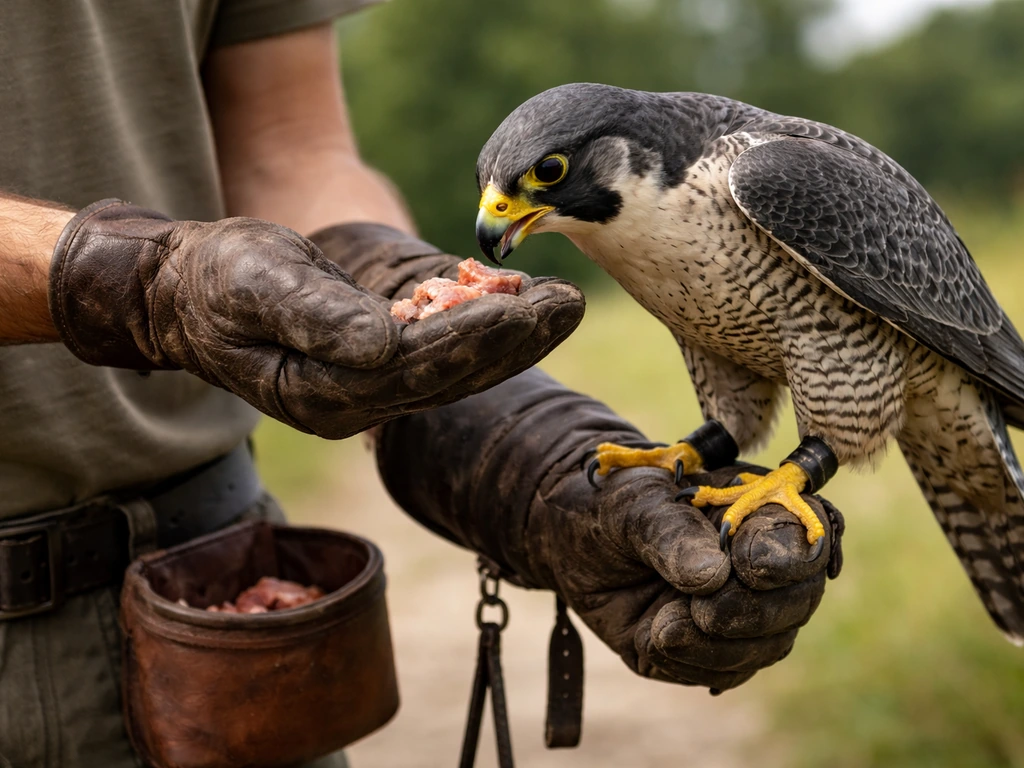
Feeding is the single most powerful tool in your training kit, and it requires careful management. Falconry training works through a concept called working weight: a flying weight at which the bird is alert, responsive, and motivated to work for food without being unhealthily thin. Finding that weight takes time, observation, and daily weighing. Most falconers work with a percentage-based reduction from a baseline weight, adjusted based on the bird's individual response and behavior.
The critical welfare line here is this: if your bird is thin but still unresponsive, the answer is not to reduce weight further. That's a signal to stop and get a veterinary evaluation. An underweight, lethargic bird is not a training problem, it's a health emergency.
Feed high-quality, species-appropriate food, typically quail, day-old chicks, mouse, or other whole prey depending on the species and what's available in your area. Always feed in association with training or handling, not freely in the mews, so food stays connected to your presence and cooperation. Reward quickly, within two seconds of the correct behavior, so the bird makes a clear association. Small pieces delivered often beat one large piece at the end of a session.
On non-training days, the bird still needs to eat a full crop. Weight management doesn't mean starvation, it means calibrated, consistent feeding that keeps the bird at the right working weight. Most experienced falconers feed a full crop after a successful flying session, then weigh the bird the next morning before feeding to track where it's sitting.
A realistic progression plan and daily schedule
Falcon training is not a linear sprint. A general progression from day one to free-flying looks something like this, though individual birds and species will vary significantly.
| Phase | Approximate Timeline | Focus |
|---|---|---|
| Manning and settling | Days 1–7 | Bird accepts your presence, hood introduction, glove step-up |
| Glove and handling tolerance | Days 7–14 | Consistent step-up, calm perch behavior, short handling sessions |
| Fist feeding and short recall | Days 14–21 | Bird flies to fist at 1–3 meters on creance, weight calibration begins |
| Creance recall extension | Weeks 3–6 | Recall extended to 30–50+ meters, lure introduction |
| Free flight preparation | Weeks 6–10+ | Reliable recall at full creance, assessment for free flight readiness |
| Free flight and hunting/display | Week 10 onward | Graduated free flying, lure work, and species-specific activity |
Daily structure matters as much as the progression plan. Aim for two short sessions per day, one in the morning and one in the late afternoon, each lasting fifteen to thirty minutes depending on the bird's energy and focus. Weigh the bird every morning before feeding. Log the weight, what was fed the day before, and how the session went. Patterns in your log will tell you far more than any single session.
Keep early sessions focused on one behavior at a time. Don't try to work on recall and hood tolerance and perch behavior in the same ten-minute session. Short, focused, and successful is always better than long, varied, and chaotic. End every session on a success, even if that means going back to something the bird already knows.
Troubleshooting common behavior and handling problems
Every falconer deals with setbacks. Here are the most common ones and what to do about them.
Excessive bating or fear response
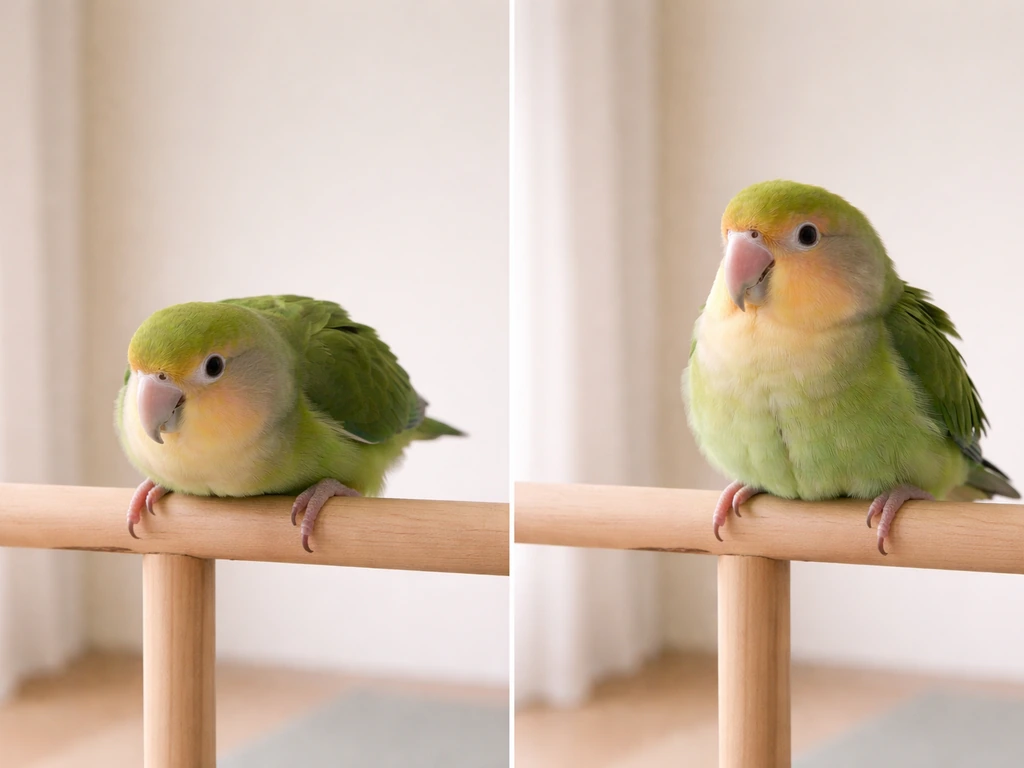
If your bird is bating constantly, freezing up, compressing its feathers tightly, or vocalizing excessively during sessions, it is telling you it's over threshold. These are all stress indicators. The answer is not to push through. Go back to the previous step in your progression, shorten sessions, reduce handling intensity, and give the bird more time to settle. Forcing contact with a stressed bird sets your training back further than a calm reset does.
Refusal to step up or come to the fist
Refusal usually means one of three things: the bird isn't hungry enough to be motivated, the bird is unwell, or you've moved too fast in your progression. Check the weight first. If the bird is at or above baseline and not particularly food-motivated, a slight weight adjustment may be needed. If the bird seems lethargic rather than just uninterested, have a vet check it before continuing training.
Footing (grabbing) or aggression on the glove
Some birds, especially young or wild-caught individuals, will foot (grip hard) or strike at the glove or your hand. This is a fear or discomfort response, not dominance. Never punish it. Instead, reduce stimulation, move more slowly, and ensure your glove gives adequate protection. With consistent positive handling, footing typically reduces as the bird becomes more comfortable. If a bird is consistently aggressive in all handling contexts after several weeks of patient work, consult an experienced falconer.
Jess and perch problems
Check jesses regularly for wear, stiffness, or damage. Stiff or ill-fitting jesses cause discomfort and will make a bird unwilling to stand calmly. Field jesses should be replaced with mews jesses when the bird is in the weathering area. Improper tether length or perch height can cause the bird to strike the perch or hit the ground during a bate, leading to feather and foot injuries. This is one of the most common and preventable husbandry problems in beginner falconry.
Species-specific notes
Kestrels tend to be quick to settle but can be more flighty under unexpected stimuli. Sakers are powerful and can be intense in their bating behavior early on, so proper perch setup and jess fit is especially important. Peregrines are fast learners but can also be prone to going 'over the top' in terms of arousal during training if sessions run too long. With any species, the individual bird matters more than the species average. Observe your bird constantly and adjust everything based on what you actually see, not just what the textbook says.
When to get expert help and when to stop
If you're new to falconry, you should not be attempting this alone. In the U.S., the federal permitting system for apprentice falconers requires that you work under a licensed sponsor for at least two years before obtaining a General falconry permit. That requirement exists for good reason. Find a licensed sponsor through your state falconry association or the North American Falconers Association (NAFA). Experienced falconers and rehabilitators are generally generous with mentorship when approached respectfully.
Stop training and contact a vet or experienced falconer immediately if you observe any of the following in your bird.
- Sudden, significant weight loss without explanation
- The bird is thin but unresponsive or lethargic (not just unmotivated)
- Persistent fluffed feathers, discharge from eyes or nares, or abnormal droppings
- A foot or talon injury, especially one that looks infected or swollen
- Feather damage that appears to be from repeated perch strikes
- No progress in trust-building after several weeks of consistent, calm work with a captive-bred bird
The IAF's Raptor Welfare site offers a self-audit tool that helps you check your own husbandry and training practices against welfare standards. Running through it periodically is a genuinely useful habit, not just a box-ticking exercise.
Knowing when to stop a session, when to step back in the progression, and when to call in expert help is one of the most important skills a falconer can develop. Falcon training rewards patience and punishes shortcuts. If you build the foundation carefully, with the right permits in place, the right equipment, and a genuine commitment to going at your bird's pace, you'll have a working partnership that's unlike anything else in the bird world.
If you're working with birds in a broader context, the principles here share a lot of overlap with general bird training and with keeping other birds of prey humanely. The same trust-building, low-stress approach you use in general bird training is the basis for how to train a towa towa bird. Wild bird handling and rehabilitation require their own specific approach, particularly around the goal of release rather than long-term keeping. But the underlying principle, that trust and food-based positive reinforcement are always the most effective tools, applies across all of it.
FAQ
Can I practice falcon training when I cannot fly the bird right now (weather, permits, or equipment delays)?
Yes. If your falcon is flying or tethered, you can still train step-ups and recall using a creance or short-range perch work (rewarding calm foot placement or a step onto the glove). Save free-flight and any “pressure” training for times when the bird is settled, weather is stable, and you can supervise continuously.
What should I do if my falcon seems threatened by me during early handling?
Don’t use direct staring or “eye contact challenges” when the bird is uncertain. Instead, use a soft gaze, slow torso movement, and keep the bird’s head and body orientation neutral by approaching at an angle rather than looming straight on. If the bird begins bating, pause and reduce your distance, then wait for stillness before any handling.
How can I tell whether my training step was too hard (progression issue) versus my technique being wrong?
A good rule is to change only one variable at a time, typically duration or distance, not both. If the bird starts bating, stop the session, return to the last step it handled calmly, and restart later with shorter, easier reps. Avoid increasing session length as your first fix, because length is a common trigger for “over threshold” behavior.
My falcon refuses food rewards sometimes, does that mean my motivation is wrong or something is medically off?
Use the bird’s log and behavior to confirm. If it is refusing repeatedly, being unusually lethargic, or you see significant weight loss, contact a vet rather than assuming it is a training plateau. Training refusal is common when underfed, but lethargy or prolonged unresponsiveness is a welfare red flag.
If my bird still eats but won’t cooperate, should I adjust weight immediately?
Not necessarily. Falcons can continue to seek food in short bursts, then “shut down” if stressed. If the bird is still eating normally, alert, and responsive but not performing, the issue is often cue clarity, timing, or session duration. If it stops eating, looks ruffled for long periods, or shows weakness, treat it as possible illness.
What are the most common preventable causes of feather or foot injuries during glove and tether work?
If you see excessive feather damage, persistent vocalizing, repeated strikes, or foot issues, stop and check husbandry first: perch surface grip, tether length, jess fit and flexibility, glove protection, and whether the bird has adequate bathing and rest. Training should pause until the physical setup removes preventable stressors and injury risk.
Should I hood my falcon immediately, or can it slow down trust building?
Yes, and it matters for welfare and performance. You should introduce the hood as a neutral cue paired with calm handling and immediate rewards, but keep sessions short at first so the bird can learn predictability. A hood used too “aggressively” can increase panic, which then makes step-ups and recall harder to build.
My bird grips or strikes the glove sometimes, is it fear, and how do I respond in the moment without making it worse?
If footing happens during approach, reduce stimulation, lower your movement rate, and confirm glove and jess security so the bird feels physically stable. Also ensure you are not rewarding avoidance with repeated reaching or extended handling. Let the bird settle, then reward only a calm moment, not intermittent struggles.
How precise do my click or marker timings need to be for reliable step-up and recall?
Maintain marker timing within about two seconds of the correct response, and avoid “labeling” behavior that you do not intend to reinforce. If you marker too early (before the bird actually steps) or too late, the bird learns the wrong association, which can look like inconsistent recall.
What is a safe strategy to increase recall distance without accidentally training drift or refusal?
Start by ensuring the bird can succeed from the first distance you use. Then increase distance in small increments, only after consistent returns. If recall reliability drops, do not keep calling from farther away as a training “challenge,” return to the previous proven distance and verify creance safety before restarting.
How should I interpret working-weight targets if the bird’s behavior changes but the scale reading looks okay?
Your baseline weight method is important, but the article’s welfare line is the deciding factor. If the bird is thin and unresponsive, do not reduce further, get veterinary evaluation. Also, compare weight trends to behavior and appetite, because some birds can appear “fine” on weight while still having underlying illness.
When should I stop a session even if the bird is technically participating?
For most beginners, the practical line is this: if you can’t do a behavior while the bird stays calm (not bating, compressing feathers, or escalating vocalization), you are beyond the right threshold. Move back a step before adding new behaviors like recall distance, multi-cue training, or longer sessions.
Can multiple people train the same falcon, or will it confuse the bird?
Yes. Because the bird learns from predictability, try to use the same trainer, the same basic routine order, and similar session length. If you must switch people, introduce the new person gradually at safe distance first, then handle only short, low-pressure portions when the bird is already calm with you.
What should I change first if training is going downhill over several days?
Most “over threshold” problems come from stacking stressors, long sessions, or too-fast progression. Use the log to identify patterns, then adjust one thing, typically shorten the next session and return to the last reliable step. If the bird keeps trending worse over several days, pause and consult an experienced falconer or a vet when lethargy is present.
Are there practical handling do’s and don’ts for transferring the falcon from the housing to the training area?
Yes, but do it carefully. When working near the bird, avoid sudden overhead movement and keep the glove and cue consistent. If you have to handle tools or open the transport box, do it calmly and out of the bird’s immediate line of anticipation, because many falcons react to abrupt movement before they react to cues.
If my falcon is calm-looking, how do I know stress is not hidden underneath the surface?
Not always. Birds may look “quiet” while still being physiologically stressed, so rely on multiple cues together: posture, feather state, vocalizing, bating frequency, and responsiveness to your presence. If the bird is quiet but shows delayed reactions, refusal, or repeated hesitation, consider reducing intensity rather than assuming everything is fine.