Adopting a bird means something very different depending on what brought you here. If you want to bring a pet bird into your home from a rescue, breeder, or shelter, you are in the right place. If you found an injured bird on the ground and are wondering what to do right now, that is a completely separate situation with different rules and risks. This guide covers both scenarios clearly so you can figure out which one applies to you, then follow the right steps from the start.
How to Adopt a Bird: Step-by-Step Pet and Wild Rescue Guide
Maya Harris
9 Apr 2026
Pet adoption vs. wild bird rescue: know which one you are doing
The phrase 'adopt a bird' gets used two ways. Most people mean adopting a captive-bred or previously owned pet bird, typically a parrot, finch, canary, cockatiel, or similar domesticated species from a rescue organization, shelter, or reputable breeder. That is a planned, legal, and straightforward process. The second meaning involves finding a sick, injured, or orphaned wild bird and wanting to 'take it in.' That second situation is far more legally restricted and, in most cases, should land the bird with a licensed wildlife rehabilitator rather than in your living room.
If you are interested in the process of how to get a bird as a companion animal, that path involves researching species, finding a reputable source, and setting up your home before the bird arrives. If you found a bird on your lawn or sidewalk, scroll down to the legality and ethics section first before you touch anything.
Before the bird comes home: housing, diet, and welfare basics
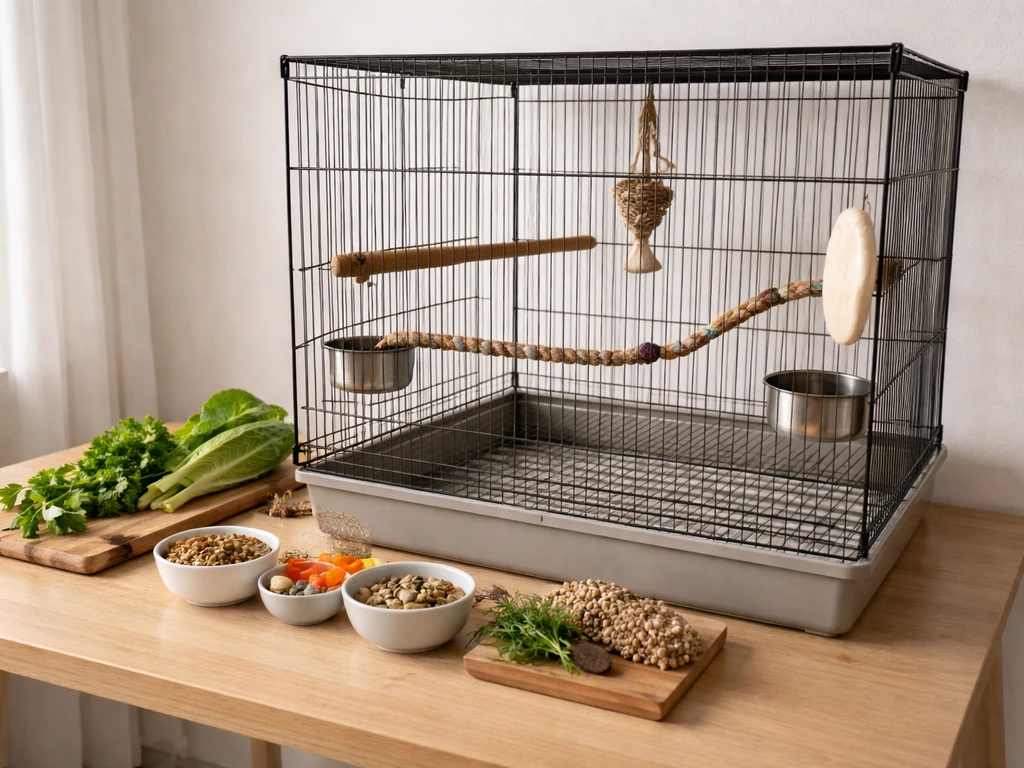
The single biggest mistake new adopters make is setting everything up after the bird arrives. You want the cage, food, perches, and vet appointment locked in before pickup day. A bird entering a chaotic, unprepared home gets stressed immediately, and stress in birds compounds fast.
Cage and space setup
Bigger is almost always better with cages. For a cockatiel or small parrot, the bar spacing should be no wider than 5/8 inch to prevent head entrapment. For budgerigar, cockatiel, lovebird, and parrotlet, the Merck Veterinary Manual’s cage bar-spacing recommendations list a bar spacing of 0. 5 inches [the bar spacing should be no wider than 5/8 inch](https://www.
merckvetmanual. com/multimedia/table/minimum-and-bar-spacing-recommendations). Larger parrots like African Greys or Amazon parrots need cages at least 24 inches wide by 24 inches deep, preferably larger. Place the cage at eye level or just below, against a wall on one side so the bird feels secure rather than exposed on all sides.
Avoid kitchens (toxic cooking fumes, especially from non-stick cookware) and drafty rooms. Add a mix of perch diameters so the bird's feet are not gripping the same position all day, which prevents pressure sores.
Diet: get this right from day one
A quality pelleted diet should make up roughly 50 to 75 percent of most pet birds' food intake, with fresh vegetables and fruits filling the remaining 25 to 50 percent, according to guidance from UC Davis School of Veterinary Medicine. Seeds should not be the main event. They are high in fat and low in nutrients, and when you mix pellets and seeds together, birds typically eat around the pellets and fill up on seeds, which defeats the purpose entirely. Offer vegetables like leafy greens, carrots, and bell peppers daily. Avoid avocado, onion, chocolate, and caffeine, all of which are toxic to birds.
If the bird you are adopting has been living on an all-seed diet, do not switch cold turkey. Transition gradually over two to four weeks, introducing pellets alongside the familiar food while slowly reducing seeds. This takes patience, but it is worth it for the bird's long-term health.
Vet check before or immediately after adoption
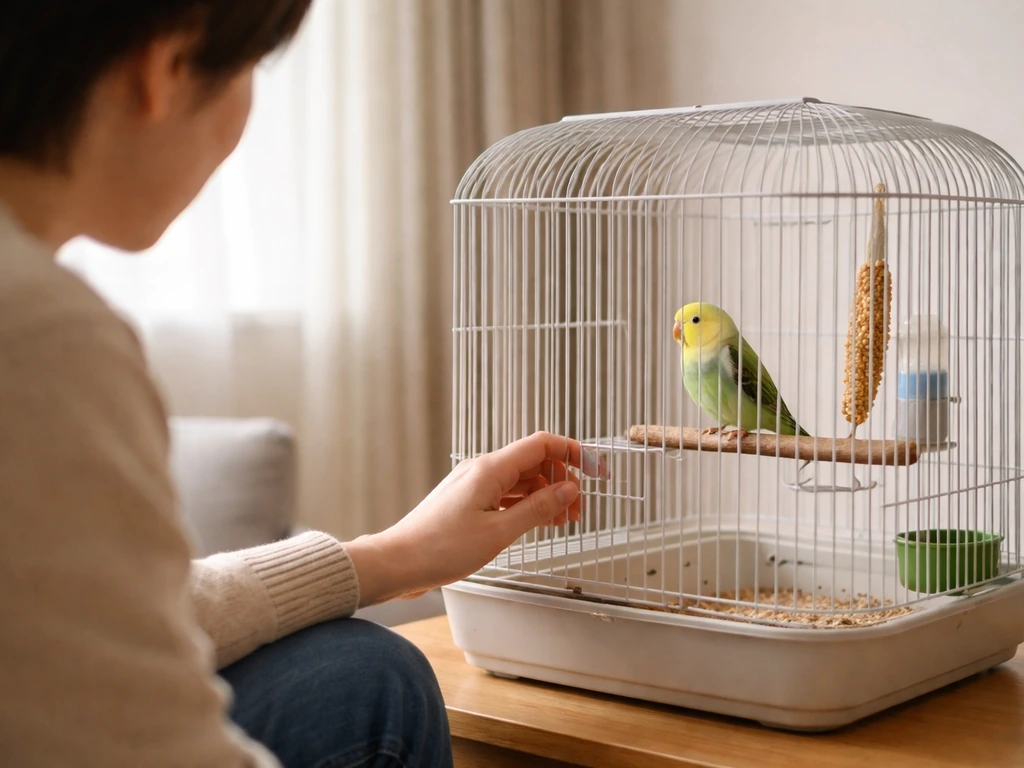
Book an appointment with an avian vet, not a general practice vet, within the first week of bringing the bird home. Avian medicine is specialized, and most dogs-and-cats vets will tell you themselves they are not the right fit. Ask the rescue or breeder for any health records. A vet visit should include a physical exam, a fecal test for parasites, and ideally a basic blood panel. This is also the time to ask your avian vet how many hours of quiet, dark, uninterrupted sleep your specific species needs, since sleep is essential to a bird's immune function and behavior.
The first days and weeks: bonding and trust-building
A newly adopted bird is not a blank slate. It comes with its own history, stress responses, and learned behaviors. Even a bird that was well-socialized in a previous home needs time to recalibrate to a new environment, new sounds, and new people. Rushing this process is the number one bonding mistake.
The 3-3-3 framework for acclimation
Many parrot rescues use a structured acclimation approach. For the first 24 hours, leave the bird in its cage and let it observe the household without interaction pressure. For the first 72 hours, only the primary adopter should feed, water, and offer treats. This builds a clear, consistent association between you and good things without overwhelming the bird with multiple strangers. For the first full week, avoid breaking the routine, no loud parties, no sudden rearranging of the cage, no forcing hands inside the enclosure.
Sit near the cage and talk softly. Read aloud. Play calm music. Let the bird get used to your presence before you ask it to interact. When you do offer your hand, keep it still and below the bird's chest level, which is less threatening than a hand looming from above. Offer high-value treats (a small piece of fruit, a nutrient-rich seed, or a bit of whole grain) from your palm with your fingers flat.
Reading stress signals
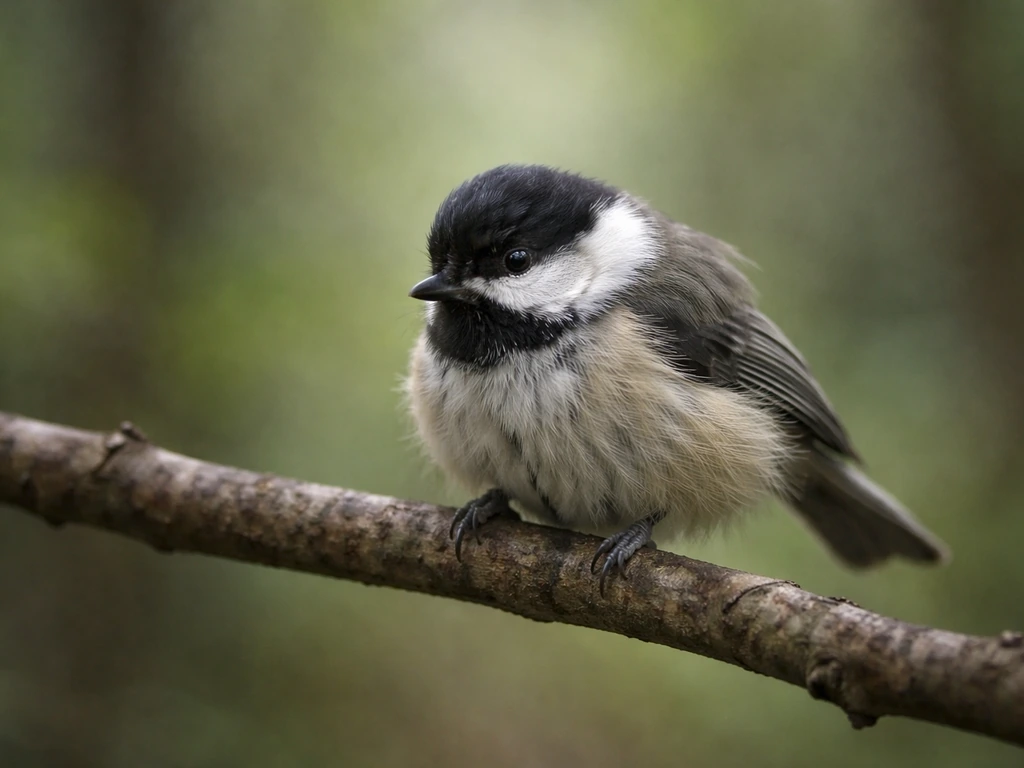
Birds hide illness and stress because showing weakness is dangerous in the wild. What looks like a calm bird may actually be a stressed bird. Watch for fluffed feathers (the bird looks puffier than normal), labored or open-mouth breathing, tail-bobbing while breathing, loss of appetite, or droppings that change in color or consistency. Any of these warrant a vet call. A relaxed bird will grind its beak lightly, preen itself, and make normal vocalizations for its species.
Gentle handling and humane training from the start
Humane training for a newly adopted bird is not about obedience, it is about replacing fear with confidence. Positive reinforcement is the method: reward the behavior you want, ignore or redirect the behavior you do not. Punishment-based methods (covering the cage, squirting with water, loud noises) increase stress and erode trust, which makes every behavioral problem worse in the long run.
Target training as a foundation
Target training is the best first step for almost any bird. You introduce a target stick (a chopstick, a pencil, or a purpose-made tool) and reward the bird with a treat every time its beak touches the tip. Once the bird reliably touches the target, you can use it to guide movement, step-ups, cage entry and exit, and eventually more complex behaviors. This gives the bird a clear way to communicate and succeed, which builds confidence fast.
Step-up training without force
Teach the step-up cue by placing your finger or a handheld perch gently against the bird's lower chest, just above its feet, and saying 'step up' in a calm voice. If the bird steps on, reward immediately. If it backs away, do not chase. Stop for the session and try again later. Some birds take days to step up willingly, especially if they have had bad experiences with hands. Consistency and short sessions of two to five minutes work far better than long forced interactions.
Species-specific care and taming differences
Not all birds tame or bond the same way. Understanding the natural behavior of your species saves a lot of frustration. A bird that seems aloof or aggressive might simply be behaving exactly as its species is wired to behave, and that calls for a species-appropriate approach rather than a one-size-fits-all method.
| Species Group | Social Needs | Taming Speed | Handling Style | Key Notes |
|---|---|---|---|---|
| Large parrots (African Grey, Amazon, Macaw, Cockatoo) | Very high; need daily interaction | Slow to moderate | Step-up, target training, patience | Highly intelligent; boredom leads to feather-destructive behavior |
| Medium parrots (Cockatiel, Conure, Caique) | High; enjoy play and handling | Moderate to fast | Step-up, gentle hand taming | Cockatiels are beginner-friendly; conures can be loud |
| Small parrots (Budgerigar, Parrotlet, Lovebird) | Moderate; can be kept in pairs | Moderate (hand-raised faster) | Short sessions, finger perch | Solo birds often bond more strongly to humans |
| Finches and Canaries | Low human interaction; prefer bird company | Not typically hand-tamed | Minimal handling; observe more than touch | Focus on environment enrichment, not taming |
| Doves and Pigeons | Gentle; tolerate handling well | Relatively fast | Calm, slow movements | Good for beginners; rarely bite hard |
If you are thinking about how to own a bird long-term, the species you choose will shape your daily routine for 10 to 80 years depending on the bird. A macaw can outlive you. A canary will not demand your attention the way a cockatoo will, but it still needs a clean, enriched environment and proper nutrition. Match the bird to your actual lifestyle, not your ideal lifestyle.
For anyone curious about the broader process of how to domesticate a bird, it is worth knowing that true domestication happens over generations of selective breeding. What you are doing with an adopted bird is socialization and trust-building, not domestication, and that distinction matters for setting realistic expectations.
Common problems after adoption and how to handle them
Biting
Biting is almost always communication. A bird bites because it is afraid, overstimulated, protecting territory, or responding to something it learned from a previous handler. The worst response is to jerk your hand away dramatically, which teaches the bird that biting works. Instead, stay as calm as you can, gently lower the bird to a perch, and end the session. Over time, learn to read the pre-bite signals: pinning pupils, raised feathers, a stiffened posture, or a low growling vocalization. Stop before the bite, and you start changing the pattern.
Screaming
Some amount of vocalization is normal and species-appropriate. Parrots call at dawn and dusk. Conures are just loud. The problem is contact calling that escalates because the bird learned that screaming brings you into the room. Do not run in to check every time. Instead, come before the screaming starts, reward quiet behavior with your presence, and leave before the bird gets anxious. Teaching a 'quiet' cue paired with positive reinforcement over weeks can significantly reduce excessive screaming.
Escape risk and flight safety
A flighted bird in a new home is a serious escape and injury risk. Before the bird is out of its cage, check that windows and doors are closed, ceiling fans are off, and there are no open toilets, full pots of water, or mirrors that could cause a collision. If the bird is not yet comfortable returning to its cage on cue, do not let it free fly until that recall is reliable. Some adopters choose to work with an avian vet or behaviorist on whether wing trimming is appropriate during the initial settling-in period, which is a genuinely debated topic with valid arguments on both sides.
Feather plucking and self-destructive behavior
If your adopted bird arrives already plucking or barbering its feathers, rule out medical causes first (skin infections, nutritional deficiencies, parasites) with an avian vet before assuming it is purely behavioral. Many rescue parrots pluck due to chronic stress or boredom in a previous home. Improving enrichment, social time, foraging opportunities, and a consistent routine often helps, but some birds benefit from working with an avian behaviorist.
Legality, ethics, and safety: what you need to know before touching a wild bird
This is where many well-meaning people get into legal and medical trouble. In the United States, the Migratory Bird Treaty Act (MBTA) is a federal law that makes it illegal to take, possess, transport, or sell most wild birds without authorization or a permit. This includes common backyard birds like robins, sparrows, and mockingbirds. 'Take' under the MBTA covers a wide range of actions, including possessing the bird, its eggs, feathers, or nest. Ignorance of the law is not a defense. If you pick up an injured wild bird and keep it at home, you may be in violation of federal law.
There is also the matter of what some people call 'renting' or temporarily fostering a wild animal, and while the topic of how to rent a bird is typically discussed in other contexts, the same principle applies here: temporarily holding a wild bird without a license is still possession under the MBTA, regardless of your intent.
When to call a wildlife rehabilitator instead
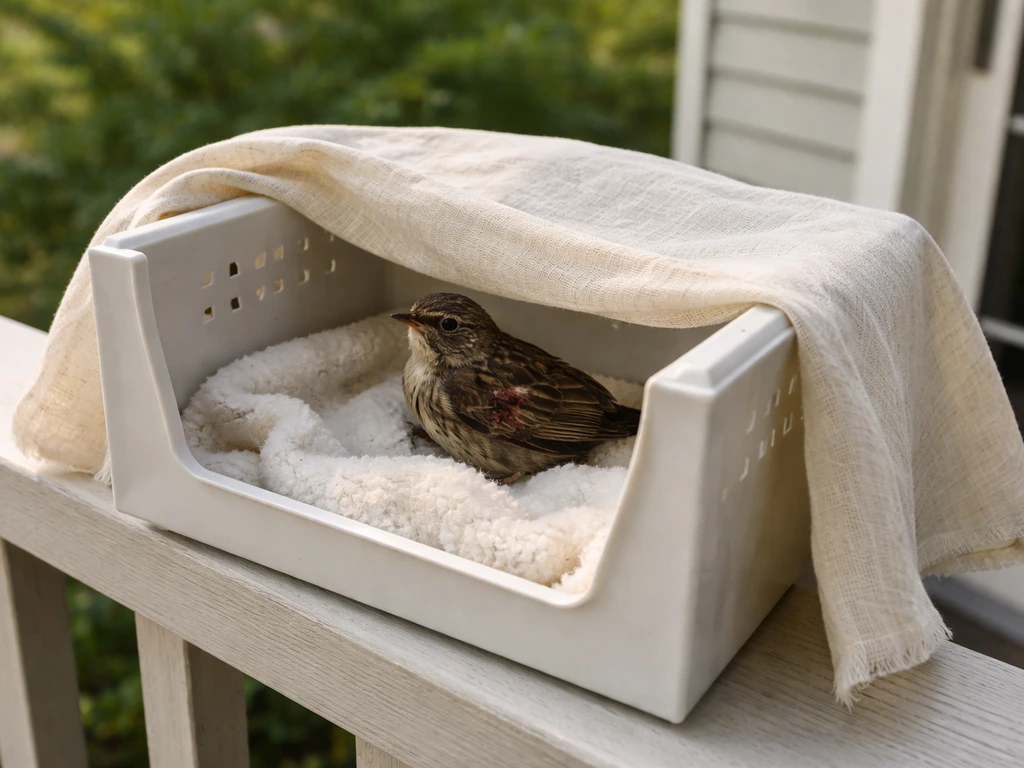
If you find a wild bird with obvious injuries such as bleeding or a visibly broken wing, the right move is to contact a licensed wildlife rehabilitation agency immediately, not to attempt home care. Reddit users also point out that in the U. S. you can [use Animal Help Now to find local wildlife rehabilitators](https://www.
reddit. com/r/Ornithology/comments/1krn87p), and those rehabilitators are trained and licensed to care for injured, orphaned, or sick wildlife with the goal of returning them to the wild. Fledglings on the ground are often not injured at all; their parents are usually nearby and still feeding them. Picking up a healthy fledgling and bringing it inside removes it from the very care it needs.
Leave it where it is unless it is in immediate danger from a cat or car, and if you must move it, place it in nearby shrubs rather than indoors.
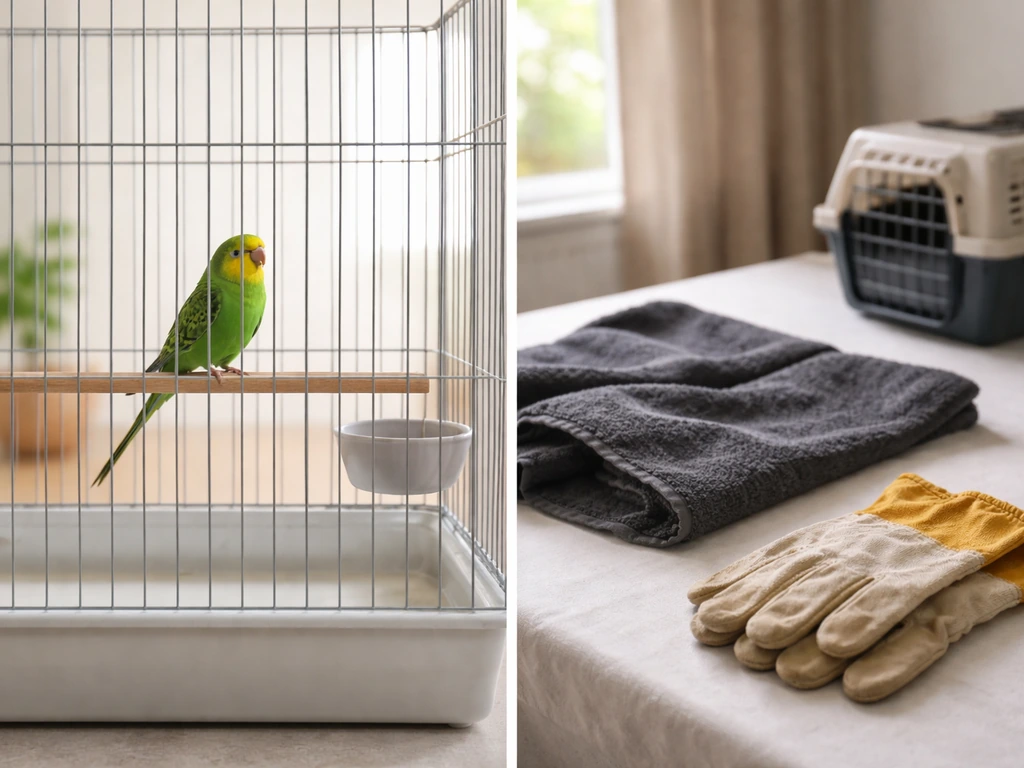
If you need to contain a genuinely injured wild bird temporarily before a rehabilitator arrives, you can place it in a cardboard box with air holes, with one end of the box resting on a towel over a low heating pad for warmth. Wild birds experience human eye contact, noise, and touch as major stressors, so cover the box and keep it in a quiet, dark space. Do not attempt to feed or water the bird, as improper feeding can cause aspiration or worsen the injury.
Disease risks you cannot ignore
Wild birds can carry highly pathogenic avian influenza (HPAI) and other zoonotic diseases. The CDC advises against direct contact with sick or dead wild birds, and strongly recommends against touching surfaces or materials contaminated with saliva, mucus, or feces from wild or domestic birds. If you must handle a wild bird before a rehabilitator takes over, use gloves, wash your hands thoroughly afterward, and change your clothes if you have other birds at home. Cornell University's wildlife health guidance notes that rehabilitators working in HPAI risk conditions should shower and change clothing before handling other susceptible birds.
Quarantine for newly adopted pet birds
Even for legally adopted pet birds, quarantine matters. If you are importing a bird from abroad, USDA APHIS requires a federal quarantine period of 30 days. During that quarantine, a second cloacal swab is taken 7 to 14 days after entry to test for highly pathogenic avian influenza and Newcastle Disease Virus. Even for domestic adoptions, if you already have birds at home, keep the new bird in a completely separate airspace (ideally a separate room) for at least 30 days and have it vet-checked before introducing it to your existing flock.
Your adoption checklist at a glance
- Identify whether you are adopting a pet bird or handling a found wild bird, and follow the correct path for each.
- Set up the species-appropriate cage, perches, and food before the bird arrives.
- Book an avian vet appointment within the first week for a health check and fecal screen.
- If you have other birds at home, quarantine the new bird in a separate room for 30 days.
- For the first 24 hours, let the bird settle in its cage without forced interaction.
- For the first 72 hours, only the primary caregiver feeds, waters, and offers treats.
- Begin target training with a stick and high-value treats once the bird is calm and eating.
- Introduce step-up training in short sessions of two to five minutes, never forcing contact.
- Monitor daily for illness signs: fluffed feathers, open-mouth breathing, tail-bobbing, or appetite changes.
- If you find an injured wild bird, call a licensed wildlife rehabilitator and do not attempt to keep or feed it yourself.
FAQ
Do I need to quarantine a newly adopted pet bird from my existing birds?
Yes. For pet birds, start a quarantine in a separate room if possible, and keep only dedicated supplies (food dishes, cleaning tools, towels) in that area. Even if the bird “looks healthy,” schedule an avian vet check within the first week and ask whether your vet wants fecal testing repeated (some parasites show up only after an interval).
What should I do if my new pet bird seems stressed during the first couple of days?
Plan for a 24 to 48 hour “no handling” window even after the first day of quiet acclimation. If the bird is still settling, prioritize monitoring appetite, droppings, breathing, and fluffed-feather posture over bonding sessions. Treat bonding as cumulative, not one big moment on day one.
Can I keep my home environment the same as usual when my new bird arrives, or should I make changes?
Do not. Any temperature or atmosphere change can be significant for birds, especially while they are acclimating. Keep room temperature stable, avoid incense and aerosol sprays, and use no Teflon or non-stick overheats. If you need to open windows for ventilation, do it when the bird is securely contained and away from drafts.
How do I know when to stop training if my bird is “still interested” but getting tense?
You can aim for shorter sessions, two to five minutes, but you should end the session based on the bird’s signals, not the clock. If the bird leans away, shows stiffening, or starts lunging, stop immediately and try again later at a lower-stimulation time (often right after the bird has eaten).
My bird is flighted and keeps escaping. Should I wing-trim immediately after adoption?
For most pet birds, you typically can wait for vet guidance before adjusting wings, and do not make wing trimming the first solution to escape risk. Instead, manage the environment (secure windows, doors, fans off) and use recall training cues when the bird is calm. If the bird is flighted and panicking, ask the avian vet whether temporary behavioral management is safer than trimming right now.
What if my adopted bird has mites or signs of skin disease, can I treat it myself?
If you can see lice, mites, or scaly changes, act urgently, but avoid bathing or “home remedies” unless your avian vet tells you to. For many parasites, the correct treatment depends on the specific cause, and wrong products can worsen respiratory irritation. Bring a fecal sample (if you have one) and ask the vet to test for mites and intestinal parasites together.
What if my bird refuses pellets during a seed-to-pellet transition?
Use the specific food transition approach for the bird’s history. If it was seed-based, introduce pellets alongside familiar seed for two to four weeks, and increase pellet portion gradually. If the bird refuses pellets entirely, ask your avian vet for options like different pellet brands or shapes, and consider adding foraging-style veggie presentations rather than changing only the diet.
Why does my bird scream more after I interact, even when I’m trying to soothe it?
Yes, and it’s usually a clue to evaluate the bird’s environment and feeding rhythm, not just their “personality.” Too little sleep, inconsistent quiet time, or attention that arrives after screaming can reinforce escalation. Start by protecting the same dark, uninterrupted sleep window your species needs, then teach a quiet cue paired with calm presence.
How can I tell the difference between “new home stress” and a real illness?
For pet birds, normal droppings vary by species and diet, but sudden changes in color, texture, or frequency, plus fluffed posture or open-mouth breathing, are not “normal adjustment.” If you notice tail-bobbing with breathing, no interest in food, or changed droppings plus lethargy, contact an avian vet promptly rather than waiting a few days.
My bird sometimes bites hard when I approach. What’s the safest way to handle that right now?
A healthy parrot that is alert and comfortable usually shows calm body language and normal activity patterns, but biting is often a fear or overstimulation signal. For aggressive sessions, reduce your proximity, offer a target or treat from farther away first, and avoid sudden hand movements. If bites are frequent or intensify, ask the avian vet or an avian behavior professional for a plan tailored to the bird’s triggers.
I found a baby bird. How do I know if it’s a fledgling that should stay outside versus an injured bird?
If it is a wild bird on the ground and you’re in doubt, the safest assumption is that many “fledglings” are meant to stay where they are unless there is immediate danger. Move it only if it is in active harm from cats or cars. For temporary holding, follow stress-minimizing containment only until a licensed rehabilitator arrives, and do not attempt feeding.
What should I do legally if I find a wild bird and want to help immediately before the rehabilitator arrives?
For legality, treat any wild bird possession as high risk. In the US, MBTA restrictions can apply even if you found the bird injured and plan to “help.” Instead of keeping it yourself, call a licensed wildlife rehabilitator as your next step, and you can often get instructions for safe containment that minimize stress while help is on the way.
How do I protect my pet birds if a wild bird needed temporary containment?
If you also own other birds, assume biosecurity risk from wild birds and from unknown-status birds. Keep the wild bird in a sealed, isolated area until the licensed rehab takes over, avoid contact with your flock, and wash hands, change clothes, and sanitize surfaces afterward. If you must handle anything that touched the bird, treat it as contaminated.
How long should quarantine be if I adopt a pet bird locally, not internationally?
Even if you adopted within your country, follow quarantine guidance based on source risk. If you bring in a new bird from a household or region with unknown disease screening, ask your avian vet whether 30 days is appropriate in your situation and whether they want repeat testing after the initial interval. Separate airspace, not just a different cage, is the key precaution.
Next Articles
How to Own a Bird: Humane Step-by-Step Care Guide
Humane step-by-step bird care: choose the right species, set up housing, feed daily, bond safely, train, and fix common
How to Get a Bird: Pet, Wild, or Trust-Building Guide
Humane steps to get a pet, attract a wild bird, or build trust, with handling, stress signs, and escalation tips.
How to Teach a Bird to Fetch Step by Step Guide
Humane, step-by-step training to teach your bird to fetch safely, with targets, rewards, troubleshooting, and gradual re