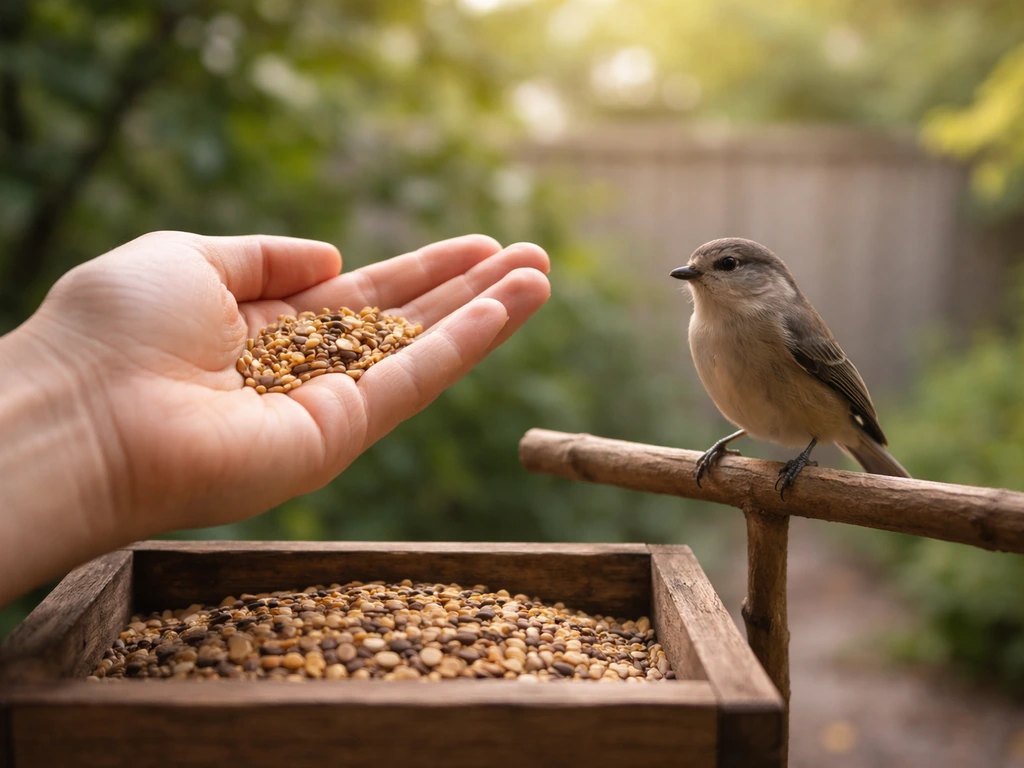
Owning a bird means committing to a living creature that can live anywhere from 10 to 80-plus years depending on the species, needs daily social interaction, and communicates stress in ways most new owners miss entirely. The good news: with the right setup, a clear feeding routine, and a patient approach to trust-building, bird ownership is one of the most rewarding things you can do. This guide walks you through every step, from picking the right species to handling bites calmly and setting up a training routine that actually works.
How to Own a Bird: Humane Step-by-Step Care Guide
Maya Harris
5 Apr 2026
Is a bird right for you? Picking the right species first
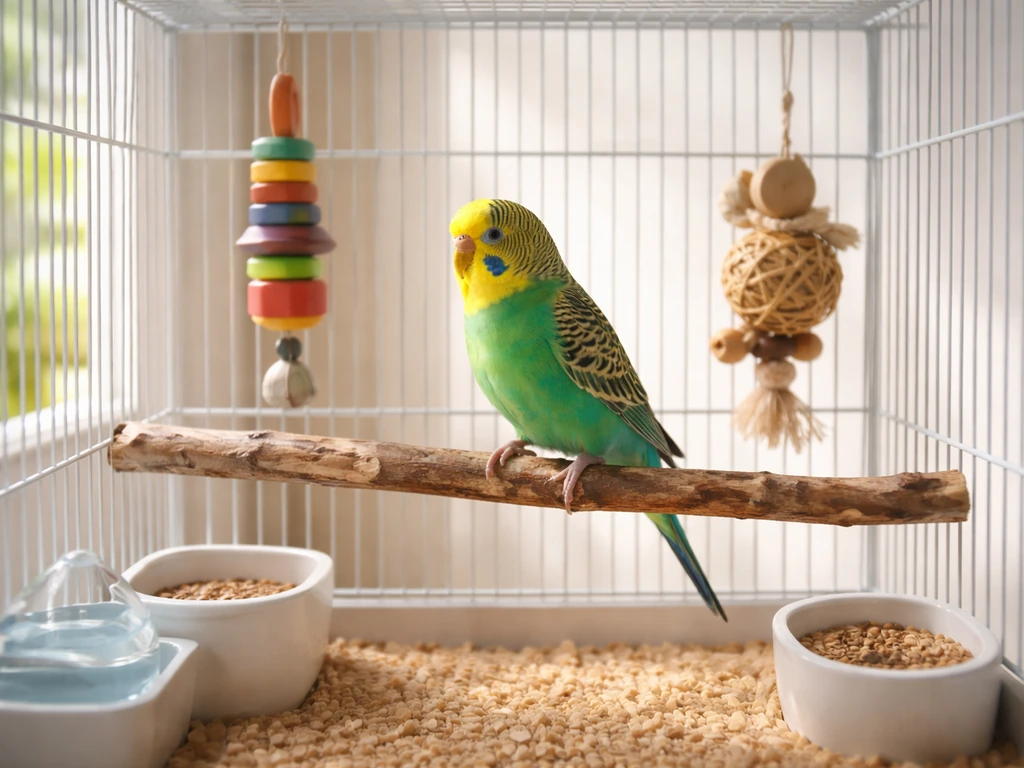
Before anything else, be honest about your lifestyle. Birds are social, vocal, and messy. A cockatiel will fill your home with cheerful chirping and feather dust. A large macaw or African Grey demands the kind of time and mental engagement you'd give a toddler, every single day. The ASPCA puts it plainly: medium and large parrots are highly intelligent and social animals with complex care requirements, and they are genuinely difficult to keep well. That is not a reason to avoid parrots entirely, but it is a reason to start with a species that matches your actual schedule and experience level.
For most beginners, budgerigars (budgies), cockatiels, or lovebirds are the best starting point. They are small enough that cage costs stay reasonable, they are forgiving of beginner mistakes, and they respond well to patient taming. If you want to move up to a conure, an Amazon, or a cockatoo, build your skills on a smaller species first. Once you have a handle on reading body language, managing enrichment, and stepping a bird up reliably, the jump to a larger parrot becomes much less overwhelming.
When it comes to actually finding your bird, there are a few paths worth knowing. You can get a bird from a reputable breeder, a pet store with transparent sourcing, or a rescue organization. Each route has its pros and cons, and if you want a deeper breakdown of those options, it helps to understand the full acquisition process before you commit.
| Species | Skill Level | Noise Level | Lifespan | Key Notes |
|---|---|---|---|---|
| Budgerigar | Beginner | Low-Medium | 7-15 years | Gentle, easy to tame, small space works fine |
| Cockatiel | Beginner | Medium | 15-25 years | Affectionate, whistles well, great first parrot |
| Lovebird | Beginner-Intermediate | Medium | 10-15 years | Feisty personality, bonds strongly to one person |
| Green Cheek Conure | Intermediate | Medium | 15-25 years | Playful and cuddly, less screechy than other conures |
| Amazon Parrot | Intermediate-Advanced | High | 40-60 years | Intelligent, hormonal phases are challenging |
| African Grey | Advanced | Medium-High | 40-60 years | Highly sensitive, requires constant mental stimulation |
| Macaw | Advanced | Very High | 50-80+ years | Massive space and time commitment, very social |
One option that often gets overlooked is adoption. Rescues and sanctuaries are full of birds that need rehoming, often for no fault of their own. If you are open to that route, learning how to adopt a bird from a rescue can save a life and often comes with background information on the bird's temperament and history, which is genuinely useful for a new owner.
Setting up the cage, environment, and enrichment
Cage size and bar spacing matter more than most people think
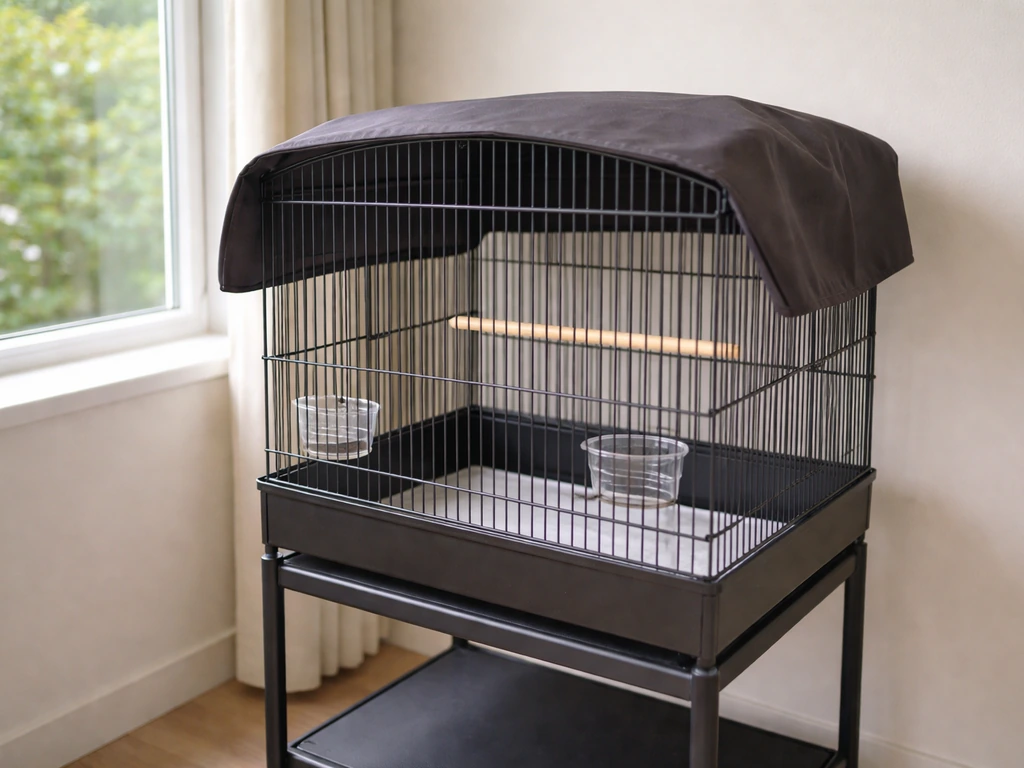
The cage is your bird's home for most of the day, so it needs to be big enough for the bird to spread both wings fully without touching the sides. Bigger is always better. The bar spacing is equally critical: for budgerigars, cockatiels, lovebirds, and parrotlets, the Merck Veterinary Manual recommends bar spacing of no more than 0.5 inches. The Edmonton Humane Society aligns with this, noting 1/2 inch for budgies and 1/2 to 5/8 inch for cockatiels. Wide bar spacing on a small bird's cage is a strangulation and escape risk, so double-check before buying.
Cage placement is the next priority. Keep the cage in a room where the family spends time so the bird feels included, but avoid the kitchen. This is not just about temperature fluctuations from cooking. Non-stick cookware coated with fluoropolymers like PTFE (commonly known as Teflon) releases highly toxic fumes when overheated. Cornell University's veterinary college has documented PTFE toxicosis causing respiratory distress and death in birds after inhalation exposure. The avian respiratory tract is extremely sensitive to inhaled toxins, and even secondhand fume exposure across a hallway can be fatal. Keep your bird in a well-ventilated space away from the kitchen and swap non-stick cookware for stainless steel or cast iron.
Perches, toys, and enrichment
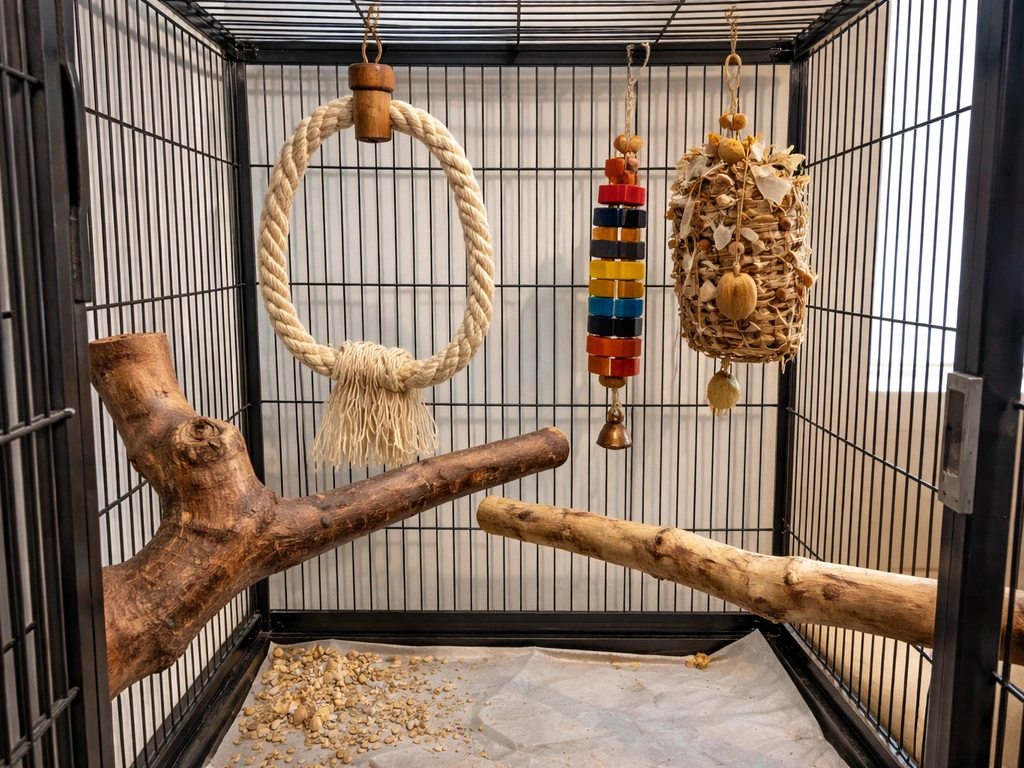
Inside the cage, vary the perch diameters so your bird's feet are exercised at different grips. Natural wood perches from bird-safe trees (such as manzanita or apple) are ideal. Avoid sandpaper perch covers, which can damage foot skin. Toys should rotate every week or two so the bird does not habituate to them. The RSPCA Australia is explicit that an enrichment plan is essential to bird husbandry: activities that stimulate the brain and keep the bird mentally active are not optional extras, they are part of basic care. Foraging toys, puzzle feeders, shreddable toys, and rotating novel objects all count.
- Minimum two perches at different heights and widths
- At least three to four toys, rotated weekly
- One foraging toy or puzzle feeder at all times
- A bathing dish or misting option several times per week
- A play gym or activity area outside the cage for daily out-of-cage time
Feeding, water, sleep, and daily care basics
Build the diet around pellets, not seeds
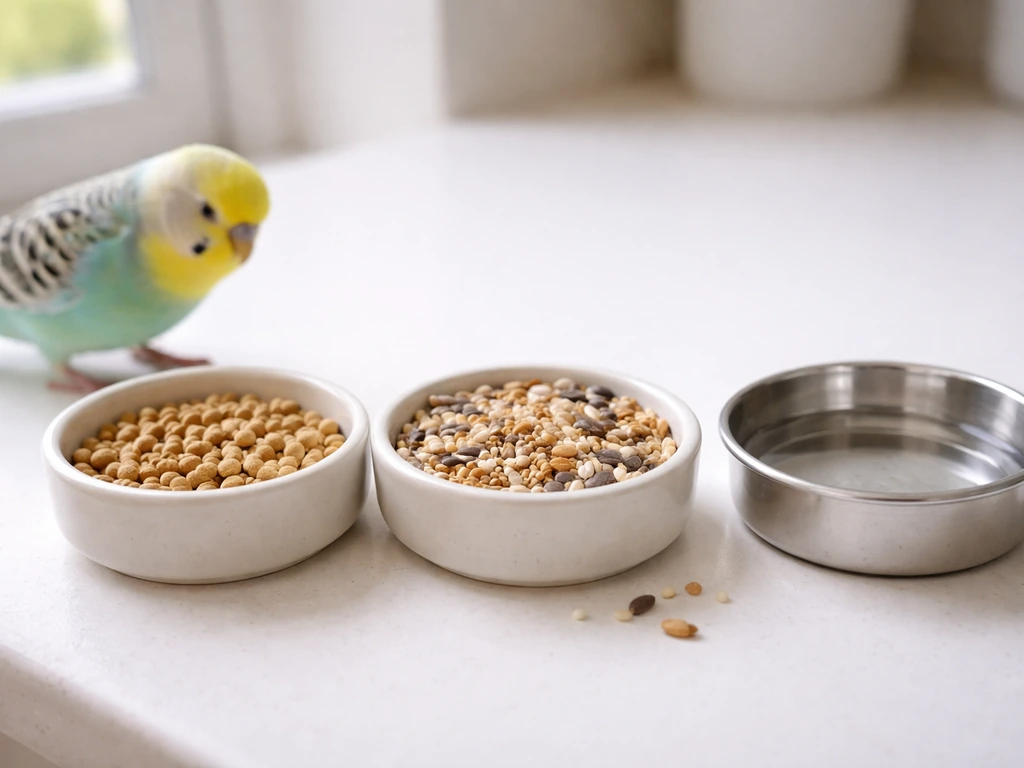
Seed-only diets are one of the most common mistakes new bird owners make. Seeds are high in fat, low in key vitamins and minerals, and birds will often eat their favorites while ignoring the rest, making nutritional imbalances even worse. The Merck Veterinary Manual notes that formulated pellet diets have genuinely improved pet bird nutrition, and VCA Animal Hospitals adds that a bird eating 60-70% pelleted diet with fresh fruits and vegetables added may not even need additional supplements. That is the target: pellets as the foundation, supplemented with bird-safe produce.
Fresh water should be changed daily. Bowls get contaminated quickly with droppings, food particles, and bacteria. Some owners prefer water bottles to bowls for hygiene, but either works as long as it gets cleaned and refilled every day without exception.
Foods to keep out of the house (or at least away from the bird)
Avocado is highly toxic to birds. The leaves, fruit, stems, bark, and seeds all contain compounds that can cause serious harm. Chocolate contains theobromine and caffeine, both of which can cause seizures and death in birds even in small amounts. Onions, garlic, caffeine, alcohol, high-sodium foods, and fruit pits are also on the do-not-feed list. Keep a printed list on the fridge until you have it memorized.
Sleep and daily routine
Birds need 10 to 12 hours of uninterrupted sleep per night in a dark, quiet space. A cage cover helps block light and signal sleep time. Inconsistent sleep schedules are a significant stress trigger and can contribute to hormonal issues and behavioral problems over time. Try to keep feeding, out-of-cage time, and bedtime on roughly the same schedule every day. Birds are creatures of routine and will become more settled and predictable when you are consistent.
Building trust: a humane step-by-step taming approach
Whether your bird came from a breeder as a hand-raised baby or arrived as a scared rescue, the trust-building process follows the same principles. The pace just varies. The goal of early taming is not to get your hands on the bird. It is to teach the bird that your presence predicts good things and never predicts fear. That shift in association is everything.
- Sit near the cage quietly for 10-15 minutes per session without reaching in or making sudden movements. Do this for several days.
- Begin talking softly to the bird, reading aloud, or playing calm music nearby. Let the bird get used to the sound of your voice.
- Offer treats through the cage bars. Let the bird come to you. Do not push the treat toward a bird that backs away.
- Once the bird is reliably taking treats from your fingers through the bars, open the cage door and offer treats from inside the opening without reaching in.
- Gradually move your hand closer. Let the bird set the pace. If it retreats, pull back slightly and try again next session.
- Introduce the step-up command only once the bird is comfortable with your hand at close range.
If you are working with a bird that has never been handled or has had bad experiences with humans, the process above can take days, weeks, or longer. That is completely normal. Rushing it causes setbacks that take even longer to undo. For anyone who wants to understand the deeper process of working with an untamed or wild-natured bird, the subject of how to domesticate a bird goes into much more detail on reading fear signals and progressing through desensitization safely.
Safe handling: step-up training and avoiding bites
Teaching the step-up
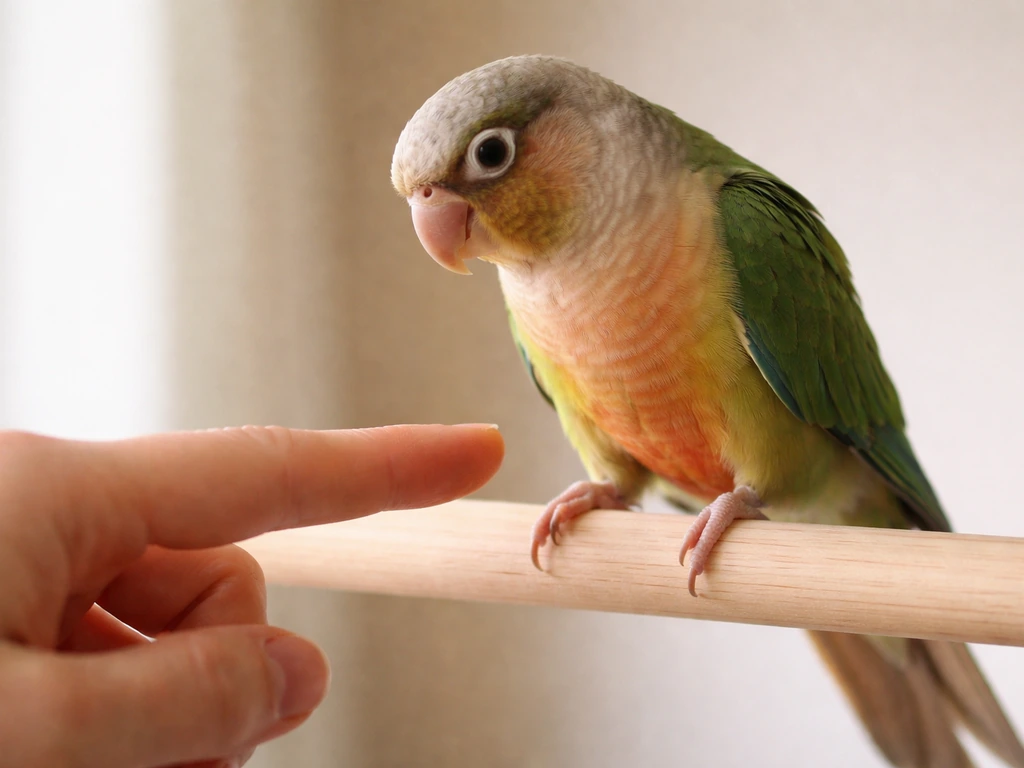
The step-up is the single most practical behavior you will teach your bird. Hold your index finger or forearm horizontally just above the bird's feet and say 'step up' in a calm, clear voice. Gently press your finger against the lower part of the bird's chest (just above the feet) to prompt it to shift its weight forward and step onto you. Reward immediately with a treat and calm praise. Practice this in short 3-5 minute sessions. Most birds that are comfortable with hands learn a reliable step-up within one to two weeks of consistent, positive practice.
The RSPCA Australia is clear that traditional restraint and pinning methods are not recommended. Forcing a bird to be held when it is afraid does not teach it that hands are safe. It teaches the bird to dread hands even more. Always let the bird step onto you voluntarily, and if it steps off or flies away during a session, calmly end the session and try again later.
What to do when a bird bites
Biting is communication, not aggression for its own sake. A bird bites when it is scared, overstimulated, hormonal, or has learned that biting makes the scary thing (your hand) go away. If your bird bites, VCA Animal Hospitals advises slowly putting the bird down and walking away. No yelling, no jerking your hand back dramatically, no retaliation. Any big reaction from you either frightens the bird further or teaches it that biting gets a fun show. Calm, quiet withdrawal is the correct response.
Learning to read pre-bite body language is more useful than knowing what to do after a bite. Watch for pinned (contracted) pupils, raised feathers, a low aggressive crouch, or an open beak. If you see those signals, give the bird space rather than pushing forward. You will get bitten far less often.
Training goals and fixing common behavior problems
Screaming
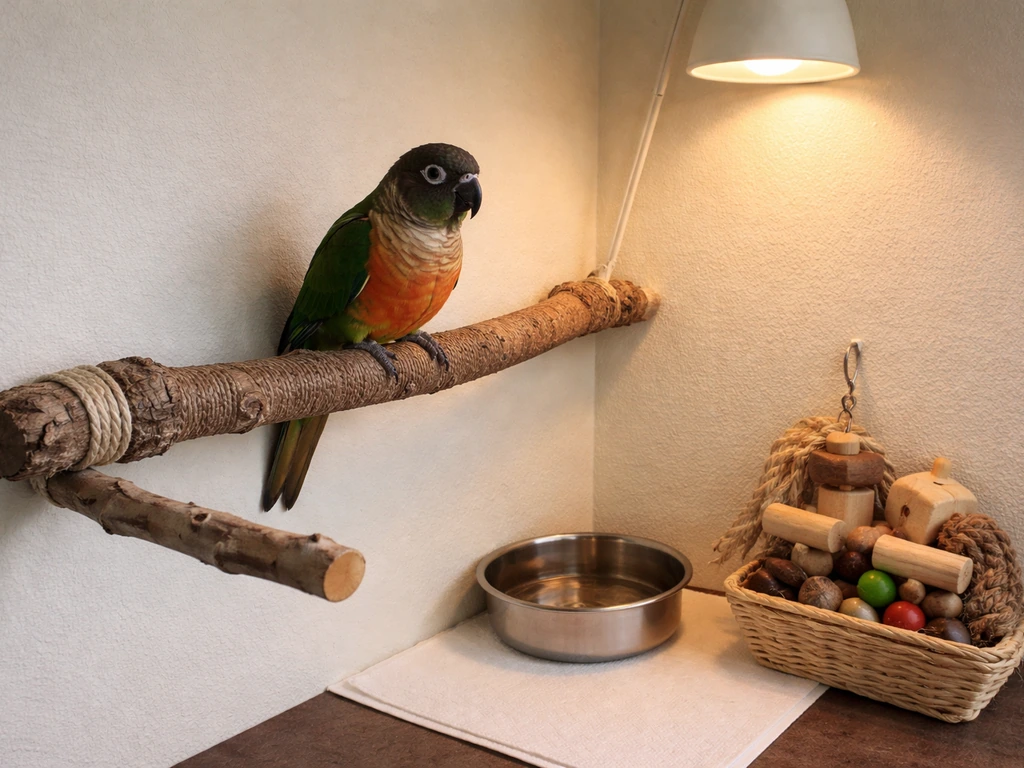
Some noise is completely normal. Birds call out in the morning, at dusk, and when they want attention. What you want to avoid is reinforcing problem screaming with attention. If your bird screams and you rush over to shush it or interact with it, you have just taught it that screaming works. Instead, only enter the room or give attention when the bird is quiet, even briefly. Reward that quiet moment with your presence. According to the Merck Veterinary Manual, insufficient stimulation is a major driver of screaming and other behavior problems, so increasing foraging time, out-of-cage enrichment, and training sessions will often reduce chronic screaming significantly.
Feather destructive behavior
Feather plucking or chewing is one of the most distressing things a bird owner can witness, and one of the hardest behaviors to resolve. It has many possible causes: nutritional deficiency, skin irritation, boredom, anxiety, or underlying medical conditions. The first step is always a vet visit to rule out physical causes. On the behavioral side, avoid drawing attention to the plucking. The RSPCA UK notes that saying 'no' or 'stop that' when a bird is self-plucking can actually encourage the bird to keep doing it, because any attention (including negative attention) can function as a reward.
Fearfulness and refusal to step up
A bird that consistently refuses to step up or retreats from hands is telling you that the trust-building process needs more time, or that something happened to cause a setback. Go back to basics: passive presence, food rewards through the cage bars, and zero pressure. The Merck Veterinary Manual reinforces that regular interaction including training sessions, not just free-roaming out-of-cage time, is what builds the kind of bond that makes handling reliable. Enrichment and training work together.
Hormonal behavior
Most parrots go through hormonal phases seasonally, and during these periods biting, territorial aggression, and regurgitation toward owners increase sharply. The RSPCA UK advises owners to avoid touching a parrot during times when sexual or regurgitation behaviors are occurring, as it can reinforce those behaviors. Reduce extended petting sessions during hormonal periods, keep photoperiods stable (consistent light and dark cycles), and avoid stroking under the wings or along the back, which can be sexually stimulating for birds.
Safety and legal basics you need to know
Household toxins: the short list to act on today
Beyond Teflon and non-stick cookware, the list of household hazards for birds is long. The Oregon Veterinary Medical Association warns that essential oils, diffusers, smoky aerosols, scented candles, air fresheners, and many common cleaning products can all be dangerous to birds. If you use any diffuser or spray product in your home, move the bird to a separate well-ventilated room and air out the space thoroughly before returning the bird. If you suspect any fume or toxin exposure, contact a vet or poison control immediately rather than waiting to see if symptoms develop.
- Replace all non-stick cookware with stainless steel or cast iron
- No scented candles, aerosol sprays, or essential oil diffusers in bird rooms
- No cigarette, cigar, vape, or incense smoke anywhere near the bird
- Store all cleaning products locked away and ventilate thoroughly before returning bird to the space
- Keep avocado, chocolate, onions, garlic, and alcohol out of the bird's diet permanently
Legal requirements for bird ownership
Federal and state laws in the United States prohibit the import and sale of wild-caught birds, according to the ASPCA. If you are buying from a breeder or pet store, ask directly whether the bird was captive-bred and request documentation. If you are importing a bird from another country, the USDA APHIS has specific requirements, including permits and health certifications, and some species are regulated by additional agencies under the Convention on International Trade in Endangered Species (CITES). U.S. Customs and Border Protection also notes that pet bird importations may be subject to federal quarantine requirements and state or municipal veterinary health regulations. This is a situation where doing the paperwork correctly upfront saves enormous legal trouble later.
Some jurisdictions also restrict ownership of certain native species under state or local wildlife laws, and a few municipalities have noise ordinances that apply to birds. Check your local laws before you bring a bird home, especially if you live in an apartment or HOA-governed property.
A note on renting versus owning a bird
If you are not ready for a full long-term commitment but want to experience what living with a bird is really like, some organizations offer foster or short-term arrangements. Understanding how to rent a bird through a sanctioned program can be a genuinely useful way to test compatibility before making a decades-long commitment.
Your first week: practical next steps to do right now
If you do not have a bird yet, spend this week researching species that fit your schedule, visiting local rescues and breeders, and reading up on the acquisition process. If you already have a bird and are trying to improve your relationship or routine, pick one thing from this guide to work on first. Most people get the best results by starting with enrichment and feeding improvements, because a healthier and more stimulated bird is almost always easier to tame and handle.
- Audit your kitchen: remove or relocate non-stick cookware and aerosol products
- Evaluate the current diet: if it is seed-heavy, start introducing pellets gradually by mixing them in
- Set a consistent sleep schedule with a cage cover
- Add one foraging toy or puzzle feeder to the cage today
- Begin one 10-minute passive presence session daily near the cage
- Book a well-bird checkup with an avian vet if you have not done so in the past 12 months
Owning a bird well is a skill set you build over time. The birds that people describe as "mean" or "untrainable" are almost always birds that never had a patient, consistent owner who knew what to do. The framework is not complicated: safe environment, good nutrition, daily interaction, positive reinforcement, and respect for the bird's signals. Start there, and everything else follows.
FAQ
What details should I ask for before I bring a bird home?
If you are adopting, ask for the bird’s most recent vet exam, weight history (last 6 to 12 months if available), and what foods it has been eating consistently for at least two weeks. If you are buying from a breeder or store, ask to see the feeding routine and stool output, and plan an avian vet visit within the first week to establish a baseline.
How do I introduce myself to a new bird without rushing taming?
Start with a “minimal contact” first week: keep routines steady, talk softly, and offer treats at the cage bars. Choose one handling goal only (for most beginners, step-up), and skip training when the bird looks fearful, hormonally ready to bite, or overly excited.
What should I do during step-up training if my bird refuses or steps off?
For step-up, reward with a small favorite treat within seconds, then stop the session. If the bird steps off or appears tense, end calmly and try again later the same day or the next day. Consistent short sessions work better than long, repeated attempts when trust is still forming.
When is biting or feather chewing a sign of illness instead of behavior?
If your bird is eating less, sitting fluffed for long periods, breathing with sound or open-mouth effort, or you notice weight loss, do not wait for “behavior changes.” Schedule an avian vet visit immediately, since plucking, biting, and lethargy can be pain or illness signals.
Do I really need a large cage if I plan to let my bird out a lot?
Yes, even if it feels tidy. Use the smallest cage you can, but still meet wing-span and bar-spacing needs, then scale playtime and training up outside the cage. The key mistake is underestimating daily out-of-cage time, not just cage size.
How should I transition my bird from seed to pellets safely?
Do not change multiple diet elements at once. If switching from seed or an unknown brand, do gradual transitions by mixing small amounts of pellets with familiar foods and track appetite and droppings daily. Sudden shifts can cause refusal or digestive upset in some birds.
Which is better for bird hygiene, a water bowl or a water bottle?
If water is a concern, use a bottle only if your bird reliably drinks from it, and still clean the nozzle and lines daily. For bowls, choose heavy, non-tip styles and scrub thoroughly each day because biofilm builds fast even if the water looks clean.
What are the safest rules for cooking and cleaning around my bird?
Teflon and many scented products are not the only risk, ventilation matters most. Run fans to improve air exchange, avoid aerosolizing cleaners near the bird, and keep a “no sprays” rule for anything aerosolized, including deodorant and hair products.
How do I manage sleep schedules if my household is active at night?
Aim for a predictable sleep block with the cage covered, lights off, and no sudden disturbances. If your bird panics at darkness, use a dim night light in the room (not aimed into the cage) and check that the cover does not create blocked airflow or overheating.
How often should I rotate toys, and what if my bird stops engaging?
Rotate toys more often for high-curiosity species, and less often for birds that become stressed by constant novelty. If your bird ignores toys for a week, try changing the texture (shreddable versus foraging), presentation (hiding treats), or placement rather than only swapping brand-new items.
What is the fastest way to reduce attention-seeking screaming?
For screaming, stop rewarding it with your immediate attention. Instead, wait for any brief calm moment, then reward with a short, predictable interaction. Also increase foraging and training during the hours your bird tends to scream, since boredom drives many persistent calls.
What should I do during hormonal phases besides “be patient”?
A short checklist: remove public cues that seem to trigger the behavior (extended petting, kissing, stroking under wings), keep the lighting schedule stable, and avoid positioning your hand under the bird’s body where it feels mating-like. If regurgitation or biting escalates, reduce handling and ask an avian vet about hormone and health factors.
How can I prevent repeat bites after my bird bites me?
If your bird bites, look for what happened right before it: sudden hand movement, backing the bird into a corner, too much excitement, or over-handling. Use calm withdrawal, then later return to a lower-stakes goal like stepping up from a consistent distance with treats.
Should only one person train and handle the bird, or is it okay to rotate?
Birds usually do best with one consistent “primary routine” person for daily training, especially during trust-building. If multiple people handle the bird, teach them to use the same language and treat method, because changing approach styles can reset progress.
How do I check local rules for owning a specific bird species?
If local laws are unclear, contact your city or county animal control or wildlife office and ask specifically about the species you want to own, not birds generally. For apartment or HOA rules, ask for the noise category and permitted pet list in writing before you purchase.
Next Article
How to Get a Bird: Pet, Wild, or Trust-Building Guide
Humane steps to get a pet, attract a wild bird, or build trust, with handling, stress signs, and escalation tips.