
Fostering a bird means something different depending on what's in front of you right now. If you've found an injured or wild bird, fostering means providing temporary, hands-off care until a licensed wildlife rehabilitator or release day takes over. If you've taken in a pet bird that needs a new home or a trust reset, fostering means building a calm, safe routine and slowly earning that bird's confidence. Either way, your first job today is the same: reduce stress, provide the right environment, and don't rush the relationship.
How to Foster a Bird: Humane Steps for Care and Bonding

Maya Harris
29 Apr 2026
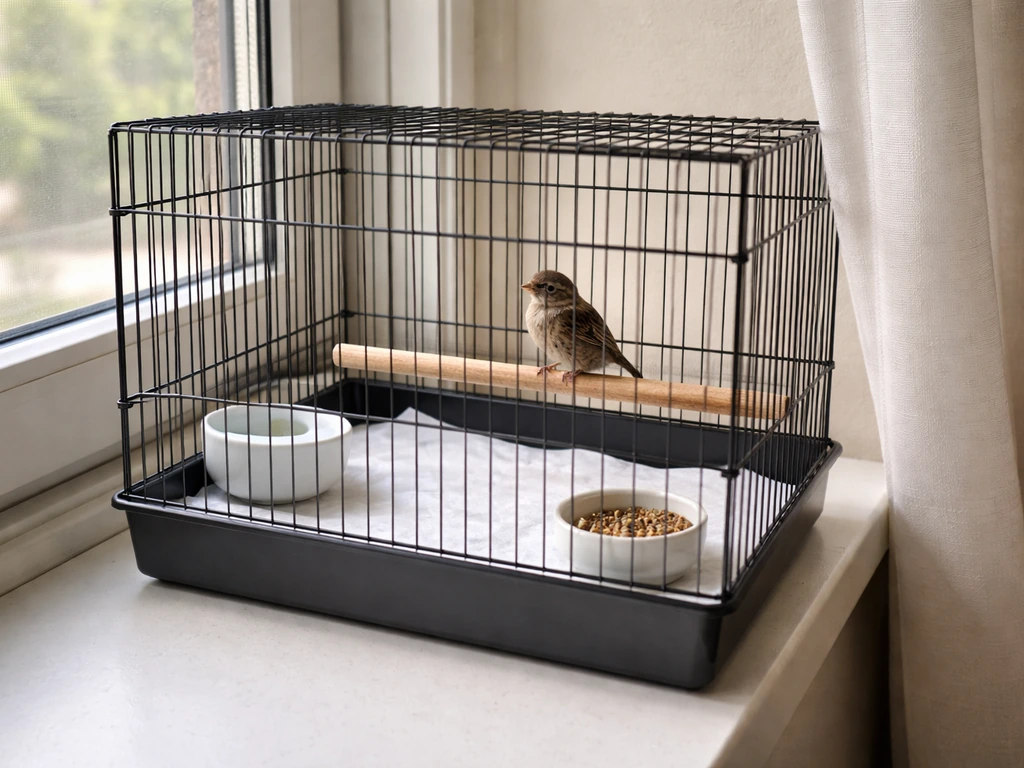
Pet bird or wild bird? Start here
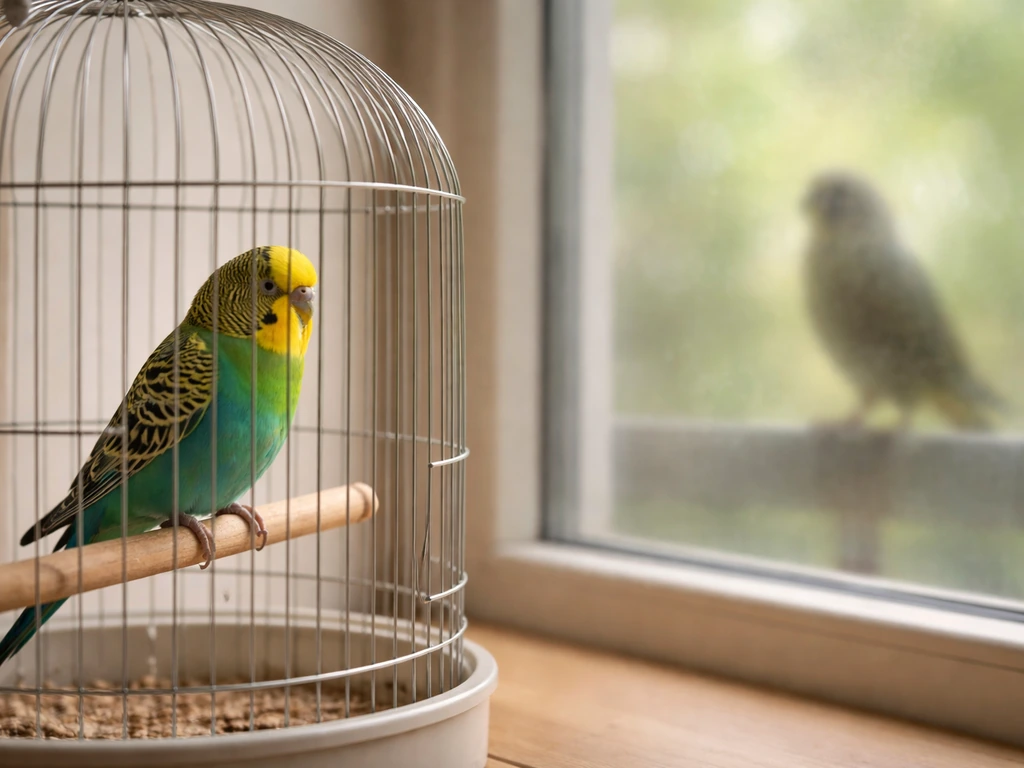
Before you do anything else, figure out what kind of bird you're dealing with. This single question changes almost every decision you'll make. A pet bird (parrot, cockatiel, canary, finch, dove) needs socialization and bonding. A wild bird (sparrow, raptor, waterfowl, migratory songbird) needs minimal human contact, specific diet, and almost certainly needs a licensed wildlife rehabilitator involved within 24 hours. If you specifically have a kiwi bird to care for, you should follow kiwi-appropriate guidance and local wildlife rules.
- Is the bird banded, clipped, or showing no fear of humans at close range? Likely a pet or escaped captive bird.
- Does it have a full set of flight feathers but is grounded or lethargic? Possibly injured wild bird — handle minimally.
- Is it a fledgling (patchy feathers, stubby tail) hopping on the ground? Probably a normal fledgling — it may not need rescuing at all.
- Is it visibly injured (blood, broken wing held at an angle, unable to stand)? Wild or pet, this bird needs a vet or rehabber fast.
- Is it fully feathered, alert, and panicking at your approach? Wild adult bird — contain it safely and contact a rehabber today.
If you're not sure whether a bird is truly abandoned or just a fledgling doing what fledglings do, watch from a distance for 60 to 90 minutes before intervening. Audubon notes that many “baby bird” rescues are unnecessary, such as healthy fledglings that may just need you to walk away watch from a distance for 60 to 90 minutes before intervening. Parent birds often feed young on the ground, and picking up a healthy fledgling creates more problems than it solves.
What to do in the first hour: safety and triage
Whether you're dealing with a frightened rescue bird or a shy new pet foster, the first hour is about containment, safety, and calm. Stress kills birds faster than most injuries do, so your goal is a quiet, warm, dark-ish space as quickly as possible.
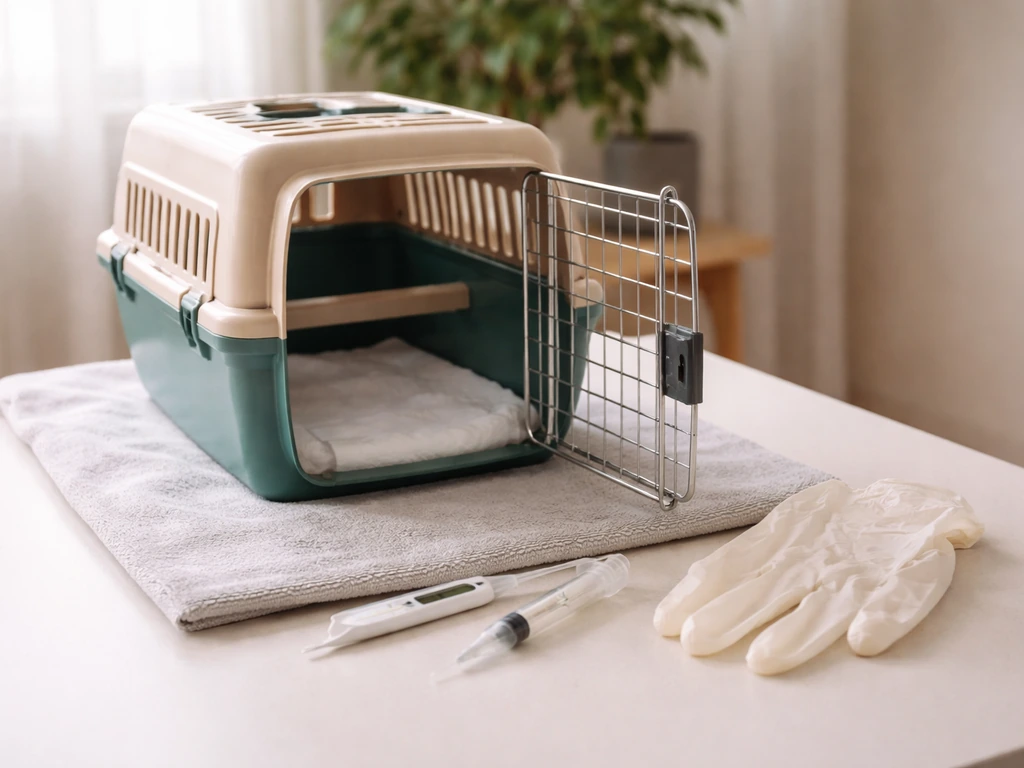
- Protect yourself first. Even small birds can bite hard and scratch. Use a lightweight towel or gloves to contain the bird if it's panicked. Don't grab at it repeatedly.
- Place the bird in a secure container. A cardboard box with air holes, a pet carrier with a towel over it, or a spare cage works. The darker and quieter the better for wild birds. Pet birds can go into a cage with perches.
- Keep it warm. Birds in shock or stress need ambient temps around 85 to 90 degrees Fahrenheit. A heating pad on low under half the container (leaving a cool side) works. Never put a hot lamp directly over a bird with no escape route.
- Minimize handling. Every time you pick up a stressed bird, you spike its cortisol. Do it only when necessary.
- Offer water — carefully. A shallow jar lid with clean water is enough for now. Do not force-feed water or food into a bird's mouth.
- Call for help if it's wild. Contact a local wildlife rehabilitator, your state wildlife agency, or a bird-savvy vet within the first few hours. In North Carolina and many other states, you are required to surrender an injured wild bird within 24 hours if you don't hold a rehabilitation license.
If the bird is a pet foster, skip the dark-box stage after initial transport. Get it settled into a proper cage in a quiet room, offer food and water, and then leave it alone for a few hours to decompress.
Housing, stress reduction, and feeding basics by bird type
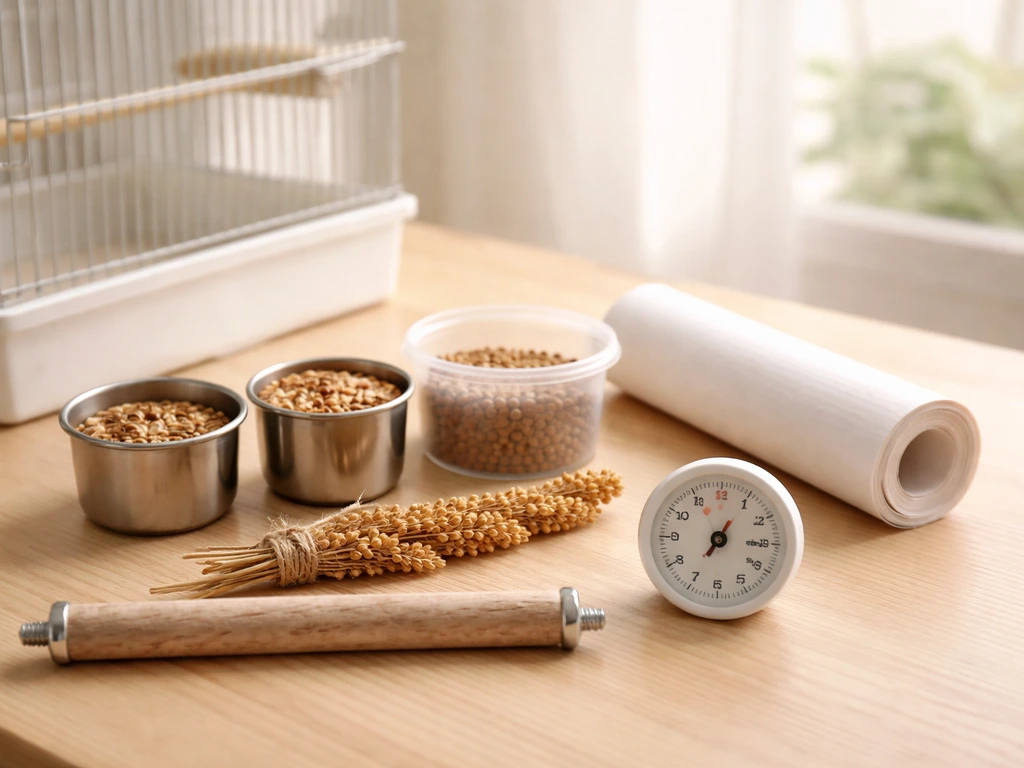
There's no universal setup that works for every bird, but there are sensible defaults for the most common types you're likely to foster. If you want a clear checklist, this guide on how to be a good bird owner can help you plan the basics and avoid common mistakes. The table below gives you a quick starting framework, then I'll break down the details.
| Bird Type | Housing | Temperature | Immediate Food Offer | Handling Level |
|---|---|---|---|---|
| Parrots / Cockatiels | Cage with horizontal bars, perches at varied heights, cage cover for nighttime | 68–78°F | Pellets, fresh water, small pieces of apple or leafy greens | Low at first, increase gradually |
| Finches / Canaries | Flight cage or aviary-style enclosure, minimal handling | 65–75°F | Small seed mix (finch/canary blend), fresh water, millet spray | Minimal — these birds are not hand-taming candidates in most cases |
| Doves / Pigeons | Low-sided box or cage, floor perch, quiet location | 68–75°F | Mixed grain/pigeon seed, fresh water | Low to moderate depending on tameness |
| Raptors (hawks, owls) | Dark, quiet carrier or raptor box — never a wire cage | 68–75°F | Do not feed — contact rehabber immediately | Absolute minimum, thick gloves required |
| Waterfowl (ducks, geese) | Large pen or bathtub with shallow water access, non-slip surface | 65–70°F for adults | Waterfowl pellets or plain cracked corn, fresh water for dunking bill | Minimal — containment only |
| Songbirds (wild) | Dark, ventilated box or small carrier with perch | 80–85°F if lethargic | Do not feed — contact rehabber immediately | Absolutely minimal |
Parrots and cockatiels
These birds are flock animals and feel most secure with routine. Set the cage in a room where there's human activity but not chaos, a living room corner works better than a busy kitchen. Cover three sides of the cage to reduce visual overwhelm. Offer fresh food twice a day at the same time, and keep a consistent light/dark cycle of about 12 hours each. Avoid the urge to constantly check on the bird or offer your hand in the first 48 hours.
Finches and canaries
These small birds are not wired for hands-on bonding the way parrots are. Your goal with a fostered finch or canary is a calm, well-fed bird that isn't terrified of your presence, not a bird that steps up onto your finger. Give them a spacious cage, other birds if possible (they're social with their own kind), and let them settle in. Loud music, TV, or talking near the cage stresses them out. Soft background noise or a radio at low volume is fine.
Raptors and wild songbirds
Do not attempt to house or feed these birds beyond the immediate containment phase. Raptors need specialized diet (whole prey, not meat chunks), specific housing to prevent feather damage, and trained handling to avoid imprinting or injury. Wild songbirds have very high metabolisms and can die within hours if not fed correctly. Both categories fall under federal migratory bird protections, and keeping them without a permit is illegal. Your job here is safe containment and a fast handoff to a licensed rehabilitator.
Building trust: humane bonding methods that actually work
For pet bird fosters, this is where the real work happens. Trust-building with birds is a slow game. Rushing it almost always sets you back. The approach that works, across species, is consistent, predictable, low-pressure presence combined with positive associations.
The calm presence method (start here)
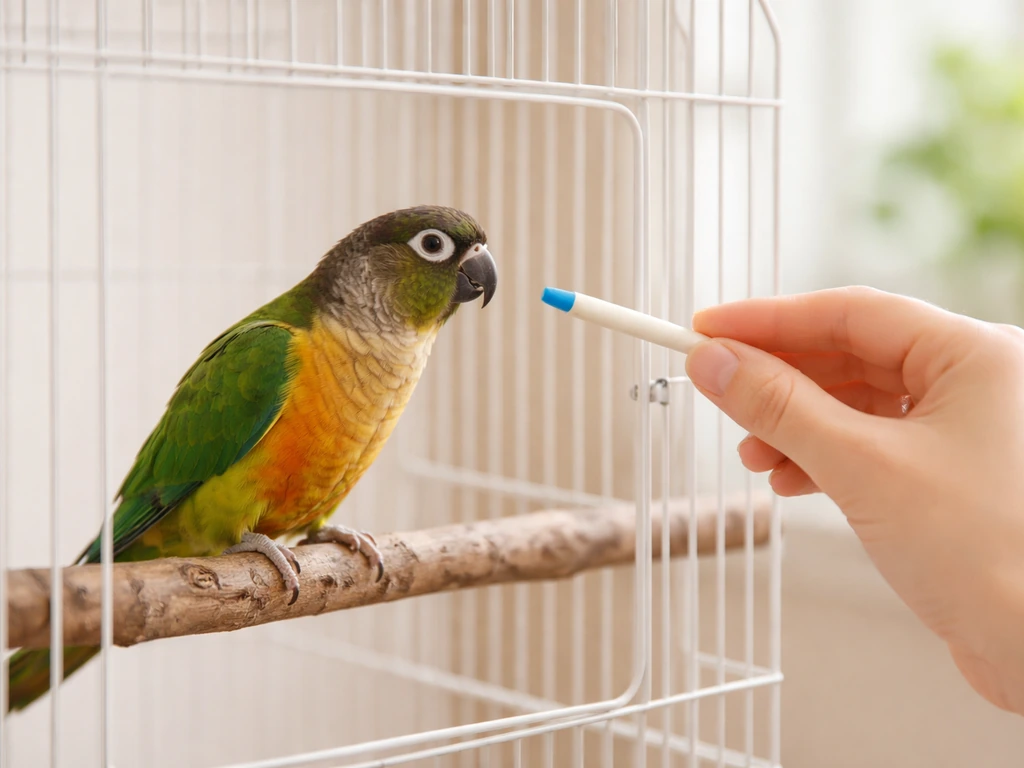
- Spend 10 to 15 minutes near the cage daily without trying to interact. Read a book, work on your laptop, talk softly to yourself. The bird is learning that you are not a threat.
- Move slowly and avoid direct staring, which birds read as predatory. Use soft, oblique glances instead.
- Talk to the bird in a calm, low voice. It doesn't matter what you say. You're just getting the bird used to the sound of you.
- After a few days of this, start offering high-value food through the cage bars. For most parrots this is a small piece of banana, mango, or a sunflower seed. For doves, a pea or millet spray. Let the bird take it from your fingertips if it wants to — don't push the food at it.
- Once the bird is reliably taking food from your hand through the bars, open the cage door and offer food just inside the door threshold. Don't reach in — let the bird come to you.
- Introduce the step-up request only after the bird is comfortable taking food from your open palm. Place your finger or a perch stick gently against the bird's lower chest/legs and say 'step up' in a calm, consistent tone. Reward any movement toward stepping up immediately.
Target training and clicker basics
Target training is one of the most effective and low-stress ways to build a working relationship with a foster bird. You teach the bird to touch a target (a chopstick, a pen cap, or a commercial target stick) with its beak, then mark that behavior with a click or a verbal marker like 'yes,' and reward with a small treat. This gives the bird a job to do, builds confidence, and creates positive associations with you very quickly. Even a shy bird will often engage with target training before it's ready for direct handling, because it keeps the human's hands at a predictable, non-threatening distance.
Reading the bird's signals
- Feathers sleeked tight, crouching, wide 'pinpoint' eyes: high stress — stop what you're doing and give space.
- Beak open in a threat gesture, lunging: the bird is telling you clearly it needs more distance. Respect it.
- Soft feather ruffling, one foot tucked, relaxed posture: the bird is calm and comfortable.
- Head bobbing, regurgitating toward you: this is a bonding behavior in parrots — the bird is treating you like flock.
- Tail wagging or 'wag shake' after a step-up: usually a sign of satisfaction, like a reset breath.
- Screaming when you leave the room: the bird is bonded enough to feel separation — you can start working on independence training.
Species-specific fostering priorities and training approaches
Every bird has a different social baseline, which changes what 'good fostering' looks like in practice. Here's how to adjust your approach by species group.
Parrots (large and medium: African greys, amazons, cockatoos, conures)
These are long-lived, highly intelligent birds that may carry trauma from previous homes. An African grey that's been re-homed twice is going to be cautious and may regress before it progresses. Your priority is radical consistency: same feeding times, same daily routine, same voice and movement style. Don't let a lot of new people interact with the bird in the first weeks. African greys in particular are sensitive to change and may feather-pluck or screech when overwhelmed. Cockatoos can become over-bonded quickly, so balance interaction with independent enrichment from day one.
Cockatiels and budgies (beginner-friendly)
These smaller parrots are typically more forgiving and faster to warm up. A young, hand-raised cockatiel may be stepping up within a week. An older, fearful one might take a month. Start with the calm presence method and move to target training early. Cockatiels respond very well to whistling and soft music. Budgies are flock-oriented, so a lone budgie will often bond to you faster out of social need, but two budgies may prefer each other's company over yours. If you're fostering budgies for rehoming, keep pairs together.
Finches and canaries (hands-off fostering)
Your goal with these species isn't taming, it's welfare. A finch or canary that is eating well, singing (canaries), flying freely in its cage, and not cowering in a corner is a fostering success. Focus on appropriate diet, cage size (bigger is always better for flight), a consistent quiet environment, and ideally a companion of the same species. If you're fostering a canary with feather condition issues or a finch that's stopped singing, a vet check is the next step, not more handling.
Raptors and waterfowl (specialist territory)
Unless you are a licensed wildlife rehabilitator or working directly under one, raptors and waterfowl should not be in your home as foster birds for more than 24 to 48 hours in an emergency containment role. These species have highly specific nutritional, behavioral, and legal requirements. A hawk that imprints on humans during rehab loses its ability to hunt and survive in the wild. A duckling raised without proper waterfowl peers may become dangerously aggressive or fail to release successfully. Connect with a licensed rehabber immediately and follow their instructions exactly.
When fostering isn't going smoothly: troubleshooting common problems
The bird won't eat
This is the most urgent problem you'll face in the first 48 hours. A bird that hasn't eaten in 24 hours is in trouble; a small bird (finch, budgie) in 12 hours. First, check that you're offering the right food in a format the bird recognizes. A parrot used to seeds may ignore pellets at first. A bird used to one brand of seed may reject another. Offer familiar-looking foods, put them near where the bird naturally sits, and try multiple dish locations. If the bird still won't eat after 24 hours, get to an avian vet.
Fearfulness and hiding
Back off. Seriously. The most common mistake people make is interpreting a scared bird as a bird that 'just needs more interaction.' It doesn't. It needs more time and less pressure. Drop back to calm presence mode, cover more of the cage, reduce household noise levels, and let the bird set the pace. Some birds need two weeks of this before they'll even take food through the bars.
Biting and aggression
A biting bird is a bird that has run out of other ways to tell you to stop. Go back and review your approach. Are you moving too fast, making eye contact too intensely, reaching into the cage uninvited, or handling the bird when it's showing stress signals? Stop the behavior that's triggering the bite. If a bird bites during step-up, switch to target-stick training so your hand isn't the direct point of contact. Never tap a bird on the beak or yell, it damages trust and doesn't stop the behavior.
Screaming and excessive vocalizing
Contact calls (screaming when you leave the room) are normal flock behavior. The mistake is rushing back every time to quiet the bird, because that teaches the bird that screaming works. Instead, return when the bird is quiet, even for a few seconds of quiet. Over time, extend the quiet period before you return. For birds screaming out of boredom, add foraging toys, rotating enrichment, and structured out-of-cage time.
Feather plucking or self-destructive behavior
This is always a flag that something is wrong, whether that's diet, boredom, illness, stress, or a combination. Rule out medical causes with an avian vet first, skin infections, parasites, and nutritional deficiencies all cause plucking. Once medical causes are cleared, look at environmental stressors: too much change, not enough sleep (birds need 10 to 12 hours of dark quiet per night), inadequate enrichment, or social isolation. Feather plucking can become a habit even after the original trigger is gone, so early intervention matters.
Refusal to adapt or regression
Some foster birds, especially older parrots or birds that have been rehomed multiple times, go through a 'mourning' period where they seem to get worse before they get better. This is normal. Maintain the routine, don't force interaction, and give it at least four to six weeks before drawing conclusions about how the bird is adapting. Document progress with weekly notes or short videos, it's easy to miss slow but real improvement.
The legal side: what you can and can't do
This is non-negotiable. In the United States, most wild birds are protected under the Migratory Bird Treaty Act, which is enforced federally through the U.S. Fish and Wildlife Service. This means that possessing, transporting, or keeping a wild migratory bird, even with the best intentions, is illegal without the appropriate federal and/or state permits. In general, the federal migratory bird rehabilitation permit will not be valid unless the required state authorization is also held when a state requires a permit to possess migratory birds for rehabilitation the appropriate federal and/or state permits. There are very narrow exceptions for immediate stabilization or transport to a licensed facility, but these are not blanket permits for home rehab.
- You can legally contain and transport an injured wild bird to a licensed wildlife rehabilitator or veterinarian without a permit, as long as you do so promptly.
- You cannot legally keep a wild bird at home for rehabilitation without state and/or federal permits, even temporarily beyond emergency transport.
- In North Carolina, the surrender deadline for an unlicensed person who takes in a wild bird is 24 hours.
- Raptors (hawks, owls, eagles) have additional layers of protection and almost always require both state and federal permits for any form of handling or care.
- Endangered or threatened species have stricter rules still — contact the U.S. Fish and Wildlife Service directly if you're unsure.
- Pet birds (parrots, doves, domestically bred finches) are not covered by migratory bird law, but may have CITES or import regulations affecting trade and transport.
The bottom line: if you find a wild bird today, your legal and ethical job is safe containment and fast transfer, not independent rehabilitation. Find your state wildlife agency's licensed rehabilitator list, or use the National Wildlife Rehabilitators Association (NWRA) or Wildlife Center of Virginia's finder tools. An avian vet in your area can also act as a bridge and may be exempt from certain permit requirements for emergency stabilization or humane euthanasia under federal regulations.
When to call a licensed wildlife rehabilitator (and what to say)
Call a licensed wildlife rehabilitator if any of the following are true: the bird is wild and visibly injured or ill, the bird is a raptor (no exceptions), you've had a wild bird in your care for more than a few hours, the bird is a fledgling that appears truly abandoned after an observation period, or you simply aren't sure of the species and its needs. When you call, be ready to describe the species if you know it, where and when you found it, its current condition, and what you've done so far. Don't offer food or water to a wild bird before talking to the rehabber, because incorrect feeding can cause aspiration or digestive damage.
Transition planning: what comes next
Every foster situation has an end goal, and knowing what that goal is from the start shapes how you approach the whole process. There are three main paths a foster bird follows.
Path 1: Release (wild birds)
Wildlife rehabilitation, as defined by most state agencies including Michigan DNR and North Carolina Wildlife, has one goal: returning a healthy animal to the wild. Release decisions should be made by a licensed rehabilitator based on the bird's flight, foraging ability, weight, and behavior. A bird that has been held too long, handled too much, or fed the wrong diet may not be releasable. This is why the 24-hour transfer rule exists, the sooner a wild bird gets to a professional, the better its release odds.
Path 2: Rehoming (pet bird fosters)
If you're fostering a pet bird for a rescue organization or a temporary situation, your transition plan involves preparing the bird for its permanent home. This means documenting what the bird eats, its behavioral progress, what it responds to positively, and any health concerns. Write a one-page 'bird profile' that goes with the bird to its adopter. If you've made real progress on trust-building or target training, walk the new owner through it in person if possible, a five-minute handoff demo makes a huge difference in continuity.
Path 3: Long-term integration (keeping the foster bird)
Sometimes a foster becomes a permanent family member. If this is your path, start thinking beyond basic care and into enrichment, diet optimization, avian vet relationships, and long-term behavioral goals. Finding the right bird for your household and lifestyle is a topic worth its own deep dive, and if you haven't gone through that process yet, it's worth thinking through before committing long-term. A good next step is figuring out how to find the right bird for you before you make a long-term commitment Finding the right bird for your household and lifestyle. If you want a bird at home, convincing your parents comes down to showing you can meet basic care needs and handle the long-term commitment responsibly. A bird that was the right foster isn't always the right permanent pet, especially if you have other birds or plan to add them.
Monitoring progress: what to track
- Weight: weigh the bird weekly on a kitchen gram scale. Steady weight or gradual gain is a good sign. Rapid loss is urgent.
- Droppings: healthy bird droppings have three parts (solid dark feces, white urates, clear liquid urine). Changes in color, consistency, or amount signal a problem.
- Behavioral milestones: document when the bird first ate from your hand, first stepped up, first showed relaxed body posture, first vocalized comfortably.
- Feather condition: new pin feathers growing in are a positive sign of recovery and reduced stress.
- Appetite: birds should eat enthusiastically at each feeding. Picking at food or leaving it untouched warrants attention.
- Activity level: a bird that was hiding and is now exploring its cage, playing with toys, or vocalizing has turned a corner.
Keep a simple weekly log, even just a few notes on your phone. Progress with birds is often slow enough that you won't notice it day to day, but looking back at week one versus week four tells you everything about whether your approach is working. If something isn't improving after four to six weeks, it's time to consult an avian vet or a certified parrot behavior consultant rather than pushing forward with the same methods.
FAQ
How do I know when a foster bird is ready for more interaction?
After initial placement, use a “touch-free decompression” window for most pet fosters (often a few hours), then test readiness with a non-contact cue like holding a target near the cage front. If the bird retreats, freezes, or vocalizes with stress, delay direct interactions and keep focusing on predictable routines.
What’s the best way to approach the cage so I don’t increase stress?
Aim to keep your presence consistent, move slowly, and avoid hovering. If you need to pass near the cage, turn your body sideways, speak quietly, and avoid direct head-on eye contact, which many birds interpret as a challenge or threat.
Should I change the bird’s diet right away when fostering?
Treat water differently from food during the transition: provide fresh water immediately, but for food start with familiar options in familiar dish types and positions. If you must change diet, do it gradually with mixed offerings over multiple days, since sudden switching can trigger refusal.
When is it safe to let a foster pet bird out of the cage?
For pet birds, you generally should not let a fostered bird free-fly in the house until it has stable eating, normal posture, and calm responses inside its cage, plus you can supervise 100 percent. Even then, use a secured, bird-safe setup and keep outings short, since an anxious bird can fly into hazards or panic.
What if the bird seems okay, but I still think it’s abandoned?
If a wild bird is acting mobile and alert, it can still be a “fledgling” rather than abandonment. The safest move is to maintain distance for observation and only intervene if it is clearly unable to flee, is injured, or appears in immediate danger, then contact a licensed rehabilitator.
Can I use a heat source or dark box longer to help a bird settle?
Yes, but only if the rehab workflow allows it. For pet fosters, warming and darkness can help, but overheating is risky, so avoid heat lamps near the cage. For wild birds, do not offer food before you talk to the rehabber, and follow the professional’s instructions for temperature and containment.
How do I keep target training from overwhelming the bird?
Target training should be incremental: use tiny rewards, keep sessions short (a few minutes), and stop while the bird is still willing to engage. If the bird stops approaching or starts lunging, reduce proximity, switch to a farther target placement, and resume later.
What routine changes most commonly cause setbacks during fostering?
Birds can learn from timing as much as from handling. Keep feeding, light schedule, and routine changes minimal, and avoid adding new people, new cages, or new toys all at once. A “one change at a time” approach prevents setbacks that look like aggression or fear.
What should I check first if my foster bird starts feather plucking?
Feather plucking has multiple triggers, and not every plucker improves with “more attention.” If medical causes are ruled out, then adjust boredom, sleep (aim for a reliable 10 to 12 hours of dark), and stressors like household noise. If plucking persists after a few weeks of environmental fixes, escalate to an avian vet.
What are reliable signs my fostering approach is working?
A good sign is steady improvement in core welfare behaviors, like eating consistently, relaxing posture, normal perching, and predictable calm vocalization. A “trust win” does not always mean stepping up, especially in small birds, so judge progress by comfort and routine stability first.
What should I do after my foster bird bites me?
If a foster bird bites, switch to a training-based boundary (target stick, not hand contact) and reduce the number of times you attempt step-up right away. Review what you were doing in the moment, then adjust one factor at a time (approach speed, distance, eye contact intensity) before trying again later.
Do I need to socialize the foster bird with other people to bond faster?
For parrots and cockatoos, limiting rapid new interactions early helps prevent over-bonding or overwhelm. Provide independent enrichment, like safe chew items and foraging, so the bird has “alone time” that supports stable behavior.
Next Article
How to Convince Your Parents to Get You a Bird
Turn your request into a welfare-first bird plan: handle parent concerns, costs, care setup, health, and readiness steps