Leading a bird means guiding it to move where you want it to go, whether that's stepping onto your hand, recalling across the room, moving from cage to perch, or nudging a wild bird safely away from a hazard. The good news: all of it is doable without force, and most of it comes down to the same core skills: patience, reading body language, and making the right choice obvious and rewarding for the bird. This guide walks you through exactly how to do that, from your very first trust-building session to more complex recall and station training, plus what to do when things go sideways.
How to Lead a Bird: Humane Steps for Pet and Wild
Maya Harris
4 May 2026
What "leading a bird" actually means
People search this phrase for very different reasons, so it's worth being clear about which situation you're in before you start.
If you have a pet bird, leading usually means one of these: getting the bird to step up onto your hand, moving it from one location to another (cage to play gym, room to room, indoors to a safe outdoor enclosure), training a recall so it flies to you on cue, or guiding it through a doorway or past a new object. These are all trainable behaviors built on trust and positive reinforcement, and they work for parrots, doves, softbills, and most other pet species.
If you're dealing with a wild bird, the picture is different. "Leading" a wild bird away from danger, such as one trapped inside a building, stuck in a garage, or sitting on a busy road, is not training. It's short-term guidance using body positioning, light barriers, and patience. You're not bonding with the bird; you're reducing its panic long enough for it to find an exit. There's also a legal dimension here that matters, and we'll cover it toward the end.
Safety first, before you touch anything
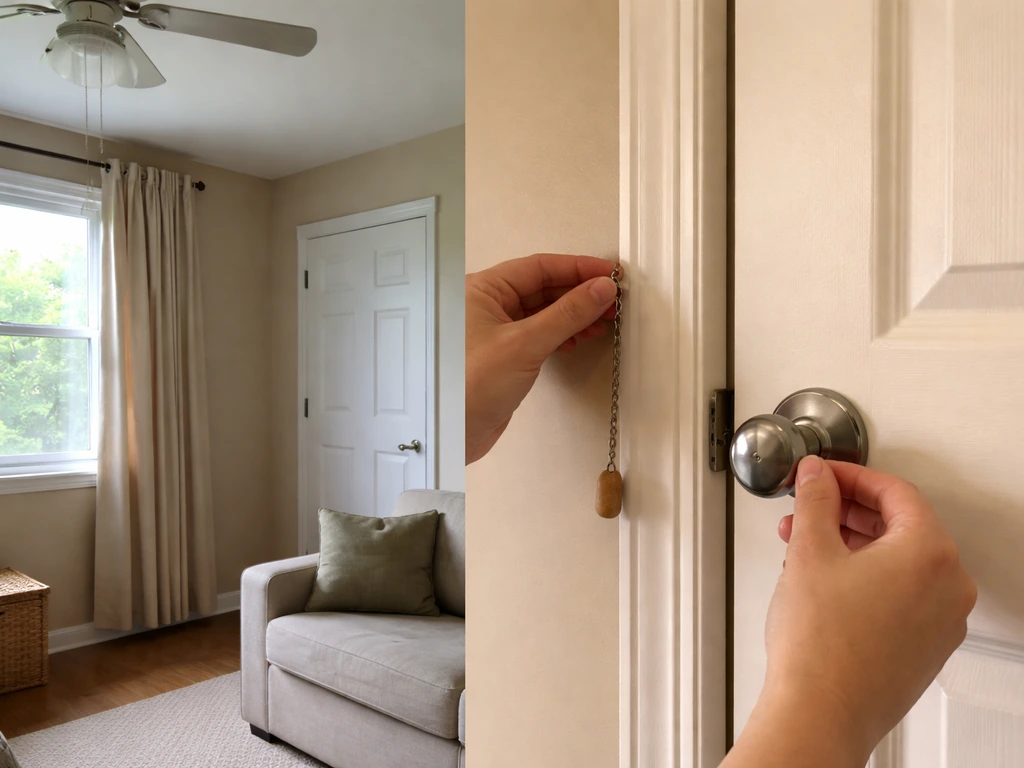
Before any leading or handling session, set your environment up to protect both of you. This is the step most beginners skip, and it's the one most likely to turn a short session into a stressful disaster.
Escape-proof your space
- Close every window, door, and ceiling fan before the bird leaves its cage.
- Cover mirrors and large glass surfaces if possible; birds fly into them.
- Remove dogs, cats, and other pets from the room entirely.
- If you're working with a flighted bird, start in a small, clutter-free room rather than a large open space.
Bite risk and physical safety
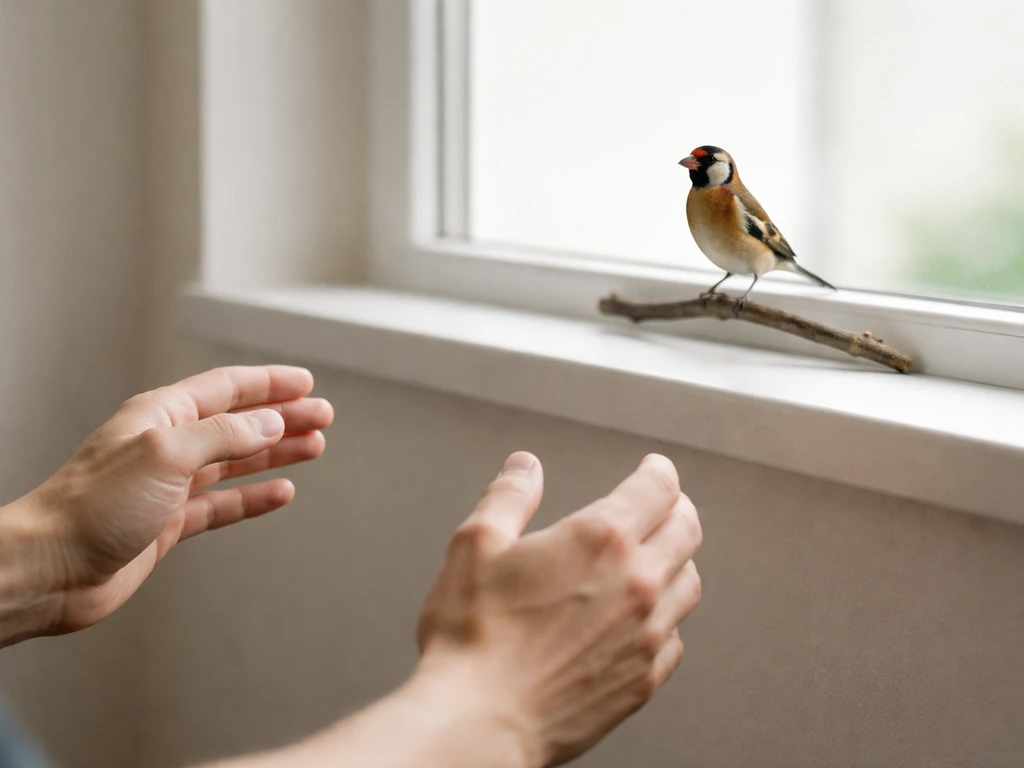
Almost any bird can bite when scared, overexcited, or in pain. Small birds like finches cause minor discomfort. Large parrots like macaws or cockatoos can crush a finger. Raptors' talons are the main danger, not their beak. If you're not already familiar with a bird's bite pressure, wear a thin leather glove for the first few interactions, then transition to bare hands once trust is established. Don't pull your hand away sharply if you're bitten. A slow, calm withdrawal removes the drama and the reinforcement for biting. According to VCA, if a bird bites while on your hand, set it down slowly and walk away briefly, treating it like a calm time-out rather than a punishment.
Reading stress signals before they become a problem
Stop what you're doing if you see any of these. They're the bird's way of saying the session needs to slow down or end.
- Feathers slicked tight against the body (alarm posture)
- Rapid, shallow breathing or open-mouth panting
- Repeated lunging or open-beak threats
- Trying to flee continuously rather than settling
- Freezing or going very still (shutdown, not calm)
- Excessive screaming or hissing
The RSPCA puts it simply: if the bird shows signs of discomfort or anticipates something bad, stop and rethink rather than push through. Forcing a scared bird to comply doesn't teach it to cooperate; it teaches it to fear the experience.
Building the trust that makes leading possible
You can't lead a bird that doesn't trust you yet. This groundwork phase feels slow, but it's what separates a bird that steps up willingly from one that bites every single time. Plan on spending at least a few days here before asking the bird to go anywhere.
Start with presence, not pressure
Sit near the cage doing something calm, like reading or working quietly, without staring directly at the bird. Let the bird get used to you as a non-threatening fixture in the room. Most birds start relaxing and going about their normal behavior within a few sessions. Once the bird regularly eats, preens, or vocalizes while you're nearby, you're ready for the next step.
Hand as a neutral object, then a good thing
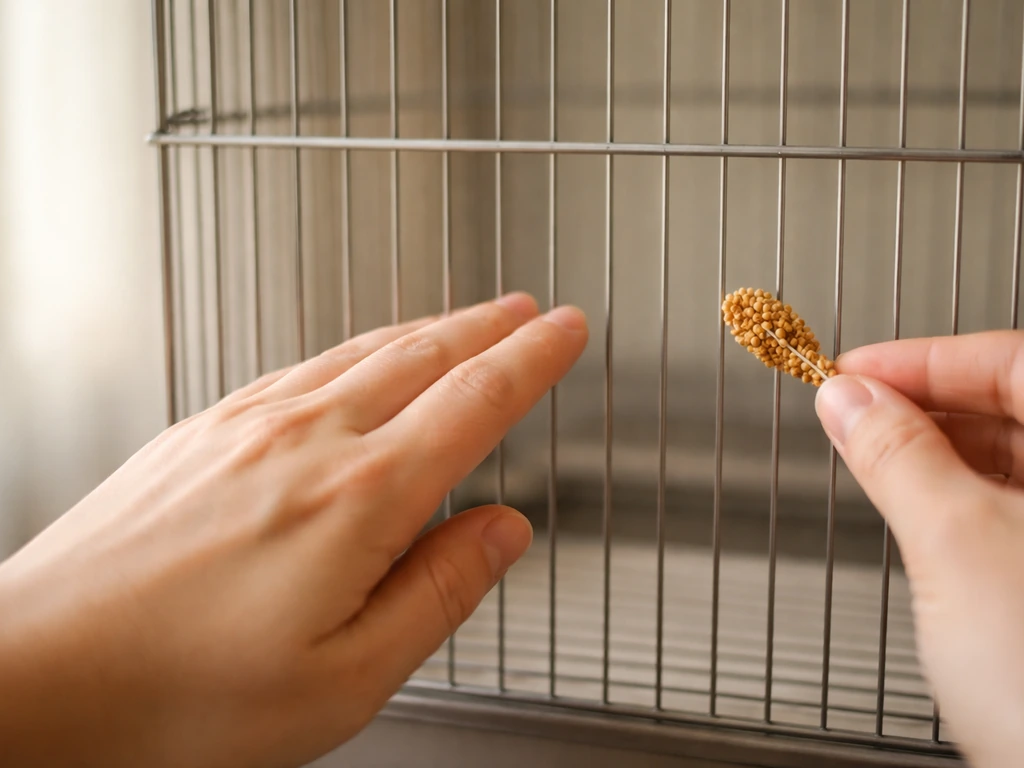
- Offer the back of your hand (less threatening than palm-out) near the cage bars without reaching in.
- When the bird doesn't retreat, offer a high-value treat through the bars.
- Repeat until the bird actively moves toward your hand for the treat.
- Only then start offering your hand inside the cage, well below chest height so it doesn't feel like a threat from above.
Positive reinforcement and target training
Positive reinforcement means the bird gets something it genuinely wants immediately after doing the right thing. The best results, as the RSPCA notes, happen when the bird wants to do the behavior. Find your bird's highest-value reward: a favorite treat, a scratch on the head, a favorite toy. Use the smallest piece of food possible so the bird stays hungry for more. A clicker or a verbal marker like "yes" helps you mark the exact moment the bird does the right thing, bridging the gap between the behavior and the reward. The Association of Avian Veterinarians describes this bridge marker as the core of clicker training: it tells the bird precisely which behavior earned the reward. Break everything into tiny steps. If the final goal is stepping onto your hand, the first reinforced step might just be the bird leaning toward your hand without retreating.
Species-specific things you need to know
What "leading" looks like and what's realistic depends heavily on the species. Here's a practical breakdown.
| Species Group | Natural Temperament | Best Leading Method | What to Avoid |
|---|---|---|---|
| Parrots (budgies, cockatiels, conures, amazons, macaws) | Highly social, food-motivated, can bond deeply | Step-up training, targeting, recall with treat/verbal cue | Cornering, grabbing, toweling except for medical emergencies |
| Songbirds and softbills (canaries, finches, doves) | Generally shy, not as hand-tame by nature | Target stick to guide movement, open-door recall with food | Direct hand contact unless medically necessary; they stress easily |
| Raptors (hawks, falcons, owls) | Requires federal/state permits to handle; trained via falconry techniques | Glove station training, creance line recall, jesses and perch transfer | Handling without permits or proper equipment; talon injuries are serious |
| Waterfowl (ducks, geese, swans) | Variable; domestic ducks can be herded, wild ones are easily stressed | Herding with extended arms or a lightweight panel/flag at a wide angle | Chasing, grabbing by wings, separating from flock mates |
Parrots are the easiest group to lead in the training sense because they're wired for social interaction and food motivation. Songbirds and finches rarely become truly hand-tame and are better guided using open-door recall with food incentives rather than direct handling. Raptors require permits in most jurisdictions and specialized falconry-based methods. If you're working with a wild raptor that's injured, do not attempt to handle it yourself; their talons cause serious injury and they are covered by the Migratory Bird Treaty Act. Waterfowl can often be herded slowly in the right direction using calm, wide body movements rather than chasing.
Training the specific behaviors that count as leading
Step-up (the foundation of everything)
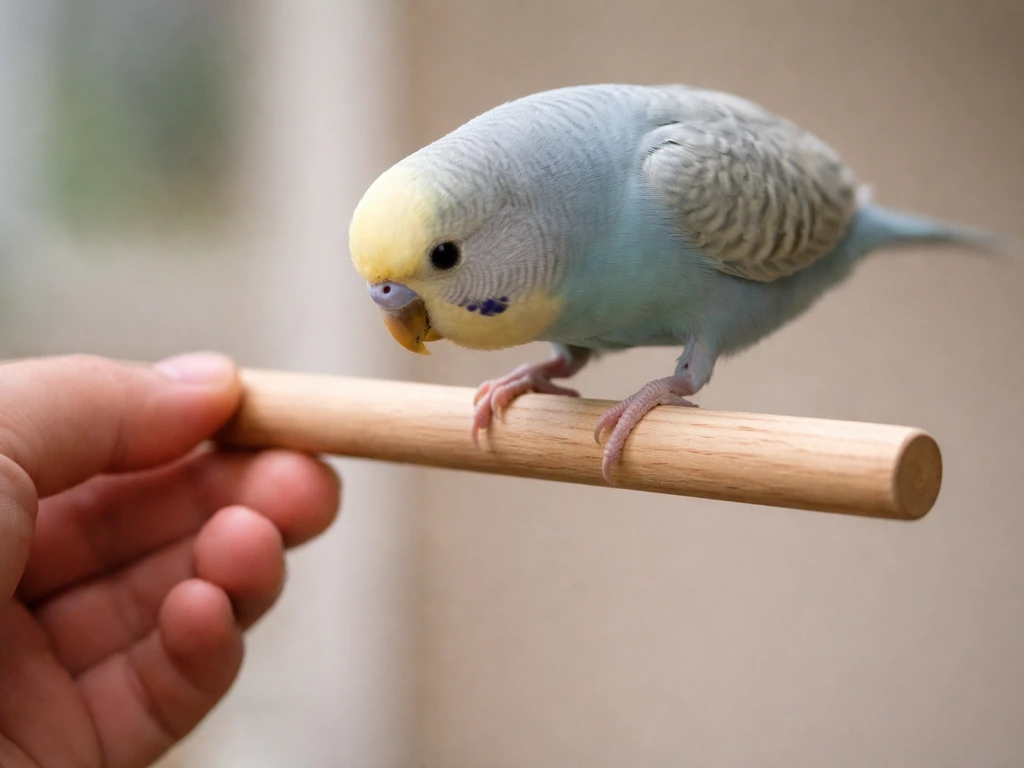
Step-up is the single most useful leading behavior you can train. Once a bird steps onto your hand reliably, you can move it anywhere. Here's how to build it from scratch:
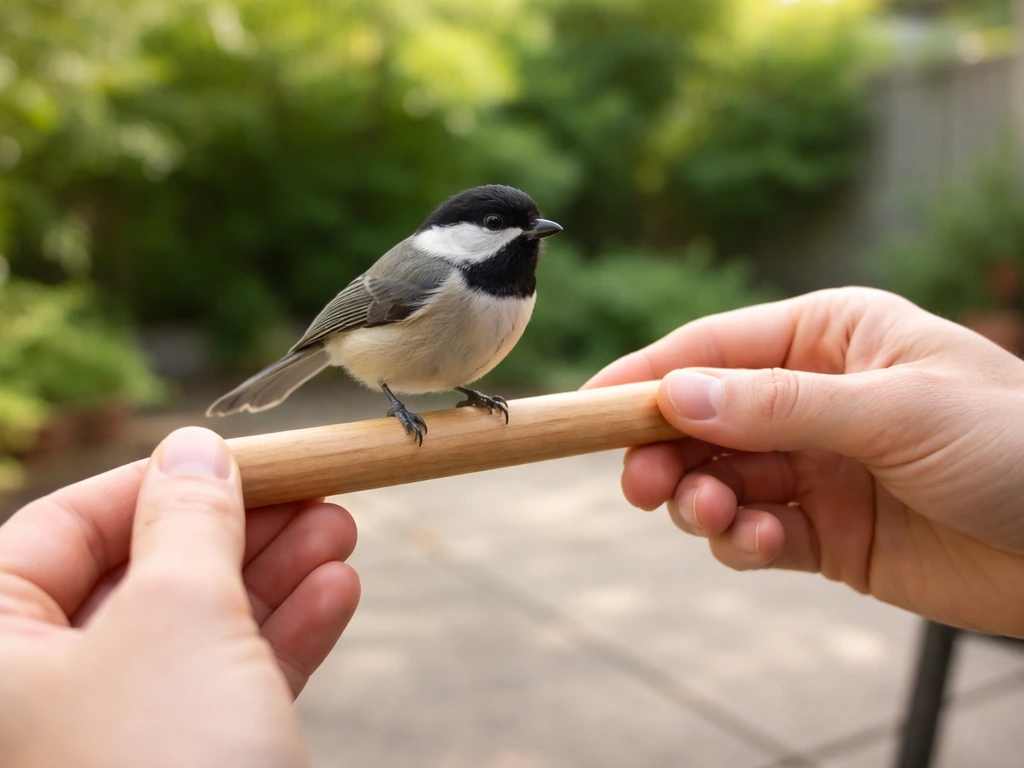
- Hold your hand or a hand-held perch stick horizontally, low and steady, just below the bird's chest.
- Press lightly against the lower chest/legs to create a gentle tipping sensation, and say your cue word ("up" or "step up") in a calm, consistent tone.
- The moment one foot lifts onto your hand, click or say "yes" and deliver the treat immediately.
- Practice in short 2-3 minute sessions, 2-3 times a day, ending on a successful step even if it's a small one.
- Add a second cue like "step down" for the return, and use a different treat if possible to help the bird distinguish the two requests, as PetMD recommends.
Never corner a bird to force a step-up. blank" rel="noopener noreferrer">Positive reinforcement step-up training gives the bird a genuine choice, and that choice is what makes the behavior reliable rather than a desperate scramble to escape. PetMD advises that when teaching “step up” and “step down” over time, you should ideally use different treats for each so your bird can distinguish which request earned which reward blank" rel="noopener noreferrer">use different treats for each so the bird can distinguish which request earned which reward.
Recall training (leading at a distance)
Recall means the bird flies or walks to you on cue. Start with very short distances (30 cm or about a foot) from a stable perch to your hand. Use a high-value treat and a consistent recall word or whistle. Hold your hand out, cue the bird, and reward the instant it arrives. Gradually increase the distance by a foot or two each session only once the bird is flying to you confidently at the current distance. Never call a bird to you when it's showing stress signals; you want recall to stay a happy, reliable behavior. For flighted birds, always practice recall before any outdoor session. Before you attempt your first outdoor session, make sure your recall is solid and your bird can stay calm on approach. Taking your bird outside or traveling with it introduces a whole new layer of complexity, and recall is the safety net. Those same planning steps are also what you need to learn before figuring out how to take a bird on a plane Taking your bird outside or traveling with it. Taking your bird outside or traveling with it introduces a whole new layer of complexity, so plan for safety and keep your leading cues consistent how to travel with a bird.
Moving through doorways and between locations
Some birds balk at doorways or unfamiliar rooms. Use targeting to solve this. A target stick is any thin stick or chopstick the bird has learned to touch with its beak for a reward. Hold the target just past the threshold of the doorway, cue "touch," reward the touch, then gradually move the target further into the new space over multiple sessions. The bird follows the target willingly rather than being carried through against its will. The same method works for moving a bird toward a carrier, which the RSPCA recommends building up gradually over several days, letting the bird investigate the carrier at its own pace before you ever need it for an actual trip.
Guiding a wild bird out of a hazard (not training, but useful)
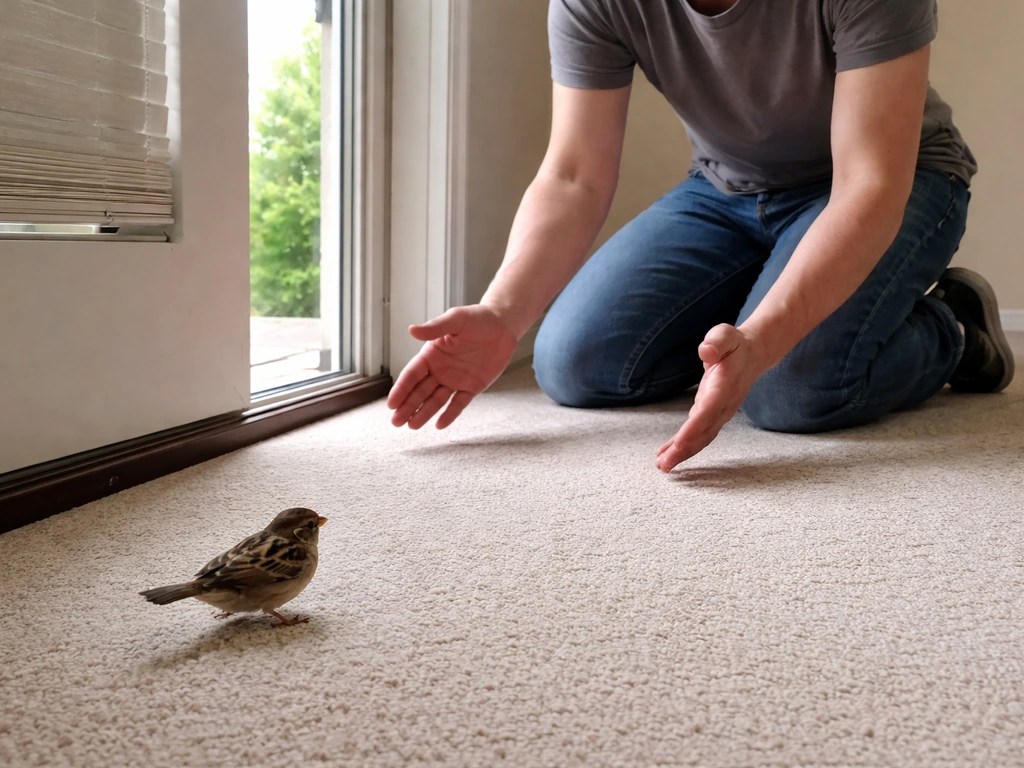
If a wild bird is trapped inside a building, darken the room by closing blinds and shutting off lights, then open one clear exit point (window or door) that has light visible through it. Stand quietly to one side. Most birds will find the light and fly out within a few minutes. If the bird is exhausted or injured and needs to be corralled, use a large, lightweight barrier like a bedsheet held between two people at arm's length, moving slowly in a wide arc to guide rather than chase. Never run at a bird or try to grab it mid-air. If the bird doesn't exit or appears injured, stop and call a licensed rehabilitator.
When things go wrong: troubleshooting common problems
Bird won't step up and keeps backing away
You're moving too fast. Go back to the trust-building phase and spend more time with hand-near-cage without asking for anything. The bird isn't ready. Trying again tomorrow after a comfortable session is always faster than pushing through avoidance today.
Bird steps up but bites mid-transfer
Biting during a step-up often signals the bird is saying "I don't want to go where you're taking me." Check whether you're moving too quickly, approaching a frightening space, or the session has gone on too long. Shorten sessions and practice step-ups that go nowhere at first, just up, treat, down, treat, in the same spot. Build the movement to a new location incrementally.
Bird is terrified and freezes or screams
Stop immediately. A frozen bird is not a calm bird; it's a bird in shutdown mode. Move back to a safe distance, allow the bird to recover, and rethink your approach. This is exactly the scenario the RSPCA training guidance warns about: if the bird anticipates something negative, continuing makes it worse, not better. Consider whether the environment is too stimulating, sessions are too long, or trust-building was skipped.
Bird isn't interested in food rewards
Either the treat isn't high-value enough, or the bird isn't hungry enough to be motivated. Do training sessions before meals, not after. Try different options: millet, sunflower seed pieces, small bits of egg, fresh fruit. If the bird still won't eat from your hand in any context, social reinforcement like verbal praise or head scratches may work better for that individual.
Bird attempts to fly off every time you move
Practice stationing: teach the bird that staying on a specific perch earns rewards. Use a target or a cue to get the bird to the perch, reward it repeatedly for staying there, then slowly introduce your movement at increasing distances. The bird learns your movement doesn't always mean something is about to happen to it.
Overexcited bird is charging or chasing
Some parrots, especially adolescent birds, get so excited they rush at you in a way that looks aggressive but isn't. Keep sessions calm and structured so the bird knows what to expect. End the session and leave the room calmly if chasing escalates. Unpredictable, chaotic interactions feed overexcitement; consistent, clear training sessions reduce it.
Legal and ethical lines you need to know
This is not optional reading if you're working with or near wild birds. In the United States, most wild birds including songbirds, raptors, waterfowl, and shorebirds are protected under the Migratory Bird Treaty Act. Under 50 CFR 21.76, a member of the public can legally pick up a sick, injured, or orphaned migratory bird without a permit only for the purpose of immediately transporting it to a permitted rehabilitator or licensed veterinarian. That's it. Keeping the bird, attempting to rehabilitate it yourself, or training it is not permitted without a federal rehabilitation permit, which requires the permittee to be 18 or older, complete at least 100 hours of hands-on experience over a full year, and meet other federal and state requirements. Holding a rehabilitated migratory bird beyond 180 days also requires approval from the Regional Migratory Bird Permit Office.
State rules layer on top of federal rules and are often stricter. North Carolina, for example, specifies that unlicensed individuals who temporarily take in an injured wild bird must surrender it to a licensed rehabilitator or licensed veterinarian within 24 hours. Washington State's wildlife rehabilitation rules note that a rehabilitation permit does not exempt anyone from complying with other applicable laws, and facilities can be inspected. If you're ever in doubt about what you're allowed to do in your state, contact your state wildlife agency before handling the bird.
When to stop and call a professional
Know when the situation is beyond DIY. Call a licensed wildlife rehabilitator if you see any of the following:
- The bird is bleeding, has a drooping wing, or cannot stand
- The bird is a raptor (hawk, owl, falcon, eagle) of any kind
- The bird has been there more than an hour and isn't moving
- You cannot guide it to safety without causing obvious distress
- The bird is a species you don't recognize and could be protected
Audubon's guidance is clear: if the bird is obviously injured, contact a wildlife rehabilitation agency. For larger birds of prey, proceed with caution even approaching, because their talons and beaks can cause real injuries to untrained handlers. The CDC echoes this: if a bird is badly injured or looks very sick, contact a wildlife rehabilitator or your state wildlife office rather than attempting to handle it yourself.
To find a licensed rehabilitator near you, contact your state's fish and wildlife agency (like the NYSDEC in New York, which maintains a public list of licensed rehabilitators), or reach out to the National Wildlife Rehabilitators Association, which the ASPCA references as the go-to resource for the public. The RSPB recommends contacting a wildlife rescue for advice before taking any action if you're unsure, which is genuinely the safest approach for both you and the bird.
For your own pet birds, knowing when to call an avian vet or a certified parrot behavior consultant is equally important. If your bird is biting hard enough to draw blood consistently, showing signs of serious fear despite months of gentle work, or hurting itself trying to escape training sessions, those are signals to bring in a professional rather than troubleshoot alone. There's no shame in that. A few sessions with a qualified avian behaviorist can save years of frustration and keep both you and your bird safe.
FAQ
What should I do if my bird steps up sometimes but refuses or bites in other sessions?
Use a short “fail-safe” plan: if the bird avoids the hand, stalls, or bites, stop for that session, place the bird back exactly where it was, and repeat only the last successfully reinforced step the next day. Avoid “chasing” forward progress, because it teaches avoidance and increases stress.
Can I lead a bird in a different room or environment than where I trained it?
Yes, but the key is consistency and safety. Many birds prefer the same approach path and same perch height, so use a predictable setup (same spot, same cue, same reward). If the bird is afraid of a specific location, train that location in tiny increments instead of switching rooms to “desensitize” quickly.
Why does my bird suddenly act like it has forgotten what it learned?
Don’t assume weight, hunger, or “mood” alone explains refusal. Confirm the bird can physically do the behavior (foot grip on your hand, claw condition, no pain, comfortable grip pressure). Then check session timing, reward value, and whether your body language changed (eye contact, leaning over, moving too close).
My bird ignores recall during distractions, what’s the right fix?
Avoid calling or reaching when the bird is already showing stress signs. If recall fails repeatedly, shorten the distance and rebuild from the last reliable range, with the bird trained to succeed before asking for more. Also make sure the recall cue is only used for positive outcomes, never to end fun or start restraint.
How do I lead a bird that hates hands or only steps up reluctantly?
For many pet species, practice “targeting without pressure” first (touch, reward, release). Then use stationing as the bridge behavior before stepping onto your hand, so the bird learns your movement doesn’t mean capture. If the bird panics at a hand, keep the hand still initially (no advance), reward voluntary contact, then slowly add movement later.
What are common mistakes that make step-up training fail?
For step-up, prefer a gentle invitation (hand near the preferred climbing path) over forcing contact. If you miss the timing and the bird climbs away, wait and reset rather than trying again immediately. A reliable sequence is, cue, wait, reward the first correct response, then pause before trying to move to a new location.
How can I lead a bird into a carrier if it becomes fearful when I bring it out?
If you need to transport the bird soon, don’t jump straight to full handling. Build “carrier leading” separately: short carrier investigation sessions, target toward the entrance, reward inside, then close briefly only after the bird stays calm. Keep the cue the same every time, so the bird learns the cue predicts reward, not the end of freedom.
Is it safe to practice leading outdoors, and how should I adjust training?
Start with the lowest distraction level and a consistent end-to-end safety check (perch stability, no open hazards, secure doors). In the first outdoor attempts, limit exposure time and always end on a success. If the bird regresses outdoors, return indoors and rebuild recall and stationing before trying again.
Do the same “leading” methods work for finches and other small birds, or is it different?
Use species-appropriate methods. Small birds often do better with open-door recall to you plus strong food incentives, rather than direct handling. If your species is prone to bolt behavior, prioritize targeting and recall from a perch, then only attempt step-up after the bird is reliably choosing you.
What should I do the next day if my bird shut down during training?
If you accidentally progress too fast and the bird is frozen, shut down, or shows signs of fear, your next step is to create distance and end the session calmly. Return the next day to the last easy behavior (for example, hand-near without asking for step-up) and rebuild gradually, longer trust sessions rather than pushing the same exercise.
When dealing with a wild bird indoors, how do I know whether to try guiding it myself or call for help?
For wild birds, do not treat “training” as the goal. A common safe rule is, if you cannot clearly provide a single obvious exit and the bird is not moving, stop and contact a licensed wildlife rehabilitator instead of improvising. Keep your body positioned to reduce panic and avoid repeated attempts that increase exhaustion.
What’s the safest legal and practical approach if I find a wild bird I want to help immediately?
Because protected wild birds have strict legal limits, the practical decision aid is this: if the bird is sick, injured, orphaned, or you need to hold it longer than immediate transport to a permitted rehabilitator, stop and call. Even if you think you are helping, attempting rehabilitation or keeping it can create legal risk.
When should I stop DIY training and call an avian vet or a behavior consultant?
For pet birds, call a professional avian vet or behavior consultant when biting escalates to blood repeatedly, fear persists despite consistent training, or self-injury or chronic escape attempts occur. If you suspect pain (sudden behavior change, limping, abnormal vocalization), get a medical check first because training won’t fix discomfort.
What should I do if my chosen treats suddenly stop working during a session?
Have a “consistent replacement reward” ready in advance for common interruptions. If the bird refuses a treat, swap to an alternative high-value item used earlier, or switch to social reinforcement it reliably likes. If the bird won’t engage at all, end the session and try again at a different time (often before meals).
Next Articles
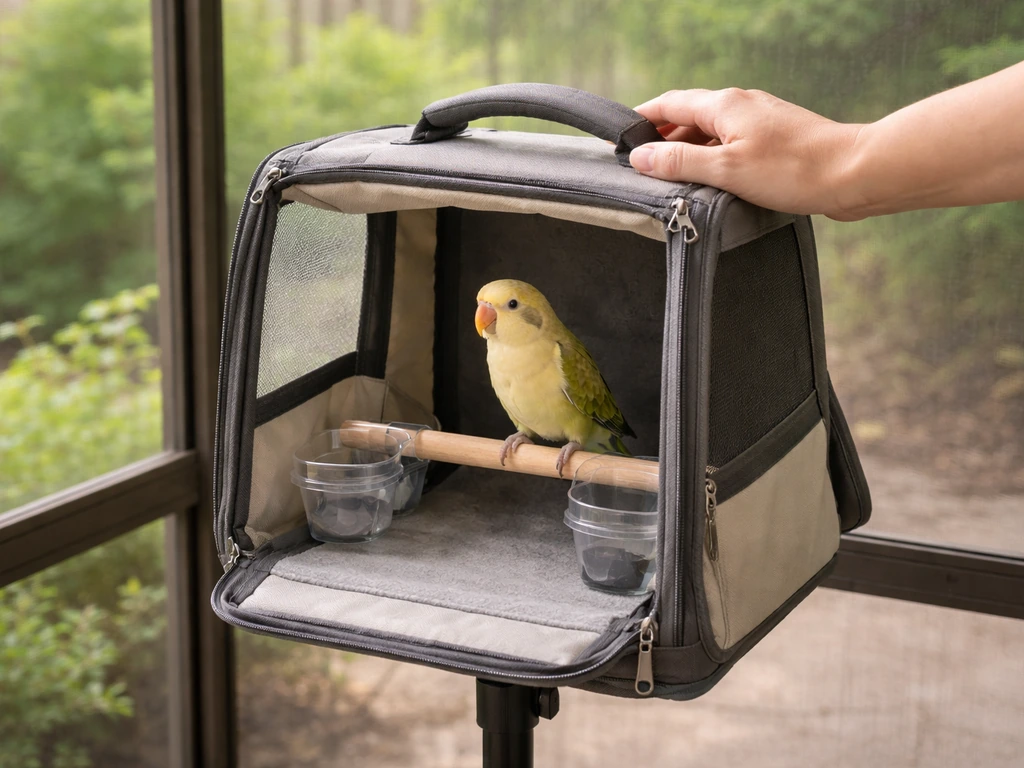
How to Guide a Bird Outside Safely and Humanely
Step-by-step how to guide a bird outside safely and humanely, for pets and wilds, with release prep and troubleshooting.
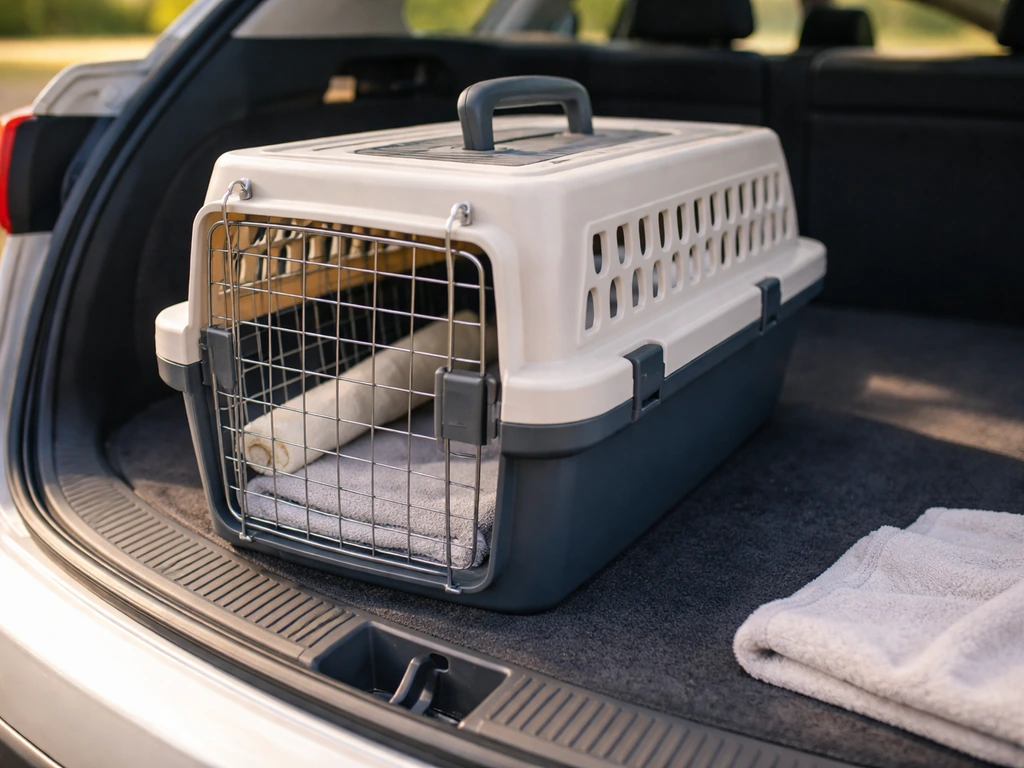
How to Travel with a Bird: Safe Humane Step by Step Guide
Step-by-step humane guide to travel with a bird: carrier setup, safe handling, car plane transit, legal tips, and contin
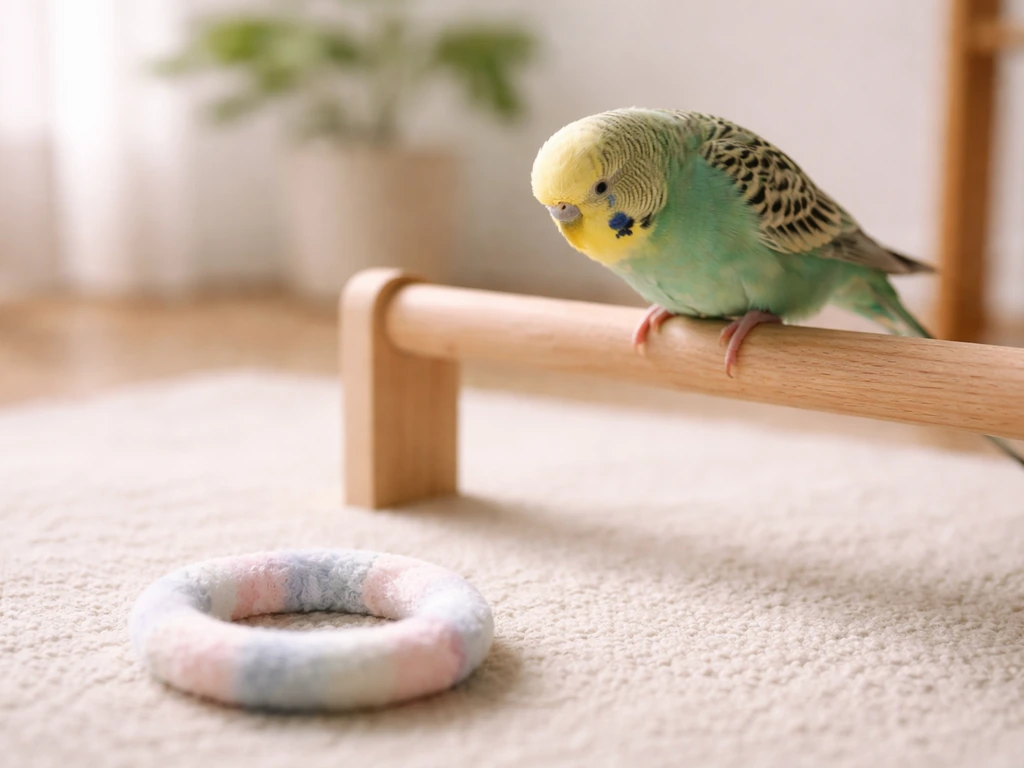
How to Teach a Bird to Fetch Step by Step Guide
Humane, step-by-step training to teach your bird to fetch safely, with targets, rewards, troubleshooting, and gradual re