
Here is the honest answer upfront: under U. S. federal law (the ADA), birds cannot legally qualify as service animals for public access. The ADA defines a service animal as a dog (and, in limited cases, a miniature horse), full stop.
How to Make My Bird a Service Animal: Legal and Training Guide

Maya Harris
18 Apr 2026
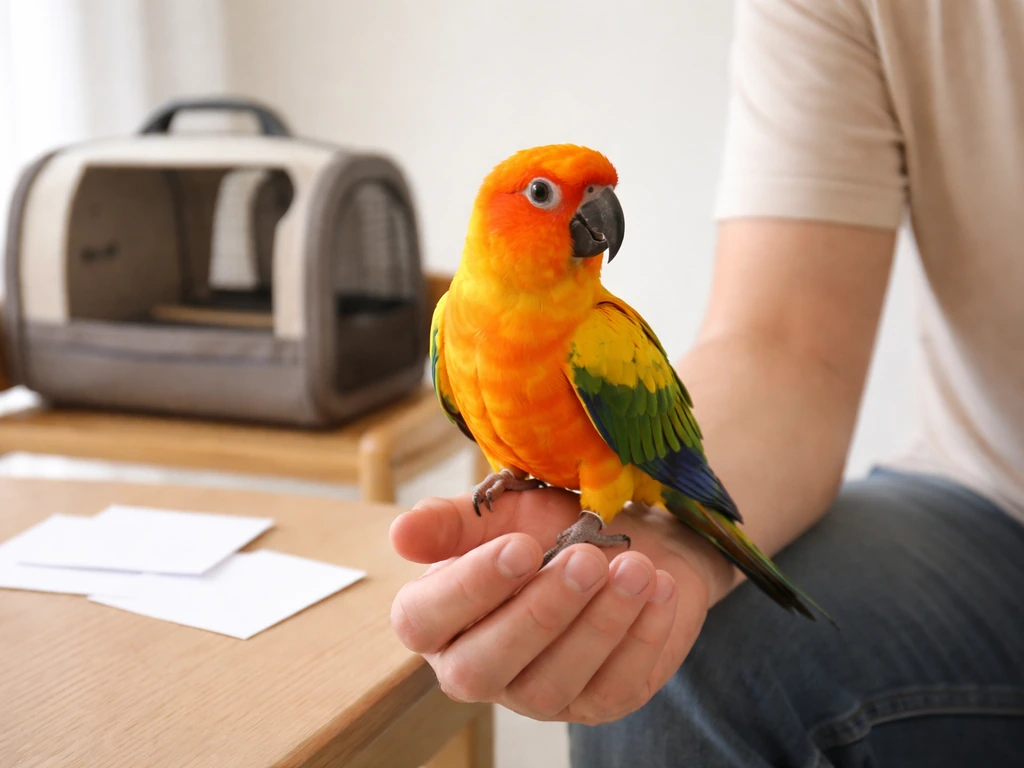
No registry, vest, or training certificate changes that. But that does not mean the conversation ends there. Depending on your situation, your bird may still qualify as an emotional support animal with real legal protections in housing, or you may be able to train your bird for meaningful assistance roles within your home.
This guide walks you through exactly what the law says, how to assess your bird honestly, how to train toward the best realistic outcome, and what to do if a full service-animal designation is not achievable.
What 'service animal' actually means for birds (and where the law draws the line)
Under ADA Title II and Title III (the rules covering public spaces, businesses, and government services), 28 CFR § 35.104 defines a service animal as 'any dog' individually trained to do work or perform tasks for a person with a disability. Miniature horses get a separate mention. Every other species, including birds, is explicitly excluded. This is not a loophole or a grey area. A parrot, cockatiel, macaw, or any other bird has no public-access service-animal rights under the federal ADA.
The ADA also makes clear that animals whose sole function is to provide comfort or emotional support do not qualify as service animals, even if the animal is a dog. The work or task the animal performs must be directly tied to the handler's disability, such as alerting to sounds, retrieving objects, or detecting medical episodes. Simply being calming or comforting does not count under that framework.
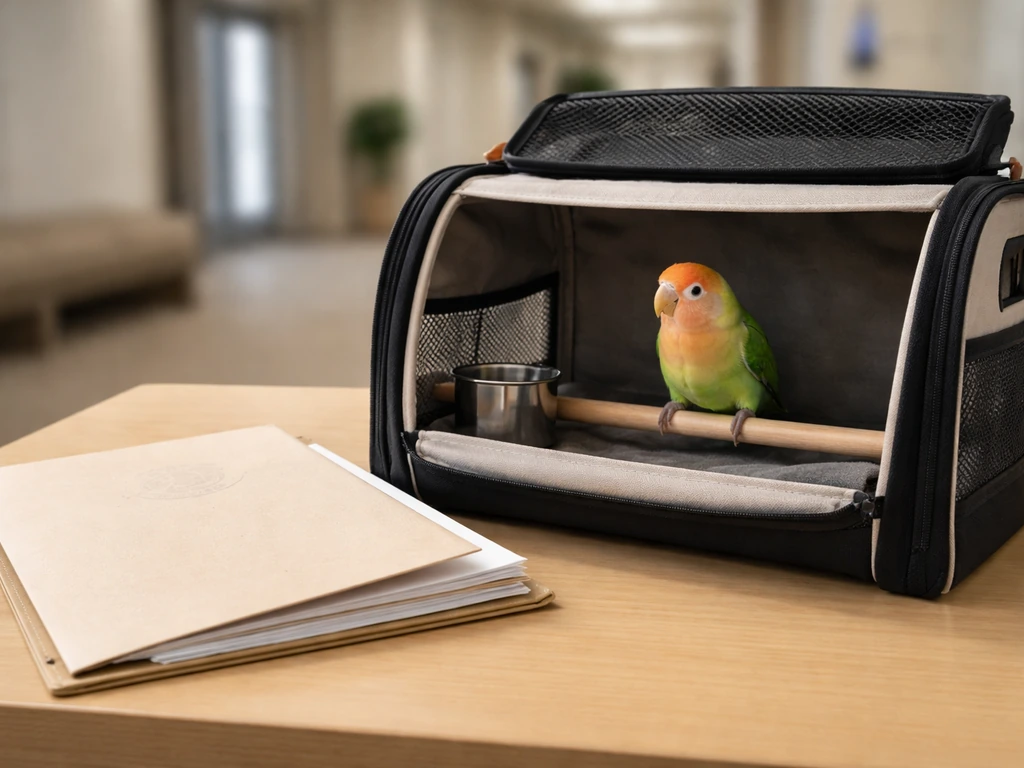
Air travel follows different rules under the Air Carrier Access Act (ACAA), but the gap has closed significantly there too. In December 2020, the DOT finalized a rule stating that emotional support animals are no longer treated as service animals under ACAA. Airlines now handle ESAs as pets, with carrier-specific policies and fees. Several carriers have documented cases of exotic birds being denied boarding under these tightened rules. If you were hoping to travel with your bird in-cabin as a service animal, plan around pet policies instead.
Some states have their own disability-access laws that can be broader than the ADA, so it is always worth checking your state's specific language. Massachusetts, for example, tracks the ADA's dog and miniature horse limitation for public-access protections. Texas distinguishes between 'service animal' and 'assistance animal' terminology but still does not extend public-access service-animal status to birds. Arizona's AG office similarly limits the service-animal definition to dogs and miniature horses for public settings. In most jurisdictions you will find the same wall. If a state law in your area does cover other species, you will need documentation specific to that law, not federal ADA paperwork.
Legal requirements and documentation basics
Because birds cannot be ADA service animals, the most relevant legal category for most bird owners is the emotional support animal (ESA). ESAs are covered under the Fair Housing Act (FHA), which means landlords and housing providers must make reasonable accommodations for them regardless of no-pet policies, assuming you have proper documentation. The ADA, as ADA.gov emphasizes, does not automatically govern ESA rights in housing, and the FHA rules are genuinely separate.
To pursue ESA status for your bird in housing, here is what you actually need to do:
- Get a letter from a licensed mental health professional (LMHP), such as a therapist, psychologist, or psychiatrist, who is treating you. The letter should state your diagnosis (or describe a mental or emotional condition), explain that the animal provides therapeutic benefit, and be on the provider's letterhead with their license number.
- Research your state's specific FHA implementation and any local housing authority rules, since some states have added their own requirements around ESA letters and fraud prevention.
- Submit the letter to your housing provider in writing and keep a copy. They are allowed to ask for documentation confirming your need, but they cannot ask for your medical records.
- Know that online ESA registries and certificates carry no legal weight. The ADA explicitly says that entities cannot require or rely on registry documents as proof, and that principle applies broadly. An LMHP letter is what matters.
One common pitfall is confusing ESA protections with service-animal public-access rights. Your bird can live with you in a no-pets apartment as an ESA with a valid letter. Your bird cannot accompany you into a grocery store, restaurant, or government building under that same ESA status. You can also work toward practical in-home assistance skills, which is often the most achievable path—see the step-by-step training plan in this guide for how to become a bird handler.
If you want a deeper, practical foundation beyond legal basics, start with how to become a bird trainer and build from there. If a business asks about your animal, the ADA permits only two questions: whether the animal is required due to a disability, and what task or work it has been trained to perform.
Those questions are designed for service dogs. Do not attempt to pass your bird off as an ADA service animal, as this can result in legal consequences and damages the credibility of people with legitimate service animals.
If you are researching whether your specific state has extended service-animal protections to species beyond dogs and horses, search your state's human rights or disability services agency website directly, or consult a disability-rights attorney. Do not rely on informal sources or online registries for this.
Is your bird actually a good candidate? Honest suitability checklist
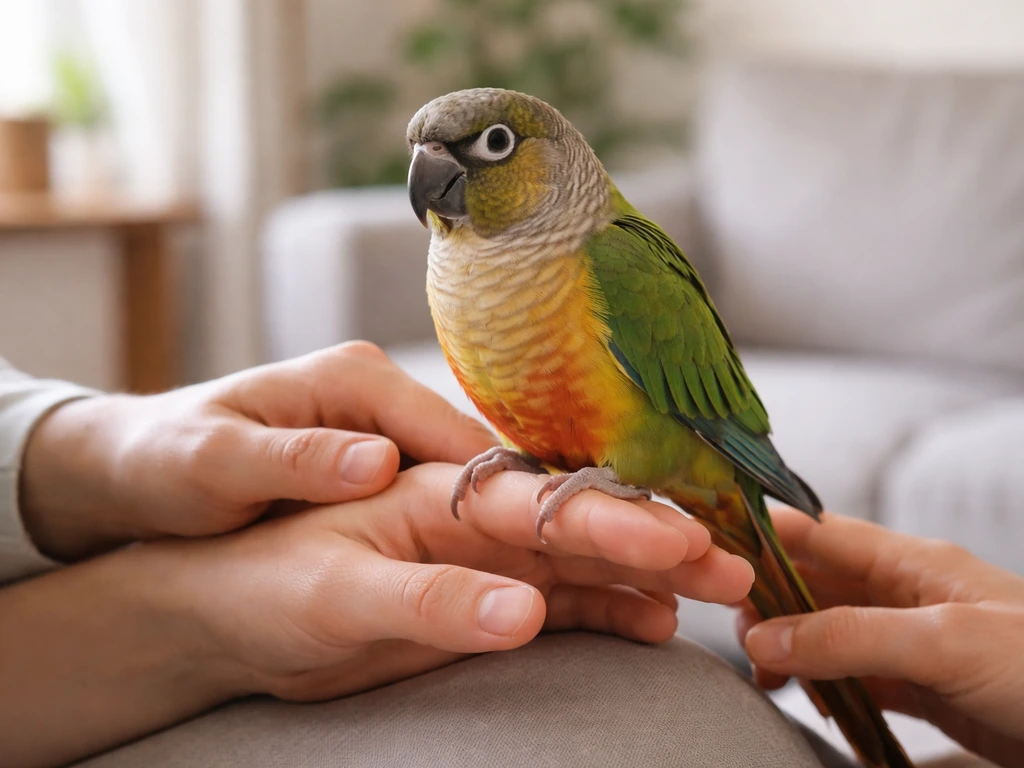
Even if you are pursuing ESA status or training your bird for in-home assistance work, your bird needs to meet a realistic behavioral and health baseline. Not every bird is suited for this, and pushing an unsuitable bird into high-stimulation or high-demand situations is a welfare problem, not just a training problem. Here is how to assess your bird honestly before investing significant time in task training.
Temperament
A suitable candidate is consistently calm around unfamiliar people, tolerates handling from someone other than their primary bonded person, and recovers quickly from mild startles or surprises. If your bird bites regularly, screams at any new stimulus, or has never been comfortable outside its home environment, that is important information, not a dealbreaker, but it means significant foundational work comes before any task training.
Health baseline
Before any training program, your bird needs a full wellness exam from an avian vet. Stress-related illness, subclinical infections, and nutritional deficiencies all affect behavior dramatically. A bird that is not in peak health will struggle to learn reliably and may deteriorate under the added demands of a structured training program. The Association of Avian Veterinarians recommends positive-reinforcement handling techniques even during vet visits, so if your bird is already comfortable with towel handling and carrier transport, that is a strong health-management asset.
Training baseline
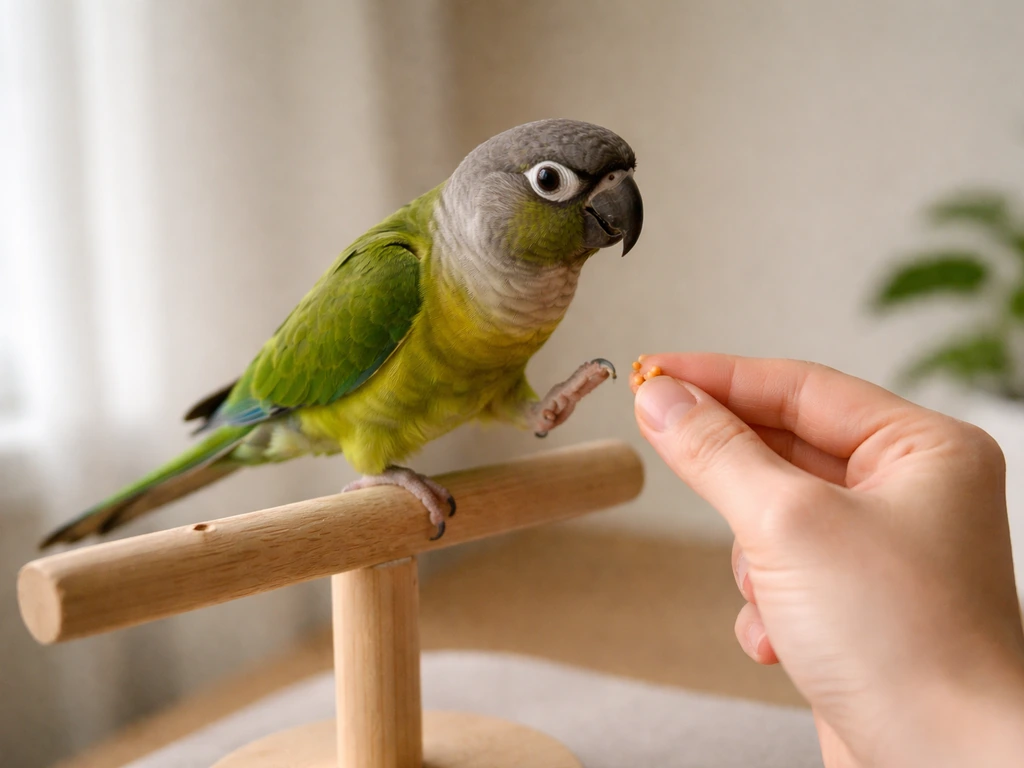
Does your bird know its name and respond to at least one trained cue? Does it step up reliably and without aggression? Can it settle calmly in a carrier or on a perch stand for 20 to 30 minutes? These are the minimum prerequisites. If you are starting from zero with a bird that has never been trained, expect to spend several months on foundational work before any task-specific training makes sense.
| Trait | Good sign | Needs work before proceeding |
|---|---|---|
| Bite history | Rarely or never bites; communicates discomfort with body language first | Bites without warning or bites frequently during handling |
| Noise level | Vocalizes normally but can be quiet for 15+ minutes | Screams persistently, especially when stressed or in new environments |
| Carrier comfort | Enters carrier willingly or with minimal encouragement | Refuses carrier or shows panic signs when near it |
| Recovery from startles | Briefly alerts, then returns to calm within 1 to 2 minutes | Remains agitated for extended periods after minor disturbances |
| Handling tolerance | Accepts handling from more than one person | Bonded to one person only; aggressive toward others |
| Health status | Recently cleared by avian vet, no signs of illness | Not recently examined or showing stress-related behaviors |
Step-by-step task training plan for birds
This training roadmap is designed for birds being prepared for in-home assistance roles or ESA-level support, and it follows welfare-first, reinforcement-based methods. To make real progress, you’ll want a step-by-step training roadmap focused on welfare-first bonding, cues, and proofing in everyday environments. Move through each phase at your bird's pace. There is no set timeline, and rushing leads to regression and stress.
Phase 1: Bonding and consent-based handling (beginner)
Before any task training, your bird needs to trust you and have some agency in interactions. Consent-based handling means reading your bird's body language and stopping before it reaches its stress threshold. If your bird leans away, pins its eyes, fluffs and then slicks down suddenly, or raises its foot to push your hand away, back off. End the session on a calm note and try a shorter session next time. Reinforce any calm, engaged behavior with a high-value treat immediately. For most parrots this might be a small piece of almond, a grape slice, or whatever your specific bird finds most motivating.
Work on a reliable step-up cue first. Present your hand or a perch, say 'step up' or whatever cue word you choose, and reward the moment the bird steps up calmly. Practice this in multiple locations in your home so the behavior becomes generalized, not tied to one spot.
Phase 2: Habituation to stimuli (beginner to intermediate)
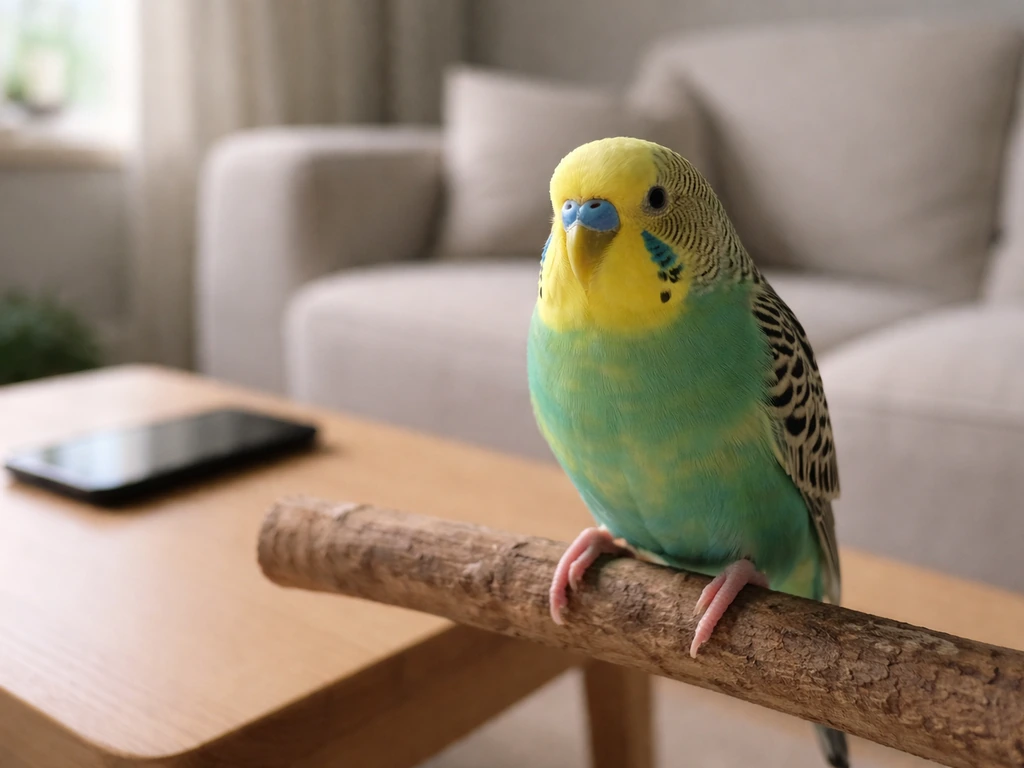
Habituation means gradually and safely exposing your bird to the kinds of stimuli it will encounter in its support role. This might include unfamiliar sounds (doors, alarms, street noise, people talking), new people, new objects, and different locations within your home. The key is to start well below the bird's stress threshold and pair each new stimulus with something positive. A bird that startles at the smoke alarm but recovers quickly and accepts a treat afterward is making progress. A bird that screams for 20 minutes and refuses food after a minor surprise is telling you the exposure was too much, too fast.
Desensitization works best in small, incremental steps. If you want your bird to tolerate the carrier, start with the carrier across the room. Reward calm behavior in its presence. Move it a foot closer each day, continuing to reward calm. Over days or weeks, progress to having the bird eat meals near the open carrier, then inside it. This approach, described in both avian behavior and veterinary handling literature, is slower than you might like but produces far more durable results than forcing exposure.
Phase 3: Clear cueing and task introduction (intermediate)
Once your bird has solid foundational behaviors and a good habituation baseline, you can introduce task-specific cues. Tasks relevant to disability support might include:
- Alerting to sounds: teaching the bird to fly to or look toward a specific sound (such as a timer, phone, or alarm) and then orient toward the handler. Some birds learn this naturally; you can put it on cue by marking and rewarding the behavior when it occurs naturally.
- Tactile interruption: training the bird to step up or nudge the handler's hand on cue, which can interrupt repetitive behaviors or redirect attention during anxiety episodes.
- Retrieval: larger parrots can be taught to pick up and carry small, lightweight objects. This requires significant shaping in small steps and works best with birds that already have strong 'hold' and 'drop' behaviors.
- Stationing: teaching the bird to remain calmly on a designated perch or stand for extended periods while the handler goes about daily tasks. This is foundational for any support role and also important for safe public-access scenarios.
Use a marker word or clicker to mark the exact moment of the correct behavior, followed immediately by a reward. Keep sessions short, ideally 5 to 10 minutes, and always end before the bird loses focus. Avian Behavior International's constructional approach is useful here: rather than trying to eliminate 'bad' behaviors directly, you build up the good behaviors that make problem behaviors unnecessary. Training for perfect behavior is not realistic, so build in predictable structure and consistent reinforcement instead.
Phase 4: Proofing and generalization (intermediate to advanced)

A task is only reliable if it works in multiple contexts, with multiple people present, at different times of day, and in different emotional states of the bird. Proof each behavior by practicing it with minor distractions, in different rooms, and at different points in the day. If the bird performs a task 8 out of 10 times in training conditions but 2 out of 10 times when a guest is in the room, the task is not yet reliable enough for a support role. That is normal, not a failure. Just keep building.
Handling, safety, and welfare during outings or new environments
If you are taking your bird outside the home, whether to a vet appointment, a friend's house, or (in jurisdictions where permitted) a more public setting, welfare and safety protocols are non-negotiable. Birds do not have the physiological tolerance for stress that many mammals do, and they can deteriorate quickly if pushed past their threshold.
Carrier and transport basics
Use a hard-sided carrier that is appropriately sized for your bird: roomy enough to turn around, small enough to feel secure. Cover the carrier with a light breathable cloth during transport to reduce visual stimulation. Veterinary handling resources consistently recommend this as a low-stress transport strategy. Place a familiar perch or a piece of foraging material inside to give the bird something to do. Never leave a bird in a hot car. Birds show heat stress through open-mouth breathing and wing-drooping; if you see either, move to a cooler environment immediately.
Leash, harness, and flight considerations
Some bird owners use flight suits or harnesses for outdoor outings. If you go this route, harness training must follow the same gradual desensitization process as carrier training. Never force a harness onto a bird that has not been trained to accept it. For flighted birds in any public or semi-public setting, flight feathers should either be trimmed (your vet can advise on safe levels) or a harness must be used and secured at all times. A bird that escapes outdoors is extremely unlikely to return safely, regardless of how bonded it is.
Reading stress signals during outings
Know your bird's stress baseline at home so you can recognize when it is outside that range. Early stress signals include feather-slicking, rapid breathing, refusal of high-value treats, excessive vocalization, and repeated attempts to return to the carrier or hide. If you see two or more of these, shorten the outing or remove the bird from the triggering environment. Over time, a well-habituated bird will extend its tolerance, but that takes months of consistent, positive experiences, not a few rushed practice runs.
Behavior standards for any public-adjacent role
Even outside strict ADA standards, a bird functioning in a support role should consistently demonstrate these behaviors before you take it anywhere:
- Remains calm in its carrier for at least 30 minutes without stress-screaming
- Steps up reliably from handler on cue, even in a new environment
- Does not lunge, bite, or show unprovoked aggression toward people nearby
- Responds to at least one trained task cue with 80% or higher reliability
- Shows visible comfort signals (relaxed feathers, willingness to eat treats) within 10 minutes of arriving somewhere new
Troubleshooting common problems
Biting
Biting is one of the most common complaints from parrot owners, and it is almost always communicative. The bird bites because it learned that biting works to end an uncomfortable interaction, or because it was pushed past its threshold without warning. If biting is happening during training, you are moving too fast. Shorten sessions, reduce the difficulty of what you are asking, and increase your rate of reinforcement. For established biters, work with an avian behaviorist rather than trying to 'power through.' Forcing interaction with a biting bird deepens the problem and risks injury to both of you.
Screaming
Screaming is normal parrot behavior, but excessive or stress-driven screaming is a welfare signal and a training problem. The IAABC Foundation recommends differential reinforcement of incompatible behavior: reward the bird heavily when it is quiet and calm, and do not reinforce screaming by immediately responding to it (though you should check that the bird's needs are met). If screaming is triggered specifically by new environments or people, that is a habituation problem, and the solution is more gradual exposure at lower intensity, not more correction.
Flightiness and fear responses
A bird that startles easily or shows persistent fear in new environments needs more desensitization work before it can reliably perform any support function. Go back to Phase 2 of the training plan and work at a much lower stimulus intensity. Consult an avian behaviorist if you have been working on desensitization for several months without progress. Some birds have had traumatic early experiences that require more specialized intervention.
Distraction and unreliable task performance
If your bird performs a task beautifully at home but falls apart in any other setting, the behavior has not been generalized enough. Increase proofing: practice in more locations, with more distractions, in shorter sessions. Also check whether your reinforcers are strong enough for high-distraction environments. A treat that motivates strongly at home may be less compelling when there are exciting new things to look at. Bring your bird's absolute favorite treat for any practice session outside its comfort zone.
Feather stress and environmental stress
Feather-destructive behavior and stress bars on feathers are signs that your bird's overall stress load is too high. If you see these, pause your training program and consult an avian vet to rule out medical causes first. Then audit the bird's daily environment: sleep quality, diet, social interaction, and enrichment. A bird that is chronically stressed at home cannot take on an assistance role. Address welfare first, always.
When your bird can't qualify: realistic and meaningful alternatives
If your bird is not behaviorally or legally suited to serve as a service animal, that does not mean the relationship has no value or that your bond cannot support your wellbeing. If you’re focused on building practical skills for your relationship and day-to-day support, “how to become a bird handler” is a related next step even when public-access service status isn’t possible. For a practical place to start, review this guide on how to become a bird handler, even if public-access service status is not possible. Here are the most realistic paths forward.
Pursue ESA status for housing
If you have a diagnosed mental or emotional health condition and your bird provides genuine therapeutic benefit, an ESA letter from your licensed mental health provider gives you real, enforceable housing protections under the FHA. To get an emotional support bird, you’ll typically need an ESA letter from a licensed mental health provider for housing protections under the FHA.This is the most straightforward legal avenue for most bird owners and does not require any specific task training.
Train for in-home assistance
A bird can be trained to perform genuinely useful tasks within your home without ever needing public-access status. Alerting to sounds, retrieving small objects, providing structured interaction during difficult mental health moments, and simply being a consistent, positive presence all have real value. Invest in the training plan above for its own sake, not just for a legal designation. If you want to pursue that in-home route, use this guide as your starting point for how to become a bird sitter. If you’re deciding between different disability-support routes, start with the same legal and documentation basics covered in our guide on how to get a job as a bird.
Consider the broader role of bird work
If working closely with birds is something you want to build into your life more formally, there are related paths worth exploring. Bird training, bird handling, and avian care roles all involve developing the same welfare-first skills this guide covers. Those who are drawn to birds' therapeutic potential might also look into animal-assisted interaction programs that work with trained birds in structured, supervised settings.
Your immediate next steps
- Book a wellness exam with an avian vet if your bird has not been examined in the last 12 months.
- Use the suitability table in this guide to honestly assess where your bird is right now.
- If ESA housing protections are your primary need, contact your LMHP and discuss whether an ESA letter is appropriate for your situation.
- Search your state's disability rights agency website for any species-specific service-animal provisions beyond the ADA.
- Start Phase 1 of the training plan this week: one 5-minute session focused on step-up with positive reinforcement.
- If biting, chronic screaming, or feather-destructive behavior is present, consult an avian behaviorist before starting task training.
- Do not purchase or use online ESA certificates or service-animal registries. They carry no legal weight and may actively undermine your credibility.
FAQ
Can I legally label my bird a service animal and bring it into stores or restaurants if it’s trained?
In the U.S., you cannot get federal “public access” rights for a bird under the ADA, even if you buy a vest, complete a program, or have your bird trained to retrieve items. The closest realistic housing protections for a bird are usually via the Fair Housing Act as an ESA, not ADA service-animal status.
What documentation do I need to have my bird approved as an emotional support animal for housing?
For housing, the FHA focuses on whether you have a legitimate need and whether a reasonable accommodation is being requested. You generally do not need task-training records for an ESA, but you do need a letter from a licensed mental health provider (when the ESA is for a mental health-related disability) or documentation that fits the specific accommodation request, depending on your situation.
Does an ESA letter let my bird go everywhere I go?
An ESA letter is commonly accepted for housing, but it does not automatically grant public-access rights, including restaurants, grocery stores, or government offices. If you want public access, that is an ADA service-animal framework that still does not include birds.
My state might be more flexible than the ADA. How do I check if birds get public-access protections?
Yes, other species can sometimes be protected under state or local disability laws, but those rules are not uniform. The practical next step is to identify your state’s disability-human rights agency or a disability-rights attorney and ask whether your state extends public-access accommodation to non-dog species, then follow that law’s documentation requirements.
What should I say if a business asks for proof my bird is a service animal?
If a business asks questions, the ADA limits service-animal inquiries for covered cases to whether the animal is required because of a disability and what work/task it performs. However, since birds are not covered by ADA public-access rules, presenting your bird as an ADA service animal can create legal and practical risk. For clarity, be prepared to request accommodation only under the correct category (for example, housing as an ESA).
Can I fly with my bird in-cabin as a service animal or ESA?
Air travel is usually where people get surprised. After the change in how emotional support animals are treated under the Air Carrier Access Act, airlines typically treat ESAs like pets unless they approve another accommodation. Your best next step is to contact the airline directly and ask for the exact in-cabin or cargo policy for small birds, including carrier sizing, fees, and any documentation they require.
My bird can step up, stay calm, and retrieve small objects. Does that automatically make it a service animal?
A reliable “step-up” and tolerance of handling are great foundational skills, but they do not prove a disability-related task. If your goal is in-home support, map the bird’s behaviors to your day-to-day needs, then train for consistency across contexts. If your goal is public access, the correct legal category would still require an ADA-qualifying species.
My bird bites during training, does that mean I should give up?
If biting is happening during training, it usually means you are exceeding the bird’s threshold or the interaction has become too stressful or inconsistent. The action items are to shorten sessions, reduce stimulus intensity, increase the rate and value of reinforcement, and work with an avian behavior professional if the problem is established rather than new.
How do I know if my training is becoming too stressful for my bird?
Yes, a bird can deteriorate under high demands even if it seems motivated at first, because stress can increase before you see obvious failure. If you notice feather stress signs, refusal of high-value treats, or repeated difficulty settling, pause training, get an avian wellness check, and revise the plan to lower intensity and improve recovery time.
If my bird cannot handle outings, what are realistic assistance goals I can still train at home?
Sometimes birds are not suitable for outside or high-stimulation support work, but still provide meaningful in-home help. A useful next step is to define a few daily “support moments” (for example, cue-based interaction during a difficult period, retrieving a small item on cue, or structured calm engagement) and train those behaviors for reliability at home without attempting public-access goals.
Do service-animal or ESA registries and certificates help, legally?
If you are trying to pursue disability-related access, be cautious with online registries. Registries and certificates usually do not change ADA eligibility for public access. For housing accommodations, the effective documentation depends on the specific accommodation and provider type, so verify what your landlord or housing authority requires and ensure it matches your state and federal category.
Next Articles
How to Become a Bird Trainer: Step-by-Step Guide
Step-by-step, welfare-first path to become a bird trainer, with safe practice, skills, safety laws, and next actions.
How to Become a Bird Rehabilitator: Licensing and Steps
Step-by-step path to become a licensed bird rehabilitator: permits, humane skills, intake workflow, records, and next ac
How to Teach a Bird to Fetch Step by Step Guide
Humane, step-by-step training to teach your bird to fetch safely, with targets, rewards, troubleshooting, and gradual re