Starting an emu farm is absolutely doable as a beginner, but it rewards people who plan carefully before buying a single bird. Emus are hardy, fast-growing ratites that produce meat, oil, leather, and eggs, but they also have specific space, fencing, and handling needs that can trip up new farmers fast. This guide walks you through every major decision in the order you actually need to make it, from checking local permits this week to hatching your first clutch within a year.
How to Start Emu Bird Farming: Beginner Welfare Guide

Maya Harris
18 Apr 2026
Is emu farming realistic for you? Feasibility, space, permits, and budget
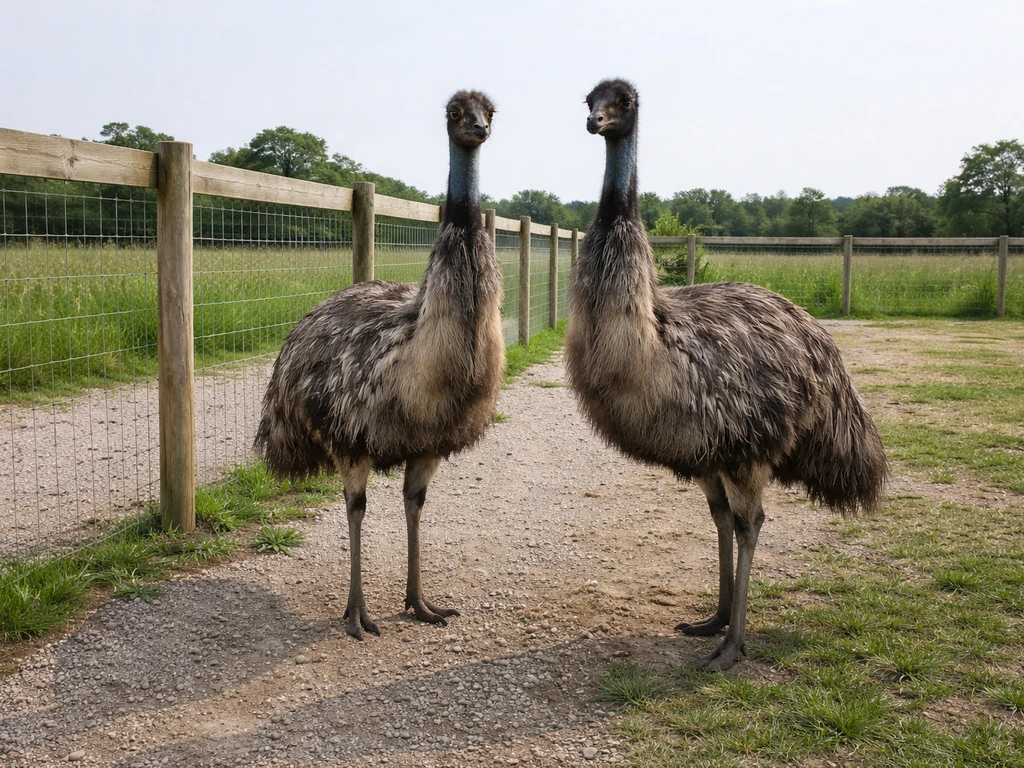
Before you spend a cent, spend a few days on feasibility. Emus are classified as livestock in most jurisdictions, but some regions treat them as exotic or native wildlife, which layers on additional permits and record-keeping requirements. In the Northern Territory of Australia, for example, each emu must have access to no less than 625 m² of space. Western Australia's Model Code of Practice (2nd edition) also mandates outside-run access for chicks at a minimum of 5 m² per bird. If you're in North America, check with your state or provincial agriculture department and your county zoning office, because both may apply. Some municipalities flat-out prohibit ratite farming, so confirm this before anything else.
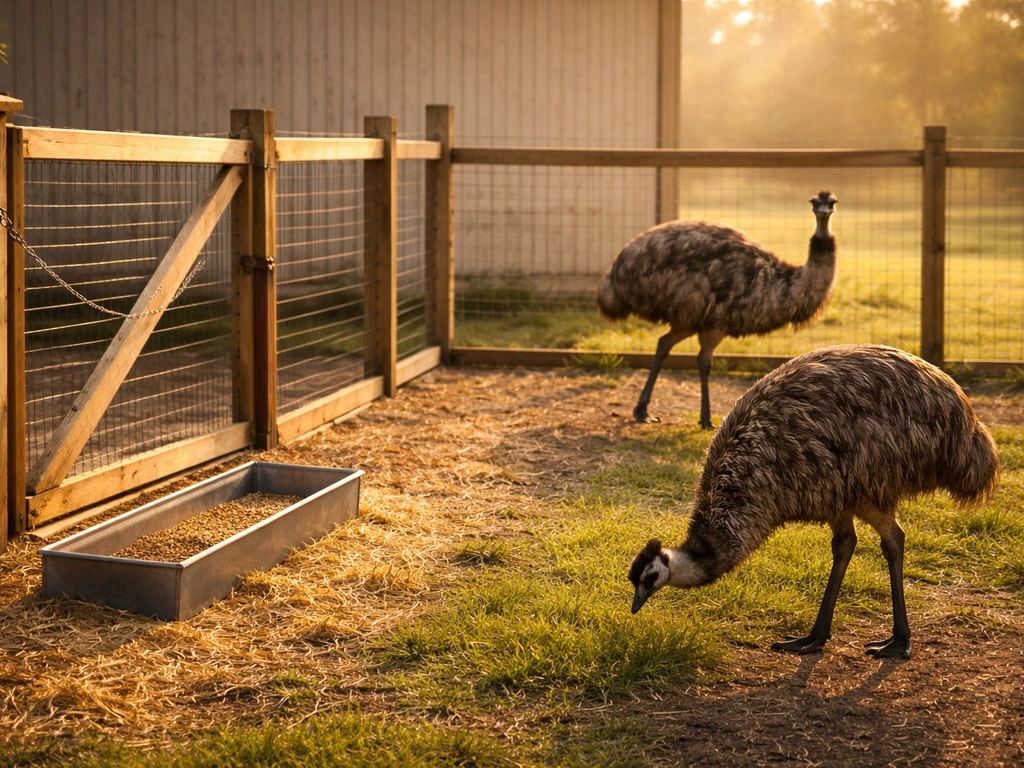
Space is the first hard constraint. A pair of adult emus needs at minimum half an acre of usable fenced land to move naturally and stay stress-free. A small starter operation of 10 birds realistically needs 2 to 3 acres, including paddock rotation space. Cramped conditions directly increase disease pressure and aggression, so don't plan to squeeze birds together and sort it out later.
On the budget side, here's a rough beginner estimate to get you grounded:
| Startup Item | Estimated Cost (USD) | Notes |
|---|---|---|
| Fencing (per acre, 6 ft woven wire) | $2,000–$4,500 | Emu-specific height and gauge required |
| Shelter/housing structure | $1,500–$5,000 | Simple three-sided shed is acceptable |
| Starter pair of yearling emus | $1,000–$2,500 | Varies by breeder and region |
| Feed (first 3 months) | $300–$600 | Ratite-specific starter + produce |
| Water system setup | $200–$600 | Automatic waterers preferred |
| Permits and licensing fees | $50–$500+ | Highly variable by jurisdiction |
| Basic veterinary startup (health check) | $150–$400 | Establish a vet relationship early |
| Incubator (if breeding) | $300–$1,200 | Forced-air, humidity-controlled unit |
Plan for a total startup investment of $6,000 to $15,000 for a small 5 to 10 bird operation, then expect ongoing monthly costs of $150 to $400 depending on feed prices and land maintenance. Emu farming rarely produces meaningful income in the first year, so treat year one as a learning and infrastructure phase.
Choosing and sourcing your emu stock responsibly
Buying healthy birds from a reputable source is one of the highest-leverage decisions you'll make. A sick or poorly socialized bird can set your entire operation back months. Always buy from a licensed breeder or established ratite farm that can provide health records, vaccination history (where applicable), and documentation that the birds were captive-bred legally. Avoid auction lots, especially for your first birds, since you can't assess the history or health background properly.
When you visit a breeder, look for these signs of healthy stock before you commit:
- Clear, bright eyes with no discharge or cloudiness
- Upright posture and an alert, curious demeanor
- Clean feathers without heavy molting or bare patches in odd areas
- Legs that are straight and move fluidly, no limping or swollen joints
- Active interest in feed and water
- No labored breathing, nasal discharge, or rattling sounds
- Clean vent area with no caking or signs of diarrhea
For a beginner operation, start with yearlings rather than chicks if possible. Yearlings have cleared the most vulnerable growth phase, and you can assess their health and temperament much more accurately. If you're planning to breed (which most people starting a farm are), you need at least one proven breeding pair or a small group of 2 to 3 females per male. If you want a different bird to focus on right away, use these conure bird breeding tips as an adjacent comparison for how to plan breeding pairs and incubation routines. If you’re also learning love bird breeding tips, focus on pair selection, nest setup, and consistent feeding to boost healthy clutch outcomes. Emus are seasonally polygamous, so a male can manage more than one female in natural conditions.
Once birds arrive, quarantine them for a minimum of 30 days in a separate pen away from any existing animals. This quarantine period is non-negotiable from a biosecurity standpoint. Use separate tools, footwear, and clothing for quarantine birds, and monitor them daily for any signs of illness before introducing them to your main flock.
Housing that actually works: layout, safety, and biosecurity
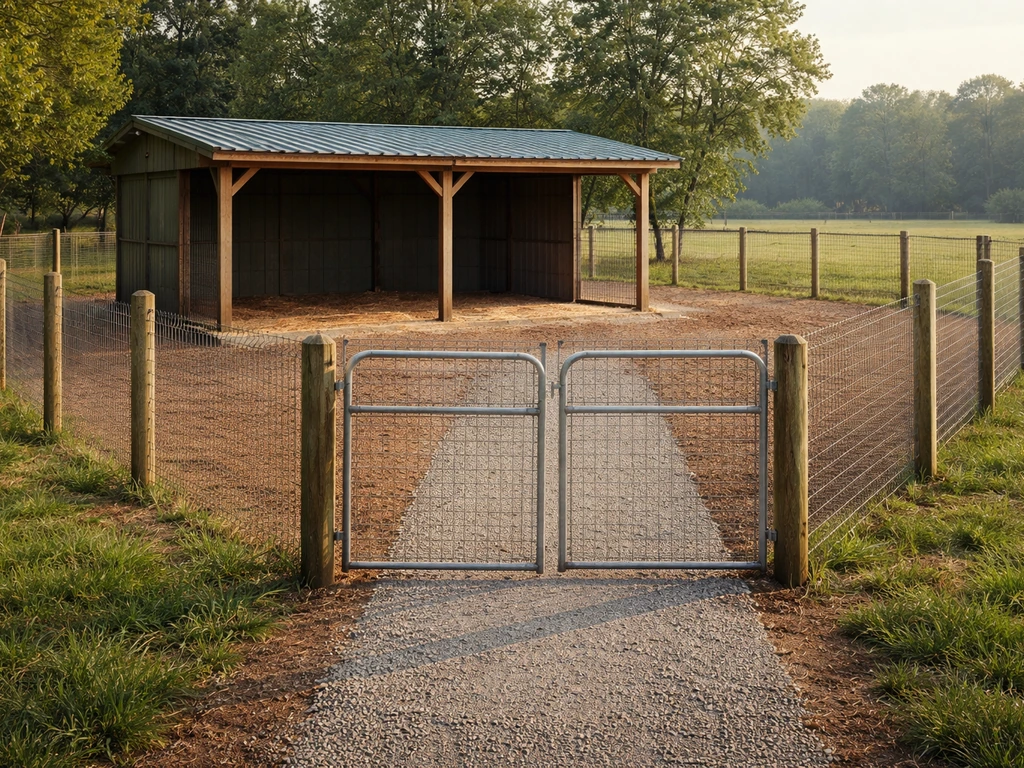
Emus don't need fancy housing, but they do need housing that's secure, well-drained, and designed with their behavior in mind. A simple three-sided open shed with a solid roof is the standard approach. Orient the open face away from prevailing wind and rain. Each adult bird needs roughly 10 m² of covered shelter space minimum, though they'll spend most of their time outdoors in good weather. The Western Australia code specifically requires outdoor run access for chicks at 5 m² per bird, and that minimum applies even during early life.
Fencing is where a lot of beginners underinvest, and it's a costly mistake. Emus can reach 1.9 meters tall and are powerful enough to push through lightweight fencing. Use welded wire or woven wire fencing at least 1.8 meters (6 feet) high, with a sturdy wooden or steel post every 2 to 3 meters. Avoid chicken wire, which an adult emu will walk through. Electric fencing can be used as a secondary deterrent but should never be the only barrier. Double-gate entry systems (a small airlock between two gates) prevent escapes during entry and exit, which is especially important when you're moving around feed or chasing a startled bird.
For the ground surface inside pens, well-draining sandy loam or gravel is ideal. Emus are prone to foot and leg problems on hard concrete, and mud creates pathogen buildup fast. In high-traffic areas around feeders and waterers, lay a 10 to 15 cm gravel base to prevent muddy patches. Rotate paddocks every 8 to 12 weeks if your land and setup allow it, giving ground time to recover and breaking parasite cycles naturally.
Biosecurity should be built into your layout from day one. Keep a footbath with diluted disinfectant at every pen entrance. Store feed in sealed containers to prevent rodents. Keep visitor access limited and log anyone who enters your bird areas. These habits are simple but they're what separate farms that stay healthy from farms that face repeated disease outbreaks.
Feeding emus at every life stage
Emus are omnivores in the wild, but in a farming context, a ratite-specific commercial feed gives you the most reliable nutrition baseline. The exact formulation changes as birds age, so feed the right ration for the right stage rather than using a one-size approach.
Chicks (0 to 3 months)
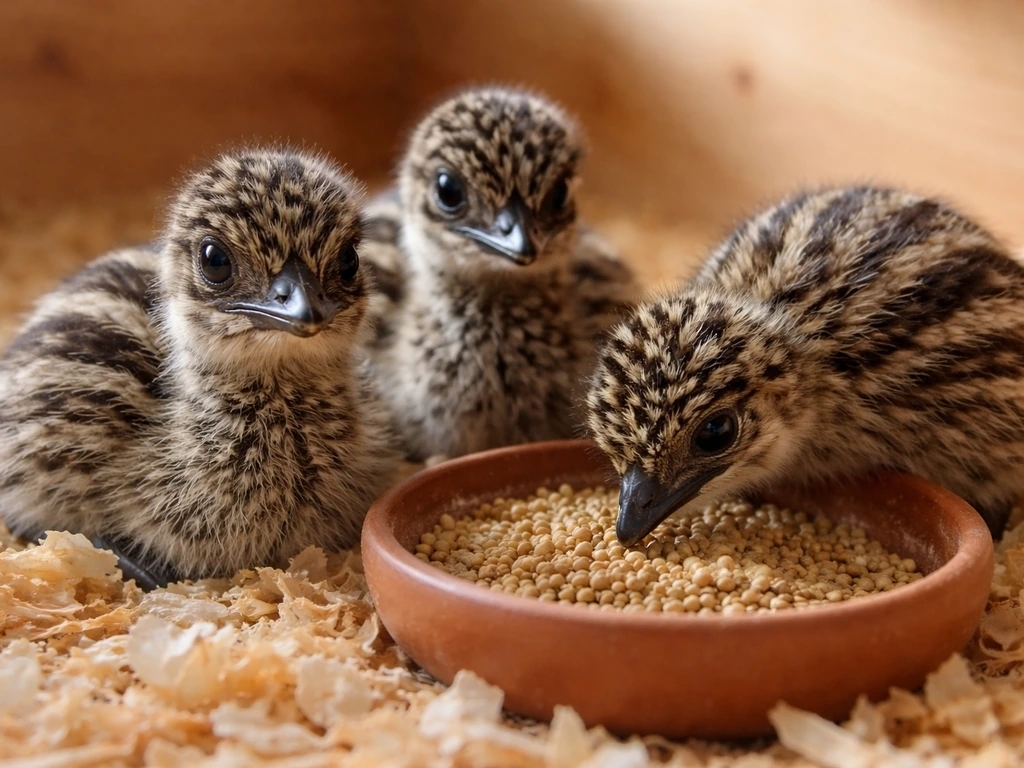
Newly hatched emu chicks absorb their yolk sac and do not need feed for the first 24 to 48 hours. After that, offer a high-protein ratite chick starter (20 to 22% crude protein) in shallow trays they can access easily. Chicks have a strong instinct to peck at small, moving objects, so you can encourage first eating by scattering feed on a dark rubber mat or tapping it with your finger. Fresh water must always be available in shallow dishes they can't drown in. Supplement with finely chopped greens like kale and spinach from week 2 onward. Avoid high-calorie, high-carbohydrate treats at this stage, since rapid uncontrolled growth causes leg deformities.
Juveniles (3 to 12 months)
Transition to a ratite grower pellet (around 18% protein) at 3 months. At this stage, emus grow extremely fast and need consistent protein and minerals to support bone development. Calcium-to-phosphorus ratio matters here: a 2:1 Ca:P ratio is the standard target. Fruit and vegetables can make up roughly 10 to 15% of the diet as enrichment without tipping the nutritional balance. Feed twice daily, morning and late afternoon.
Adults (12 months and older)
Adult emus do well on a ratite maintenance pellet (14 to 16% protein) supplemented with free-choice access to mixed grasses and legume hay. Breeding females during laying season (typically autumn through winter in the Southern Hemisphere, or late fall in Northern Hemisphere climates) benefit from a slight protein boost and additional calcium. Adults need roughly 1 to 1.5 kg of feed per bird per day depending on body condition and season. Always keep fresh, clean water available at all times. A 100 kg adult emu can drink 10 to 20 liters per day in hot weather, so automatic waterer systems with large reservoirs are worth the investment. Check and flush water lines weekly to prevent algae and bacterial buildup.
Breeding, incubation, and raising chicks
Emus have a predictable but somewhat counterintuitive breeding biology. In most climates, the breeding season runs from roughly October through March (Southern Hemisphere) or aligns with shortening day length in other regions. The male incubates the eggs and raises the chicks in wild populations, but in a farming context you have the choice to let the male incubate or pull eggs for artificial incubation.
Mating management
A single male can mate with 2 to 3 females in a managed pen. House your breeding group together well before the season begins (by 6 to 8 weeks) so they can establish a hierarchy and bond. Remove any subordinate males to prevent fighting. Watch for the female's booming drumming call and the male's characteristic grunting response as signs the pair has bonded and mating is occurring. If you’re specifically looking for step-by-step guidance on how to breed bird, the mating, egg collection, incubation, and chick-raising process is the core workflow mating is occurring.
Egg collection and storage
Emu eggs are large (roughly 700 to 900 g each) and dark green to near-black in color. Females lay a clutch of 5 to 15 eggs over several weeks. If you're running artificial incubation, collect eggs daily in the morning to minimize temperature fluctuations. Store collected eggs large-end up at 55 to 60°F (13 to 16°C) with about 75% humidity and turn them gently once daily. To learn the full process of collecting, storing, incubating, and raising bird eggs, follow the bird-egg guidance in this section how to get bird eggs. Don't store eggs for more than 7 to 10 days before setting them in the incubator, as hatchability drops off sharply after that.
Artificial incubation
Set your forced-air incubator to 36.2 to 36.5°C (97.2 to 97.7°F) with a relative humidity of 25 to 35%. Emu eggs need to lose about 12 to 14% of their initial weight over the incubation period through moisture evaporation. Weigh eggs weekly to track this. Turn eggs 3 to 5 times daily (or use an automatic turner) until day 46, then stop turning and raise humidity to 50 to 55% for lockdown. Incubation takes approximately 49 to 55 days. Do not open the incubator unnecessarily during lockdown.
Chick rearing basics
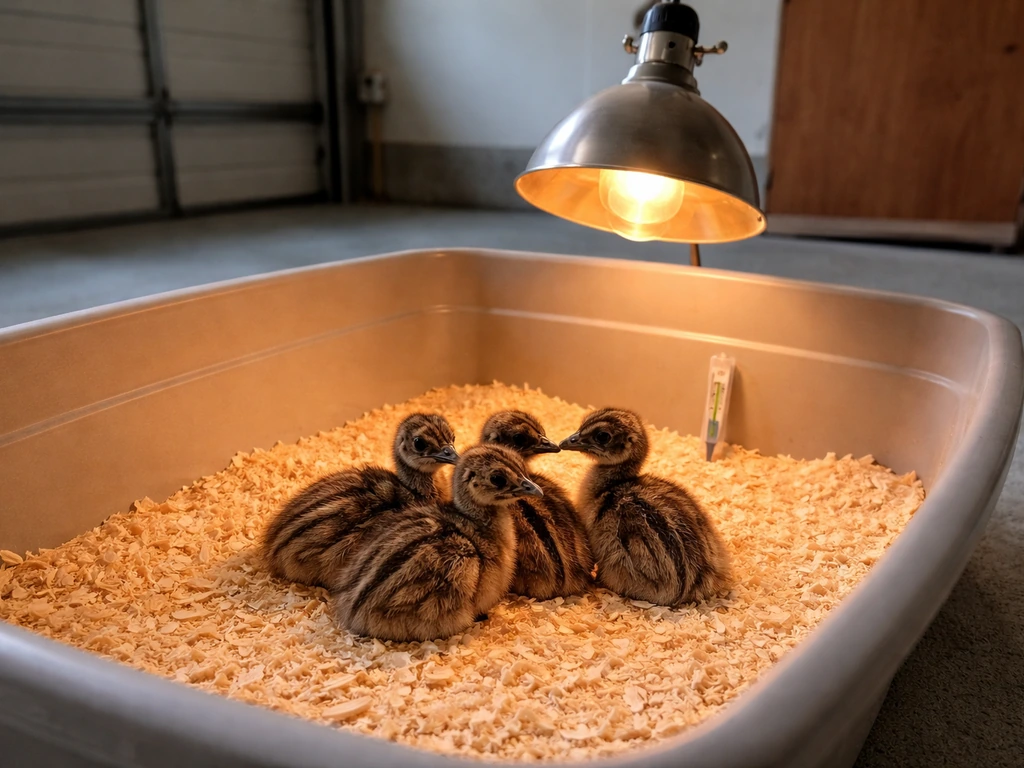
Newly hatched chicks go into a brooder set to 30 to 32°C (86 to 90°F) for the first week, then drop the temperature by roughly 2°C per week until they're fully feathered at around 10 to 12 weeks. Avoid slippery flooring in the brooder: textured rubber mats, thick towels, or straw bedding prevent spraddle-leg problems. Keep groups small in the brooder (no more than 10 to 15 chicks per 4 m²) and watch for any birds being trampled or bullied. If you're raising chicks away from their parents for the first time, handle them gently and frequently from day 3 onward to begin building tolerance to human contact. This early imprinting phase is the easiest window for establishing calm, manageable birds.
Humane handling, taming, and training your emus
This is the section most emu farming guides skip, and it's often what makes or breaks a beginner's experience. An untamed adult emu is difficult and potentially dangerous to manage. A bird that associates humans with calm, consistent, positive interactions is one you can safely check for injuries, move between pens, and handle during veterinary care. The approach here mirrors what works across ratites and other large birds: patience, predictability, and zero pressure.
Starting with chicks (easiest path)
If you're raising birds from hatch, start handling them gently from day 3. Sit quietly in the brooder space and let them approach you. Offer small food treats from an open palm. Keep early sessions short (5 to 10 minutes) and always end on a calm note. Chicks that experience positive human contact daily in weeks 2 through 8 are dramatically easier to manage as adults. This is similar to the early socialization windows that matter in many other bird species.
Working with older or previously unsocialized birds
Introduce yourself to an unfamiliar emu slowly. Enter the pen and stand quietly, avoiding direct staring (which emus read as a threat). Let the bird approach you on its own terms over several sessions before you attempt any direct contact. Use a consistent visual cue (like a specific colored bucket) associated with feeding so birds begin to predict your arrivals as positive events. Never rush an emu from behind: they kick forward and can deliver a serious strike. Always approach from the side and slightly in front.
Safe physical handling for routine care
When you need to physically restrain an emu (for health checks, banding, or veterinary care), you need at least two people. One person approaches from the side and wraps their arms firmly around the bird's body, pinning the wings against the body and pointing the bird's head away from their face. Pinning a bird is a hands-on, controlled restraint technique used to keep a bird calm and safe during routine care pinion a bird. The second person can then perform the task. Covering the bird's eyes with a cloth dramatically reduces struggling. Never grab or twist the neck. For training your staff, practice the approach and hold technique with a calm, socialized bird before attempting it on a new or stressed animal.
Humane training for routine management (moving birds between paddocks, loading for transport, accepting feed from hand) all builds on the same foundation: repetition, low pressure, and rewarding calm responses. If a bird shows persistent aggression during breeding season (when males especially can become territorial), give them space and use visual barriers or flags to redirect rather than confronting them directly.
Keeping your emus healthy: monitoring, common problems, and when to call a vet
Emus are generally robust, but early detection of problems saves birds and money. Build a daily observation habit: spend 10 minutes every morning just watching your birds before you feed them. Normal behavior is active movement, clear eyes, upright posture, and healthy interest in food. Anything that deviates from that warrants a closer look.
Common health issues to know
- Leg and foot problems: Often linked to nutrient deficiencies (especially calcium, phosphorus, and vitamin D3) or slippery surfaces in chicks. Lame or swollen-legged birds need immediate assessment.
- Respiratory illness: Nasal discharge, labored breathing, or rattling sounds can indicate bacterial or viral infection. Isolate affected birds immediately.
- Parasites (internal): Roundworms and other intestinal parasites are common in birds kept on soil. Fecal egg counts done by a vet help you decide on a deworming schedule rather than treating blindly.
- External parasites: Lice and mites can cause feather damage and irritation. Regular inspection of feather bases reveals infestations early.
- Nutritional deficiencies: Rickets-like bone problems in growing chicks, poor feather quality, and low egg production in hens often trace back to diet.
- Impaction: Emus will eat non-food items (stones, plastic, string) which can cause gut impaction. Remove debris from pens and watch for birds that stop eating and show abdominal bloating.
- Eye infections: Conjunctivitis or eye discharge in dusty or poorly ventilated conditions. Mild cases respond to veterinary-prescribed eye wash; persistent cases need a vet visit.
Preventive routines
- Clean and disinfect waterers and feeders every 2 to 3 days, daily in hot weather
- Remove and replace soiled bedding in shelters weekly
- Flush and inspect water lines weekly
- Inspect fencing for damage after any storm or disturbance event
- Weigh a sample of birds monthly and record weights to track condition
- Schedule a fecal parasite check with your vet every 6 months
- Keep a farm health log noting any unusual observations, feed changes, or treatments
Call your avian or livestock veterinarian immediately if you see: sudden death without obvious cause, multiple birds showing illness at the same time, a bird that cannot stand or is severely lethargic, suspected impaction or bloat, any injury involving the eye or head, or any signs of neurological issues (circling, head tilting, seizures). Establish a relationship with a vet experienced in ratites before you need one urgently, because not every large animal vet is comfortable treating emus.
Daily farm management: routines, fencing checks, enrichment, and troubleshooting
Good emu farming runs on routine. Birds that experience consistent, predictable daily schedules are calmer, healthier, and easier to manage. To support birds that thrive and grow over time, you can also focus on habitat quality and food availability—key steps in how to increase bird population. Here's what a solid daily and weekly management rhythm looks like for a small starter operation.
Daily tasks
- Morning observation: Walk the pens and observe all birds for 10 minutes before feeding. Note any abnormal posture, lethargy, or absence from the group.
- Feed and water: Refresh feeders and check water levels. In hot weather, check water at midday as well. Flush and clean waterers if there's any visible slime or discoloration.
- Pen check: Walk fencing lines looking for holes, downed posts, or areas where birds have been pushing. Check gate latches.
- Collect eggs (during breeding season): Pick up any laid eggs and log date, weight, and condition.
- Evening check: A brief walk through all pens at dusk to confirm all birds are accounted for and shelters are accessible.
Weekly tasks
- Clean shelters and replace or top up bedding material
- Disinfect all feeders and waterers thoroughly
- Inspect pen ground for mud build-up, especially around watering points
- Review farm log for any trends (weight changes, behavioral shifts, feed consumption changes)
- Check incubator temperature and humidity logs if running artificial incubation
Enrichment: why it matters
Emus are curious, active birds that benefit from environmental enrichment. Bored emus in bare pens develop repetitive pacing, feather-picking, and aggression. Low-cost enrichment ideas include hanging bundles of leafy branches for them to pull at, scattering fruit around the paddock so they have to forage for it, providing a shallow mud or dust bath area, and placing large, smooth stones or logs in the pen for investigation. Paddock rotation naturally provides enrichment through new ground, new smells, and regrown vegetation.
Common troubleshooting situations
| Problem | Likely Cause | First Response |
|---|---|---|
| Bird not eating | Stress, illness, diet change, or impaction | Isolate, offer familiar feed, check for impaction signs, call vet if 48 hours with no intake |
| Aggression between birds | Overcrowding, breeding season hormones, feed competition | Separate birds, check stocking density, add more feeder stations |
| Chick leg problems (splayed or weak) | Slippery flooring, nutritional deficiency, genetics | Move to textured surface, review diet calcium/vitamin D, vet assessment |
| Fencing escape or breach | Insufficient height or gauge, post failure | Repair immediately, add electric deterrent strand at 60 cm and 120 cm height |
| Low hatchability | Incubator temperature/humidity issue, old eggs, infertile males | Calibrate incubator, shorten egg storage time, verify male is mating actively |
| Persistent mud in pens | Poor drainage, high stocking density near water | Add gravel base, relocate waterers, reduce stocking density |
Your first-month action plan
Here's what I'd recommend focusing on in the first two to four weeks before you have any birds on property. If you’re specifically looking for how to breed quail bird, plan your breeding setup, nesting, and incubation steps in advance just like you would for emus. This is the phase most beginners rush past, and it's where your long-term success is actually built.
This week
- Contact your local agriculture department and county zoning office to confirm licensing, permit, and zoning requirements for ratite farming at your property
- Do a land assessment: measure your usable space, identify drainage patterns, and note prevailing wind direction for shelter orientation
- Get quotes from at least two fencing contractors or suppliers for 6-foot woven wire and post materials
- Search for a local or regional vet who has experience with ratites or large exotic birds and introduce yourself
- Join one or two emu or ratite farming online groups to find reputable breeders in your region
This month
- Submit any required permit applications and keep copies of all correspondence
- Install primary fencing and double-gate entry system before any birds arrive
- Build or source your shelter structure and set up the initial water system
- Set up a quarantine pen at least 50 meters from your main pen
- Purchase an incubator and practice running it at target settings for two weeks before setting any eggs
- Source your ratite-specific feed and establish a supply account with a local feed store
- Visit at least two reputable breeders, assess bird condition, and discuss purchase timeline
- Create your farm health log template and start recording baseline observations from day one
If you work through that list consistently, you'll be ready to receive your first birds within 4 to 6 weeks and in a genuinely strong position to give them a healthy, humane start. The planning phase feels slow, but every hour you put in before the birds arrive pays back ten-fold once you're managing them daily. Emu farming is a long-term commitment, and the farms that do well are the ones that started methodically rather than impulsively.
FAQ
What approvals and paperwork should I verify before signing a lease or bringing my first emus home?
Before you buy anything, confirm both the land-use approval (zoning or agricultural use) and the animal-ownership rules (livestock vs wildlife classification). Also ask whether you need a premises identification, animal movement permits, or producer record-keeping, since those requirements can differ even within the same region.
Should I start emu farming with chicks or yearlings, and what changes in day-to-day care?
For beginners, yearlings are usually easier because temperament is more predictable after the most vulnerable growth phase. If you do start with chicks, plan for longer daily brooder supervision, stricter flooring control, and higher early management risk.
How should I set up quarantine to actually prevent disease spread, beyond just separating birds?
Quarantine should be a physically separate pen with its own tools, separate footwear, and a dedicated workflow so you do not mix routines between birds. Many failures happen when people “check on” quarantine birds last, then immediately handle the main flock.
What fencing and gate mistakes cause the most beginner emu escapes?
Welded or woven wire at least 1.8 meters high works best as a primary barrier, but you should also design for escape-proof gate movement. Use a double-gate (airlock) plan for feed and entry, and always maintain a buffer zone when opening gates so a bird is not pushed out by people or startled movement.
Can I use electric fencing as my main fence for emus?
Do not rely on electric fencing alone. Emus can test barriers and push through weakened sections, so treat electricity as a secondary deterrent and inspect posts, wire tension, and corners weekly.
Should I house adult and juvenile emus together, and what’s the safer way to group them?
If your birds share pens with different age groups, you increase the chance that parasites and respiratory issues move between cohorts. A practical approach is to group by age (or at least by hatch date range) and schedule paddock rotation so younger birds get the cleanest ground first.
What feeding shortcuts most often lead to leg or growth issues in emus?
Feed stage and rationing matter, especially protein and mineral balance. Avoid stretching costs by feeding the same pellet to chicks and adults, because the Ca:P needs during rapid growth are not interchangeable and can contribute to leg problems.
Can I supplement emu feed with kitchen scraps or lots of fruit and vegetables?
Yes, but do it as enrichment within limits. Keep treats at a small percentage of the diet and avoid frequent high-carbohydrate foods, and ensure calcium and mineral targets are still met by the correct stage pellet.
How can I improve hatch rates if my incubator setup is ready but I have a delay collecting eggs?
For egg storage, do not store eggs too long, and keep them stable at the specified temperature and humidity. Also, minimize time out of the storage conditions during collection and transfer, since temperature swings are one of the fastest ways to reduce hatchability.
What are the most common mistakes people make during emu egg incubation, and how do I catch them early?
Incubation success depends on maintaining correct evaporation and turning consistency. If you must troubleshoot humidity or turning, weigh eggs weekly and adjust only within safe ranges, and avoid opening the incubator during lockdown unless you are resolving a critical equipment failure.
How do I prevent spraddle-leg and bullying in the brooder?
Brooder temperature ramp is important, but flooring is equally critical. Slippery surfaces raise spraddle-leg and stress risk, and overcrowding increases trampling and bullying, so size the brooder for your chick count and keep a close watch on weaker chicks.
What handling routine works best for making emus easier to manage long term?
A routine feeding and handling schedule helps, but you also need predictable human presence during early imprinting. Short, consistent daily sessions build calm responses, while sudden changes in staff, timing, or approach style can reverse progress.
What should I do if an emu is too aggressive to restrain for a checkup?
If you cannot restrain safely with two trained people, do not attempt solo handling for exams or veterinary care. Use proper positioning (approach from the side, wings pinned, head controlled away from faces), consider eye cover, and get your vet’s input on sedation options for particularly uncooperative birds.
What should I track each day to catch problems before they become emergencies?
A daily 10-minute observation habit is great, but you should also track patterns, not just one-off events. Keep a simple log of appetite, droppings, mobility, and any injuries so you can notice early clusters that suggest a pen-level or feed/water issue.
How do I choose an avian or livestock vet if I’m new to ratites?
When choosing a veterinarian, confirm they have experience with ratites specifically and ask what your “after hours” plan is for urgent issues. Also request a preseason check baseline so you have a reference for normal weight, mobility, and exam findings.
Next Article
How to Breed Quail Birds: Step by Step for Success
Step-by-step humane guide to breeding quail: housing, pairing, egg incubation, hatch-day care, chick raising, and troubl