
Hand-raising a bird means different things depending on your situation, and getting the approach right from day one determines whether the bird thrives. If you have a pet baby bird from a breeder, you're learning to feed and bond with a bird already accustomed to human contact. If you want a step-by-step plan for how to raise a bird safely, follow the guidance in the sections for pet baby birds and feeding schedules. If you found a wild hatchling or injured bird, the rules change dramatically, both for the bird's welfare and under federal law. If you are trying to figure out how to raise a wild bird, start by contacting a licensed rehabilitator instead of handling or feeding it yourself. This guide walks you through both paths, step by step, so you can act confidently and humanely today.
How to Hand Raise a Bird: Safe Steps and Timeline
What "hand raise" actually means (and which path you're on)
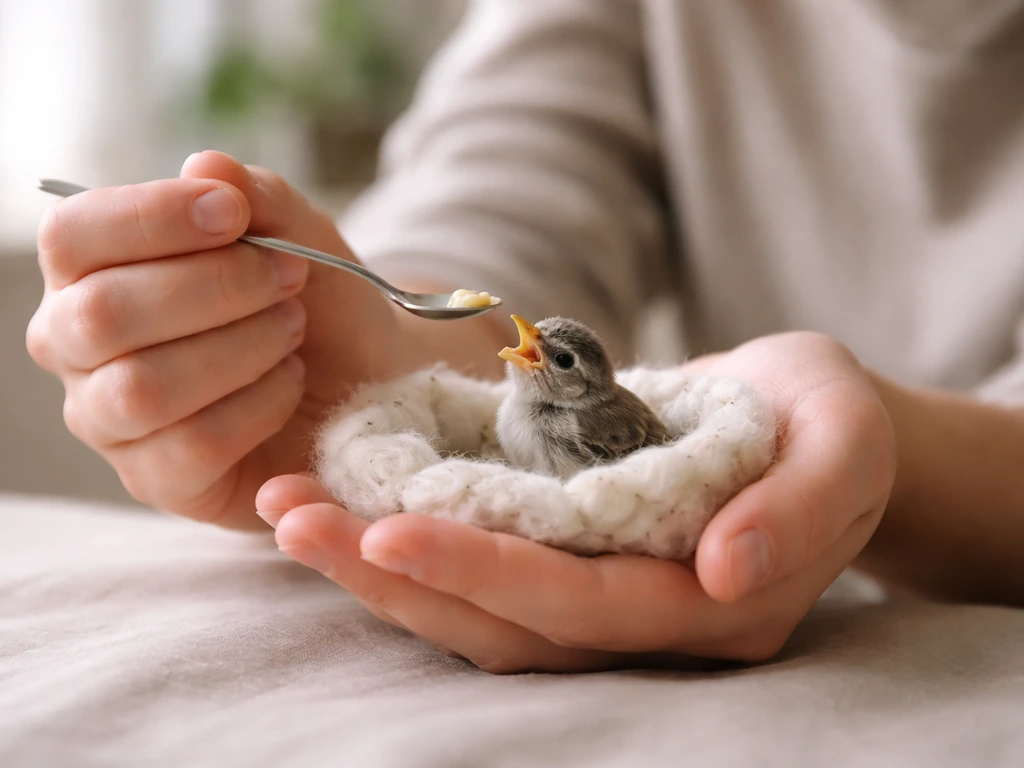
"Hand raising" covers three distinct situations that people often lump together, and mixing them up leads to real harm. First, there's the pet-bird scenario: a breeder or owner takes over feeding a chick from a young age to produce a bird that's comfortable with humans. Second, there's wildlife rehabilitation: a licensed professional (or someone under their supervision) temporarily cares for a sick, injured, or orphaned wild bird with the goal of releasing it. Third, there's bonding with an older pet bird that wasn't hand-raised from birth, using gradual handling and trust-building to reduce fear.
The feeding and handling methods covered in depth here (the hands-on, step-by-step parts) apply most directly to pet birds, because working with wild birds without a permit is federally illegal in the United States under the Migratory Bird Treaty Act. For wild birds, this guide will tell you what to do in the first minutes and hours, and then exactly when and how to hand off to a professional. If you're looking specifically at hand feeding technique for pet chicks, raising a bird at home from egg or hatchling, or hand rearing wildlife under a rehabilitator's guidance, those topics get fuller treatment in companion articles on this site.
Before you touch any bird: safety, welfare, and the law
Hygiene and stress basics
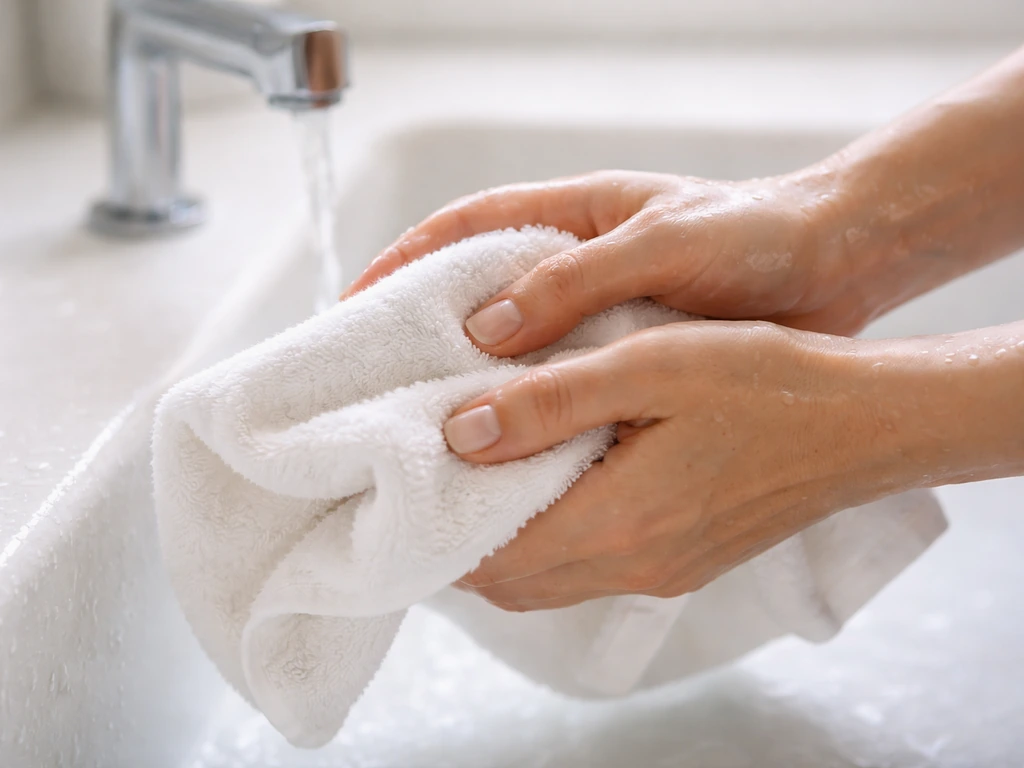
Wash your hands before and after every interaction. Baby birds are fragile and immunologically immature, and stress alone can kill a chick that might otherwise survive. Keep the environment warm (85 to 90 degrees Fahrenheit for very young hatchlings with no feathers, dropping gradually as feathers grow in), quiet, and dimly lit. A small cardboard box with air holes, lined with clean paper towels or a soft cloth without loose loops that can catch toes, works well as a temporary container. Do not use terry cloth or anything with loops.
The legal reality for wild birds
In the United States, nearly every wild bird species is protected under the Migratory Bird Treaty Act (16 U.S.C. § 703). That law makes it unlawful to take, possess, or keep migratory birds without a federal permit. Cornell Law’s LII text for 16 U.S.C. § 703 summarizes this Migratory Bird Treaty Act prohibition on taking, killing, possessing, or keeping migratory birds without authorization or a permit unlawful to take, possess, or keep migratory birds without a federal permit. This isn't a technicality: it applies to well-meaning people who find a baby robin in their yard. To legally rehabilitate wild birds, you need both a federal Migratory Bird Rehabilitation Permit and, in most states, a state wildlife rehabilitation permit. Private citizens do not have these permits. The practical upshot: if you find a wild bird that genuinely needs help, your legal and ethical job is to stabilize it safely and get it to a licensed rehabilitator as quickly as possible, not to raise it yourself.
What "stabilize" means before the handoff
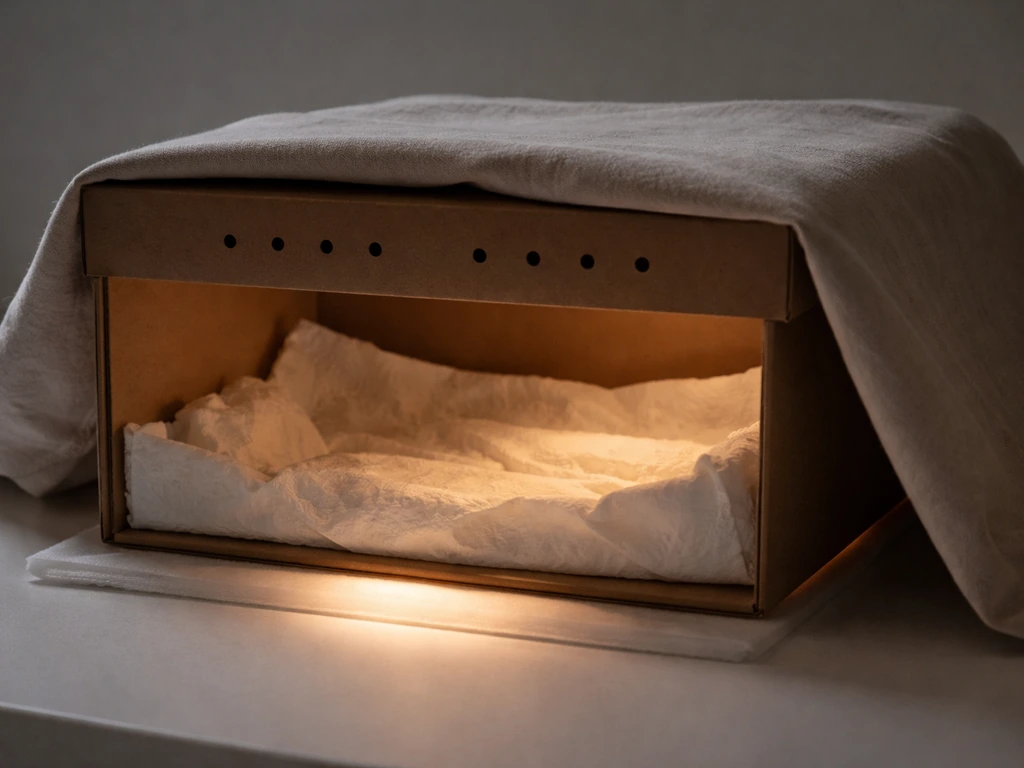
- Place the bird in a small, ventilated box lined with paper towels. Do not use a cage with bars that can injure wings.
- Keep it warm and dark. A heating pad set to low under half the box works; the bird can move off the heat if needed.
- Do not offer food or water unless a licensed rehabilitator or veterinarian specifically tells you to. Force-feeding or giving water to a bird in shock can cause aspiration and death.
- Minimize handling. Every time you pick it up, you trigger a stress response that burns energy the bird cannot spare.
- Call a licensed rehabilitator immediately. The National Wildlife Rehabilitators Association directory and local wildlife clinics (such as university veterinary schools) are your fastest resources.
Imprinting, development stages, and when to intervene
Before you do anything, you need to know what stage of development the bird is in, because that determines everything: what it needs, how urgently, and whether intervention is even appropriate.
| Stage | Appearance | Typical Need | Intervene? |
|---|---|---|---|
| Hatchling (0-5 days) | Eyes closed, little or no down, helpless | Constant warmth, frequent feeding every 15-20 min | Only if truly orphaned or injured. Needs professional care immediately. |
| Nestling (5-14 days) | Eyes opening, pin feathers emerging, stays in nest | Warmth, frequent feeding, nest containment | Only if nest is destroyed or parents confirmed absent for 2+ hours. |
| Fledgling (14-28 days) | Short feathers, may be on the ground, can hop | Parental feeding still ongoing; learning to fly | Usually no. Parents are almost certainly still feeding it nearby. |
| Juvenile/Weaning pet chick | Fully feathered but still begging, species-dependent | Transitioning from formula to solid food | Normal part of pet-bird hand-raising process. |
The most important thing to understand about fledglings is that being on the ground is normal. Cornell Lab of Ornithology is clear on this: a fledgling hopping around in your yard with short tail feathers is almost certainly fine, and its parents are watching from nearby. Picking it up "to help" is the wrong call. Leave it where it is, keep cats and dogs away, and walk away. The parents will return.
Imprinting is the window during which a bird learns what species it belongs to, and it has serious welfare consequences. A bird that imprints on humans during this critical period cannot be released into the wild and may not bond normally with other birds. This is why licensed rehabilitators go to great lengths to minimize human contact with wild birds, sometimes using hand puppets shaped like the parent species and keeping birds in groups. For pet birds, some degree of human imprinting is the goal, but it still needs to be done thoughtfully to avoid behavioral problems later.
How to hand feed and hold a baby bird
Everything in this section applies primarily to pet baby birds (parrots, cockatiels, finches, doves, and similar species obtained from a breeder). If you are feeding a wild bird under the direct instruction of a licensed rehabilitator, follow their protocol exactly rather than a general guide.
Preparing the formula
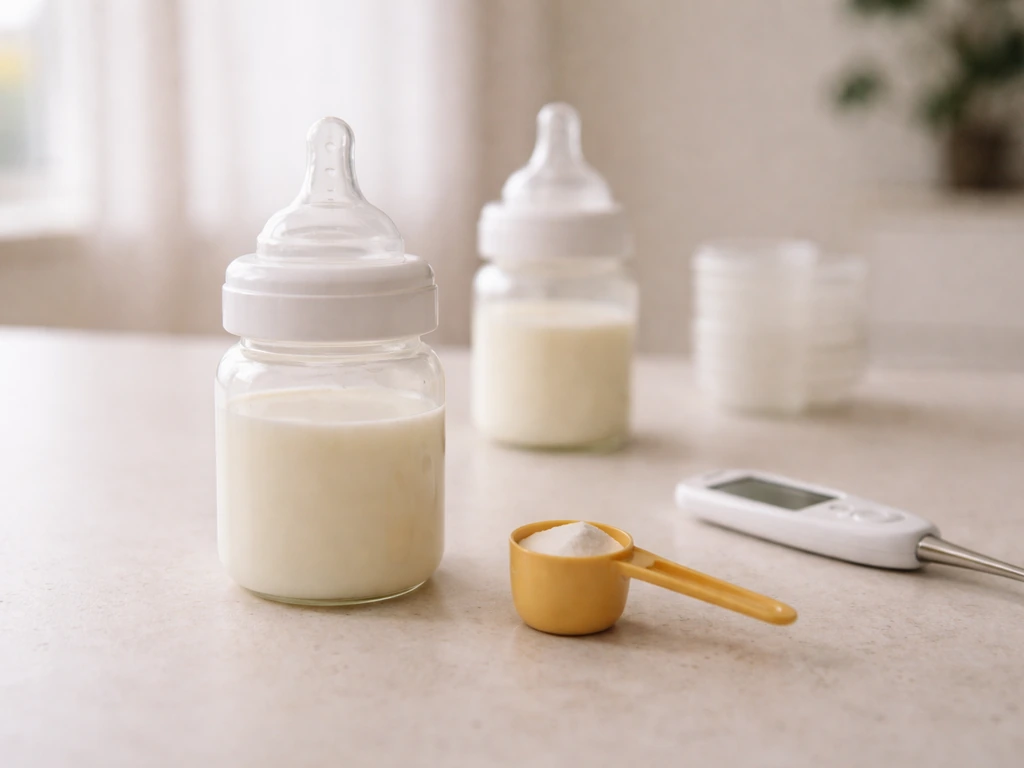
Use a commercially prepared hand-feeding formula designed for the species, such as those made by KAYTEE or Zupreem. Do not improvise with baby food, bread, milk, or anything not designed for birds. Mix the formula with warm water to the consistency the manufacturer specifies for the bird's age: thinner (more watery) for very young hatchlings, progressively thicker as the bird develops. The feeding temperature matters: aim for 105 to 108 degrees Fahrenheit, checked with a cooking thermometer. Formula that is too hot causes crop burns; formula that is too cold slows digestion and can cause sour crop. Prepare fresh formula for every feeding and discard any leftovers.
Feeding frequency by age
| Age | Feeding Frequency | Consistency of Formula |
|---|---|---|
| Hatchling (0-1 week) | Every 15-20 minutes during daylight hours | Very thin, almost liquid (90% water) |
| Nestling (1-2 weeks) | Every 30-45 minutes | Thin to medium |
| Older nestling (2-3 weeks) | Every 1-2 hours | Medium |
| Weaning chick (3-6 weeks, species-dependent) | 3-4 times daily, introducing solid foods | Thick, with access to soft solids alongside |
How to hold the bird during feeding
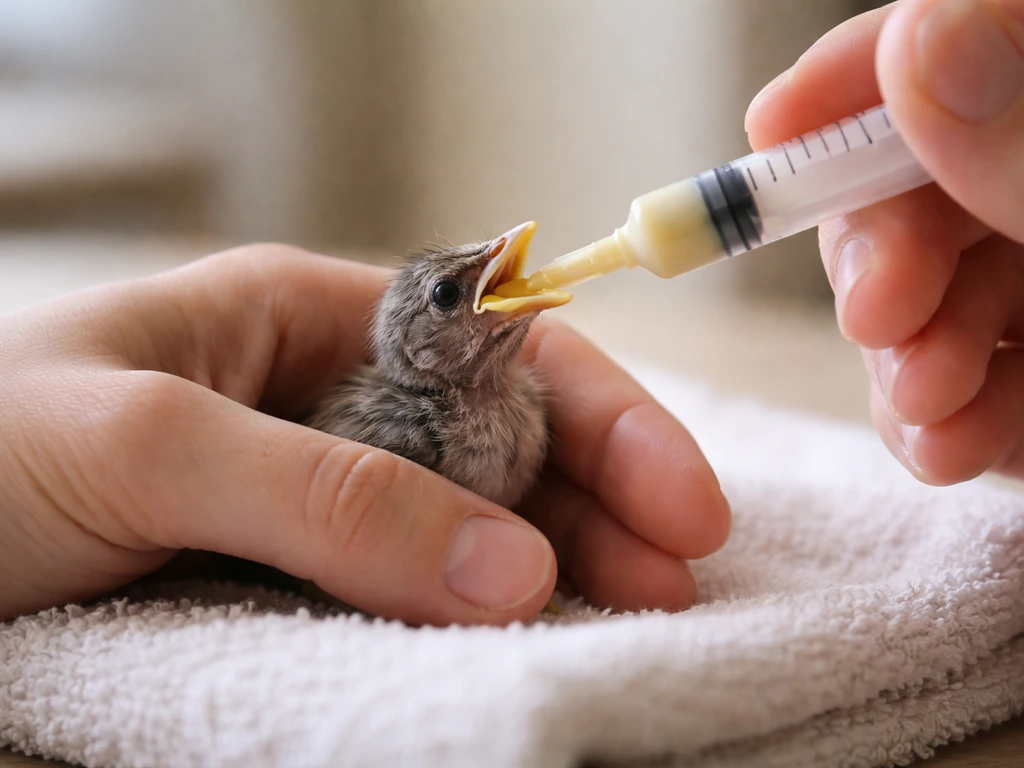
Sit down and work over a padded surface. Cup the bird gently in one hand, keeping its body upright and its head slightly elevated. Never restrain the head or force it back. Young birds should be warm before you feed them: a cold bird digests poorly and is at higher risk of aspiration. Use a small syringe (without a needle), a spoon with curled edges, or a specialized feeding spoon. For nestlings, lightly tapping or gently whistling near the bird often triggers the begging response, where the chick opens its beak and bobs its head. This is the moment to feed, not before.
Deliver formula to the side of the beak, not straight down the throat. The bird's trachea is at the center of the mouth, and aiming directly at it risks aspiration. Allow the bird to swallow between deliveries. Watch the crop (the visible sac at the base of the neck, just above the chest) to gauge how full the bird is. Feed until the crop is comfortably full but not stretched tight. Let the crop empty completely before the next feeding. A crop that stays full, feels hard, or smells sour is a warning sign that needs veterinary attention.
After feeding
Wipe any formula off the beak and face immediately. Dried formula around the face can cause skin irritation and bacterial growth. Keep the bird warm and quiet after feeding. Very young chicks will sleep almost immediately after eating. Do not try to handle or stimulate them further.
Building trust: daily handling, vocal cues, and bonding
Once a pet bird is weaning and no longer dependent on round-the-clock feeding, the focus shifts from survival to relationship. This is where bonding drills come in, and the goal is a bird that genuinely feels safe with you rather than one that tolerates you out of dependency.
The foundation: low-stress daily contact
Short, positive sessions beat long, overwhelming ones every time. Start with five to ten minutes, two to three times a day. Sit at the bird's level rather than looming over it. Let the bird choose to step onto your hand by offering a perch (your finger, held horizontally at chest height for the bird). Don't grab. The RSPCA recommends offering a treat from your hand rather than forcing contact, and that principle applies here too: you're teaching the bird that your hand predicts good things, not stress.
Consistent vocal cues
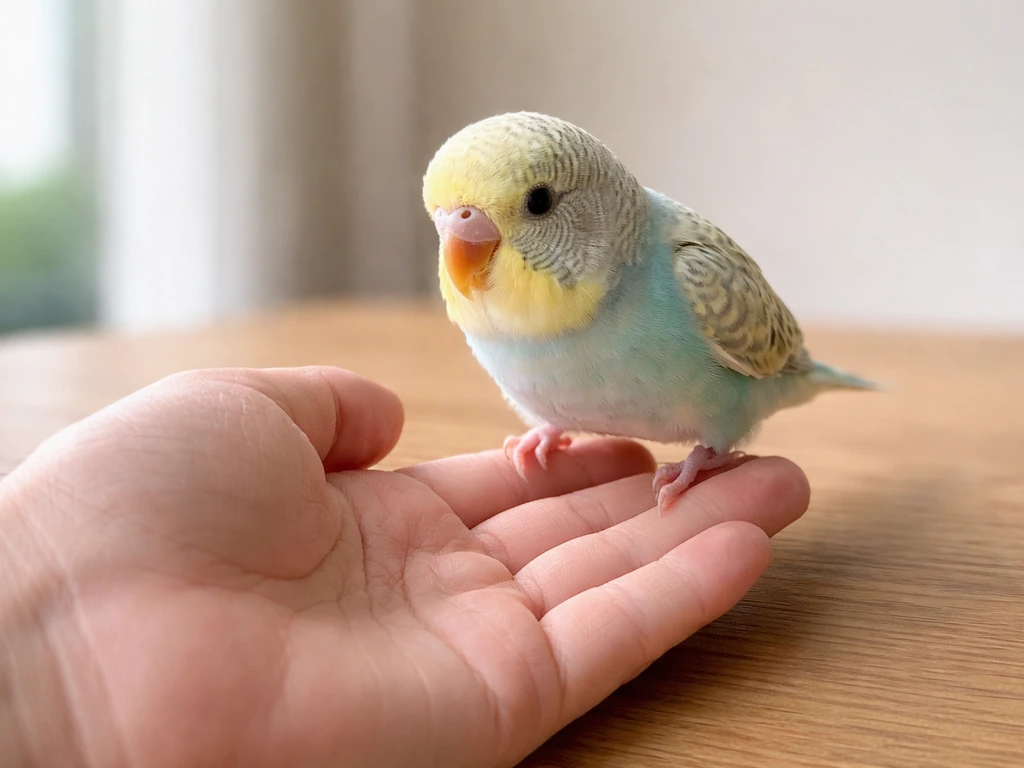
Use a calm, consistent phrase every time you approach: the same word or short sound, delivered in the same tone. Birds are highly attuned to voice, and a familiar cue becomes a genuine signal that this interaction is safe. Pair it with a positive outcome (a favored treat, gentle scratching behind the crest if the bird allows it) and repeat it hundreds of times. Over days and weeks, you'll notice the bird orienting toward you when it hears the cue rather than moving away.
Reading trust signals
- The bird steps willingly onto your hand without hesitation or wing-spreading panic.
- It preens itself while sitting near you or on you (a deeply relaxed behavior).
- It makes soft contact calls or quiet vocalizations rather than alarm calls when you approach.
- It falls asleep near you or on you.
- It accepts food directly from your fingers without lunging or biting defensively.
- It leans into gentle head scratches rather than pulling away.
Avoid feeding from your mouth or encouraging the bird to regurgitate food as a bonding behavior. These are natural flock bonding behaviors for birds, but when directed at humans they can create confusing attachment patterns and reinforce behaviors that become problematic as the bird matures.
Troubleshooting: biting, fear, feeding refusal, and other common problems
The bird bites when you approach
Biting is almost always fear, not aggression. If a bird bites every time your hand approaches, you're moving too fast. Go back to basics: sit near the bird without trying to touch it. Let it eat from your hand at its own pace. Never pull away sharply when bitten (this teaches the bird that biting works), but also never push through a bite to force contact. The solution is slower progression and more positive association, not dominance or force.
Feeding refusal
A weaning chick that refuses formula is usually telling you one of three things: the formula is the wrong temperature, the bird is ready to transition to solids faster than you expected, or the bird is unwell. Check temperature first (should be 105 to 108 degrees Fahrenheit). If it checks out, try offering soft solid foods appropriate to the species alongside the formula. If the bird refuses food entirely for more than a few hours and seems lethargic, contact an avian vet. Do not try to force-feed a bird that is actively resisting; aspiration is a serious risk.
Crop problems
A crop that does not empty between feedings (slow crop), feels hard and grainy (impacted crop), or smells fermented (sour crop) requires veterinary attention, not a home fix. These conditions can be fatal if untreated. The most common cause in hand-raised birds is formula that was too thick, too cold, or contaminated. Prevention is better than treatment: always use fresh formula at the right temperature and the right consistency for the bird's age.
Excessive fear or stress behaviors
Signs of acute stress include rapid breathing, open-mouth panting, feathers slicked flat, frantic wing-beating against the container, and loss of balance. If you see any of these, stop what you're doing, return the bird to its quiet container, and give it at least thirty minutes before trying again. If stress behaviors are persistent across multiple sessions, the bird may be sick, in pain, or genuinely not ready for the level of interaction you're attempting. Scale back and consult an avian vet if it continues.
Abnormal vocalizations
A healthy, hungry chick begs loudly and clearly. Weak, raspy, or absent vocalizations in a bird that should be vocal are a warning sign. So is constant distress calling that doesn't settle even after feeding and warming. These can indicate respiratory infection, nutritional deficiency, or other medical issues that need professional diagnosis.
Species differences and when to stop DIY
Pet parrots and parakeets (beginner to intermediate)
These are the most common birds people hand-raise at home. They are altricial (born helpless) and require intensive early feeding. The good news is that commercially prepared formula, good temperature management, and consistent handling produce excellent results when done carefully. Species like cockatiels wean relatively quickly (around 6 to 8 weeks); larger parrots like African greys or macaws may take four to six months. The longer timeline means more opportunity for things to go wrong, so connecting with an avian vet early is worth the investment.
Songbirds found outdoors (wild, not for DIY)
Robins, sparrows, starlings, finches, and similar birds found as hatchlings or nestlings are protected under the MBTA. Do not attempt to raise them yourself. The diet and feeding frequency requirements are extremely specific (many insectivorous species require live or rehydrated insects every 15 to 20 minutes), imprinting risk is high, and the chance of causing harm through well-intentioned but incorrect care is significant. Get the bird to a licensed rehabilitator within hours. In the meantime: warm box, dark, quiet, no food or water unless instructed.
Raptors (advanced, licensed only)
Hawks, owls, eagles, and falcons require a federal falconry or rehabilitation permit to possess legally. They have highly specific dietary needs (whole prey, including bones and fur or feathers for proper gut function), extremely strong imprinting responses, and can cause serious physical injury to untrained handlers. There is no DIY scenario here. If you find an injured raptor, contain it safely in a large, ventilated box, keep it dark and quiet, and call a licensed raptor rehabilitator or raptor center immediately.
Waterfowl and shorebirds
Ducks, geese, herons, and shorebirds are all MBTA-protected and require specialist care. Precocial species (those that hatch with down and can walk almost immediately, like ducklings) imprint extremely rapidly, often within the first day of life. A duckling that imprints on you cannot be released successfully and will not integrate with other ducks. Do not take waterfowl into your home. Contact a rehabilitator.
When to stop DIY and get professional help, no matter the species
- The bird is visibly injured (broken wing, leg, bleeding, puncture wounds, eye injury).
- The bird is a wild species and you cannot locate the nest or confirm the parents are absent for more than two hours.
- The crop is not emptying normally or smells sour.
- The bird has been lethargic or refused food for more than a few hours.
- Vocalizations are weak, raspy, or absent when they should be present.
- The bird is a raptor, waterfowl, or any wild species (regardless of how it seems).
- You are unsure of the species or developmental stage.
- Your gut says something is wrong.
For wild birds in the US, the US Fish and Wildlife Service website and the National Wildlife Rehabilitators Association maintain directories of licensed rehabilitators by state. Your local veterinary school wildlife clinic, Humane Society, or animal control office can also connect you with the right person quickly. Tufts Wildlife Clinic and the Wildlife Center of Virginia are examples of the kind of professional resources available in many regions.
Your next steps right now
If you have a wild bird in front of you today: get it into a warm, dark, ventilated box with no food or water, and find a licensed rehabilitator using the NWRA directory or a local wildlife clinic. Do not wait, do not experiment, and do not feed it. Speed matters more than anything else at this stage.
If you have a pet baby bird from a breeder: confirm the species-appropriate formula and age-based feeding schedule with the breeder or an avian vet before your first feeding. If you are choosing the pet-bird path, use this as your checklist before you commit to how to hand rear a bird with the correct formula and feeding schedule. Once you have the right setup and a safe feeding routine, you can follow a dedicated guide on how to raise a bird at home. Once you have the right setup and a safe feeding routine, you can follow a dedicated guide on how to raise a bird at home and how to hand feed a bird properly. Set up your brooder with a reliable heat source, a thermometer, and fresh paper towel bedding. Establish a feeding log so you can track crop fill, formula temperature, and the bird's weight daily. Connect with an avian vet in your area now, before there's an emergency.
If you're bonding with an older pet bird: start with five-minute sessions, let the bird set the pace, and use consistent calm vocal cues paired with high-value treats. Document what the bird responds to and what triggers stress. Progress happens in weeks and months, not days, and that's completely normal. The articles on hand feeding technique and raising a bird at home on this site go deeper on both the feeding mechanics and the longer developmental journey if you want more detail on either stage.
FAQ
What should I do if I cannot tell whether the bird is a fledgling or a nestling?
If you find a baby outside and you are not sure whether it is a fledgling or a nestling, treat it as wild and delay handling. For fledglings (on the ground with short tail feathers and hopping around), the safest action is to leave it where it is and keep pets away, because parents usually remain nearby. For nestlings (little to no feathers, very unsteady), do not feed or give water, and instead contact a licensed rehabilitator right away so they can confirm the exact species and stage.
What if I already fed with the wrong formula or the wrong temperature?
If you accidentally give the wrong formula or the wrong temperature, the priority is to stop and correct course using the species and age guidance from the breeder or an avian vet. Do not “fix” it by forcing extra feedings to catch up, because aspiration risk and crop problems increase. If you notice symptoms like sour odor, persistent crop fullness, lethargy, or open-mouth breathing, seek veterinary care urgently.
Can I store hand-feeding formula between feedings or reheat it?
Mix and discard leftovers, because formula can spoil quickly and contamination is a common cause of crop issues. For each feeding, prepare a fresh batch and warm only what you need, then verify the temperature with a thermometer. Avoid reheating repeatedly, since that can create hot spots that burn the crop even if the average temperature seems right.
How do I know if the crop is too full, or if something is wrong?
A “full” crop should feel comfortably rounded, not tight or hard. If the crop stays full across the next feeding cycle, feels grainy/hard, or smells fermented, do not continue the same feeding plan at home. Those patterns match slow, impacted, or sour crop and typically require an avian vet evaluation rather than adjustments to consistency alone.
Is it okay if my bird regurgitates when I’m bonding or feeding?
Do not try to induce regurgitation as a bonding drill. If a pet bird starts begging to be fed by mouth contact, treat it as a behavior you should not reinforce, and redirect to the proper feeding method and calmer interaction schedule. Reinforcing regurgitation to humans can create confusing attachment and feeding behavior that can become harder to manage later.
My bird bites whenever I try to step it up, what should I change first?
If the bird repeatedly bites as soon as your hand appears, slow down your pace and reduce intensity. Sit near the bird without reaching, then let it accept a treat from your hand first (or even from a perch slightly away from your finger) before you attempt step-up. Also watch for stress signs, if present, postpone training and return the bird to a quiet warm container before trying again.
What human foods or substitutes can I use if I can’t get the exact formula right away?
No, use only bird-appropriate hand-feeding formula for the species. Human foods like milk, bread, or baby food can cause serious digestive and nutritional problems, and plain water can also be unsafe for very young nestlings depending on stage. If you are working under a rehabilitator’s protocol, follow their instructions exactly, since diets differ by species.
How long should I wait before assuming a weaning chick is sick?
For pet chicks, a weaning refusal can be a temperature or transition issue, but it can also be illness. Confirm feeding temperature first, then offer the correct next-stage foods gradually if the bird is otherwise bright and stable. If the chick seems weak, lethargic, or refuses food for more than a few hours, contact an avian vet instead of trying to force-feed resistive birds.
What is the safest temporary setup for a wild bird until I reach a rehabilitator?
If you need to temporarily contain an injured wild bird while waiting for help, use a ventilated box that is dark and quiet with a stable, non-slippery surface. Keep it warm but not overheated, and do not give food or water unless instructed by a rehabilitator. Avoid frequent handling, since transport stress plus incorrect feeding is a major risk combination.
How can I progress bonding without worsening fear or stress?
Start socialization with very short, consistent sessions at the bird’s level, then track triggers. Keep a simple log of what preceded stress (your approach speed, the room noise, time of day, cage placement, or handling type) and what helped (treat value, voice cue, duration). If the bird shows persistent stress across multiple days, scale back and consider an avian vet or avian behavior specialist to rule out pain or illness.
When can I stop hand-feeding and move fully to solids?
For pet birds, you can usually transition out of hand-feeding only when the species is at an appropriate developmental stage and the bird is eating suitable weaning foods consistently. The exact timing varies widely by species, so confirm weaning criteria with the breeder or an avian vet. If the bird still relies on formula and shows refusal of solids, don’t rush the schedule.
What are the legal and safety risks if I keep a found wild bird at home for a day?
If you are in the US and it is a wild bird, do not attempt to raise it yourself under any DIY feeding plan. Even “just keeping it warm” for a short time can become a legal issue if you possess a migratory species without required permits. The practical workaround is to stabilize safely (warm, dark, quiet, ventilated) and contact a licensed rehabilitator immediately, then let them take over.
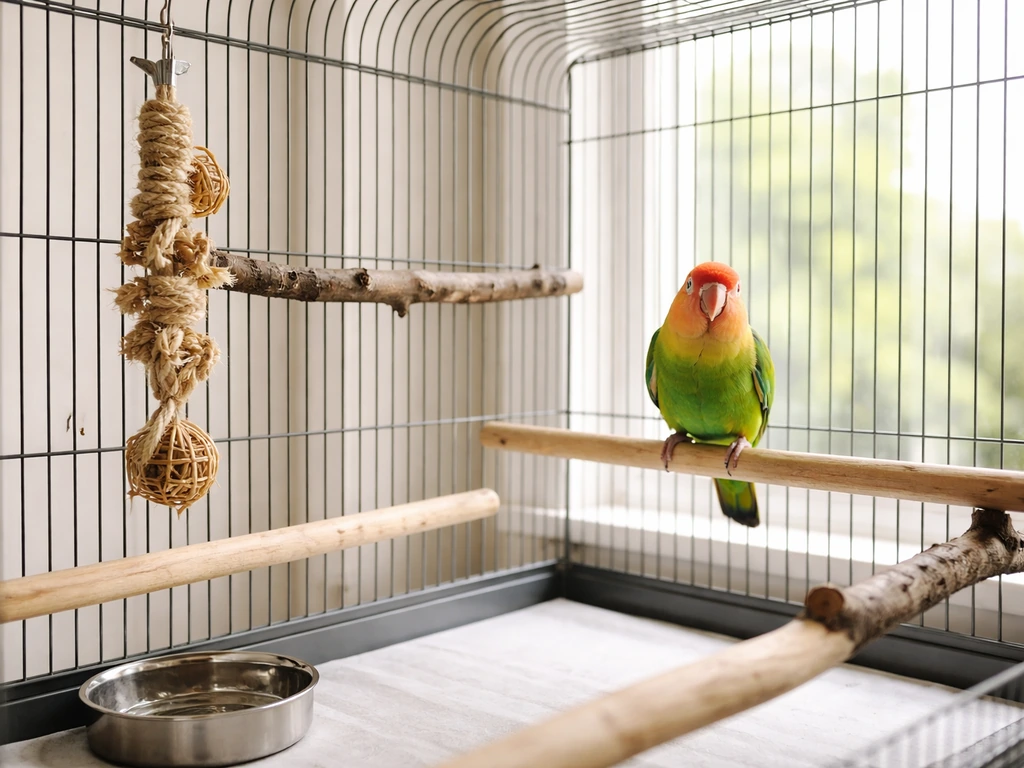
Humane, step-by-step guide to raising pet or baby wild birds: housing, feeding, bonding, training, hygiene, and problem
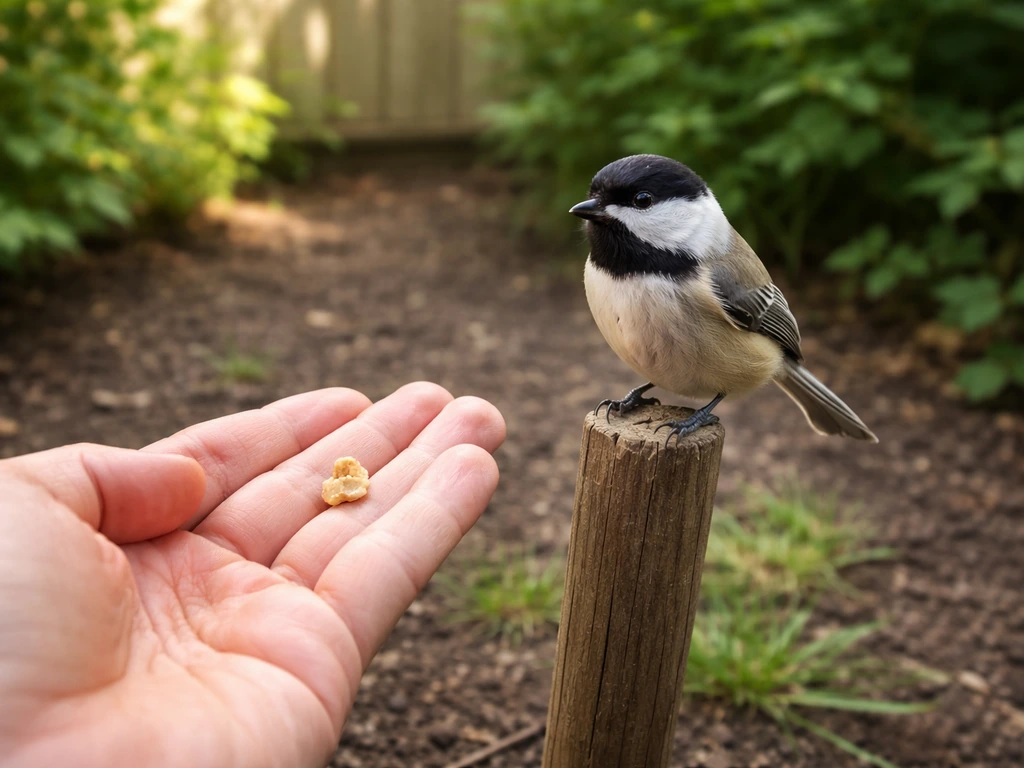
Step-by-step humane guide for how to hand feed pet or wild birds safely, with food, setup, approach, and troubleshooting
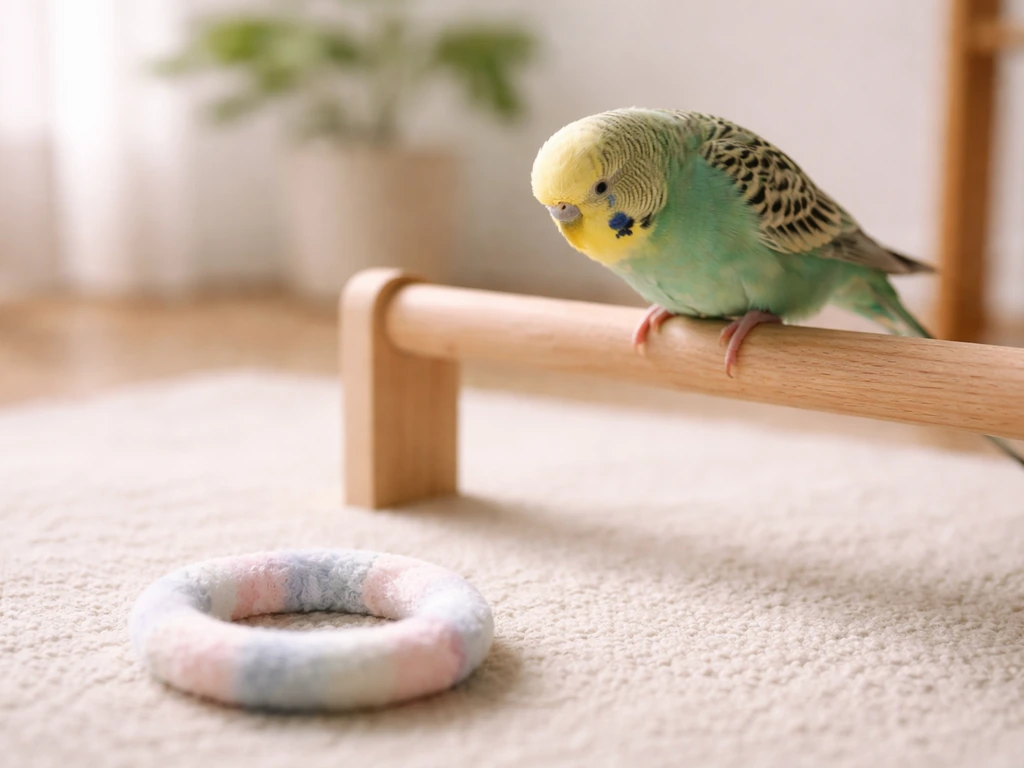
Humane, step-by-step training to teach your bird to fetch safely, with targets, rewards, troubleshooting, and gradual re