Hand-feeding a bird is completely doable at home, but the right approach depends entirely on your situation: are you bonding with a pet bird or chick, or did you find a wild bird that looks like it needs help? The steps, the foods, and the goals are different in each case. This guide walks you through both paths, from the first safety checks to what you do after the feeding session ends.
How to Hand Feed a Bird: Pet and Wild Steps
Maya Harris
8 Apr 2026
Before you start: safety, welfare, and legal checks
Before you pick up food or approach any bird, run through these checks. Skipping them is how people accidentally harm birds or themselves.
On the health side: birds can carry germs that affect people. The CDC specifically flags Chlamydia psittaci (the cause of psittacosis) and Salmonella as real risks. Wash your hands thoroughly with soap and water immediately after every interaction, and use hand sanitizer as a backup. If you're dealing with a sick or visibly infected bird, gloves and an N95 respirator are the right call. Keep the bird away from your kitchen and food prep areas entirely.
For pet bird owners, this means wiping down food and water bowls daily and keeping the cage clean. For anyone handling a wild bird found on the ground, UC Davis research on salmonellosis in wild songbirds confirms that glove use during handling is a smart habit, since fecal contamination is a real route of transmission.
On the legal side: if your bird is wild, you need to know the law before you do anything else. Under 16 U. S. C.
§ 703, possessing most migratory birds without a permit is illegal in the United States. There is a narrow exception under 50 CFR § 21. 76 that allows you to take temporary possession of a sick, injured, or orphaned migratory bird for the specific purpose of transporting it to a licensed wildlife rehabilitator or veterinarian. That exception does not include keeping the bird long-term or feeding it at home.
State laws add another layer: Florida's Fish and Wildlife Conservation Commission, for example, issues rehabilitation permits under state authority, and most hands-on care requires those credentials. The short version: if it's a wild bird, your legal job is to get it to a qualified person, not to become its caretaker.
On welfare: the biggest mistake people make is assuming a bird needs help when it doesn't. A baby bird sitting on the ground with its parents nearby, or a fledgling hopping around a yard, usually does not need human intervention. Acting too fast often does more harm than doing nothing.
Choosing the right situation: pet bird vs. wild bird
Hand-feeding means two very different things depending on which bird you're dealing with, and mixing up the approach can cause real problems.
Pet bird hand-feeding applies to three situations: (1) you have a young chick that needs formula because it was pulled early from the nest or isn't being fed by its parents, (2) you want to build trust and bonding with an older bird using food as a positive reinforcer, or (3) you are managing a sick pet bird under veterinary direction. In all three cases, your goal is long-term relationship or health, and you have time to do it right.
Wild bird hand-feeding is a much more limited situation. If you've found a grounded bird, your first question is whether it actually needs help. Many birds that look abandoned are not. Texas Parks and Wildlife explicitly advises not to attempt to give food or water to a found wild bird unless directed by a qualified rehabilitator, because trauma or dehydration can prevent the animal from processing food safely.
If you find a baby bird, Texas Parks & Wildlife notes that it is generally not legal to possess a bird without a permit (with limited exceptions) and advises contacting a permitted wildlife rehabilitator for help Texas Parks and Wildlife explicitly advises not to attempt to give food or water to a found wild bird unless directed by a qualified rehabilitator.
The Arizona Wildlife Resource goes further: birds don't cough, and they aren't built to be dropper-fed by humans. Aspiration is a real risk. Stress from handling is also a genuine welfare concern, sometimes more dangerous than whatever brought the bird down.
So: if the bird is wild, your path is to contain it gently in a ventilated box, keep it warm, dark, and quiet, and get it to a licensed rehabilitator the same day. If the bird is a pet or captive-bred bird in your care, keep reading.
What to feed and what not to feed
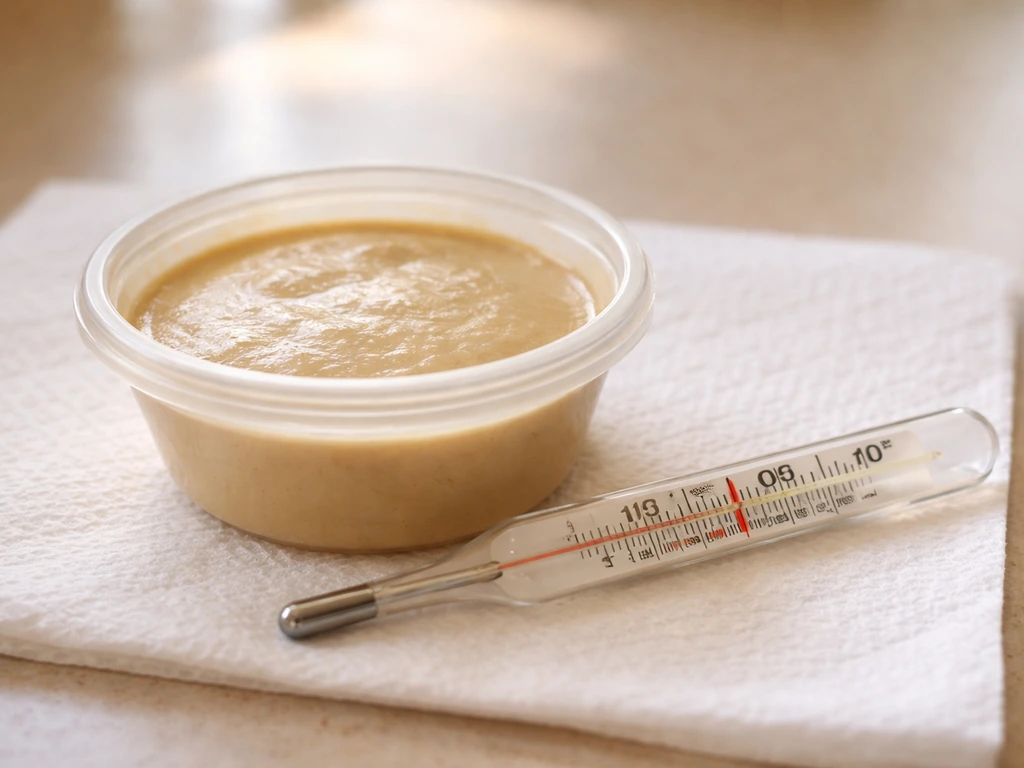
For pet chicks and baby birds
Use a commercially formulated hand-feeding formula. Kaytee Exact and Harrison's are two of the most widely used and respected brands. Do not improvise with baby food, mashed fruit, or cow's milk products. A published avian pediatrics reference is clear that changing a hand-feeding formula recipe without expertise is risky, and it's not worth the gamble when proper formulas are inexpensive and widely available.
Temperature is the most critical variable here. Both Kaytee and Mazuri specify a feeding temperature of 102–110°F (approximately 38–40°C), with 105°F as the practical target. Merck's veterinary guidance puts the safe tube-feeding range at 102–105°F (38.8–40.5°C). Formula that is too hot causes crop burns, which are painful and can be fatal. Formula that has cooled below range should be discarded and remixed, not reheated in the same container. Always check temperature with a thermometer, not your finger or wrist. The target feels like warm (not hot) bath water, but thermometers don't lie and your hand does.
Feeding volume is equally important. Merck notes that a baby bird's crop holds roughly 10% of body weight per feeding, or about 100 mL per kilogram. For a small chick this is a surprisingly small amount. Overfeeding causes regurgitation and can lead to aspiration.
For adult pet birds eating from your hand
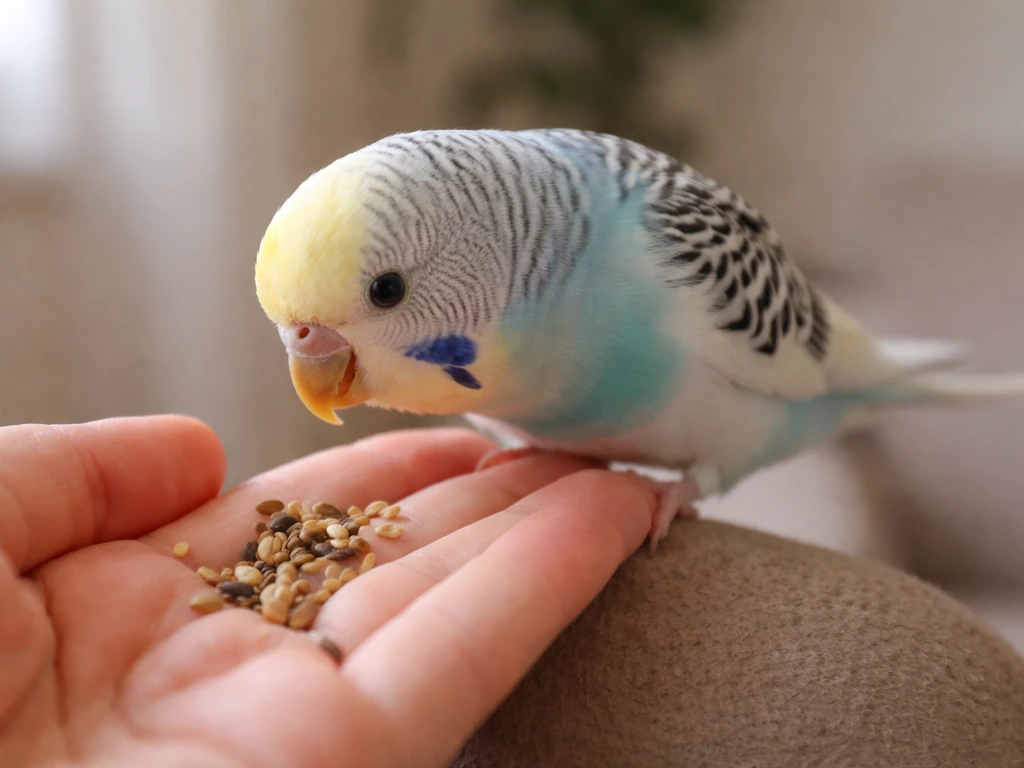
If you're hand-feeding an adult or juvenile bird as a bonding exercise, the foods are the bird's normal diet: seeds, pellets, fresh vegetables, small pieces of fruit, or species-appropriate treats. The goal is to let the bird take food from your open palm or fingers, not to push anything into its beak. Never offer avocado, chocolate, caffeine, onion, garlic, alcohol, or anything with xylitol. These are genuinely toxic to birds. Also avoid heavily salted or processed human foods.
For wild birds (emergency situations only)
The guidance from every major wildlife organization is consistent: do not feed a wild bird until you've spoken with a rehabilitator. Rockfish Wildlife Sanctuary, the Arizona Wildlife Resource, and Texas Parks and Wildlife all say the same thing. The risk of GI upset, aspiration, or feeding the wrong food for the species is high enough that attempting to feed the bird can worsen an already bad situation. Keep it contained, warm, dark, and quiet, and make the call first.
| Food Type | Pet Chick (Formula) | Adult Pet Bird | Wild Bird |
|---|---|---|---|
| Commercial hand-feeding formula | Yes, at 102–110°F | Not needed | Only if rehabilitator-directed |
| Seeds and pellets | No (too early) | Yes | No (wait for expert guidance) |
| Fresh fruit/vegetables | No (too early) | Yes (species-safe only) | No |
| Bread, crackers, or processed food | Never | Never | Never |
| Avocado, chocolate, caffeine, onion, alcohol | Never | Never | Never |
| Water via dropper | Not independently (consult vet) | Not needed in normal feeding | No (aspiration risk) |
Step-by-step hand-feeding process
Feeding a baby bird or chick (formula feeding)
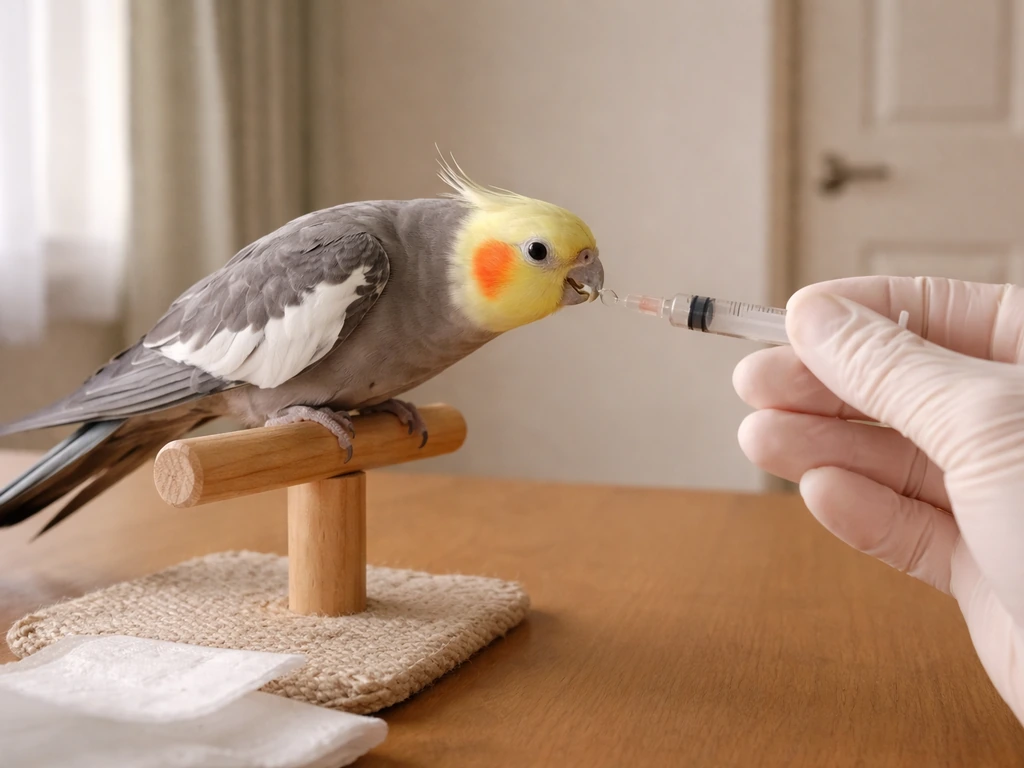
- Gather your supplies before you start: commercial hand-feeding formula, clean hot water, a thermometer, a syringe or spoon (species-appropriate), paper towels, and gloves if needed for hygiene.
- Mix the formula with hot water according to the package directions. Stir thoroughly to remove any hot spots that a thermometer can miss if you only check the surface.
- Check the temperature with a thermometer. Target 102–110°F, with 105°F as your practical goal. If it reads above 110°F, let it cool. If it's dropped below 100°F, discard and remix.
- Position the chick upright, not on its back. Never tilt the bird backward during feeding, as this increases aspiration risk.
- Offer the syringe or spoon at the left side of the beak (this matches the natural angle the parent bird would use). Let the bird pump or bob its head to accept the food. Do not force food in.
- Feed in small amounts, pausing to let the crop empty slightly between bites. Watch the crop visually, it should fill but not bulge tightly.
- After feeding, gently wipe the beak and any spilled formula off the face and feathers immediately. Formula that dries on feathers causes serious damage.
- Log the time, amount fed, and the bird's weight if possible. This helps you track whether the bird is growing and eating correctly.
Feeding an adult pet bird from your hand (bonding)
- Choose a small, quiet room with no escape routes (ceiling fans off, windows and doors closed). This keeps the bird safe and removes distractions.
- Sit at the bird's level, on the floor or in a low chair. Towering over a bird is threatening body language.
- Hold a small piece of food flat in your open palm or pinched lightly between two fingers. Don't reach toward the bird. Let your hand rest still and wait.
- Give the bird time, sometimes several minutes, to decide to approach. Look slightly away rather than making direct, sustained eye contact, which birds read as a predator stare.
- The moment the bird touches the food or your hand, stay completely still. Let it take the food on its own terms.
- Repeat this in short sessions (5–10 minutes, once or twice a day). Consistency across multiple days builds trust faster than one long session.
Feeding frequency: how often is enough?
For baby birds, frequency depends heavily on age. A published zebra finch husbandry guideline describes feeding every 2 hours between 6 a.m. and 11 p.m. for the first 5 days, shifting to every 3 hours after day 5 until the bird can feed itself. A finch hand-feeding guide provides age-based intervals that shift around days 15–23, again reflecting how closely feeding schedules track developmental age. The point is that there is no single universal answer. Check species-specific resources and adjust as the bird grows and the crop empties more efficiently.
Managing different bird temperaments and common problems
The bird won't take food from your hand
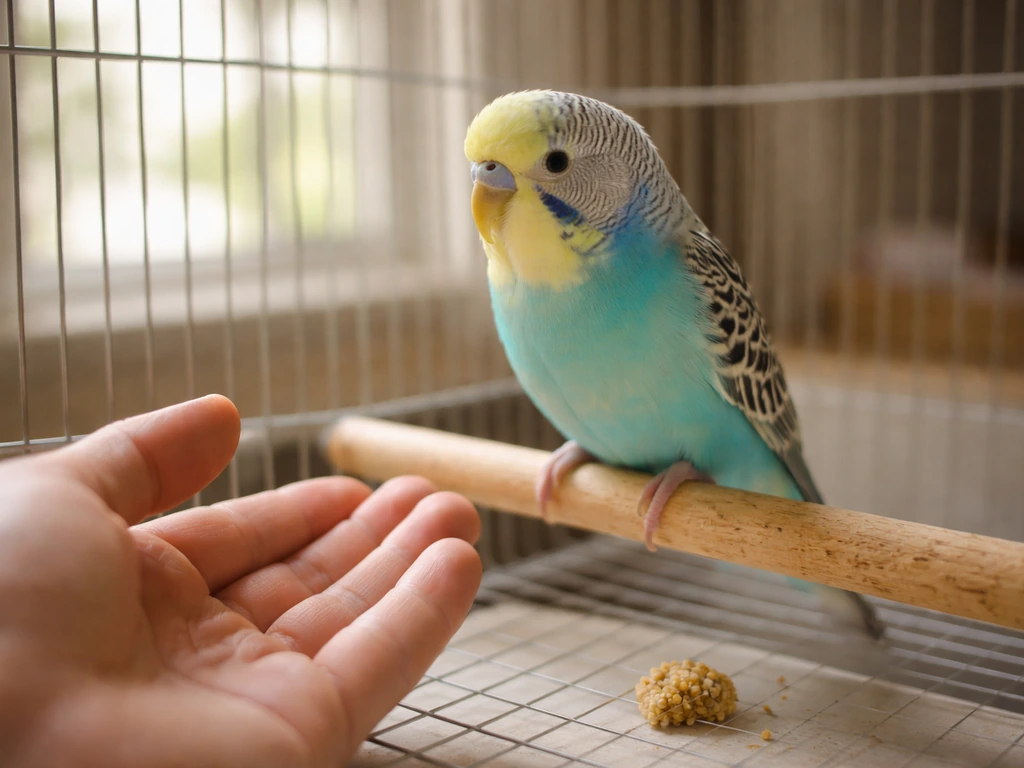
This is normal at first and usually not a real problem. For adult pet birds, the fix is patience and repetition. Place the food and walk away if needed. Put a treat near the bird's perch and gradually, over several sessions, move it closer to your hand. Don't rush. For chicks that aren't pumping to accept formula, check temperature first (formula that's too cool or too warm triggers a stop response), then check whether the crop is already full from a previous feeding.
Biting
A bird that bites your hand when you offer food is almost always communicating fear, not aggression. Don't pull away sharply (this rewards the behavior by releasing the bird from the uncomfortable situation). Stay calm, don't react loudly, and end the session calmly. Come back shorter and quieter the next time. If biting is severe and consistent, it's worth revisiting whether the bird is ready for this stage of interaction.
Regurgitation during formula feeding
If a chick is regurgitating during or after tube or syringe feeding, the most common cause is feeding too much at once. A clinical hand-rearing reference confirms that overfeeding is the primary trigger for regurgitation. Slow down, reduce the volume per session, and make sure the crop has adequate time to empty between feedings. If regurgitation continues despite reducing volume, contact an avian vet.
The bird seems stressed or panicked
Heavy breathing, wing spreading, frantic movement, or freezing are all stress signals. Stop the session immediately. Give the bird quiet time to settle before trying again. For wild birds especially, stress is a genuine medical concern. Arizona Wildlife Resource notes that keeping the animal calm and getting it to a proper wildlife center is typically more beneficial than any feeding attempt.
Species-specific notes
Parrots and parakeets are generally easier to hand-tame than finches, canaries, or most softbills, which are naturally more flighty. Larger parrots like cockatiels and African Greys often respond well to slow, calm repeated sessions. Finches and canaries may never become hand-tame in the same way, and that's fine. You can still offer food from your hand near the cage as a trust-building exercise without expecting the bird to step onto your finger. Adjust your goal to match the species.
Aftercare and next steps
Ongoing sessions for pet birds
Consistency is everything. One good session followed by a week of nothing undoes most of the progress. Short, calm daily sessions are far more effective than occasional marathon attempts. Keep a simple log of what food you used, how the bird responded, and whether it accepted food from your hand. Progress tends to be nonlinear, so notes help you see improvement over time that might not be obvious day to day. Routine veterinary checkups support this process too, since a bird that's feeling unwell will not respond to hand-feeding attempts the same way a healthy bird will.
Weaning baby birds off formula
Weaning is gradual. Kaytee's guidance on species-specific weaning timelines lists cockatiels, for example, as typically ready to begin weaning around 6–7 weeks of age. The process involves offering solid foods alongside formula and slowly reducing formula feedings as the bird eats independently. Kaytee's weaning guide recommends that when the bird is down to one formula feeding per day, offer that feeding only at night so the bird has the full daytime to explore and try new foods on its own. Never abruptly cut off formula before the bird is reliably eating solid food; the stress and weight loss can be significant.
If you're new to raising birds from chick stage, the full picture of what that involves goes well beyond feeding. Our guide on how to hand raise a bird covers the broader process, including brooding temperature, hygiene routines, and developmental milestones to watch for.
When and how to stop hand-feeding a wild bird
If you've been directed by a rehabilitator to assist with a wild bird temporarily, follow their instructions exactly on when to stop. In general, the goal for wild birds is always to minimize human imprinting and dependency, restore health, and release as soon as possible. Under federal regulations, birds kept in care beyond specified timeframes generally need to be transferred to a federally permitted rehabilitator. Do not let temporary care drift into long-term possession, both for legal reasons and because imprinted wild birds have reduced survival odds after release.
If you're thinking about taking on more responsibility with wild bird care, understand what that actually requires. Learning how to raise a wild bird involves permits, specialized knowledge, and infrastructure that go well beyond what most households can reasonably provide.
Building toward full independence
The end goal of hand-feeding, whether for a chick or a bonding adult, is a bird that is healthy, confident, and appropriately independent. For pet birds, that means eating on its own, interacting with you comfortably, and not being dependent on hand-feeding as its only source of food or comfort. For a thorough walkthrough of the full raising process from hatch to independence, the guide on how to raise a bird is a good next read.
If you're doing this at home without a lot of prior bird experience, it also helps to understand the environmental and care requirements beyond feeding. A practical breakdown of how to raise a bird at home covers housing setup, temperature management, and the day-to-day logistics that affect whether a young bird thrives.
Finally, if you're working with a bird that was pulled from the nest and need a comprehensive rearing framework, the article on how to hand rear a bird goes deeper into the developmental stages, equipment choices, and red flags to watch for during the most critical early weeks.
FAQ
Can I use a syringe, eyedropper, or spoon instead of tube-feeding tools for a chick?
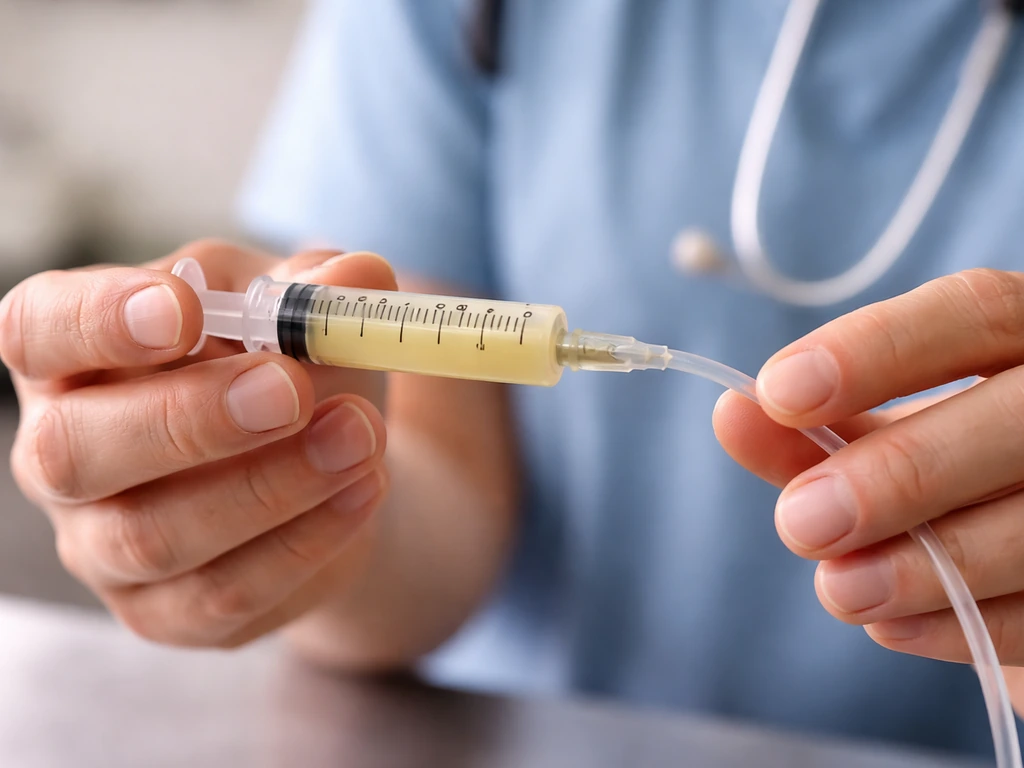
If the bird is truly on formula, use the specific method your avian vet or the formula instructions recommend. Syringes and droppers increase the risk of delivering into the wrong place, which can cause aspiration, especially if the chick moves. For safety, prefer the setup designed for hand-feeding (tubing appropriate to the bird’s size) and practice only if you have guidance.
What should I do if the crop does not empty between feedings?
If the crop stays full or feels abnormally swollen when it should be mostly empty, stop feeding and reassess temperature first. Warm formula outside the recommended range can slow digestion, and regurgitation risk rises with overfilling. If it does not improve over the next check, contact an avian vet or follow your breeder’s or veterinarian’s crop-care protocol.
How can I tell normal stress from a dangerous problem during hand-feeding?
A brief, mild startle is different from sustained respiratory effort or collapse. Stop feeding immediately if you see open-mouth breathing, continuous wing flutters, repeated frantic thrashing, or a bird that becomes limp or unresponsive. If stress signals continue after a quiet settle period, treat it as a health issue and get avian guidance.
My pet bird won’t take food from my hand, should I keep offering or force it?
Keep sessions short and do not push food into the beak. If the bird repeatedly backs away or bites when the hand approaches, reduce the distance and work in smaller steps (for example, food near the perch first, then slightly closer over multiple days). If the bird still refuses, a vet check can rule out pain, illness, or an unappealing formula texture or temperature.
Is it okay to rewarm formula that cooled down?
No, discard formula that dropped below the safe feeding range and remake a fresh batch. Rewarming the same container can create hot spots and inconsistent temperature, which increases burn risk. Use a thermometer for each new batch, and keep only the amount you need to avoid repeated temperature swings.
How do I store prepared hand-feeding formula safely?
Prepare according to the label, then refrigerate promptly if the instructions allow storage. Use clean utensils every time and avoid leaving formula at room temperature for extended periods. When you warm it, bring it to the target range, mix well, and do not use formula that smells off or shows separation beyond what the label describes.
What if a wild bird seems injured but is eating on its own, can I still offer food?
If it is wild, you should not provide food unless a licensed rehabilitator tells you to. Even if it is eating, aspiration risk and GI problems can still occur, and the wrong food can worsen dehydration or gut function. Focus on gentle containment, warmth, and fast transport to a rehabilitator.
A baby bird is on the ground, how do I decide whether it is a nestling or a fledgling?
Nestlings are usually mostly immobile, have little feathering, and look like they cannot hop well. Fledglings have more feathers and can hop or flutter. In both cases, the safest move is to evaluate from a distance first, watch for parents returning, and then contact a rehabilitator for direction. Avoid feeding attempts unless instructed, because many ground birds are being tended.
What cleaning steps should I take after hand-feeding to reduce infection risk?
Wash hands thoroughly with soap and water immediately after handling, then sanitize as a backup. Clean any surfaces that contacted droppings or formula, and keep the bird away from kitchen and food prep areas. For pet birds, also wipe and disinfect bowls daily to reduce fecal-borne contamination between feedings.
How long should I hand-feed a pet chick before transitioning to independent feeding?
Transition timing depends on species and developmental stage, not just age. Start offering appropriate solid foods while continuing formula as directed, then reduce formula feedings gradually. Never abruptly stop formula before the bird is reliably eating on its own, because sudden weaning can trigger weight loss and stress.
If I’m helping briefly per a rehabilitator’s instructions, when do I stop feeding?
Stop exactly at the time window and procedure the rehabilitator specifies. If your instructions include “only until the next transfer,” do not extend care beyond that plan even if the bird looks better. Imprinting risk increases the longer wild birds are handled, and some jurisdictions require transfer to a permitted rehabilitator after specified timeframes.
Next Article
How to Teach a Bird to Fetch Step by Step Guide
Humane, step-by-step training to teach your bird to fetch safely, with targets, rewards, troubleshooting, and gradual re