Yes, you can brush a bird, but only under the right conditions. If your bird is tame, trusts you, and is in good health, gentle feather grooming with the correct soft tool can support bonding, comfort, and basic hygiene. If you are working on basic pet routines, you can also train your bird to use a litter box for easier, cleaner cleanup train a bird to use a litter box. If the bird is wild, injured, stressed, actively losing feathers, or showing any signs of pain, brushing is off the table until a vet or licensed wildlife rehabber gives you the green light.
Can You Brush a Bird Safely No or Yes by Species
Maya Harris
7 May 2026
When brushing is okay vs. when to leave the feathers alone
Brushing a bird is not automatically a harmless activity. The safety depends on three things: the bird's species and feather structure, the trust level between you and the bird, and the bird's current health status. Get all three right and a gentle grooming session can be a genuinely positive experience. Get one wrong and you risk feather damage, psychological stress, or an acute health crisis.
| Situation | Brushing okay? | What to do instead if not |
|---|---|---|
| Tame pet parrot, good health, trusts you | Yes, with correct technique | N/A — go ahead carefully |
| Tame small passerine (finch, canary) | Rarely and minimally | Let the bird preen itself; mist bath is better |
| Untamed or skittish pet bird | No | Build trust first through target training and step-up work |
| Wild bird (healthy) | No | Contact a wildlife rehabber; do not handle |
| Wild bird (injured or oiled) | Only under rehabber/vet instruction | Keep bird warm, dark, quiet; call a rehab center immediately |
| Any bird with feather loss, sores, or visible mites | No | Vet visit first; grooming could worsen the problem |
| Bird showing stress signs (panting, fluffed feathers, tail bobbing) | No | Stop all handling; let bird settle in a quiet space |
Why brushing (done right) actually matters
Birds spend a significant part of their day preening, and for good reason. Feathers are precision structures: each flight or contour feather has a central rachis (the backbone of the feather), with barbs branching off it and barbules branching off those. The barbules interlock like tiny hooks to form the smooth, airtight vane. When those barbules get displaced, the feather loses its function. Birds realign them with their beaks during preening. A gentle human-assisted grooming session mimics that tactile stimulation, which is why many parrots actively seek head scratches and light feather smoothing from their trusted person.
Beyond feather structure, grooming serves real bonding and welfare purposes. It reinforces the social bond (parrots are highly social and use mutual preening as a relationship behavior), it allows you to spot early signs of feather problems or skin irritation, and for powder-down species like cockatoos and African greys, occasional gentle smoothing helps distribute the keratin powder that naturally conditions the feathers. That said, aggressive combing or scrubbing can disrupt the very barbule alignment you are trying to support, so technique matters enormously.
How to set up a safe brushing session
Space and timing
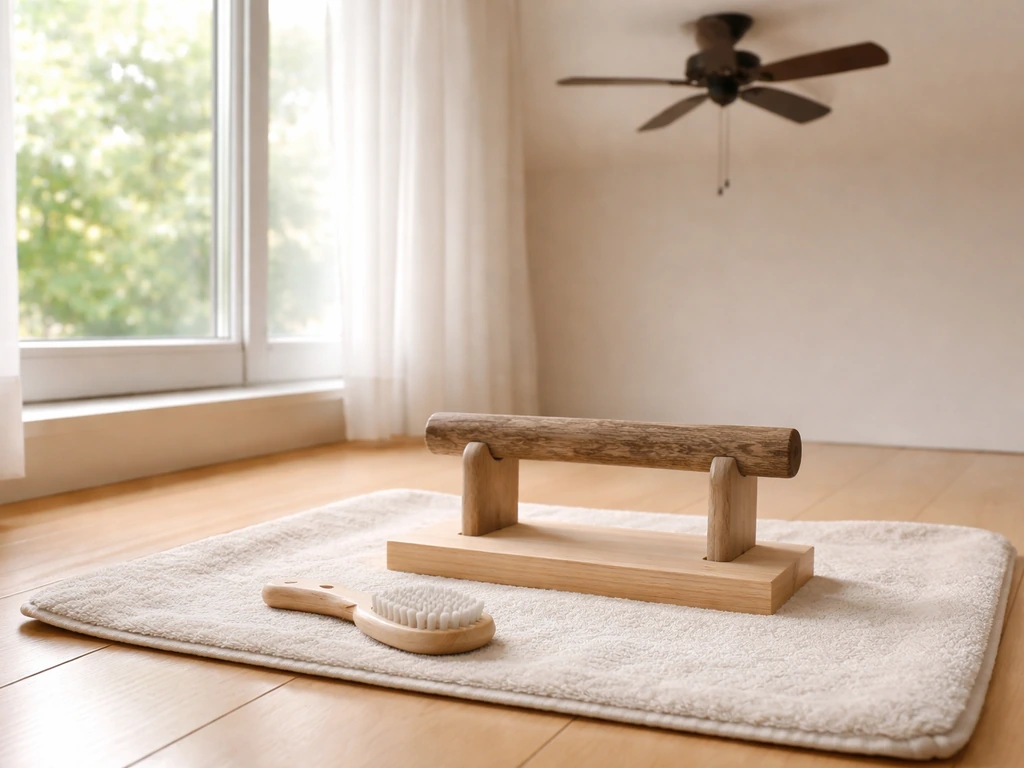
Choose a calm, quiet room with no ceiling fans running, no other pets present, and good but not harsh lighting so you can see the skin and feathers clearly. Midday or early afternoon tends to work better than right after waking or just before sleep, when birds can be grumpy or overstimulated. Keep sessions short, especially the first few times: five minutes is plenty.
Tools to use (and what to avoid)
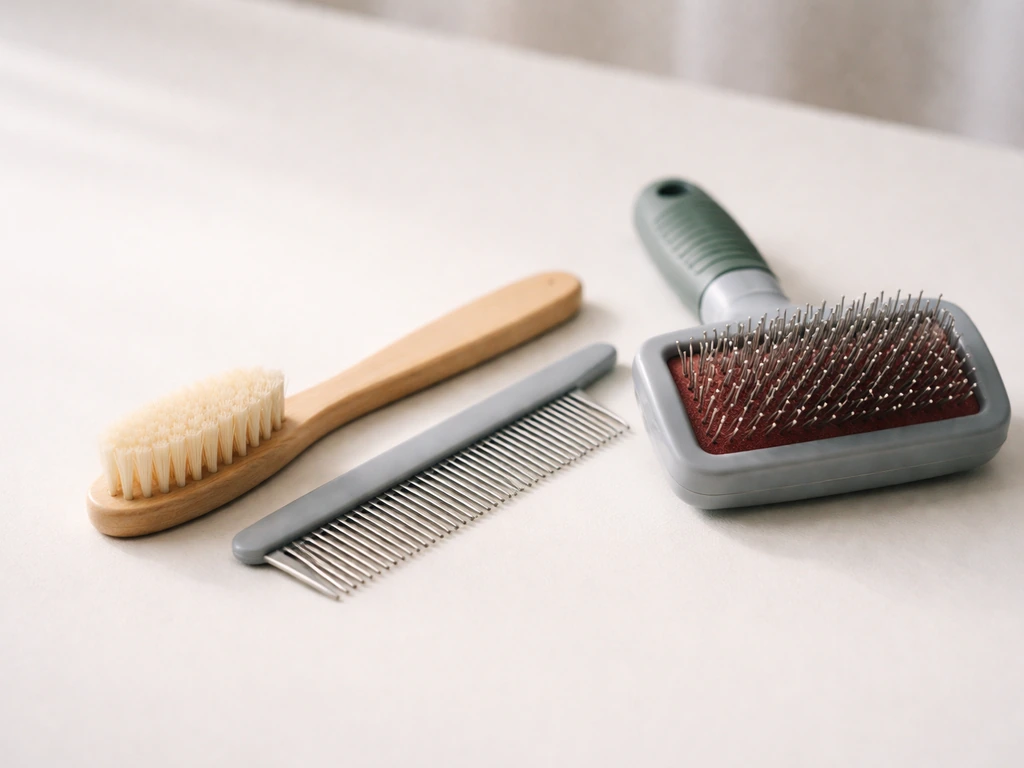
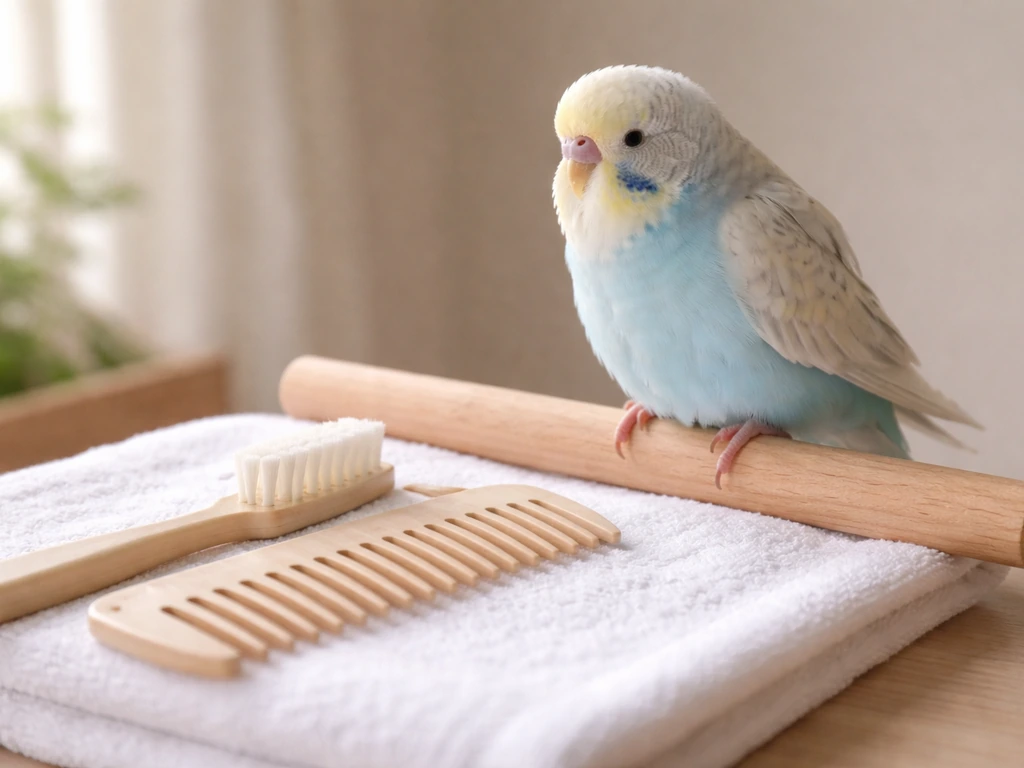
- A very soft natural-bristle toothbrush (unused, dry) works well for larger parrots and is easy to control
- A fine, wide-toothed comb designed for small animals can work on larger feathered areas, but use it only to gently smooth, never to tug
- A clean, dry cosmetic blush brush (large, very soft) is a low-cost alternative for gentle body feather smoothing
- Your fingertips are genuinely the best tool for head feathers: scratch gently at the base of the head and nape feathers the way a companion bird would
- Avoid stiff-bristle brushes, metal combs, fine-toothed combs, and anything damp unless you are intentionally mist-bathing the bird as a separate activity
- Never use chemical sprays, conditioners, or any product not specifically formulated for birds on feathers before or during grooming
Handling basics
For a fully tame bird, you do not need to restrain it at all. Let the bird sit on your hand or a perch and approach the brush from the side, not overhead (overhead movement triggers a prey response). For any situation where light restraint is needed, a soft breathable cloth towel wrap can help, but watch breathing continuously. If the bird shows any sign of hypoventilation or overheating, release it immediately and resume the session later. Towel restraint changes a bird's physiological state even when done gently, so keep it brief.
Step-by-step technique by bird type
Pet parrots (beginner to intermediate)
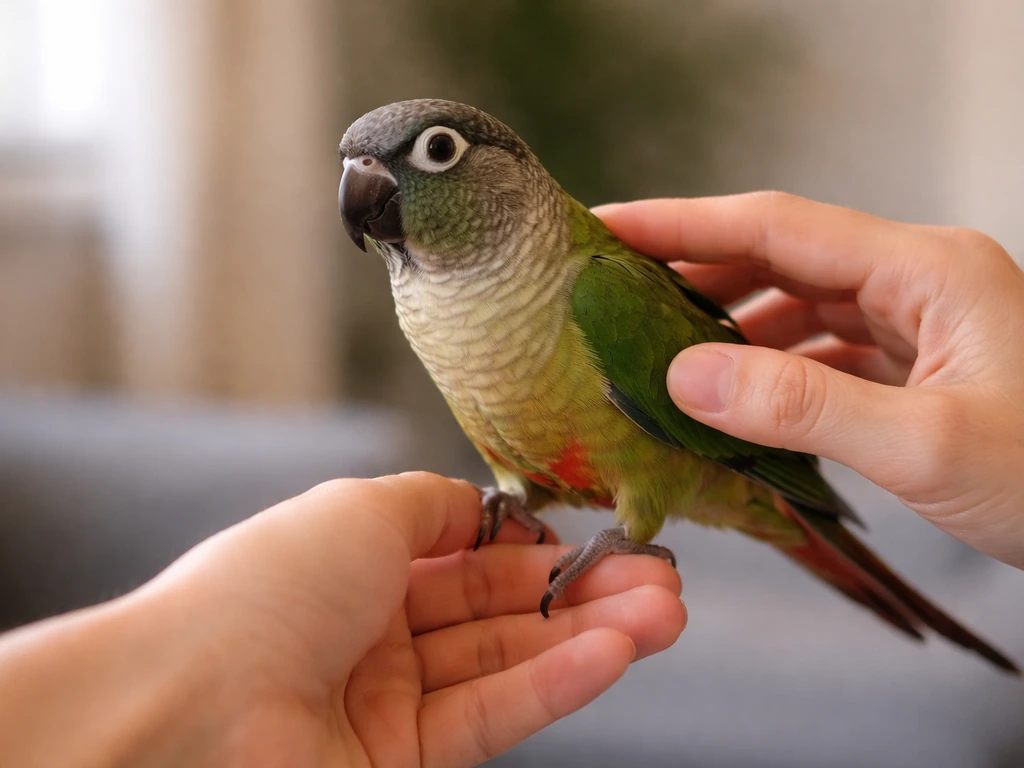
- Wash your hands thoroughly before starting. Sit at the bird's level and let it step up or come to you voluntarily.
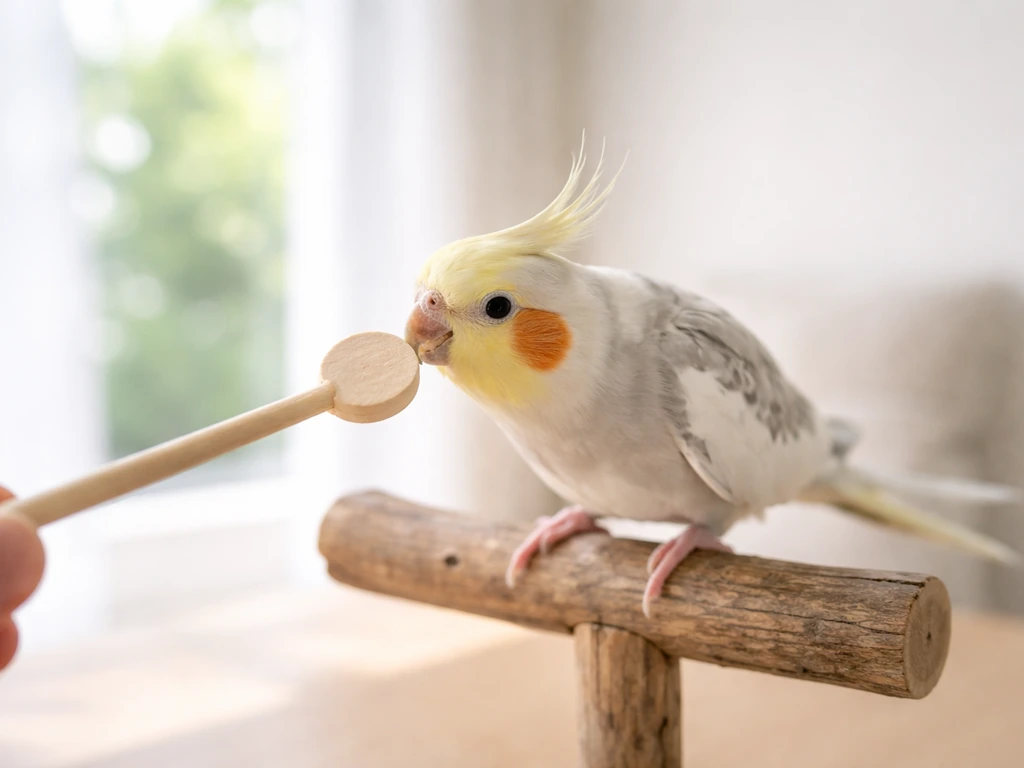
- Offer a small high-value treat (a sliver of almond or a piece of millet) to create a positive association before you introduce any tool.
- Let the bird investigate the soft brush by sniffing and touching it. Do not rush this step.
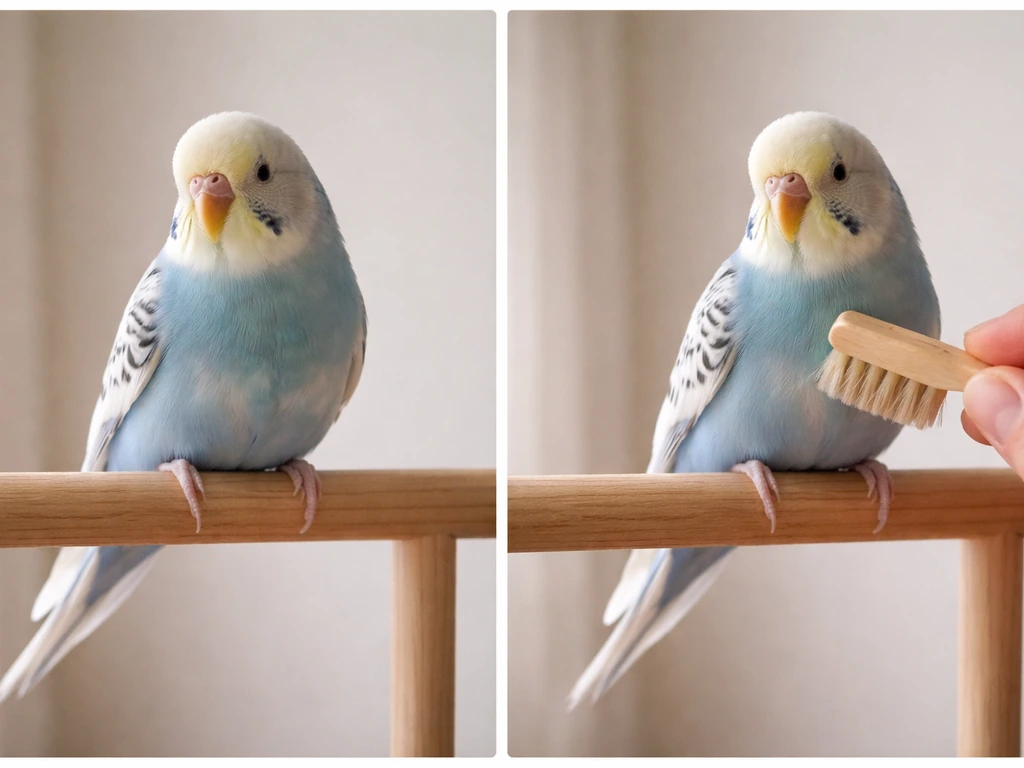
- Start at the back of the head and nape, where birds cannot preen themselves and where mutual preening naturally happens. Use your fingertips or the very tips of the brush bristles with almost no pressure.
- Move to the upper back and wings only if the bird remains calm and relaxed (loosely held feathers, relaxed posture, maybe some soft vocalizations). Always stroke in the direction the feathers grow, from base to tip, never against the grain.
- Avoid the vent area, belly, and tail unless the bird specifically invites contact. These areas can be sensitive and touching them can cause discomfort or confusion.
- Keep the session to five to ten minutes maximum. End on a calm note, give a reward, and return the bird to its space.
Small passerines: finches and canaries (intermediate)
Finches and canaries are not naturally handleable birds. Unlike parrots, they did not evolve for human contact and most will experience brushing as a stressful predator encounter rather than a pleasant bonding moment. For these birds, the answer is almost always: let them preen themselves and offer a shallow mist bath or clean water bowl for self-grooming instead. If you genuinely need to check feathers or address a specific issue (say, a stuck molt feather), do it as briefly as possible with a gentle wrap, check the area quickly, and return the bird immediately. Routine brushing is not appropriate for most small passerines.
Wild birds (wildlife rehabilitation context only)
If you have found an injured wild bird, do not attempt to brush or groom it yourself. Wild birds are extremely easily stressed, and handling alone can be fatal. The priority is to keep the bird in a quiet, dark, well-ventilated container (a cardboard box with holes works) in a warm location, and contact a licensed wildlife rehabilitator or avian vet immediately. Feather cleaning or grooming of oiled or contaminated birds is a specific clinical procedure carried out in stages to prevent hypothermia and shock, not something to attempt at home. Wash your hands after any contact with a wild bird, and consider gloves if you are handling an unknown species.
Signs to stop right now
Birds communicate discomfort clearly if you know what to look for. The moment you see any of the following, stop the session, move the bird back to its familiar space, and give it time to settle before attempting any further handling.
- Open-mouth breathing or panting: this indicates overheating or acute stress and requires immediate stopping
- Tail bobbing with each breath: a sign of respiratory distress, especially urgent in small birds
- Fluffed or puffed-up feathers combined with a hunched posture: the bird is telling you it does not feel safe
- Excessive vocalizing, screaming, or lunging: the bird is stressed, not playing
- Increased heart rate you can feel through a towel wrap (very rapid or irregular)
- Freezing completely still: some birds 'play dead' when extremely frightened, which is often misread as calm
- Any blood, bare skin patches, broken pin feathers, or visible skin inflammation: stop and examine carefully; this may need a vet visit
- The bird actively trying to move away from the tool: that is a clear no
blank" rel="noopener noreferrer">Pin feathers (the new feathers still growing in, enclosed in a keratin sheath with an active blood supply) are especially important to protect. Brushing over them can be painful and can cause bleeding. If you see small, waxy-looking quill-like structures mixed in with the regular feathers, work around them carefully or skip that area entirely.
After the session: rewards, routines, and when to call a vet
Ending well and building a routine
Always end a grooming session before the bird gets restless, not after. Give a reward immediately when the session ends so the bird links the experience with something positive. Over time, short and rewarding sessions build the kind of trust that makes grooming easier and more pleasant for both of you.
If you are also trying to train your bird to accept handling on cue, you will have an easier time with consistent routines, including how to house train a bird. A reasonable grooming check-in interval for most pet parrots is every three to four months for any hands-on assessment, with lighter daily or weekly touch interactions woven into normal bonding time.
Clean your brush or comb after each use with warm water and mild soap, rinse thoroughly, and let it dry completely before the next session.
Monitoring between sessions
After brushing, watch the bird for the next hour or so. Normal post-grooming behavior includes preening itself (this is good, it is realigning barbules), relaxed vocalizations, eating, and normal activity. To prevent messes and make cleanup easier, you can also train your bird to poop in a designated cage area how to train your bird to poop in the cage.
If the bird remains fluffed, quiet, or off-food for more than a couple of hours after a session, that is worth paying attention to. Stress and feather-destructive behavior can compound each other: repeated stressful handling can actually worsen feather problems rather than help them, so if grooming sessions consistently result in a withdrawn or agitated bird, dial back the frequency and focus on non-contact bonding first.
When to call an avian vet or wildlife rehabber
- You notice feather loss, bare patches, or inflamed skin that was not there before
- A pin feather broke and is bleeding (apply gentle pressure with clean gauze and call the vet)
- The bird has been consistently stressed after multiple short sessions despite a calm approach
- You suspect mites, lice, or any external parasites (visible movement on feathers, excessive scratching)
- The beak looks overgrown or misaligned: this is a vet job, not a home grooming task
- You are dealing with any wild bird requiring feather cleaning after contamination: contact a licensed wildlife rehabilitator before doing anything
Brushing a bird is less about the physical grooming and more about reading your bird and responding to what it is telling you. When the trust is there, the technique is gentle, and the bird is healthy, it can genuinely strengthen your relationship. When any of those conditions are missing, the kindest thing you can do is slow down, get help, or simply let the bird handle its own feathers.
If you are trying to train a bird to deliver mail, it is important to start with trust-based handling and only move to delivery practice when your bird is consistently relaxed. They are remarkably good at it. If you are wondering about training behaviors like getting a bird to steal money, it is better to focus on safe, welfare-first handling and enrichment instead train a bird to steal money.
FAQ
Is it safe to brush a bird during a molt?
You should not brush a bird that is molting if it has visible pin feathers or actively growing quills in that area. If you must check for a problem, do a very brief, targeted look, avoid pressing on new quills, and stop immediately if you see twitching, flinching, or any sign of bleeding risk.
What signs mean I should stop immediately for overheating or breathing trouble?
If the bird starts breathing faster, panting with an open beak, trembling, or feeling unusually hot to the touch, end the session right away. Let it fully settle before trying again, because overheating and stress can escalate quickly, especially when any towel restraint is used.
What type of brush should I use, and what should I avoid?
For most birds, you should use a brush or comb with soft, appropriate spacing, and you should never use human hair tools, stiff metal combs, or anything that scrapes skin. If you feel resistance or hear or see snagging, switch to a gentler tool or skip that area entirely.
Can I brush my bird right after a bath or misting?
Do not brush wet or recently bathed feathers. Wait until the bird is fully dry, because wet feathers can clump, and extra manipulation increases the chance of barbule disruption and skin irritation.
My bird hates brushing, and it tries to bite. Should I force it?
If your bird bites, lunges, or stiffens every time you bring the tool out, that is a signal to pause grooming and focus on trust first. Keep sessions off the calendar until the bird can be near you calmly, then resume with very short, low-pressure handling from the side.
What should I do if there are pin feathers or quills in the area I want to groom?
Pin feathers and any waxy quill-like structures should be treated as off-limits for brushing pressure. Work around them, and if debris is caught near a quill, remove it gently by hand only if you are confident, otherwise wait and consult an avian vet.
How soon can I reward and what should I do right after a grooming session?
After brushing, you can offer a favorite treat or a preferred activity immediately when the bird is done. Avoid letting the bird zoom around while it is still stressed, and do not schedule another handling session for the next several hours.
How often should I brush if my bird looks healthy?
For routine checks on healthy pet parrots, a grooming assessment every few months is reasonable, while everyday bonding touch can stay light and non-tool-based. If your bird develops redness, persistent scratching, or feather breakage, reduce brushing frequency and get veterinary advice instead of increasing sessions.
What if my bird’s feathers are oily or have something sticky on them?
If you suspect contamination like heavy oil, strong odor, or sticky residue, do not attempt at-home grooming. Oiled or contaminated feathers require stepwise clinical cleaning to prevent shock and hypothermia, so contact an avian vet or wildlife rehabilitator promptly.
I found a wild bird. Can I brush the feathers to help it look better before I get help?
For wild birds, the safest approach is minimal handling, quiet containment, and rapid professional help. Even feather grooming can worsen stress and increase risk, so do not try to “fix” feathers yourself.
How do I properly clean and store the brush between sessions?
Clean the brush after each session with warm water and mild soap, rinse thoroughly, then dry completely to prevent residue and damp bacterial growth. If a brush ever smells sour, feels greasy, or has residue you cannot wash out, replace it.