Yes, you can train a pet or captive bird to pick up a small object and bring it to you on cue. It is a real, teachable behavior built on the same foundation as any other retrieve or fetch skill.
How to Train a Bird to Collect Money Safely

Maya Harris
14 Apr 2026
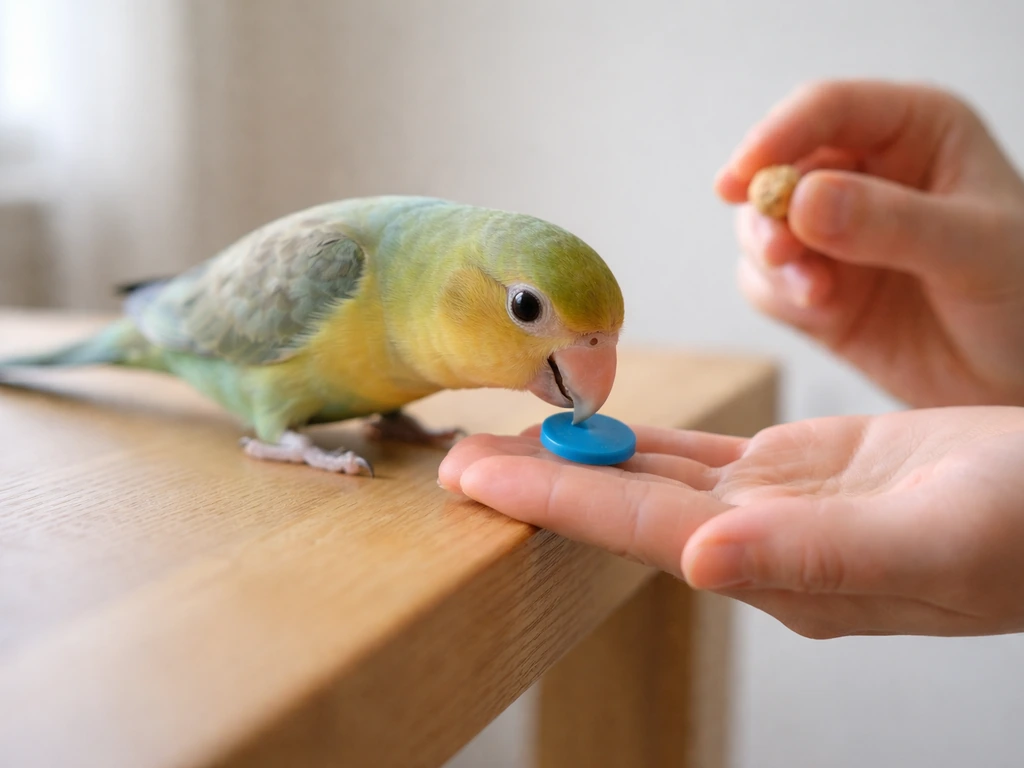
The catch is that "collecting money" in a literal sense (sending your bird out to grab loose change from strangers, or training a wild bird to forage cash) is not humane, not safe, and in most places involving wild birds, not legal. What you can do is train your bird to pick up a safe token or pouch and deliver it directly into your hand, which looks impressively like "collecting money" and is genuinely enriching for your bird.
This guide walks you through the whole process from scratch.
First, let's reframe what "money" actually means here
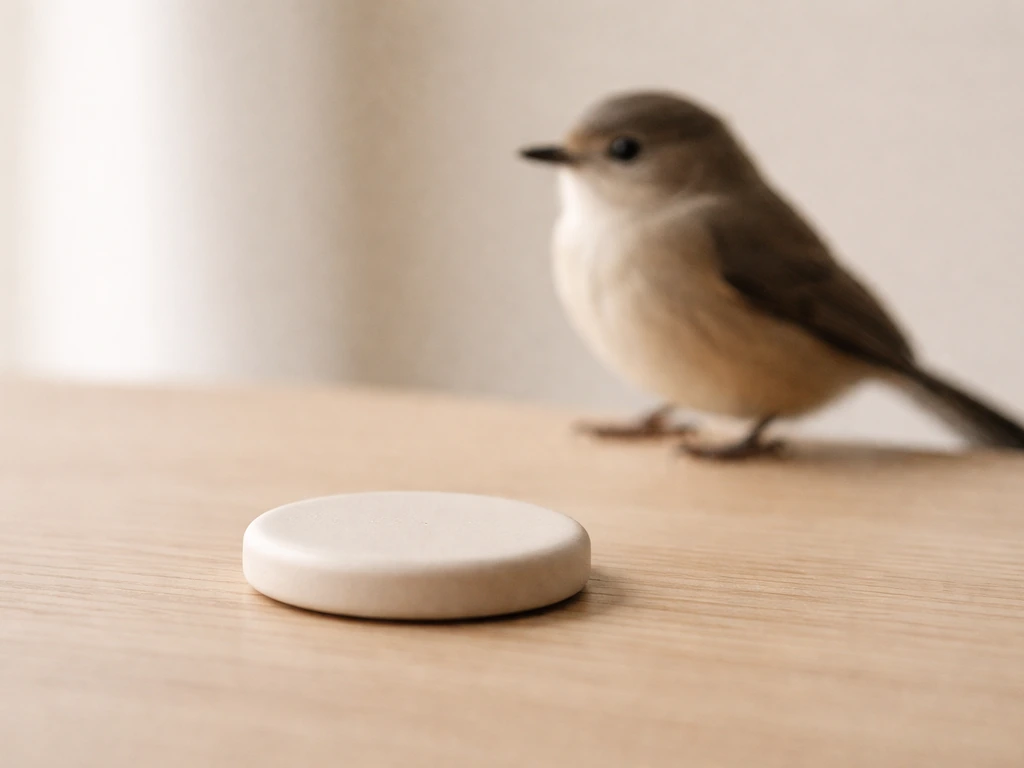
Real coins are a welfare and safety problem. Lead and zinc are both common in metal objects, and as the University of Illinois College of Veterinary Medicine warns, birds are highly sensitive to heavy metal poisoning from galvanized hardware, cage components, and toys. PetMD adds that lead and zinc are among the most common heavy metal toxins affecting pet birds, and even small exposures can be dangerous. A coin your bird mouths repeatedly is not a safe training prop.
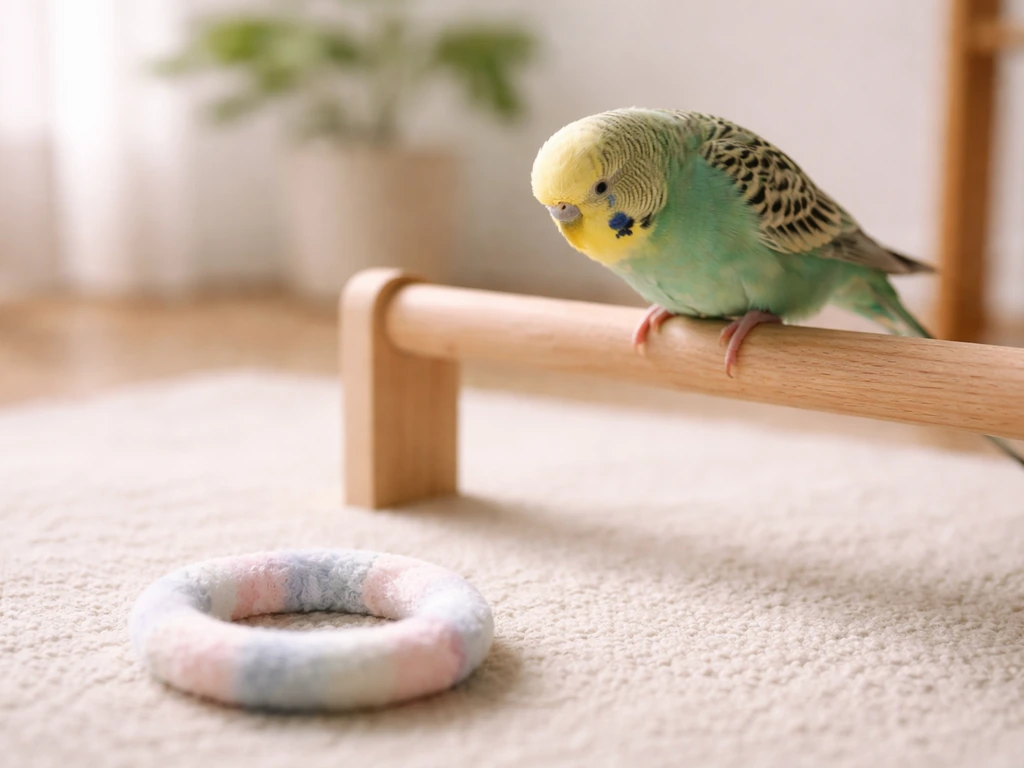
So the very first thing to do is choose a substitute. Good options include: a wooden disk cut to coin size and painted with bird-safe paint, a small cloth pouch with a drawstring (similar in concept to parrot foraging pockets designed for enrichment), or a purpose-built retrieve toy like the kind used for fetch training. The object should be large enough that it cannot be swallowed, firm enough to be gripped in a beak without crumbling, and free of metal clips, bell clappers, or lead weights (all flagged as hazards by VCA Animal Hospitals). When in doubt about a toy's safety, check with your avian vet before introducing it.
It is also worth being honest with yourself about the goal. If you are imagining an unsupervised bird that roams public spaces and retrieves dropped bills, that picture involves a wild or semi-wild bird in an uncontrolled environment. This guide is written for pet bird owners and rehabilitators working with birds in a home or managed setting. The behavior we are building is a supervised, cued retrieve-and-deliver: your bird picks up a token when you ask, carries it to you, and releases it into your hand. That is the humane version of this trick, and it is genuinely impressive.
Build the foundation before you touch a token
No retrieve behavior is going to work reliably if your bird is stressed around you, afraid of hands, or not motivated to engage. Before you introduce any object, spend time on three things: trust, a marker, and a reinforcer that actually works for your individual bird.
Trust and handling comfort
The Association of Avian Veterinarians emphasizes observing stress signals before physical handling and using positive reinforcement to build comfort gradually. If your bird is fluffed, leaning away, biting, or flying off when you approach, you are not ready to train a retrieve. Start by simply sitting near the bird, letting it approach you voluntarily, and reinforcing calm behavior. For rehabilitated birds or those new to handling, this phase can take days or weeks. Do not skip it.
Choose your marker and your rewards
A marker (clicker or a short spoken word like "yes") is how you tell the bird the exact moment it did the right thing. AVSAB describes this "mark and reward" approach as one of the most effective and welfare-friendly tools available. The key rule from target training resources like LibertyWings is simple: click or mark at the exact instant the behavior happens, then deliver the treat immediately. A sloppy marker that comes two seconds late teaches nothing useful.
Finding the right reward matters more than most beginners expect. The Association of Avian Veterinarians notes that different birds have very different reinforcer preferences. Some parrots go wild for a single pine nut; others prefer almonds, a piece of nutrient-rich pellet, or even a brief scratch on the head. Run a quick preference test: offer two treats side by side and see which one your bird reaches for first. Use the winner as your training treat. Keep portions tiny so the bird stays motivated across many repetitions.
Station training: your secret weapon
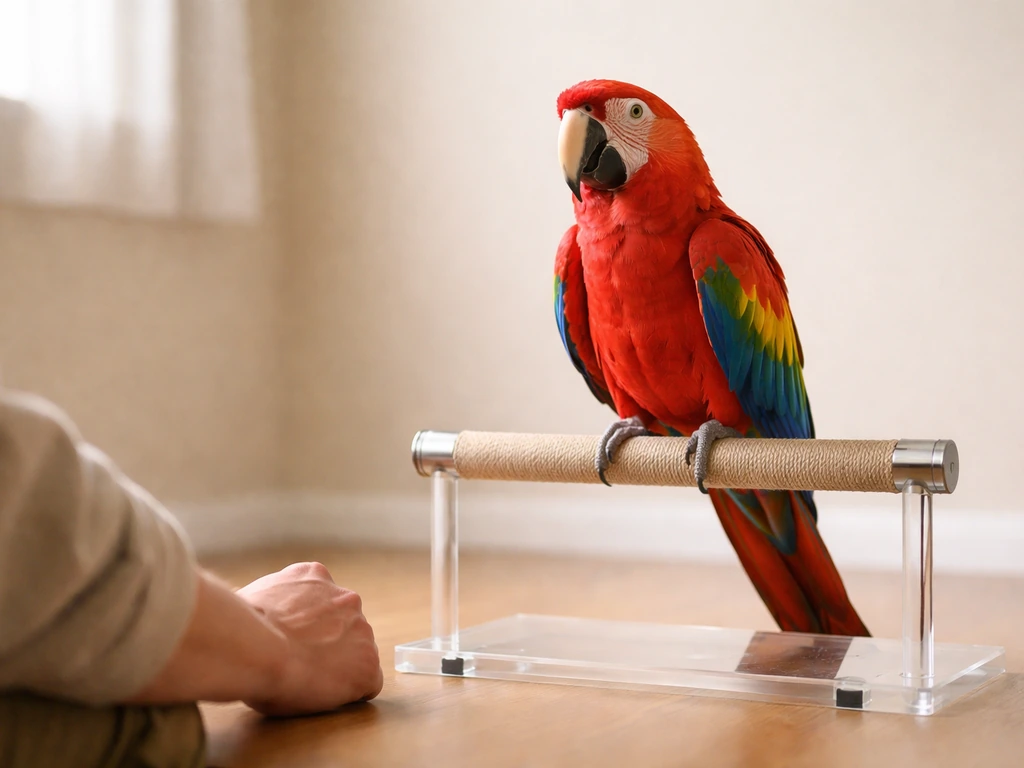
Station training means teaching your bird to go to a specific perch or spot and stay there on cue. It is not glamorous, but it is genuinely one of the most important skills in the chain. Resources from Vetafarm and The Animal Behavior Center both describe stationing as the anchor that makes all other training sessions more controlled and productive. Kaytee's training guidance recommends a simple stepwise approach: wait for the bird to place a foot on the station perch, mark and reward, then build duration and reliability before moving on. Once your bird stations reliably, you have a clean starting point for every retrieve session.
Teaching the pickup: shaping the grasp
This is where target training becomes your best friend. Target training (teaching a bird to touch a specific object with its beak or foot) is described by Parrots.org as a foundational, structured skill that most birds learn quickly and that transfers naturally into more complex behaviors like retrieve. The pickup is essentially a chain of: look at the token, approach the token, touch the token with the beak, and finally grip and lift the token.
- Place the token on a flat surface in front of your stationed bird. Do nothing else. Wait.
- The moment your bird glances at the token, mark and reward. Repeat until the bird is consistently orienting toward it.
- Next, only mark and reward when the bird leans toward or moves closer to the token.
- Then, only mark and reward when the bird touches the token with its beak.
- Finally, only mark and reward when the bird grips the token (you will see the beak close around it). This is the moment you have been building toward.
- Keep sessions to 3 to 5 minutes. End on a success, even if that means going back one step to guarantee a win.
This stepwise process is called shaping: reinforcing successive approximations of the final behavior rather than waiting for the perfect response to appear fully formed. The Happy Chicken Coop's guide on target training makes a point that is easy to forget: never scold or punish if the bird does not perform. Just wait, or gently reset. Aversive responses during training, as both ACVB and BSAVA note in their position statements, increase fear and distress and can permanently set back your progress.
For species context: most parrots (budgies, cockatiels, conures, African greys, Amazon parrots, macaws) pick up the "touch it" step within a few sessions. Corvids are naturals at object manipulation. Softbills and raptors take longer and may need more motivation management. If you are working with a raptor in a rehabilitation context, Avian Behavior International's approach of building confidence through small, frequent repetitions with lots of reinforcement is worth following closely.
Adding the delivery: getting the token into your hand
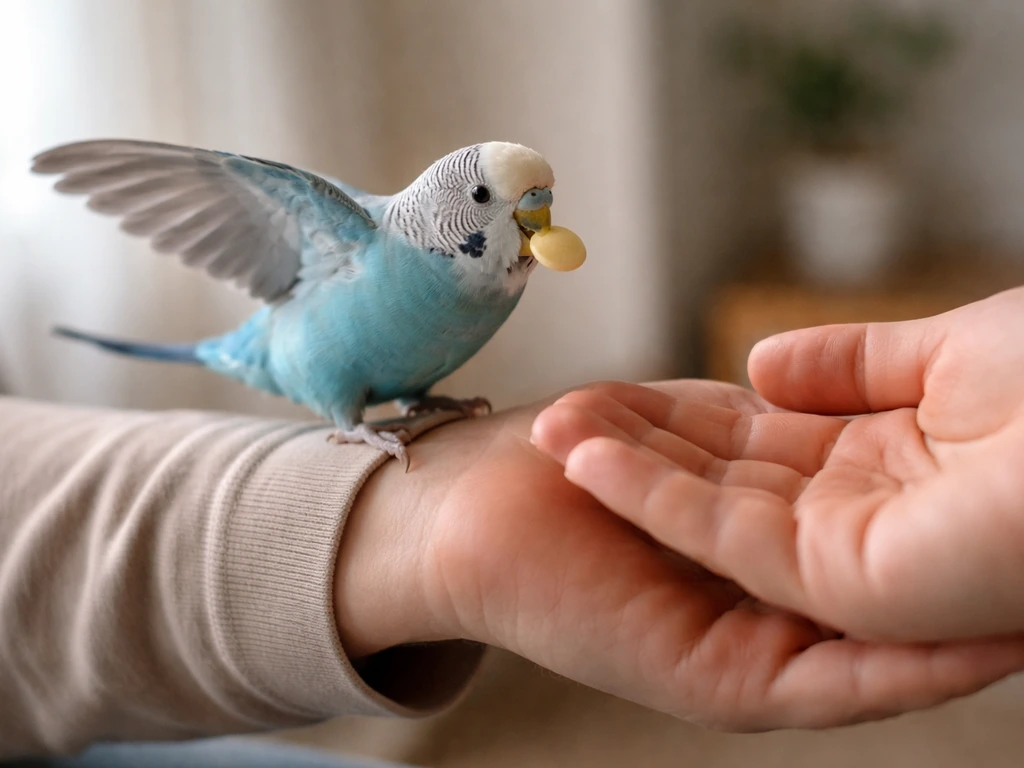
Once your bird reliably grips the token, the next challenge is teaching it to carry the token to you and release it. This is called the delivery step, and it is where a lot of trainers stall out. Here is how to work through it.
Start with proximity
While your bird is gripping the token, present your open hand directly next to the token (inches away). The moment the bird releases the token anywhere near your hand, mark and reward heavily. You are not asking for a perfect drop yet; you are just rewarding any release near your hand. Gradually, only mark when the token actually falls into your palm.
Add the cue
Once the bird is consistently picking up and releasing into your hand, add a verbal cue like "bring it" or "fetch" right before the bird would naturally pick up the token. Say the cue once, wait, and mark the full pickup-carry-deliver sequence. Keep the cue short and consistent. Using different words across sessions will confuse the bird and slow the whole process down.
Recall-by-delivery
A fun advanced layer: instead of waiting for your bird to drop the token into a stationary hand, you call the bird to you (using a recall cue) while it is holding the token. The bird learns that carrying the token to you is what earns the reward. Research published in scientific literature on parrot token exchange has shown that parrots can reliably learn to carry tokens and deliver them toward an exchange location when the contingency is clear.
That is essentially what you are building. For practical training props, a structured retrieve toy like the Parrot Wizard Birdie Treasure Chest (designed around a retrieve-and-drop mechanic) can be a helpful intermediate step to confirm the drop behavior before transferring it to your open hand.
Proofing the behavior so it actually works
A behavior that only works in one spot, with one token, and no distractions is not really trained. Proofing means systematically testing the behavior under different conditions until it holds. Work through the three D's: distance, duration, and distraction.
| Variable | How to Introduce It | Beginner Benchmark | Intermediate Benchmark |
|---|---|---|---|
| Distance | Move the token progressively farther from your hand in small increments (2 cm at a time) | Bird retrieves from 15 cm away | Bird retrieves from across a training table |
| Duration | Wait slightly longer after the pickup before presenting your hand | Bird holds token for 2 to 3 seconds | Bird carries token 30 cm to your hand |
| Distraction | Introduce mild background noise or a second person in the room | Bird performs with TV on low | Bird performs in a new room or different perch setup |
| Token Variety | Swap in a slightly different token (same size, different color) | Bird accepts one alternate token | Bird retrieves any token in its learned size range |
The Companion Parrot Workshop Series from Parrots.org demonstrates exactly this kind of structured, cue-based proofing using positive reinforcement. The key mindset: if the bird fails at a new level of difficulty, you went too fast. Drop back one step and rebuild. Proofing is not a test; it is just more training.
A Soarin' Hawk bird handling manual framing that is genuinely useful here: in positive reinforcement training, the learner (your bird) has control. If it is not performing, the information is about your training plan, not about the bird being stubborn. Adjust the plan.
When things go wrong: troubleshooting common problems
The bird won't touch the token at all
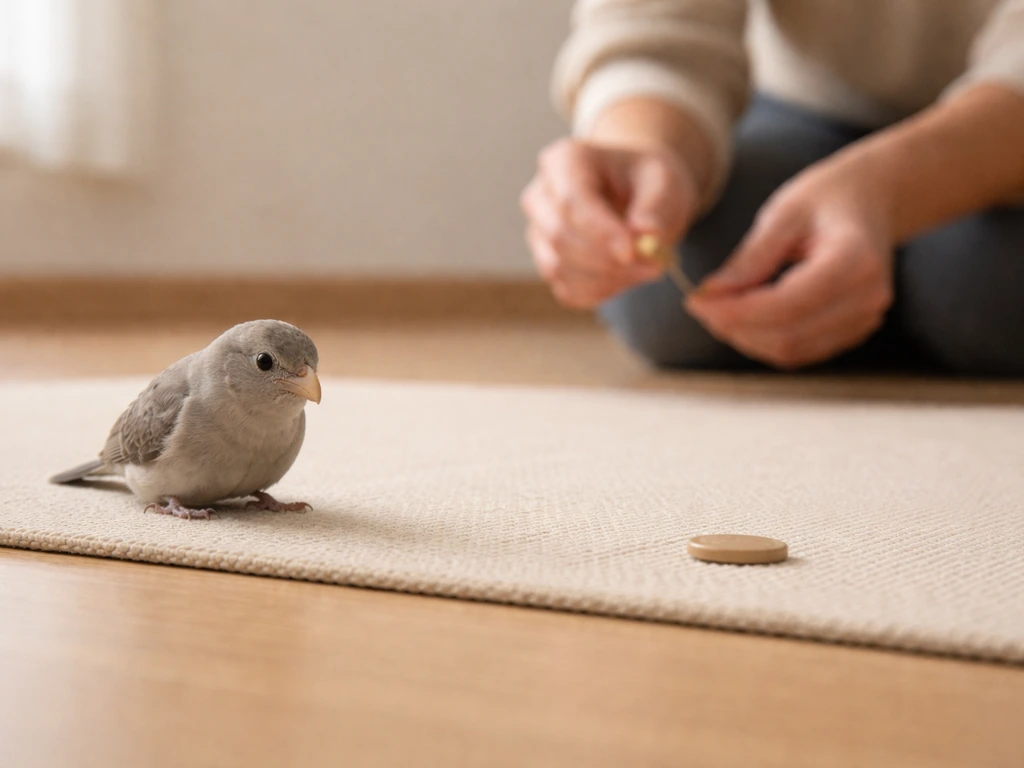
This is usually a neophobia (fear of new objects) problem, not a stubbornness problem. Shrink the ask: reward the bird for just looking at the token from a distance. Gradually move the token closer over multiple sessions. If the token is reflective or metallic in appearance, swap it for a matte wooden disk, which tends to be less alarming. Never force the bird to be near an object it is scared of.
The bird picks up the token but immediately drops it
Mark and reward the drop if it happens near your hand. You are rewarding the "drop near hand" behavior, which is actually what you want. The problem is usually that the bird has not yet learned that holding equals a bigger reward. Try briefly presenting your hand only after a half-second of holding, and mark immediately when you see sustained grip.
The bird delivers inconsistently
Inconsistency usually means the cue is unclear or the reinforcement history is thin. Go back to basics: 20 easy, heavily rewarded reps in a row with zero distractions. Inconsistency is your signal that the behavior is undertrained, not that the bird is capable of inconsistency as a personality trait.
Biting or aggression during training
If your bird bites when you present your hand for the delivery, it is almost certainly being asked to do something before the foundation is solid. Stop the session, give the bird a break, and come back to an easier step. SpectrumCare specifically advises consulting a vet or behaviorist if a bird shows fear, lunging, or sudden behavior changes during training, especially if the behavior is new and unexpected. Do not push through aggression.
The bird eats or destroys the token
Swap to a harder material (untreated hardwood dowel cut to size, or a dense plastic disk large enough not to be swallowed). If destruction is the draw, the token may be too similar to a chew toy. Make it visually distinct from things the bird is already allowed to chew.
Safety, welfare, and legal considerations
This is not the boring disclaimer section. These points actually change what you should do, so read them.
Pet birds
For most parrot species in a home setting, this retrieve behavior is low-risk and highly enriching. The main welfare concerns are token material (no metals, no easily splintered wood, no small parts), session length (keep it short, especially early on), and respecting the bird's choice to disengage. If your bird walks away, the session is over. Forcing continued participation is not training; it is coercion, and it will damage your relationship.
Rehabilitated birds
Rehabilitated birds being prepared for release should generally not be trained in complex interactive behaviors with humans. Humanization (habituation to people) reduces their chance of survival in the wild. If you are training a permanent education or ambassador bird that cannot be released, the rules are the same as for pet birds, but check with your facility's protocols and your state or provincial wildlife agency before adding enrichment behaviors.
Wild birds and public spaces
Training wild birds to interact with money or objects in public is not a humane or legal activity in most jurisdictions. The Migratory Bird Treaty Act in the US (and equivalent laws in many other countries) prohibits the capture, possession, and intentional harassment of most wild bird species without a permit. Even crows and jays, which are sometimes discussed online in the context of "paying" with shiny objects, should not be trained through deliberate conditioning in public spaces. If you are interested in corvid enrichment and interaction, do it properly through a licensed facility.
Hygiene and disease
Birds that mouth shared objects can spread bacteria and fungi. Wash tokens between sessions and do not share training props between birds unless they have been properly disinfected. This is especially relevant in multi-bird households or rescue settings.
What to work on next
Once your bird has a solid retrieve-and-deliver behavior, you have unlocked a whole family of related skills. Most birds that can fetch a token can also learn to sort objects by color, deposit tokens into containers, or string together a sequence of behaviors. These chains are excellent mental enrichment and tend to be very popular with audiences if you ever demonstrate at educational events.
You might also notice that a bird with this level of training often has excellent general impulse control and responsiveness, which makes day-to-day handling much smoother. If you have been wondering about things like whether you can house train a bird alongside trick training, the answer is yes, and the same marker-and-reward foundation applies to both goals. Many owners find that once they understand positive reinforcement mechanics, they want to apply them everywhere.
For example, training a bird to poop in one spot uses essentially the same shaping logic as the retrieve: you are marking a naturally occurring behavior (elimination) at the right moment and reinforcing it in a specific location. Once that connection clicks for you as a trainer, the whole picture becomes much cleaner. Speaking of which, if managing mess around the house is a bigger priority right now, the question of how to train a bird not to poop everywhere is worth reading alongside this guide.
Similarly, litter training a bird is a popular next step for parrot owners who want more freedom to let their bird roam outside the cage without the constant cleanup. It pairs well with the station training you already built for the retrieve behavior, since the station perch becomes the natural "go here and poop" spot as well.
If you want to take the retrieve concept further and are curious about whether birds can be trained to find specific objects or locate things in the environment, the related topic of how to train a bird to find money covers that angle in more depth, including the more advanced targeting and search-behavior chains involved.
The short checklist before your next session: token is safe and the right size, treats are prepped and high-value, your marker is consistent, your bird is calm and engaged, and your session is no longer than 5 minutes. That is really all you need to get started. The behavior is absolutely within reach for most pet birds with a patient owner and a clear training plan.
FAQ
My bird picks up the token but won’t release it near my hand. What should I do?
Use the smallest “win” you can guarantee safely, then scale only if the bird stays comfortable. For example, during the first deliveries, reward release within inches of your hand, not in your palm, and keep the distance between you and the station consistent. If your bird hesitates, reset to the last step where it reliably grips and waits for your cue.
Can I teach a “retrieve and bring it to me” version where I call the bird while it holds the token?
Yes, but only if you can stop the training from becoming a chase. Practice recall while the bird is already gripping, then reward delivery, not running. Start with the exchange happening at a fixed spot (same perch and same distance every time), and keep session length very short so the bird learns the contingency clearly.
What if my bird keeps chewing or destroying the token instead of doing the retrieve?
Pick a token that is visually and physically different from anything the bird can chew or destroy during training. Avoid brittle, splinter-prone items and anything with internal metal parts. If the bird is shredding the token instead of gripping, reduce the chew value by switching to a firmer material, increase reinforcement rate, and slow down shaping so the bird learns grip first, then carry.
Why is my bird suddenly less consistent, even though it used to do this well?
If you lose the marker or rewards, behavior often drops because the bird no longer understands what earns the treat. Check that your click or cue is immediate, treats appear right away, and you are not asking for an extra skill before it is trained (for example, “carry” before reliable “pickup”). Then do a quick reset session with 15 to 20 very easy reps at the previous skill level.
How long should training sessions be, and when is it best to stop?
Keep early sessions extremely short (around 5 minutes) and end on success, especially if the bird is new to handling. If the bird pauses, fluffs, turns away, or stops engaging, treat that as the end point. You can always do “micro sessions” later, but forcing longer sessions usually teaches avoidance rather than learning.
Can I use the same retrieve token with multiple birds in my home?
For multi-bird households, never assume shared props are safe. Wash and fully dry tokens between sessions, and avoid letting birds mouth the same object without disinfection. Consider dedicating one token set per bird and storing it separately so training doesn’t accidentally become a disease-spreading routine.
My bird bites when I present my hand. Is it okay to keep practicing delivery?
If your bird shows fear, lunges, or freezes when your hand appears, do not “push through.” Stop, return to stationing, and rebuild delivery in smaller steps, like rewarding the grip with your hand still farther away. If the reactions are intense or escalate across sessions, consult an avian vet or a certified behavior professional before continuing.
How do I make sure my verbal cue doesn’t confuse the bird during retrieve?
Sometimes the issue is that your cue is competing with other cues or the cue timing is too late. Choose one short cue (for example, “fetch” or “bring it”), say it once right before the moment the pickup is expected, then keep everything else identical. If you changed words, positions, or token type, revert to the version that worked best and rebuild from there.
Is it legal or ethical to train wild birds to pick up money in public?
Never train a wild bird in public or attempt to “help” loose birds by conditioning them to approach or forage for money. If you want enrichment in that context, do it through a licensed facility with proper permits and protocols. For safety, prioritize pet or managed birds where training is supervised and legal.
What specific safety checks should I do before using a new training token?
Yes, look for the safety foundations first. The token should be large enough not to be swallowed, free of metal and small detachable parts, and firm enough to grip without splintering. If you see any aggression or frantic mouthing, remove the token and switch to a safer material before restarting shaping.
Next Articles
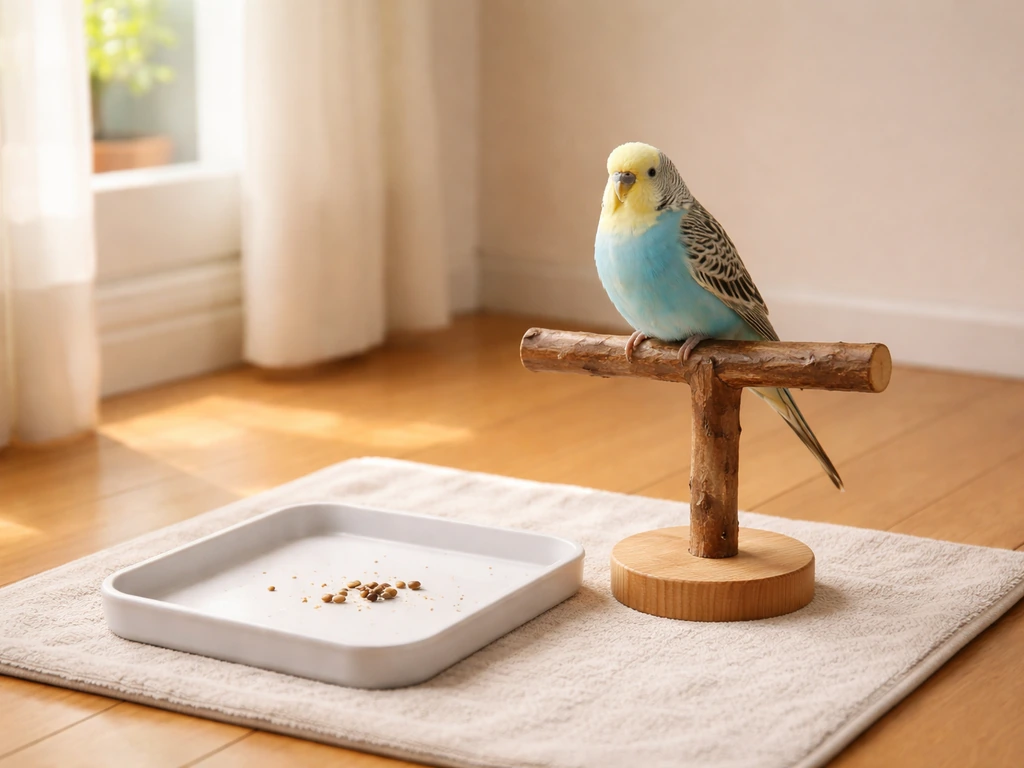
Can You House Train a Bird? Humane Steps and Tips
See if you can house train a bird with humane, species-agnostic steps, routines, poop-spot training, and safety tips.
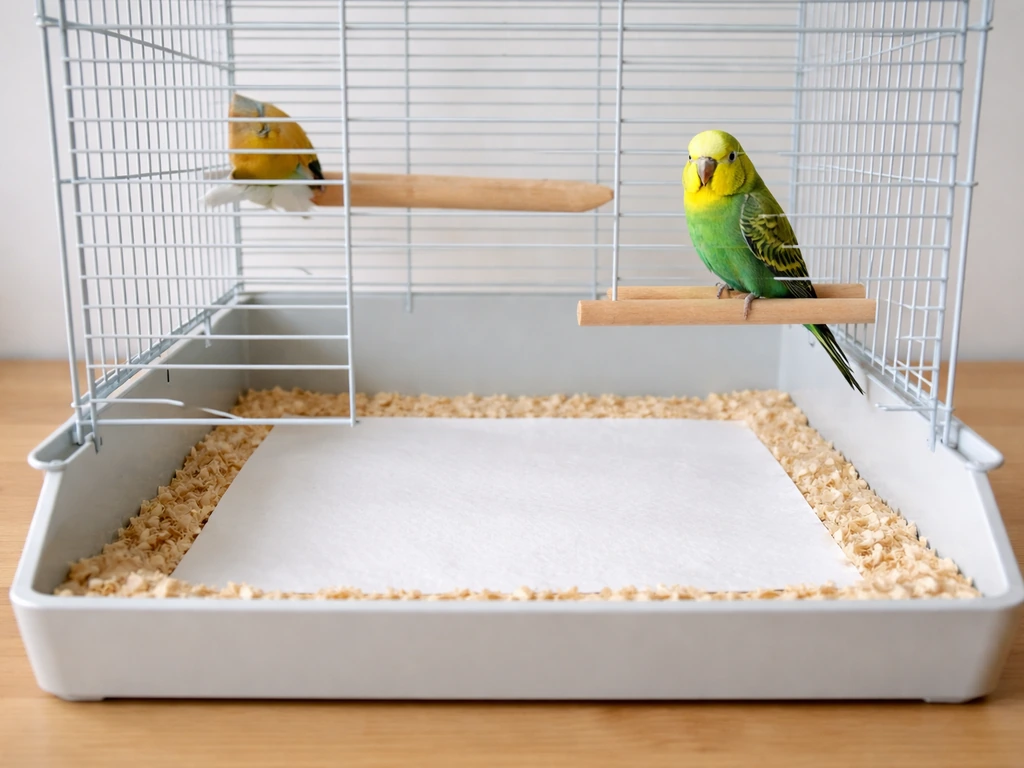
Can You Train a Bird to Poop in One Spot? How-To
Yes with limits. Step-by-step potty training teaches birds to poop in one spot using cues, timing, and positive reinforc
How to Teach a Bird to Fetch Step by Step Guide
Humane, step-by-step training to teach your bird to fetch safely, with targets, rewards, troubleshooting, and gradual re