Yes, you can train a bird to poop in one spot, and plenty of bird owners do it successfully. The honest answer, though, is that it is partial control, not total control. Birds poop roughly every 20 minutes on average, they have no bladder or sphincter control the way mammals do, and that biological reality sets the ceiling on what training can achieve. What you are really teaching is a strong habit and a cue-response association: your bird learns that when you bring it to a specific spot and give a verbal cue, that is the time and place to go. Done right, it dramatically cuts down on random messes without putting any harmful pressure on the bird.
Can You Train a Bird to Poop in One Spot? How-To

Maya Harris
6 Apr 2026
Is it actually possible to train a bird to poop in one spot?
The short answer is yes, with realistic expectations. Bird potty training works through positive reinforcement: you build a strong association between a location, a cue word, and the act of eliminating. Over time, many birds reliably go on cue when brought to the target spot. However, because birds eliminate so frequently and cannot physically hold it for long stretches, you should think of this as "mostly reliable" rather than "100% accident-free." If you search around for information on whether you can train a bird not to poop everywhere, you will find that the answer is the same: yes, with consistency and realistic goals.
The biggest risk to avoid is training that encourages a bird to hold its droppings for long periods. Repeated straining and withholding can contribute to cloacal prolapse, a serious medical condition where tissue protrudes from the vent. The Merck Veterinary Manual also notes that cloacal prolapse risk is linked to frequent straining and withholding, including a tendency to hold feces in the vent for prolonged periods such as overnight rather than defecating normally repeated straining and withholding can contribute to cloacal prolapse. This is not a theoretical risk: avian vets see it, and it is one reason why "just wait until we get to the perch" is not a good training philosophy. Your goal is to bring the bird to the spot frequently enough that it never has to hold it at all.
Setting up the right environment and routine
Before you run a single training session, get your environment and daily schedule sorted. The training only works if the setup makes it easy for the bird to succeed and for you to be consistent.
Choosing your target spot
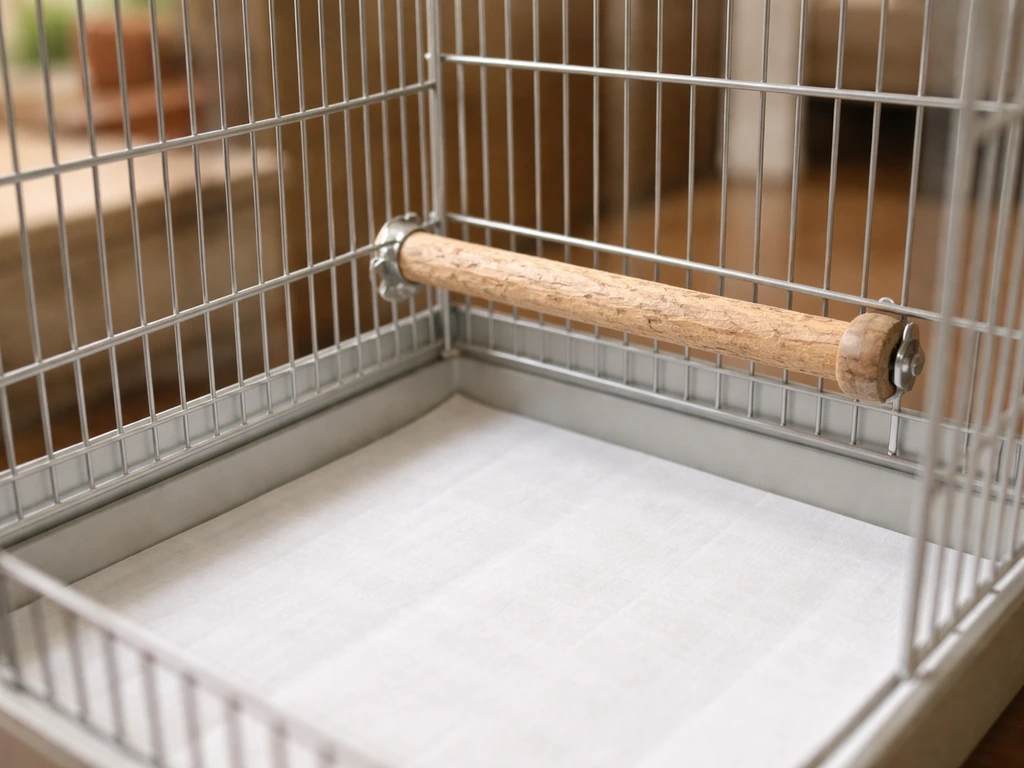
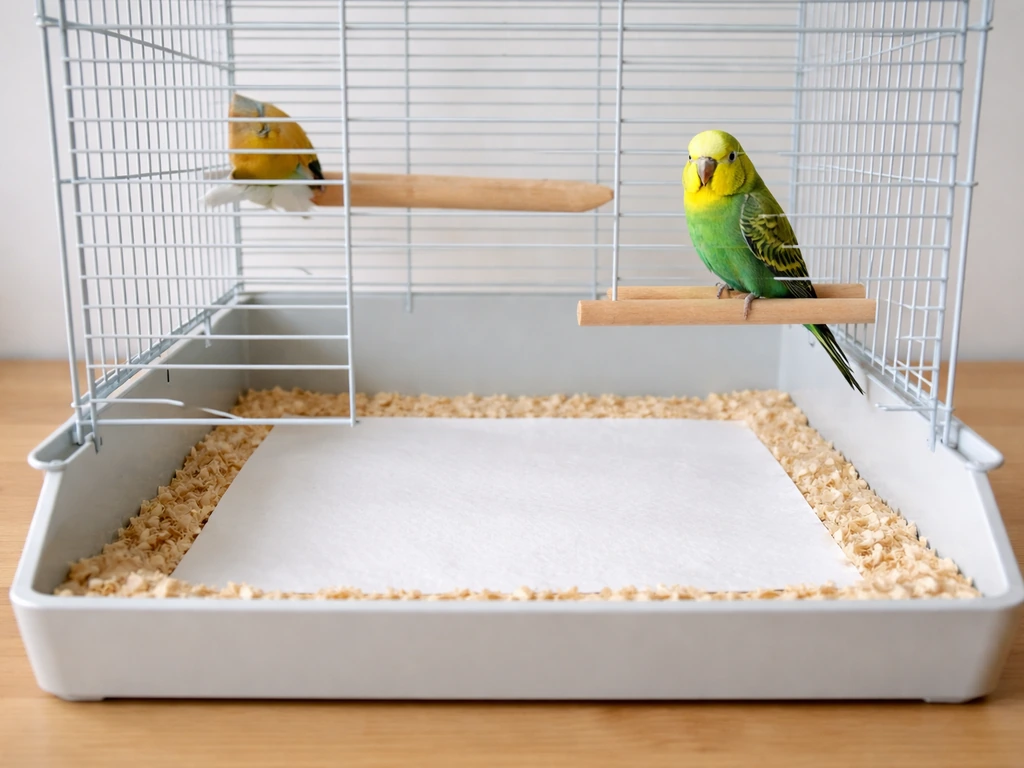
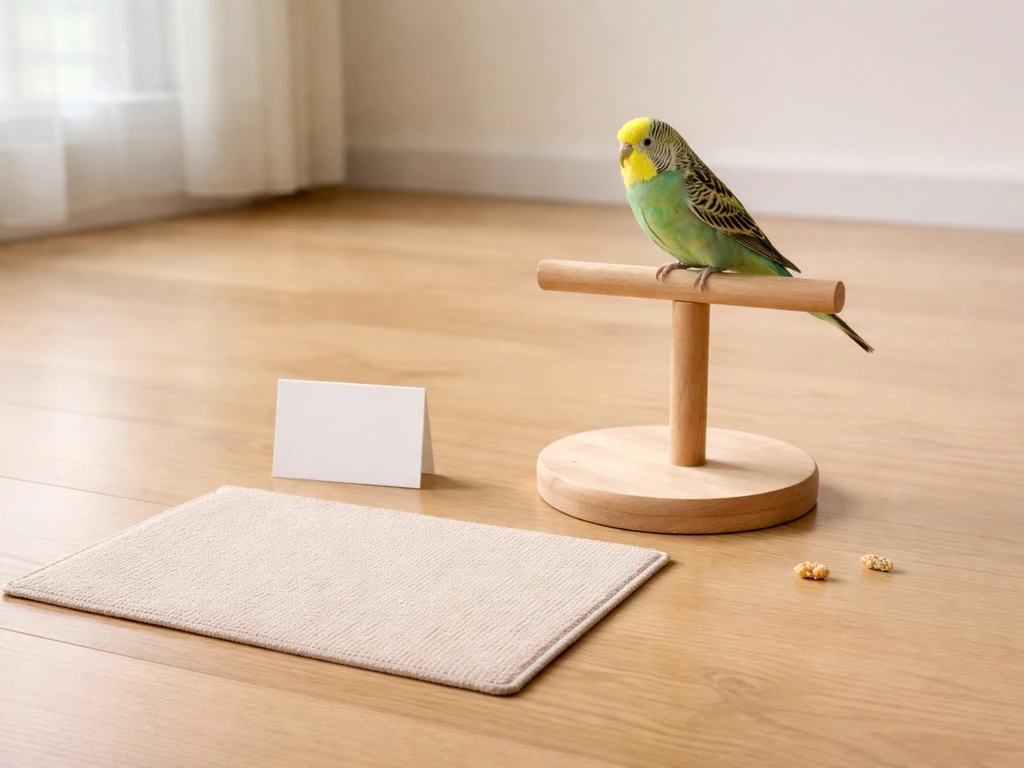
Pick one or two fixed spots that make practical sense for your household: a designated perch over a lined tray, a specific corner of the cage, a t-stand with a tray beneath it, or a small waste basket lined with paper. The spot should be somewhere you can take the bird quickly and repeatedly throughout the day. Avoid soft furniture and carpeted areas for your training zone. Put newspaper, paper towels, or a dedicated liner underneath so cleanup is instant. This is the "target area" your bird will learn to associate with going.
Building a predictable schedule
Because birds eliminate roughly every 20 minutes, build a loose schedule around that window. The most productive moments to bring your bird to the spot are: right after it wakes up, within a few minutes of eating or drinking, after a play session, before and after handling, and any time you notice pre-poop body language (tail bob, slight squat, shifting weight, or a brief stillness). Keeping a simple log for two or three days before you start training tells you your individual bird's personal rhythm, which is almost always more reliable than the 20-minute average.
Cage hygiene is a separate but related concern. Droppings accumulate fast, and the cage itself should be cleaned daily (food bowls, water bowls, cage floor) and given a full scrub-down with non-toxic disinfectant and hot water at least once a week. Clean cages reduce disease risk, minimize odors, and give you a clear picture of your bird's normal dropping patterns, which matters if something changes health-wise.
Step-by-step training plan
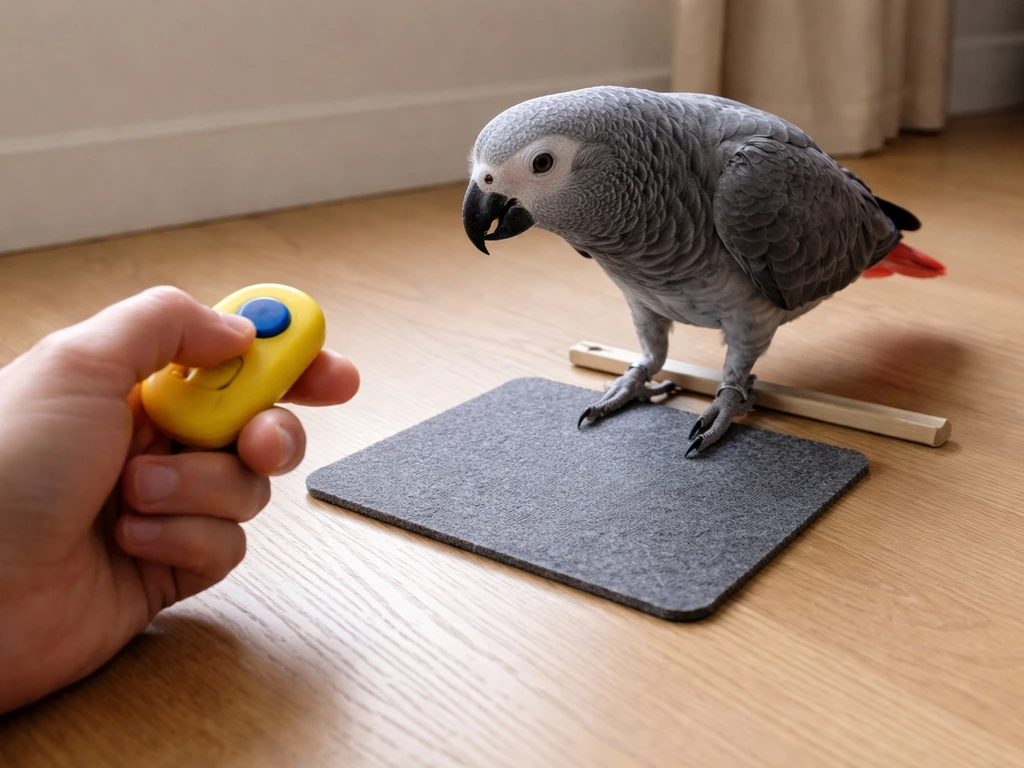
This plan uses positive reinforcement and a marker signal (a clicker or a short verbal word like "yes"). It works for most companion birds with some patience and consistency. If you want a broader framework for this kind of behavioral work, it helps to understand how house training a bird generally compares to other forms of indoor bird management, since the principles overlap significantly.
- Pick your marker. Decide whether you will use a clicker or a short verbal marker like "yes" or "good." The marker must be delivered the instant the bird eliminates at the target spot, before the treat arrives. This precise timing is what tells the bird exactly which behavior earned the reward.
- Identify your bird's pre-poop signals. Spend two to three days watching and logging. Most birds give a slight tail bob, a brief still pause, or a small squat just before going. These signals are your cue to move.
- Bring the bird to the target spot. As soon as you see the pre-poop signal, or at a scheduled interval, move the bird calmly to the designated area. Place it on the perch or spot and wait quietly. Do not rush or force it.
- Give a consistent cue word. Say your chosen word softly and clearly: "go poop," "go potty," or whatever phrase you will use every single time. Keep the word consistent across every person in the household.
- Mark and reward immediately. The instant the bird eliminates, click or say "yes" right away, then deliver a small, high-value treat. Timing is everything here. A delayed reward teaches the wrong thing.
- Return the bird to its activity. After the reward, calmly return the bird to play, perching, or wherever it was. The whole trip to the target spot should feel routine and positive, not like an interruption.
- Repeat at every natural opportunity. Hit every post-waking, post-eating, and pre/post-handling moment you can. The more repetitions in the early days, the faster the association builds.
- Fade the treat gradually. Once the bird is going reliably on cue at the spot, you can reward intermittently rather than every single time. Keep the cue word and the praise consistent even after you reduce treats.
- Add distance over time. Once the behavior is solid at close range, practice calling the bird to the spot from a short distance or having it fly to the target perch on cue. This is advanced work and takes weeks of foundation first.
Keep sessions short and frequent rather than long and occasional. Five minutes of focused practice spread through the day beats a single 30-minute marathon. Watch your bird's body language throughout: relaxed feathers, calm posture, and willingness to interact mean you are in good shape. If the bird fluffs up defensively, tries to flee, or stops eating treats, that is a signal to slow down, reduce the distance, and make the training feel easier.
How this works differently by species and situation
Not all birds respond the same way, and the training approach needs to match the species, the individual bird, and its relationship with humans. The question of whether you can litter train a bird gets asked a lot, and the species differences are a big part of why results vary so much from one household to the next.
Parrots and larger companion birds
Parrots (African Greys, Amazons, cockatiels, budgies, conures, cockatoos, and similar species) are the most trainable candidates. They are intelligent, food-motivated, socially bonded to their owners, and capable of learning complex cue-response chains. Target training is generally an easy first behavior for these birds, which is exactly why potty training builds so naturally on top of it. Larger parrots like Amazons and African Greys often pick up the poop cue within a few weeks. Smaller birds like budgies and cockatiels can also learn it, but their small bodies and faster metabolism mean they go more frequently, so you need more repetitions and tighter timing.
Finches, canaries, and other hands-off species
Finches and canaries are not typically hand-tame and do not tolerate close physical handling the way parrots do. For these birds, trying to physically move them to a target spot for potty training is stressful and counterproductive. The better approach is environmental management: line the cage floor well, use cage skirts or strategically placed trays under favorite perching spots, and accept that cue-based potty training simply is not appropriate for these species. Their welfare has to come first.
Rehabilitated or semi-wild birds
If you are working with a bird in a rehabilitation context, the priorities are completely different. Rehabbed birds are not being trained as companions, and conditioning them to seek out or respond to human cues can actually harm their chances of successful wild release. Potty training is not appropriate for these birds. Focus entirely on minimizing handling, maintaining enclosure hygiene (removing waste frequently to prevent disease and pest issues), and reducing stress. If a bird in your care is showing abnormal droppings or vent issues, contact a licensed avian vet immediately rather than adjusting any training plan.
| Bird Type | Trainability for Potty Spot | Best Approach | Realistic Outcome |
|---|---|---|---|
| Large parrots (Amazons, Greys, cockatoos) | High | Cue-based positive reinforcement, clicker/marker | Reliable on cue within a few weeks to months |
| Medium parrots (cockatiels, conures) | Moderate to high | Same cue-based approach, shorter intervals | Good reliability, needs more frequent trips |
| Budgies/parakeets | Moderate | Cue-based, high repetition needed | Partial reliability; size means frequent eliminations |
| Finches and canaries | Not recommended | Environmental management only | Tray/liner placement reduces mess without training |
| Rehabilitated/wild birds | Not appropriate | Enclosure hygiene management only | No potty training; minimize handling entirely |
When things go sideways: troubleshooting common setbacks
Setbacks are normal. Every bird has off days, and even well-trained birds occasionally miss the mark. Here is how to handle the most common problems without losing progress.
The bird goes right after you take it away from the spot
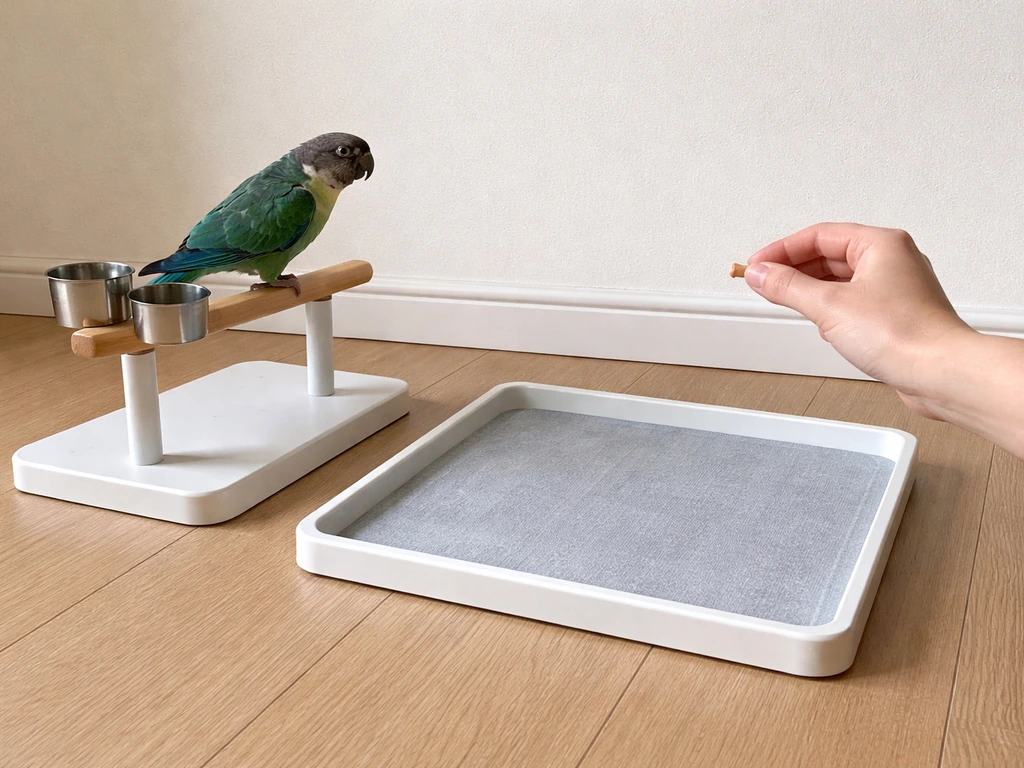
This is the most common frustration. It usually means your timing is slightly off: you brought the bird to the spot, waited, gave up just before it was ready, and then it went somewhere else 30 seconds later. The fix is to extend your wait time by 30 to 60 seconds before giving up on a session. Also revisit your pre-poop signal log. If the bird consistently goes two minutes after eating rather than one minute, adjust your schedule accordingly.
The bird refuses to go on cue
Some birds simply need more time to build the association. If you have been consistent for two weeks and getting almost no on-cue eliminations, check a few things: Is the target spot comfortable and accessible? Is the treat genuinely high-value enough to motivate your bird? Are you marking the behavior with precise timing? Sometimes the spot itself feels unfamiliar or slightly threatening. Try placing the bird there during relaxed, non-training moments to build neutral familiarity before you try to cue elimination again.
Backsliding after initial success
A bird that was doing well and then stops is usually responding to a change in routine, a new stressor (new pet, rearranged furniture, schedule shift), or illness. Rule out illness first: if droppings look different in color, consistency, or frequency for more than 24 hours, or if the bird is straining, lethargic, not eating, or shows any swelling or protrusion around the vent, contact an avian vet promptly. Those are medical signals, not training problems. If the bird is healthy, go back to basics: shorter intervals, higher rewards, and rebuilding the association from step one.
Accidents happen: what to do right now
When an accident happens outside the target spot, clean it up calmly and without reaction. Do not scold the bird. Birds do not connect after-the-fact scolding with the eliminated dropping; they connect it with your frightening behavior, which damages trust and slows training. Just clean it, mentally note the timing, and adjust your next session accordingly. Keep paper towels and a bird-safe cleaner within reach in the areas where your bird spends time.
Keeping it humane: welfare-first principles for this kind of training
This type of training is completely humane when it is done correctly, but a few principles are worth keeping front of mind throughout the process. Some bird owners get interested in teaching behavioral chains after they explore more general skill-building like training a bird to find money or training a bird to collect money, which shows just how capable these animals are when motivation and timing are right. Potty training follows the same principles: positive reinforcement, clear cues, and attention to body language.
- Never punish accidents. Negative reactions create fear, not learning, and will make your bird less willing to work with you.
- Never restrict food or water to make treats more motivating. Use a preferred treat (a small piece of fruit, a seed, a bit of millet) that is separate from the bird's regular diet.
- Never try to make a bird "hold it." Training should work with the bird's natural elimination frequency, not against it. Encouraging withholding risks cloacal prolapse and other health problems.
- Always read body language. Relaxed feathers, calm posture, and food acceptance mean you are on track. Fluffed feathers, escape attempts, or refusal of treats mean back off and make things easier.
- Keep sessions short. Two to five minutes of focused, positive interaction is better than a long session that exhausts or stresses the bird.
- Watch for health signals. Changes in droppings, straining, weakness, reduced appetite, or any vent abnormality should go to an avian vet, not a training plan adjustment.
Potty training works best when it is embedded in a generally positive, trust-based relationship with your bird. The same attention to body language, the same consistent rewards, and the same respect for the bird's pace that make any other training succeed are exactly what make this work too. Start with the schedule, watch the signals, and build up the cue-response chain one repetition at a time. Most motivated parrot owners start seeing real progress within two to four weeks of consistent daily practice.
FAQ
How do I choose the best “one spot” for my bird if it keeps avoiding the target area?
Pick a location the bird already prefers to perch or spend time near, then place the tray lined with paper at that same height and distance. If you move the target too far from the bird’s normal routine, you’ll trigger avoidance. Also avoid placing the tray next to sudden noises or high-traffic routes, because many birds only eliminate when they feel secure.
What cue should I use, a sound word, a clicker, or both?
Use one consistent cue for “go” and one consistent marker for “good.” For example, a short word like “potty” as the cue, then clicker or “yes” at the exact moment droppings start. If you only reward after the bird finishes walking away, the bird may learn the wrong association.
My bird sometimes eliminates while stepping onto the target. Should I still reward immediately?
Yes. Reward at the moment elimination begins, not after the bird is done or after you move it off the spot. That timing prevents the bird from learning a competing behavior like waiting to eliminate until you remove it.
How long should each training attempt last before I try again later?
Aim for brief, repeated attempts. If your bird shows clear pre-poop body language, stay calm and wait long enough for that typical window (often up to an extra 30 to 60 seconds beyond your first estimate). If there is no pre-poop signal and the bird seems restless, end the session and try again at the next likely elimination window rather than prolonging stress.
Should I limit food or water to control when my bird poops?
No. Do not restrict water or intentionally delay feeding to force elimination. Instead, build your schedule around natural timing, and use reminders like “right after eating” or “after drinking” to bring the bird to the spot at predictable moments. Restriction can cause stress and can contribute to constipation.
Can I train a single bird to use one spot for the whole day, or should I have backup trays?
A single spot is fine for most households, but many owners keep one primary spot plus a secondary lined option nearby for convenience. Backup trays reduce accidents when you cannot get to the exact target in time, and they still reinforce the overall cue-response routine.
What if my bird keeps missing the spot and goes to a nearby corner instead?
That nearby corner is often part of the bird’s natural elimination zone. Consider shifting the tray slightly toward where the bird goes, keeping the cue the same. Another approach is to temporarily place a second liner in the corner, then later transition it closer to your chosen target once accuracy improves.
How do I tell normal training misses from a potential medical issue?
Watch for changes that persist beyond a day, like a sudden shift in color, abnormal consistency, straining, lethargy, reduced appetite, or any vent swelling or discharge. One accident during training can be normal, but repeated straining or vent abnormalities are not training setbacks. If those signs show up, contact an avian vet right away.
Is scolding ever useful when the bird poops outside the tray?
No. Reaction can teach fear or disrupt trust, and the bird may avoid the target because it associates your presence with a negative moment. Instead, clean calmly, do not add verbal punishment, and adjust your timing so the next attempt aligns with your bird’s pre-poop signals.
How should I clean accidents to avoid the bird returning to the same place?
Remove the mess promptly and use a bird-safe cleaner. After cleaning, briefly avoid reintroducing the bird to that exact spot until the scent is fully gone, because many birds develop a learned preference for elimination areas that still smell faintly like waste.
Will potty training work for birds other than parrots, like finches or canaries?
For finches and canaries, physical handling to move them to a spot is usually stressful and undermines the goal. The more effective approach is environmental management, like lining perches and using cage skirts or trays under favorite areas, then accepting that cue-based “take me there” training is not typically appropriate for their welfare.
Can I potty train a rescue or rehabbed bird?
Usually not as a companion-style cue training. Rehabbed birds should prioritize low handling and low cue-conditioning to avoid interfering with their intended rehabilitation or release plans. Focus instead on hygiene, frequent enclosure waste removal, and reducing stress, and follow the guidance of the rehabilitation team.