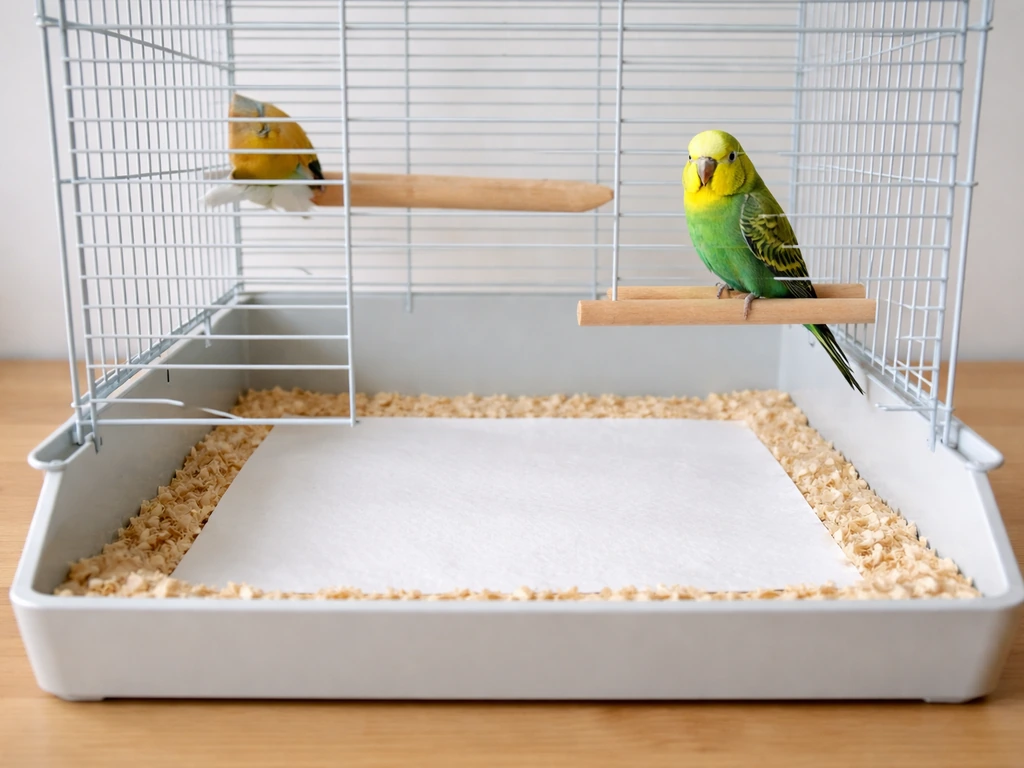
Yes, you can house train a bird, but it works differently from training a dog or cat. You are not teaching your bird to "hold it" until you say so. What you are actually doing is learning your bird's natural elimination rhythm, setting up a target spot, and reinforcing the habit of being in that spot at the right time. Most pet birds, especially parrots, cockatiels, and budgies, can learn to use a designated bathroom area most of the time with consistent, welfare-first training. It takes patience and a realistic mindset, but it is absolutely achievable.
Can You House Train a Bird? Humane Steps and Tips

Maya Harris
11 Apr 2026
What 'house training' actually means for a bird
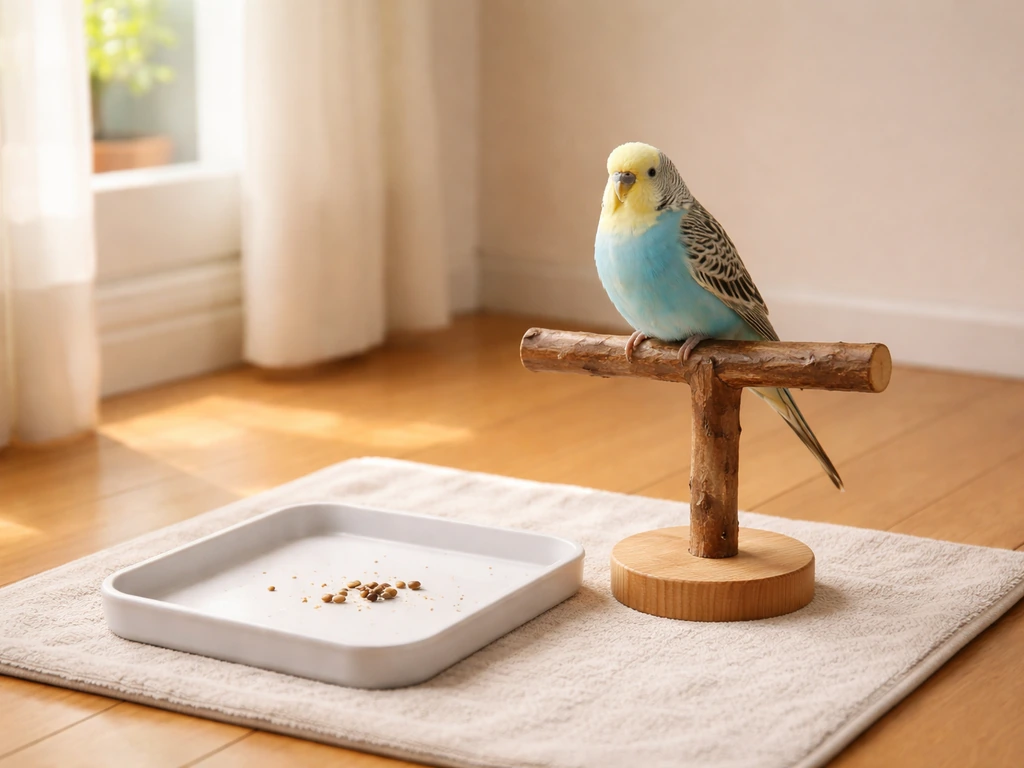
In the dog world, house training means the animal eliminates in one approved spot instead of randomly around the home. For birds, the concept is the same in principle, but the biology is different. Birds eliminate through a single opening called the cloaca, which combines feces, urates, and urine into one dropping every time. There is no separate bladder to "hold" the way a mammal does. What you can realistically shape is location preference: through management, routine, and positive reinforcement, your bird learns that the designated spot is where good things happen right after a natural drop.
A practical way to think about it: you are not commanding defecation. You are conditioning a voluntary pattern. The bird still eliminates on its own timetable, but you are stacking enough repetitions in the right environment that the designated spot becomes the bird's go-to location most of the time. If you have ever wondered whether you can litter train a bird the way you would a cat, the short answer is: not exactly, but you can get surprisingly close with the right approach.
Why birds eliminate where and when they do
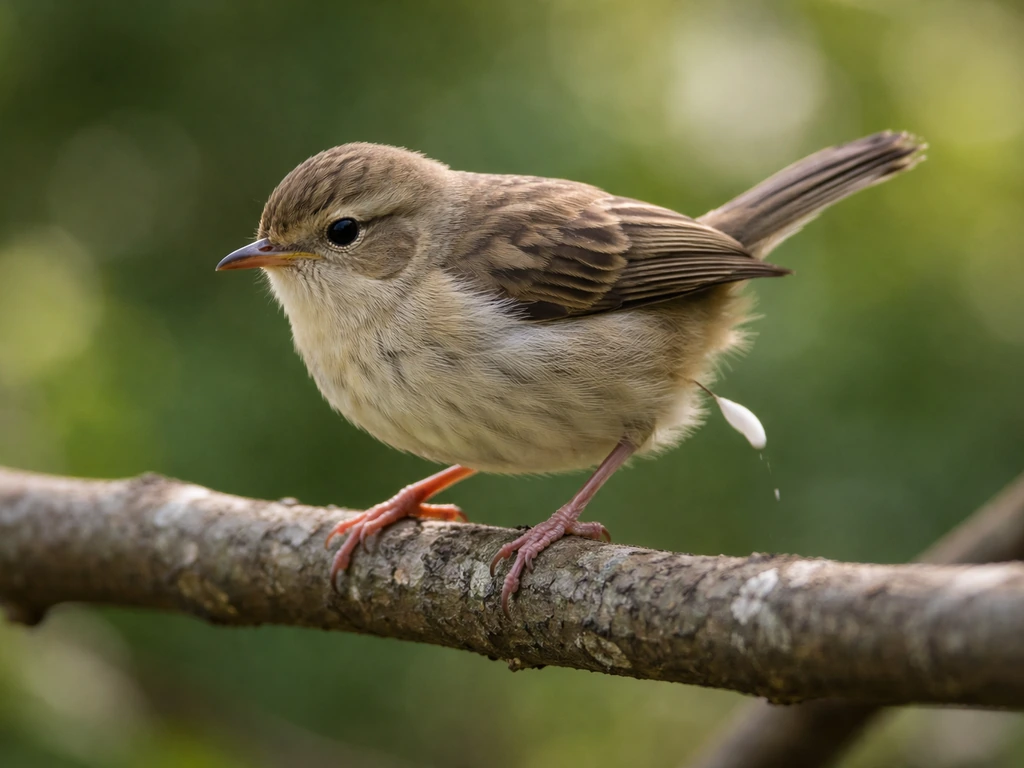
Understanding your bird's elimination biology is the foundation of any training plan. Birds have fast metabolisms, so they eliminate frequently, typically every 15 to 30 minutes depending on species and body size. Larger parrots tend to go less frequently than small birds like budgies or finches. The most predictable windows are right after waking up and shortly after eating, which gives you built-in training opportunities you can use from day one.
Before a bird eliminates, many species show subtle body cues: a slight squat or lowering of the tail, a brief pause in activity, a widening of the vent area, or a light bob. These cues are easiest to notice in calmer, bonded birds. Once you start watching for them, you will catch most drops before they happen, which is exactly what you need for timing-based training. Stress, overstimulation, and illness can disrupt this rhythm entirely, which is worth keeping in mind when troubleshooting.
Step-by-step bathroom spot training plan
This plan works for most companion birds. Go at your bird's pace, keep sessions short (5 to 10 minutes maximum), and never force or punish. All reinforcement should be immediate (within 1 to 2 seconds of the desired behavior) to be effective.
- Choose one primary bathroom spot: a perch, stand, or tray placed in a consistent, easy-to-clean location. A simple wooden perch over a small tray lined with paper works well and costs almost nothing.
- Track your bird's natural elimination timing for 2 to 3 days. Note the clock time after waking and after each meal. Most birds are consistent within a few minutes.
- Teach a target behavior first. Hold a target stick (a chopstick or wooden dowel works fine) near the designated spot and reward your bird with a small treat or verbal praise the moment it touches or approaches the target. This is called target training, and it gives you a reliable way to station your bird near the bathroom spot without coercion.
- Use your timing windows. At the times you have tracked as likely elimination moments, cue your bird to the designated spot using the target. Stay calm and patient. Wait. If the bird eliminates while on or near the spot, mark it immediately with a clicker or a consistent word like 'good' and offer a reward.
- Add a verbal cue gradually. Once your bird is reliably eliminating on the spot during training windows, begin saying a short phrase like 'go potty' just before the typical drop moment. Over many repetitions, the bird may begin to associate the cue with the behavior, though full on-cue reliability is rare and should not be the primary goal.
- Keep the spot clean. Fresh paper or a washable liner replaced daily keeps the bird willing to use the spot and makes hygiene easy.
- Expand the routine over time. Once the designated spot becomes a habit during supervised out-of-cage time, you can begin managing free-flight sessions around the same rhythm.
Setting up your home for success
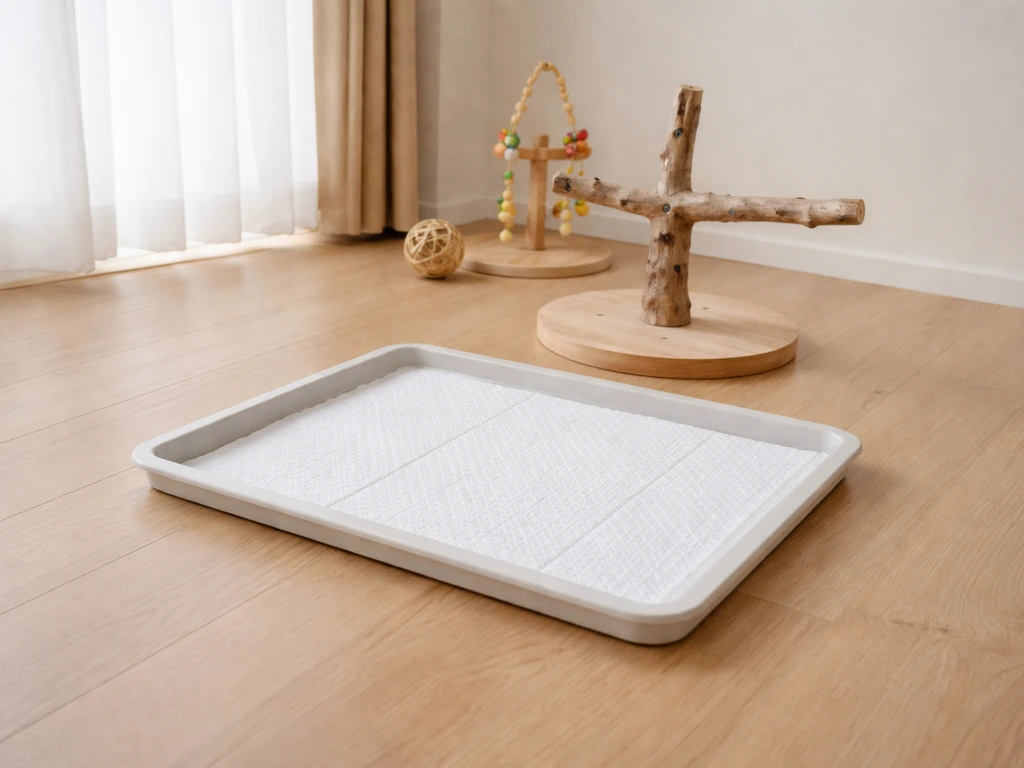
The physical environment does a lot of the work in house training. Placement of the designated spot matters: it should be somewhere your bird already likes to perch or land during out-of-cage time, not somewhere unfamiliar or isolating. A perch stand near your usual activity area (living room, home office) works better than a hidden corner. Put a washable liner or a few layers of paper under and around the spot so cleanup is quick and stress-free.
If your bird is flighted, flight management during training is important. You do not need to clip wings to house train, but limiting free-roam to one room at a time while your bird is learning helps keep accidents contained and makes it easier for you to direct the bird back to the bathroom spot on schedule. As the habit solidifies, you can expand access room by room.
Cleaning products deserve serious attention here. Birds have extremely sensitive respiratory systems, and many common cleaners, including bleach, ammonia-based sprays, and aerosol disinfectants, can cause respiratory distress or poisoning even in brief exposures. Always move your bird to a separate, well-ventilated space before cleaning any surface, and use bird-safe cleaners (diluted white vinegar or enzyme-based pet cleaners) for routine spot cleanup. Let all surfaces dry and air out before bringing your bird back. This is not an area to cut corners.
Reinforcement that works, and what to do when things go sideways
Positive reinforcement is the only tool you need here. The moment your bird lands on or near the designated spot and eliminates, reward it. Small food treats work well for most parrots. For birds less motivated by food, vocal praise and a brief head scratch (if the bird enjoys contact) can be just as effective. The key is that the reward happens immediately and consistently. If you miss the timing window by more than a second or two, the reinforcement loses its meaning.
When accidents happen elsewhere (and they will), your response is simple: say nothing, clean it up calmly, and move on. Scolding or showing frustration teaches the bird that eliminating near you is dangerous, which will make it hide the behavior and make training harder. A missed drop is just information, not a failure. It tells you that your timing was off or the bird had an unexpected elimination window you had not mapped yet.
If your bird consistently refuses the designated spot, revisit the setup. Is the perch stable and comfortable? Is the spot too close to a high-traffic area or a frightening stimulus? Is the bird associating the spot with something negative? Sometimes relocating the perch by just a few feet makes a big difference. You can also review the broader challenge of how to train a bird not to poop everywhere if random-location accidents are your main frustration, as some of those strategies pair well with spot training.
For birds that seem to eliminate constantly and unpredictably, first rule out a health issue (more on that below). If the bird is healthy, the issue is usually that the training windows are not tightly enough matched to actual elimination timing. Go back to your observation notes and look for patterns you may have missed, such as post-play drops or stress-triggered eliminations.
How to adapt this for different species and situations
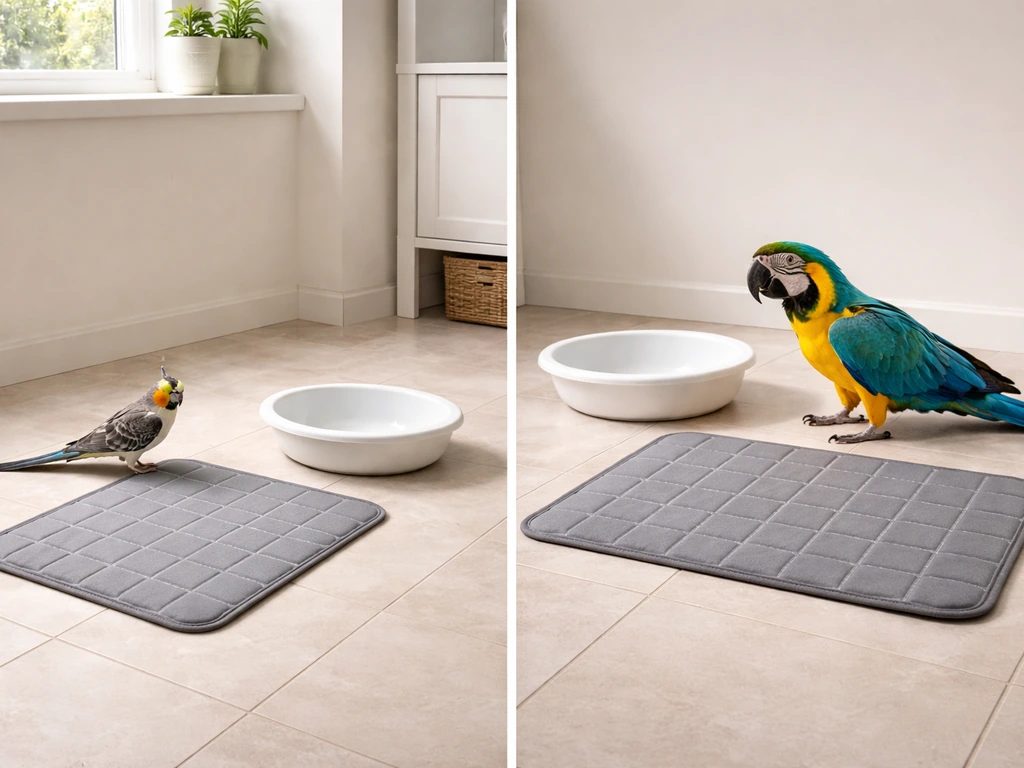
Parrots (African Greys, Amazons, Conures, Cockatiels)
Larger parrots are generally the easiest birds to house train because they are highly responsive to targeting and reinforcement, and their elimination intervals are long enough (20 to 30 minutes or more in some larger species) to give you clear training windows. Cockatiels fall in the middle: they are smart, trainable, and bond well to routines, but they eliminate more frequently than large parrots. Conures tend to be expressive and enthusiastic, which helps training, but they can also be easily overstimulated, so keep sessions calm. The targeted approach to training a bird to poop in one spot works particularly well for parrot-family species because they already understand targeting as a communication tool.
Budgies, finches, and canaries
Small birds present more of a challenge for spot training. Their elimination intervals can be as short as 10 to 15 minutes, and they are generally less motivated by deliberate interaction with humans compared to parrots. Full spot training is harder to achieve with finches and canaries, and most owners find that management (keeping these birds in large, well-lined cages with short supervised out-of-cage sessions) is more practical than formal bathroom training. Budgies are smarter and more social than finches, and some individuals do learn a loose bathroom routine, but expectations should be lower than with parrots.
Wild or rehabilitated birds
If you are working with a wild or rehabilitated bird, the training conversation is very different. For rehabilitators, the goal is never full domestic house training. It is safe containment, minimal handling stress, and cooperative behaviors that support health checks and eventual release. Elimination training is largely irrelevant in a rehab context, and any unnecessary conditioning can reduce the bird's natural wariness needed for survival post-release. Legal considerations also apply: in most countries, keeping wild birds without a permit is illegal, so if you are in a rehab role, you are operating under regulatory oversight that shapes what training is even appropriate. The welfare-and-release framework is always the priority.
| Species Group | Training Ease | Elimination Frequency | Best Approach |
|---|---|---|---|
| Large parrots (African Grey, Amazon, Macaw) | High | Every 20-40 min | Full spot training with target + cue word |
| Cockatiels | Moderate-High | Every 15-25 min | Spot training with consistent routine windows |
| Conures | Moderate-High | Every 15-25 min | Spot training; keep sessions calm to avoid overstimulation |
| Budgies | Moderate | Every 10-20 min | Partial spot training; management-heavy approach |
| Finches and canaries | Low | Every 10-15 min | Management (lined cage) + short supervised sessions |
| Wild/rehabilitated birds | Not applicable | Varies | Containment and cooperative handling only; no elimination training |
When the real issue is health or stress, not training
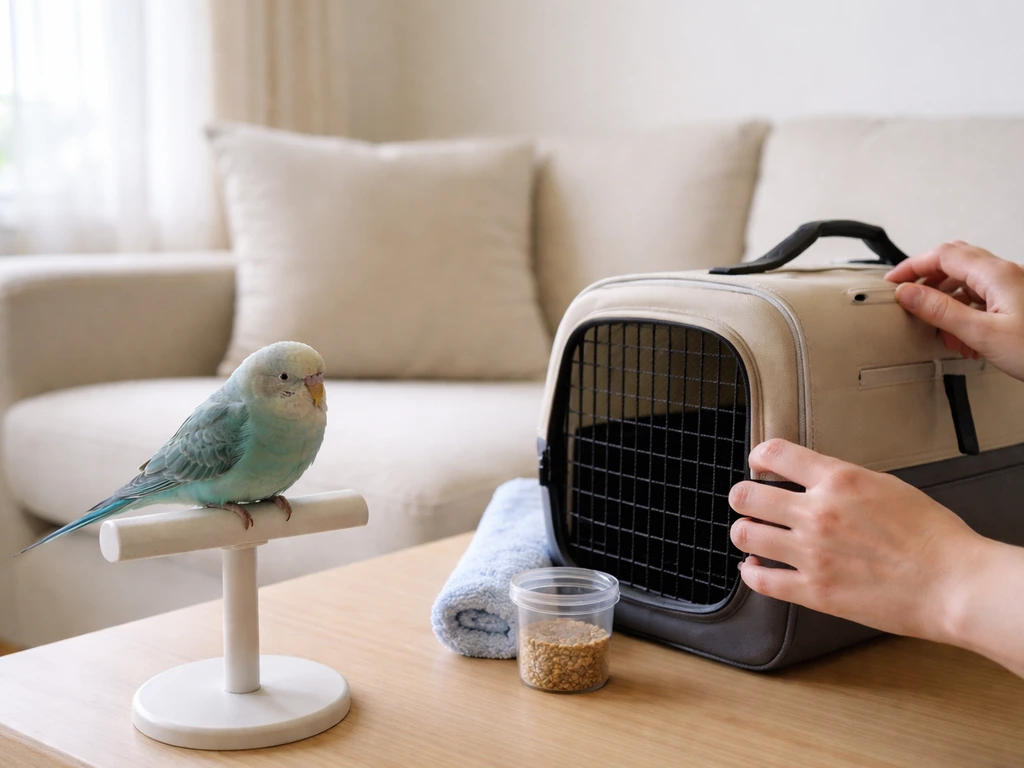
If your bird's elimination pattern suddenly changes, or if training is not progressing despite consistent effort, health is the first thing to consider. Birds are famously good at masking illness, and by the time symptoms are obvious, a problem can be quite advanced. Changes in droppings (color, consistency, frequency, smell) are often the earliest signal that something is wrong internally. Loose or watery stools, unusually dark or bright-colored urates, or a sudden increase in accident frequency are all reasons to pause training and schedule a vet check.
There are specific red flags that require a vet call the same day, not a "wait and see" approach. These include your bird straining visibly but unable to produce any droppings, vent swelling or prolapse, blood in the droppings, or signs of significant pain or lethargy paired with elimination changes. Straining without output can indicate cloacal inflammation, reproductive issues, a mass, or a digestive obstruction, and pushing training in that context is not only ineffective, it is actively unsafe.
Stress is the other major confound. A bird that is going through a hormonal cycle, adjusting to a new home, or reacting to a recent change in routine may show dramatic changes in elimination patterns that have nothing to do with training resistance. Hormonal birds can also become territorial around their cage or nesting spots, which can interfere with willingness to use a designated bathroom perch elsewhere. If you notice behavioral changes alongside elimination shifts, give the bird a few days of low-pressure routine before resuming training, and consult an avian vet or certified behavior professional if the changes persist.
Keeping a short daily log of your bird's droppings (appearance, frequency, any anomalies) gives you a baseline that makes it much easier to spot health changes early. This takes about 30 seconds a day and can genuinely save your bird's life down the line. If you are working through more advanced poop-management goals, the detailed breakdown in this guide on training a bird not to poop everywhere also covers how to distinguish training problems from health-triggered accidents.
Realistic goals and long-term success
Most pet parrots and cockatiels with consistent training can reach a point where they eliminate in or near their designated spot 70 to 90 percent of the time during supervised out-of-cage sessions. That is a meaningful improvement over random drops everywhere, and it makes sharing your space with a bird much more enjoyable for both of you. Some highly trained parrots do develop near-complete reliability, but even experienced trainers treat this as a bonus rather than a baseline expectation.
The goal is never perfect compliance. It is a cooperative, low-stress routine that works for your bird's biology and your household. Some owners combine spot training with a broader strategy, taking cues from approaches like those covered in litter training methods for birds, while others keep it simple with a single target perch and a twice-daily routine. Either way, consistency beats complexity every time.
One last thing worth mentioning: some bird owners, especially those with larger parrots, also explore novelty behaviors built on the same targeting and stationing skills used in bathroom training. For example, the foundational target training you build for spot training is the same framework used to teach more complex tasks. If you are curious where those skills can lead, there are whole other directions to explore, including how trainers have taught birds to perform retrieving and exchange behaviors, such as teaching a bird to find money or how others have explored training a bird to collect and return objects. The point is that a bird trained on positive reinforcement basics is a bird you can keep teaching. Start with the bathroom routine, build the bond, and go from there.
FAQ
Can you house train a bird if they are not bonded to you yet?
Yes, but you need to treat it as location shaping, not control of elimination. Plan for frequent, short check-ins (often every 15 to 30 minutes depending on species), and use a consistent cue like “bathroom time” right before the window when your bird usually drops.
What should I do if my bird keeps eliminating away from the bathroom perch?
Expect slower progress and more accidents, then focus on management first. Keep the designated perch stable, reduce new stimuli during sessions, and use the bird’s preferred perch height and closeness to you to make the spot feel safe.
What if my bird only uses the area around the designated spot, not the exact perch?
If the bird eliminates near the perch but not on it, you can still succeed by moving your target a few inches at a time toward the exact landing spot. Reward only when the droppings happen immediately after the desired landing zone.
When are the best times of day to train for bathroom spot use?
Mornings and after meals are best, but you can also target other predictable moments like after play sessions. Keep your log for a week to identify your individual bird’s off-schedule windows (for some birds it is play, for others it is specific foods).
Should I interrupt my bird during an accident to prevent future mistakes?
Do not punish or physically interrupt elimination. If you discover a dropped mess, calmly clean it up and keep training going, then adjust timing and containment for the next window.
Is wing clipping necessary for house training a bird?
You do not have to, and it can be counterproductive if done to force training. Instead, limit free-roam to one room or a contained area while the bird is learning, so accidents are easier to contain and you can redirect at the right moment.
Can I use a tray or must it be a perch?
Sometimes it is easier to train birds to go on a specific landing zone than to a bare “tray.” Use a washable liner under the area, and position the perch so your bird naturally lands there during out-of-cage time.
How do I handle house training when I rearrange furniture or change the cage setup?
Yes, but the routine must stay identical. If you change the designated spot, perch type, or liner thickness, the association can reset, leading to a drop in reliability for several days.
How can I tell when potty issues are a training problem versus a health problem?
If droppings change suddenly, training should pause and you should contact an avian vet. Cloacal straining without output, blood, vent swelling, and significant lethargy are same-day concerns.
Do I need to worry about odor making my bird return to the same accident spot?
Use the same cleaning approach every time: remove the bird to a well-ventilated area before cleaning, avoid fumes, and let surfaces fully dry. Consistent odor removal matters because birds can react to lingering smells and keep returning to the same area.
Is house training realistic for budgies, finches, or canaries?
For most small birds, full “spot reliability” is often unrealistic. Instead, prioritize management (lined cage, short supervised sessions) and aim for consistent containment rather than expecting the same level of bathroom-perch use as larger parrots.
When can I expand my bird’s out-of-cage freedom after they start using the spot?
At the beginning, try keeping a single designated location, then expand access only after the bird is reliably using it during supervised sessions. A good rule is to change one variable at a time, so you know whether reliability drops due to the new access or timing.
Next Article
Can You Train a Bird to Poop in One Spot? How-To
Yes with limits. Step-by-step potty training teaches birds to poop in one spot using cues, timing, and positive reinforc