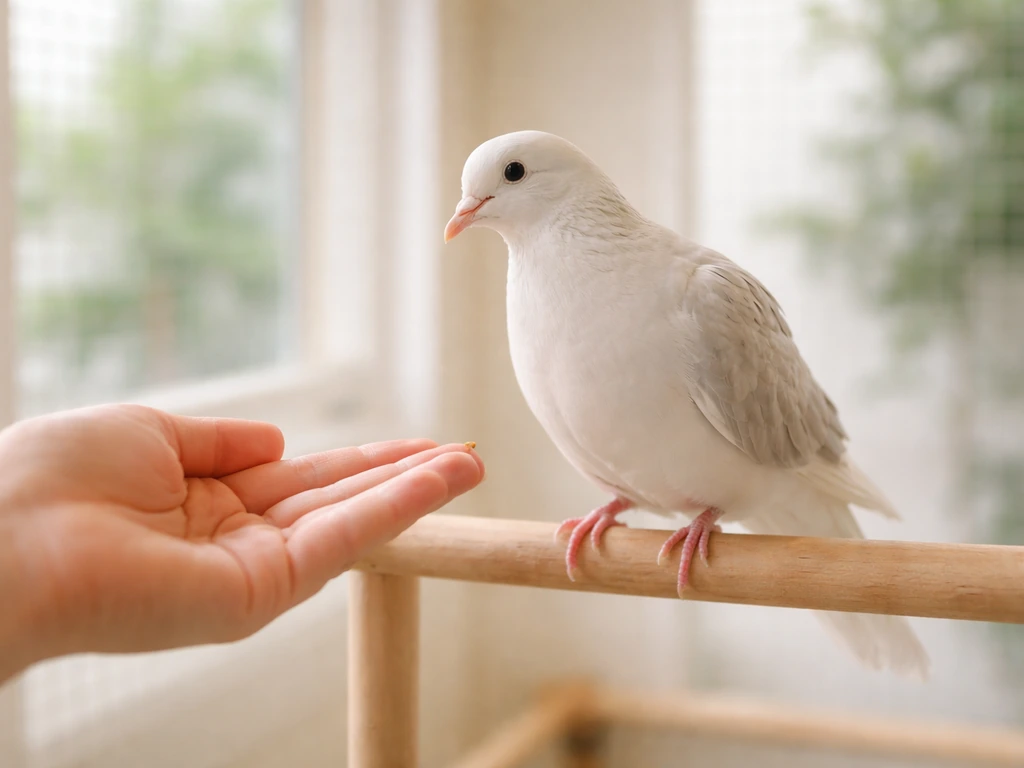
You can start training a lovebird today by sitting quietly near the cage, letting the bird set the pace, and rewarding any calm, curious behavior with a small treat. That one habit, repeated daily for 10 to 15 minutes, is the foundation of everything else: hand-taming, step-up cues, recall, and reducing biting or screaming. The key is patience over force. Lovebirds are small, feisty, and deeply social, and they respond to trust-building far better than to handling they did not consent to.
How to Train a Lovebird: Step-by-Step Bonding Guide
Maya Harris
14 May 2026
Understanding lovebird behavior and readiness
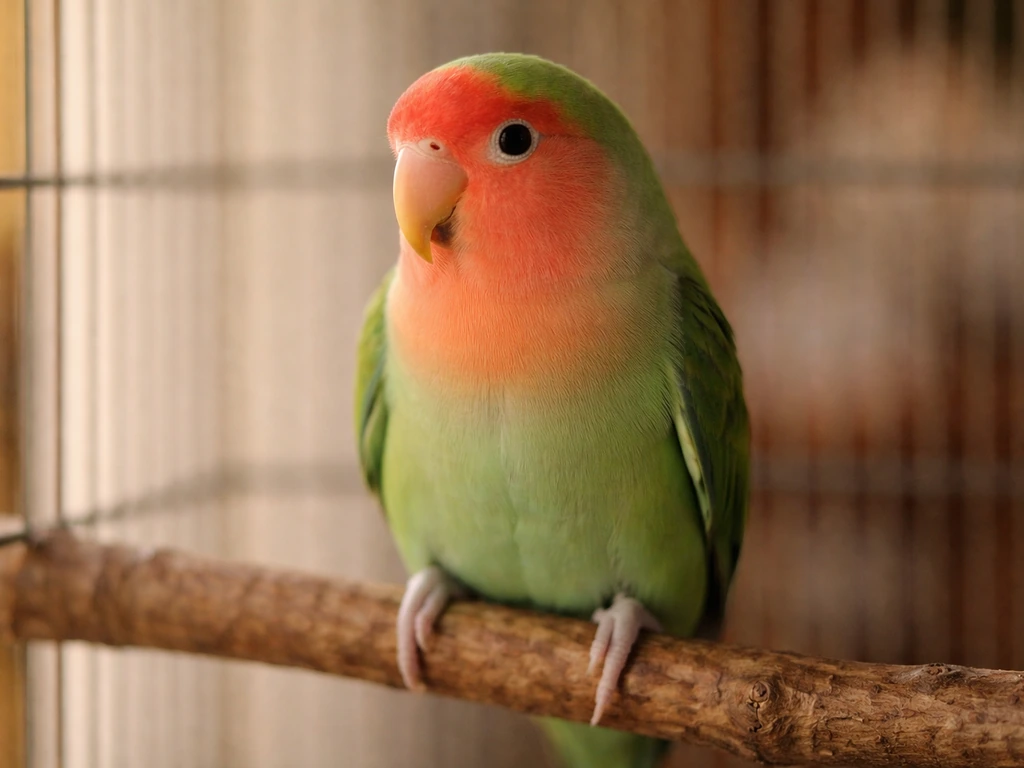
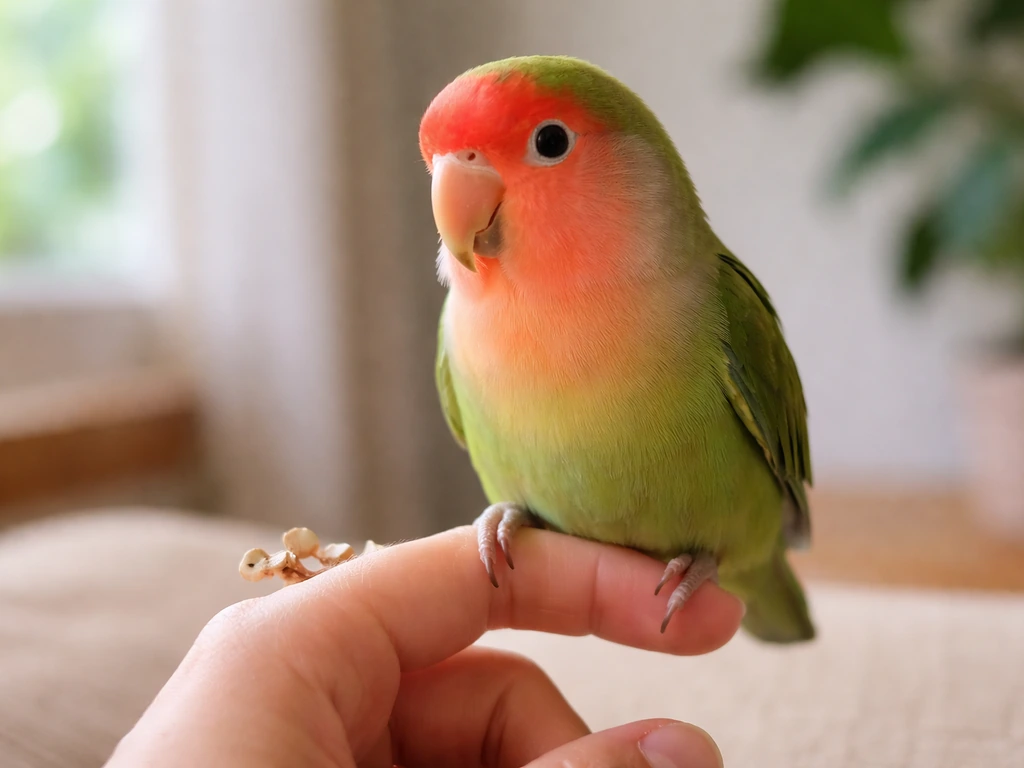
There are nine species of lovebirds in the genus Agapornis, and the one you are most likely working with is the peach-faced lovebird (Agapornis roseicollis), the largest and most commonly kept pet species. Fischer's lovebirds and black-masked lovebirds (both from the 'eye-ring' group) are also popular but tend to run a bit more territorial and reactive, so if you have one of those, expect to move a little more slowly and manage space more carefully during early sessions. Species really does matter here, so knowing what you have helps you calibrate your expectations from the start.
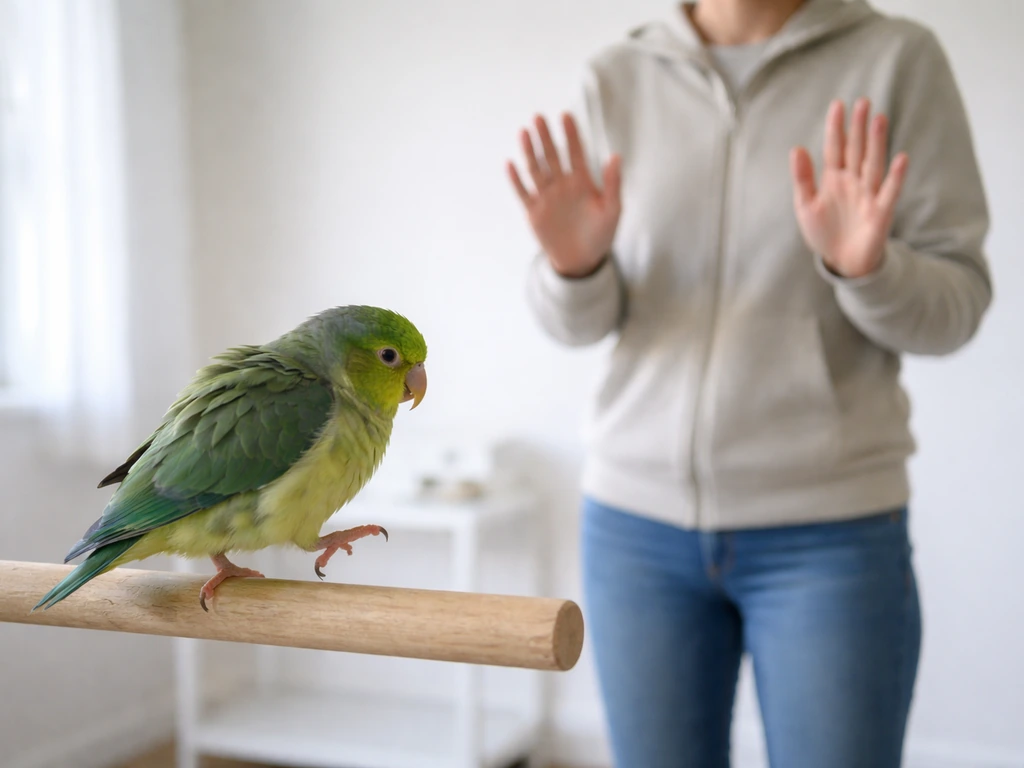
Before you try to touch, handle, or train a lovebird, you need to read what the bird is telling you. A relaxed, ready lovebird will have smooth feathers, relaxed eyes, and will lean toward you or bob its head. A stressed or fearful bird will pin its eyes (pupils rapidly dilating and contracting), fluff or slick its feathers tight, crouch low, open its beak, or lunge. Biting almost always comes with visible warning signs first. If you are seeing those signals and pushing through them anyway, you are not training the bird, you are teaching it that you are a threat.
- Relaxed body: feathers slightly loose, calm posture, curious head tilt toward you
- Ready to engage: moves toward your hand, nibbles gently, vocalizes softly
- Mild stress: feathers slicked tight, body low, watching you intensely but not moving
- High stress or pre-bite: eye pinning, open beak, lunging, hissing or sharp vocalizing
- Stop and back off any time you see high-stress signals — ending on a calm moment is always a win
Peach-faced lovebirds can bond intensely to one person, which is charming until you realize it also means they can be aggressively protective of that bond. If your bird has already bonded to one family member and is aggressive toward others, that is a bonding dynamic issue, not a training failure, and it needs to be addressed with consistent handling by multiple people during the socialization phase, not just corrected after the fact.
Humane bonding setup and handling basics
Set up the environment before you start working with the bird. The cage should be at chest height or slightly below eye level, not above you. Birds placed above human eye level tend to feel dominant and are harder to handle calmly. Put the cage in a room where you spend real time, not a spare bedroom. Lovebirds are flock animals, and passive exposure to your daily presence, talking, cooking, watching TV, builds familiarity before you ever open the cage door.
For a newly acquired bird, give it at least three to five days just to decompress before you start any active handling. During that window, approach the cage slowly, talk in a calm, low voice, and offer treats through the bars. Small pieces of millet spray, apple, or leafy greens work well. The goal is simple: the bird should associate your presence with something good before it has to make any physical contact with you.
When you are ready to handle, work in a small, bird-safe room with windows covered or closed. Remove ceiling fans, mirrors, and open water sources. Start with the cage door open and let the bird come out on its own terms. Never chase, grab, or corner a lovebird, that single experience can set your trust-building back weeks. If you need to retrieve the bird from a perch, approach from below and offer your finger as a gentle, steady surface rather than reaching down from above.
Step-by-step taming plan: hand-feeding, perch training, and recall
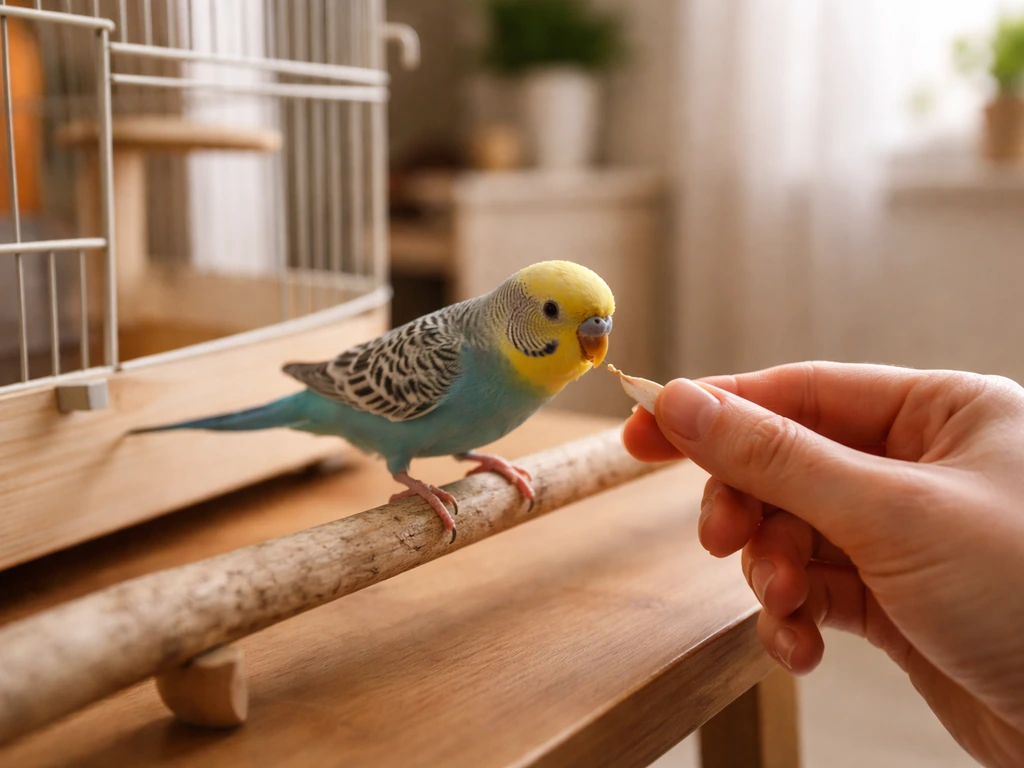
Think of taming as a ladder. Each rung has to be solid before you step up to the next. Rushing a step almost always means you have to go back down and rebuild. Here is a practical progression that works for most lovebirds, including birds that came in scared or have a history of minimal handling.
- Days 1 to 5 — Proximity: Sit near the cage for 10 to 15 minutes daily. Talk softly. Do not try to interact directly yet. Let the bird watch you.
- Days 3 to 7 — Treat through the bars: Offer millet or a favorite food through the bars. Do not pull away if the bird approaches. Let it eat from your fingers with the bars still between you.
- Days 5 to 14 — Hand inside the cage: Rest your open hand or fingers inside the cage without moving. Let the bird investigate, land on your hand voluntarily, and return to a perch at will. Repeat until the bird is landing consistently and calmly.
- Days 10 to 21 — Finger perch cue: Once the bird is comfortable landing, say a simple cue like 'up' or 'step up' as you press your finger gently against its lower chest, just above the feet. The bird will often step up simply to maintain balance. Reward immediately with a treat and praise.
- Days 14 to 28 — Hand outside the cage: Repeat the perch training with your hand outside the cage in a neutral space. Start short and end on a calm note every session.
- Week 4 onward — Recall and targeting: Introduce a target stick (a chopstick with a small ball on the end works fine). Touch the target to the bird, reward contact, then gradually move the target further away to teach the bird to fly or move to it. This becomes the foundation for recall.
Keep sessions short, ideally five to ten minutes for a new or fearful bird and up to fifteen to twenty minutes for a confident one. For more detailed guidance on the full process, see how to train a messenger bird. Always end while the bird is still engaged and calm. A bird that is bored, stressed, or over-stimulated stops learning. Ending before you hit that wall means the next session starts better.
Training for common goals
Reliable step-up behavior
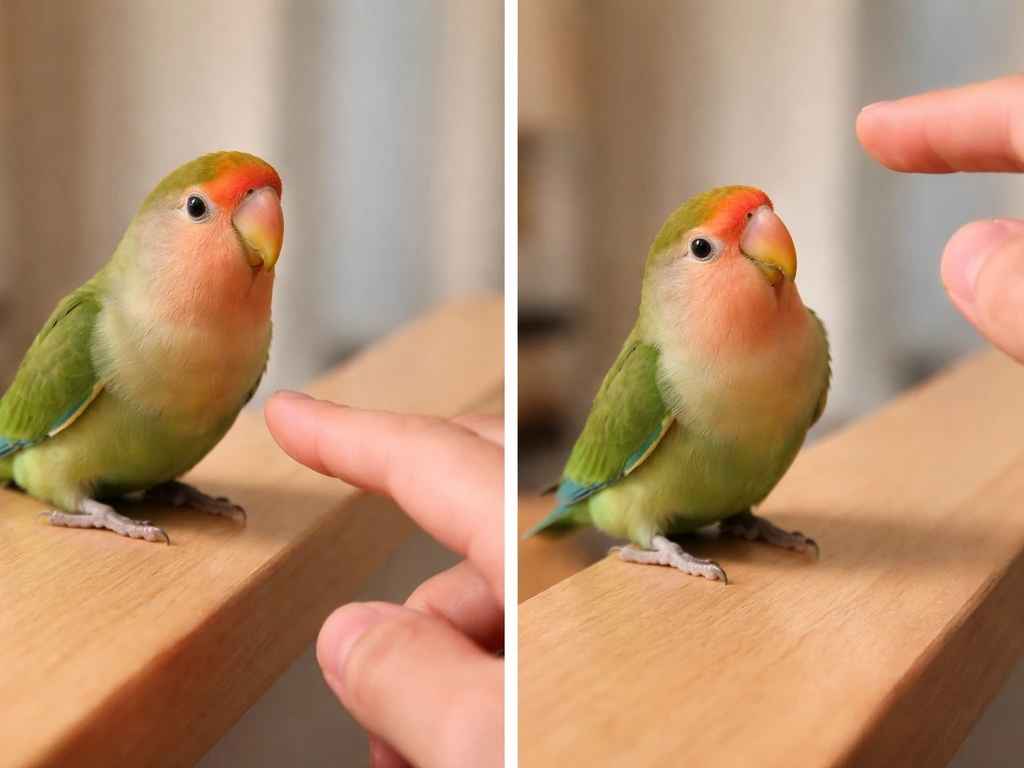
Step-up is the single most useful behavior you can teach a lovebird. A bird that steps up reliably is easier to handle safely, easier to move, and easier to manage during vet visits or emergencies. Once the bird is stepping up in the cage, practice it in at least two or three different locations so the behavior generalizes. Say the cue, press the finger, reward the step. Do this ten or fifteen times in a session, mix in other interactions so it does not feel like drilling, and within a few weeks most lovebirds will step up on cue without hesitation.
Flock bonding and social behavior
Lovebirds are strongly pair-bonding birds in the wild, and a hand-tamed lovebird kept alone will often transfer that bond to you. That is sweet but also comes with responsibility, a bird that has bonded to one person and is underexposed to others can become territorial, anxious when left alone, or aggressive during hormonal seasons (typically late winter to spring).
Peach-faced or rosy-faced lovebirds (often grouped under blank" rel="noopener noreferrer">Agapornis roseicollis in pet care resources) may be territorial and can bond strongly to an individual, which can affect how quickly you can introduce handling and how much access you should control during early training can become territorial. If you want a well-socialized bird, involve multiple household members in daily handling and feeding from early on.
If you have two lovebirds, know that pair-bonded birds are usually less focused on human interaction, which is not a problem, it is just a different dynamic, and training becomes more about enrichment and cooperation than intense one-on-one bonding.
Enrichment that makes training stick
Training works best when the bird has a rich baseline environment. Foraging toys (small cups with treats hidden inside, paper-wrapped pellets, woven grass toys) give lovebirds a productive outlet for their natural chewing and exploring drive. A bored lovebird is a louder, bitier, and more stubborn training partner. Rotate toys every week so the cage feels fresh. Spend some training time on puzzle feeders or foraging tasks rather than just cue-and-reward drills, that mental engagement builds the same calm, curious mindset that makes step-up and recall training easier.
Troubleshooting fear, biting, screaming, and aggression
| Problem | Likely cause | What to do right now |
|---|---|---|
| Bird lunges or bites during handling | Moving too fast through the trust ladder, or ignoring pre-bite signals | Back up two steps in the taming plan. Let the bird dictate contact. Never pull away fast after a bite — stay still, then calmly end the session. |
| Bird screams when you leave the room | Flock-call behavior, often amplified by single-bird setups or inconsistent schedules | Respond calmly once to confirm you are present, then do not reinforce continued screaming by returning repeatedly. Consistent daily routines reduce anxiety screaming significantly. |
| Bird refuses to step up after weeks of training | Inconsistent cue use, too many failed attempts per session, or a perch or location the bird is protecting | Reduce pressure: go back to hand-feeding in the cage, vary locations, shorten sessions, and use higher-value treats. Avoid training near a favored perch or nest site. |
| Sudden aggression in a previously calm bird | Hormonal season (typically late winter to spring), perceived mate or rival, territorial behavior | Reduce nesting materials and hiding spots. Avoid petting the bird on the back or under wings during hormonal periods. Keep handling consistent but low-key until the season passes. |
| Bird seems frozen or completely unresponsive | Extreme fear or shock — common in recently imported, neglected, or wild-caught birds | Do not handle. Give the bird quiet, a covered cage, and time. Basic needs only. Contact an avian vet if the bird is not eating or shows signs of physical illness. |
Biting is communication, not malice. Every bite has a reason, and that reason is almost always something you can identify if you slow down and watch. The most common mistake is punishing a bite by shaking the hand or saying 'no' sharply, that spooks the bird further and makes the next session harder. Instead, stay still after a bite, wait two seconds, then calmly end the interaction. The bird learns that biting ends the fun without learning that you are unpredictable or threatening.
Safety, welfare, and what changes for wild or rehabilitation birds
For pet lovebirds, the safety basics are straightforward: always handle in a bird-safe room, wash your hands before and after sessions, avoid non-stick cookware fumes (PTFE is lethal to birds), and never leave a lovebird unsupervised with other pets. Keep training sessions positive and watch for signs of fatigue or stress. A bird that is panting, trembling, or hiding is done for the day.
Wild lovebirds are a very different situation, and this is important to understand clearly. In most countries, keeping or training a wild-caught lovebird is either illegal or tightly regulated. In the United States, lovebirds are not native species but escaped or feral populations do exist in places like Arizona, Florida, and California. If you encounter a lovebird that appears wild, sick, or injured, the right step is to contact a licensed wildlife rehabilitator, not to begin taming or training it yourself.
For rehabilitation contexts, the goal is fundamentally different from pet training. A rehabbed bird should not be tamed to humans, it should be kept as wild as possible to maximize release success. Stress reduction, appropriate housing, species-appropriate diet, and minimal human contact are the priorities. If the bird genuinely cannot be released (due to injury or imprinting), that is a welfare and legal decision that should be made with a licensed rehabber or avian vet, not independently. Training in the pet sense is only appropriate for confirmed captive-bred pet birds.
Lovebirds are not the only small birds where these welfare distinctions matter. Similar frameworks apply when working with doves, robins, or birds of prey in rehabilitation settings, each species has its own threshold for human habituation, and pushing past that threshold in a wild bird creates more problems than it solves. The same gentle, trust-first approach is also key when learning how to train a dove bird working with doves.
If you want to know how to train a bird of prey safely, focus on conditioning, reward timing, and professional guidance from the start birds of prey. The same careful, welfare-focused approach also applies if you are wondering how to train a robin bird in a rehabilitation or humane context.
For pet lovebirds, though, you have every reason to build a close, trained relationship, and the step-by-step plan above gives you a clear, humane path to get there starting today. If you are asking how to train a messenger bird, apply the same principles of patience, short sessions, and positive reinforcement to build trust step by step. To train a robin bird, use the same humane basics: patience, short positive sessions, and rewarding calm, voluntary behavior how to train a robin bird with patience, short sessions, and positive reinforcement / training a robin bird.
FAQ
What should I do during training if my lovebird shows stress but still won’t step up?
Use a stop-and-pause rule: if the bird leans away, pins eyes, fluffs tight, or opens its beak repeatedly, end the session immediately and try again later. Then reduce the challenge for the next attempt (sit closer to the cage but do not reach, offer treats through the bars, or lengthen the decompression period by a few more days).
How many treats should I use while I’m learning how to train a lovebird, and what if the bird starts having digestive problems?
Start with very light rewards during early taming, like tiny pieces of millet or leafy greens, and spread them across many short wins. If you notice loose droppings or reduced interest in normal pellets, scale treats back, because frequent high-sugar or high-fat treats can slow overall behavior progress by causing health or digestive issues.
Should I use the same cue word every time for step-up, and when should I say it?
Choose a single calm cue phrase and keep it consistent, then reward only the exact behavior you want (feet on your finger). Avoid saying the cue while reaching or touching, and do not change the word each day, because lovebirds learn patterns around both the sound and the handling. If you must redirect, do it with distance and a treat, not by repeating the cue over and over.
What’s the fastest safe order of training steps if my lovebird is scared or new?
Tame in a “ladder” order: first build comfort with your presence and hands near the cage, then allow brief finger contact if offered, then step-up inside the cage, and only after reliability move to a second location. The biggest step back is trying out-of-order handling, like expecting step-up before the bird will eat treats from your fingers.
My lovebird refuses the step-up cue. How long should I keep trying before backing off?
Assume “no” means “not ready yet.” Do not force step-up, but you can offer a smaller perch option (your finger lower and closer to the bird’s feet) and try when the bird is already moving naturally, such as after it has eaten. If it refuses repeatedly, shorten the session and revisit decompression and treat-taking through the bars first.
How should I respond right after my lovebird bites so training does not get worse?
If a bite happens, freeze your body, avoid sudden hand movement, and end the interaction after a short pause. Start the next session at a lower difficulty level, like rewarding calmness at the cage door, and only return to touching when the bird can take treats without warning signs. Consistency is more effective than repeating the same correction.
What changes should I make during late winter to spring if my lovebird becomes more aggressive?
For seasonal aggression, change your expectations and your environment: involve more household members, keep sessions short, and focus on enrichment and cooperative handling rather than intense one-on-one bonding. Also plan for hormonal periods by increasing supervision, avoiding high arousal triggers, and scheduling vet contact early so you are not trying to train during peak intensity.
If my lovebird bonds to only one person and is aggressive toward others, what should I do?
Pair-bond issues show up as selective friendliness, biting at certain people, or refusing step-up for others. Fix it by having multiple people participate in the same daily routine (feeding, treat offering, gentle presence) and by keeping expectations consistent across people, rather than only “correcting” after aggression occurs.
How can I start recall training for a lovebird if it has never learned to come to my hand?
If recall is not discussed in your current plan, build an alternative foundation by teaching targeting or simple approach to a hand-held perch in short repetitions. For safety, practice recall only in controlled spaces with fewer distractions, and reward immediately when the bird moves toward you, because delayed rewards can teach the wrong association.
How do I know when my lovebird is done for the day, and how do I prevent training from becoming overstimulating?
Use a simple cue routine and watch for “alarm fatigue.” If the bird stops engaging, hides more, or shows repeated warning signs, it is likely overstimulated or tired, end the session, and try again later. Aim for consistency in time of day, environment, and session length so learning happens before stress accumulates.
Will training be harder if I have two lovebirds, and what should I focus on instead?
If you have two lovebirds, many birds will bond more to each other and show less interest in humans. That does not mean training is impossible, but you should switch goals toward cooperative handling, for example step-up for safe moves and enrichment-based training with puzzle feeders, rather than expecting intense human attachment.
Are there specific hygiene or scent factors that can make it harder to train a lovebird?
Wash hands before and after sessions, especially if you cook or handle chemicals, and avoid perfumes on your skin because strong scents can trigger defensiveness. For safer predictability, use the same treat type and similar clothing each session so the bird does not associate your presence with new smells or textures.
Next Article
How to Train a Dove Bird: Humane Step-by-Step Guide
Humane step-by-step how to train a dove: trust, calm handling, step-up, perch return, and safety for wild or pet birds.