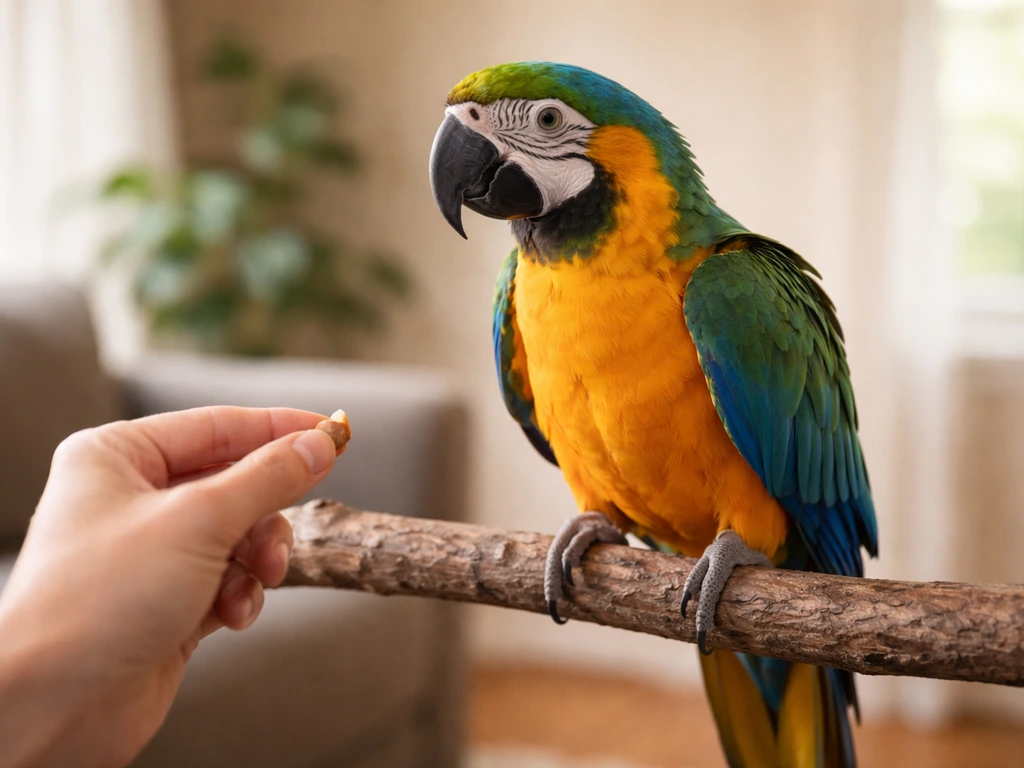
You can teach most pet birds to fetch by breaking the behavior into three small chains: pick up the object, carry it toward you, and drop it on cue. Each step is trained separately using positive reinforcement and a marker (a clicker or a short verbal bridge like "yes"), then linked together once each piece is solid. The whole process usually takes anywhere from a few days to a few weeks depending on your bird's species, temperament, and prior training experience.
How to Teach a Bird to Fetch Step by Step Guide

Maya Harris
7 May 2026
What "fetch" actually means for a bird
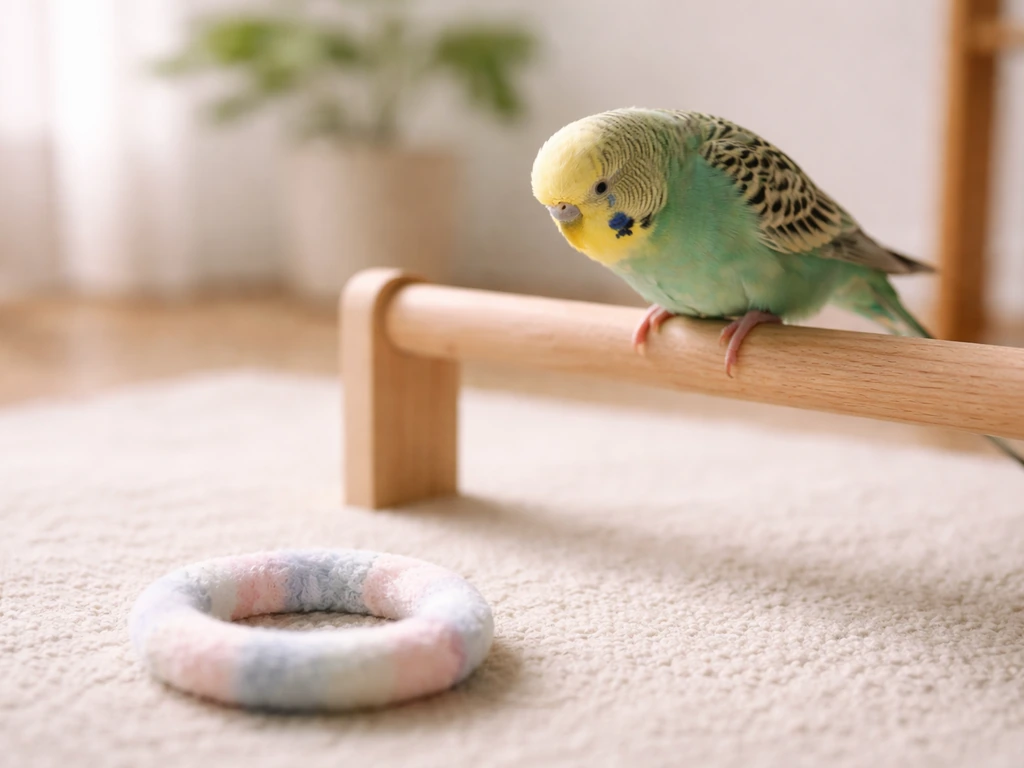
Fetch for a dog is instinctive. For a bird, it's a trained behavior chain built from scratch. A completed fetch looks like this: your bird approaches a small object, picks it up in its beak or foot, moves back toward you, and drops or releases it on cue. That's three distinct behaviors (pickup, return, release) chained together. It's not natural in the wild, so your bird has no reason to do it until you make each step rewarding. Understanding this framing matters because it tells you where to start: you're not waiting for the bird to "get it," you're shaping each tiny step deliberately.
The goal here is always welfare-first. That means no force, no punishment, and no continuing a session when your bird is giving you stress signals. A bird that fetches because it genuinely wants to engage is far more reliable, and far healthier, than one that performs under pressure. If your bird also knows how to step up or has done any targeting work before, you're already ahead, because those skills use the exact same training mechanics.
Set up your training space before you start
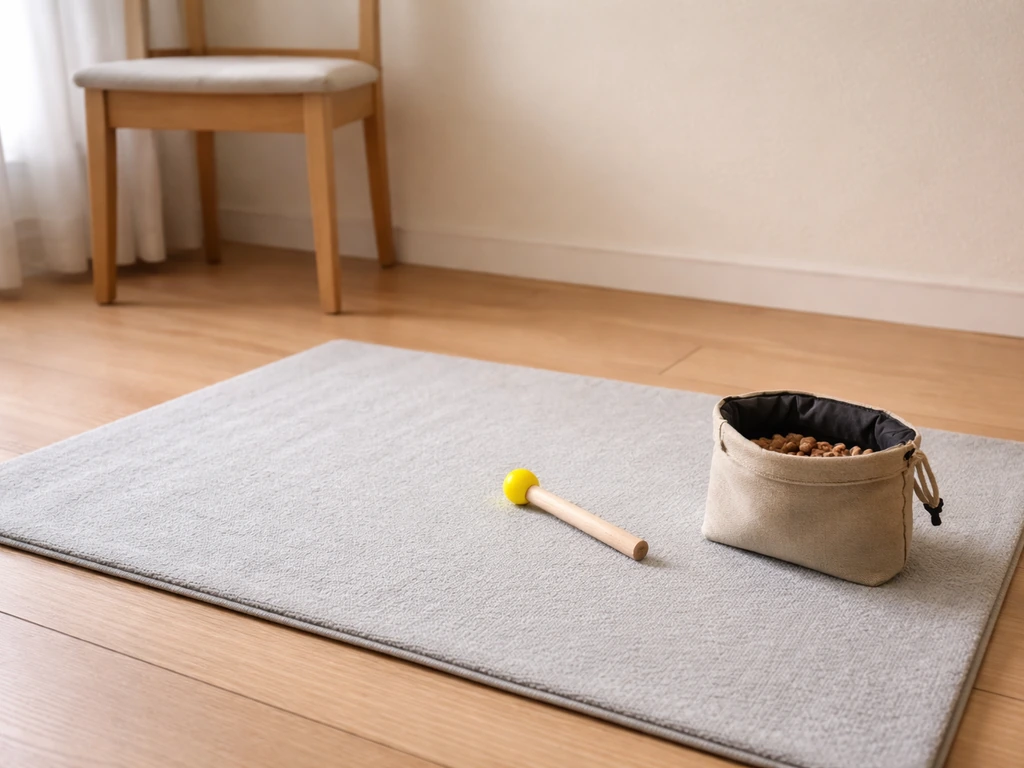
The environment matters more than most people realize. A distracted, stressed, or over-stimulated bird won't learn efficiently. Pick a quiet room with no TV, no other pets, and minimal foot traffic. A tabletop or training perch at roughly your chest height works well because it puts you and your bird at a comfortable working distance without you looming over them. Looming and direct eye contact from above are stress signals for many birds, so keep your posture relaxed and your movements slow and predictable.
Session length is critical. Keep training sessions to 5 to 10 minutes maximum, and always end while your bird is still engaged and wanting more. Once you see yawning, feather-fluffing, moving away, hissing, or fanned tail feathers, the session is already too long. Stop before that point. Two or three short sessions per day will move you faster than one long one that burns your bird out.
- Quiet room, no competing distractions or pets
- Training perch or flat tabletop at a comfortable working height
- A clicker (or a consistent verbal marker like "yes") charged and ready
- Pre-portioned high-value treats: small pieces of a favorite food your bird doesn't get freely throughout the day
- The fetch object ready but set aside until you need it
- A clear stress-signal checklist in mind: panting, hissing, raised head feathers, wings held away from body, moving away from you
Pick the right object and build targeting first
The fetch object needs to be the right size for your bird's beak and safe to mouth. A small wooden block, a colorful cork, a wiffle ball, or a purpose-made parrot foot toy all work well. Avoid rope toys or toys with string components as the fetch object: strings can unravel and entangle toes or legs. If you do use rope in any toy, remove it the moment it begins to shred. For materials, look for natural options like vegetable-tanned leather, 100% cotton, sisal, or hemp. Nothing with zinc hardware, loose metal rings, or small parts that can be ingested.
Before you introduce the fetch object, make sure your bird has at least a basic understanding of targeting. Target training means teaching your bird to touch a target (usually a chopstick, dowel, or the end of a pen) with its beak on cue. This is the foundational skill for almost all trick training. If your bird already knows "touch" or "target," the fetch process becomes much easier because you already have a way to direct its beak toward an object. If not, spend a few sessions on that first: hold the target near your bird's beak, click and treat the moment it touches it, and gradually move the target to different positions so the bird has to lean and step toward it.
Once targeting is solid, swap the target stick for your fetch object. Hold it out the same way you held the target. Most birds will approach and touch it out of habit. Click and treat that. You're now using a technique called shaping: rewarding successive approximations of the final behavior, starting from the simplest version (just looking at the object or leaning toward it) and gradually requiring more.
Shaping steps for first contact with the fetch object
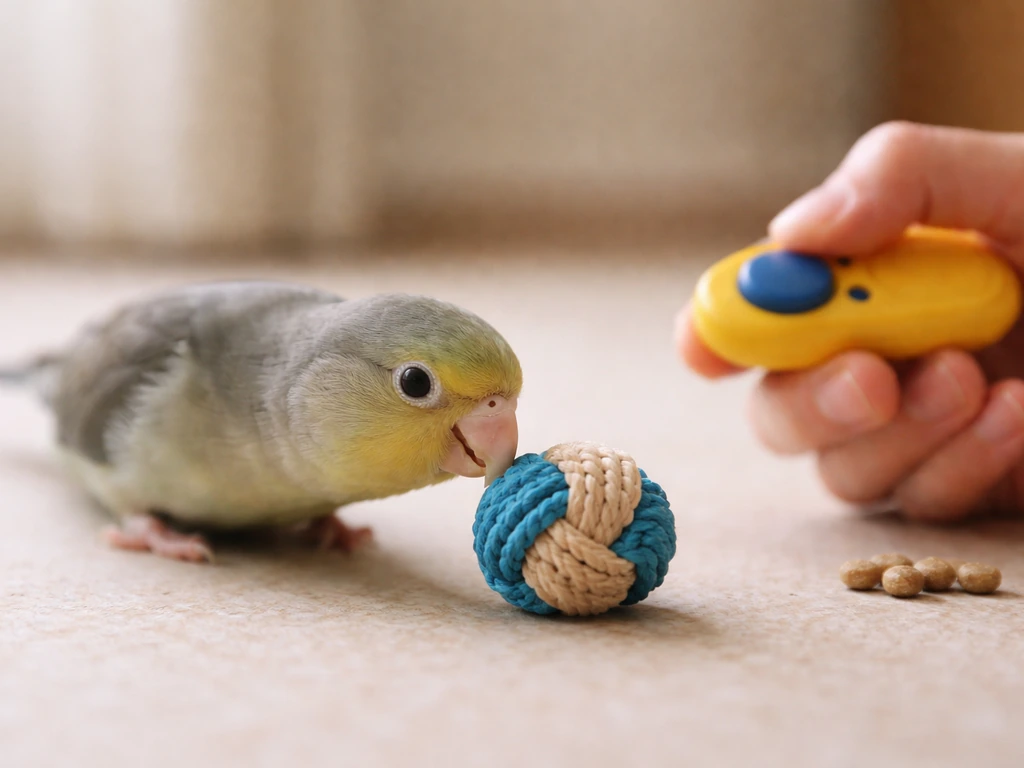
- Bird orients toward or looks at the object: click and treat
- Bird leans toward or takes a step toward the object: click and treat
- Bird touches the object with its beak: click and treat
- Bird mouths or grabs the object momentarily: click and treat
- Bird holds the object for one second: click and treat
Move through these steps only when your bird is succeeding at the current level 80 to 90 percent of the time. Rushing is the most common training mistake. If your bird suddenly stops engaging or seems frustrated, you moved too fast. Drop back one step and rebuild confidence there.
Build the pickup and release
Once your bird is reliably grabbing the object, it's time to build a clean pickup (beak or foot grabs the object off a surface rather than from your hand) and a deliberate release on cue. Place the object on the training surface in front of your bird instead of holding it out. Wait. The moment your bird bends down and grabs it, click and treat. If your bird just nudges or noses the object without grabbing, don't click yet. You're now raising the criteria: grabbing is required, not just touching.
For the release, introduce a simple verbal cue like "drop" or "give." The easiest way to teach this is to hold your open hand directly under the bird's beak the moment it's holding the object, say your cue word, and wait. The instant the object drops into your hand (even if the bird just opens its beak for an unrelated reason), click and treat immediately. Timing is everything here. The click must land within about one second of the behavior you want, or your bird won't make the right connection. Repeat this until your bird is dropping reliably into your palm on the verbal cue.
One important note on biting versus grabbing: there's a real difference between a bird that mouths a toy firmly as part of exploring and playing, and a bird that is biting defensively. If your bird is grabbing the object and then biting your hand when you reach for it, that's a consent issue, not a fetch issue. Back off, reassess whether the bird is comfortable with the interaction, and don't push through resistance. Forced training at this stage tends to make things worse, not better.
Add the return to complete the chain
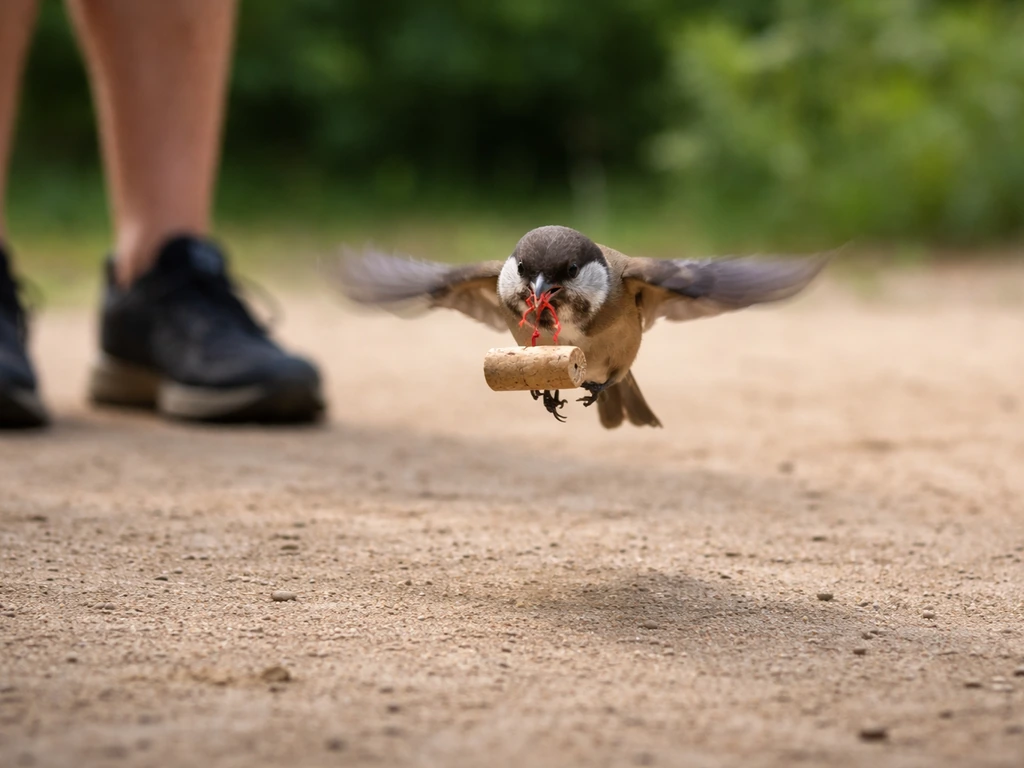
This is where fetch really comes together. The return means your bird picks up the object and moves toward you before dropping it. Start with almost no distance: your bird is right in front of you, grabs the object, and you step back just one small step and hold out your hand. The bird should walk or hop toward you and drop it. Click and treat enthusiastically. You're now rewarding the whole mini-chain: grab plus move plus drop.
Build distance very slowly. Over multiple sessions, move the object one step farther away from you each time your bird is succeeding reliably. The goal is that eventually you can set the object down a foot or two away, give a cue, and your bird walks to it, picks it up, returns to you, and drops it into your hand. Don't rush the distance increase. If your bird grabs the object but then plays with it or wanders off instead of returning, you've added too much distance too quickly.
For birds with strong recall (birds that already come when called), you can layer in a recall cue to help bring them back to you with the object. Say your recall word as soon as they pick it up. The recall cue becomes a prompt to return. For birds without a solid recall, build that skill separately first, since it will make fetch training much smoother. Recall and fetch share a lot of the same training mechanics.
Troubleshooting the most common fetch problems
| Problem | Likely cause | What to do |
|---|---|---|
| Bird won't pick up the object | Criteria jumped too fast, or the object is unfamiliar/aversive | Go back to shaping first contact. Try a different object. Make sure the bird has investigated it casually before training begins. |
| Bird picks it up but immediately drops it without returning | Return behavior hasn't been shaped yet, or distance is too large | Remove all distance. Reward pickup plus any movement toward you, even a head turn. Build incrementally. |
| Bird grabs the object and won't let go | "Drop" cue hasn't been reinforced enough, or bird is resource-guarding the toy | Practice the drop cue separately without the full fetch chain. Trade the object for a treat until releasing on cue is fluent. |
| Bird loses interest mid-session | Sessions too long, treats not high-value enough, or bird is full/satiated | Shorten sessions. Use a better treat. Train before meals, not after. |
| Bird bites or nips when you reach for the object | Stress, resource guarding, or the interaction feels threatening | Stop the session. Assess stress signals. Never reach toward a bird that is showing defensive body language. |
| Bird was doing well and suddenly stops | Possible extinction burst, schedule change, or something in the environment changed | Stay consistent. Don't accidentally reward refusal with extra attention. Return to an easier step briefly, then rebuild. |
One mistake that trips up a lot of trainers is accidentally reinforcing the wrong behavior. If your bird drops the object, you reach for it, the bird grabs it again and you laugh and engage with it, you've just rewarded keep-away, not fetch. Be deliberate about what gets clicked and treated. Only the correct behavior, in the correct order, earns the reinforcement.
You may also hit what's called an extinction burst: after a period of success, your bird suddenly performs the behavior more frantically or in slightly wrong ways when you've tightened your criteria. This is normal. Stay consistent, keep your criteria clear, and it passes. Don't drop your standards just because your bird is pushing back.
Make fetch reliable across distances, objects, and locations
A behavior is only truly trained when it holds up in different contexts. Once your bird is fetching consistently with one object in one spot, start varying things gradually. Introduce a second object with a similar size and weight. Change locations slightly. Add a small increase in distance. Work on each variable separately rather than changing everything at once.
As fetch becomes reliable, you can also start thinning out the reinforcement schedule. Instead of clicking and treating every single successful fetch, start rewarding every second or third one, then intermittently. Variable reinforcement schedules actually make behaviors more persistent over time. Just don't thin the schedule out too fast before the behavior is solid, or you'll see it fall apart.
Species-level notes are worth keeping in mind here. African grey parrots, Amazon parrots, and many cockatoos tend to be highly food-motivated and often pick up fetch quickly once targeting is in place. Cockatiels and budgies can definitely learn fetch but may need smaller objects and shorter sessions, and their body language can be subtler. Conures and caiques are energetic and often love retrieving naturally, but they can also get over-aroused quickly, so watch for the transition from playful engagement to frantic or nippy behavior. For any species, the principles are the same: shape small steps, keep sessions short, watch for stress signals, and end on a win.
Fetch is genuinely one of the more impressive tricks you can build with a bird, and it strengthens your bond at the same time because it requires clear communication and trust in both directions. If you are looking for the full process, these steps also line up well with a practical, step-by-step approach to how to teach bird tricks impressive tricks. Once you have fetch solid, you'll find that teaching other chained behaviors (like waving, or combining tricks into sequences) goes faster because both you and your bird have already learned how to learn together.
FAQ
What if my bird picks up the object but won’t return to me?
Return usually fails when distance was increased too fast or when the bird has learned keep-away. Go back to zero or one-step distance, reward the moment it moves even one step toward you, and only then require the full return and drop. Also make sure your hand is stationary and open when you cue release, so the bird does not interpret your reaching as the start of another game.
My bird drops the object early, right after pickup. How do I fix that?
This is often a criteria issue. Shorten the chain by practicing pickup and immediate drop at close range (object on the surface, hand under the beak), then gradually delay your hand position by a second or two. If it drops when you approach, reduce how quickly you reach toward the bird and keep reinforcement tied to dropping into your hand.
Should I use a verbal cue for pickup, return, and drop, or just drop?
For most birds, one cue for the release (drop or give) is enough once the bird reliably grabs and moves. Pickup and return are then shaped through timing and reward. If you add too many cues too early, you may accidentally reward a response to the sound rather than the full behavior sequence.
How do I prevent my bird from playing with the fetch object instead of fetching?
Make the fetch object “high value” only during training, and end each session quickly while the bird is still interested. During training, keep your reinforcement criteria strict, click only for the grab-return-drop order, and avoid rewarding wandering or chewing. If the bird starts chewing, swap to an object it can grasp without prolonged mouth contact.
What do I do if my bird refuses the object or is afraid of it?
Do not introduce the object by tossing it toward the bird. First pair the object with treats by placing it within easy reach and clicking for calm interest or gentle touches. Only then hold it in the same position you used for targeting so the bird can choose to approach without pressure.
My bird bites or nips when I reach for the object. Is that still fetch training?
It is likely not a fetch problem if the bird bites your hand during release. Treat it as a consent and interaction issue, reduce how close you ask the bird to get, and rebuild a safe “drop into a target hand” with lower criteria (reward dropping while your hand is farther away, then move closer slowly). Avoid forcing the interaction, and if bites increase, pause and reassess comfort and safety.
Can I teach fetch if my bird does not have targeting yet?
Yes, but expect slower progress. You can temporarily use a “treat-lure to touch” approach by rewarding any approach and contact with the object, but eventually you will want a reliable targeting cue to direct the beak toward the object. Start targeting first if your bird struggles to orient its beak toward objects on cue.
How do I know if I’m reinforcing the wrong behavior like keep-away?
Watch what happens immediately after the click. If the bird drops, you move closer, and it instantly grabs again and moves away, the bird is learning that keep-away gets attention. To correct this, stand still after the correct drop into your hand, reward only the proper sequence, and avoid engaging with the bird when it has the object but has not returned it.
What counts as a “successful drop” if my bird doesn’t open its beak fully?
You still reward the exact behavior you want: the instant the object leaves its grip. If the bird releases partway, wait for the point where the object truly transfers into your hand or onto the surface you designate, then click. Over time, require a cleaner transfer by moving your hand position consistently where you want it to end.
My bird seems to learn fast, then suddenly gets frantic or starts doing it wrong. Is that normal?
Often it is an extinction burst or an overreach in criteria. Keep your environment calm, reduce difficulty to the last level it got right 80 to 90 percent of the time, and keep sessions very short. Consistency and stopping before stress signals will usually bring the behavior back to reliability.
How should I choose an object, especially for foot vs beak grabbers?
Use an object that matches how your bird naturally grips. For beak grabbers, choose a small block or toy that can be held firmly without slipping. For foot grabbers, use a purpose-made foot toy or a handle-shaped item your bird can pin. Keep everything string-free and check for any shredding material, remove any rope or loose components immediately if they start breaking down.
When can I increase distance, and how much is too much?
Increase by the smallest increment that still keeps the bird succeeding. If you went from zero distance to a foot or two in one jump and performance drops, you moved too fast. A safe rule is to add distance only after multiple sessions at the current range, then add distance just one step farther away each time.
How do I thin treats without wrecking the behavior?
Wait until fetch is consistent across the training variables you have introduced (object and location). Start by reinforcing every second or third success, keep the session ends on high success rates, and maintain occasional full-reward days if accuracy declines. Thin too quickly and you can trigger a drop in reliability.
Is it okay to include a recall cue during fetch for birds that come when called?
Yes, but introduce it as a timing prompt, not a substitute. Say the recall word at pickup so returning is paired with that sound, then still require the grab-return-drop order. If the bird responds to recall by coming without the object, use recall training separately until it can bring itself back while maintaining the object chain.
Next Article
How to Teach Your Bird: Calm, Positive Training Steps
Step-by-step humane training to bond, reduce stress, and teach behaviors with positive reinforcement for parrots and sma