Teaching a bird to wave is absolutely doable, even for beginners, and most companion parrots can learn it within a few weeks of consistent, short training sessions. The wave is essentially a lifted foot or wing paired with a cue, shaped through positive reinforcement. If your bird already steps up comfortably and takes treats from your hand, you have everything you need to get started today.
How to Teach a Bird to Wave: Step-by-Step Training
Maya Harris
22 Apr 2026
Is your bird ready? Assessing readiness and planning stress-free sessions
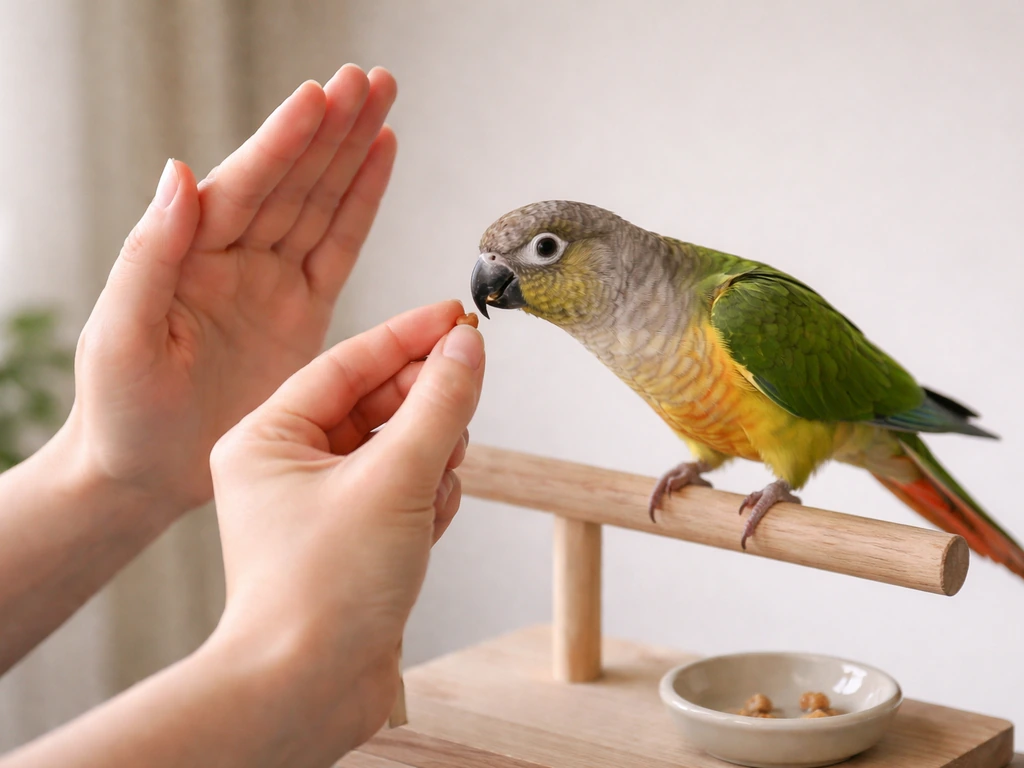
Before you teach anything, take an honest look at where your bird is right now. A bird that flinches when you reach toward it, screams when you enter the room, or refuses treats in your presence is not ready for trick training. That is not a failure on anyone's part, it just means trust-building comes first. The wave trick requires your bird to be comfortable enough with you to focus, take food rewards calmly, and stay relaxed on a perch while you move your hand near it.
Individual birds have individual physiological and behavioral needs, and it is your job as the trainer to read your specific bird rather than follow a rigid script. A confident African Grey, a skittish rescue cockatiel, and a young budgie each need a different pace. That said, the mechanics of shaping the behavior are the same across species.
Where things differ is in the physical gesture itself: larger parrots (macaws, cockatoos, Amazons, African Greys, conures) lift a foot clearly enough that the wave reads as a foot wave, while smaller birds like budgies and parrotlets often produce a more subtle wing-tip flutter. Softbills and finches are not great candidates for this specific trick because they do not perch and gesture the same way, so if you keep finches, focus your energy on other goals.
For your training plan, commit to sessions of two to five minutes, no more. If you want a broader roadmap, the full guide on how to teach your bird can help you plan safe sessions from the start two or five minutes. Short and frequent beats long and infrequent every time. Once a day minimum, twice a day is ideal. Always end on a success, even if that means rewarding something simpler than what you were working toward. If your bird looks away, puffs up, grinds its beak out of stress rather than contentment, or bites, the session is over. These are clear signals the animal is at its limit.
- Bird takes treats calmly from your hand or close to your hand
- Bird steps up or at least approaches you without obvious fear
- Bird is healthy (vet-checked, not molting heavily or ill)
- Training space is quiet, familiar, and free from other pets or sudden loud noises
- You have a consistent daily window of five to ten minutes available
Build the foundations: trust, handling comfort, rewards, and a marker
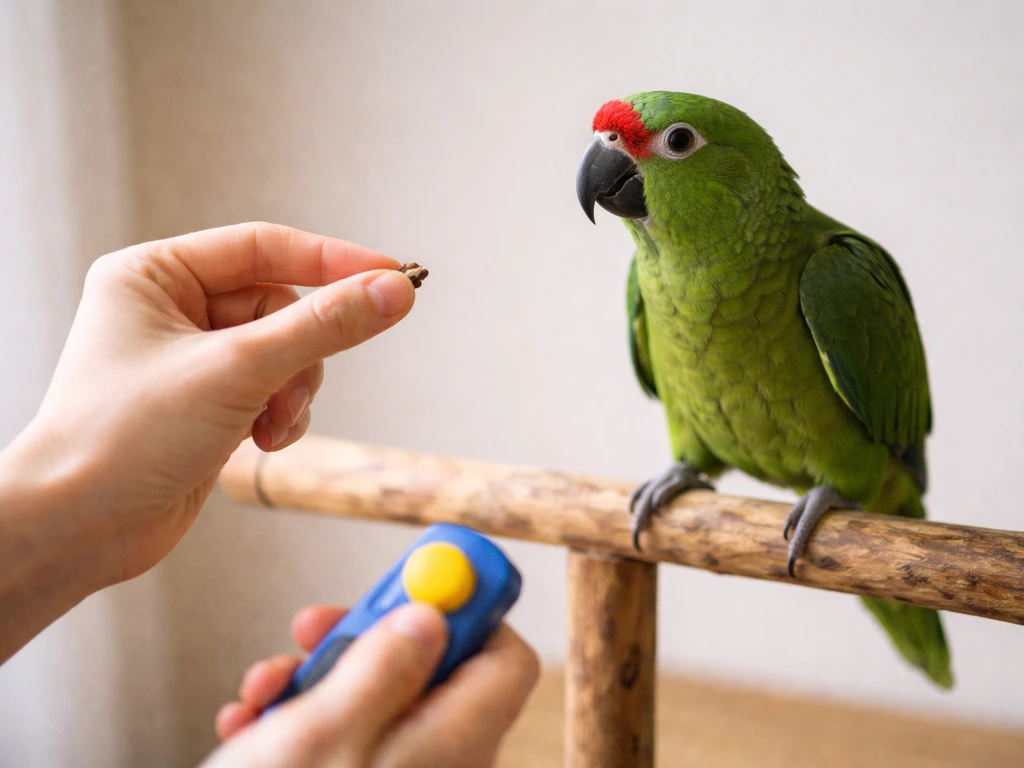
The single most important tool in this whole process is a marker signal. blank" rel="noopener noreferrer">A marker is a sound or visual signal that tells your bird exactly which moment earned the reward. The most common marker is a clicker, but a short verbal word like "yes" works just as well if your tone is consistent. blank" rel="noopener noreferrer">The marker bridges the gap between the behavior and the treat, which matters because you physically cannot deliver a sunflower seed the instant a bird lifts its foot, but you can click or say "yes" in that exact moment.
Your bird needs to understand what the marker means before you use it in training. Charge the marker by simply clicking or saying "yes" and then immediately delivering a treat, over and over, maybe ten to fifteen repetitions across two or three short sessions. You are not asking the bird to do anything yet. You are just building the association: marker sound equals food is coming. Once your bird visibly perks up, turns toward you, or looks for the treat the moment it hears the marker, you are ready to move on.
Choose a high-value treat your bird goes nuts for. Millet spray works well for budgies and cockatiels. A small piece of almond, walnut, or a bit of nutriberri works for medium and large parrots. The treat should be tiny, so the bird stays motivated and does not fill up quickly. If your bird is not food-motivated during a session, it is either not hungry enough (avoid training right after a big meal), stressed, or unwell. Never force interaction. The best results come when the bird wants to participate, not when it feels it has no choice.
Handling comfort matters here too. You do not need to hold your bird to teach the wave, but your bird does need to be comfortable with your hand being near it. If it backs away or snaps when your hand approaches, spend a few sessions just holding your hand still near the perch and rewarding calm behavior. Do not pressure the bird's chest or crowd it. Build up closeness gradually and let the bird set the pace.
Shape the wave step by step: from a foot lift to a real wave
The wave is built by shaping, which means rewarding small approximations of the final behavior and gradually raising the bar. You are not waiting for a perfect wave on day one. You are rewarding the tiniest foot shift, then a bigger lift, then a hold, then a repeated motion. Here is the progression.
Step 1: Get a foot lift using the step-up prompt
If your bird already knows how to step up, you have a shortcut. Present your finger as if asking for a step-up, but pull it back slightly just as the bird lifts its foot to step on. The moment the foot comes up, mark and reward immediately. You are catching that foot-lift moment before the bird actually steps onto your hand. Repeat this until the bird is consistently lifting the foot in response to your finger approaching. This can take five to twenty repetitions depending on the bird.
Step 2: Build duration and the repeated lift
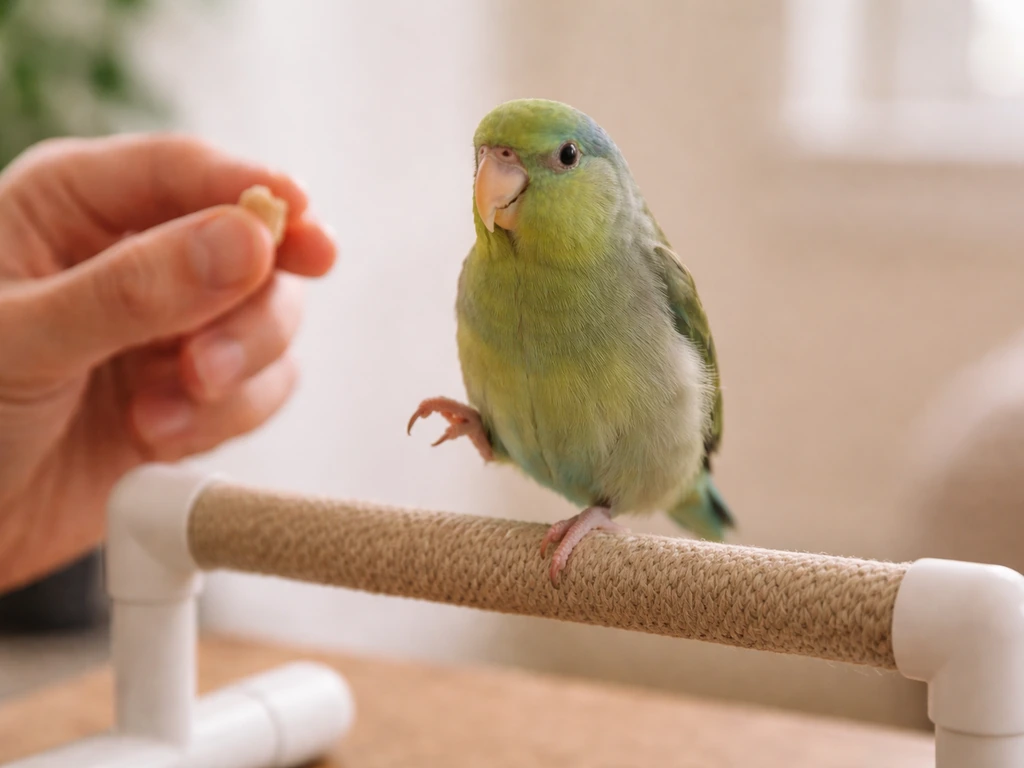
Once the foot lift is happening reliably, start waiting for the foot to stay up a beat longer before you mark. Then begin rewarding only when the bird lifts the foot two or three times in a row, creating the back-and-forth motion that actually looks like a wave. Some birds offer this naturally; others need more shaping. Always reward the best attempts and ignore (do not punish) weaker ones.
Step 3: Fade the physical prompt
Right now your hand movement is doing a lot of the work. Start making that prompt smaller and less obvious. Instead of a full finger-toward-the-bird motion, try a smaller gesture, then a hand raise, then eventually just a small upward flick of your fingers. You are gradually replacing the big physical lure with a smaller, cleaner cue. Do this slowly, over multiple sessions, so the bird stays successful.
A note on wing waves vs. foot waves
Most parrots wave with a foot, which is the most natural and easiest to shape. Some trainers prefer a wing-tip flick for smaller birds like budgies. If you are going for a wing wave, never physically move or hold the wing yourself. Forcing a wing into position causes pain, damages trust, and can injure the bird. Instead, shape it by rewarding any natural wing extension or flap, gradually building toward a deliberate wing lift on cue. If your bird never naturally extends its wings, stick to the foot wave.
Pair the wave with a verbal or hand cue and build reliability
Once the wave behavior is happening consistently (about eight out of ten attempts), it is time to attach a cue. A cue is the signal you want to use to ask for the behavior going forward. It can be a word like "wave" or "hi," a hand signal like a small finger flutter, or both together. The key is to present the cue just before the behavior happens, not during or after.
Here is how to introduce it: present your cue word or gesture, pause one second, then use the smaller physical prompt you have been fading. When the wave happens, mark and reward as usual. You are essentially sandwiching the behavior between the new cue and the old prompt. After ten to twenty repetitions done this way across a few sessions, try giving the cue without the physical prompt at all. If the bird waves, that is huge. Mark and reward with extra enthusiasm and a bigger treat. If it does not wave, go back to including the prompt for a few more sessions.
Verbal cues work especially well with species that are vocal and attentive to human speech, like African Greys, Amazons, and cockatoos. For smaller or less vocal birds, a clear hand signal is often more reliable. You can always use both together. What matters most is that your cue is consistent every single time: same word, same tone, same gesture.
Reliability comes from repetition across many sessions, not from drilling in one marathon session. Aim for ten to fifteen clean wave-on-cue repetitions per day across multiple short sessions. Within one to three weeks of consistent work, most birds reach a point where they wave reliably when asked in their familiar training spot.
When things go wrong: troubleshooting the most common problems
The bird will not lift its foot at all
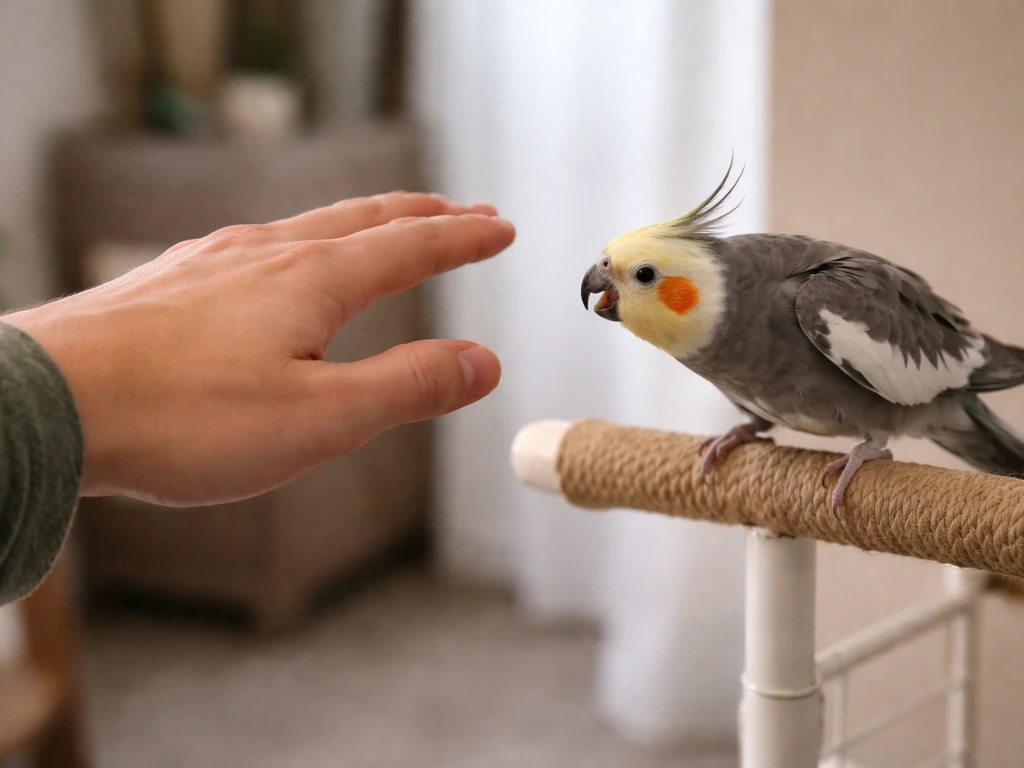
Go back to basics. Is the bird comfortable with your hand nearby? Is it motivated by the treat you are using? Try a higher-value treat and a calmer environment. If the step-up prompt is not triggering a foot lift, try luring: hold a treat just above and to the side of the bird's foot to encourage shifting weight and lifting. Mark any weight shift at first, then raise criteria gradually.
The bird approaches the hand but then bites
Biting is communication. It usually means the bird is uncomfortable, overstimulated, or frustrated. Stop the session immediately, but calmly, without yelling or reacting dramatically. Review whether you are moving too fast, asking for too much in one session, or whether the bird has enough personal space. Give it a day off and restart at an easier step where it was succeeding.
The bird loses interest fast or gets distracted
Shorten your sessions further. Two to three minutes is plenty. If your bird is distracted by something in the environment, move to a quieter room or a different time of day. Make sure the treat is genuinely exciting. Sometimes switching from seed to a tiny bit of cooked egg or fresh fruit reignites motivation.
The wave is inconsistent: sometimes yes, sometimes no
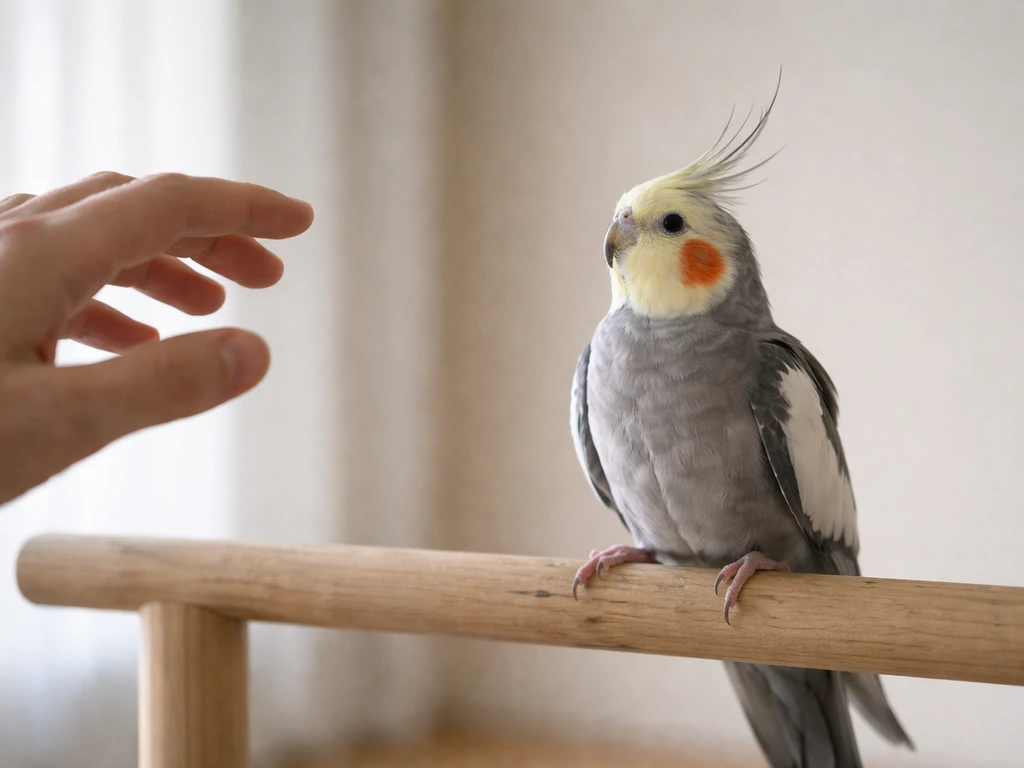
Inconsistency usually means the cue is not fully learned yet, the bird is not sure what you are asking, or the behavior has not been reinforced enough times. Go back to pairing the cue with the physical prompt for more repetitions. Make sure you are not accidentally changing your cue (different hand position, different tone of voice). Consistency on your end is just as important as consistency on the bird's end.
The bird flinches when your hand approaches
This is a trust and desensitization issue that needs to be resolved before the wave can progress. Slow everything down. Spend sessions just sitting with the bird, offering treats without any training agenda, and letting the bird approach your hand on its own terms. Do not rush this phase. A fearful bird cannot learn efficiently, and pushing through fear creates lasting setbacks.
Proof the trick and keep it sharp long-term
A bird that waves perfectly in one spot in your living room but nowhere else has a "location-dependent" behavior, which is common and fixable. Proofing means practicing the wave in new environments, with mild distractions, and with different people giving the cue. Start small: move the perch to a different part of the room, then to a different room, then outside if it is safe. Each new location is a new challenge for the bird, so expect to briefly drop back to using the physical prompt and then fade it again.
Prompt fading is a deliberate process. Each time you introduce a new environment or distraction, use the smallest prompt that still gets the behavior, then fade it over a few sessions. The goal is that the verbal or hand cue alone is enough, anywhere you ask. Some birds generalize quickly; others need two to three weeks of location practice before the cue really sticks everywhere.
To maintain the wave long-term, practice it a few times per week even after it is solid. Behaviors that are never asked for eventually fade. You do not need to do full training sessions forever, but incorporating the wave into daily interactions, like asking your bird to wave before it comes out of its cage or before receiving a treat, keeps it fresh and reinforced naturally. Once your bird will wave on cue, you can use the same short-session, positive reinforcement approach to learn how to teach a bird to fetch.
Once the wave is reliable, it makes a great foundation for building more complex behaviors. Chaining tricks together (wave, then turn around, then wave again) is a natural next step for birds that are engaged and motivated. The wave also reinforces the relationship between you and your bird because it requires attention, communication, and mutual trust. That is really the point of all of this: the trick itself is fun, but the training process is what deepens the bond. If you want to go further, follow the same cueing, reinforcement, and short-session approach to learn how to teach bird tricks beyond just one behavior.
Quick comparison: training the wave across common companion species
| Species | Best wave type | Session length | Typical timeline | Common challenge |
|---|---|---|---|---|
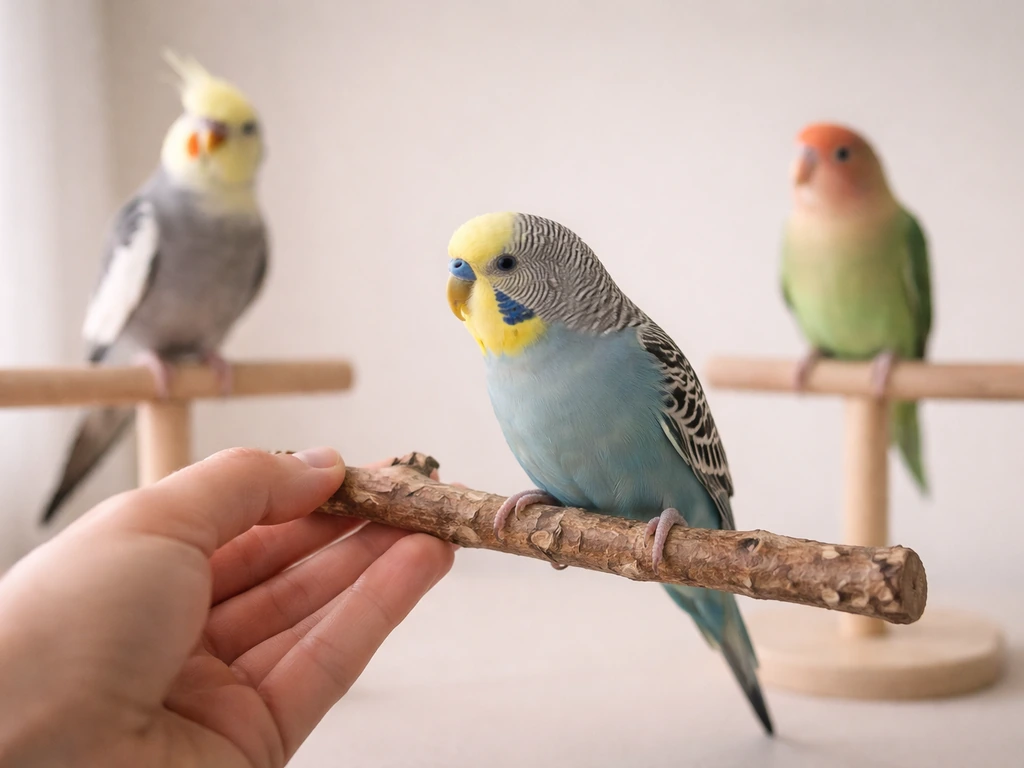
| Budgerigar | Foot wave or wing flutter | 1-2 minutes | 2-4 weeks | Small movements hard to see/mark precisely |
| Cockatiel | Foot wave | 2-3 minutes | 1-3 weeks | Can get overstimulated quickly |
| Conure (small/medium) | Foot wave | 3-5 minutes | 1-2 weeks | High energy; needs frequent rewards |
| African Grey | Foot wave | 3-5 minutes | 1-3 weeks | Cautious learner; needs low-pressure approach |
| Cockatoo | Foot wave | 2-4 minutes | 1-2 weeks | Emotional sensitivity; stress signals easy to miss |
| Amazon Parrot | Foot wave | 3-5 minutes | 1-3 weeks | Can be stubborn if not highly food-motivated |
| Macaw | Foot wave (large, dramatic) | 3-5 minutes | 2-4 weeks | Needs physical space; foot lift is very visible |
If you have already worked on step-up training or other foundational handling skills, the wave will come faster because your bird already knows how to engage with you in a structured way. Teaching additional tricks builds on each success, and the wave is one of the best starting points because it is visual, crowd-pleasing, and genuinely easy to shape once the trust is there.
FAQ
My bird takes the treat but does not lift the foot. What should I check first?
Confirm your bird is calm enough to manipulate weight, not just comfortable with treats. Try rewarding a weight shift or toe lift first, then raise criteria. Also double-check that you are using a cue that gets presented consistently near the same perch height, since foot-lift attempts drop when the perch is too low or unstable.
How do I know whether I should use a foot wave or a wing wave for my bird?
Watch what your bird naturally offers during relaxed perch moments. If it frequently lifts one foot when you approach, stick with the foot wave. If it reliably extends or flutters wings voluntarily, you can shape a wing-tip flutter. If your bird never extends wings without stress, forcing wing positions will likely create fear, so the foot wave is safer.
Can I teach the wave if my bird is not fully trained to step up yet?
Yes, but only if your bird can stay on the perch without panic and accepts treats while you are nearby. Start with the same shaping goals using hand proximity and perching cues rather than step-up. If your bird flinches at approach, spend more sessions on hand desensitization before asking for any foot lift.
What is the best marker to use, clicker or a verbal word?
Either works, but choose based on how consistent you can be. A clicker is precise timing and often easier during fast shaping moments. A verbal marker can work well if your tone is identical every time and you do not accidentally change the word or volume across sessions.
How long should I keep practicing before changing something?
If you get no clear signs of foot lift or consistent approximations after a few short sessions, reduce your criteria. Return to easier behaviors (toe shift, small lift) and reinforce immediately, then rebuild. Avoid switching the treat, marker, cue, and prompt all at once, since that confuses the bird and resets progress.
My bird waves only when I am sitting in a specific spot. How do I fix that?
That usually means location or person dependence. Proof gradually by keeping the training structure the same, but changing only one variable at a time (perch location first, then room, then who gives the cue). At each new setting, use the smallest prompt that still produces the wave, then fade it again over a few repetitions.
Should I give the cue word at the same time as the hand prompt, or before it?
Present the cue first, then wait briefly, then use the prompt you have been fading. The cue should come just before the behavior opportunity, and the physical prompt is your safety net during early learning. If you give cue and prompt together, your bird may associate the prompt rather than the cue.
What if my bird is learning, then suddenly stops waving after a few days?
Usually it is fatigue, stress, or reduced reinforcement. Check whether you trained after a big meal, in a noisier environment, or with a different tone or hand position. Go back one step (make the task easier, reduce criteria, or reintroduce the physical prompt) and end on a success to rebuild confidence.
How can I prevent biting during wave training?
Stop the session immediately at the first sign of stress, then review your pace and space. Reduce how quickly you approach, shorten sessions, and reward smaller approximations so your bird can succeed. Never chase or restrain the bird to avoid biting, because it can teach that biting ends the interaction.
Is it okay to practice multiple wave sessions back-to-back in one sitting?
It is better to do fewer minutes per session, then stop while the bird is still succeeding. Back-to-back work can push overstimulation and reduce motivation. A practical approach is one short attempt block, watch for the bird’s stress signs, and only continue if the bird stays relaxed and engaged.
Should I reward with the same treat every time?
Consistency helps early learning, but if motivation drops you can rotate within a bird-safe range. If the bird stops responding, try a higher-value tiny portion that your bird reliably loves, rather than increasing meal-size. Keep rewards small so training does not turn into satiation.
Can I use the wave to help with other behaviors later?
Yes. Once the wave is on cue reliably, you can chain it by adding the next behavior immediately after the wave is completed, with a marker and treat for each step. If the bird starts dropping the wave during chaining, it is a sign the next step is too hard, so return to the wave-only cue until performance stabilizes.
Next Articles
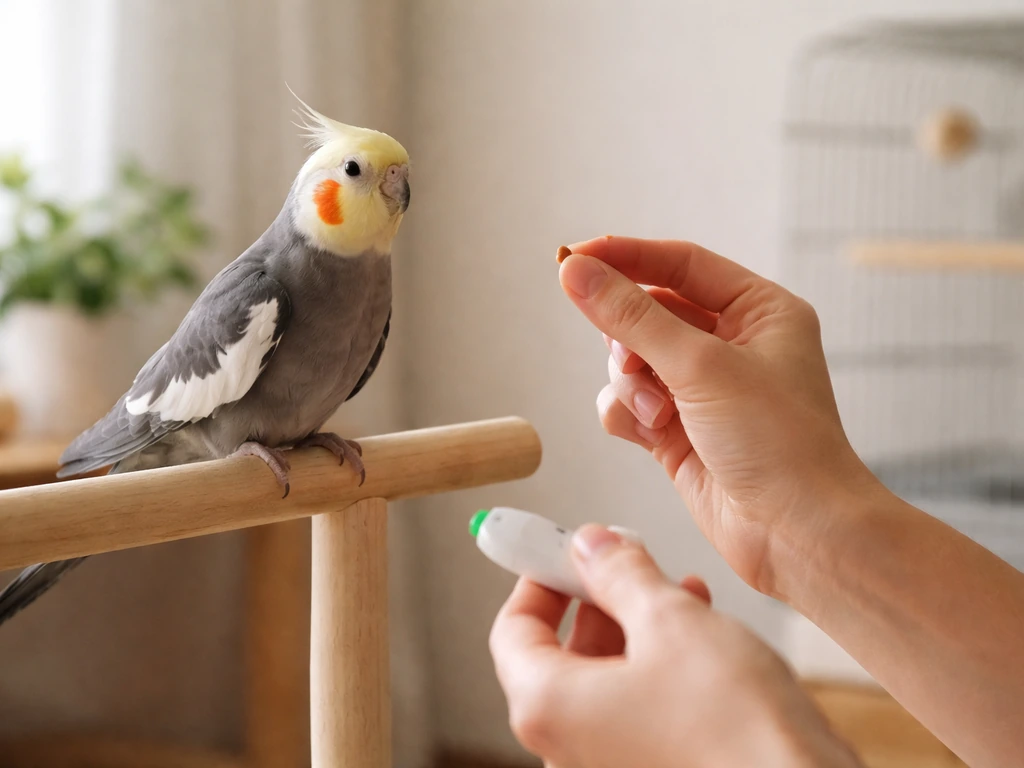
How to Teach Bird Tricks: A Welfare-First Training Plan
Welfare-first, step-by-step plan to teach bird tricks with positive reinforcement, cues, and troubleshooting for pet or
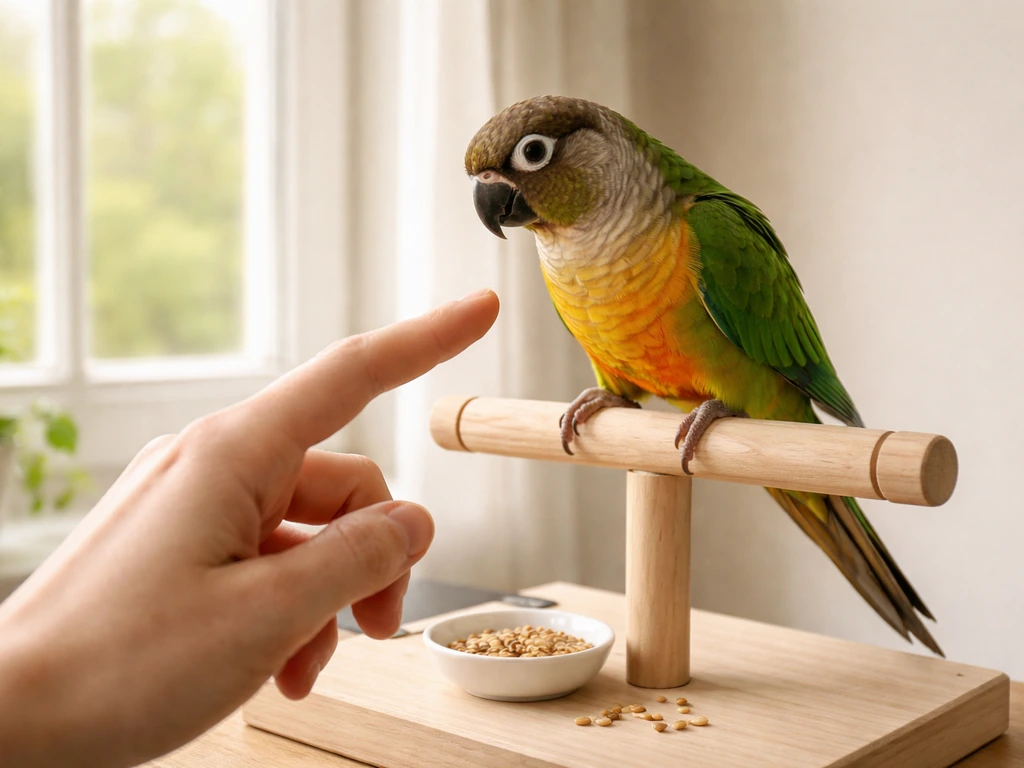
How to Teach a Bird to Step Up Safely and Reliably
Step up training guide for birds: humane cues, setup, treats, reinforcement, and troubleshooting for safe reliable hand
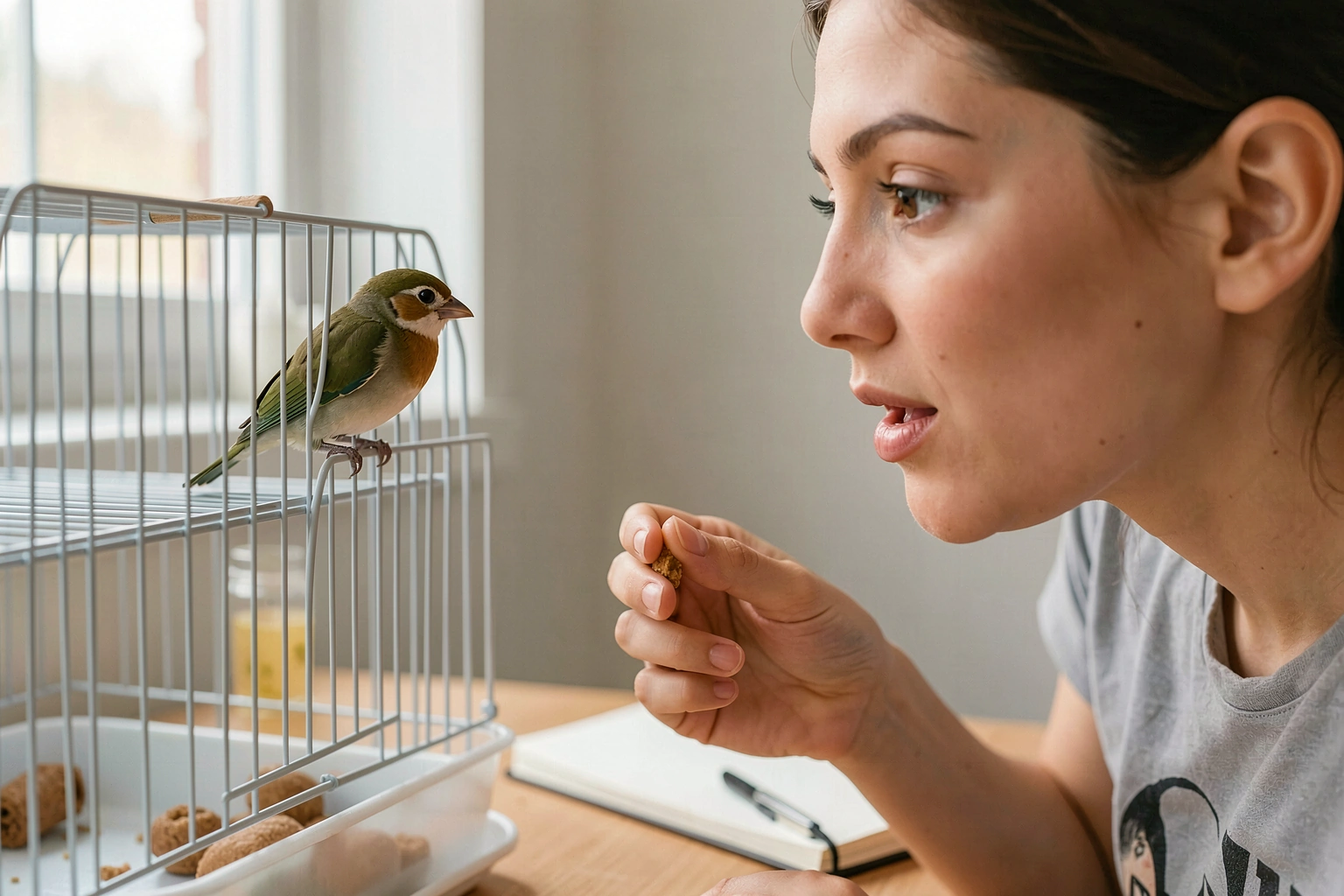
How to Teach a Mynah Bird to Talk: Step-by-Step
Step-by-step mynah training plan to teach talking, with setup, daily routine, rewards, timing, and troubleshooting for n