Teaching your bird tricks is absolutely doable, and you can start today. The method that works is positive reinforcement: you mark the behavior you want, reward it immediately, and repeat. That's the core of it. Everything else in this guide is about doing that well, in the right order, with realistic expectations for your specific bird. Whether you have a budgie, a cockatiel, an African grey, or you're working with a rehabilitated bird, the fundamentals are the same. Let's walk through them properly.
How to Teach Bird Tricks: A Welfare-First Training Plan
Maya Harris
13 Apr 2026
Choosing the right bird and goals
Before you pick a trick to teach, you need an honest look at your bird and what's realistic. Not every bird is a good candidate for trick training on day one. A newly adopted bird that's still scared of hands is not ready to learn to wave. A bird that's bonded to you and already steps up confidently is ready for a lot more.
Think about your bird's species, age, and individual personality. Parrots, corvids (like crows and ravens kept legally as pets or educational birds), and mynas are generally the most trainable because they're highly food-motivated and cognitively flexible. Budgies and cockatiels can learn a surprising number of tricks but tend to need shorter sessions and gentler handling. Canaries and finches are much harder to train for physical tricks but can learn some behaviors with patience. Chickens and ducks, believe it or not, are quite trainable with the right food reward.
Set one goal at a time. Pick the single trick you want to teach first, ideally the simplest one your bird isn't already doing. Good first tricks: step-up, targeting (touching a stick with the beak), turning in a circle, or bobbing on cue. Save wave, fetch, and chained behaviors for once you've got the basics locked in.
- Beginner birds: start with step-up and targeting only
- Intermediate birds (already step up reliably): add spin, turn, or wave
- Advanced birds (know 3+ behaviors): work on chaining tricks, duration, and new environments
- Avoid setting goals that require prolonged restraint or force. If you need to hold your bird to make something happen, it's not trick training.
Getting trust first: handling, bonding, and target consent
Trust is not optional. If your bird is afraid of you, or even just mildly uncomfortable around your hands, trick training will stall or backfire. The good news is that building trust and starting to train are not that different. Positive reinforcement builds trust at the same time as it builds behavior.
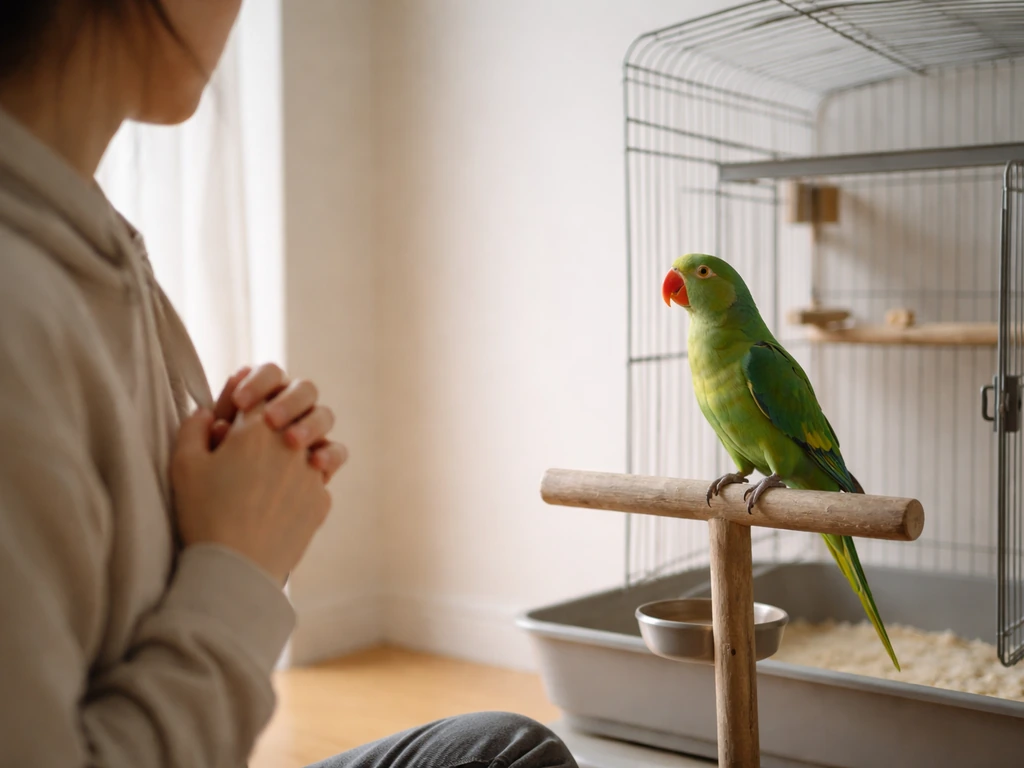
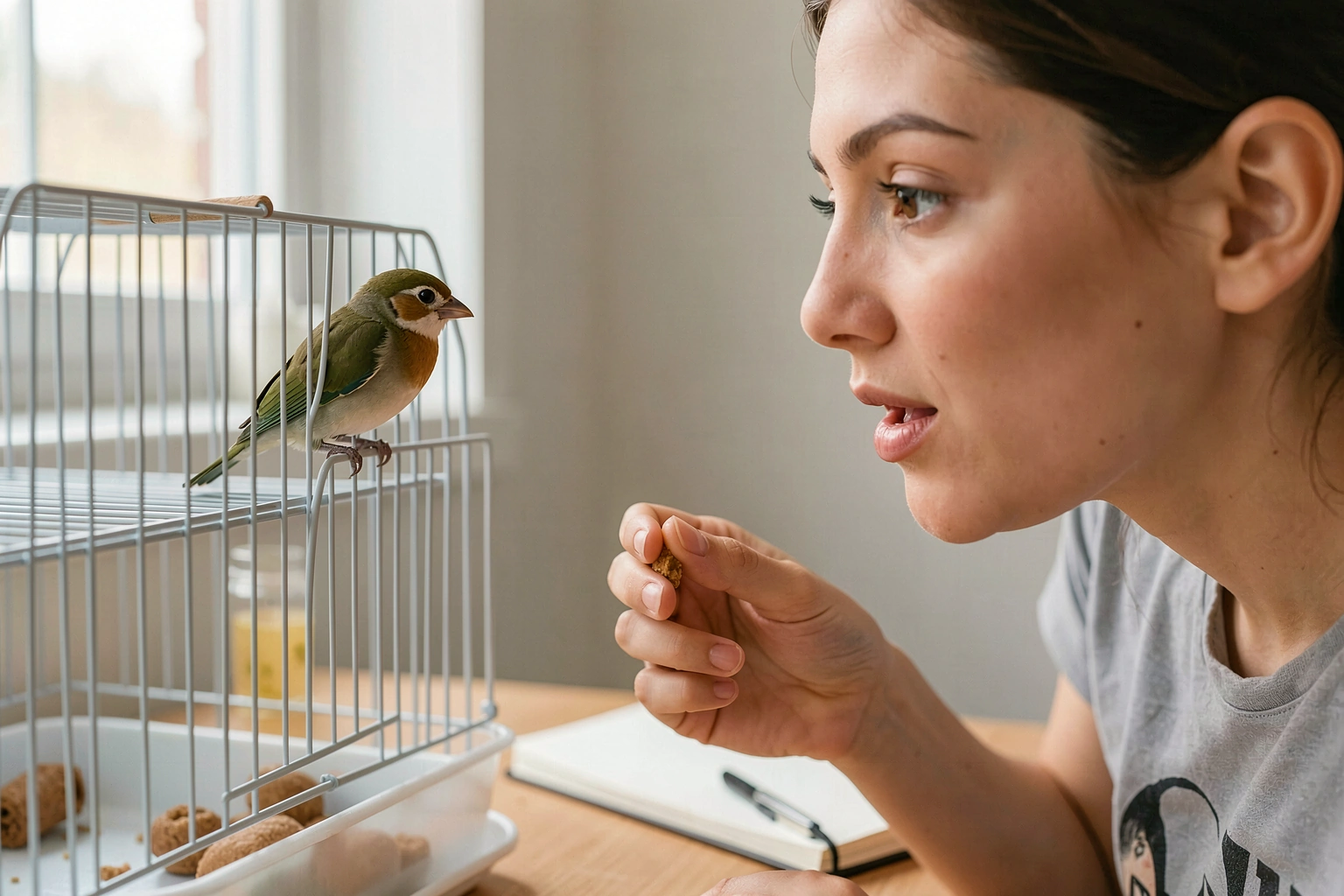
Spend time near your bird without asking anything of it. Sit by the cage, talk softly, and offer treats through the bars. Let the bird choose to come closer. This is target consent: you're letting your bird tell you it's ready to engage. Forced interaction, especially repeated exposure to things that scare the bird, does real harm. Research on psittacine behavior is clear that blank" rel="noopener noreferrer">frequent punishment and coercive handling increase the probability of aggression, apathy, generalized fear, and escape or avoidance behaviors. The moment your bird shows stress signals (feathers slicked down, wide eyes, lunging, biting), you've pushed too far. Stop, give the bird space, and try a lighter version of the interaction next time.
Stress signals to watch for during any handling or training session include: slicked-down feathers, rapid breathing, tail bobbing (not normal preening bob), biting or lunging, turning away or walking to the far side of the perch, and vocalizing in alarm tones. When you see any of these, end the session on something the bird can succeed at, even if that's just sitting near you without reacting.
A solid bond also means your bird is comfortable with your hands before you ask it to do tricks with them. Teaching your bird to step up is genuinely the best foundation for everything else. It establishes a cooperative interaction, gives the bird a way to say yes to you, and is something you'll use every single day.
Training foundations: motivation, treats, timing, and clicker training
The engine of trick training is positive reinforcement: the bird does something, you mark it, you reward it. Do this consistently and the bird does it more. This is not complicated, but the details matter a lot.
Find what your bird actually wants
Motivation varies by individual, not just species. Most parrots are food-motivated, but some birds respond better to a favorite toy, a scratch on the head, or verbal praise. Test it: offer a few different treats and see which one your bird drops everything for. Common high-value treats include sunflower seeds (use sparingly, they're fatty), small pieces of almond, millet spray, freeze-dried corn, or tiny bits of fruit. Whatever makes your bird's eyes light up, that's your training treat. Keep portions tiny. You want your bird to want more, not to be full.
Train before meals when possible, not right after. A bird that just ate is much harder to motivate. A bird that's slightly hungry is ready to work. Don't withhold food to the point of distress, but do time sessions strategically.
Marking and timing
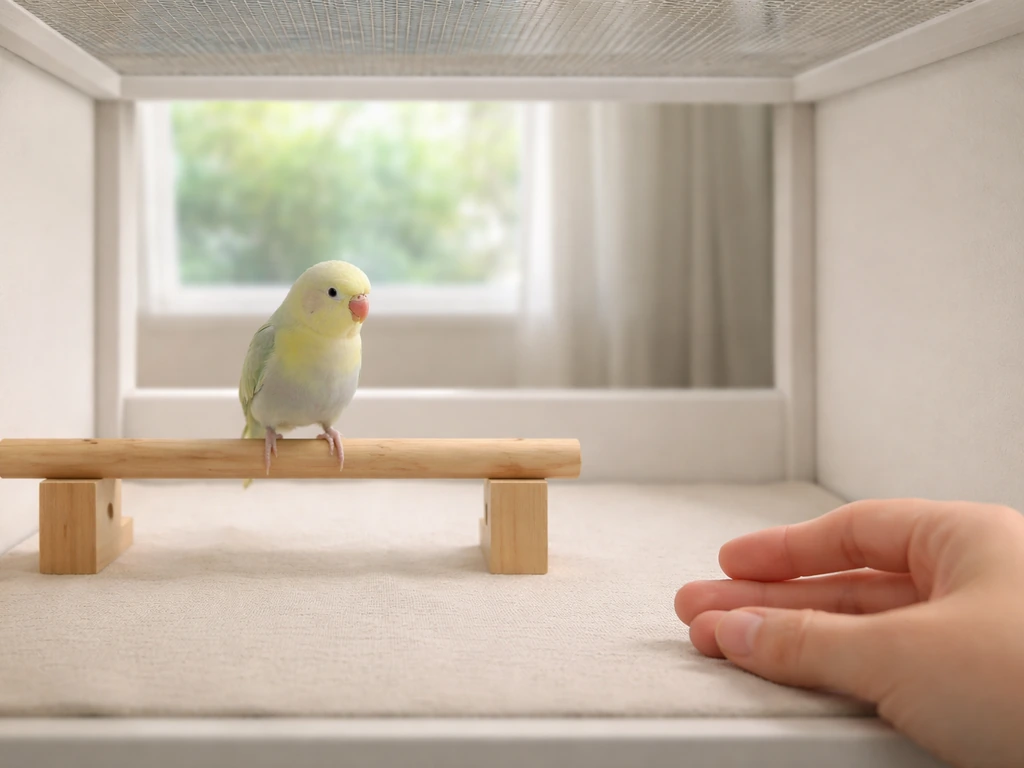
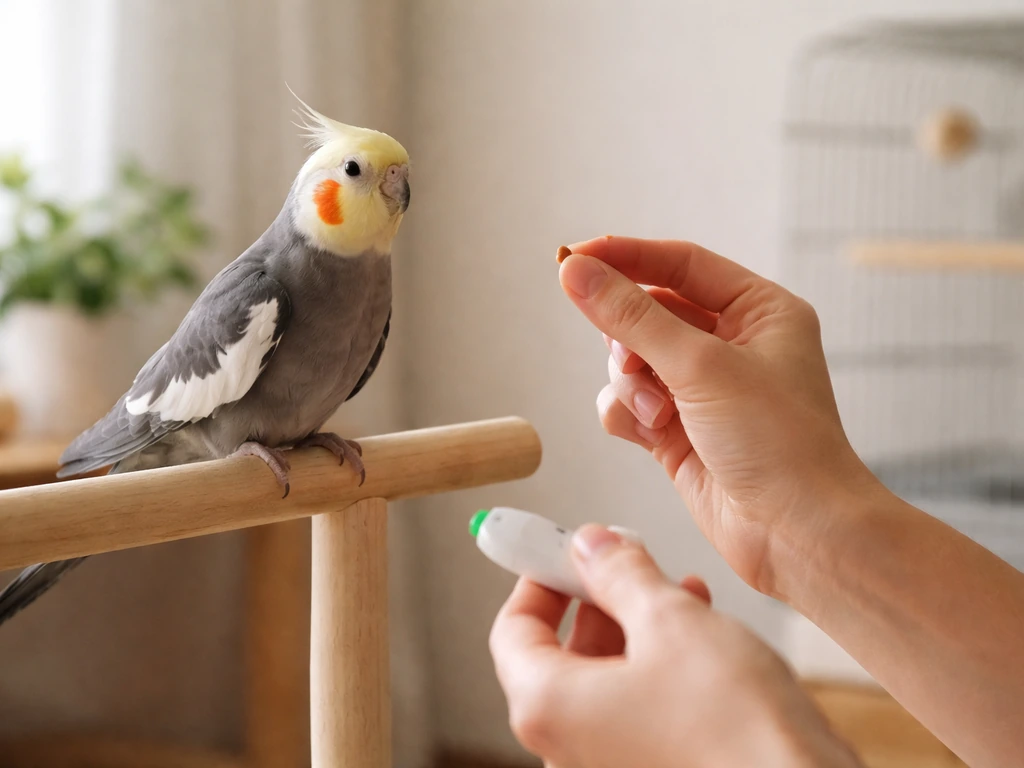
Timing is everything. The reward has to feel connected to the behavior, and the only reliable way to do that is with a marker: a precise signal that tells the bird "yes, that exact thing" the instant it happens. A clicker is the classic tool, and it works because it's consistent and distinct. A short verbal marker like "yes" or "good" works too, as long as you say it the same way every time.
The AVSAB describes marker training as a three-step loop: observe, mark, reinforce. The mark and the reward are separate events. You click (or say "yes") the moment the behavior happens, then deliver the treat within a second or two. If you mark and reward at the same time, the timing gets muddy. Keep them as two distinct steps. Use one clear criterion for what earns a mark. If you're teaching spin, only mark full rotations, not half-turns. Consistency here is what shapes clean behavior.
Session structure
Keep sessions short. Five minutes is enough for most birds. Three is better for new learners or anxious birds. End while the bird is still engaged and succeeding, not when it's bored or checked out. Two to four short sessions per day beat one long session. Always end on a win: ask for something easy at the very end so the last thing the bird experiences is success and a treat.
Teaching basic tricks step-by-step
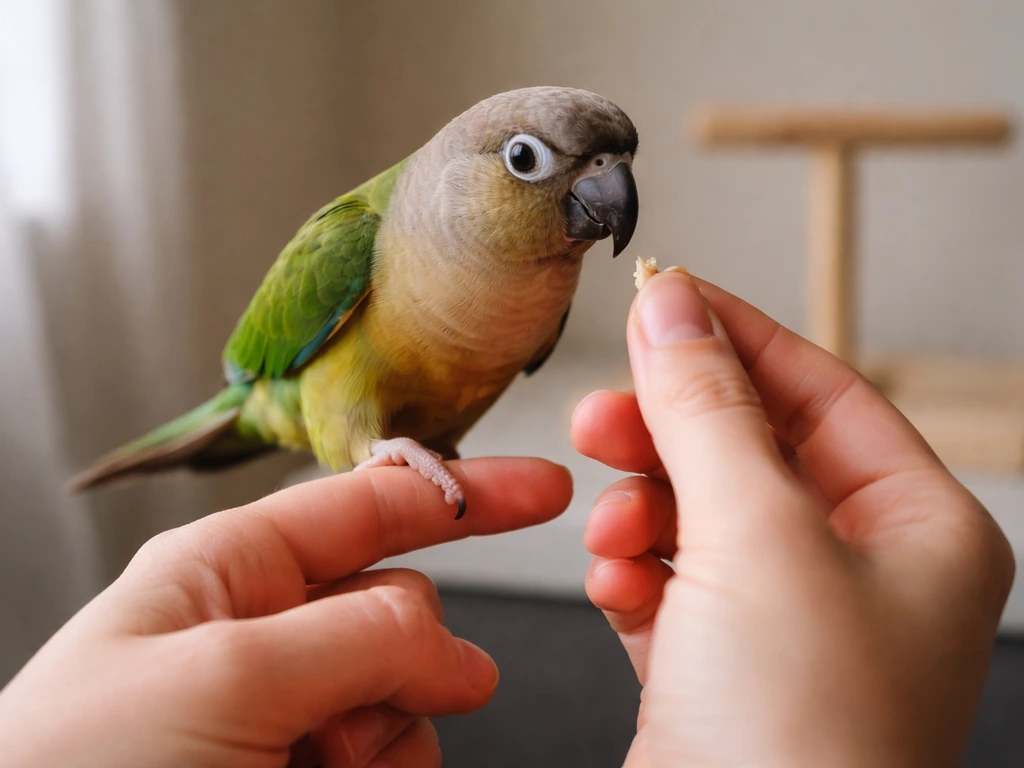
Here are the four beginner tricks I recommend starting with, in order of difficulty. Work through them in sequence if your bird is new to training.
Step-up (the essential first trick)
If your bird doesn't already step up onto your finger or a handheld perch reliably, start here before anything else. Present your finger or perch at the bird's chest level just above the feet. Say "step up" once in a calm voice. The moment one foot lifts onto your hand, click and treat. Repeat until the bird steps up eagerly on cue. Then gradually wait for both feet before marking. This single behavior is the foundation for almost every other trick.
Targeting
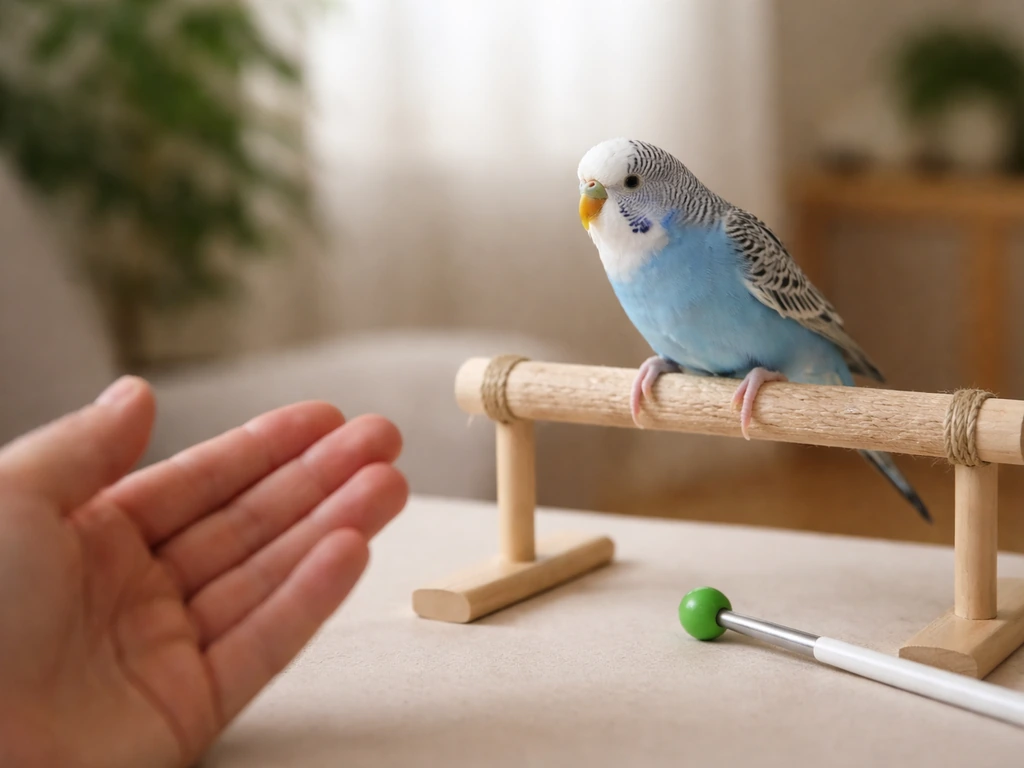
Hold a chopstick, pencil, or commercial target stick near your bird (not touching it). When the bird leans toward it or touches it with its beak, mark and treat immediately. Move the stick around slightly to prompt the bird to follow and touch it. Targeting is a powerful tool because you can use the target stick to guide the bird into almost any position, which makes it the shortcut to teaching turn, spin, and many other tricks.
Turn and spin
Once your bird targets reliably, use the target stick to guide it in a full circle. Hold the stick just in front of the bird's beak and slowly arc it around the bird's body. The bird will follow with its beak and naturally rotate. Mark when it completes the circle. After 5 to 10 repetitions, start adding a verbal cue ("spin" or "around") right before you move the stick. Over time, you'll fade the stick out and the bird will spin on the verbal cue alone. For a half-turn or "turn around," use the same method but stop the arc at 180 degrees.
Wave
Wave is essentially a step-up that never gets completed. Present your finger for step-up, but pull it away just as the bird lifts one foot. Mark and treat the moment the foot lifts. Repeat, and start adding the verbal cue "wave" right as you present your hand. Gradually ask for a bigger lift, then two or three lifts in a row before marking. If you want the full detail on this trick, there's a dedicated guide on how to teach a bird to wave that walks through every micro-step.
Progressing and generalizing tricks
Once your bird can do a trick reliably in one location with you standing in front of it, you've only learned half the lesson. A well-trained bird can perform in different rooms, with different people around, and on different surfaces. This is called generalization, and it takes deliberate practice.
Change one variable at a time. If your bird spins perfectly in the living room, try it in the kitchen. If it works there, try it with a family member in the room. Each new context is a new learning opportunity. Don't be surprised if the bird seems to "forget" the trick in a new place. That's normal. Just go back to basics briefly: use the target stick, reward more generously, and the bird will catch up quickly.
Adding duration is how you build on simple behaviors. If you want your bird to hold a pose or stay on a perch, you do this by gradually delaying the mark. After the bird does the behavior, wait one extra second before clicking. Then two seconds. Then three. Never ask for a big jump in duration all at once. A rule of thumb: increase duration by no more than 25% per session. If the bird fails more than two or three times in a row, you've moved too fast. Go back to shorter durations and rebuild.
Chaining tricks means linking two or more behaviors into a sequence. A classic example: step up, spin, wave, then return to perch. Teach each piece separately first until they're solid. Then chain them by rewarding only the full sequence. Start with just two behaviors chained, then add a third. Chaining works better when you build the chain from the last behavior backward (called back-chaining), because the final behavior is always closest to the reward and stays the strongest.
If you're ready to expand your repertoire with something more physically engaging, the guide on how to teach a bird to fetch is a great next step. Fetch requires targeting, picking up objects, and returning to a location, so it's a perfect intermediate challenge once your bird has the basics.
Troubleshooting common training problems
Most training problems have a simple cause: the bird isn't ready, the criteria jumped too fast, or something in the environment is making the bird uncomfortable. Here's how to handle the most common issues.
Refusal to engage
If your bird just walks away or ignores you, first check motivation. Is the treat actually good enough? Is the bird full? Is it distracted by something else (a window, noise, another pet)? Try a higher-value treat or move to a quieter room. If the bird still isn't interested, respect that. Don't push. Some days birds are just not in the mood, and that's fine. Short, positive, zero-pressure sessions will pay off better over time than forced daily sessions.
Biting during training
Biting during training is almost always a communication signal. The bird is telling you it's stressed, confused, or you've moved too fast. Don't punish biting. Remove your hand calmly, give the bird space, and ask yourself what just happened. Did you push for something it wasn't ready for? Was a trick criterion unclear? Go back to something easy, reward the bird for calm behavior, and approach the difficult part more gradually next time. Punishment reliably makes training worse, not better.
Distraction and short attention spans
This is especially common in young birds and in species like budgies and cockatiels. Shorten sessions to two or three minutes. Remove visual distractions from the training space. Work in a room the bird is familiar with. And keep sessions varied enough to stay interesting: rotate through two or three known tricks plus one new one.
Fear responses
If your bird is showing fear (feathers slicked, wide eyes, trying to flee), you've moved too fast somewhere in the trust-building process. Go back to basics: sitting near the bird, letting it approach you, offering treats through the cage. Do not proceed with trick training until the bird is voluntarily engaging with you. Fear and learning don't mix well, and pushing through fear creates lasting avoidance.
Inconsistent responses to cues
If your bird does a trick sometimes but not others, check whether your cue is consistent. Are you saying the word the same way each time? Are you presenting your hand or the stick in the same position? Birds respond to very specific signals, and small variations confuse them. Video yourself training and watch it back. You'll often spot inconsistencies you didn't notice in the moment.
Species notes, welfare, safety, and the pet vs. wild bird distinction
Not every bird can or should be trained the same way. Here's a quick reference for the most common species groups, followed by important welfare and legal notes.
| Species Group | Trainability | Best Tricks to Start | Special Notes |
|---|---|---|---|
| Budgies (parakeets) | High, but short attention span | Targeting, step-up, turn | Keep sessions under 3 minutes; very sensitive to pressure |
| Cockatiels | High, social and willing | Step-up, wave, spin | Respond well to verbal praise as reward |
| African Greys | Very high, long memory | All basics plus fetch, speech-linked tricks | Can become bored quickly; need variety and mental challenge |
| Amazon Parrots | High but assertive | Targeting, spin, wave | Watch for bluffing phase in adolescents; keep sessions calm |
| Macaws | High, physically strong | Targeting, step-up, large-object fetch | Ensure perch is secure; large beaks mean biting hurts more |
| Cockatoos | High but emotionally sensitive | Step-up, wave, simple chained tricks | Prone to over-excitement; end sessions before they escalate |
| Corvids (legal pet/educational) | Extremely high | Complex object tasks, targeting, fetch | Need very high-value rewards and mental enrichment daily |
| Canaries / Finches | Low for physical tricks | Targeting only (limited) | Focus on song training and environmental enrichment instead |
| Chickens / Ducks | Moderate | Targeting, step-up to platform, spin | Highly food-motivated; excellent for clicker training |
Safety during training
Always train in a safe, enclosed space. Close windows and doors. Cover mirrors if your bird gets confused by reflections. Don't train near ceiling fans, open water, or hot surfaces. If you're working with a large bird like a macaw or cockatoo, wear appropriate clothing on your arms if you're still building trust. Never use force to position a bird's body into a trick pose. If you can't lure or target the bird into position, the behavior isn't ready to be taught yet.
Wild birds, rehabilitated birds, and legal considerations
This section is critical if you're a wildlife rehabilitator or you've found a bird you're caring for temporarily. Wild birds in the US, Canada, and most other countries are protected by law, and keeping them without a permit is illegal. Migratory birds are protected under the Migratory Bird Treaty Act, which covers most songbirds, raptors, and waterfowl. If you find an injured or orphaned wild bird, contact a licensed wildlife rehabilitator immediately.
For licensed rehabilitators: the welfare concern with young wild birds is imprinting. Wildlife rehabilitation organizations note that young birds, especially raptors, corvids like crows and jays, and newly hatched waterfowl, are the species of greatest concern for imprinting on humans. Experienced rehab centers use specific techniques to prevent this, including using species-appropriate puppets, minimizing direct human contact, and housing birds with conspecifics whenever possible. Teaching tricks to a wild bird in rehab is strongly discouraged because it deepens human imprinting and reduces the bird's chances of successful release.
Educational birds (non-releasable birds kept for falconry, education programs, or permitted wildlife centers) are a different category. These birds can absolutely be trained using positive reinforcement, and trick training is actually beneficial for their welfare because it provides mental stimulation and gives them agency over their environment. But even here, the welfare-first principle applies: the bird should always be able to opt out of a training session, and sessions should be structured to minimize stress.
Welfare-first as a guiding principle
The professional and scientific consensus from major animal welfare and veterinary behavior organizations is consistent: positive reinforcement methods produce better learning, stronger bonds, and better welfare outcomes than punishment-based or coercive methods. That doesn't mean you're a bad person if your bird bites and you flinch, but it does mean that deliberate use of punishment (spraying with water, yelling, physically forcing behaviors) will cost you trust and make training harder over time, not easier. Keep it positive, keep it short, and keep paying attention to what your bird is telling you.
Where to go from here
If you've read this far and you're not sure where to start, here's the simplest possible plan: pick one trick, find one high-value treat, and do five repetitions today. That's it. Don't worry about getting it perfect. The first session is about seeing what motivates your bird and what it's comfortable with. Everything else builds from there.
For a deeper look at the full range of behaviors you can work toward, this comprehensive guide on how to teach your bird covers the broader training journey from your first session all the way to advanced behaviors. It's a good companion resource to return to as your bird progresses.
The most important thing to remember: your bird is not a performance animal. Tricks are enrichment, bonding, and mental stimulation. The goal is a bird that enjoys its sessions with you and a relationship built on trust. When you approach it that way, tricks become the natural outcome of a great bond, not something you have to fight for.
FAQ
What should I do if my bird takes the treat but still will not repeat the behavior right away?
That often means the bird is interested in the reward but not yet confident in the behavior chain. Lower your criteria back one step (for example, mark the earlier version of the movement), then rebuild. Also check timing, the marker should happen instantly when the correct part occurs, otherwise the bird may not understand what earned the treat.
How do I choose a “high-value” treat without accidentally training through overeating?
Use tiny pieces and watch body cues. If you notice loose droppings, frequent regurgitation (in some parrots), or the bird becomes unmotivated because it is full, switch to a different treat option for training and reduce quantity per session. A simple check is to see if the bird is still eager for the next repetition without seeming stuffed.
Can I teach tricks if I do not have a clicker?
Yes. Use any consistent marker you can deliver instantly, such as a short word (“yes” or “good”) or a distinct sound. The key is separate timing from the reward, mark at the behavior, then deliver the treat within a second or two. Practice by recording yourself once, you want the marker to land exactly on the correct moment.
What if my bird goes quiet or freezes during training instead of showing stress signals like lunging?
Some birds show fear by shutting down rather than fighting. Treat that as a stress sign. End the session early, return to a trust-building task the bird already accepts (for example, eating treats through the bars or stepping up reliably), then try again later with shorter sessions and more distance between you and the bird.
How can I prevent my bird from only performing tricks when it sees the treat?
Gradually fade the visible treat. Start by keeping the treat delivery consistent but reduce how obvious it is during the cue. Over time, reward from your hand or container after the marker, not by showing it before the behavior. Also vary rewards slightly (still positive) so the cue predicts the outcome, not the sight of food.
Should I train every day, even when my bird seems stressed or distracted?
Not necessarily. If the bird is avoiding, flying away, or showing shutdown cues, skip that day or switch to a very easy win with minimal handling. Two to four short sessions are enough when things are going well, forcing training on bad days tends to create avoidance rather than faster progress.
How do I handle it if my bird bites the target stick or grabs the hand instead of touching politely?
Stop and lower the difficulty. Increase distance so the bird can target without contacting your hand, and mark only the behavior you want, like touching the stick with the beak. If the bird is too aroused to practice calmly, pause until it settles, then resume with a different easy behavior it already understands.
Is it okay to teach tricks to a bonded bird, even if it does not like being handled?
You can, but start with non-hand-dependent behaviors (targeting, calling a cue, turning in place, perch-based actions). If hand contact triggers discomfort, avoid progressing toward step-up variations until the bird is voluntarily comfortable. The goal is opt-in cooperation, not “desensitizing by force.”
What’s the safest way to train with children or other household members around?
Generalization includes different people, but introduce humans gradually. Start by having only one person present and reward calmer body language. When you expand, keep the same cues and same training space, and require everyone to follow the same rules (no reaching, no sudden movements) so the bird does not learn inconsistent signals.
How can I tell whether I moved too fast versus whether the environment is the problem?
If the bird struggles across multiple days and contexts, think criteria. If it struggles only in one place or time (noise, windows, a fan turning on, a pet passing by), think environment. A quick decision aid is to run two short tests: one in a familiar quiet spot with the same cue and one in the challenging spot using an easier criterion, then compare success rates.
What should I do if I accidentally reward the wrong behavior (for example, I click too late)?
It happens. Don’t try to “correct” the moment with punishment. Next repetition, reset to a behavior the bird can do easily and ensure your marker timing is accurate. If you notice a pattern, slow down your setup so you can observe the behavior clearly and mark the exact target.
Next Articles
How to Teach a Bird to Step Up Safely and Reliably
Step up training guide for birds: humane cues, setup, treats, reinforcement, and troubleshooting for safe reliable hand
How to Teach a Mynah Bird to Talk: Step-by-Step
Step-by-step mynah training plan to teach talking, with setup, daily routine, rewards, timing, and troubleshooting for n
How to Teach Your Bird to Say Peekaboo Step by Step
Step-by-step training to teach your pet bird peekaboo, with setup, rewards, fixes for common issues, and maintenance.