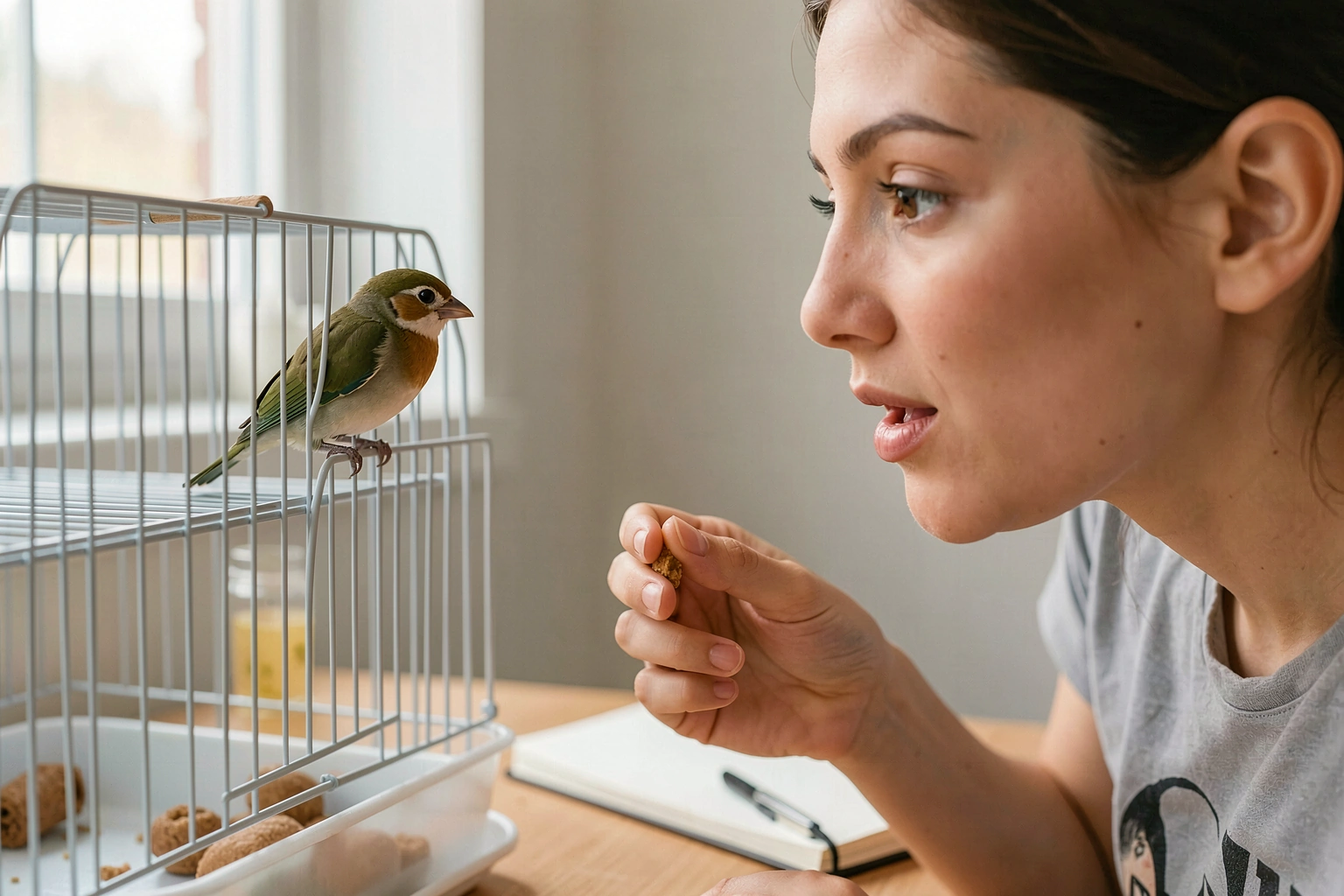
Teaching a bird to step up is the single most useful thing you can train, and it's more straightforward than most people expect. The behavior itself is simple: your bird voluntarily places one foot, then its full weight, onto your finger or hand on cue. No grabbing, no forcing, no drama. Once it's reliable, almost every other handling task becomes easier, whether that's moving your bird to a new perch, doing a quick health check, or just building trust. Here's exactly how to get there.
How to Teach a Bird to Step Up Safely and Reliably
Maya Harris
10 Apr 2026
What 'step up' actually means (and why birds sometimes fight it)
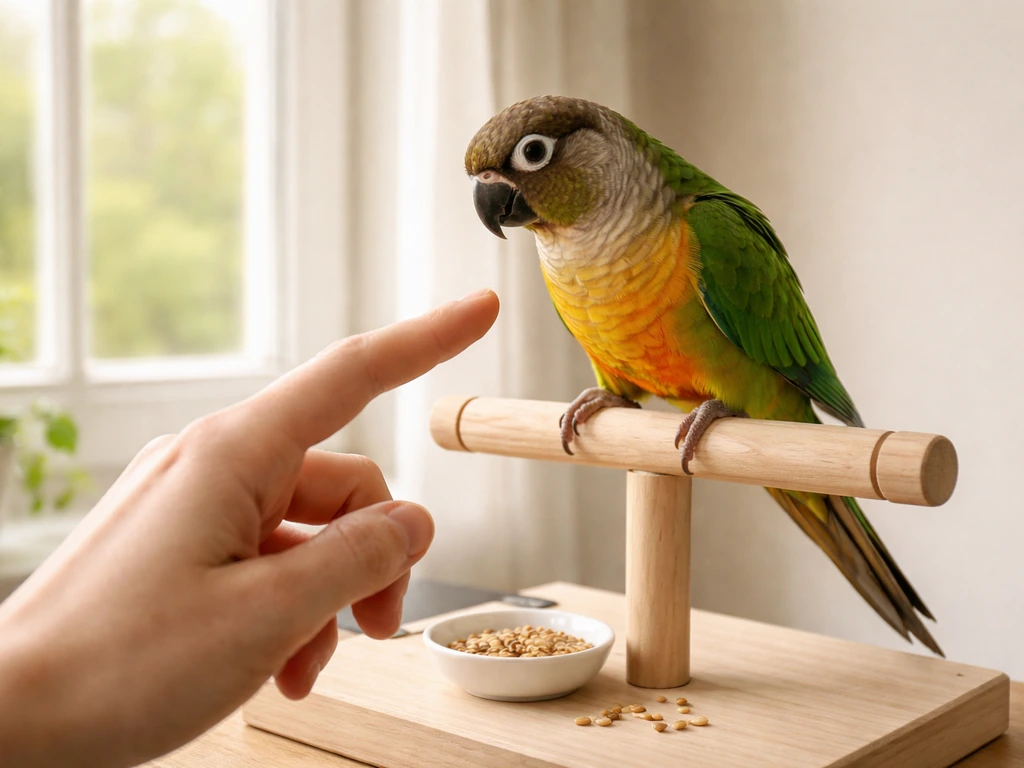
A proper step up means your bird shifts its weight and places a foot onto your offered hand or finger as a deliberate, voluntary choice. The defining moment is that foot-on-hand placement with actual weight transferred, not just a toe brush or a reluctant lean. It sounds simple, but it's worth being precise about what you're training for, because a half-hearted step that the bird immediately reverses doesn't count as a fluent behavior.
Birds resist for a few different reasons. Some haven't learned that a hand near them is safe, so the whole situation reads as a threat. Others have been grabbed or forced before and have learned that a moving hand means something uncomfortable is coming. Some birds are simply highly motivated to stay exactly where they are, especially if they're on their cage or a favorite perch. A bird that bites when you present your hand isn't being stubborn or mean. It's communicating, usually that something about the situation feels unsafe or unpredictable. The good news is that all of these reasons are fixable with the right approach.
Safety first: reading your bird and setting up the space
Before any training session, take thirty seconds to read your bird's body language. Warning signs that your bird is over threshold and not ready to work include: feathers puffed tightly around the head and shoulders, wings held visibly away from the body, a fanned tail, aggressive lunging at the perch, and eye pinning (rapid dilation and contraction of the pupils, mostly visible in parrots). If you see any combination of these, skip the session. Training a stressed bird doesn't teach step up, it teaches the bird that your approach predicts a bad experience.
A calm bird ready to engage will sit loosely, may preen briefly, and will orient toward you with curiosity rather than defensiveness. Some birds also show a subtle crouching posture right before a bite, so learn your individual bird's specific pre-bite signals. If you're genuinely unsure how to read your bird's signals, a quick consultation with an avian vet is worth it, especially if you're also noticing any new or escalating aggression, which can sometimes have a medical cause.
For setup, choose a neutral space away from the bird's cage if you can. The cage is home territory, and many birds are significantly more motivated to stay put or defend it when they're sitting on top of it. A room where the cage isn't in direct view reduces the pull to escape back to it. Keep sessions short (five to ten minutes maximum), quiet, and free from distractions like other pets or sudden noises. If you're working with a larger bird that has a known bite history, start with a wooden dowel instead of your bare hand. This isn't a long-term strategy, but it protects you while the bird is learning that stepping onto an object is safe.
Step-by-step: how to teach your bird to step up
The method below works for most hookbills and psittacines, including parakeets, cockatiels, conures, and larger parrots. For small finches and canaries, step up is much less commonly trained and those species are typically handled differently, so this guide is most directly applicable to hand-perchable birds.
- Get your bird comfortable with your hand in the area. Before you ask for anything, simply hold your hand still near the bird without pressing or reaching. Reward calm behavior (not flying off, not lunging) with a small treat. Do this for a full session or two if needed.
- Introduce a marker sound. A clicker works well, but a short verbal marker like 'yes' is fine. Pair it with a treat 8 to 10 times in a row so your bird learns that the marker reliably predicts a reward. After this pairing, deliver the treat within one to two seconds of the marker every single time.
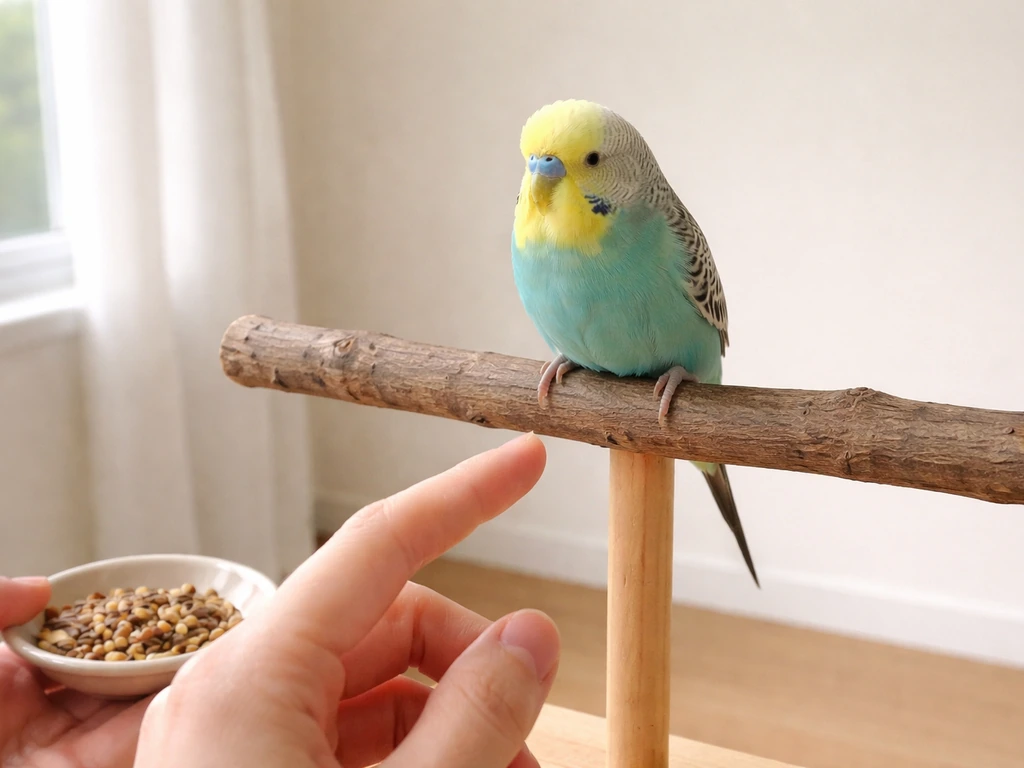
- Present your hand as a stable perch. For small birds like budgies, use one index finger held horizontally, palm down, so it looks like a natural branch. For larger birds, offer a flat, still palm or the side of your index finger. The key word is stable. A wobbling, hesitant hand is harder to step onto and can startle the bird.
- Apply gentle pressure to cue the step. Position your finger or hand just above the bird's feet and press it gently against the lower chest or belly, right above the legs. This light pressure shifts the bird's center of gravity slightly forward, which naturally prompts it to lift a foot to rebalance. You're not pushing the bird. You're just creating a small moment where stepping forward is the easiest thing to do.
- Mark and reward the instant a foot touches your hand. Even if the bird only places one toe on your finger and then pulls back, that's worth marking and rewarding at the start. You're building on the smallest correct responses.
- Add the verbal cue once the foot placement is happening reliably. Say 'step up' clearly and calmly right before you present your hand. Timing matters here: say the cue, then present the hand, not simultaneously. Over repetitions, the cue will predict the hand, and the bird will start anticipating the step.
For budgies specifically, the palm-down horizontal finger approach is particularly effective because it mimics the profile of a natural perch. Many budgies will step onto a still horizontal finger much more readily than onto a vertical or angled one that looks like something closing around them. If you're working to teach your bird new behaviors beyond step up, this same patient shaping approach applies across almost everything.
Treats, timing, and making the behavior stick
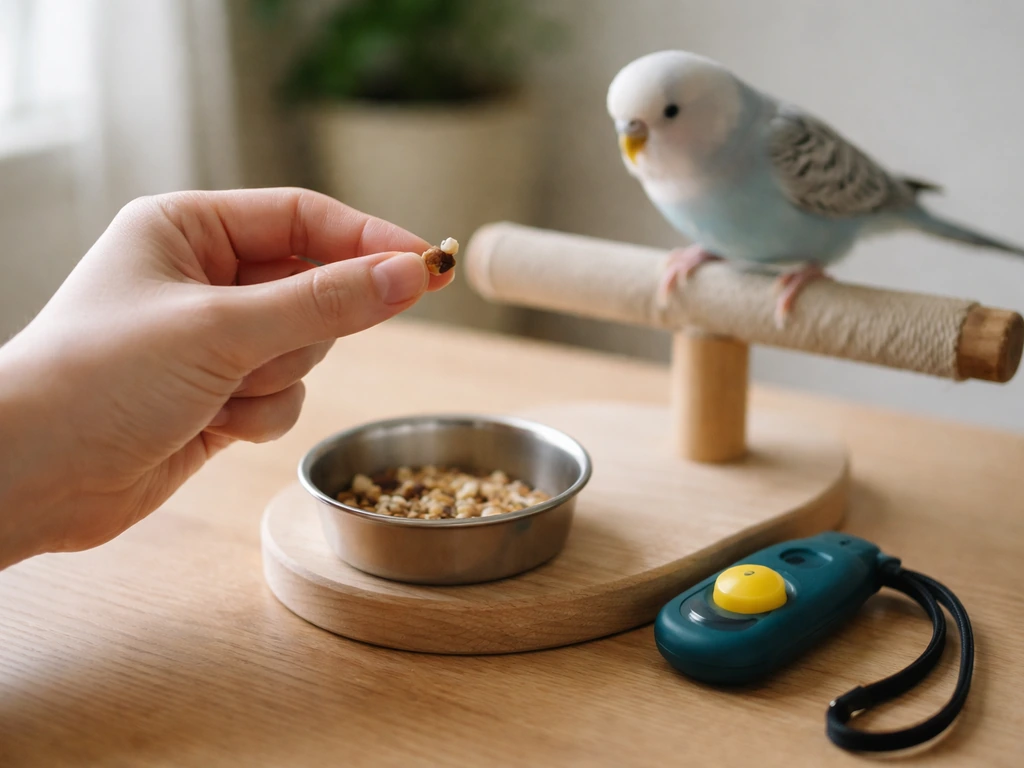
Reinforcement is the engine of training, and getting the details right matters more than most people realize. Association of Avian Veterinarians materials emphasize implementing positive reinforcement with step-by-step, customized training protocols to support behavioral change in birds. Use treats your bird actually loves, not just what's convenient. For most parrots this means small pieces of fruit, a specific seed, or a soft treat that can be consumed in about two seconds. If your bird takes the treat politely and looks for more, you've found a good reinforcer. If it drops the treat or ignores it, find something else.
Timing is everything. The marker (click or 'yes') needs to happen at the exact moment the foot touches your hand, and the treat needs to follow within one to two seconds. If there's a long gap between the behavior and the reward, your bird will associate the reward with whatever it was doing in that gap, not the step up. This is the most common reason early training stalls.
Start with continuous reinforcement: reward every single correct step up, every time, in early training. Once the behavior is happening reliably and your bird is stepping up calmly and consistently, you can begin to shift to an intermittent schedule, rewarding most responses but not every single one. This is actually important for long-term reliability. Behaviors maintained on a consistent intermittent schedule with a high reinforcement rate are more durable than those only ever reinforced continuously. Move gradually. Don't jump from rewarding every rep to rewarding one in five. Thin the ratio slowly over many sessions.
Building from a single step to a consistent, reliable behavior
Early in training, success looks like: bird places foot on hand, you mark and reward, bird steps back. That's a complete repetition. As training progresses, you raise the criteria gradually. First, you reward only when full weight is transferred (not just a toe touch). Then you reward only when the bird stays on your hand for two to three seconds before stepping off. Then you start asking for step ups in different positions, like when the bird is lower than you, at eye level, and when you approach from different angles.
Generalization is one of the most overlooked parts of step-up training. A bird that will only step up from its specific perch, at one particular angle, isn't actually reliable. Practice stepping onto different objects: your hand, a training perch, a dowel, different surfaces. This variety teaches the bird that 'step up' means 'step onto whatever stable surface is being offered,' not just one specific setup. It also reduces the chance that the bird associates the cue with a single location or context.
Once step up is solid, it opens the door to a lot of other fun training. Teaching your bird tricks becomes much easier once it's comfortable being handled and stepping onto your hand reliably, because you already have a working communication system and a bird that trusts the training process.
Troubleshooting: when the bird refuses, bites, or just doesn't get it
The bird backs away or flies off
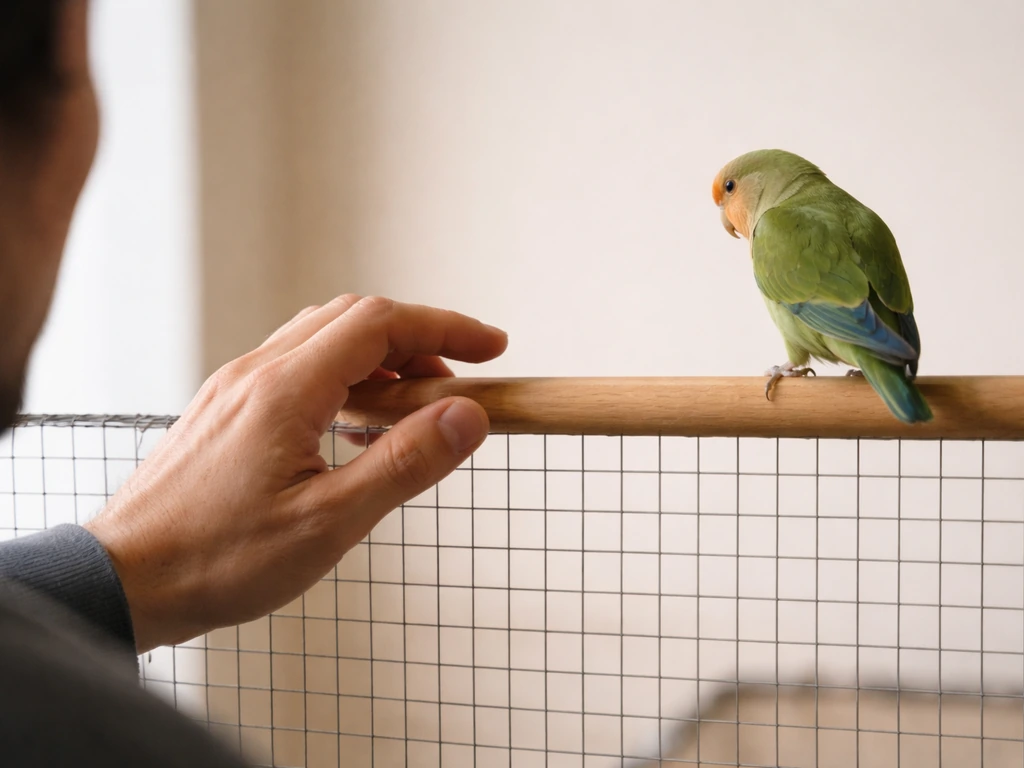
This usually means you're moving too fast or your hand is being presented in a way that reads as a threat. Go back to hand-presence desensitization: just hold your hand near the bird without asking for anything. Reward calm body language. Make sure your approach is slow and your hand is steady. Abrupt movements, even well-intentioned ones, trigger the flight response.
The bird bites when you try
Never push through a bite by continuing to press forward. That teaches the bird that biting is necessary to get you to stop, and it will use that strategy again. Instead, calmly remove your hand, give the bird a moment, and ask yourself whether you were reading the warning signs correctly. Most bites are preceded by body language signals that were missed or ignored. If the biting is new, sudden, or escalating without any clear training reason, get a veterinary evaluation before continuing. Pain and illness can cause birds to bite when they never did before.
The bird steps up but immediately steps back off
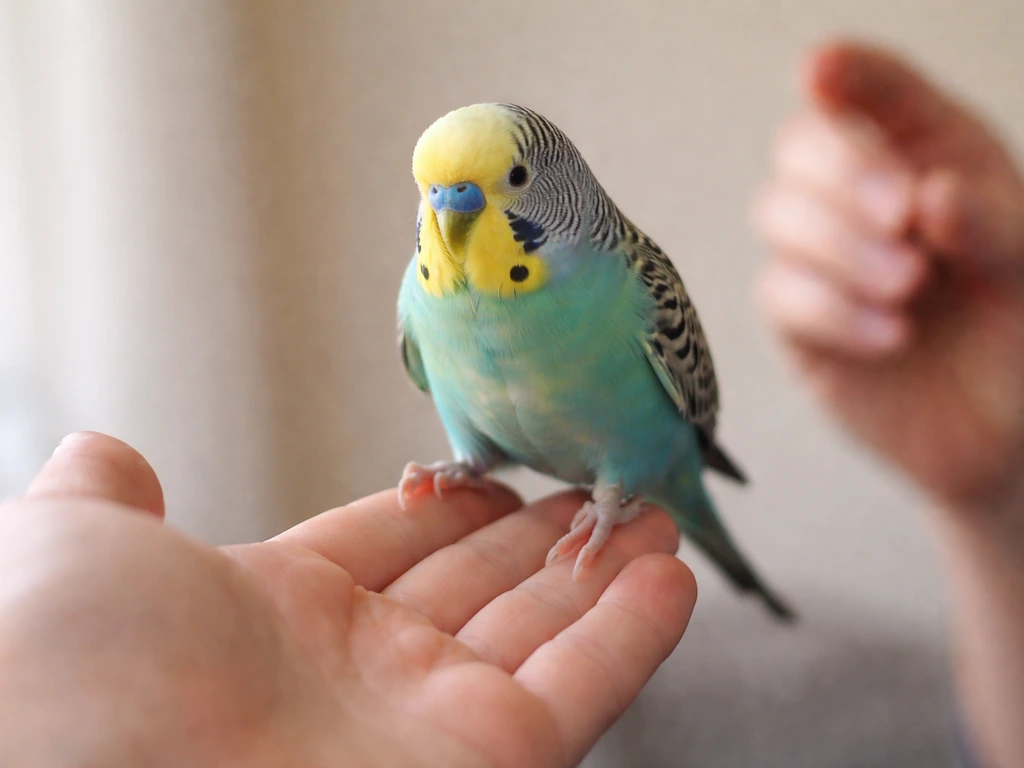
This is normal early in training. Mark and reward the moment both feet are on your hand, before the bird has a chance to step off. You can also make staying on your hand more rewarding than leaving by delivering the treat while the bird is still perched on you, not after it's stepped away.
The bird ignores the cue entirely
Either the cue hasn't been properly paired yet, or the reinforcer isn't motivating enough. Check both. Make sure you've consistently said 'step up' right before presenting your hand for at least 15 to 20 repetitions before expecting the verbal cue alone to work. And try a different treat. Some birds find certain foods only mildly interesting, which isn't enough to overcome the effort of doing something new.
The bird only steps up sometimes (inconsistent)
Inconsistency often means you thinned the reinforcement schedule too fast, or the bird has learned that ignoring sometimes works. Go back to a higher rate of reinforcement for a few sessions, then thin the ratio again more gradually. Also consider context: is the bird near its cage? Near a favorite toy? Strong environmental motivators compete with your reinforcer and will win if the reward value isn't high enough.
If your bird seems generally fearful around hands even after patient work, it may help to consult a positive reinforcement trainer who specializes in parrots. Some birds, especially rescues or those with a history of negative handling, need a longer desensitization period before step-up training can really begin.
A simple practice plan to keep training moving forward
Short and frequent beats long and occasional every time. Aim for two five-to-ten-minute sessions per day rather than one long one. Research on cooperative handling training with parrots supports this structure: twice-daily short sessions over several weeks produced reliable voluntary participation with handling-related tasks. Here's a practical week-by-week framework:
| Week | Focus | Session length | Reps per session |
|---|---|---|---|
| Week 1 | Hand desensitization + marker pairing | 5 min | 10–15 marker/treat pairings, no step-up asked |
| Week 2 | Shaping: reward any foot movement toward hand | 5–7 min | 10–20 reps, continuous reinforcement |
| Week 3 | Full foot-on-hand placement + adding verbal cue | 7–10 min | 15–25 reps, continuous reinforcement |
| Week 4 | Weight transfer + duration (2–3 sec on hand) | 7–10 min | 15–20 reps, start shifting to intermittent |
| Week 5+ | Generalization: different locations, surfaces, angles | 7–10 min | Varied reps, intermittent reinforcement |
Once step up is consistent across locations and contexts, you have a solid foundation to build on. Teaching a wave is a natural next step because it builds directly on the foot-lift motion your bird already knows from step-up training. From there, other stationary behaviors become accessible too. For example, teaching your bird to fetch is a great way to add enrichment and strengthen the training relationship once handling is comfortable and reliable.
The most important thing to remember: every session is a deposit in the trust account between you and your bird. Go slowly, keep it positive, and stop before either of you gets frustrated. A three-minute session that ends with a willing step up is worth ten times more than a twenty-minute battle that ends in a bite. Patience is the actual technique here.
FAQ
When should I start using the verbal cue “step up” (and when should I say it)?
Use the cue only after your bird has repeatedly stepped up when your hand is present. Then say “step up” right before you offer the hand, not during the moment you see the foot moving. If your bird responds before the hand is offered, the cue is likely already paired correctly; if it hesitates, go back to hand-present training for 15 to 20 reps before trying cue-alone again.
What do I do if my bird steps up, but steps right back down immediately?
If your bird steps up and then immediately jumps back, first make sure you marked and rewarded the moment full weight was on your hand, not after it stepped off. Then add a short “stay” increment by rewarding only when it remains for 2 to 3 seconds. If it bolts every time, keep the session shorter and reduce criteria again for a few repetitions.
Why does my bird work on some days but refuse other times, even with the same hand and treats?
Avoid asking for step up at moments your bird is unusually motivated to resist, such as during loud household activity, right before lights out, or when it is actively defending a favorite item. A practical fix is to choose a calmer baseline time, keep sessions short, and confirm your reinforcer is high value by offering it outside of training to see if your bird actively seeks it.
How can I tell when my bird is becoming overstressed, and should I stop training?
Take a breath and stop the session when you see a repeat pattern of warning signs, like eye pinning plus lunging, puffed shoulders with wing extension, or a crouch right before contact. Then do desensitization only (hand near, calm reward, no asking for a step up). Reintroduce step up only after the bird can tolerate the hand near it without escalating.
Should I keep my hand position exactly the same while teaching step up, or vary it from the start?
Yes. Many birds learn faster when the hand is consistent in height, orientation, and distance. If step up keeps failing, standardize to the same starting perch height and offer the same finger position each rep. After reliability improves, then begin the position and angle changes described in the article.
What if my bird only steps up for specific treats, and ignores everything else?
If your bird only steps up for certain foods, treat that food as part of the training plan until behavior is fluent. Once step up is solid, thin to smaller portions, vary reinforcers (still high value), and avoid switching to low-value treats too early. If you change treats, do it gradually, not all at once mid-session.
My bird bites during step-up attempts. How should I respond in the moment, and when is it a health issue?
Do not punish or withdraw your hand by force in response to a bite attempt. Instead, remove your hand calmly, reset to hand-presence desensitization, and look for missed body language earlier in the sequence. If biting is new, sudden, escalating, or accompanied by other changes like fluffed sleepiness or reduced appetite, schedule an avian vet check before continuing.
Can I use a dowel or target object to teach step up if my bird has a bite history?
If your bird bites when you present a bare hand but is calmer with a dowel, continue using the dowel briefly to rebuild confidence, then progress back toward your finger over multiple sessions. The key is to make the offered object predictable and safe, so the bird learns step up on a stable platform first.
How long should a training session last if my bird is learning quickly at first?
Long sessions often backfire because the bird reaches its tolerance limit. A useful rule is to end after a small win, such as two to five successful step ups, before the bird starts showing signs of fatigue or frustration. If the bird is still eager, you can repeat short sessions, but stop as soon as attention drops or body language tightens.
What are common mistakes with click/marker timing, and how can I fix them quickly?
Use the start of the step up as your marker moment, then confirm the treat delivery timing with consistency. If the treat is delivered late, try pre-portioning treats and positioning your reward hand so you are not fumbling after the bird steps. Also check that you are only marking after the foot placement you want, full contact, and weight transfer.
My bird steps up from its cage perch but not from other perches. How do I fix that?
If the bird is successfully stepping up but only from one specific perch or surface, treat that as a generalization problem. Practice step up from different stable surfaces (training perch, dowel, different locations in the room) and from slightly different heights once the bird can do it calmly. Keep each new condition short so you do not overload the bird.
Once step up is reliable, how do I start using it for a health check without triggering fear?
Yes, but it should be only when the bird is comfortable with predictable handling. For example, do health checks only while the bird is calmly perched on your hand, then return to easy step-ups. If the bird starts showing warning signs during the check, pause and return to pure step up and hand-presence work until it regains trust.
Next Article
How to Teach a Mynah Bird to Talk: Step-by-Step
Step-by-step mynah training plan to teach talking, with setup, daily routine, rewards, timing, and troubleshooting for n