Being a good bird owner comes down to three consistent habits: giving your bird a safe, stimulating environment, feeding it correctly every day, and building trust through calm, patient interaction. Do those three things well and almost everything else falls into place. This guide walks you through exactly how to do each one, with a same-day checklist to get started right now, troubleshooting for common problems, and clear signs that tell you when to call an avian vet. If you're wondering how to start a bird in the real world, start with these fundamentals and build from there day by day. If your parents are unsure about getting a bird, focus on the concrete care plan in this guide and address their concerns step by step how to convince your parents to get you a bird.
How to Be a Good Bird Owner: Practical Daily Steps
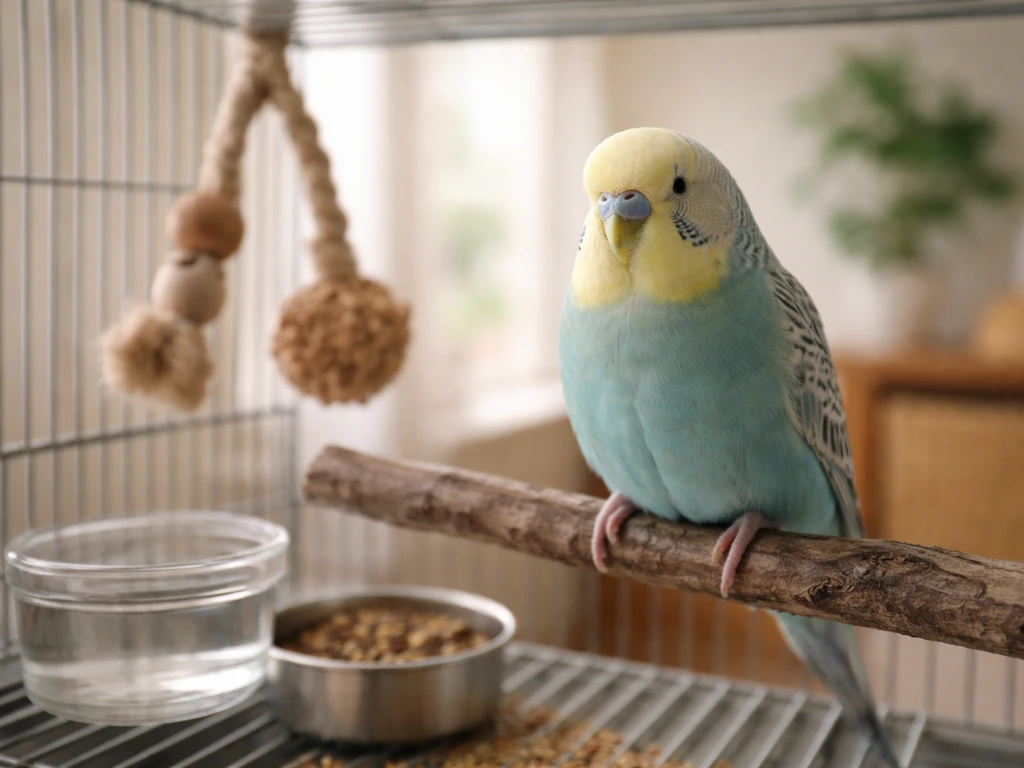
Start-with-today checklist
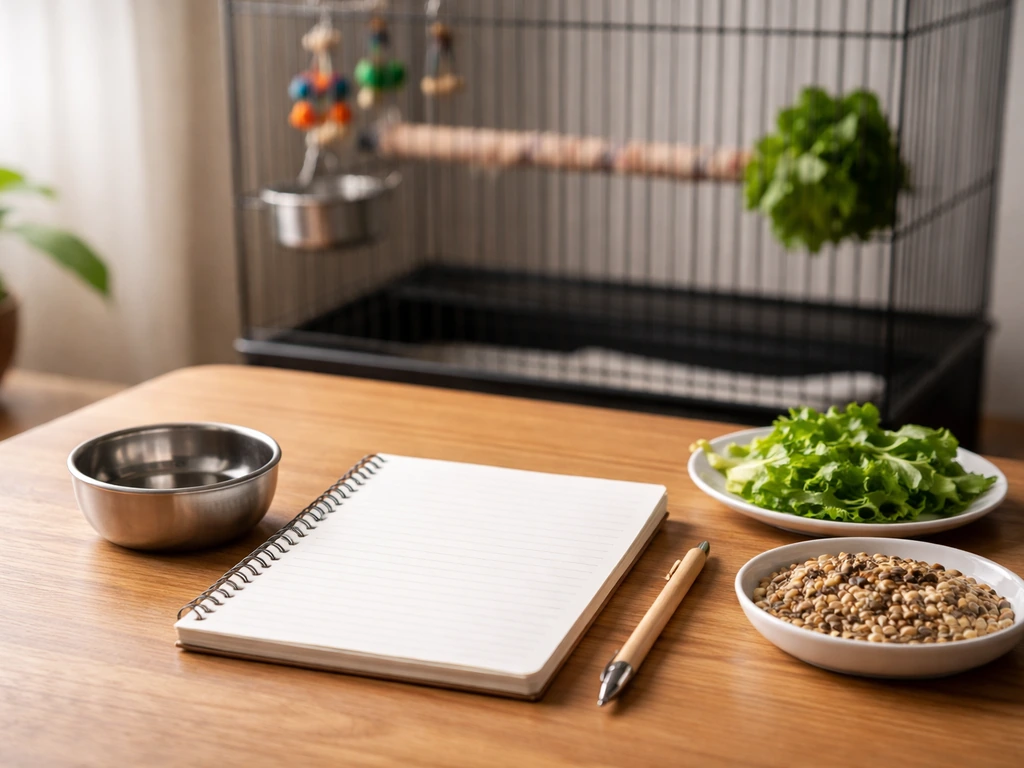
Whether you just brought a bird home or you're trying to improve the care you're already giving, these are the first things to tackle today. Don't try to bond or train until the basics are solid.
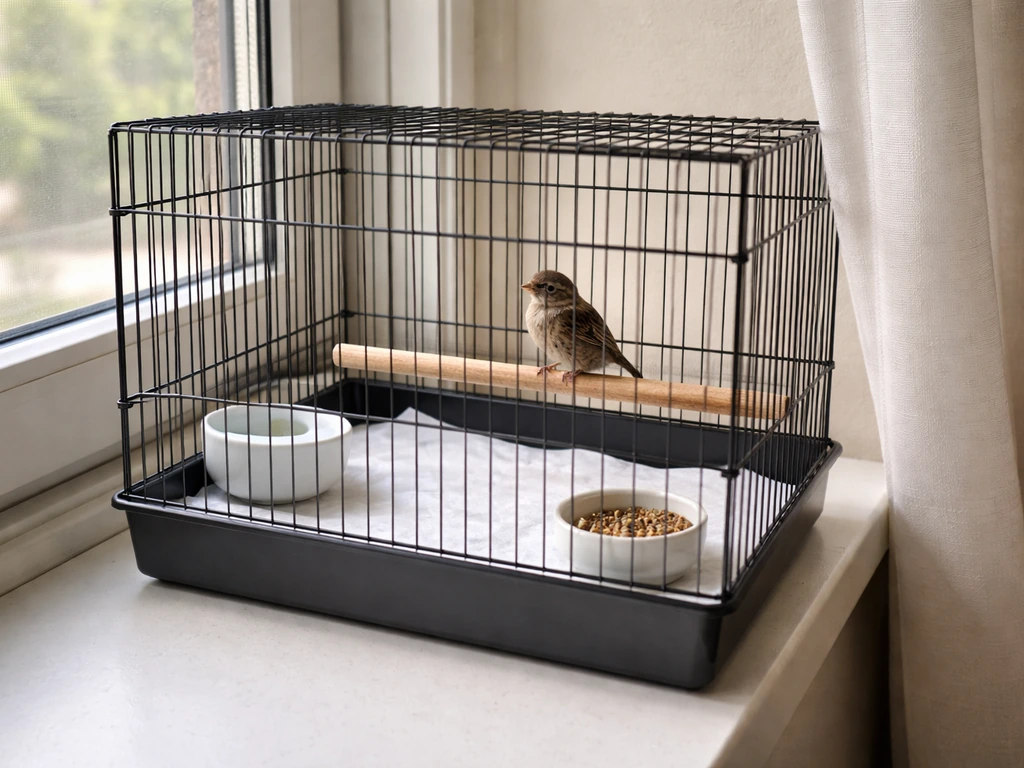
- Confirm the cage is large enough for your bird to fully extend both wings and turn around comfortably, with bar spacing that can't trap the head.
- Check that food and clean water are in the cage right now. Refresh both if they've been sitting more than 24 hours.
- Scan the room for hazards: open flames, non-stick cookware on the stove, scented candles, ceiling fans, open windows, cats, dogs, or small children with unsupervised access.
- Note what your bird's droppings look like today as your baseline. Healthy droppings have three distinct parts: greenish or brownish feces, white or cream urates, and clear urine.
- Give the bird at least 10 undisturbed minutes to observe you from the cage before you attempt any interaction.
- Set a light timer or plan to cover the cage at the same time each evening so the bird gets 10 to 12 hours of darkness.
- Schedule an avian vet wellness exam if your bird hasn't had one in the past 12 months, or if you don't yet have an avian vet identified.
If you're still deciding whether to get a bird, picking the right species for your lifestyle makes everything downstream easier. If you're still deciding, you can also use this as a starting point for how to pick a pet bird that fits your lifestyle and long-term care needs picking the right species. Parrots, finches, canaries, and budgies each have very different social, noise, and space needs, and matching the bird to your household is one of the most important decisions you'll make. Choosing the right bird for you is the first step, so your species matches your noise tolerance, time, and space how to find the right bird for you. If you are specifically looking at how to get a kiwi bird, the best starting point is to confirm whether you can legally keep one and then work out the right housing, diet, and handling plan.
Housing and environment setup
Cage size and bar spacing
The most common housing mistake is buying a cage that's too small. For budgies and other small birds, the minimum is roughly 18 x 18 x 24 inches, but bigger is always better. For cockatiels and conures, you want at least 24 x 24 x 36 inches. Larger parrots like African greys or macaws need cages where they can spread their wings fully without touching the sides. Bar spacing matters too: small birds like finches and budgies need bars no more than half an inch apart so they can't get a foot or head stuck. Larger parrots can handle 3/4 to 1 inch spacing.
Perches: variety is the point
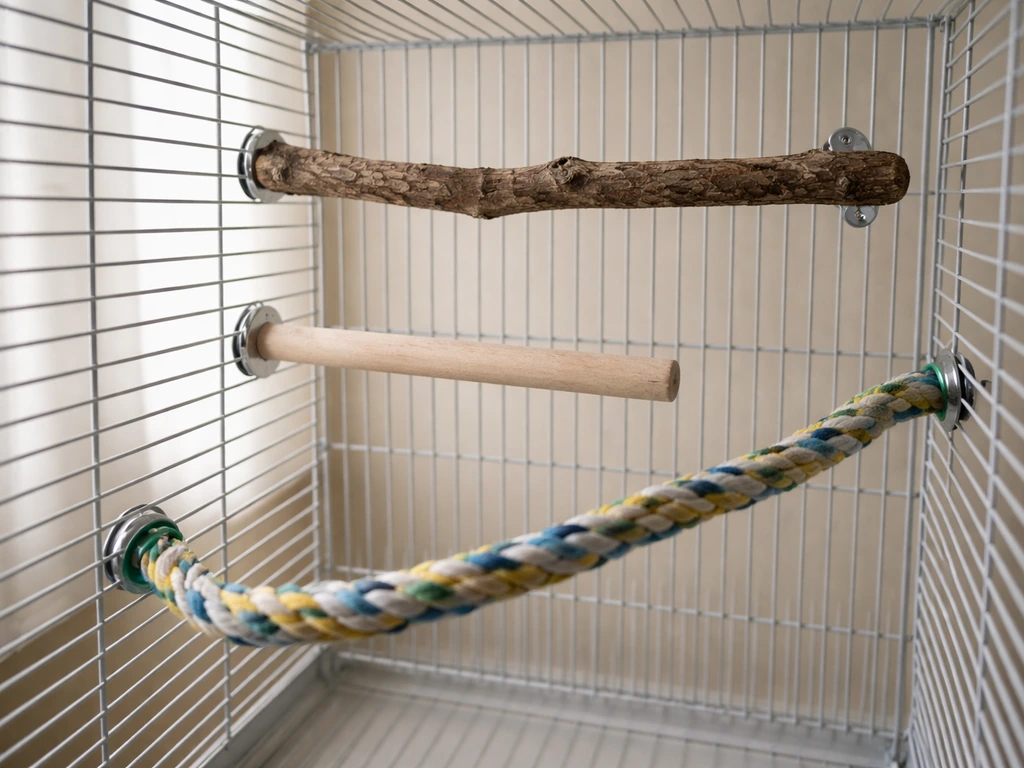
Use at least three different perch types at different heights and diameters. Uniform dowel perches sold with most cages cause foot problems over time because the foot grips the same way every time. Rotate in natural wood perches (manzanita, java wood, or safe fruit tree branches), rope perches, and a concrete or mineral perch near the food station to passively help with nail wear. Avoid sandpaper perch covers, they abrade the feet and don't meaningfully dull nails.
Enrichment inside the cage
Enrichment is not optional, it's healthcare. Boredom causes feather destructive behavior, excessive screaming, and aggression, especially in social species like parrots. Aim for two to three foraging opportunities per day: wrap a piece of food in paper, hide pellets in a cardboard tube, or use a commercial foraging toy. Rotate toys every few days so the bird stays curious. For finches and canaries, nesting materials, swings, and visual complexity (plants, varied perch heights) are the priority since they're less interactive by nature.
Air quality, lighting, and temperature
Birds have extremely sensitive respiratory systems. Never use non-stick (PTFE/Teflon) cookware in the home, as the fumes released during normal cooking, and especially overheating, are rapidly fatal. Scented candles, aerosol sprays, air fresheners, cigarette smoke, and strong cleaning products are all dangerous. Ventilate the room but avoid cold drafts directly on the cage. Keep the room between 65 and 80 degrees Fahrenheit for most pet species. For lighting, birds need exposure to natural light or a full-spectrum avian bulb for around 10 to 12 hours per day, followed by 10 to 12 hours of darkness. A predictable light cycle reduces stress and regulates hormones and sleep.
Cage placement
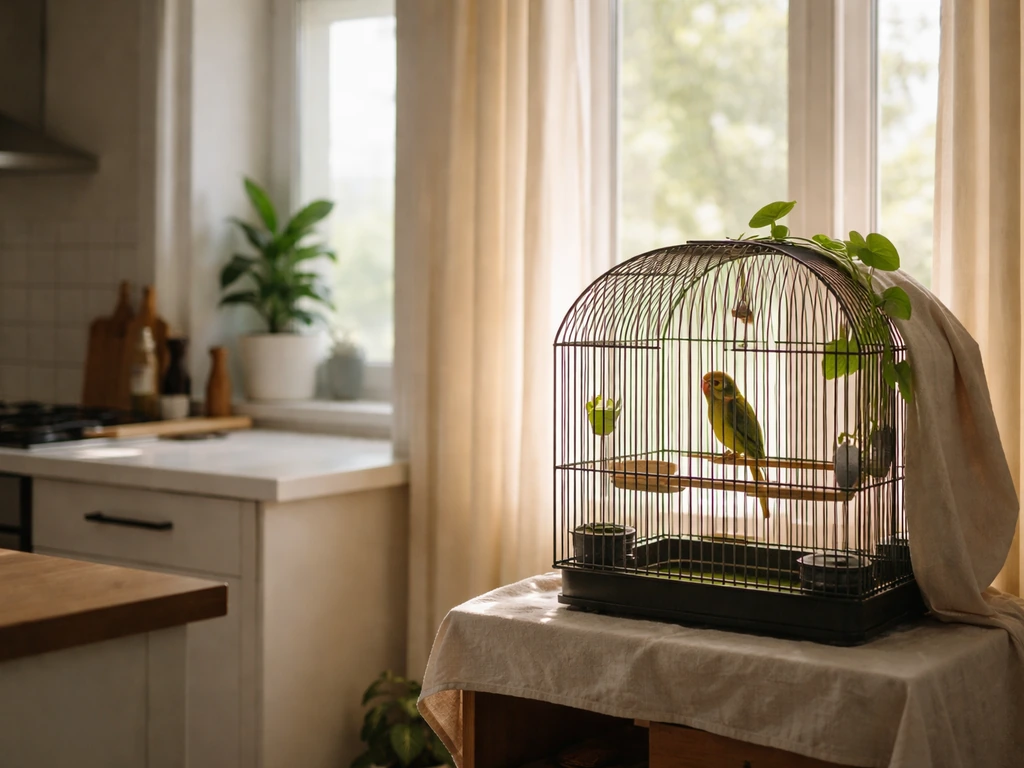
Put the cage at or slightly below eye level in a room where the family spends time, so the bird feels part of the flock. Avoid the kitchen (fumes and temperature swings), bathrooms (humidity and cleaning products), and isolated rooms. One solid wall behind the cage gives the bird a sense of security without cutting it off from activity.
Nutrition and feeding routines
The foundation: pellets, not seed

For most pet parrots, cockatiels, and budgies, a high-quality pelleted diet should make up 60 to 70 percent of the total diet. Seeds are not nutritionally complete and are extremely high in fat. An all-seed diet is one of the leading causes of nutritional deficiency and shortened lifespan in pet birds. Switching a seed-addicted bird to pellets takes patience, sometimes weeks, but it's worth the effort. Finches and canaries are the exception: they do better on a quality seed mix supplemented with fresh greens, egg food, and occasional live food.
Safe fresh foods to add daily
Fresh vegetables and some fruits should fill out the rest of the diet alongside pellets. Dark leafy greens like kale, romaine, and chard are excellent. Cooked sweet potato, carrots, bell peppers, and broccoli are also great options. Fruits should be given in smaller amounts due to sugar content. Remove any uneaten fresh food within two to four hours to prevent bacterial growth.
Foods to avoid completely
- Avocado (toxic to all birds, can be fatal within hours)
- Chocolate and caffeine
- Onions and garlic
- Apple seeds and cherry pits (contain cyanide compounds)
- Alcohol
- High-sodium processed foods or anything with artificial sweeteners
- Rhubarb
Water and food hygiene

Change water every single day, twice daily if the bird dunks food in it. Bacteria and yeast grow quickly in a wet dish with food debris. Wash water and food dishes with hot soapy water daily, and deep-clean with a diluted white vinegar or bird-safe disinfectant solution a few times a week. If your tap water has a strong chlorine taste or known contaminants, filtered water is worth using.
Daily care, cleaning, and health monitoring
Daily routine
- First thing in the morning: uncover the cage, say good morning, and give the bird a moment to wake up before you start anything.
- Refresh food and water.
- Do a quick visual health check (see below).
- Offer out-of-cage time or interaction appropriate to the species and your bird's current trust level.
- Add a foraging activity or rotate a toy.
- In the evening: cover the cage at the same time each night.
Weekly and monthly cleaning
| Task | Frequency | Notes |
|---|---|---|
| Liner/tray paper change | Every 1 to 2 days | Lets you monitor droppings easily |
| Food and water dish wash | Daily | Use hot soapy water; rinse well |
| Perch scrubbing | Weekly | Replace if heavily soiled or cracked |
| Full cage wipe-down | Weekly | Bird-safe disinfectant or diluted white vinegar |
| Toy inspection and rotation | Weekly | Remove frayed rope or splintered wood |
| Deep clean (disassemble cage) | Monthly | Soak trays and grates; inspect bar integrity |
Daily health check: what to look for
Birds hide illness instinctively because in the wild a sick bird is a target. By the time a bird looks obviously sick, it's often quite unwell. Daily observation is how you catch problems early. During your morning routine, scan for these things: bright, clear eyes; smooth, well-kept feathers; alert posture; normal activity level; and droppings that match the bird's baseline. Healthy droppings have three parts: darker feces, white or off-white urates, and clear liquid urine. Very few droppings or no droppings in the morning can mean the bird isn't eating or is dehydrated and that warrants attention.
Grooming awareness
Most healthy birds maintain their own feathers through preening. What you're watching for is over-preening, bald patches, broken blood feathers, or feathers that look dull and matted. Nails that curve so much the bird can't perch normally need trimming. Wing clipping is a personal and welfare decision with real trade-offs: clipped birds are safer in the home but lose some exercise and confidence. If you clip, do it conservatively or have an avian vet or experienced groomer do it. Beaks that are overgrown, crossed, or peeling beyond a normal flaking also warrant a vet visit.
Humane handling, trust-building, and bonding
The most important rule: go at the bird's pace
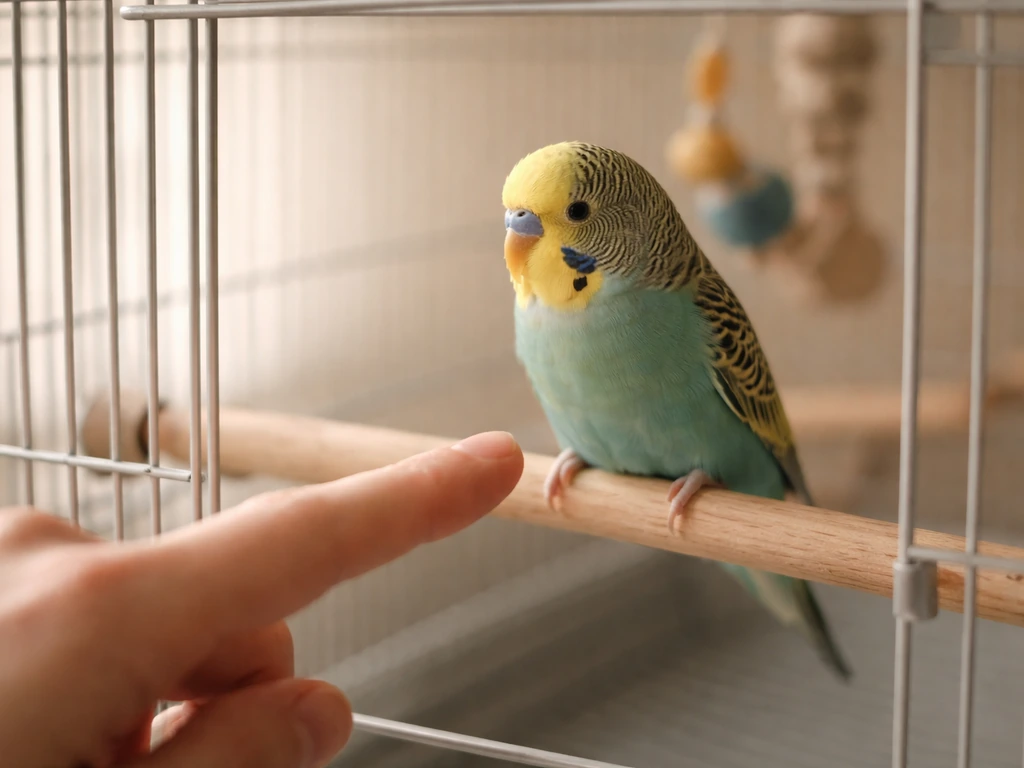
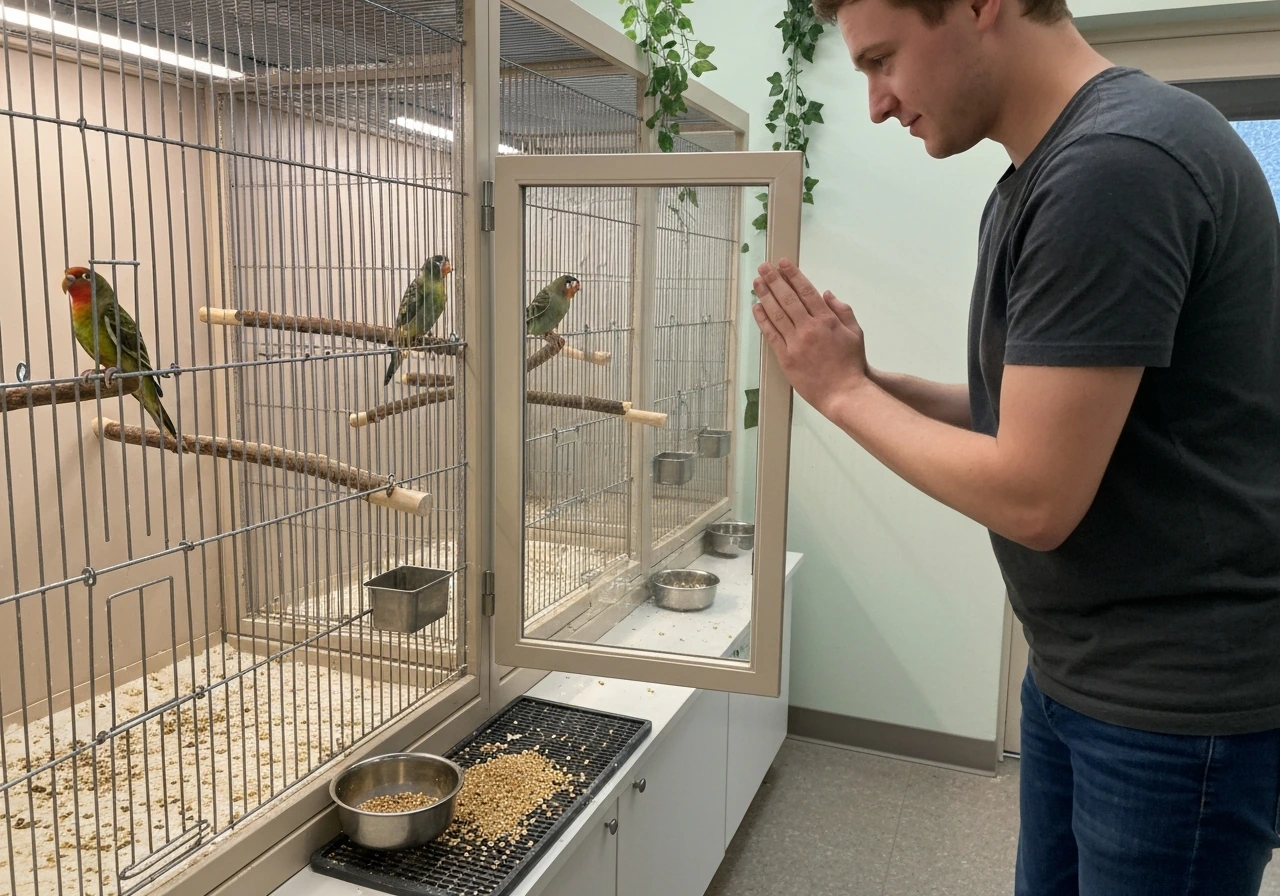
Trust is built through repeated, low-pressure positive experiences, not through forcing contact. If you're working with a new or fearful bird, start by simply being present near the cage without reaching in. Sit next to the cage, talk softly, and let the bird observe you as non-threatening. Offer a high-value treat through the bars. Move to the next step only once the bird is clearly comfortable with the current one. Rushing this process creates fear, and a frightened bird bites or retreats, which sets the relationship back.
Step-up training: the foundation of handling
- Start with your hand resting near the bird inside the cage without moving, until the bird stops moving away from it.
- Present a finger or flat palm just below the bird's chest, at perch height. Say 'step up' in a calm, clear voice.
- The moment the bird steps onto your finger, reward it immediately with a small treat and verbal praise.
- Keep early sessions very short (two to five minutes) and end on a positive step.
- Gradually increase session length and move to stepping up outside the cage once the bird is comfortable.
Bonding for different species
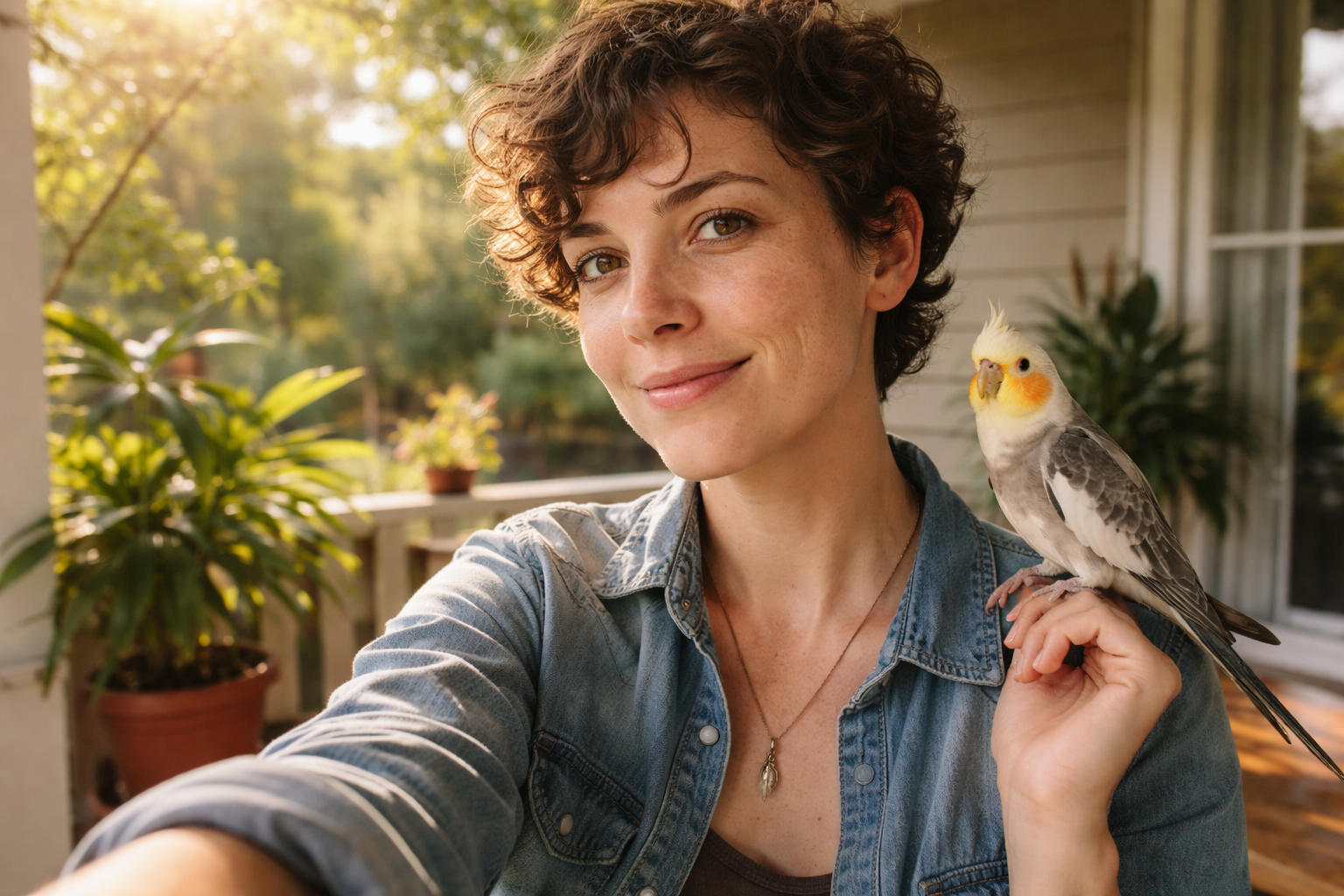
Social parrot species (budgies, cockatiels, conures, African greys, cockatoos, macaws) actively want one-on-one interaction and will bond closely with their primary caretaker. Plan for at least 30 to 60 minutes of real interaction daily for these birds, not just background presence. Finches and canaries are different: they bond to each other and to the routine, not to hands-on handling. These birds are best kept in pairs or small groups and their joy comes from a well-arranged habitat, not lap time. Respecting these natural differences is part of good ownership.
Bathing and preening support
Most birds benefit from regular opportunities to bathe, which supports feather health and skin condition. Offer a shallow dish of room-temperature water a few times a week, or mist your bird with a clean spray bottle set to a fine mist. Some birds love a shower perch in a lukewarm bathroom. Watch what your bird prefers and offer that consistently. Never use cold water or strong sprays, and make sure the bird can dry in a warm room to avoid chilling.
Behavior troubleshooting and humane training plans
How to read normal vs. concerning behavior
Healthy birds are curious, vocal, and active during the day. A bird that suddenly becomes quiet, sits fluffed up on the cage floor, stops eating, or loses interest in interaction is showing you something is wrong. Occasional biting or screaming is normal communication. Constant biting, non-stop screaming, feather destruction, or repetitive pacing are behavioral red flags that signal an unmet need, a welfare problem, or a medical issue.
Common problems and what actually helps
| Problem | Likely cause | Humane fix |
|---|---|---|
| Biting | Fear, overstimulation, hormonal state, territorial guarding | Stop before the bird escalates; read body language; shorten sessions; never punish |
| Excessive screaming | Attention-seeking, boredom, inadequate out-of-cage time, under-stimulation | Never reward with attention; add foraging; increase daily interaction at set times |
| Feather destruction | Boredom, stress, skin condition, nutritional deficiency, or medical issue | Rule out medical causes first; increase enrichment; evaluate diet and environment |
| Aggression toward cage | Cage guarding is territorial instinct; often hormonal | Approach the bird outside the cage for training; don't reach straight into the cage |
| Fear and fleeing | Insufficient socialization, past negative experience, or species temperament | Slow down; use positive reinforcement only; give more low-pressure observation time |
| Chewing everything | Normal foraging behavior, especially in parrots | Provide appropriate chew toys and foraging items; bird-proof out-of-cage areas |
A simple retraining plan for biting or fear
- Take ten days off from any forced interaction. Just be present near the cage.
- On day one, sit beside the cage and offer a treat from your fingers through the bars. No reaching in.
- Once the bird takes the treat calmly for three days in a row, open the cage door and hold a treat just inside without moving.
- Progress to the step-up protocol described above, one small increment at a time.
- If biting happens at any stage, go back one step and stay there longer. Never punish or scold.
Enrichment adjustment plan for screaming or feather problems
If your bird screams excessively or is starting to over-preen, the first thing to audit is the daily routine. Count how many hours the bird spends in the cage with nothing to do. If it's more than four to six hours uninterrupted, that's the starting point. Add a foraging challenge in the morning and one in the afternoon. Increase supervised out-of-cage time by 15-minute increments each week. If the feather destruction is localized (a specific area the bird can't preen normally, like the chest), rule out a skin issue or nutritional deficiency with a vet before assuming it's behavioral.
Safety, legal and welfare considerations, and when to see an avian vet
Making your home bird-safe
- Remove or permanently relocate non-stick cookware from the kitchen or commit to never using it when the bird is out.
- Keep toilet lids closed and fish tanks covered when the bird has flight access to the room.
- Secure electrical cords and anything with small parts the bird could swallow.
- Check that any houseplants in the bird's reach are non-toxic (many common plants like pothos and philodendron are toxic to birds).
- Shut windows and ceiling fans before letting the bird out of the cage.
- Keep predator pets (cats, dogs, ferrets) completely separated during out-of-cage time, even if they seem calm.
Legal and welfare considerations
In the United States, most parrot species bred in captivity are legal to own, but wild-caught birds have been banned from import since the Wild Bird Conservation Act of 1992. Some species like hyacinth macaws and certain cockatoos are protected under CITES and require documentation. Always buy captive-bred birds from reputable breeders or adopt from a rescue. If you encounter an injured wild bird, the legal and safest approach in most countries is to contact a licensed wildlife rehabilitator rather than attempting to keep or treat it yourself. The site covers wildlife handling and foster situations in separate guides if you're in that situation. If you're fostering, start by setting up the same basics as for any new bird so you can build trust safely and quickly foster situations.
Call an avian vet immediately if you see any of these
blank" rel="noopener noreferrer">Open-mouth breathing and visible tail bobbing with each breath are emergencies. This pattern of labored breathing, sometimes called dyspnea, means the bird is working hard just to get air and needs a vet immediately, not a wait-and-see approach. The same applies to bleeding that doesn't stop within a few minutes, a bird sitting on the bottom of the cage and unable to perch, sudden collapse or weakness, obvious injury, or any known or suspected toxic ingestion like avocado, chocolate, or fumes from overheated non-stick pans. If your bird is sick, an avian veterinarian may need to give medicine, and owners should seek veterinary guidance rather than trying to treat blindly at home blank" rel="noopener noreferrer">Merck Veterinary Manual.
- Open-mouth breathing or tail bobbing with each breath
- Bleeding that doesn't stop or blood in the droppings (red or black coloration)
- Droppings that look abnormal for more than 24 hours, or no droppings at all
- Bird sitting on the cage floor and not responding normally
- Sudden loss of balance or inability to perch
- Known or suspected toxic exposure
- Rapid weight loss or visible muscle wasting over the breast bone
- Discharge from eyes or nostrils
Routine avian vet care
Even a perfectly healthy bird should see an avian vet at least once a year for a wellness exam. A good avian vet will weigh your bird, check feather and beak condition, assess the droppings, and talk through diet. Annual visits let you establish a baseline weight so you'd know if the bird drops grams quietly, which is one of the earliest signs of illness in birds. Not every general practice vet has avian experience, so look specifically for a vet with avian specialty training or board certification. Find one before you need one urgently.
Being a good bird owner isn't about being perfect from day one. It's about paying attention, adjusting when something isn't working, and always putting the bird's welfare first over your own convenience. Start with the checklist above today, get the environment and feeding right this week, and build the trust and training from there. The birds that thrive are almost always the ones whose owners bothered to learn exactly what you're doing right now.
FAQ
How can I tell if my bird is getting enough sleep, especially if the room is busy at night?
Use a consistent 10 to 12 hour dark period and avoid late-night light or voices near the cage. If the bird is still active or calling hard when it should be resting, check whether the room light is leaking in, or whether the cage is too close to a bright TV or hallway.
Is it safe to let my bird free-fly around the house before it bonds with me?
Free-flying is risky until you can reliably recall, use target training, and manage window and ceiling hazards. Start with short, supervised sessions in a bird-safe room using a familiar landing spot near the cage, and only proceed when the bird voluntarily approaches you under low-stress conditions.
My bird refuses pellets, what’s the best way to switch from seed without starving it?
Reduce seed gradually rather than all at once, and add pellets by mixing them into preferred foods (such as chopped vegetables or a favored wet mash). Offer pellets in the morning and remove them after a short window, while ensuring the bird still eats enough overall to stay hydrated.
How often should I clean the cage, and can I over-clean?
Daily water and food dish cleaning is non-negotiable, but you can deep-clean scheduled items a few times a week to avoid constant chemical exposure. When disinfecting, rinse thoroughly and let all surfaces dry fully before returning the bird, because residue can irritate sensitive respiratory systems.
What’s the “right” temperature and humidity for birds, and what should I do in a dry climate?
Most pet birds do best in the 65 to 80°F range, but very dry indoor air can dry skin and worsen feather problems. If your home is very dry, increase humidity cautiously and offer bathing opportunities, avoid direct misting drafts, and monitor for breathing changes.
Can I use essential oils, diffusers, or scented lotions around my bird?
Avoid them. Even when you cannot smell anything strongly, many fragranced products can irritate or harm birds’ airways. Use plain, unscented cleaners and keep personal products (sprays, lotions) away from the cage area during and after application.
How do I handle bathing and drying if my bird hates water?
Try offering a bath at the same time of day using the bird’s preferred method (dish, mist, or shower perch). If the bird won’t bathe, focus on gentle misting rather than forcing, and ensure it can dry in a warm room with no chilling drafts.
What should I do if my bird’s droppings look different for one day only?
One unusual day can happen with diet changes, stress, or treats, but you should compare against the baseline you have already observed. If it persists into the next morning, if the bird is eating less, or if droppings become drastically watery, contact an avian vet rather than waiting.
Are nail trims always necessary, and how can I reduce bleeding risk?
Trimming is needed when nails prevent normal perching, not on a fixed schedule. If you attempt it, use a light, steady restraint plan and stop at the first sign you are getting close to the quick. If you have to do it repeatedly or the bird is very reactive, an avian vet or experienced groomer is safer.
Should I clip wings, and what’s the safer way to decide?
Clipping is a welfare decision with trade-offs, and the safer choice depends on the bird’s temperament and your home hazards. Decide after you assess window safety, ceiling fans, and whether you can provide safe flight or supervised exercise; if you do clip, it should be conservative and performed by a professional or with a vet’s guidance.
My bird is pacing and screaming at certain times. How can I figure out what’s triggering it?
Do a simple time audit, note what changes around the same hour, and check for boredom, lighting changes, hunger cues, or lack of morning and afternoon foraging. Then adjust the routine first (more active enrichment, consistent light cycle, and added foraging) before assuming it is purely “behavior.”
Is it okay to give fruit as a daily treat?
Fruit can be part of the diet, but it should be small amounts because sugar content can contribute to health issues. If your bird gets fruit daily, measure portions and balance it with more vegetables, and watch weight trends at wellness visits.
If I find a wild bird or injured bird, what should I do immediately?
Contact a licensed wildlife rehabilitator as the safest first step. Keep the bird warm and quiet in a ventilated container while waiting, avoid feeding unless the rehabilitator instructs you, and do not attempt long-term housing or treatment.
How do I choose an avian vet if I’m moving or don’t have one yet?
Before an emergency, call a few clinics and ask about bird-specific experience, whether they see the species you own, and how quickly they can schedule urgent visits. Establish who handles emergencies after hours, and ask if they can provide a weight baseline plan during a new patient wellness visit.