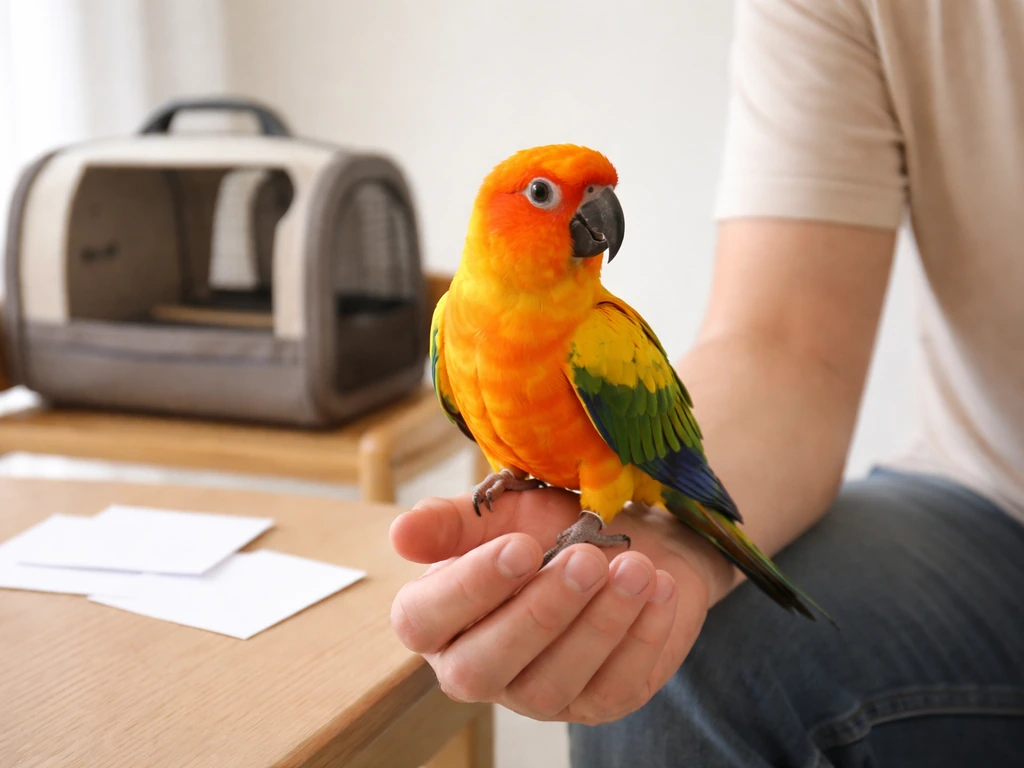
Becoming a bird handler means learning to work with birds safely, humanely, and on their terms, whether that's taming a rescued parrot, caring for injured wildlife at a rehabilitation center, or working alongside raptors at a conservation facility. The path looks different depending on your goal, but the foundation is always the same: read bird body language, minimize stress, build trust slowly, and never let eagerness override welfare. This guide walks you through every step, from choosing your track to finding your first hands-on experience.
How to Become a Bird Handler: Steps, Skills, and Safety
Maya Harris
20 Apr 2026
What a bird handler actually does
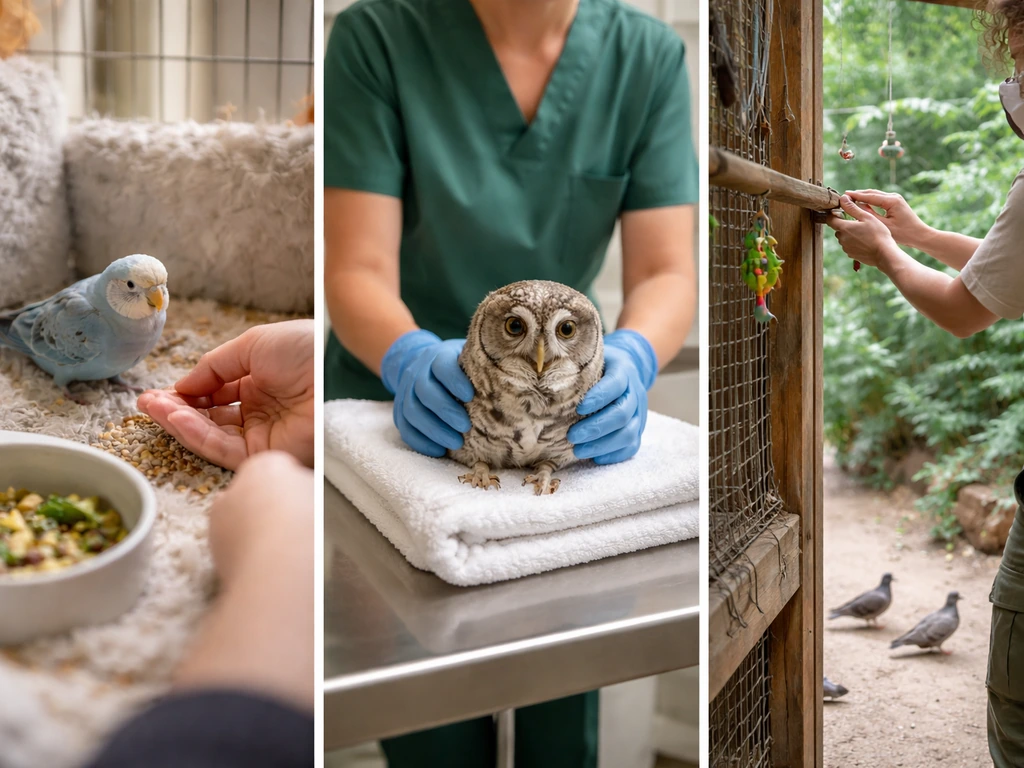
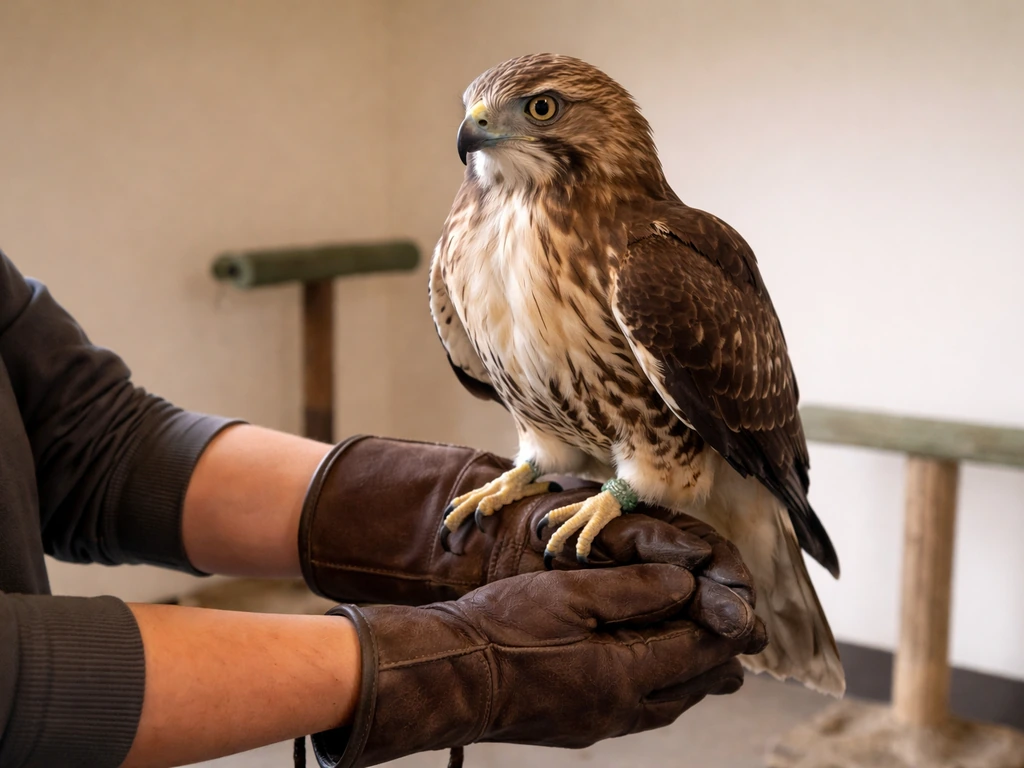
The term 'bird handler' covers a wide range of real-world roles, and understanding what each one looks like day-to-day will help you pick the right path. Broadly, handlers fall into two camps: those who work with pet or captive birds (parrots, aviary species, trained raptors) and those who work with wild birds in a rehabilitation or wildlife context.
Pet and captive bird handling
If you work with pet or captive birds, at a sanctuary, aviary, shelter, or as a private trainer, your daily tasks center on husbandry and behavioral work. That means preparing species-appropriate diets, cleaning enclosures inside and out, conducting health observations, running enrichment sessions, and doing cooperative training. A veterinary resource also recommends teaching step up and step down in a fun, reward-based, non-adversarial way cooperative training. You might condition a parrot to step up voluntarily, teach a bird to accept a travel carrier, or help a frightened rescue bird associate hands with positive experiences. Record keeping is also a core part of the job: logging weight, behavior changes, diet, and any health concerns.
Wildlife bird handling
Wildlife handlers work with injured, sick, or orphaned wild birds, everything from songbirds and waterfowl to raptors and shorebirds. A typical day includes intake assessment and stabilization, daily feeding and hydration, enclosure sanitation, behavioral monitoring, assisted feedings for nestlings, and preparation for release conditioning. There's a lot of what the Michigan DNR honestly calls 'busy work', laundry, dishes, cage scrubbing, hotline support, alongside the hands-on animal care. Accurate daily records covering diet, medications, weight, behavior, and treatments are legally required in most permitted facilities. If falconry or birds of prey are your goal specifically, that's a related but distinct certification pathway worth exploring separately. If falconry or birds of prey are your goal specifically, that's a related but distinct certification pathway worth exploring separately, including how to become a bird of prey handler.
Choose your path and set realistic expectations
Before you start practicing handling skills, get clear on which track fits your goals. The training requirements, legal considerations, and day-to-day work are genuinely different across these paths.
| Path | Typical Setting | Key Skills Needed | Credentials/Permits |
|---|---|---|---|
| Pet/captive bird trainer or handler | Home, shelter, sanctuary, aviary | Positive reinforcement training, husbandry, behavior reading | No formal permit required for most captive species; AWA applies to regulated facilities |
| Wildlife rehabilitator/handler | Licensed rehab center, veterinary clinic, wildlife center | Intake assessment, minimal-stress restraint, record keeping, release conditioning | State wildlife rehab permit + federal migratory bird permit (U.S.); veterinary consultant required in most states |
| Avian keeper/zookeeper | Zoo, raptor center, nature center | Husbandry, enrichment, training, exhibit maintenance | Varies by institution; often requires relevant education or internship experience |
| Falconer | Falconry center, conservation programs | Raptor handling, telemetry, licensed training | High school diploma minimum; falconry license required; apprenticeship under a licensed falconer |
For beginners, the most accessible starting point is pet bird handling, your own bird, a foster, or shelter volunteering. Wildlife rehabilitation requires permits in almost every U.S. state and involves working under a licensed rehabilitator before you can operate independently. North Carolina, for example, requires at least 12 months of supervised rehabilitation activities before you can even apply for your own captivity license. Carolina Wildlife Conservation Center’s apprenticeship model in North Carolina begins with apprentices working on-site with licensed wildlife rehabilitation staff, supporting learning required for licensure pathways 12 months of supervised rehabilitation activities. If wildlife rehab is where you want to go, start volunteering at a licensed center now while you work toward that permit pathway.
Be honest with yourself about what draws you to bird handling. If it's the bond and behavior side, pet training and aviary work are deeply rewarding. If it's conservation and rescue, wildlife rehab is the right direction. If raptors specifically excite you, falconry and birds-of-prey handling is its own specialty track. Each path has a parallel journey worth exploring in more depth.
Bird-handling safety basics and welfare-first rules
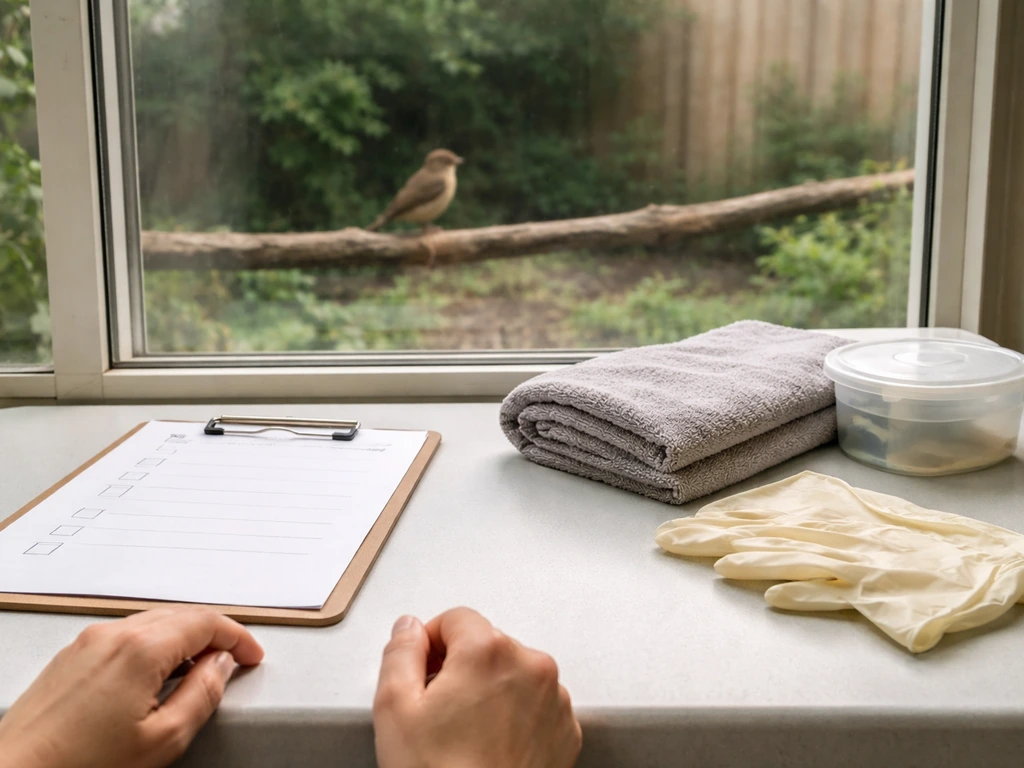
Safe bird handling starts with one non-negotiable principle: the bird's welfare comes before your agenda. Forcing handling when a bird is stressed, sick, or frightened increases injury risk for both of you and can set back weeks of trust-building in a single session. The American Animal Hospital Association is explicit about this, manual restraint and forceful handling increase injury risk to both handler and animal and can undermine successful outcomes.
Read stress signals before you touch
Before any handling session, spend two to three minutes observing the bird without making direct eye contact or reaching toward it. A bird showing open-mouthed breathing, hunched posture, dull eyes, excessive vocalization, or thrashing against cage bars is not ready to be handled. Stress can be fatal in birds, this is not an exaggeration. Signs of mild to moderate stress include feathers slicked back, tail fanning, wings held slightly away from the body, eye pinning, or lunging. A relaxed bird holds feathers loosely, moves calmly, and shows curiosity rather than alarm.
Restraint: what 'humane' actually means physically
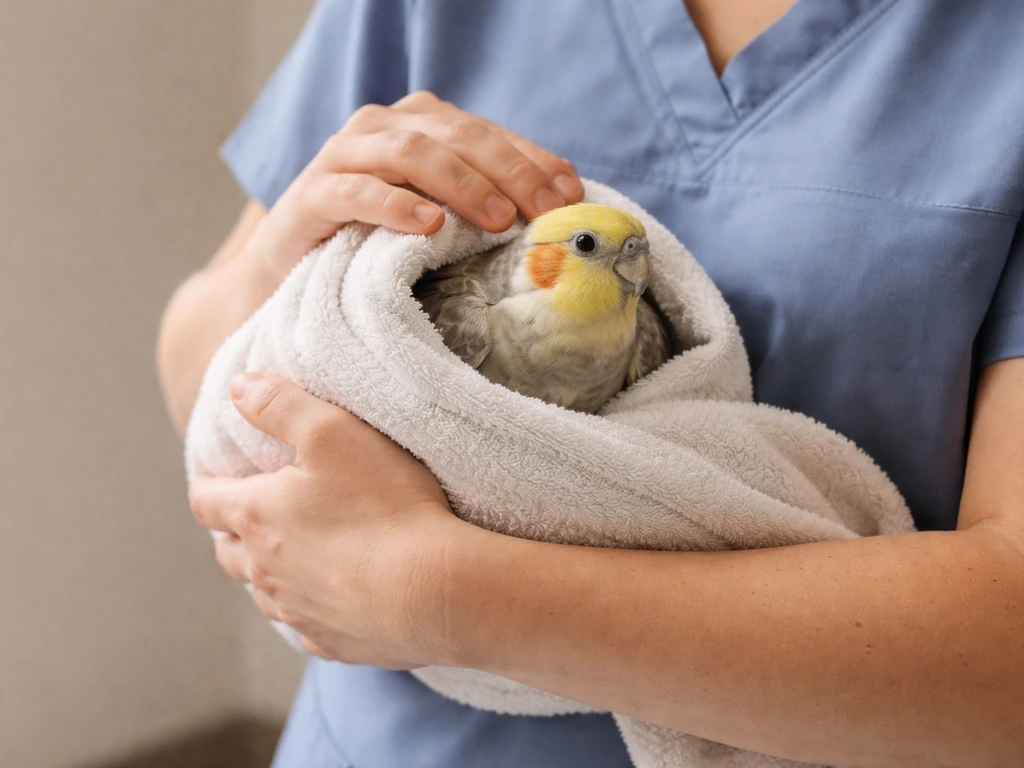
When restraint is genuinely necessary (for transport, a health check, or an emergency), the cardinal rule is: never compress the chest. Birds breathe by expanding their sternum, and squeezing around the thorax even briefly can suffocate them. Support the body with your palm and fingers, controlling the head gently with your thumb and forefinger if needed, while allowing the sternum to move freely. Keep restraint sessions as short as possible. The moment the necessary task is complete, release and give the bird space to decompress. For parrots and larger psittacines, a towel wrap can reduce stress once the bird has been conditioned to accept it, never introduce a towel as a surprise capture tool with an untrained bird.
PPE and hygiene for handlers
Good hygiene protects both you and the birds. Wash hands thoroughly before and after handling any bird. In wildlife rehabilitation and aviary settings, wear gloves when handling wild or unknown birds, and change or disinfect between different animals. For anyone working with poultry or wild waterfowl populations, OSHA and CDC guidance recommends respiratory protection and full PPE including eye protection in environments with potential avian influenza exposure. Avoid touching your eyes, mouth, or nose after contact with any bird or its environment. Disinfect enclosures thoroughly after any animal is moved or after heavy contamination, this is central to preventing disease transmission in rehabilitation settings.
- Wash hands before and after every handling session
- Wear gloves with unknown wild birds; use species-appropriate PPE in high-risk environments
- Never compress a bird's chest during restraint
- Observe stress signals for 2 to 3 minutes before initiating any contact
- Keep handling sessions short and purposeful
- Disinfect cages and equipment between animals
- Avoid touching your face after handling birds or their enclosures
Humane training and taming: building trust step by step
Whether you're working with a nervous rescue parrot or a wild bird recovering in a rehab enclosure, the trust-building process follows the same logic: approach gradually, pair your presence with good things, and let the bird set the pace. Forcing interaction, especially forcing a step-up before a bird is ready, reliably causes biting and sets back the relationship. The Gabriel Foundation puts it plainly: pay attention to body language and use preferred voluntary behaviors rather than pushing through resistance.
Step-by-step taming sequence for beginner handlers (pet birds)
- Start outside the cage. Sit near the bird's enclosure daily at consistent times, doing low-key activities. Let the bird observe you without pressure. Do this for several days until the bird shows relaxed body language near you.
- Introduce your hand at a distance. Hold your hand still near (not inside) the cage while offering a high-value treat through the bars. Pull back if the bird retreats. Repeat until the bird approaches willingly.
- Enter the bird's space slowly. Open the cage door and rest your hand just inside, motionless, with a treat on your palm. Do not reach toward the bird. Let it come to you.
- Introduce the step-up cue. Once the bird is comfortable taking treats from your hand inside the cage, gently press the side of your finger against its lower chest just above the feet and say your step-up cue. Wait. If the bird steps up, reward immediately. If it moves away, drop the pressure and try again in the next session.
- Practice step-up and step-down in short sessions. Aim for two to five minutes, two to three times a day. End on a success — even a tiny one.
- Introduce a towel or carrier gradually. Place the towel or carrier near the bird's perch, let it investigate on its own, and gradually associate it with treats. Use clicker or marker signals to pinpoint the exact moment the bird interacts with the object voluntarily.
- Progress to more complex cooperative behaviors. Once basic handling is comfortable, train the bird to accept gentle touch on wings, feet, and beak — one area at a time, always paired with rewards and read against the bird's body language.
For wildlife birds in a rehab context, the goal is the opposite of bonding, you want to minimize human imprinting, so handling is kept strictly functional and brief. Use visual barriers (covering the transport container, minimal eye contact) and handle only when medically necessary or for feeding. This preserves the bird's wild instincts and improves release outcomes.
Using positive reinforcement correctly
A clicker or verbal marker (a short word like 'yes') tells the bird exactly which behavior earned the reward. Mark the moment the bird does the right thing, then follow with a treat within two to three seconds. Keep treat portions tiny, a sunflower seed sliver, a small piece of fruit, so the bird stays motivated without filling up. Positive reinforcement-based handling, sometimes called cooperative care, is the welfare-first standard used by organizations like the Psittacine Welfare Institute and Avian Behavior International. Procedures like nail trims, crate entry, and carrier acceptance can all be trained voluntarily using shaping plans rather than restraint-first approaches.
Practice plan: how to build skills progressively
Skill-building in bird handling is genuinely cumulative. Rushing from beginner tasks to advanced species before the fundamentals are solid is one of the most common mistakes new handlers make. Here's a practical progression framework you can adapt to your track.
Beginner (weeks 1 to 4): foundational observation and interaction
- Practice reading body language daily — identify relaxed, alert, mildly stressed, and highly stressed postures in your bird or in video footage
- Work on stationary hand presence and treat delivery without any physical handling
- Practice cage entry and exit routines calmly and consistently
- Learn proper hand positioning for step-up on a tame, willing bird before attempting with any nervous or untrained bird
- Study species-specific needs: diet, temperature, stress triggers, and common health warning signs
Intermediate (weeks 5 to 12): applied handling and basic procedures
- Introduce towel conditioning in short, positive sessions
- Practice brief, gentle restraint (sternum-free, body-supported holds) on a calm bird — time yourself and keep it under 30 seconds until confidence builds on both sides
- Train carrier and crate entry using shaping steps
- Work on touch desensitization: feet, wings, beak, and vent area one at a time
- Begin maintaining your own handling logs: date, duration, bird's stress level before and after, what worked, what to adjust
Advanced (month 3 onward): new species and higher-stakes contexts
- Handle additional species only after demonstrating consistent, low-stress technique with familiar birds
- Practice capture and containment for emergency scenarios — organizations like emergency preparedness groups recommend practicing before a real emergency arises
- Assist with hands-on procedures (health checks, assisted feedings, transport) under direct supervision at a shelter, clinic, or rehab center
- Seek feedback from an experienced mentor after each new species or context
- For wildlife handlers: practice structured visual inspections before any physical exam, following the principle of assess before you touch
A good milestone for readiness to handle unfamiliar or more difficult birds: you can complete a step-up, brief hold, and cage return on your primary bird with no visible stress signals at any point, and your handling sessions are consistently under five minutes without rushing. Once that's routine, you're ready to expand.
Legal and ethical boundaries, know the rules before you touch a wild bird

This is the section most beginners skip, and it's the one that can get you into real legal trouble. In the United States, wild migratory birds are federally protected under 50 CFR Part 10. Possessing, rehabilitating, or even temporarily holding a protected migratory bird without a federal Migratory Bird Rehabilitation Permit is illegal, full stop. Most states layer their own requirements on top of the federal rules, and state rules can be more restrictive than federal ones.
There is a limited Good Samaritan provision (50 CFR 21.31(a)) that may allow a member of the public to move a bird that is trapped, attacking, or posing an immediate health threat, without a permit. But this is a narrow exception, not a license to treat or hold the bird. Massachusetts makes this very clear: it's illegal to take a wild animal from its environment to care for it at home, even with good intentions. If you find an injured wild bird, the correct action is to contact a licensed rehabilitator or wildlife center and follow their transport instructions.
For anyone pursuing the wildlife rehabilitation path: research your specific state's permit requirements now, because the application process often requires documentation of volunteer hours, a sponsoring licensed rehabilitator, and a formal agreement with a licensed veterinarian willing to provide consultation. Washington State, for example, requires all of these before issuing a permit. States like North Carolina require a full 12-month apprenticeship under a licensed rehabilitator. Minnesota recommends completing introductory wildlife rehabilitation training courses before applying. Start that process early, permit approvals take time.
On the ethical side: know your scope. If a bird needs veterinary care, your job is to transport it safely and get it to a vet within 24 hours, not to diagnose or treat. Birds of prey in particular should have a veterinary assessment within 24 hours of admission to any facility. If a bird is showing signs of severe illness (open-mouthed breathing, seizures, inability to stand), that's a medical emergency and a licensed veterinarian needs to be involved immediately.
How to find mentors, volunteer, and get real hands-on experience
Reading about handling is useful. If you are trying to learn how to make my bird a service animal, focus on welfare-first cooperative care and consistent training toward specific tasks Reading about handling is useful.. Watching videos helps. But there is no substitute for supervised hands-on time with experienced handlers, and this is the step most beginners undervalue. If you want a more direct roadmap, learn how to become a bird trainer step by step, starting with welfare-first basics and supervised practice. If you are aiming for a career, pair these supervised experiences with the specific steps for how to get a job as a bird in your chosen track. Every serious path into bird handling, pet training, wildlife rehab, avian keeping, or falconry, runs through mentorship.
Where to start volunteering today
- Licensed wildlife rehabilitation centers: most accept volunteers for tasks like food prep, cage cleaning, baby bird feeding shifts, and transport. Look up your nearest licensed center through your state wildlife agency's website.
- Parrot rescues and bird sanctuaries: volunteer roles often include daily husbandry, socialization, and basic training assistance — ideal for building pet bird handling skills.
- Raptor centers and falconry organizations: centers like Carolina Raptor Center offer formal internship programs for avian keeper training.
- Avian behavior organizations: groups like Avian Behavior International offer general avian care volunteer roles that include learning avian behavior protocols alongside hands-on care tasks.
- Veterinary clinics with avian patients: many will accept volunteers or assistants in support roles, giving exposure to health assessment and clinical handling.
How to find a mentor
Contact your state's wildlife agency and ask for a list of licensed rehabilitators who accept volunteers, that list is your starting point for both mentorship and permit sponsorship. If you want to learn how to become a bird sitter, look for mentorship and supervised experience in handling so you can practice safe, welfare-first care licensed rehabilitators. For pet bird training, look for certified trainers affiliated with organizations that maintain best-practice guidelines rooted in positive reinforcement. When evaluating a mentor or program, ask directly about their approach to stress and restraint. A welfare-first mentor will talk about body language, cooperative care, and minimizing restraint. Anyone who frames force or dominance as normal handling practice is not modeling best-practice technique.
Training courses and certifications worth pursuing
Minnesota DNR and other state agencies explicitly recommend completing introductory wildlife rehabilitation training before applying for a permit. The International Wildlife Rehabilitation Council (IWRC) offers courses covering hygiene, animal care standards, and record keeping. Psittacine Welfare Institute and Avian Behavior International offer training materials and cooperative-care resources for anyone working with captive parrots. These are practical, welfare-grounded starting points that will also signal seriousness to future mentors and employers.
Troubleshooting common early challenges
If a bird bites every time you attempt a step-up, you're moving too fast, back up to treat delivery at a distance and rebuild approach tolerance. If a bird freezes and goes limp during restraint, that's a stress response called tonic immobility, not calmness: shorten your session and reassess your technique. If progress stalls completely over two to three weeks, change one variable, location, time of day, treat type, or who is doing the handling. And if a bird you're working with shows any sign of illness (weight loss, fluffed feathers, changes in droppings), pause training and consult a vet before continuing. Health always takes priority over behavioral goals. A qualified emotional support bird plan usually starts with choosing a suitable bird and training it with cooperative, stress-minimizing handling.
FAQ
How do I know whether I should pursue pet bird handling, wildlife rehab, or raptor work?
Start with the bird’s context, not the label. “Pet/captive” handling usually focuses on husbandry and voluntary training, while “wildlife” handling requires permits and functional, brief care that minimizes imprinting. If your goal is injured wild birds, plan for supervised work under a licensed rehabilitator before you ever handle a bird independently.
Can I volunteer and then start handling wild birds on my own right away?
For wildlife, you generally cannot start independent handling legally until you have the specific permit your state requires and a documented path (often volunteer hours plus a sponsoring licensed rehabilitator). A practical next step is to call your state wildlife agency and ask what activities count toward permit requirements, because some states limit who can do intake, feeding, or transport.
What’s a realistic milestone that tells me I’m ready to handle a more challenging bird?
A good “first win” is not heavy restraint, it’s building a voluntary routine. If you cannot reliably complete a step-up and calm cage return on a familiar bird in under five minutes, don’t move to unfamiliar species or longer handling sessions yet. Use short practice blocks, and require no visible stress signals before escalating.
Is a towel wrap ever okay for handling parrots or larger birds?
Yes, but do it as cooperative training, not as capture. Introduce the towel only after the bird already accepts handling cues and rewards, and keep the towel session brief. If the bird seems surprised or shows escalating distress, stop and return to distance-based treats and observation until tolerance improves.
What should I do if my bird shows strong stress during practice?
If you feel pressure to “push through,” pause. A bird showing open-mouthed breathing, frantic thrashing, or hunched, dull, or slicked-back posture is not a teaching moment. The safe move is to stop handling, give decompression space, and reassess whether restraint is medically necessary.
What are the biggest hygiene mistakes new bird handlers make?
Most beginners underestimate zoonotic risk and cross-contamination. Wash hands before and after, avoid touching your face, use gloves for unknown or wild birds, and disinfect equipment between birds. If you work in environments with possible avian influenza exposure, you may need respiratory protection and full PPE beyond standard gloves.
How do I handle it when a bird refuses cooperative training?
For most training tasks, the welfare-first rule is voluntary participation, reward timing, and tiny treat portions. When you can’t get the bird to cooperate, avoid improvising restraint as “practice.” Instead, slow the setup, mark the smallest acceptable behavior, or reduce the difficulty until cooperation returns.
My bird bites every time I try a step-up, what should I change?
A bite can be a communication signal, not “bad behavior.” If bites happen reliably at the start of step-up attempts, rebuild approach tolerance with treats at a distance, then progress to brief, low-pressure contacts. If bites increase during restraint or handling, stop the session and revisit your body language and handling speed.
If my bird goes limp during restraint, does that mean it’s calm?
Yes. If you see tonic immobility (the bird goes limp during restraint), that is a stress response. Shorten the session, change the handling technique, and return to low-stress cooperative steps that do not require that restraint state.
What should I do if my training progress stalls for a couple of weeks?
If progress stalls for two to three weeks, change only one variable at a time so you can identify what helps. Common levers include practice location, time of day, treat type, how long you wait before marking, and who is handling (different people can trigger different stress patterns).
When should I stop behavior training and switch to a health-first plan?
Birds can’t be diagnosed at home by behavior alone. If you observe illness signs like weight loss, fluffed feathers, or changes in droppings, pause training goals and contact a qualified avian veterinarian for guidance. Training can resume only after health stabilizes.
I want to work toward service-type behavior training, how does that affect the handling approach?
If you are aiming for services or behavior support, you still need cooperative care as the foundation. Use reward-based shaping toward specific tasks and consistency across sessions, but don’t assume every bird is suitable. A practical next step is to match the bird’s temperament and stress tolerance to the task demands rather than forcing the task.
What are the safest rules for temporary restraint if it’s unavoidable?
Most handling injuries and failures come from trying to “teach” while using unsafe restraint. Never compress the chest, support the body while controlling the head gently, and keep any necessary restraint as short as possible. As soon as the task is done, release and let the bird decompress.
What is my role in medical situations during wildlife rehab, and what is not my job?
If you’re working with wildlife, your job is typically transport, stabilization, and feeding when assigned by the licensed protocol, not interpretation or diagnosis. A key decision aid is the 24-hour rule for veterinary assessment when the situation requires it, especially for raptors and birds of prey.
How can I evaluate a potential mentor or training program before I commit?
Mentorship should be assessed for welfare-first practice, especially how they talk about stress and restraint. Ask directly how they build voluntary behaviors, whether they minimize restraint, and what they do when a bird shows stress signs. If they normalize force or dominance as standard, that’s a red flag.
What should I do first if I want to work toward a wildlife handler permit pathway?
You should start with your state’s rules and a list of licensed centers that accept volunteers, then align your daily experience with what those centers need. For permittable wildlife tracks, early preparation matters because paperwork and approvals can take time.
Next Article
How to Make My Bird a Service Animal: Legal and Training Guide
Bird service animal guide: legal steps, suitability checklist, humane training for public tasks, and troubleshooting if