Bringing a new bird home safely comes down to three things: a properly prepared space, a calm and patient introduction process, and a minimum 30-day quarantine before any contact with birds you already own. Do those three things right and you dramatically cut the risk of disease transmission, escape, injury, and a traumatized bird that takes months to trust you.
How to Introduce a New Bird to Your Bird Safely
Maya Harris
28 Apr 2026
Set Up the Home Before the Bird Arrives
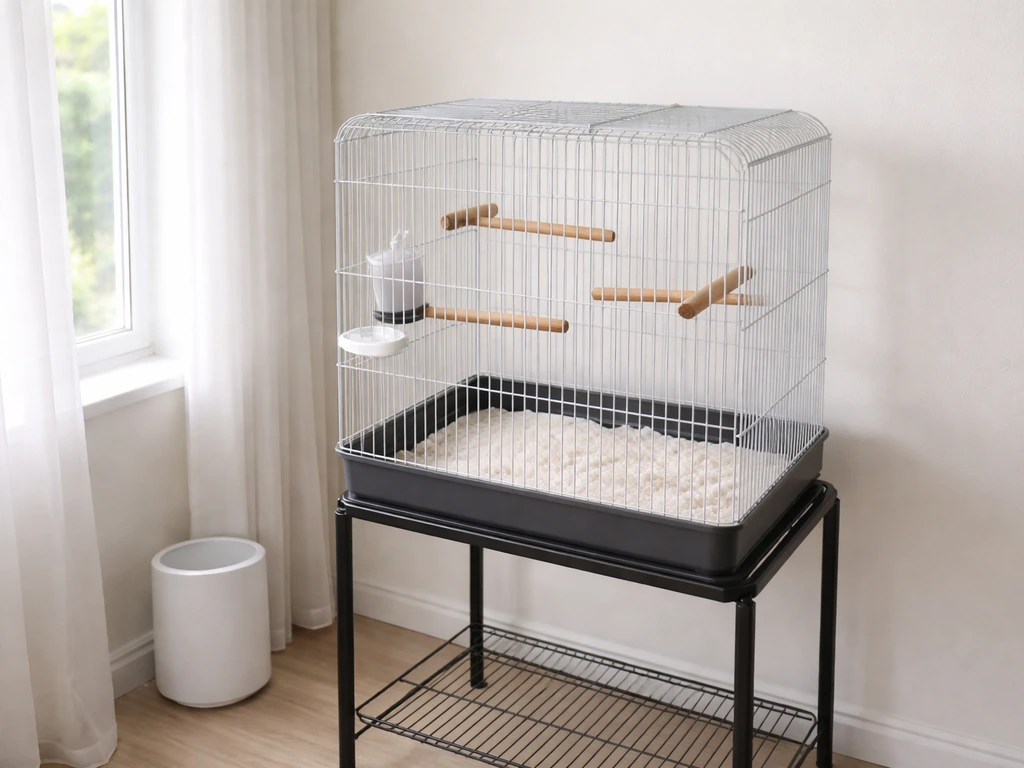
The cage and room should be completely ready before your bird walks through the door. Last-minute scrambling when a stressed bird is already in a carrier is a recipe for escapes and accidents. Pick a room that is quiet, away from high foot traffic, and has stable temperature. Birds run a body temperature of roughly 104 to 112°F (40 to 44°C), so a drafty room or one that swings between hot and cold makes acclimation harder. Aim for a comfortable ambient temperature of around 70 to 75°F for most companion species.
Air quality is genuinely critical. Avian lungs are extremely sensitive, and PTFE-coated (nonstick) cookware releases fumes when overheated that can kill a bird quickly. Keep your new bird well away from kitchens where nonstick pans are used, and never place a cage near candles, aerosol sprays, air fresheners, or scented wax melts. If you have a dusty species like a cockatoo, clean air matters even more.
Before the bird arrives, scrub the cage thoroughly. Merck's shelter medicine guidance emphasizes paying special attention to cracks and corners where debris and pathogens accumulate, using an appropriate disinfectant, and rinsing well before the bird occupies the space. Set up at least two perches at different heights, food and water dishes in accessible but not easily contaminated positions, and one or two simple enrichment items. Don't overload the cage at first; a cluttered space adds stress.
- Close all windows and doors in the room before opening any carrier
- Cover mirrors and large glass surfaces to prevent flight collisions
- Remove other pets from the room entirely
- Keep ceiling fans off during the acclimation period
- Have a spare carrier or travel cage accessible in case you need to move the bird quickly
- Stock up on the same food the bird was eating before you got it — abrupt diet changes during stress make things worse
Quarantine and Health Checks (and When to Call an Avian Vet)
A 30-day quarantine is the minimum recommended by avian veterinary organizations including LafeberVet and Agriculture Victoria, and it aligns with federal regulatory standards in the US. If you can stretch it to 45 or even 60 days (as the Avian Welfare Coalition suggests for shelter birds), that's genuinely better. The purpose is dual: it protects your existing birds from potential disease, and it gives the newcomer time to acclimate to your home's environment, schedule, and food before facing the additional social stress of meeting other birds.
The quarantine room needs to be a separate, physically isolated space with its own airspace if at all possible. California's public health guidance specifically flags airspace separation as a key biosecurity measure for psittacosis and similar avian diseases. Keep the door shut. Dedicate a smock or coverall that you put on before entering the quarantine room and remove before going near your other birds. This reduces the chance of transferring pathogens on your clothes. Use separate food prep tools and clean any equipment that leaves the quarantine space before it goes anywhere else.
Book a well-bird check with an avian vet within the first week of bringing the bird home, even if it looks healthy. A good next step is to follow a “what to do when you get a new bird” checklist so you don't miss anything important during the first days. Many illnesses in birds are masked until they're severe, because birds instinctively hide weakness. A vet check at the start gives you a baseline and catches anything the bird may have arrived with. During the quarantine period, monitor droppings daily, changes in consistency, color, or volume are often the first sign something is wrong.
Call or visit an avian vet immediately if you see any of the following. Birds deteriorate fast and waiting is not safe.
- Open-mouth breathing, tail bobbing with each breath, or any wheezing/clicking sounds
- Gasping or neck extension while breathing
- Fluffed feathers combined with lethargy and eyes closed during the day
- Bleeding that won't stop
- Refusal to eat or drink for more than 24 hours
- Loose, discolored, or drastically changed droppings for more than a day or two
- Any sign of trauma such as a drooping wing, inability to grip a perch, or visible injury
If a bird becomes ill during quarantine, handle it minimally. Dyspneic (breathing-distressed) birds can deteriorate from the stress of being handled. Keep the ill bird warm (a temperature of around 80 to 90°F, or 27 to 32°C, is recommended for sick birds awaiting vet care) and get it to a vet as quickly as possible.
Safe Transfer, First Contact, and Minimizing Stress
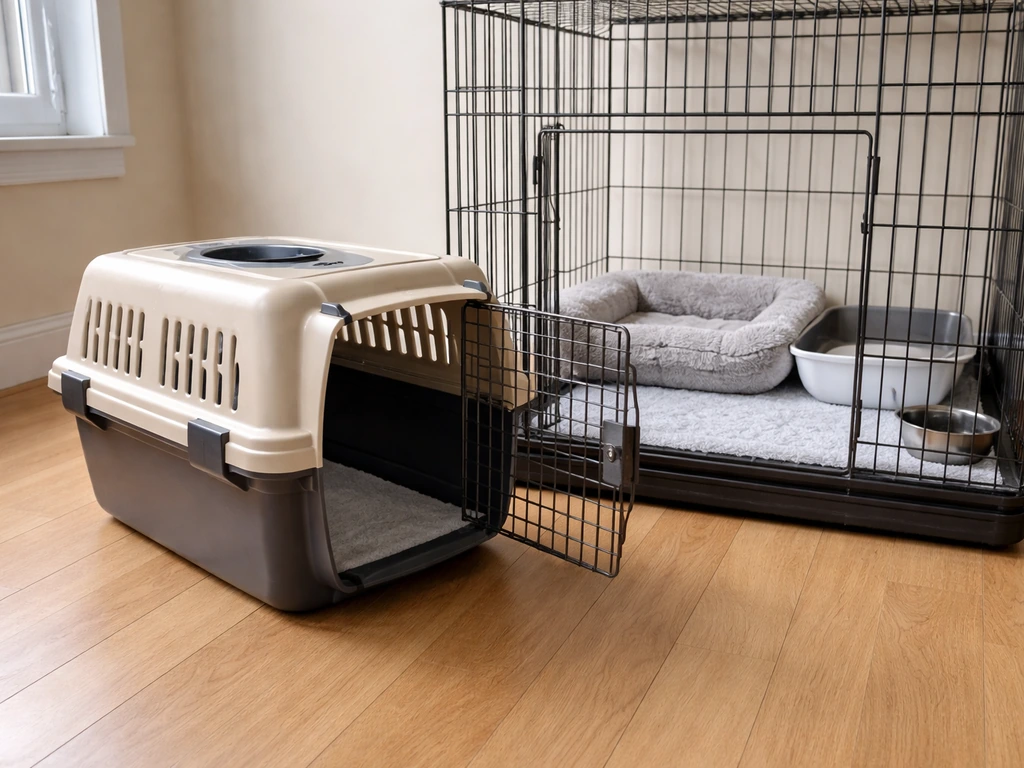
The transfer from carrier to cage is one of the highest-risk moments for escapes and injuries. Do it in a closed room with all windows shut. Place the carrier opening directly against the cage door so the bird moves naturally from one space to the other without a gap. Don't try to rush or grab the bird to move it; just open both doors and let the bird take its time. If the bird is reluctant, dim the lights slightly, birds tend to calm down in lower light.
For the first 24 to 48 hours, your job is to be a calm, non-threatening presence, not an active handler. Sit near the cage and read, work, or just be still. Talk quietly without direct eye contact, which many birds interpret as a challenge. Let the bird observe you and get used to your voice, your smell, and your movement patterns. Resist the urge to keep approaching the cage to check on it.
If you need to physically handle a bird during the acclimation period for a health or safety reason and it's not yet tame, a towel restraint is the safer option than bare hands. The Avian Welfare Coalition and HARI both describe towel restraint as appropriate for safe handling in situations where injury risk is real. The key is avoiding pressure on the bird's chest (birds can't expand their lungs if the chest is compressed) and keeping the restraint period as short as possible. Get guidance from an avian vet or experienced rehabilitator if you've never done this before.
Bonding and Humane Handling Routines by Species Level
How you approach bonding depends heavily on the species and the individual bird's history. A hand-raised budgie and a wild-caught or rehomed large parrot need completely different approaches. Use these as a starting framework, then adjust based on what you're actually seeing.
Beginner-friendly species (budgies, cockatiels, canaries, finches)
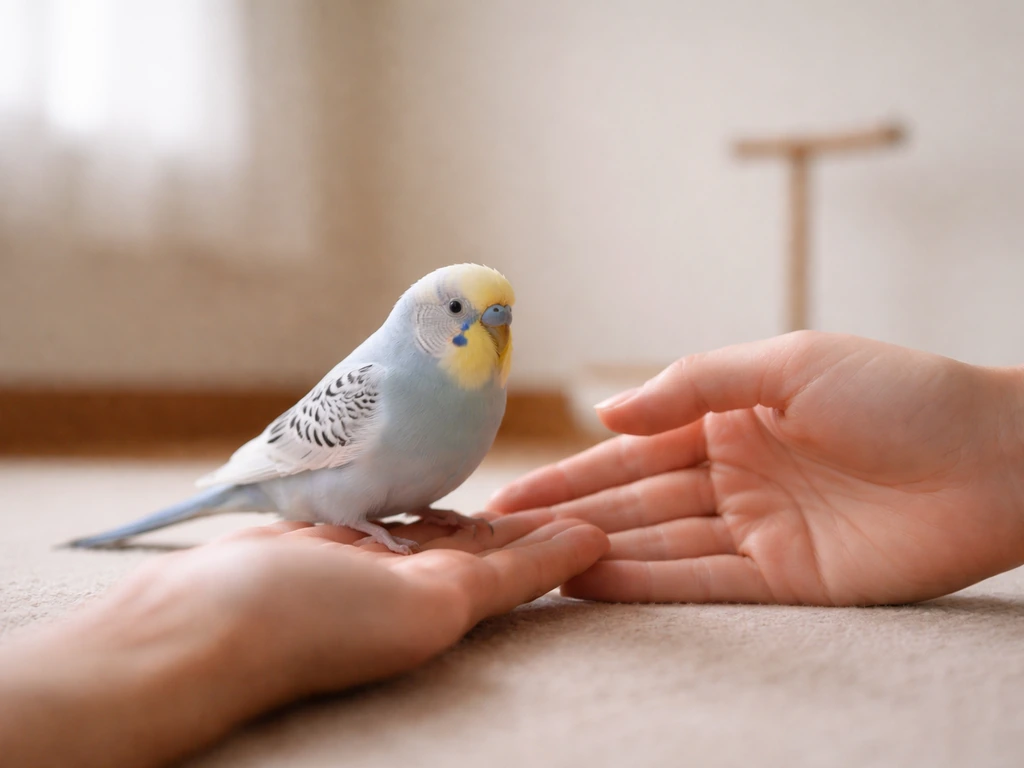
With smaller species, the goal in weeks one and two is just presence and routine. Feed and water at the same times each day, move slowly and predictably, and talk gently. For budgies and cockatiels, you can begin offering millet from your fingers through the cage bars after three to four days if the bird is curious and not cowering. Don't push it. Voluntary approach is always better than forced contact.
The step-up cue is the foundation of handling for any tame parrot-type bird. VCA describes it as prompting the bird to move from a surface onto your offered hand or finger. To teach it without creating fear, start by resting a perch or dowel inside the cage and letting the bird choose to step onto it. Only introduce your actual hand once the bird is stepping onto the perch readily and showing relaxed body language (not fluffed, not leaning away, not holding its beak open). Using a perch before your hand gives you a safety buffer if the bird is still likely to bite.
Intermediate species (conures, lovebirds, caiques, small Amazons)
These birds are often highly social but can also be defensive. Watch body language closely before any handling attempt. Petco's bird training guidance lists the warning signs clearly: wings held away from the body, beak open, rapid pupil dilation, intense vocalizing, and crouching. Any of those signals mean back off and try again later. Forcing interaction when a bird is showing threat display almost always results in a bite and sets back your trust-building significantly.
For a bird showing hand fear, ThinkParrot's shaping approach works well: start with a perch, reward the bird for calmly stepping onto it, and gradually work toward your hand being behind, then alongside, then replacing the perch over many sessions. Keep sessions short (two to five minutes) and always end on a successful, calm interaction.
Advanced or rehabilitator-level situations (large parrots, wild birds, trauma cases)
Large parrots (macaws, large cockatoos, large Amazons) and any bird with a trauma history need the slowest possible approach. Some birds may not be ready for any handling contact for several weeks, and that's okay. Prioritize food-motivated positive reinforcement from the beginning: anything the bird does that moves toward calm interaction gets a reward. Avoid any situation where you corner or physically dominate the bird; that relationship damage is hard to undo. For wild birds in a rehabilitation context, minimize all unnecessary human contact intentionally so the bird retains its wildness.
Enrichment, Food and Water Basics, and a Day-by-Day Settling Plan
For the first few days, keep enrichment simple. One or two chew-safe toys, a foraging item, and varied perch textures are enough. Overwhelming a new bird with too many novel objects in a stressful environment actually adds to anxiety rather than relieving it. Introduce new items one at a time over the first couple of weeks.
Food-wise, start with exactly what the bird was eating before you got it. Get that information from the previous owner, rescue, or breeder before pickup. A diet change layered on top of relocation stress is a common reason birds stop eating in the first few days. Once the bird is eating and drinking consistently, you can begin gradually transitioning toward your preferred diet by mixing new foods in small proportions.
Fresh water should be changed at minimum once daily, and more often for species that dunk food in their water. Check that the bird is actually drinking, especially in the first 48 hours. Uneaten food should be removed within a few hours to prevent spoilage and bacterial growth.
| Days | Focus | Daily Actions |
|---|---|---|
| 1 to 2 | Arrival and rest | Transfer to cage, minimal interaction, quiet presence nearby, monitor eating and drinking |
| 3 to 7 | Routine and observation | Establish feeding times, sit near cage daily, begin quiet talking, check droppings daily, vet visit within this window |
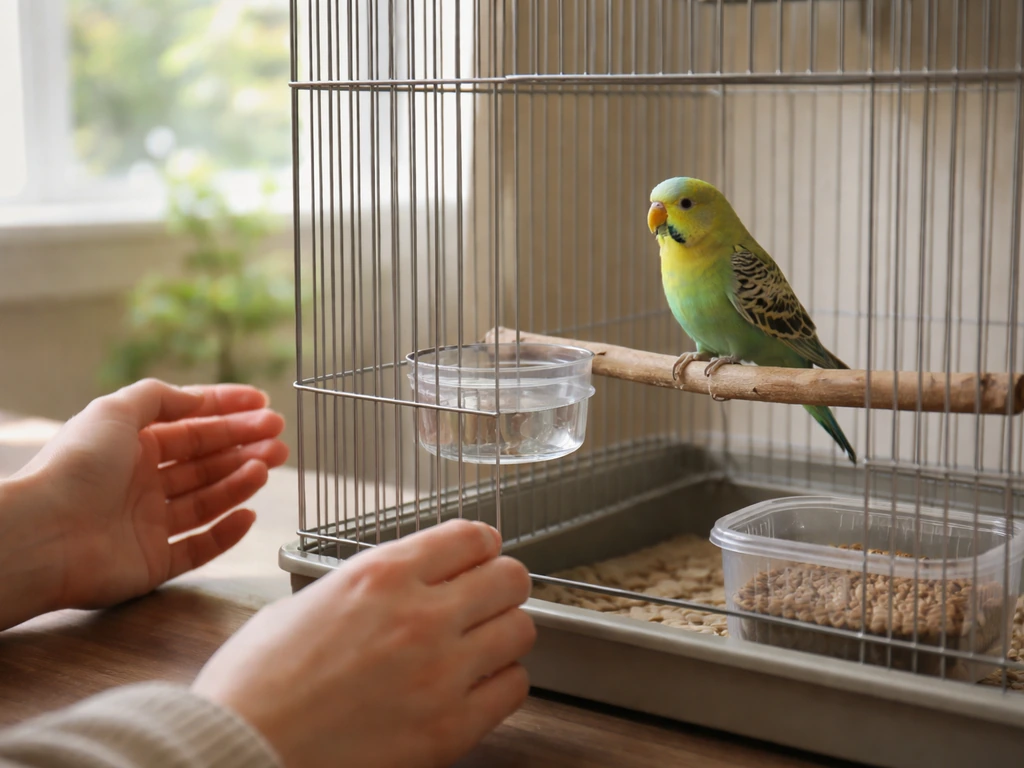
| 8 to 14 | Gentle approach | Begin offering food through bars or cage door, introduce a perch for step-up if bird is curious and calm |
| 15 to 21 | Voluntary interaction | Open cage door during supervised time, allow bird to come out on its own terms if safe, introduce one new enrichment item |
| 22 to 30 | Trust building | Begin short handling sessions if bird is ready, continue positive reinforcement, maintain quarantine from other birds |
Troubleshooting Common Issues
The bird won't eat or drink
This is the most common concern in the first 24 to 48 hours and is usually stress-related. Make sure you're offering the same food it had before. Try covering three sides of the cage to create a sense of security. If there's no eating or drinking after 48 hours, call your avian vet. Don't wait on this one.
Fear and hiding
A bird that stays in the back of the cage, won't come to the front, and startles at every movement needs more time and less pressure. Reduce the amount of time you spend directly approaching or staring at the cage. Let the bird observe you from a safe distance by sitting in the room doing something calm. Many birds make significant progress just by watching their owner go about daily life without anything threatening happening.
Biting
Biting is communication. It almost always means the bird felt cornered, was pushed past its comfort threshold, or didn't want the interaction that was being offered. Even small birds can break skin. When a bird bites, don't pull your hand back sharply (which can injure the bird's beak and reinforces the biting as effective) and don't yell. Calmly and slowly withdraw. Review what happened right before the bite and adjust your approach. Switch to a perch or dowel for step-up training if hand biting is frequent.
Aggression and territorial behavior
Some birds become territorial about their cage quickly, especially hook-bills and birds that have been through multiple rehomes. All the threat displays described above (open beak, flared wings, dilated pupils) signal that the bird is not comfortable with what's happening. Work on handling outside the cage rather than inside it, use food rewards consistently, and keep sessions short. Territorial aggression usually improves once the bird develops trust and stops seeing you as a threat.
Stress behaviors (feather plucking, screaming, pacing)
If you're seeing feather destruction, repetitive pacing, or excessive screaming in the first week, the bird is telling you it's overwhelmed. Reduce stimulation: cover part of the cage, lower noise levels, and decrease interaction attempts. If stress behaviors persist past two weeks or escalate, flag them to your avian vet because some have underlying medical or psychological causes that need professional assessment.
When to Progress and How to Integrate with Other Birds
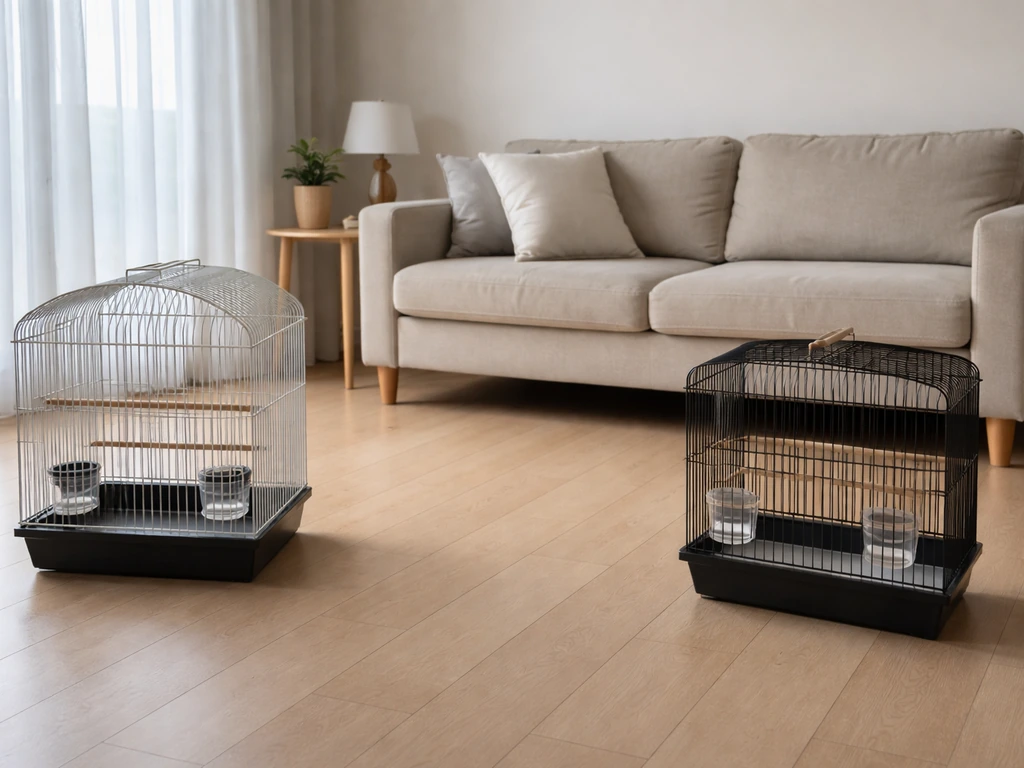
The 30-day quarantine minimum is non-negotiable before any contact with resident birds, and 45 days is safer if you can manage it. After quarantine, integration should still be a slow, staged process. If you are wondering how to introduce a new bird to another, keep the first meetings short and separate them at the first sign of stress or aggression a staged process. A healthy quarantine completion doesn't mean the birds are ready to share a cage; it just means the infection risk window has passed and the new bird has some degree of comfort in your home.
Start by placing the cages in the same room at a distance where both birds can see each other but have no physical access. Watch for extreme distress on either side: if one bird stops eating, becomes obsessively fixated, or shows constant fear responses, slow down. Let them observe each other over several days before moving cages closer. Gradual exposure over a week or two at increasing proximity is far safer than rushing to a shared space.
Supervised out-of-cage time in a neutral space (not inside either bird's cage territory) is the next step. Keep the first shared sessions very short and have a way to separate the birds quickly if needed. Watch for resource guarding over food, perches, or your attention. Species compatibility matters here too: mixing species with very different size and strength profiles carries injury risk that same-species pairings don't.
Use these milestones to decide when it's safe to move forward at each stage.
- Both birds are eating, drinking, and maintaining normal dropping patterns
- New bird is stepping up reliably and not showing prolonged fear responses
- Both birds can see each other without extreme stress behaviors (screaming, feather destruction, refusal to eat)
- Neither bird is showing escalating aggression toward the other through the cage bars
- You have at least 30 days of clean bill of health since the new bird's arrival
Integration is genuinely one of the more complex parts of adding to a multi-bird household, and it's worth reading into species-specific pairing guidance before attempting it. The first days of getting a new bird settled and making the new bird feel comfortable in your home are the foundation that makes everything that comes after easier. To help you settle in, focus on low-stress routines, predictable feeding, and giving the bird time to choose safer interactions at its own pace make the new bird feel comfortable in your home. To keep that same calm, staged approach in mind, use bird-safe introduction steps when you add a dog to the routine as well introduction steps for a dog to a bird. Get the basics right early and the trust-building process tends to follow naturally from there.
FAQ
Do I still need a 30-day quarantine if the new bird looks healthy and came from a clean home or breeder?
If you already have birds, the quarantine rule still applies, even if the new bird seems healthy and comes from the same household, same breeder, or a “clean” store. Use a physically separate room, separate air if possible, and do not allow shared toys, perches, or cookware until the quarantine period is complete and your vet has cleared the bird.
How can I tell if my new bird is “obviously” fine, so I can shorten quarantine?
No. Many birds can shed disease before showing symptoms. That’s why you should not shortcut quarantine based on behavior like singing, active climbing, or normal droppings early on. The only practical decision tool is your quarantine timeline plus a vet exam early in that window and monitoring every day during quarantine.
What should I keep separate during quarantine besides the cage itself?
Use a dedicated “quarantine kit” and keep everything from that room inside it: gloves or a dedicated smock, food and water dishes, cleaning tools, and perches used for transport. Replace disposable items when possible, and if equipment must move, clean and disinfect it before it ever touches your resident birds’ area.
Can I use air fresheners, scented candles, or spray cleaners in the house while the bird is in quarantine?
Yes, avoid aerosol risk. Even if you are not cooking with nonstick, scented products can be a problem (candles, air fresheners, wax melts, aerosol sprays, insecticides). Also avoid heavy fragrance on your body when you enter the quarantine room, since birds can be sensitive to airborne particulates and odors.
What should I do if my bird panics or escapes during the carrier-to-cage transfer?
If the carrier transfer goes wrong, treat it like an emergency. Keep windows closed, have the cage door open and ready, and make sure the room has no hazards like ceiling fans, open toilets, or mirrors that can startle the bird. If the bird escapes, focus first on keeping it contained and calm (dim light, close doors, block access to other rooms), then contact your avian vet or an experienced bird rescue for next steps.
When is towel restraint appropriate, and what mistakes should I avoid during handling?
If you need to handle an untrained bird, towel restraint can be safer than bare-hand grabbing, but the bird should not be forced into breathing restrictions. Use gentle control that avoids compressing the chest, aim to minimize time, and have a clear plan for what you are doing (for example, necessary weighing or a quick exam). If you’re repeatedly needing restraint in the first days, schedule the work with your avian vet so you reduce stress overall.
My new bird isn’t eating yet, but it acts alert. When does that become an urgent problem?
Don’t assume no eating means “it’s just shy.” Stress can suppress appetite, but you should still check water intake and droppings. Offer the exact diet from the previous owner and use familiar feeding routines. If there is no eating or drinking after 48 hours, contact an avian vet immediately as a next step.
What are the signs I should stop an attempted step-up or bonding session immediately?
Start by watching body language and letting the bird choose. If the bird fluffs, leans away, holds wings away from the body, opens its beak, or shows intense vocalizing, pause all handling attempts and adjust the approach (more distance, lower light, shorter sessions). Voluntary stepping onto a perch is the right goal before expecting step-up onto your hand.
During the staged integration, how do I decide whether to move cages closer or slow down?
Yes. Move cages closer only when both birds can eat and stay relatively calm at the current distance. If one bird stops eating, becomes fixated, or shows constant fear responses, separate them again and slow down the proximity schedule. The “right pace” is the one where both birds remain stable, not the one where you progress to contact quickly.
Can I let the birds share toys or foraging items after quarantine if I’m supervising?
Avoid shared toys, foraging items, and anything that can be carried between cages early on. Even if the birds are visible to each other, shared items defeat the purpose of isolation and increase contamination risk. After quarantine, introduce contact only through short, supervised sessions in a neutral area, with a separation plan ready.
What if my bird’s stress behaviors (screaming, pacing, feather issues) don’t improve after I lower stimulation?
If stress behaviors like repetitive pacing, feather destruction, or excessive screaming persist beyond the first week, or they worsen after you reduce stimulation, treat it as a signal that needs professional assessment. Some causes are medical (pain, respiratory issues), others are psychological (fear, overexcitement), and an avian vet can help you separate the two.