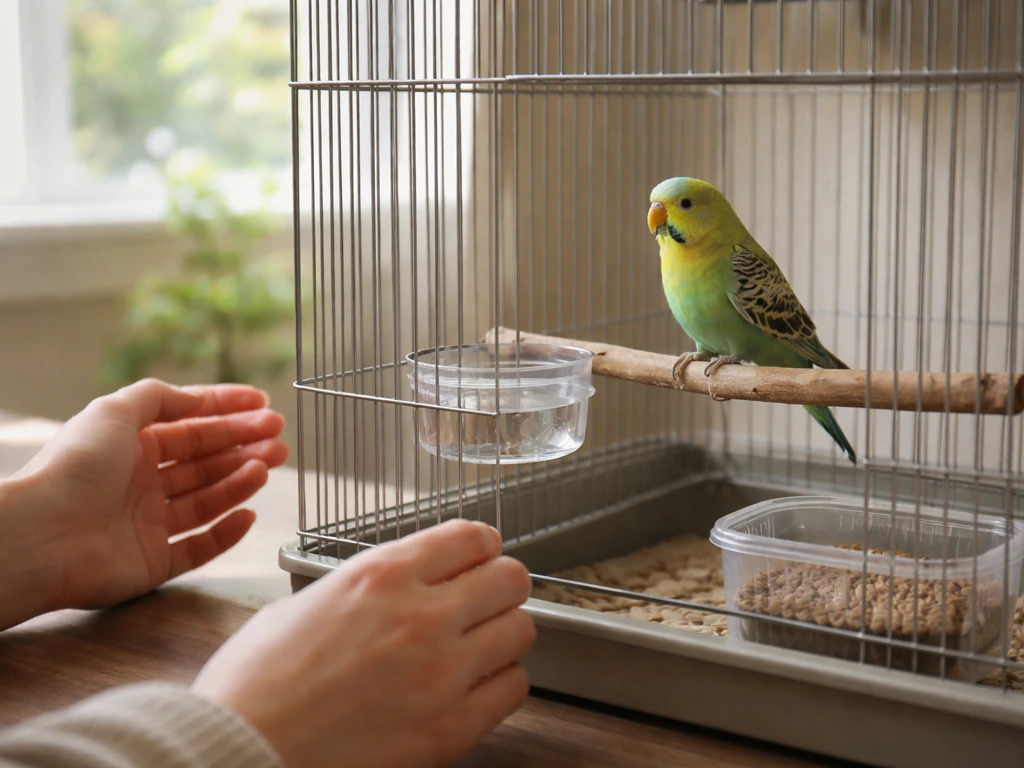
The moment you get a new bird, your first job is simple: do less, not more. Put the bird in a secure, quiet space, leave it mostly alone for the first 24 hours, and observe from a distance. Whether it's a pet parrot fresh from a breeder, a rescue cockatiel, or a wild bird you found injured outside, the first priority is always the same: reduce stress, ensure safety, and watch for any signs that need urgent attention. Everything else, including bonding, training, and socializing, comes after the bird has had a chance to breathe.
What to Do When You Get a New Bird: First Day to Week
Maya Harris
28 Apr 2026
First thing: immediate safety and stress reduction
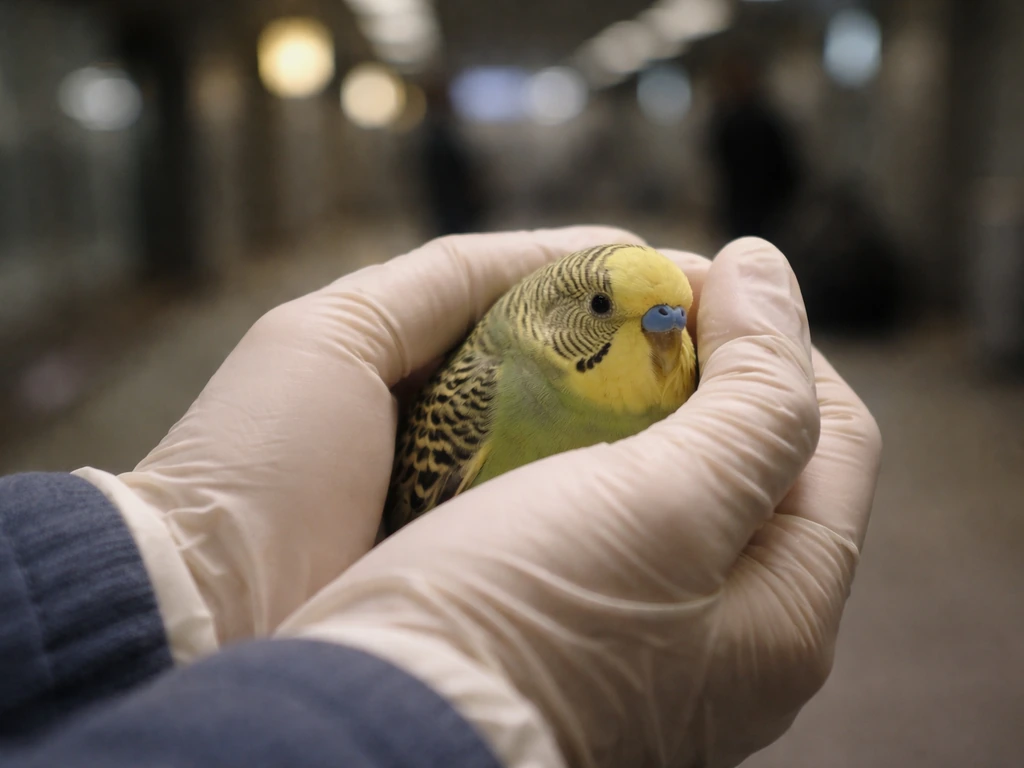
Birds are prey animals, which means they're hardwired to hide stress and fear. The chaos of transport, new smells, new sounds, and new people is genuinely overwhelming for them, and a stressed bird can go downhill faster than most people expect. Your immediate goal is to eliminate as many stressors as possible the moment you arrive home.
- Move slowly and speak softly. No sudden movements, no loud voices, and keep kids and other pets away for now.
- Place the bird in its enclosure (or a temporary holding container for wild birds) in a quiet room with low foot traffic.
- Keep the room at a comfortable temperature, ideally between 65 and 80 degrees Fahrenheit, and well away from air conditioning vents, heating vents, and drafty windows.
- Avoid placing the cage in direct sunlight for extended periods, which can cause overheating.
- Check the room for escape routes: open windows, ceiling fans running, and gaps under doors all pose real danger.
- Remove or turn off anything that releases fumes: scented candles, air fresheners, aerosol sprays, and especially any non-stick (PTFE/Teflon-coated) cookware in nearby rooms. Overheated Teflon releases fumes that are rapidly lethal to birds.
- If you've been told the bird was previously cage-covered at night, you can try a light breathable cover once it's calm, but watch for any panicked reaction. If the bird seems agitated or distressed by the cover, remove it. Never cover a bird that hasn't been introduced to covering gradually.
For the first 24 hours, resist the urge to interact. Sit near the cage and let the bird observe you from safety. That quiet presence is actually doing important work: it's teaching the bird that you're not a threat.
Pet bird or wild bird? Figure out your situation first
The steps you take next depend heavily on what kind of bird you have. A hand-raised parakeet from a breeder and an injured starling you found on your lawn need completely different responses, and mixing up the approach can cause real harm.
If you've just gotten a pet bird
Pet birds, whether purchased from a breeder, adopted from a rescue, or rehomed by a previous owner, need a proper setup, a quarantine period if you have other birds, and a vet check within the first week or two. Even a bird that looks perfectly healthy may be carrying a contagious disease that won't show symptoms right away. This is not a reason to panic; it's just a reason to be methodical.
If you've found or taken in a wild bird
This is where the guidance changes significantly. In the United States (and most countries), it is illegal to keep a wild bird without a federal or state permit. In many states, simply taking a wild animal indoors to care for it without a license is a violation of wildlife protection laws. The right move is to contact a licensed wildlife rehabilitator as soon as possible, and your state fish and wildlife agency's website will have a list of licensed rehabilitators in your area.
Until you can reach a rehabilitator, do not feed the bird food or water. This sounds counterintuitive, but improper feeding, especially the wrong foods or liquids given to a bird in shock, can cause aspiration, metabolic problems, or worse. Keep the bird in a ventilated box lined with a soft cloth, in a quiet, warm space, and make your calls. If the bird appears to be in immediate distress (labored breathing, visible injury, unresponsive), contact an emergency vet or rehabilitator right away.
| Situation | Who to contact | What NOT to do |
|---|---|---|
| Pet bird (new purchase or adoption) | Avian vet within 1–2 weeks | Skip quarantine, skip vet check, force interaction |
| Wild bird (found injured or grounded) | Licensed wildlife rehabilitator immediately | Feed it, give it water, attempt to keep or tame it |
| Wild bird (appears uninjured, fledgling) | Leave it alone or contact a rehabilitator for guidance | Bring it inside, assume it's orphaned |
| Rescued/surrendered pet bird (domestic species) | Avian vet; contact rescue if unsure of history | Assume it's healthy, skip health observation period |
First-day routine: setup, feeding, and settling in
For pet birds, getting the setup right on day one makes everything easier. A few small details matter more than most new owners realize.
Cage placement and environment
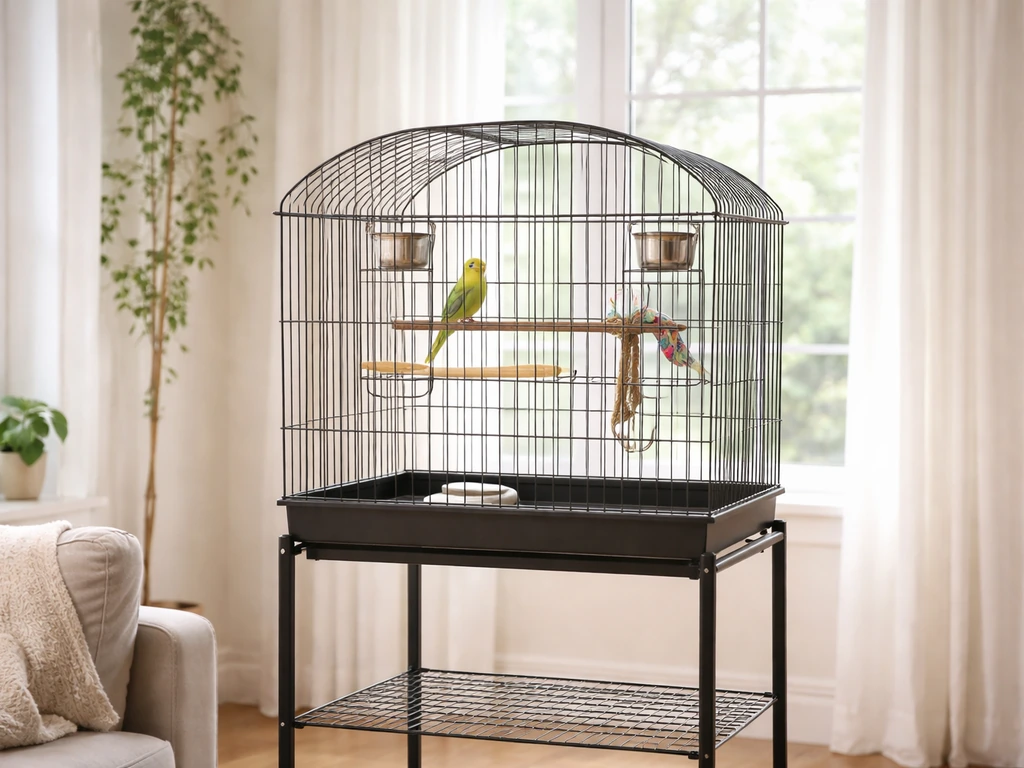
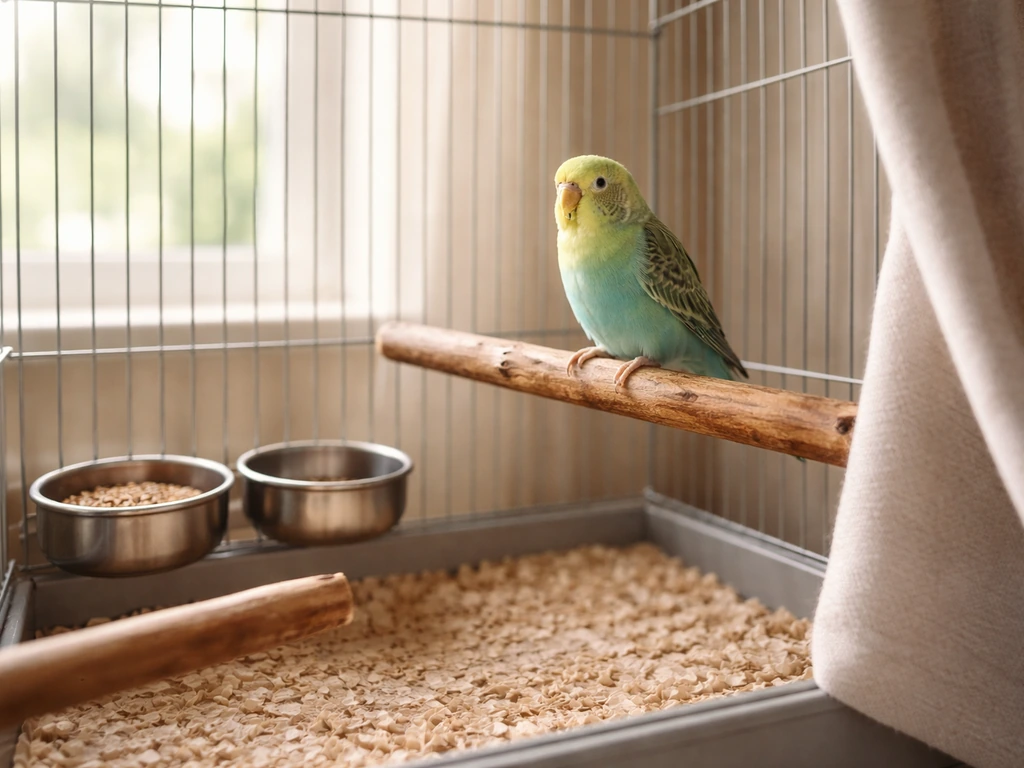
- Position the cage at or above eye level where the bird can see the room without feeling exposed or cornered.
- Keep the cage away from HVAC vents, exterior drafty walls, and kitchens (where cooking fumes are a hazard).
- Make sure the cage is stable and can't be knocked over by a pet, child, or accident.
- Provide at least two or three perches of different diameters to encourage foot health.
- Include a hide or partially enclosed area (like a corner covered on two sides) so the bird has somewhere to retreat if it feels overwhelmed.
Food and water setup
Place food and water bowls as high as practical within the cage to minimize contamination from droppings. On day one, offer the same food the bird was eating before you got it. This isn't the time to experiment with new foods. Ask the previous owner, breeder, or rescue what the bird was eating, and replicate that as closely as you can. A bird that's already stressed about a new home is much more likely to stop eating if its familiar food is also gone. Gradually introducing a better or more varied diet can happen in week two and beyond.
Fresh water should be available at all times. Change it daily, and wash the bowl before refilling to prevent bacterial buildup.
The first 24 hours: what to expect
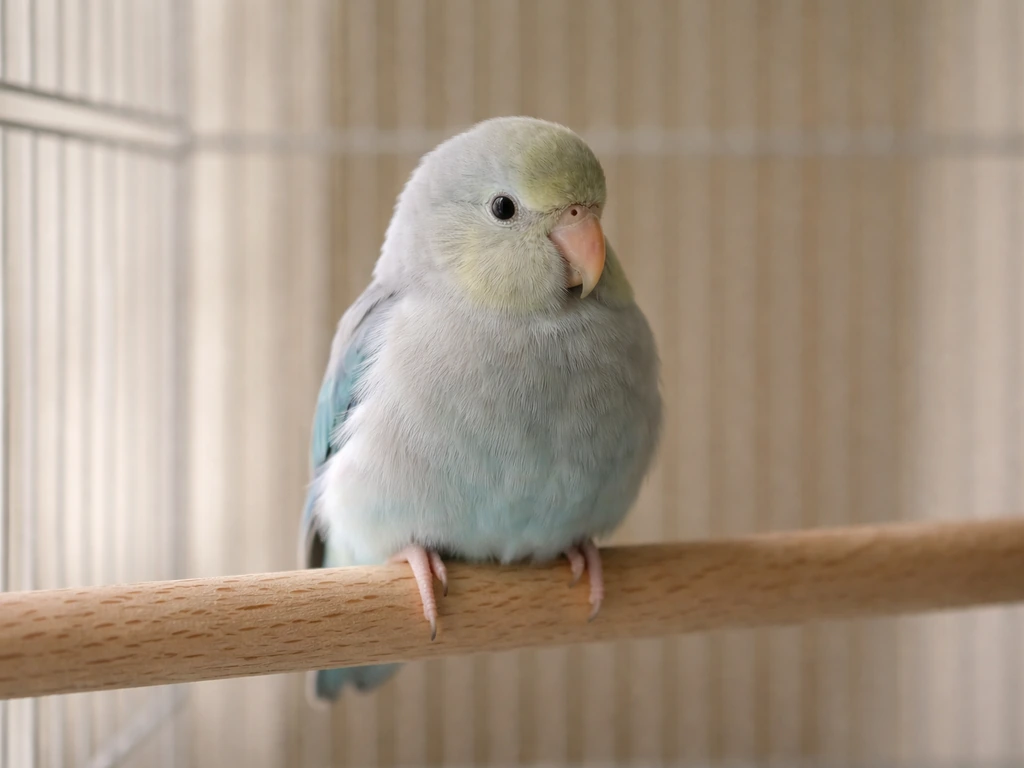
Many birds eat less, stay quiet, and perch in one spot for the first day or two. This is normal. The bird is processing a huge amount of new sensory information. Your job is to be present but undemanding. Keep the room calm, check on the bird without hovering, and resist the instinct to reach in and interact. The first 24 hours in a new home are specifically not the time for step-up training or extended handling.
How to spot health problems early: normal vs. red flags
Birds are famously good at hiding illness. In the wild, showing weakness attracts predators, so they mask symptoms until they can't anymore. This means by the time a bird looks visibly sick, it's often been unwell for a while. Early observation is genuinely important, and it doesn't require any special skill, just regular watching.
Normal adjustment signs (not a reason to panic)
- Quieter than usual or less active for the first few days
- Eating slightly less during the initial transition period
- Sitting fluffed for a short period after arrival (especially if the bird was cold during transport)
- Startling easily at new sounds or movements
- Not vocalizing much in the first 24–48 hours
Red flags that need urgent attention
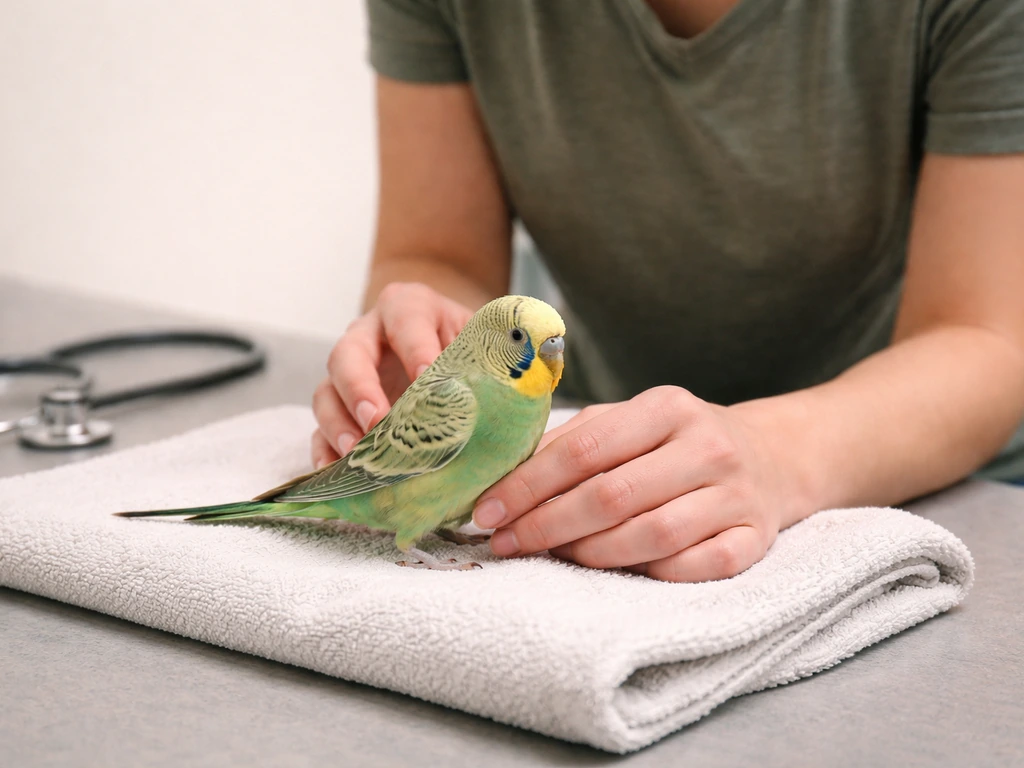
These signs should prompt an immediate call to an avian vet, not a wait-and-see approach. Birds can deteriorate rapidly once symptoms become visible.
- Tail bobbing while breathing (the tail pumps up and down with each breath, indicating respiratory effort)
- Open-mouth breathing or wheezing at rest
- Sitting on the cage floor rather than on a perch
- Staying persistently fluffed up for more than a few hours, especially combined with lethargy
- Discharge from the nostrils, eyes, or beak
- Complete refusal to eat or drink for more than 24 hours
- Visible injury: bleeding, drooping wing, inability to grip a perch
- Any neurological sign: falling, spinning, inability to balance
- Loose or discolored droppings that persist beyond the first day (some change is normal due to stress and diet change)
If your bird was recently exposed to any aerosol sprays, cleaning products, or non-stick cookware fumes and shows any breathing abnormality, treat it as an emergency and get to a vet immediately. Healthline notes that at high temperatures Teflon coatings can break down and release toxic fumes, which can cause a hazard context often described as polymer fume fever blank" rel="noopener noreferrer">non-stick cookware fumes. Poison Control explains that “Teflon flu” or polymer fume fever is caused by inhaling fumes from burning polymer products, usually nonstick cookware blank" rel="noopener noreferrer">Teflon flu or polymer fume fever.
Quarantine, monitoring, and when to call an avian vet
If you already have birds at home, quarantine your new bird for a minimum of 30 days, ideally 45. Keep the new bird in a separate room with separate food and water dishes, separate tools, and wash your hands before and after interacting with each bird. Some contagious diseases don't show symptoms immediately, and introducing a sick bird to a healthy flock can spread illness before you even realize there's a problem.
During quarantine, monitor droppings daily. If you're able, have a fecal sample checked by an avian vet early in the quarantine period to screen for internal parasites. If the bird shows any signs of illness during quarantine, reset your quarantine clock back to day one after it recovers. Agriculture Victoria's guidance on this is practical: 30 days is the minimum, and any health event during that period means you start counting again.
Even if your bird has no other birds to infect, scheduling a wellness exam with an avian vet within the first week or two is one of the best things you can do. Newly acquired birds are among the highest-risk group for undetected infectious disease. A vet can also establish a health baseline for your bird, which becomes invaluable if something changes later.
On the zoonotic disease front: some bird diseases, including psittacosis (parrot fever), can be transmitted to humans. Wash your hands thoroughly after handling your bird, its food, dishes, and cage accessories. This is basic hygiene, not cause for alarm, but it's worth building the habit from day one.
Humane handling, bonding, and taming: a realistic progression
Bonding with a new bird takes patience, and the biggest mistake most new owners make is going too fast. The bird doesn't know you yet. Every interaction you have in the first week is either building trust or eroding it, and trust is much harder to rebuild than it is to establish slowly from the start.
Week one: presence, not pressure
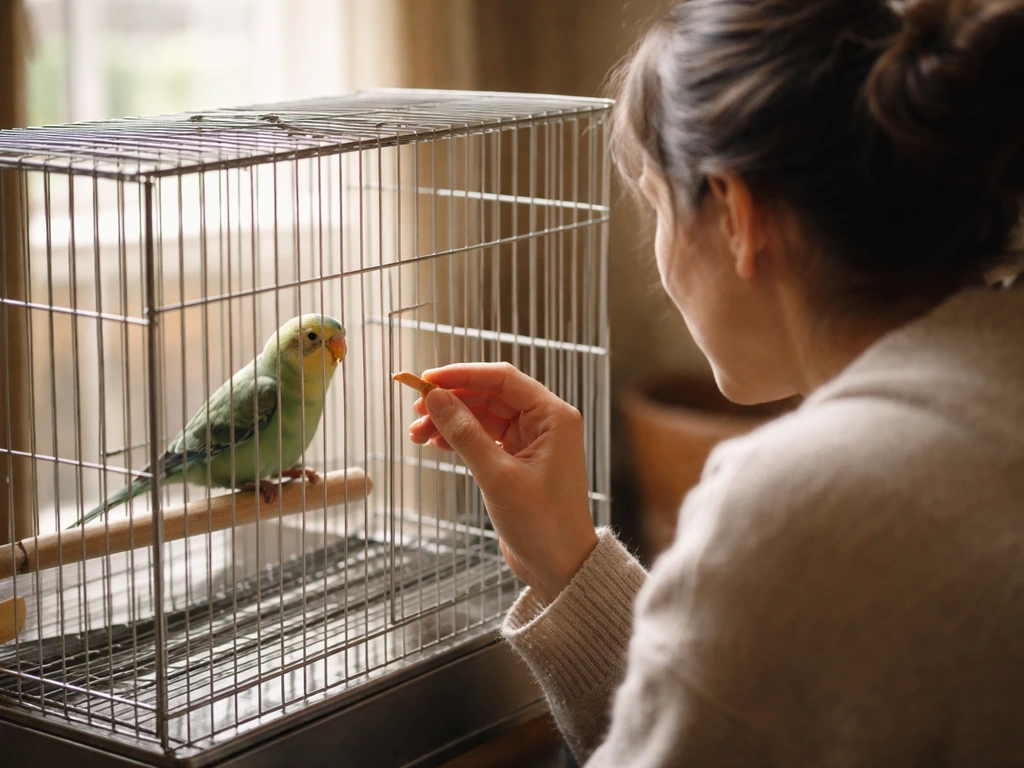
Spend time near the cage without demanding anything from the bird. Read out loud, talk quietly, offer treats through the bars without expecting the bird to approach. Let the bird set the pace. If the bird moves toward you, that's progress. If it moves away, you've moved too fast. Step back and try again the next day.
Starting step-up training (parrots and tame species)
For parrots and other species that can be step-up trained, don't attempt this in the first 24 hours. Once the bird has settled (typically after the first few days, though some birds need longer), you can open the cage door and offer your finger or hand near a perch without reaching in forcefully. If the bird chooses to step onto your hand, let it sit for a moment and then reward that interaction with a calm voice and a small treat. If it doesn't step up, close the door and try again later.
A useful rule from parrot rescue guidance: wait until the bird has been perched calmly on or near the cage door for at least a full minute before asking for a step-up. If the bird steps up but then bites or panics, that's a signal to slow down. Go back to cage-side presence without handling and rebuild from there. Don't force it through, and don't punish a bite. Biting at this stage is communication, not aggression.
Reward-based approach (all species)
Positive reinforcement works for every species, from budgies to macaws. Reward any movement toward you, any voluntary contact, and any calm behavior around your hand. Keep early sessions short, no more than 5 to 10 minutes, and always end on a positive note before the bird gets tired or stressed. Consistency matters much more than duration.
Troubleshooting early behavior and eating issues
New birds throw a lot of curveballs in the first week. Most of what you'll see is normal stress behavior, but it helps to know what to expect and how to respond.
| Problem | Likely cause | What to do |
|---|---|---|
| Refusing to eat | Stress, unfamiliar food, new environment | Offer familiar food; don't change diet yet; monitor closely; if over 24 hours, call vet |
| Hiding or staying in one corner | Fear response, adjusting to new space | Normal in week one; reduce foot traffic near cage; give it time |
| Screaming excessively | Stress, seeking contact, testing environment | Don't reward screaming with immediate attention; respond during quiet moments |
| Biting when handled | Fear, feeling cornered, moving too fast | Back off, slow down the handling progression, rebuild trust with cage-side presence |
| Excessive clinginess or screaming when you leave | Contact call behavior, bonding anxiety | Normal for flock-oriented species; gradually increase independence in small steps |
| Feather ruffling, not moving much | Stress, cold, or illness | Check temperature; if persistent beyond 24 hours or combined with other signs, contact vet |
| Loose or unusual droppings | Diet change or stress | Normal for first 1–2 days; if persists or worsens, collect a sample and contact vet |
If a bird that was eating fine suddenly stops, or a bird that seemed calm becomes increasingly lethargic, don't wait more than 24 hours to call an avian vet. Birds mask illness well, and what looks like an adjustment issue can sometimes be the beginning of a more serious health problem.
Common mistakes to avoid and your first-week checklist
Mistakes that can cause real harm
- Over-handling in the first 24–48 hours: even a friendly bird needs time to decompress after transport
- Skipping quarantine if you have other birds: 30–45 days is the minimum, not optional
- Changing the diet immediately: replicate the previous diet first, then transition gradually
- Using Teflon-coated cookware or aerosol products near the bird
- Placing the cage near HVAC vents, drafty windows, or in the kitchen
- Trying to keep a wild bird without contacting a licensed rehabilitator
- Assuming a quiet, still bird is fine: quiet plus fluffed plus sitting low is a warning sign
- Punishing biting or fear responses: this destroys trust and makes behavior worse
- Skipping the avian vet visit because the bird 'looks healthy'
Your first-week checklist
- Day 1: Set up cage in a quiet, draft-free room. Check for household hazards (fumes, open windows, ceiling fans, toxic cookware). Offer familiar food and fresh water. Leave the bird alone to settle.
- Day 1–2: Observe from a distance. Note eating, drinking, droppings, posture, and breathing. Do not attempt handling.
- Day 2–3: Begin short, calm cage-side visits. Speak softly. Offer a treat through the bars. Watch for body language.
- Day 3–5: If the bird seems relaxed and curious, try opening the cage door and offering your hand nearby without forcing contact. Reward any voluntary approach.
- Day 3–7: Schedule a wellness exam with an avian vet if you haven't already.
- Ongoing (if you have other birds): Maintain strict quarantine for 30–45 days. Separate tools, handwash between birds.
- Week 1 health log: Write down daily observations including what the bird ate, droppings appearance, behavior, and any concerns. Bring this log to your first vet visit.
- Week 2+: Begin gradual diet improvement if needed. Continue building trust through positive reinforcement. Introduce enrichment items slowly.
Once your bird is eating well, comfortable with your presence, and has had its first vet check, you're in a great position to move into more active bonding and training. If your bird is still adjusting, focus on comfort basics like a quiet routine, minimal handling, and steady cage-side presence make a new bird feel comfortable.
Making a new bird comfortable at home is an ongoing process, and learning how to introduce it to other household birds or pets is its own careful progression. Learning how to introduce a new bird to your bird is part of that careful progression too.
If you are learning how to introduce a dog to a bird, keep the bird’s space quiet and secure while you control the dog’s access and excitement introduce it to other household birds or pets. A big part of how to introduce a new bird to another is keeping their stress low and building trust step by step introduce it to other household birds or pets.
The first week, though, really does set the tone for everything that follows. Go slow, stay observant, and let the bird lead.
FAQ
I’m worried I’m doing too much. How much should I clean or handle on day one?
After you set the bird up, avoid prolonged cleanup right away. Do a quick check for obvious hazards (loose wires, drafts, open windows), then leave the cage alone for the first 24 hours. If you must spot-clean droppings, do it gently and minimize noise, so the bird does not learn that your presence predicts disruption.
What if my new bird refuses food on the first day or two, should I change the diet?
Yes, but do it carefully. Offer only the foods the bird was already eating (if known) and switch gradually later. If the bird is not eating, that is a separate issue from “food changes,” and you should contact an avian vet promptly rather than troubleshooting with random new treats.
Is it normal for a new bird to be quiet and eat less for a day or two?
Not automatically. Many birds spend the first day or two perching quietly and eating less due to stress. Use a simple checklist instead: normal breathing (no open-mouth or tail-bobbing), responsive posture, and some interest in the environment. If breathing looks abnormal, droppings change dramatically, or lethargy increases, treat it as health concern and contact an avian vet.
How strict does quarantine need to be if I already have birds at home?
For pet birds, quarantine is about preventing cross-contamination and not just “keeping them separate.” Wash hands before and after, use separate utensils, and keep the new bird in a different room if possible. If you share airspace tightly, consider upgrading separation (doors closed, minimize fans that blow air between rooms) and talk to an avian vet if you already suspect illness.
My bird seems fine but there were cleaning fumes or non-stick cookware smells. What should I do?
If the bird appears to have been sprayed, exposed to fumes, or has sudden breathing problems, treat it as urgent rather than waiting to see if it improves. Do not attempt home remedies. Keep the bird warm and calm, limit handling, and go to an avian vet or emergency service as soon as you can.
I found a wild bird. Can I give it water or seeds while I wait for help?
Until a licensed wildlife rehabilitator advises otherwise, do not give food or water. Stabilize the bird safely, keep it warm and ventilated, and place it in a quiet, darkened area to reduce panic. If you can safely do so without additional stress, note when and where you found it, and collect photos of any injuries for the rehabilitator.
What should I do if my parrot steps up but then panics or bites?
If the bird steps up but then bites, that is often an information signal about fear, overstimulation, or discomfort. Stop the step-up attempt for the day, go back to calm cage-side presence, and try again later only when the bird is relaxed and perched steadily. Avoid punishment, because it teaches the bird to fear the hand rather than to trust it.
How should I manage my dog or cat around a new bird during the first week?
Do treat other pets differently from people. Dogs and cats can ramp up excitement quickly, even if they are “calm.” Keep their access controlled, prevent them from getting close to the cage, and ensure your bird has visual and physical security (a steady perch area, no cornering). Supervise any interaction and end the session early if the bird shows stress behaviors.
When should I skip waiting for the first-week vet check and call sooner?
Plan for an earlier visit if you already notice red flags rather than waiting for the routine wellness window. Examples include repeated puffing, open-mouth breathing, tail bobbing, significant changes in droppings, sudden refusal to eat over a short window, or ongoing lethargy. In those cases, call an avian vet immediately to decide timing.
What lighting or sleep routine should I use for a new bird?
If you can, identify and match the original light and day-night rhythm. In a new bird setup, aim for a consistent sleep period (dark, quiet, minimal disturbance) and avoid bright lights blasting the cage at night. If the bird has been sleeping poorly, that can look like stress, but it can also worsen health, so keep routine steady.
Next Article
How to Introduce a New Bird to Your Bird Safely
Step-by-step, welfare-first guide to safely introduce a new bird: setup, quarantine, first contact, bonding, and integra