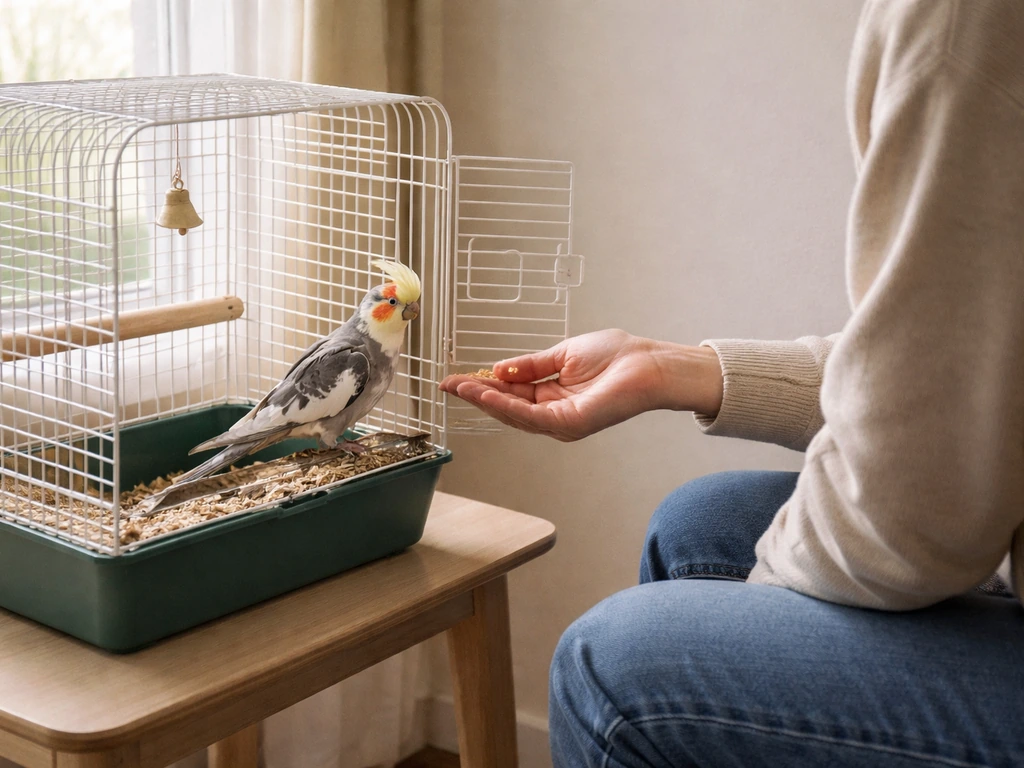
You can absolutely get a wild bird comfortable around you, but the goal isn't really to make it 'like' you the way a pet would. What you're working toward is habituation: the bird learns through repeated, calm, low-pressure exposure that you are not a threat. Over days and weeks, that familiarity builds to the point where it will feed near you, hold its ground instead of flushing, and eventually, with some species, accept food from your hand. The key is patience, consistency, and always letting the bird set the pace.
How to Make a Wild Bird Like You: Humane Steps
Maya Harris
2 May 2026
Humane first steps: set up a safe, stress-free environment
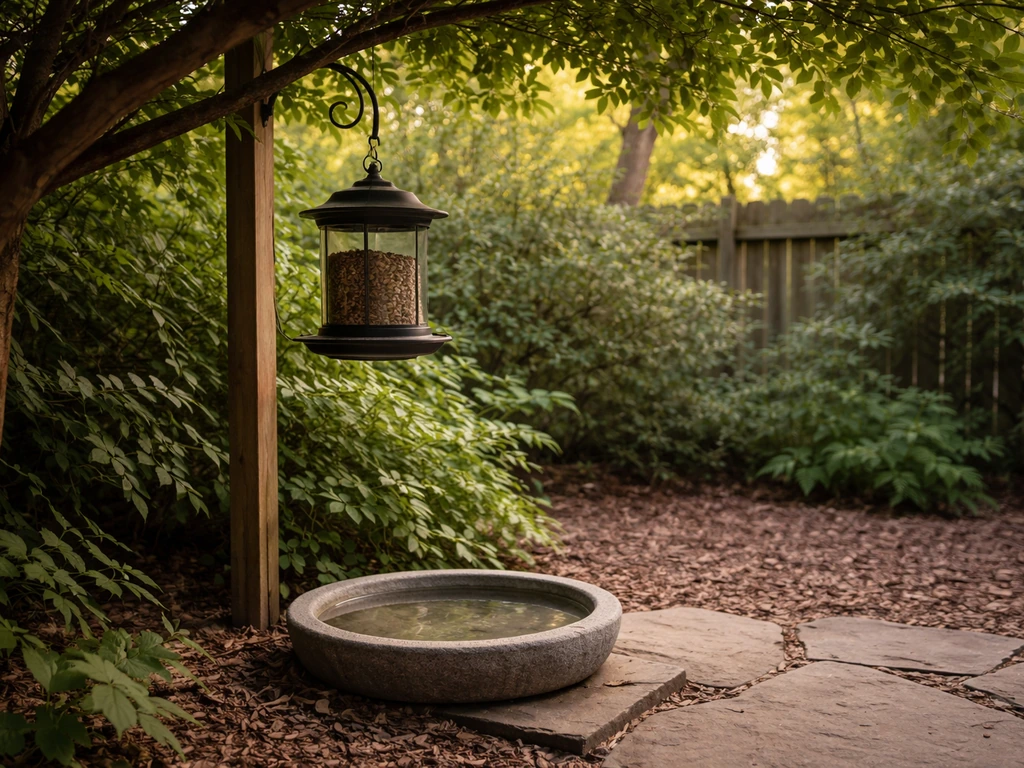
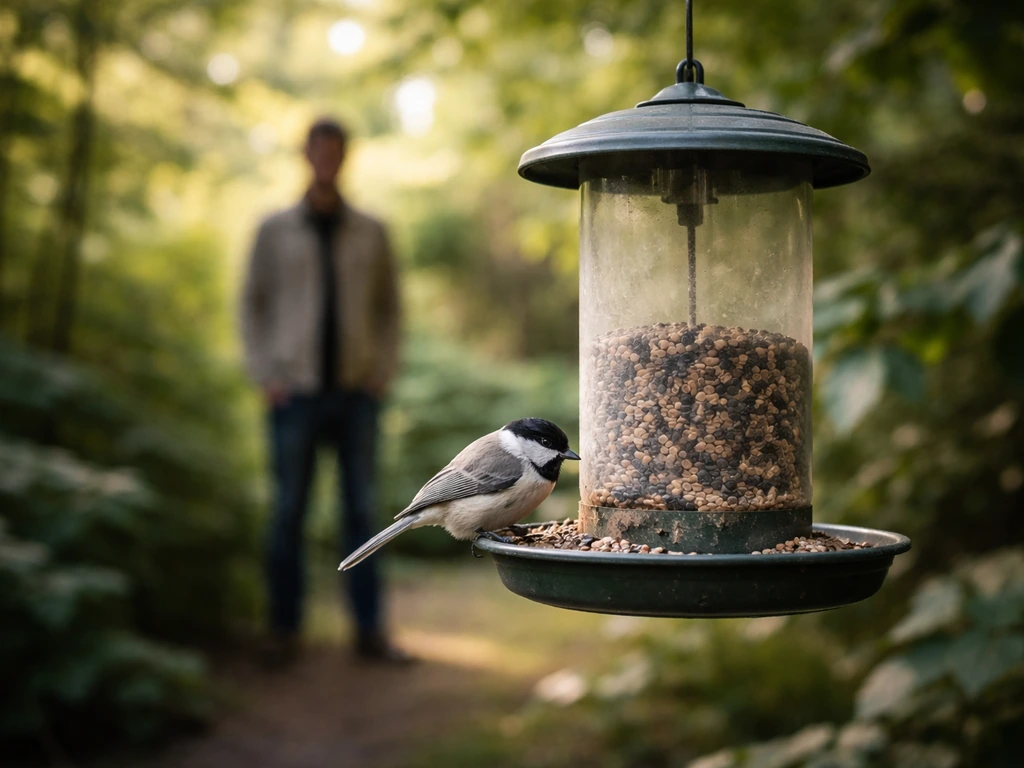
Before a wild bird can warm up to you, it needs to feel safe in the space where you're both present. If what you want is the bird to start trusting you quickly, focus on humane first steps and a low-stress setup how to get a bird to like you. Start by making the area around your yard, patio, or garden as low-stress as possible. That means minimizing sudden noise, limiting foot traffic from other people and pets, and removing obvious threats like free-roaming cats. Birds are far more willing to linger near a human when they're not also scanning for a dozen other dangers.
If you're using a feeder or feeding station, placement matters a lot. Position it where you can sit nearby quietly, ideally with a clear sightline for the birds (they won't visit spots that feel like ambush territory). Audubon recommends placing feeders near cover like shrubs or low trees so birds have a quick escape route they can see, which actually makes them feel safer approaching. Keep feeders away from large glass windows to prevent strikes, and set up a consistent spot you'll return to every day. Routine is everything.
- Reduce pet activity and loud noise around the feeding area
- Place the feeder or feeding spot near cover but with open sightlines
- Pick one consistent location and stick with it every session
- Remove or manage window-strike hazards nearby
- Sit or stand in the same spot each visit so your silhouette becomes familiar
How wild birds learn trust (behavior basics and social signals)
Wild birds don't make friends the way mammals do. Trust, for a bird, is really just the absence of fear. If you want to build trust with a bird, focus on reducing fear first through calm, consistent, non-threatening routines. They learn through repetition: you show up, nothing bad happens, and the brain gradually stops flagging you as a threat. That's habituation, and it's a genuine neurological process. The National Park Service notes that habituated animals no longer respond to humans as predators, allowing closer approaches over time. In a controlled, welfare-conscious backyard context, you can work with this process intentionally and safely.
Reading body language is non-negotiable. A relaxed bird has smooth, flat feathers, moves at a normal pace, and occasionally closes its eyes briefly. A stressed or fearful bird gives very clear signals you should know cold before you start. According to avian welfare guidance, watch for alarm postures like a raised, erect head with neck stretched tall (high alert), wings held slightly away from the body, a fanned tail, or feathers suddenly puffed up to look larger.
The U. S. Fish and Wildlife Service notes that puffed-up threat posturing is a distress signal, and if that fails, birds may lunge, dive-bomb, or bite. Alarm calls, those sharp, repetitive chip or scold notes, are another clear signal from Cornell Lab's bird communication research that the bird perceives a nearby threat.
| Signal | What It Means | What You Should Do |
|---|---|---|
| Smooth feathers, normal movement | Relaxed, comfortable | Stay still, maintain current distance |
| Upright posture, neck stretched high | Alert, assessing threat | Freeze, avoid eye contact, wait |
| Alarm call (sharp chips or scolding) | Perceives you as a threat | Back off slightly, slow all movement |
| Feathers puffed out, wings spread | Active threat display | Increase distance immediately |
| Flushing (flying away) | Crossed the flight-initiation distance | Note where it landed, give more space next time |
| Approaching you on its own | Habituated, comfortable | Stay still, let the bird lead |
Food-based bonding: feeding routines and favorite foods by species
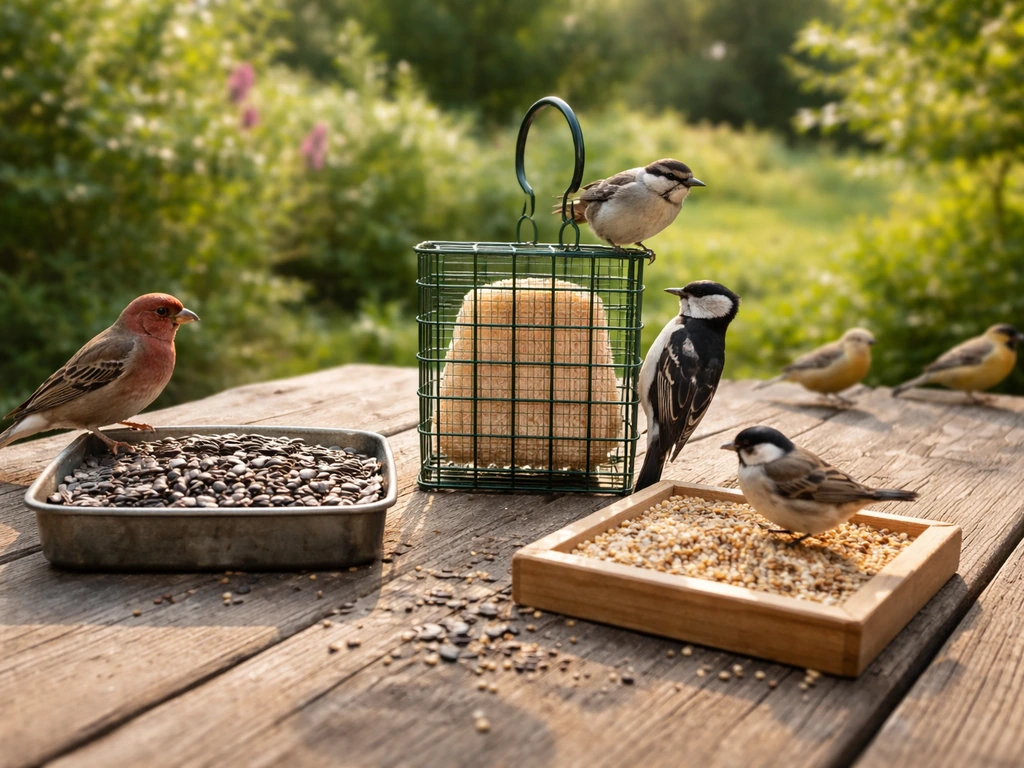
Food is the most reliable bridge between a wild bird and a human. It gives the bird a strong, positive reason to associate your presence with something good. That said, it comes with real responsibilities around nutrition, hygiene, and dependency, which I'll cover in the welfare section. When done thoughtfully, a consistent feeding routine is the single most effective tool you have.
Match the food to the species you're working with. Offering the wrong thing either gets ignored or attracts the wrong birds entirely. Black-oil sunflower seed is the closest thing to a universal currency: chickadees, nuthatches, finches, cardinals, and sparrows all take it readily. Peanuts (shelled or in-shell) appeal strongly to jays, woodpeckers, and crows.
Mealworms are a standout choice for robins, bluebirds, and wrens. Suet cakes work well for woodpeckers and nuthatches, but Audubon advises pulling suet in hot weather when it can go rancid. Hummingbird feeders with plain sugar water (4:1 water to white sugar, no dye) are species-specific but extremely effective. A firm rule from multiple sources including PetMD: do not offer bread.
It has no nutritional value and can cause real harm.
| Species Group | Best Food Offering | Feeder/Delivery Type |
|---|---|---|
| Chickadees, nuthatches | Black-oil sunflower, peanut pieces | Tube or platform feeder |
| Cardinals, sparrows, finches | Black-oil sunflower, safflower | Platform or hopper feeder |
| Robins, bluebirds, thrushes | Mealworms (live or dried) | Open tray or low dish on ground |
| Woodpeckers, jays | Suet cakes, shelled peanuts | Suet cage, platform feeder |
| Crows, ravens | Peanuts, dog kibble (plain) | Ground or large platform |
| Hummingbirds | Sugar water (4:1 ratio, plain) | Hummingbird feeder, cleaned every 3–5 days |
| Doves, pigeons | Millet, cracked corn | Ground tray or low platform |
On feeder hygiene: this isn't optional. Birds congregate at feeders, and that concentration spreads disease fast. Project FeederWatch recommends cleaning seed feeders roughly once every two weeks with a diluted bleach solution, and more often in warm, wet weather or during heavy use. Iowa DNR sets the bar higher for hummingbird feeders: clean those every 3 to 5 days. Bird baths should be scrubbed at least once a week. If you see mold, cloudiness, or sick birds visiting your feeder, take it down, clean it thoroughly, and wait two weeks before putting it back up. Some areas issue local avian flu advisories requiring feeders to come down temporarily, so check your regional wildlife agency.
Taming vs habituation vs training: what you can and can't control
These three things get mixed up constantly, and understanding the difference will save you a lot of frustration and set realistic expectations from day one.
Habituation is what you're mostly working toward with a wild bird. If you are trying to figure out how to make a love bird trust you, habituation is still the foundation, but you should use lovebird-appropriate handling and setup. It's the gradual reduction of a fear response through repeated, non-threatening exposure. A habituated bird isn't tame, it's just comfortable.
It will still fly off if you move too fast, still have full wild behaviors and instincts, but it tolerates your presence at increasingly close distances over time. In Grand Canyon National Park guidance, habituation is described as habituated animals no longer responding to humans as predators, allowing closer approaches over time [habituated animals no longer respond to humans as predators](https://www. nps. gov/grca/learn/nature/wildlife-habituation.
htm). This is realistic for most wild species and is what the step-by-step approach in this guide targets.
Taming implies much closer contact, often hand-feeding or physical touch, and is only realistic with a small number of species that have a history of close human association, like certain corvids (crows, jays), some individual chickadees, or ground-feeding birds that become very bold at established stations. Even then, 'tame' is a spectrum. A chickadee that eats from your palm is not a pet. It's a wild bird that has learned a specific behavior in a specific context.
Training, in the strict sense of shaping specific behaviors through cues and rewards, is possible with highly intelligent species like crows, ravens, and jays, and has been documented extensively. But this is advanced territory, requires significant time investment, and comes with the strongest dependency concerns. For most readers, the goal should be habituation, not training or taming. Other topics on this site dig deeper into trust-building techniques for birds in more controlled settings, which is worth reading if you're working with a bird that already has regular human contact.
Step-by-step approach for getting closer over time
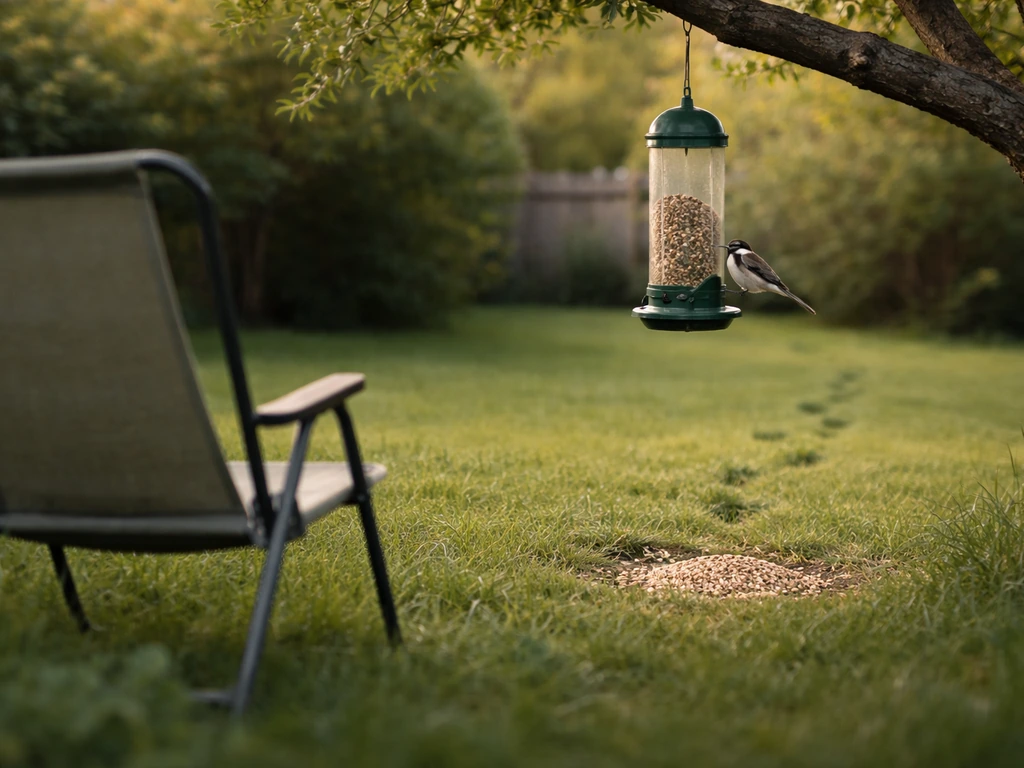
This progression works for most backyard songbirds, corvids, and ground-feeders. The core rule throughout every stage: never push past the bird's comfort threshold. If it flushes, you moved too fast. Back up a step and stay there longer before advancing again.
- Week 1: Establish the spot. Set up your feeder or food offering and leave the area entirely. Let birds discover and begin visiting without any human presence. The goal is to create a strong food association with a specific location.
- Week 2: Introduce your presence at distance. Sit or stand 10 to 15 feet away from the feeder while birds are visiting. Stay completely still, avoid direct eye contact, and keep your body turned slightly sideways (less threatening than facing them head-on). Do this at the same time each day.
- Week 3: Reduce distance slowly. Move your chair or position 1 to 2 feet closer every two to three days, only if the birds are still visiting comfortably. If they flush, you moved too fast. Return to your previous position.
- Week 4 and beyond: Reach arm's-length proximity. Once birds are feeding within 3 to 4 feet of you without flushing, try holding food (mealworms, sunflower seeds, or peanut pieces) flat on your outstretched palm instead of the feeder. Keep your hand completely still. This can take days or weeks of repetition before a bold individual tries it.
- Hand-feeding milestone: The first bird to approach your hand will likely do a quick fly-by or grab-and-go. Let it. Stay still, keep offering, and that individual will become your ambassador. Others sometimes follow once one bird models the behavior as safe.
Chickadees are often the fastest species to reach the hand-feeding stage, sometimes within two to three weeks at an established station. Corvids like crows and jays can take longer but become remarkably reliable once they trust you. Robins and sparrows may never hand-feed but will comfortably feed within a few feet with consistent exposure. Match your expectations to the species, not a fixed timeline.
Troubleshooting common issues (fear, aggression, no approach)
The bird won't approach at all
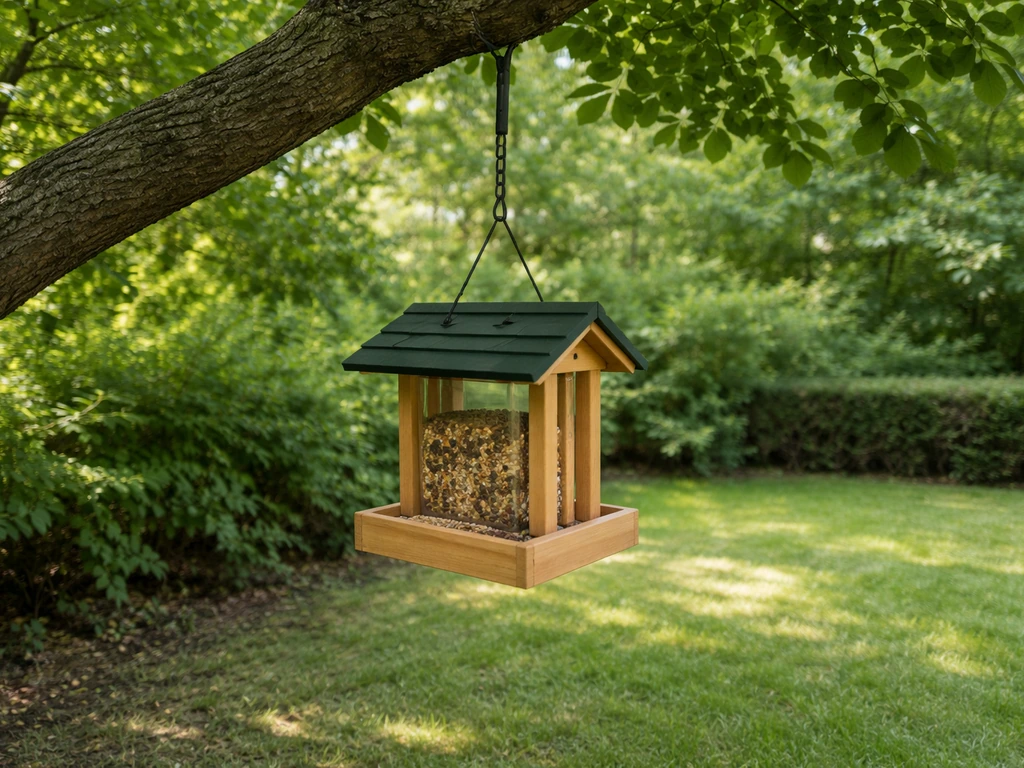
If birds aren't visiting your feeder even when you're not present, the problem is usually location, food type, or local predator pressure. Check that the feeder is in a spot with nearby cover, that you're offering the right food for local species (see the table above), and that there's no cat or hawk frequenting the area. Give it a full week before assuming the location doesn't work.
The bird approaches briefly then pulls away
This usually means you're at or just past its current comfort threshold. The bird is interested in the food but hasn't fully habituated to your presence yet. Don't move closer. Hold your position, reduce any movement or sound on your end, and let several more sessions pass at this distance. Consistency matters more than patience at this stage, so show up every day.
The bird shows aggressive displays
Puffed feathers, open-beak posturing, or a bird actively flying at you is a stress response, not a sign of bonding. Back off significantly and give the bird more space. This is especially common during nesting season when birds are defending a territory. The FWS notes that if threat posturing fails, birds can and will lunge or dive-bomb. Give them a wide berth in spring and early summer near active nests, and return to your bonding routine once nesting is complete.
Progress stalls and the bird stops advancing
Plateaus are normal. Sometimes a bird reaches a comfortable distance and simply stays there. That's okay. Not every individual will hand-feed, and that's not a failure. Continue daily sessions, keep the food quality high, and try switching to a more motivating food (live mealworms are often more compelling than dried ones, for example). Avoid the temptation to reach toward the bird or close the gap faster. The bird's timeline is the only timeline that matters here.
Safety, welfare, and legal considerations for feeding and training wild birds
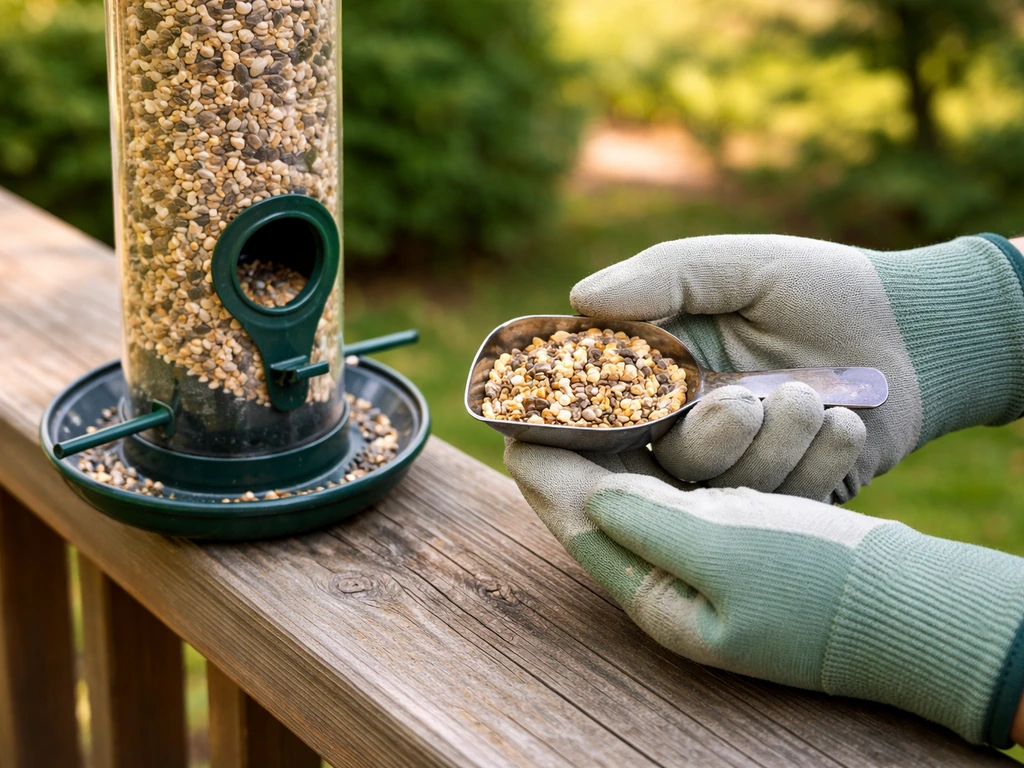
This is important, and I want to be direct about it. Getting a wild bird comfortable around you carries real responsibilities. If you're wondering how to make your bird not scared of you, start by building safety through patience and non-threatening routine rather than trying to rush contact. Done carelessly, it can genuinely harm the bird.
Dependency is a real risk. Multiple wildlife agencies, including the RSPCA and MassWildlife, warn that feeding wild birds can create dependency on human-provided food. If you start feeding and then stop, or move away, birds that have come to rely on your station can be left in a difficult position, particularly in winter. The fix is to keep feeding stations consistent once established, or to wean birds off gradually rather than stopping suddenly. Think carefully before you start.
Disease transmission is the other major welfare concern. Birds congregating at feeders spread diseases including salmonellosis and house finch eye disease. The CDC has documented salmonella outbreaks linked specifically to wild songbirds at feeders. Stick to the cleaning schedules above (seed feeders every two weeks, hummingbird feeders every 3 to 5 days), always wash your hands after handling feeders or food, and never handle sick or dead birds with bare hands.
On the legal side: in the U.S., all native songbirds are protected under the Migratory Bird Treaty Act. You cannot legally capture, handle, or keep a wild bird without proper federal and state permits. Feeding is generally legal in most jurisdictions but some areas have ordinances or seasonal restrictions, and avian influenza outbreaks can trigger mandatory feeder removal orders. Check with your state or regional wildlife agency before setting up a feeding station, especially if you're in an area with active bird flu activity. The CDC notes wild birds can expose backyard flocks to bird flu viruses, so if you keep poultry, take extra precautions.
One final point on imprinting: if you encounter an orphaned or injured wild bird, do not attempt to hand-raise it or bond with it yourself. Wildlife rehabilitators use specific protocols, including keeping young birds with others of their species and minimizing human visual contact, specifically to prevent imprinting onto humans. An imprinted bird cannot be released successfully into the wild. Contact a licensed wildlife rehabilitator immediately if you find a bird in distress.
If you apply all of this consistently, here's what your first month realistically looks like: Week one, the feeder gets visited when you're absent. Week two, visits continue with you sitting 10 to 15 feet away. Week three, you're down to 5 to 6 feet. Week four, you're close enough to extend a hand with food. That progression isn't guaranteed, but it's achievable with the right species and the right approach. Start today by setting up your feeder in the right spot with the right food, and begin sitting nearby tomorrow.
FAQ
How long does it usually take before a wild bird starts approaching me?
Most people see first visits within about a week if the feeder location and food match local species. Hand-feeding, when it happens, often takes several weeks, especially for cautious birds like finches or sparrows. If you see no visits at all after a full week, treat it as a setup problem (food type, feeder placement, nearby cover, or predator pressure), not a patience problem.
Should I move closer each day to speed up habituation?
No. Advancement should only happen after the bird shows relaxed, predictable behavior at your current distance. If it flushes when you’re present, you moved too fast, back up and stay there longer. Even during progress phases, change one variable at a time (usually your distance), and keep movements slow and minimal.
What if the bird approaches only when I’m not looking or when I turn away?
That’s common, and it usually means the bird still treats you as a potential threat when you’re directly visible. Try sitting in the same spot, using slower head turns, and avoiding sudden gestures. You can also reduce your visual profile by sitting slightly sideways rather than facing straight on.
Is it okay to call or talk to the bird to get it used to me?
Keep it quiet and consistent. Loud talking, whistling, or frequent calling can increase alertness and delay habituation. If you want to use sound, do it at a low, steady level from the start so it becomes part of the bird’s “nothing bad happens” routine.
Can I try hand-feeding to speed things up?
Only if the bird repeatedly feeds while you are at a close, calm distance and shows no high-alert or threat posture. If the bird puffs up, raises its head tall, holds its wings away, or lunges, stop advancing and return to distance. Also, many species may never accept hand-feeding, and that’s still successful habituation.
What should I do if a bird seems aggressive toward me near the feeder?
First, increase distance and give it a clear escape route. Aggression can spike during nesting or territorial defense, and some birds will dive-bomb when they perceive an intruder. Avoid lingering directly under active nest areas, and resume normal routine only after the nesting period ends or aggression drops.
Should I continue feeding if I want the birds to stay healthy and not become dependent?
The safest approach is to plan consistency before you start. If birds learn a station and then you stop abruptly, you can put them in a hard position, especially in winter. If you decide to stop, wean gradually rather than shutting off overnight, and keep feeder hygiene strict so the station remains a net benefit while active.
What are the signs I should remove the feeder immediately for welfare reasons?
Take the feeder down if you see moldy or clumped food, cloudiness or wet seed, sick-appearing birds, or dead birds at or near the station. Clean thoroughly, allow a waiting period (commonly about two weeks), and only restart once the area looks clear and healthy birds resume normal behavior.
Do I need to worry about diseases even if only a few birds visit?
Yes. Disease risk still exists with any congregation at feeders, because pathogens can spread through droppings and contaminated surfaces. The key details are hygiene frequency (seed feeders about every two weeks, hummingbird feeders every 3 to 5 days), hand-washing after handling, and avoiding bare-hand contact with any sick or dead birds.
Are there foods I should avoid beyond bread?
Bread is a major no because it lacks nutritional value and can cause harm. Also match food to local species, because offering the wrong items can attract the wrong birds or reduce overall visitation. For example, suet can go rancid in hot weather, so switch strategies during warm periods rather than leaving stale food out.
Where should I place a feeder to help birds feel safe?
Aim for a location that offers nearby cover and a fast escape option that the bird can see before committing. At the same time, keep feeders away from large glass windows to reduce strike risk. Consistency matters too, pick one spot and keep it there so the bird can build reliable familiarity.
If no birds show up when I’m home, what should I troubleshoot first?
Start with the basics: feeder placement (cover and escape route nearby), food choice (species match), and whether predators frequent the yard (cats, hawks, or other risks). Also consider timing, give it a full week before concluding failure. If birds only come when you leave, your presence may be too intense, so reduce motion and maintain distance.
What should I do if I find an injured bird or a baby bird that seems orphaned?
Do not attempt to hand-raise it or “bond” with it yourself. Rehabilitators use protocols to prevent imprinting onto humans, which can make release unsuccessful. Contact a licensed wildlife rehabilitator immediately, and keep human visual contact and handling to a minimum until help arrives.
Next Article
How to Make Your Bird Not Scared of You: Step-by-Step Plan
Humane step-by-step plan to reduce your bird’s fear with desensitization, targeting, safe handling, and troubleshooting.