Building trust with a wild bird is genuinely possible, but it works differently than taming a pet. Wild birds are not starting from a neutral place. They are wired to treat you as a potential predator until you prove otherwise, and that proof takes time, consistency, and respect for their signals. The good news: many backyard species (house sparrows, mourning doves, American robins, corvids, and several others) can learn to tolerate and even approach specific humans within weeks when you do this right. The key is understanding what "trust" actually looks like in a wild bird, and then building your routine around their comfort level rather than your enthusiasm.
How to Make a Bird Trust You: Humane Step-by-Step Guide
Maya Harris
6 Apr 2026
What bird trust actually looks like (and how to read it)
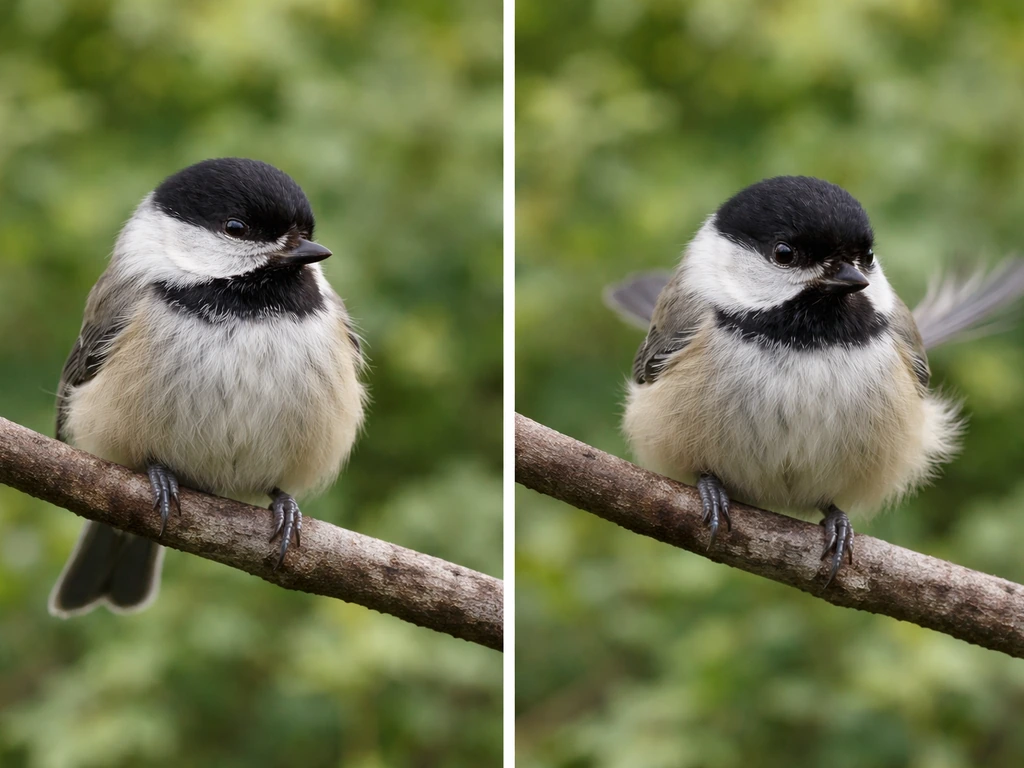
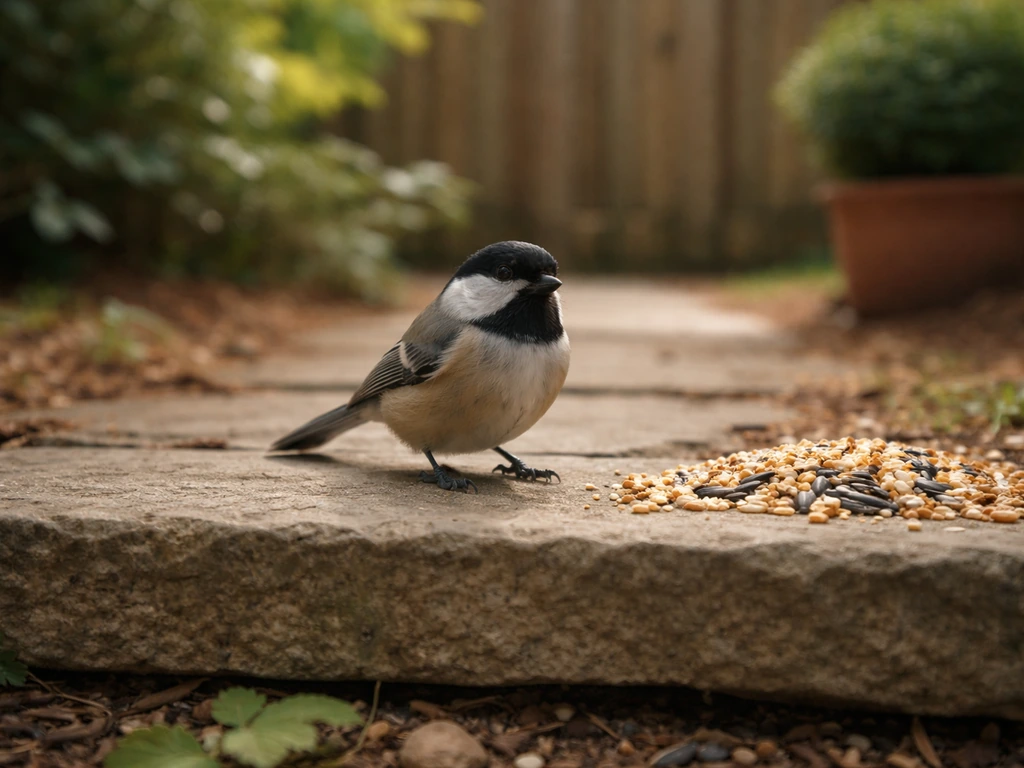
Trust in a wild bird is not the same as affection in a pet. You are not aiming for a bird that lands on your shoulder on day two. What you are looking for is a bird that continues its normal activity while you are present. That means preening, foraging, vocalizing softly, and moving around at its own pace rather than freezing or fleeing the moment you appear. Those calm, relaxed behaviors are your measurable milestones.
Stress signals are just as important to learn as comfort signals. A stressed wild bird will often go completely still (behavioral freezing), stop vocalizing, or give a sharp alarm call and then go silent. You may also notice feathers puffed around the head and shoulders, wings held slightly away from the body, or the tail fanned out. These are defensive postures, and they tell you the bird is in a threat response, not a relaxed state. If you see any of these, you have moved too fast or too close. Back off.
Relaxed comfort cues to watch for include: slow blinking or a soft, half-closed eye, normal preening behavior, unhurried hopping or foraging, and a willingness to eat while glancing at you only occasionally. A bird that looks for an escape route but does not immediately take it is on the edge of comfort. A bird that resumes preening after looking at you has basically decided you are not worth worrying about right now. That is progress.
| Behavior | What It Means | What To Do |
|---|---|---|
| Preening, soft eyes, calm hopping | Relaxed and comfortable with your presence | Maintain your position, stay still, let it continue |
| Alarm call followed by silence | Heightened threat response | Stop moving, wait, or back away slowly |
| Full body freeze | Predator-mode threat response | Back away slowly, do not make sudden sounds or movements |
| Feathers puffed, wings held out, tail fanned | Defensive/aggressive stress posture | Increase your distance immediately |
| Looking at you but continuing to forage | Alert but not panicked | Hold your position, do not move closer |
| Flying away the moment you appear | Too much perceived threat at current distance | Begin again at a greater distance tomorrow |
Set up the space before you try to connect
Before you ever sit outside trying to coax a bird closer, your environment needs to work for the bird, not just for you. Wild birds feel safer in spaces that offer cover (nearby shrubs, low branches, or a fence line) and clear sightlines so they can see threats coming. If your yard is wide open concrete, birds will always be on high alert. Adding a few potted shrubs or placing a feeder near an existing hedge makes a real difference.
Distance and predictability matter more than almost anything else in the early stages. Pick one spot where you will sit every day at roughly the same time. Birds are highly routine-oriented and will start to recognize your presence at that spot as a normal, non-threatening part of their environment. Use a chair or low stool rather than standing, because a lower profile is less intimidating to small birds. Avoid wearing bright or shifting colors in the first few sessions. Neutral tones (tan, gray, soft green) blend better with natural backgrounds and reduce the chance you trigger an alert response.
Start farther away than you think you need to. If the bird flushes (flies away) when you sit down, you are too close. Move back until the bird ignores your arrival and resumes normal behavior. For most small backyard songbirds, that is somewhere between 10 and 20 feet at the start. For larger, warier species like crows or herons, you may need to start 30 to 50 feet away. From there, you can reduce your distance by a foot or two every few sessions as the bird demonstrates comfort.
Feeding and water: doing it responsibly
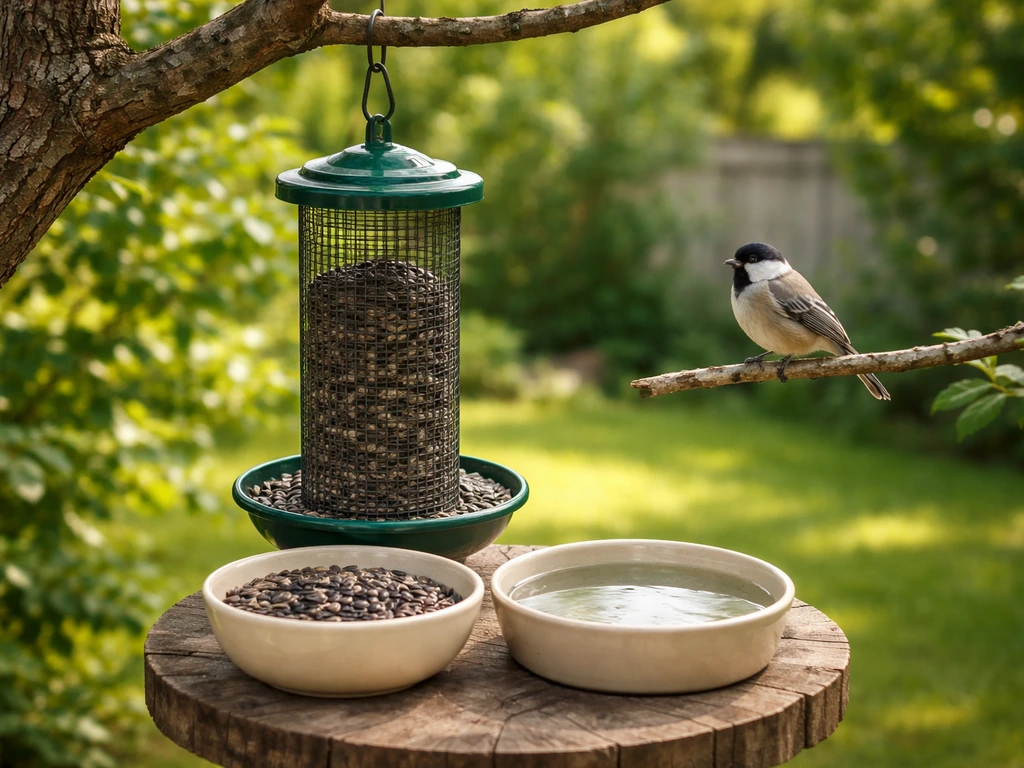
Food is your most powerful trust-building tool, but it comes with real responsibilities. The wrong food can harm or kill a wild bird, and feeding done carelessly can cause birds to associate humans with food in ways that reduce their natural wariness of dangers beyond your yard. Learning how to make a wild bird like you through food starts with getting the food right for your target species.
For most North American backyard songbirds, black oil sunflower seeds are the most universally accepted option. Audubon adds that black oil sunflower seed appeals to the greatest number of birds and recommends offering nyjer (thistle) separately and using feeder types that match the species' feeding style black oil sunflower seeds are the most universally accepted option. Nyjer (thistle) seed attracts finches specifically. Mealworms (live or dried) are excellent for bluebirds and robins. Suet cakes are a good winter choice for woodpeckers and nuthatches. Avoid bread, chips, crackers, and processed human food entirely. These offer no nutritional value and can cause digestive problems in wild birds.
Set up a feeder or scatter food at a fixed spot, at a consistent time each day. The goal is for the bird to learn that food appears at that spot when you are around. You are building an association: your presence predicts food, not danger. Fresh water in a shallow dish or birdbath placed nearby is equally valuable, especially in summer. Change the water daily to prevent mosquito breeding and bacterial growth, and keep the dish no deeper than 2 inches to be safe for small birds.
- Black oil sunflower seeds: broad appeal, good for most songbirds
- Nyjer/thistle: finches and small seed-eaters
- Dried or live mealworms: robins, bluebirds, wrens
- Suet cakes: woodpeckers, nuthatches, chickadees in cool weather
- Fresh water in a shallow dish (max 2 inches deep): all species
- Avoid: bread, chips, crackers, salted or processed foods, avocado, chocolate
How to approach and interact without stressing the bird
The single biggest mistake people make is moving toward a bird too quickly. Wild birds do not interpret a fast approach as friendly. They interpret it as a predator behavior. Every approach should be slow, indirect, and calm. If you are walking toward your sitting spot and a bird is already there, move at about half your normal walking speed, avoid making eye contact, and angle your body slightly sideways rather than walking straight at the bird. Direct frontal approaches are more threatening to most species.
Once you are settled, minimize your movements. Keep your hands in your lap or on your knees. Avoid checking your phone repeatedly (the screen flash and head movement reads as unpredictable behavior). Talking quietly is generally fine and can even help, since birds learn to distinguish your voice as non-threatening. Avoid sudden sounds like coughing sharply, sneezing loudly, or banging objects.
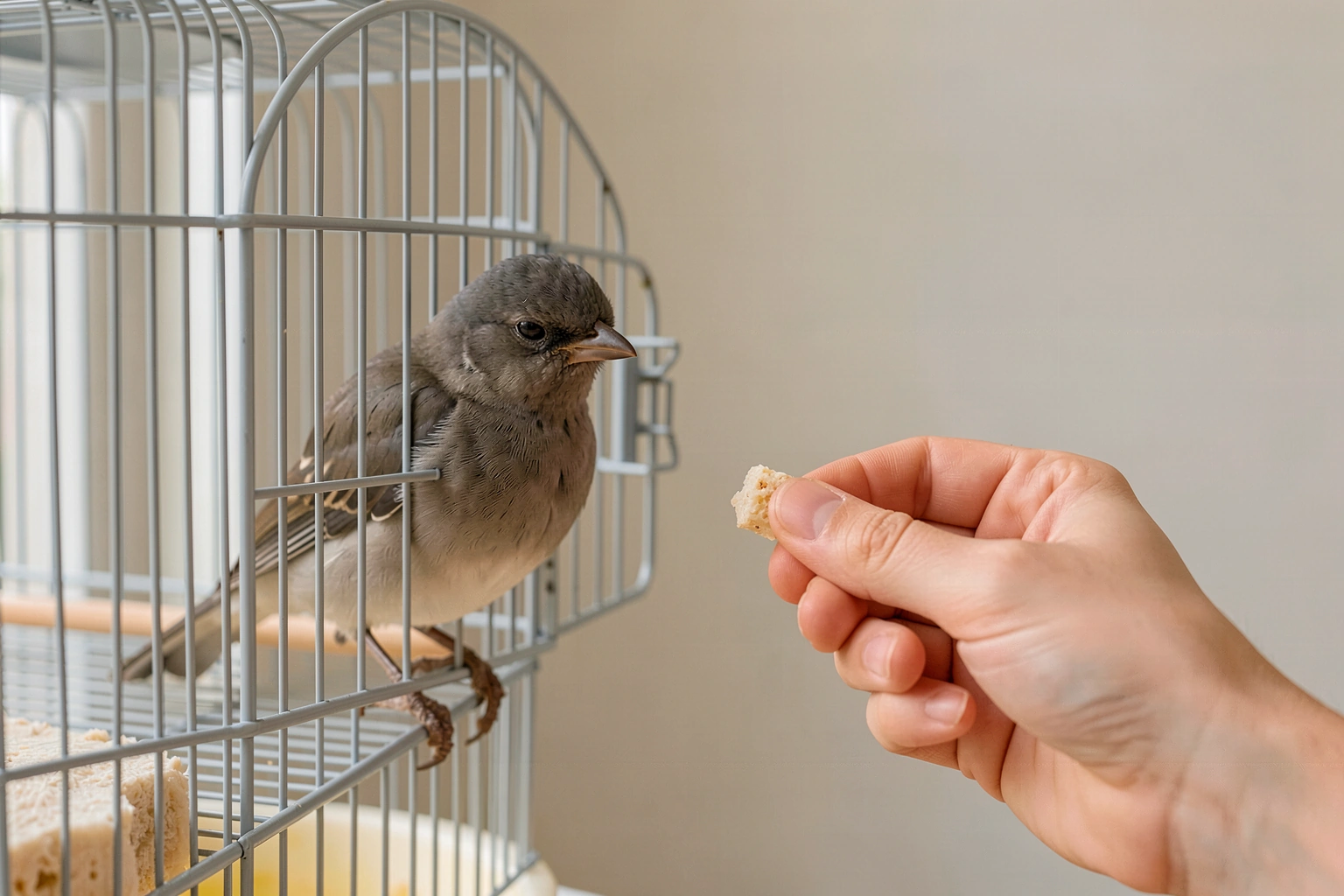
If you want to offer hand-feeding, that comes much later in the process, and only after the bird is already comfortable eating within a few feet of you. Start by placing food on a flat surface near your sitting spot. Over multiple sessions, gradually move that surface closer to you. Eventually, place it on your knee or an outstretched hand. Hold completely still when the bird approaches. The bird will fly off if you twitch. Patience here is not optional. Some birds, particularly corvids like crows and jays, can progress to hand-feeding in a few weeks. Smaller, shyer species may take months or never reach that stage. If you are working with a skittish species, reading about how to make your bird not scared of you can help you calibrate your pace.
Handling setbacks: when things go wrong
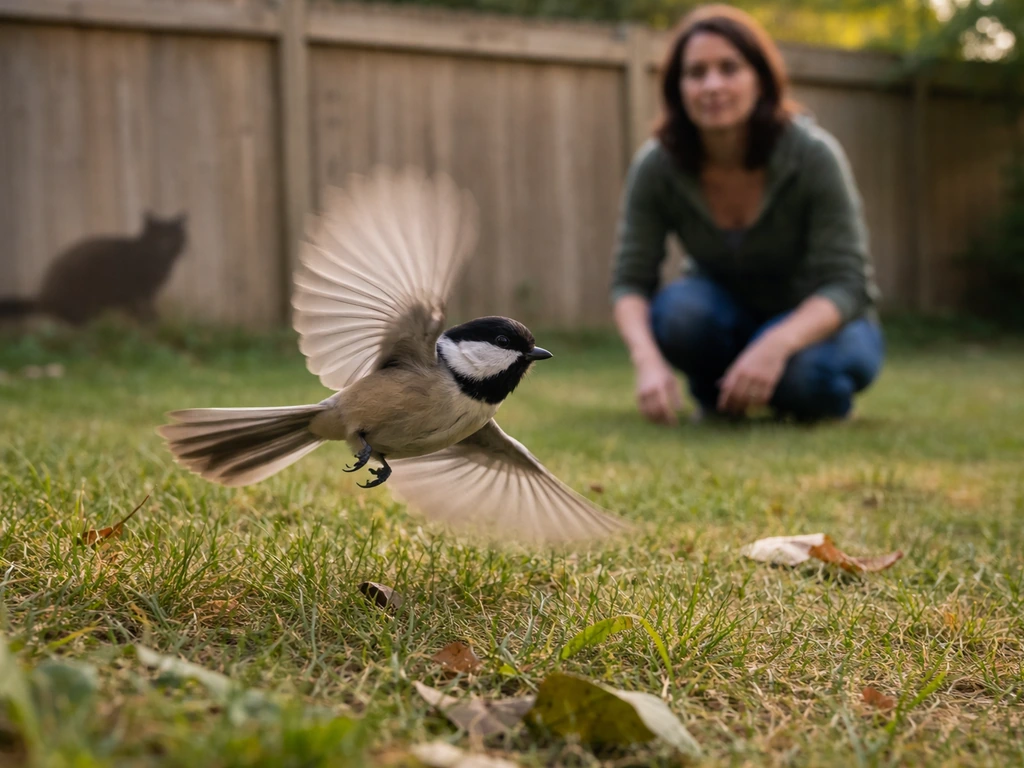
Setbacks are normal. A bird that was comfortable around you last week may flush repeatedly this week due to a neighborhood cat, a change in the yard, or just a bad day. Do not interpret regression as failure. Go back to the distance and routine that was working and rebuild from there.
Here are the most common problems and what to actually do about them:
- The bird flushes every time you appear: You are moving too quickly or sitting too close. Return to a farther starting distance and slow down your approach speed significantly.
- The bird eats at the feeder but ignores you entirely: This is actually good progress. It means the bird is comfortable in the space. Gradually shift your sitting spot a foot or two closer to the feeder every three to four sessions.
- Multiple birds arrive and the dominant one chases off others: This is normal flock hierarchy behavior. You can add a second feeding station a few feet away to reduce competition and keep more birds in the area.
- The bird shows puffed feathers and aggressive posturing toward you: Back off more than you think you need to. Some individual birds are simply more defensive. Give it more space and more time.
- Progress has plateaued and the bird will not close the remaining distance: This often means you have reached that individual bird's comfort threshold. Some birds will not hand-feed, and that is okay. Consistent proximity and calm behavior on your part is still a meaningful and welfare-respecting outcome.
- A different bird has started appearing instead: Continue your routine. If this is a competing individual, it may simply be rotating through the territory. If you have been targeting a specific bird, note any distinguishing markings to track individuals.
When you are working with multiple birds or dealing with species that are naturally warier, the approach fundamentals do not change, but the timeline does. Crows and ravens are extraordinarily good at recognizing individual human faces and can build meaningful associations quickly. Sparrows and finches work more as a flock and may not differentiate you from any other non-threatening human, which is still progress. The underlying principles of how to build trust with a bird apply across species, but your expectations for specific outcomes need to flex.
Legal and ethical limits: knowing when to step back
Most wild birds in the United States, Canada, and the UK are protected by federal or national law. In the US, the Migratory Bird Treaty Act protects the vast majority of native species, making it illegal to capture, keep, or possess them without a specific federal permit, even with good intentions. This means that if you find an injured or grounded wild bird, you cannot legally keep it to rehabilitate it yourself. You need to contact a licensed wildlife rehabilitator.
If you encounter a fledgling (a young bird with feathers that is hopping on the ground), leave it alone unless it is in immediate danger from a predator or traffic. Fledglings on the ground are almost always in the care of their parents, who are watching from nearby. Moving or 'rescuing' them unnecessarily can actually harm their development. If the bird is clearly injured (broken wing, bleeding, hit by a car, caught by a cat), do not attempt to treat it yourself. Place it gently in a ventilated box in a warm, dark, quiet space and contact your nearest licensed wildlife rehabilitator or a wildlife rescue hotline immediately.
Ethically, the guiding principle is: your desire to connect with a wild bird should never override its welfare or freedom. If a bird is consistently stressed by your presence, or if your feeding setup is attracting predators to the area (a feeder placed near dense bushes where cats can hide, for example), it is your responsibility to change your setup. Wild birds are not tame animals, and a bird that tolerates your presence at a respectful distance has given you something genuinely meaningful. Do not push beyond what the bird is offering.
Your step-by-step plan from day one to consistent proximity
Here is how to structure your first few weeks in practical terms. This plan assumes you are starting from zero with a wild bird that has no prior positive association with humans. Adjust the pace based on how the bird responds. If it is progressing faster, you can compress the timeline. If it is progressing slower, extend each phase.
- Days 1 to 3: Observe only. Sit at your chosen spot (at maximum safe distance) with no food present. Note the birds that visit naturally, what times they are most active, and how they respond to your presence. Do not approach.
- Days 4 to 7: Add a feeding station at your sitting distance. Use species-appropriate food. Sit quietly for 15 to 20 minutes at the same time each day. Do not move toward the feeder or the birds.
- Week 2: Once birds are feeding regularly while you are present, reduce your sitting distance by 1 to 2 feet. Watch for stress signals. If you see any, move back to the previous distance.
- Weeks 3 and 4: Continue reducing distance by 1 to 2 feet every two to three sessions as the bird demonstrates calm behavior. Your goal is to get to within 3 to 5 feet of the feeding station.
- Week 5 and beyond: If the bird is feeding calmly within arm's reach of your sitting spot, you can try placing food directly on your knee or outstretched flat hand. Hold completely still. Be patient.
- Ongoing: Maintain your routine even when you are not actively trying to reduce distance. Consistency is what teaches the bird that you are predictable and safe. Missing several days in a row can cause regression.
For readers who are working with a non-wild but non-tame bird, such as a recently acquired parrot, a rescue bird, or a hand-raised bird that has lost trust, the behavioral fundamentals are the same but the context is different. In those cases, it helps to also read about how to get a bird to like you for tactics that apply more specifically to captive bird relationships. Similarly, if you are working with a lovebird or other small companion parrot, there is specific guidance on how to make a lovebird trust you that accounts for their particular temperament and social needs.
Transitioning from 'it eats near me' to 'it approaches me'
This transition is where most people stall, and it usually comes down to one thing: the bird has learned that food appears in a fixed spot, but it has not yet associated your body specifically as a safe source. To close that gap, you need to make yourself part of the food-delivery process. Move the food to a spot that requires the bird to pass closer to you to reach it. Or try holding a small piece of food between two fingers and extending your arm slowly while staying otherwise motionless. The bird needs to make the connection that approaching you specifically produces the reward.
Corvids (crows, jays, magpies) often make this leap faster than other species because they are highly intelligent and actively problem-solve. Chickadees are surprisingly bold and can be hand-fed with patience. Sparrows and doves tend to stay more cautious and may never hand-feed, but they can reach a point where they feed within a foot of you without stress. Understanding the natural boldness level of your target species will save you a lot of frustration. If you want to go deeper on the day-to-day practical side of this, there is a full breakdown of how to get a bird used to you that covers habituation techniques in more detail.
Species-specific notes for common backyard birds
| Species | Natural Boldness Level | Best Food | Realistic Trust Goal | Timeline |
|---|---|---|---|---|
| American Crow | High (individually variable) | Unsalted peanuts, meat scraps, egg | Hand-feeding possible | 2 to 8 weeks |
| Black-capped Chickadee | High | Black oil sunflower, mealworms | Hand-feeding possible | 1 to 4 weeks |
| Mourning Dove | Low to medium | Millet, sunflower, cracked corn | Close proximity feeding | 4 to 12 weeks |
| House Sparrow | Medium (flock dependent) | Millet, sunflower chips | Proximity feeding, rarely hand | 3 to 8 weeks |
| American Robin | Medium | Live or dried mealworms | Close proximity feeding | 4 to 10 weeks |
| Blue Jay | Medium to high | Peanuts in shell, sunflower | Proximity to hand-feeding | 3 to 8 weeks |
| Northern Cardinal | Low to medium | Sunflower seeds, safflower | Proximity feeding | 6 to 16 weeks |
Where to go from here
The most important thing you can do today is pick a spot, pick a time, and show up consistently. Trust-building with a wild bird is not a project you complete in a weekend. It is a routine you build over weeks, and the bird is the one who sets the pace. Your job is to be predictable, calm, and patient. If you do those three things and read the bird's signals honestly, you will make real progress.
If you are finding that your bird seems to have generalized fear of humans rather than just wariness of your presence, it helps to explore the specific techniques covered in how to get a bird to trust you, which goes into more depth on desensitization approaches. And if your situation involves a bird that is actively frightened and stressed in your company, the targeted methods in that resource will help you reset the relationship from a healthier starting point than just waiting it out.
Wild bird trust is earned in small increments. A bird that eats within three feet of you, continues preening while you sit nearby, and no longer startles at your voice has given you genuine trust on its own terms. That is worth more than a bird that tolerates being handled under stress. Work with the bird's nature, not against it, and both of you will get something real from the relationship.
FAQ
How do I know the bird actually trusts me, versus just tolerating me?
A bird can be “trusting” without ever becoming hand-feeding. Use measurable signs like continued normal foraging, resuming preening after you arrive, and no freezing or alarm calling. If the bird still bolts when you stand up, make eye contact, or shift position, it is not ready for closer approaches yet.
What should I do if the bird seems calm one day but panics the next?
Do a quick “distance test” after each session: if the bird leaves when you stand, approach, or move your hands, you were too close or moving unpredictably. When in doubt, increase the distance by a few feet and keep the next few sessions at the same spot and time until the bird returns to normal behavior.
Can I change where I sit or where the food is during the trust-building process?
Start with a consistent routine, then change only one variable at a time. If you need to reposition feeders, do it gradually over several days (a small shift each day) rather than a sudden relocation. Sudden changes reset the bird’s predictions about safety.
Is it okay to talk to the bird or play music while I’m waiting?
Yes, but only if you control the stimulation. If you use sound, keep it soft and steady and avoid rapid head turns and screen light. The safest rule is to behave the same way every visit, because unpredictable movement and sudden noises read as threat cues.
When should I start offering food directly from my hand?
Skip hand-feeding at first. Begin by letting the bird eat at the fixed feeding spot while you sit farther away, then progress to feeding on a flat surface closer to you, and only later to a knee or outstretched hand. If you feel the need to “prove” yourself by reaching sooner, it usually causes the bird to retreat and slows progress.
How can I feed birds responsibly without making them more vulnerable?
Feeding can be safe only if it supports the species correctly and does not create dangerous access for predators. If you notice repeated visits by cats, hawks congregating near cover, or birds are gathering in stressful clusters, move the setup to safer open sightlines and reduce the frequency of feeding.
The bird will eat, but it still won’t get close. What’s the problem?
Not necessarily. A bird may get used to you but still stay highly wary of motion. Make your body movements slower than you think you need, avoid sudden posture changes (like leaning forward), and keep hands still. If the bird flinches mainly at your movement, your timing and motion control need adjustment more than the food.
What if no birds approach the feeder, even after days of consistent sitting?
If your area has no existing birds that are comfortable, you may be placing food in a way that does not match local species behavior. Try adjusting the food type to target species (for example, sunflower for many songbirds, nyjer for finches, suet for nuthatches and woodpeckers) and keep feeding time consistent so birds can learn the pattern.
Should I keep reducing my distance every day if the bird seems okay?
Avoid encouraging repeated “chasing” behavior. If you see the bird feeding but you keep closing the gap, it will eventually associate your presence with forced retreat. Instead, keep distance for several sessions until the bird calmly resumes normal routines while you are still.
Do I have to spend hours outside to build trust?
If a bird is already comfortable at a certain distance, you can also maintain trust by doing shorter visits at the same spot and time window. Consistency matters more than length, so even 10 to 20 minutes can work if you stay calm and predictable.
How do other people, dogs, or frequent yard activity affect trust?
Yes, because other people and pets can sabotage habituation. If possible, prevent dogs from entering the area, keep other humans from approaching the bird, and avoid having the bird “learn” you in conflict with frequent interruptions. The bird trusts the overall pattern of low threat, not just your personal effort.
What should I do if I find a fledgling or a bird that seems hurt?
If the bird is injured, keep your hands and attempts to “help” to yourself. Place it in a ventilated box only as a last-resort safety measure and contact a licensed wildlife rehabilitator or rescue hotline immediately. For healthy fledglings on the ground, leave them alone unless there is immediate danger from traffic or predators.
Does weather change how quickly a bird trusts me?
A rapid change in weather can trigger a temporary setback because the bird’s risk level changes. Bad storms, heat waves, and sudden cold snaps often reduce foraging time and increase alert posture. When this happens, keep feeding and routine steady, but do not push closer until you see relaxed comfort cues return.
What if the bird fears everyone, not just me?
If the bird seems to generalize fear to humans, use slower desensitization rather than stronger feeding incentives. Reduce stimulation, increase your starting distance, and avoid adding new sounds, clothing changes, or different sitting spots. The goal is to let the bird update its safety assessment gradually.
Next Article
How to Get a Bird to Like You: Step-by-Step Tips
Step-by-step trust building with your pet bird: reading stress vs trust, positive rewards, target and step-up, and avoid