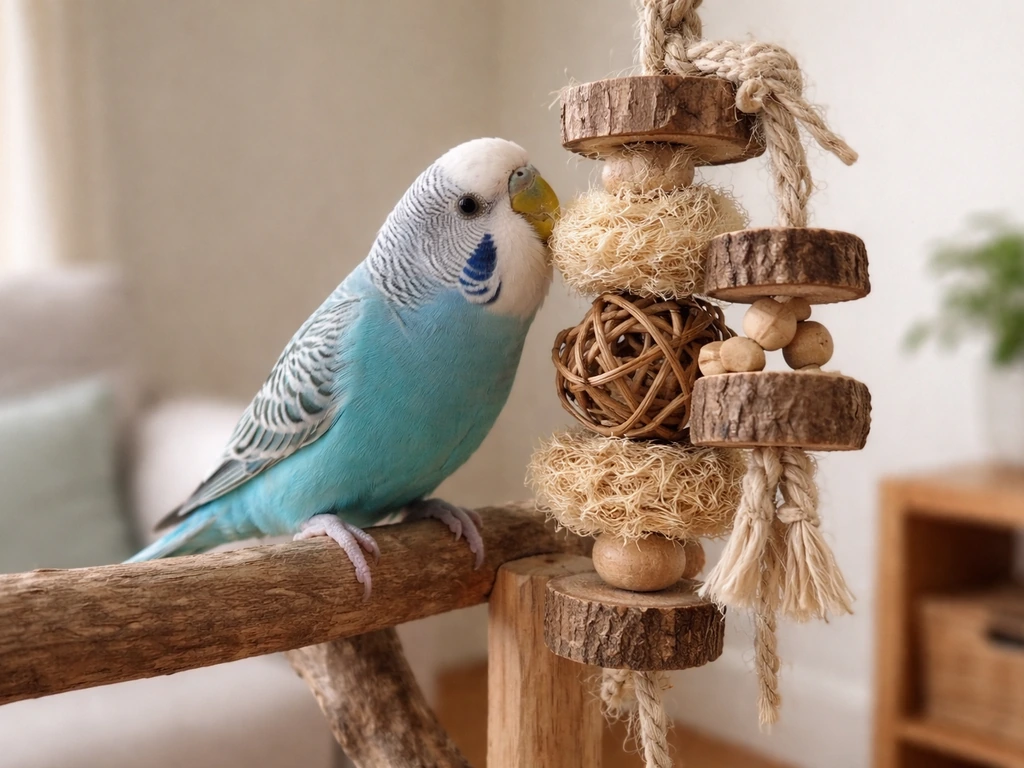
You can start playing with a caged bird today, even if it barely knows you exist yet. The key is working with the cage as part of the interaction, not as a barrier to get past. Most people either rush physical contact too fast or wait too long and miss the bonding window entirely. What actually works is a simple, repeatable routine built on trust, predictability, and the bird's natural instincts to explore and forage. This guide walks you through the whole thing, from setting up the cage correctly to running daily play sessions your bird will genuinely look forward to.
How to Play With a Bird in a Cage: Safe Daily Games

Maya Harris
17 Apr 2026
Humane safety basics before you touch anything
Welfare-first means starting with one non-negotiable rule: never force interaction. Forceful or manual restraint can cause lasting emotional damage to a bird, making future bonding significantly harder. The goal is to keep every session low-stress from the very first day. That means managing the environment as much as managing your own behavior.
Before your first play session, check these environmental factors. Keep the room quiet and dim during initial introductions. Avoid strong odors (candles, cooking fumes, aerosols) since birds have sensitive respiratory systems. Limit the number of people moving around the cage. The USDA Animal Welfare Act standards frame these as baseline humane care requirements, not suggestions. Unfamiliar people and objects are genuine stressors for birds, and stacking too many novelties at once sets you back rather than forward.
- Wash your hands before every session to remove food smells that could cause accidental biting
- Never play with a bird when it is showing respiratory distress, discharge from eyes or nares, or abnormal breathing sounds. Those are veterinary emergencies, not play-day problems
- Avoid reaching into the cage aggressively or grabbing from above. Predator-style approaches trigger panic
- Keep sessions short, especially at first. Three to five minutes of calm interaction beats twenty minutes of stress
- Remove any rings, dangling earrings, or loose clothing near the cage that could catch toes or beaks
Toy safety is also part of this foundation. Toys with openings large enough to trap a toe or beak, rope fibers that unravel into long strands, or materials treated with chemicals and pesticides are all real hazards. Choose toys made from natural, non-synthetic materials where possible, and always inspect them before putting them in the cage. If you are unsure about a toy's safety, leave it out. A bare cage is safer than one with a dangerous object in it.
Set up the cage and environment so play is actually possible
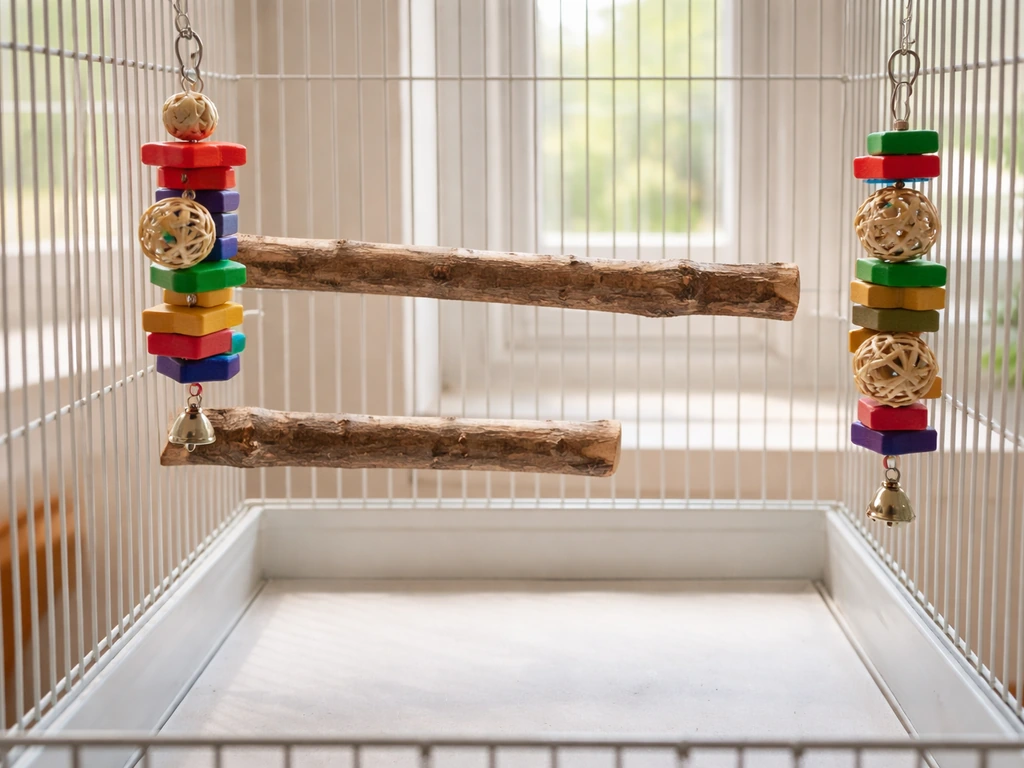
A cage that is not set up correctly makes bonding harder because the bird is uncomfortable, bored, or stressed before you even arrive. The first thing to look at is perches. Ditch the single-diameter wooden dowel rod. Birds need at least four different perch diameters so their feet can shift grip positions throughout the day. This reduces pressure points and keeps feet healthy enough for the bird to engage with you comfortably. Place perches at different heights, making sure none of them sit directly over food or water dishes where droppings will contaminate them.
Toys should be rotated, not piled in all at once. Too many new objects at once is genuinely overwhelming for a bird and can make the cage feel unsafe rather than stimulating. Offer two or three toys at a time, then swap one out every few days so the cage stays interesting without becoming chaotic. A good toy rotation includes at least one shredding toy, one foraging toy, and one puzzle or manipulable object. Avoid tent or hammock products that create enclosed, nest-like spaces since these can trigger hormonal behavior that complicates bonding and training.
Think of the space just outside or on top of the cage as an extension of the play area. Many birds feel more comfortable engaging from a familiar perch or cage door than from your hand right away. If your cage has a flat top with a play stand, use it. If not, a simple tabletop perch placed within arm's reach of the cage gives the bird a defined "play zone" that it can associate with fun things happening. Making your bird feel happy and secure in its space is the foundation everything else builds on, so invest time here before rushing to the next step.
How to approach the cage and read what the bird is telling you
Approach the cage slowly and at eye level whenever possible. Coming from above triggers a hard-wired predator response. Talk quietly as you approach so your arrival is predictable, not a surprise. Sit near the cage without doing anything for a few minutes. Let the bird check you out. This is not wasted time. It is the actual work.
Reading body language accurately is the skill that separates people who bond quickly from people who stay stuck. Here is what to look for before you make any move closer or offer any interaction:
| Signal | What it means | What to do |
|---|---|---|
| Feathers slicked flat, head pulled back, eyes darting, mouth slightly open | Fear: bird is actively stressed and looking for escape | Back off, speak softly, wait until posture relaxes |
| Puffed head/shoulders, wings held slightly out, tail fanning, eye pinning, lunging | Aggression: bird is warning you off | Do not push forward. End the session and try again later |
| Crouching, hissing, spreading wings, charging toward bars | Escalating threat: bite is likely imminent | Give the bird space immediately. Do not reward the behavior by rushing away in a panic, but do stop the session |
| Relaxed feathers, one foot lifted casually, slow blinking, gentle vocalizations | Calm and comfortable: good time to engage | Proceed slowly and positively |
| Leaning toward you, bobbing head, chirping or talking softly | Curious and interested: actively inviting interaction | This is your green light. Move gently and reward the engagement |
One important note: a lifted foot combined with agitation (tense body, pinned eyes) is not an invitation. That is a readiness-to-bite posture. Context matters. Read the whole bird, not just one signal. When you see multiple stress or aggression signals at once, change your approach immediately rather than pushing through.
Building trust before play even starts
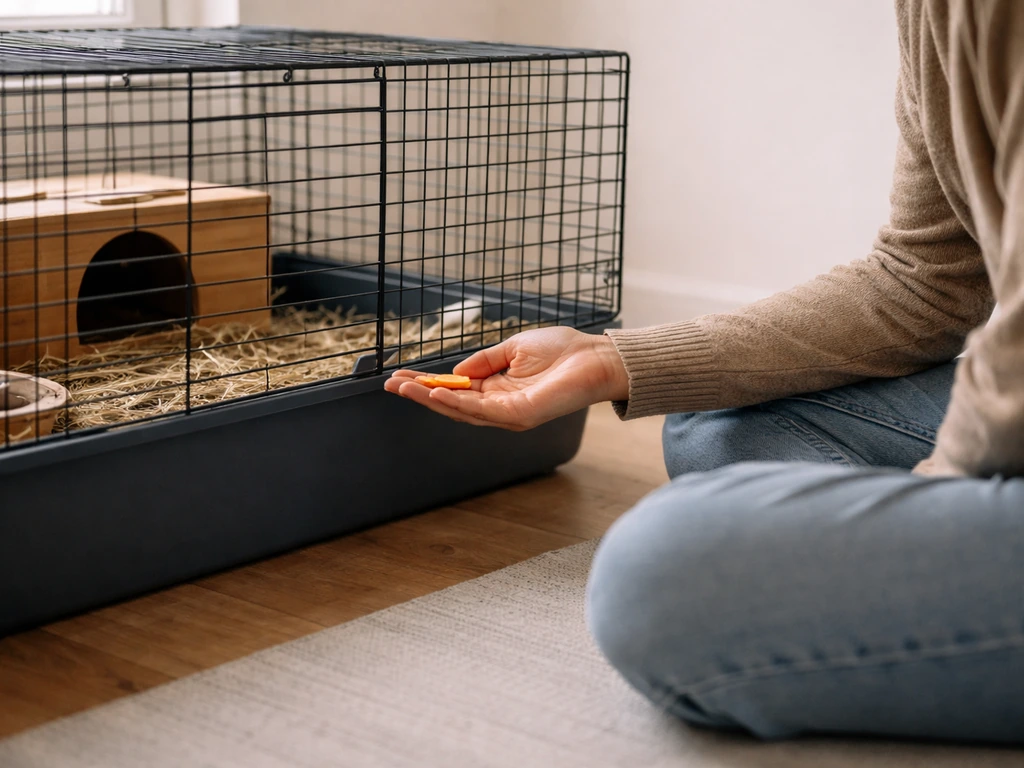
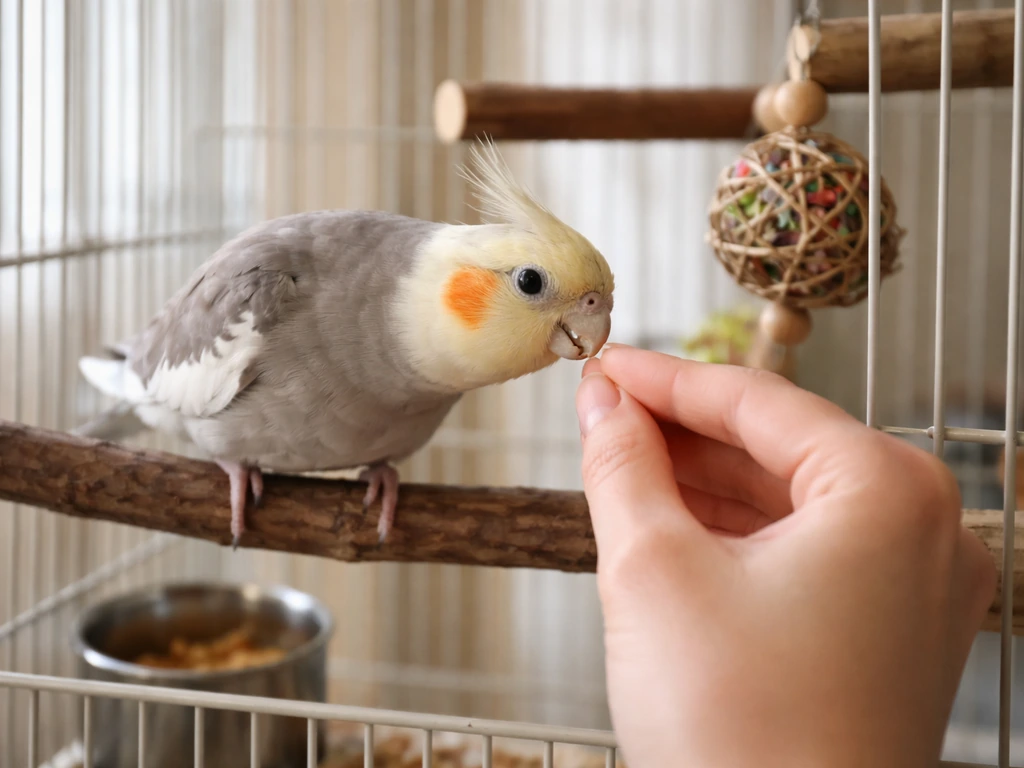
Trust-building happens in stages, and you cannot skip them. Start with what trainers call "presence pairing": sit near the cage and offer a small piece of a preferred food by placing it near the cage bars without reaching in. Do this at the same time every day. Predictability is enormously reassuring to birds. After a few sessions where the bird accepts the food without retreating, you can start placing it slightly inside the cage door. The goal here is voluntary approach, not compliance.
Never use punishment at any point in this process. Punishment, including shouting, spraying water, or shaking the cage, increases fear and anxiety and will undo weeks of trust-building in seconds. If a session is going badly, the correct move is to end it calmly and try again tomorrow. Turning a defensive or aggressive bird into a willing companion takes patience and consistency, but it is absolutely achievable with the right approach.
A practical daily play and interaction routine
Once the bird is accepting your presence calmly, you can build a simple daily routine. Keep it at roughly the same time each day since birds are creatures of habit and will start anticipating (and enjoying) the schedule. Here is a framework that works for most caged pet birds, from finches and cockatiels to larger parrots:
- Arrival and settling (1 to 2 minutes): Approach the cage calmly, speak softly, and let the bird register your presence. No touching or reaching in yet. Check the bird's posture and determine whether it is calm enough to proceed
- Food-based engagement (2 to 3 minutes): Offer a small treat through the bars or at the cage door. Let the bird come to you rather than pushing toward it. This keeps the association with your arrival positive
- Toy interaction through the bars (3 to 5 minutes): Hold a toy or object near the bars and let the bird investigate, peck, or interact with it on its own terms. Wiggling a foraging toy gently can trigger play behavior without requiring physical contact
- Training-based play if the bird is ready (3 to 5 minutes): See the next section for specific games. Keep this portion short and end on a success
- Calm wind-down (1 to 2 minutes): Talk softly, offer one last treat, and give the bird time to settle before you walk away. Ending abruptly can leave the bird in a heightened state
Total session time for a new or shy bird should stay under ten minutes. For a bird that is already comfortable with you, fifteen to twenty minutes is a reasonable cap. If the bird becomes disinterested or stressed at any point, shorten the session and note what triggered the change. Finding creative ways to entertain your bird gets easier once you know which activities your specific bird responds to best.
Training-based games that count as play
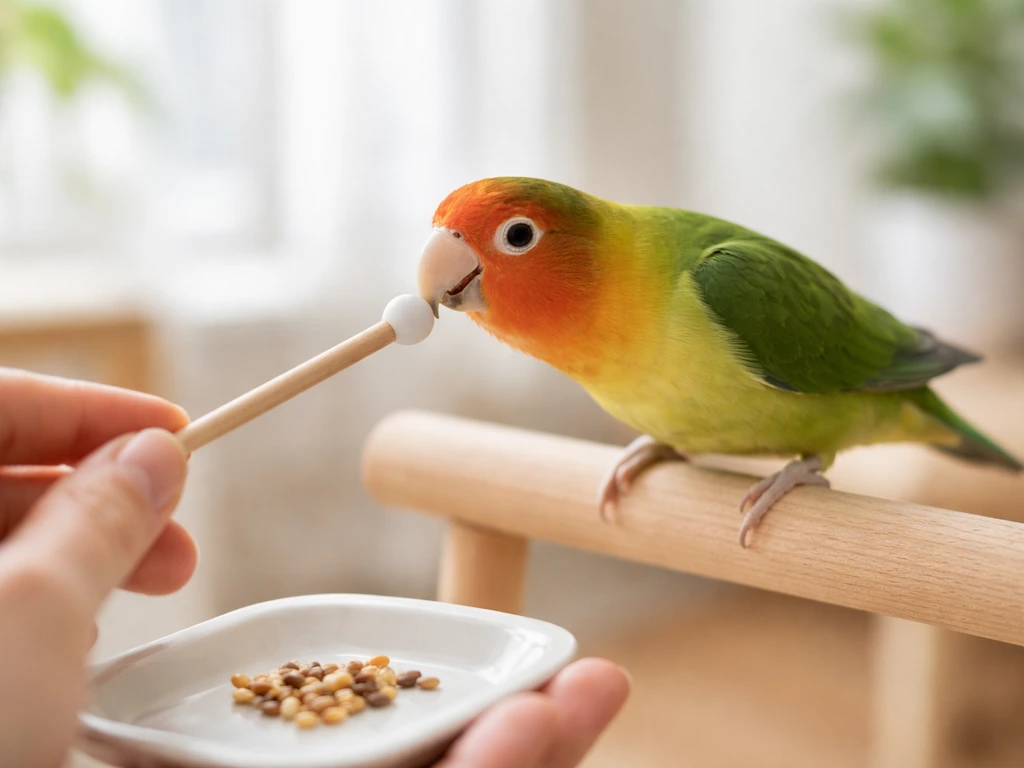
Training and play are not separate things for birds. A bird that is working on a puzzle, following a target, or practicing stepping up is mentally engaged in exactly the way play is supposed to work. These activities build the bond faster than passive interaction because the bird is actively participating and getting rewarded.
Target training
Target training is the foundation of almost all bird training and it is a great first game. You introduce a target, which can be a chopstick, the eraser end of a pencil, or a commercial target stick, and teach the bird to touch it with its beak.
Here is how to start: hold the target near the bird and the instant it investigates or touches it, mark the moment with a clicker or a consistent word like "yes," then immediately offer a treat. AVSAB’s positive-reinforcement training intro explains that with a “mark and reinforce” approach, the marker becomes meaningful by being consistently paired with a reward.
Keep sessions to three to five minutes. Over time, you can move the target to guide the bird between perches, toward you, or to specific spots in the cage. A marker (the click or the word) works as a timing tool: it tells the bird the exact moment it did the right thing, which makes learning much faster.
Step up as a movement game
"Step up" is taught by presenting your finger or a hand-held perch near the bird's lower chest and applying gentle upward pressure while saying "step up." When the bird steps onto your finger, mark and reward. Over time this becomes a voluntary behavior the bird will offer readily, and you can chain it with "step down" to create a back-and-forth movement game between your hand and a perch. This also doubles as essential handling practice that reduces stress during vet visits and transport. Understanding the broader range of ways to play with your bird helps you see how step up fits into a full interaction toolkit rather than being just a training drill.
Foraging play
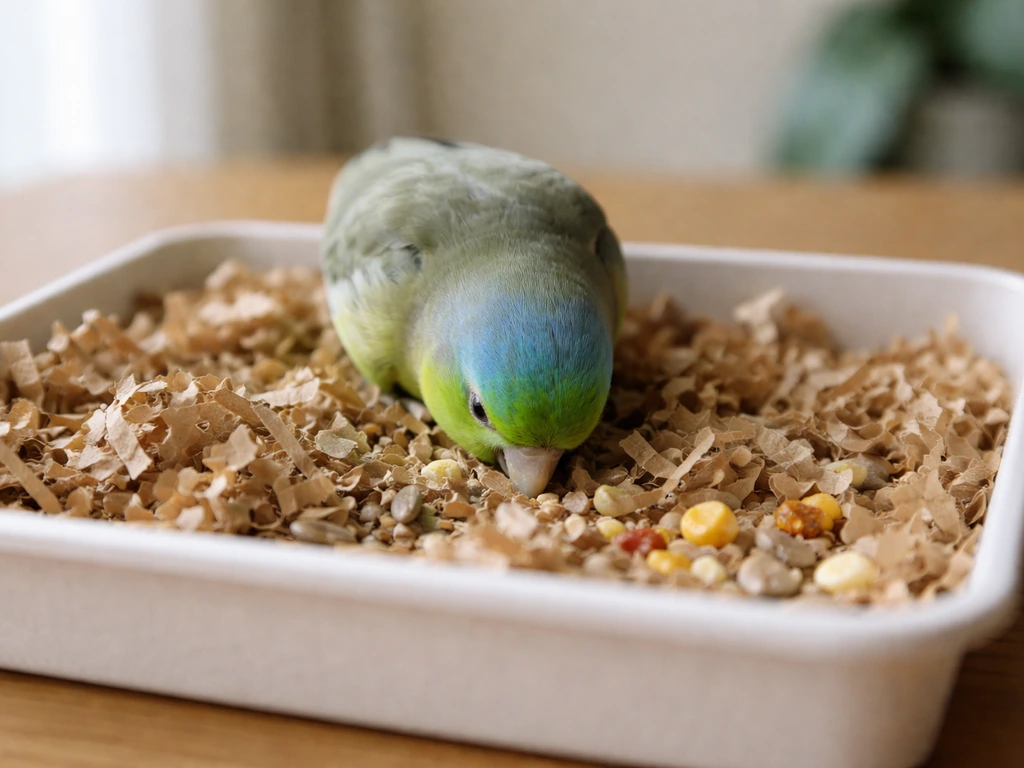
Foraging is the most natural form of enrichment for nearly every bird species. In the wild, birds spend the majority of their active time searching for food. Replicating that in a cage environment is one of the most powerful things you can do for mental health and engagement. Start simple: place a small treat under a piece of shredded paper in a dish and let the bird dig for it.
Once the bird understands that food can be hidden, you can increase complexity with foraging cups, wrapped paper parcels, or puzzle feeders. VCA Animal Hospitals notes that puzzle and foraging toys are enrichment that challenge birds to solve problems to get food, and that these puzzles may take hours for birds to access favorite foods foraging cups, wrapped paper parcels, or puzzle feeders. Use natural materials that are not treated with chemicals or pesticides.
Food items should be portion-appropriate and factored into the bird's total daily diet to avoid unintended weight gain. There are many fun things you can do with your bird that center on this instinct, and foraging is a great anchor for most of them.
Species and age considerations: not all birds play the same way
A budgie, a cockatiel, and a macaw all need play, but they need it differently. Size, temperament, species instinct, and age all shape how you approach these routines. Here is a practical breakdown:
| Bird type | Play style | Toy/foraging notes | Session length |
|---|---|---|---|
| Small birds (budgies, finches, canaries) | Often play independently; enjoy mirror toys, bells, swings, and shredding | Small paper parcels, millet sprays hidden in paper; avoid toys with large openings that could trap them | 5 to 8 minutes of active interaction; leave enrichment accessible all day |
| Medium birds (cockatiels, conures, lovebirds) | Social and curious; respond well to target training and step up; enjoy foraging and puzzle toys | Lafeber-style foraging packs, cork pieces, palm fronds; moderate challenge level | 8 to 12 minutes; highly trainable with positive reinforcement |
| Large parrots (African Greys, Amazons, cockatoos, macaws) | Highly intelligent; need complex foraging and multi-step puzzles; bond deeply and can develop problem behaviors without enough stimulation | Wrapped nuts, multi-layer foraging boxes, shreddable wood; high challenge level | 15 to 20 minutes maximum; daily sessions are essential |
| Young/juvenile birds | Shorter attention spans; play is exploratory rather than goal-oriented; start with simple textures and sounds | Soft wood, paper, and simple bells; avoid complex puzzles until they have basic confidence | 3 to 5 minutes; multiple short sessions better than one long one |
| Older or rescue birds | May need longer trust-building phase; may have learned fear responses or cage aggression from previous handling | Start with foraging only through bars; no physical contact until clear trust signals appear | Follow the bird's pace entirely; no time targets |
For wild birds or birds in rehabilitation, the rules change significantly. The goal with wild birds is not bonding but welfare and eventual release. Minimize direct human contact as much as possible, provide species-appropriate enrichment that encourages natural behaviors, and work under the guidance of a licensed wildlife rehabilitator. Playing with a wild bird the same way you would a pet bird can cause imprinting or habituation to humans, which reduces its chances of survival after release. When thinking about how to exercise your bird, the same principle applies: the type and intensity of activity must match the species, age, and context.
When your bird refuses to engage, bites, screams, or gets aggressive
Troubleshooting is a normal part of this process, not a sign that something is wrong with you or your bird. Here are the most common problems and what to actually do about them.
The bird refuses to engage at all
This usually means you are moving too fast or the environment is too stimulating. Go back to basics: sit near the cage without initiating anything, let the bird habituate to your presence, and start with food rewards only. Do not introduce toys or training yet. A bird that is shut down or completely disengaged from enrichment may also be unwell, so rule out a health issue first. Changes in appetite, vocalization, or activity level are clinical red flags that warrant a call to an avian veterinarian.
Biting when you reach into the cage
Cage aggression is extremely common and usually territorially motivated, not a sign of a permanently aggressive bird. The bird is defending its space. The fix is to do all initial interaction at the cage door or through the bars rather than reaching in. Use a perch or target stick instead of your hand when first asking for step up. Build the association that your hand near the cage means good things happen, not invasion. If you are away during the day and worried about your bird's behavior, leaving foraging enrichment set up before you leave can reduce the territorial tension that builds when birds are bored and isolated.
Screaming during or after play sessions
Contact calls and some vocalization during play are normal. Prolonged screaming, especially when you leave the room, is often a separation or anxiety response. Avoid rushing back to the bird every time it screams, as this teaches the bird that screaming summons you. Instead, return during a quiet moment and build up the bird's tolerance for brief separations gradually. Make departures and arrivals low-key rather than dramatic.
Destructive behavior toward toys or the cage
Chewing and shredding are natural behaviors, not problems. If a bird is destroying inappropriate things (cage bars, perch hardware, feathers on itself), that is usually a signal of understimulation. Increase foraging complexity, add a shredding toy, and make sure the bird is getting enough direct daily interaction. Feather destructive behavior specifically can have medical causes and should be evaluated by an avian vet before assuming it is purely behavioral.
When to get professional help
Some situations genuinely need an expert. Contact an avian veterinarian if you see any of these: open-mouth breathing or tail-bobbing while breathing, discharge around the eyes, nares, or mouth, significant changes in eating habits or droppings, labored breathing, bleeding that will not stop, or a bird holding its wings away from its body while panting. These are medical emergencies. For behavior problems that are not improving after consistent welfare-first training, a certified avian behavior specialist is the right next step. Keeping your bird genuinely happy sometimes means recognizing that a problem is beyond what you can solve alone, and getting that help early leads to much better outcomes than waiting.
Your plan starting today
Start with the cage setup: swap out the single dowel for varied perches, pull out excess toys, and add one simple foraging element like treats hidden under shredded paper. Then pick a consistent time to sit near the cage today, even if you just sit quietly for five minutes and offer a small treat through the bars. That is play session one. Tomorrow, read the bird's body language before doing anything else and build from there. The routine does not need to be complicated. Predictability, positive association, and a bit of patience will get you further than any toy or gadget.
FAQ
How do I know when my bird is ready to play instead of just tolerating me?
Look for calm curiosity, relaxed posture, and voluntary movement toward the cage door or your nearby perch (instead of freezing). If the bird approaches the offered food without strong retreating or pinned eyes, that is a good sign it is ready for the next step, like a short foraging session or a target game.
Is it okay to start play sessions with my hand inside the cage?
For most birds, start with interactions that do not require reaching in. Use the cage door or bars for early trust, and introduce your hand only after the bird is reliably accepting food and stepping onto a perch or target. Reaching in too early commonly triggers territorial defense.
My bird bites when I move closer. Should I pull back immediately or try again after a minute?
Pull back and end the moment. Then resume later during a quieter time, with presence pairing or food rewards from a safe distance. If you repeatedly “try again” right after agitation, you often teach the bird that escalation happens whenever it signals distress.
What should I do if my bird runs away when I offer a treat?
Do not follow into the retreat. Place the treat near the bars where the bird can choose it, keep your body still, and repeat the same approach at the same time each day. If the bird still cannot approach after several sessions, reduce stimulation and consider a health check.
How many toys is too many during play, and should I add new toys one at a time?
Usually start with two or three at most, rotating gradually. Add only one new toy at a time so you can tell whether it helps or increases fear. If the bird avoids the cage area or spends extra time pacing, switch back to previously accepted toys.
Can I use foraging games if my bird doesn’t like hidden food yet?
Yes, but keep it visible at first. Try placing the treat under shredded paper only when the bird is already comfortable eating treats near you. Once the bird shows interest, you can increase the difficulty by using puzzle feeders or more enclosed foraging methods.
Do I need a clicker for target training, or can I use a word?
A consistent marker works either way. If you use a word, keep it short and identical every time, and deliver the treat immediately. The timing matters most, the exact tool is less important than being precise.
How close should the target or my finger be when teaching step up?
Present it near the bird’s lower chest and let the bird decide to step. If you press too hard or move too quickly, the bird may interpret it as restraint and resist. Gentle upward pressure is enough, stop and reassess if the bird shows readiness-to-bite or strong agitation.
What if my bird screams during play, especially when I leave the room?
Avoid teaching that screaming controls your behavior. Keep departures and arrivals low-key, return only during calmer moments, and gradually build tolerance for short separations. If screaming is constant, happens with other stress signs, or escalates suddenly, rule out anxiety or medical causes.
My bird destroys things, sometimes including feathers. Is that always boredom?
Destructive chewing and shredding can be understimulation, but feather-related damage can also be medical. If you notice feather plucking, skin changes, or sudden changes in behavior, contact an avian veterinarian before assuming it is purely behavioral.
Should I play with a wild or rehab bird the same way as a pet bird?
No. For wild or rehabilitated birds, direct bonding games can cause imprinting or habituation. Keep contact minimal, focus on species-appropriate enrichment, and work with a licensed wildlife rehabilitator.
How can I make play safer if my bird likes to get under or behind things?
Provide a defined play zone using the cage top or a stable tabletop perch within reach. Avoid enclosed nest-like structures that can trigger hormonal behaviors, and remove items that snag feet or beaks. Regularly inspect toys for loose fibers, sharp edges, or widening holes.
What time of day is best for learning and play sessions?
Pick a consistent window when the bird is typically active and not just after a major disturbance, such as cleaning or loud household activity. For many birds, a predictable daily routine improves engagement, and staying within short session limits prevents fatigue or overwhelm.
My bird won’t engage even with food rewards. What’s the next step?
First, shorten and simplify, use presence pairing with only preferred food near the bars, and keep the environment quiet and dim. If there is no improvement, or you see appetite changes, droppings changes, or reduced activity, contact an avian veterinarian.
When should I stop a session, even if it seems like I’m “making progress”?
End the session immediately when you see multiple stress signals at once, such as agitation combined with defensive body language. Leaving calmly prevents the bird from associating your presence with escalating discomfort, and you can restart the next day at an easier stage.
Next Article
How to Exercise Your Bird Safely With Training and Enrichment
Humane, welfare-first guide on training and enrichment so your bird safely moves more through flight, climbing, and fora