Here is the short answer: in your next session, sit quietly near your bird for five to ten minutes without asking anything of it, then offer a treat by hand, and end on that positive note. That one routine, repeated daily, is the foundation of every game and bonding activity in this guide. Everything else builds from there.
How to Play With a Bird: Humane Games and Steps

Maya Harris
6 Apr 2026
Understanding bird temperament and safety first
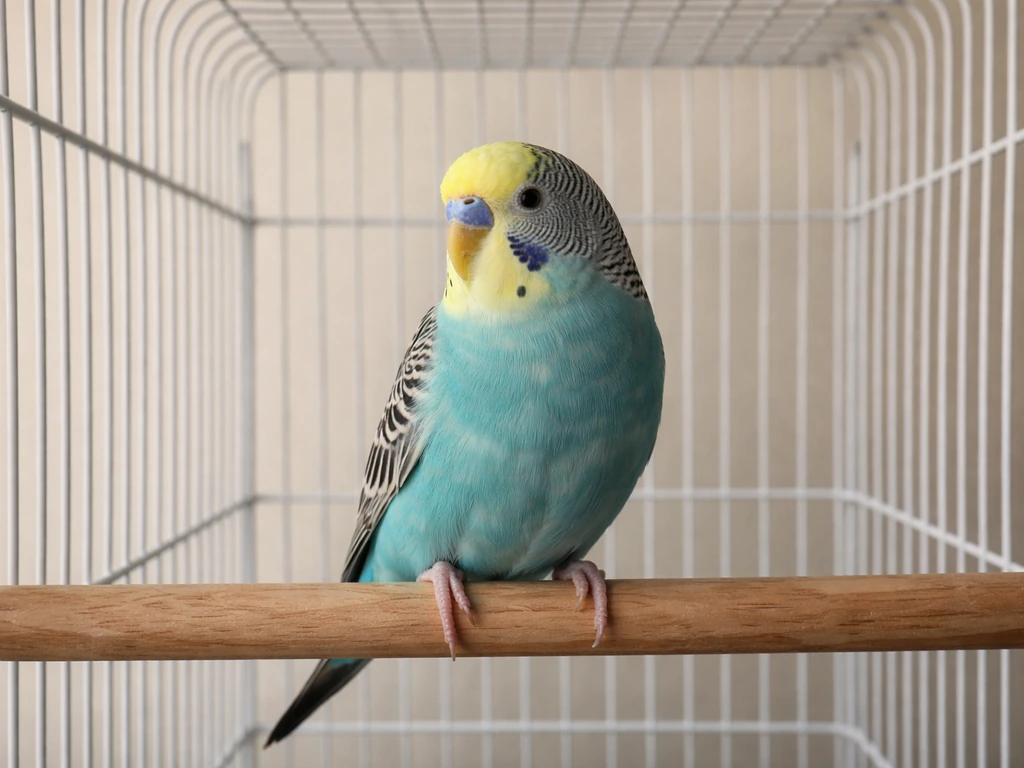
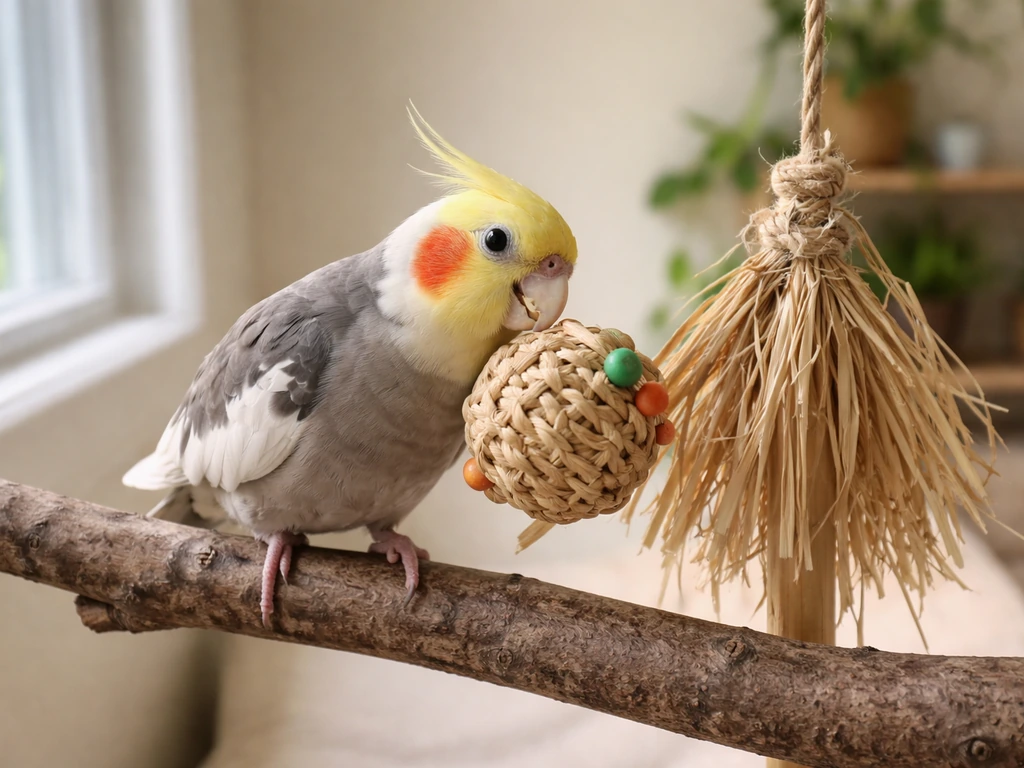
Before you pick up a toy or reach into the cage, you need to be fluent in what your bird is telling you. Birds communicate almost entirely through body posture, and misreading those signals is the most common reason play sessions go badly. The Association of Avian Veterinarians identifies fear cues as: leaning away, wide-open eyes, a low crouch, quivering wings, feathers pulled tight to the body, a raised crest in cockatiels and cockatoos, an open beak, a very tall upright stance, and side-to-side head rocking. If you see any of these, the bird is not ready to play. Stop, back off, and give it space.
Aggression looks different. A bird that is angry will often crouch with its head down and pointed forward, flare its tail feathers, ruffle or hackle its body feathers, and dilate its pupils. Lunging and flaring are the final warning before a bite. These are not signals to push through. Forcing interaction at that point damages trust and often results in the exact biting problem people are trying to avoid.
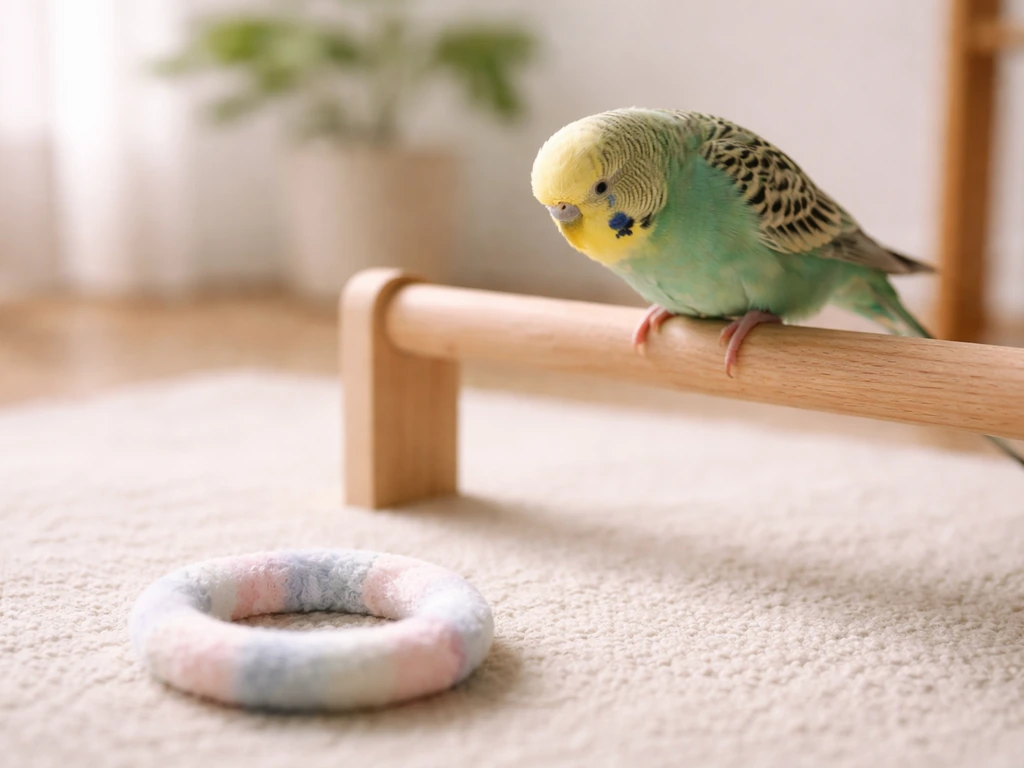
A relaxed, ready-to-play bird looks like this: feathers slightly fluffed under the beak and on the head, soft normal-sized pupils, head resting low around the shoulders, quiet vocalizing or gentle chattering, and possibly one foot tucked up. When you see these signs, your bird is comfortable and genuinely open to engagement. Only increase your interaction when fear cues are absent, not just reduced. If you are dealing with a bird that snaps or bluffs regularly, it is worth reading up on how to make a mean bird nice before diving into active play, since trust has to come first.
A quick note on hygiene: birds, especially parrots, parakeets, macaws, and cockatiels, can carry Chlamydophila psittaci, the bacterium responsible for psittacosis. Wash your hands thoroughly after handling any bird or cleaning its environment. This is not a reason to avoid your bird, but it is a reason to make hand-washing a default habit before and after every session.
Setting up a safe play and bonding environment
The room you choose for play matters as much as what you do in it. The kitchen is the one place to rule out entirely. Overheated non-stick cookware releases PTFE fumes that are deadly to birds at around 464°F (240°C), but even ordinary cooking smoke and steam can damage a bird's respiratory tract. The same goes for cleaning products, paints, varnishes, air fresheners, and hair sprays. A practical rule: if you can smell it, it may harm your bird. Ceiling fans are another hazard that catches people off guard during out-of-cage sessions, so turn them off before opening a cage door.
Electrical cords should be hidden or unplugged in any room where your bird will be out. A bird that chews through a live cord risks electrocution, facial burns, and fire. Products that off-gas, like new carpet or adhesives, can slowly emit fumes for months, so avoid letting your bird spend time in recently renovated spaces. Draft exposure is also a genuine risk: place the cage and play area away from air vents, open windows with fans, and direct sunlight. A well-lit spot that gets indirect natural light is ideal.
For the cage itself, a quiet area that is off the floor but not in a window with intense direct sunlight is the right placement. High-traffic zones create chronic low-level stress that makes birds harder to engage during play. Think of the environment as a dial you control before the session even starts: quiet room, familiar smells, consistent temperature, no ceiling fan, no kitchen. When those boxes are checked, your bird is already more likely to engage positively.
Games and interactive play ideas for pet birds
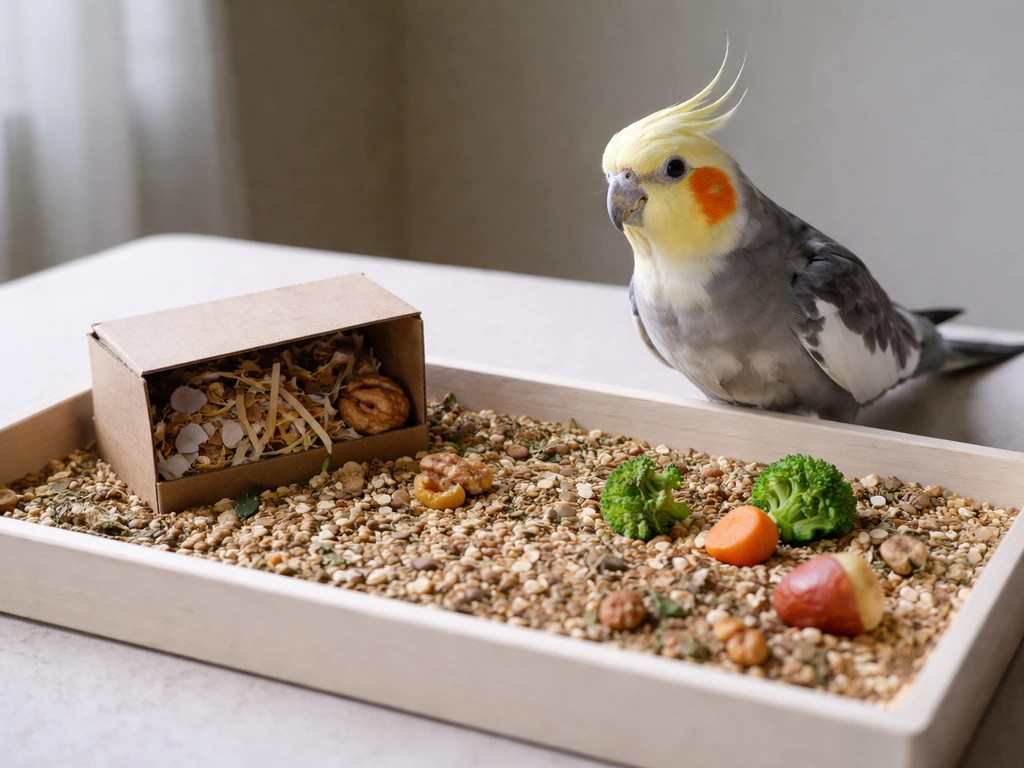
The most effective play for pet birds mimics what they do in the wild: forage, solve problems, interact socially, and explore novelty. Conventional food bowls actually reduce that stimulation because the bird finishes eating in seconds. Switching to foraging setups extends the engagement dramatically. Try filling a small cardboard box with safe chewable items (paper strips, untreated wood pieces) and a few pieces of food hidden inside. The bird has to search through the materials to find the reward. You can let your bird watch you hide the food first, which sparks curiosity and gets it oriented toward the puzzle before you even step back.
Target training is one of the best interactive games you can introduce early, and it doubles as a trust-building tool. Present a small stick or chopstick near the bird and reward the moment it touches or orients toward it. Over a few sessions, you can shape this into having the bird follow the target across a play stand, through a simple obstacle, or into its carrier. It keeps the bird mentally engaged and gives it a clear, low-pressure way to interact with you. The AAV recommends target training explicitly as part of enrichment, and it works for everything from budgies to large parrots.
Bathing play is another option many owners overlook. Most birds enjoy a light mist from a spray bottle set on the finest mist, a shallow dish of lukewarm water, or even being gently splashed near a sink. Introduce it slowly and let the bird approach on its own terms. Social enrichment, like talking to your bird, playing music, or simply being present in the room while it explores, counts as genuine play for highly social species. For a broader list of activities you can rotate through, the guide on fun things to do with your bird is a good companion resource.
Variety matters. Rotating toys and foraging challenges keeps novelty high. Introduce one new item at a time and place it near (but not directly in front of) the bird so it can approach on its own schedule. Never force a new toy into the bird's space. If it leans away or tightens its feathers, remove the item and reintroduce it another day.
Quick play ideas by engagement level
- Beginner: Sit near the cage and talk or read aloud. Offer a treat through the bars. Let the bird observe you doing something interesting nearby.
- Beginner: Place a foraging box on the play stand with a few pieces of food hidden inside and let the bird explore at its own pace.
- Intermediate: Introduce target training using a chopstick or wooden dowel. Reward any contact with the target, then shape movement toward it.
- Intermediate: Set up a bath station (shallow dish or fine-mist spray bottle) and let the bird decide whether to engage.
- Advanced: Build a simple foraging board with cups, corks, and wrapped treats. Rotate the configuration every few days.
- Advanced: Teach the bird to retrieve a specific object or navigate a short obstacle course using target cues.
Step-by-step bonding and trust-building routines
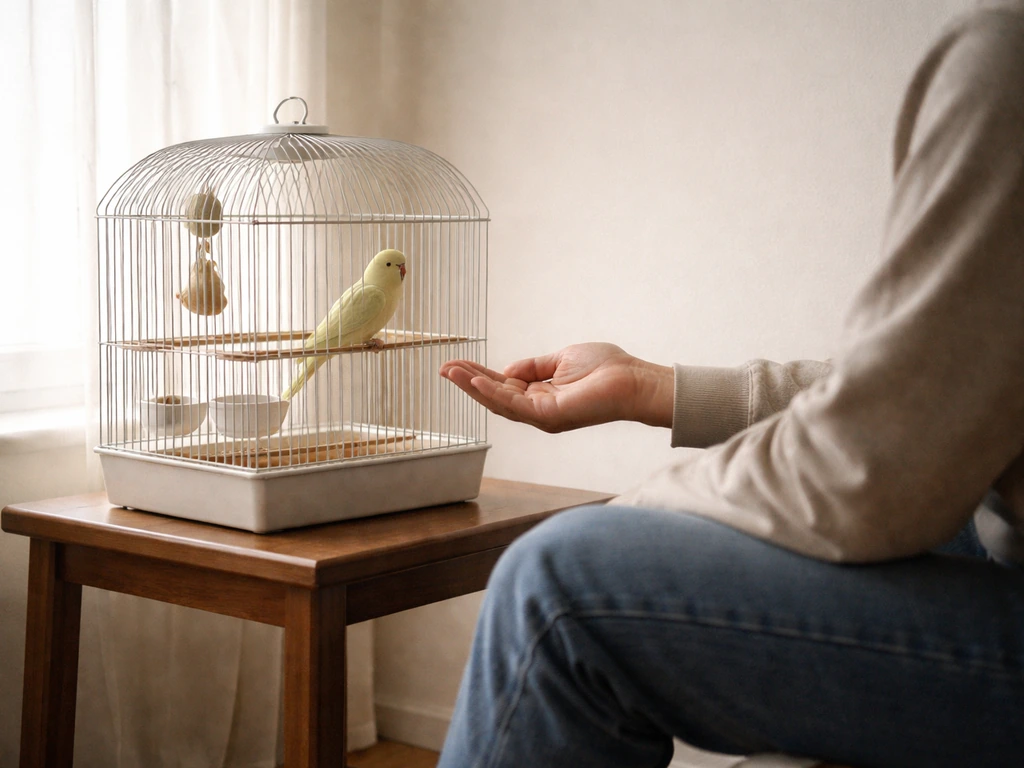
Trust builds in small, consistent increments. The biggest mistake new bird owners make is trying to compress that timeline. Here is a progression that works reliably across most species and temperaments.
- Week 1 (presence): Sit near the cage daily for five to ten minutes. Do not stare directly at the bird. Read, work quietly, or just exist in the space. Let the bird observe you and realize you are not a threat.
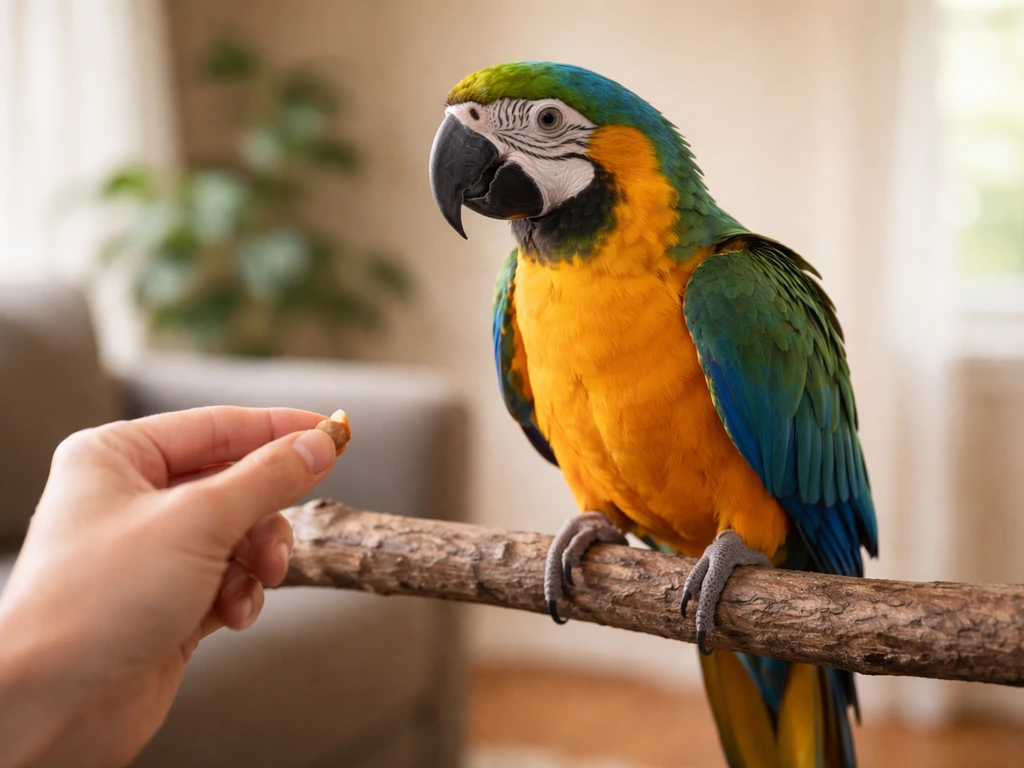
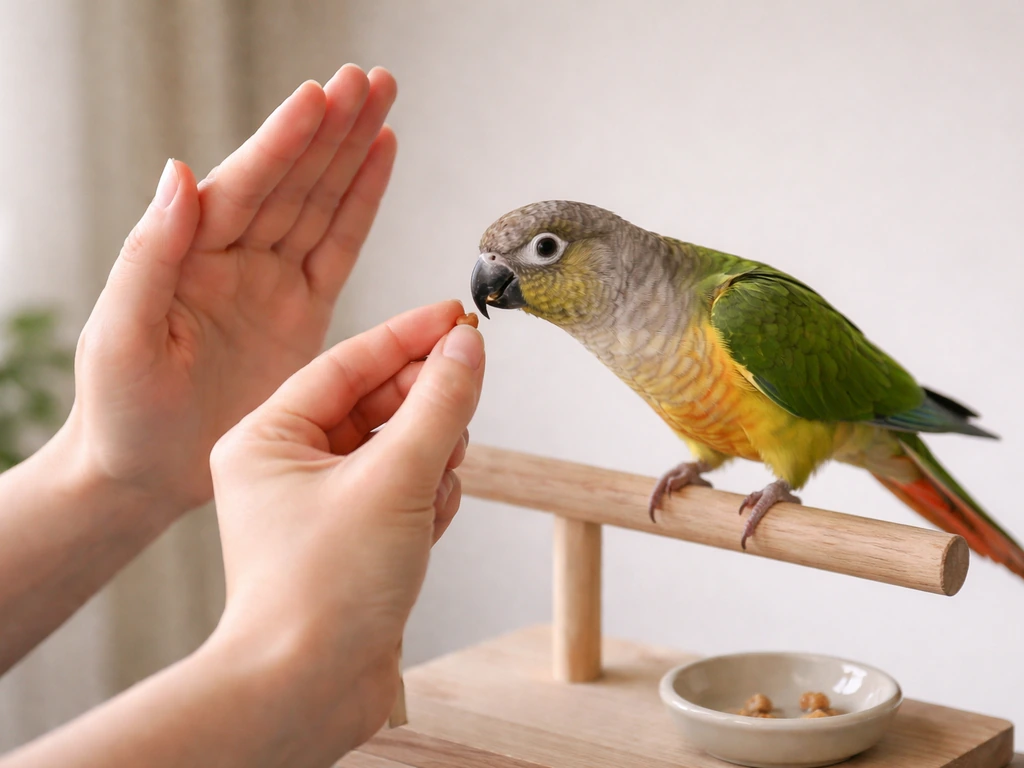
- Week 2 (approach and treats): Begin offering high-value treats (a favorite fruit, millet, a seed) through the cage bars or cage door. Do not push your hand deep into the space. Hold the treat at the opening and wait. If the bird comes forward, that is a win. If not, place the treat just inside and leave.
- Week 3 (hand near the bird): Once the bird is reliably taking treats from your hand at the cage opening, let your hand rest near it for a few seconds without offering anything. The goal is for the bird to become desensitized to your hand as a neutral object.
- Week 4 (step-up introduction): Gently present one finger or a perch-stick just below the bird's chest, at the lower leg line, and say a calm cue word like 'up.' Do not push. Do not chase. If the bird steps up, reward immediately and set it back down after a few seconds. Keep the first sessions under two minutes.
- Ongoing: Gradually extend session length and add new activities as trust grows. Always end on a positive interaction, even if that means shortening the session early to avoid a bad moment.
Session length is something a lot of guides skip over, but it matters. For a newly adopted or shy bird, five minutes is plenty. For a bird that is already comfortable with you, fifteen to twenty minutes of active engagement is a reasonable target before you start seeing signs of overstimulation. Two shorter sessions per day tend to produce better results than one long one. If you work during the day and worry about your bird's mental health in the hours you are gone, the article on how to keep your bird entertained while at work has practical setup ideas for that gap.
Timing within the day also helps. Most birds are most active and social in the morning and again in the late afternoon, mirroring wild activity patterns. Scheduling bonding sessions around those windows gives you a natural advantage. Avoid playing with a bird that just ate a large meal or that is clearly sleepy (one foot tucked, eyes half-closed, head turned back toward the wing). Those are nap signals, not play signals.
Handling and humane play techniques by bird type
Different species have genuinely different tolerances, energy levels, and preferred interaction styles. What works brilliantly with a cockatiel might overwhelm a budgie or bore a large macaw. Use the table below as a starting framework, but remember every individual bird has its own personality within its species range.
| Bird Type | Typical Tolerance for Handling | Preferred Play Style | Session Length Guideline | Key Caution |
|---|---|---|---|---|
| Budgerigar (Budgie) | Moderate, builds with time | Foraging, mirror play, gentle target training | 5–10 min | Easily startled; avoid sudden movements and loud noises |
| Cockatiel | High once bonded | Shoulder time, whistling games, foraging, head scratches | 10–20 min | Raised crest signals fear or excitement; read context carefully |
| Lovebird | Moderate; often prefers a pair | Chewing toys, foraging, short handling sessions | 5–15 min | Can be nippy; step-up training is important early |
| Conure (small-medium) | High; often very social | Active play, target training, puzzle toys, shoulder time | 15–25 min | Loud and energetic; needs outlet or may redirect energy into biting |
| African Grey / Amazon | Variable; can be sensitive | Complex foraging, target training, talking interaction | 15–20 min | High intelligence means boredom is a real risk; rotate challenges |
| Macaw (large) | Variable; strong personality | Large foraging puzzles, target training, chewing | 10–20 min | Powerful beak; never push past a clear 'no' signal |
| Rehabilitated wild bird | Low; minimize handling | Visual enrichment, appropriate foraging setups | Minimal direct play | Goal is release, not bonding; consult a licensed rehabber |
For step-up work specifically, the technique is the same across species but the tolerance for repetition varies a lot. A cockatiel might step up ten times in a session happily; a large parrot may give you two or three quality step-ups and then signal it is done. Respect that limit. Chasing a bird to get one more step-up or forcing it after it has clearly disengaged is one of the fastest ways to break down a trust relationship you have spent weeks building. Step-up should always feel safe and repeatable for the bird, not like something being done to it. If your bird suddenly resists step-up after doing it reliably, that warrants a vet check since pain or illness can appear this way.
If you are working with an out-of-cage bird, physical exercise is part of play too. Flight, climbing, and exploring new surfaces all count as enrichment. The guide on how to exercise your bird covers safe flight and movement activities in more detail, and it pairs well with the bonding routines here. For birds that spend most of their time in the cage, how to play with a bird in a cage has specific setups for enrichment within that space.
Troubleshooting common issues and knowing when to pause or seek help
Even with the best setup and the most patient approach, you will hit bumps. Here are the most common problems and what to actually do about them.
The bird won't engage at all
This is normal for newly adopted birds and for shy individuals. Do not interpret disinterest as rejection or a permanent personality trait. Go back to Week 1 of the bonding progression: just be present without asking anything. Change the treat you are offering (millet works well as a high-value motivator for many species). Make sure the environment checks out: quiet, correct temperature, no drafts, no unfamiliar smells. Sometimes a bird that seems unresponsive is actually just adjusting to a new home and needs two to four weeks of low-pressure presence before it starts to engage. For more strategies on keeping an uninterested bird stimulated and happy, the article on how to entertain a bird has specific ideas for reluctant birds.
Biting during play
Biting is almost always communication, not malice. The bird is telling you it is overstimulated, uncomfortable, or afraid. Look at what happened in the ten seconds before the bite: did you move too quickly, reach into a space the bird considers its territory, handle it past its tolerance point, or miss a warning signal? A sudden increase in biting, especially in a bird that was previously calm, can signal pain or illness and warrants a vet exam. For day-to-day biting during handling, withdraw calmly and without drama, wait a few minutes, and try again at a lower intensity. Never flick or tap the beak as a correction. It escalates fear and aggression.
Fear of new toys or objects
This is extremely common. Place the new item on the floor near the cage for a few days before introducing it into the play space. Let the bird see you interact with the object casually, picking it up and putting it down without offering it to the bird. Once the bird is watching without leaning away or tightening its feathers, move the item closer over several sessions. The principle here is the same as desensitization work in any animal training: controlled, gradual exposure at a pace the animal controls.
Overstimulation and aggression mid-session
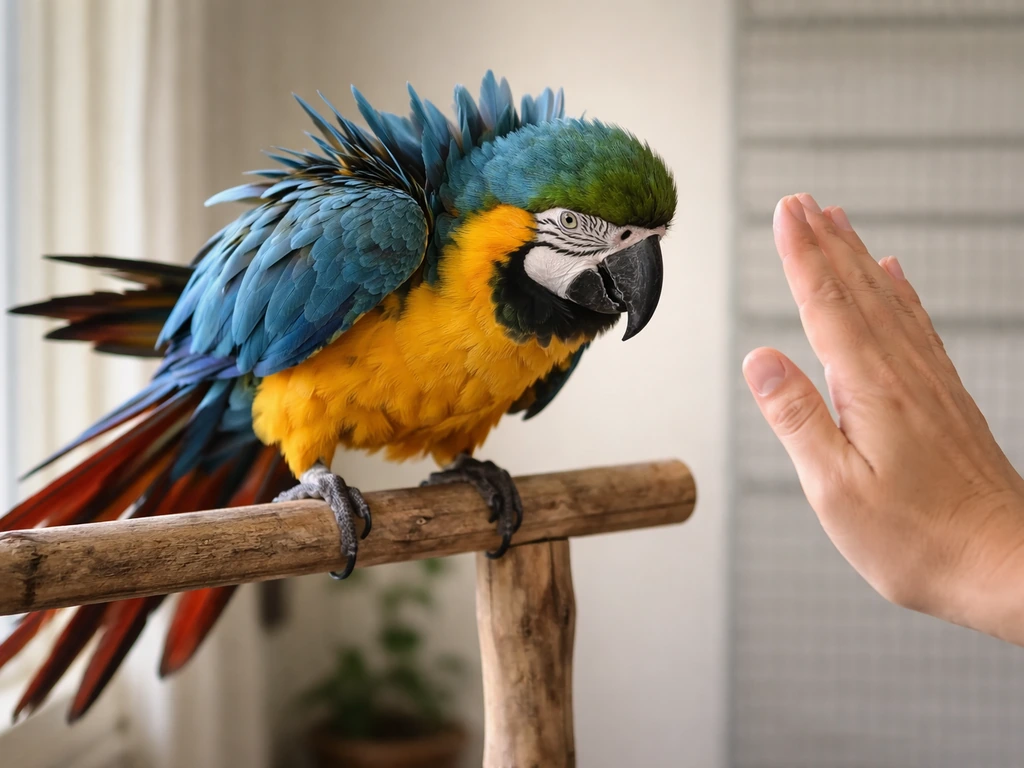
Some birds, especially larger parrots and conures, can flip from playful to agitated quickly. Watch for the aggression cluster: head down and forward, tail flared, ruffled feathers, pupil dilation. When you see this, end the session immediately and calmly. Do not try to get in one more step-up or one more trick. Put the bird back on its perch or in the cage, say something neutral like 'okay, done,' and walk away. Ending the session before it escalates to a bite is always the right call. The overall goal is a bird that looks forward to seeing you, and that only happens if sessions reliably end before they go badly.
When to call a vet or behaviorist
Seek professional help if: biting has escalated suddenly with no apparent cause; your bird is feather-destructive, self-harming, or showing repetitive stereotypic behaviors; the bird has been fearful and non-responsive for more than four to six weeks despite a patient, consistent approach; or you suspect illness (fluffed feathers combined with lethargy, loss of appetite, discharge, or changes in droppings). A certified avian vet or a veterinary behaviorist with bird experience is the right resource. Behavior problems rooted in medical issues will not improve with training alone. The broader goal of making your bird genuinely content is covered well in the guide on how to make bird happy, which includes health and enrichment factors together.
Your plan for the next session, starting today
Here is exactly what to do in the next twenty-four hours. First, check your environment: kitchen off-limits, ceiling fan off, no strong smells, cage away from drafts and direct sun. Second, identify where your bird is on the trust timeline. If it is new or shy, your session today is just five minutes of quiet presence, no interaction required. If it is comfortable with you, offer a treat by hand, try one or two calm step-up cues, and introduce one foraging challenge like a treat wrapped in a small piece of paper. Third, read its body language throughout and end the moment you see any stress signal or even before if things are going well. You want the last thing the bird remembers from the session to be positive.
Repeat that tomorrow. And the day after. Consistency is the most powerful tool you have. The games get more interesting, the sessions get longer, and the bird gets more confident, but only because you showed up the same calm, readable way every single day. That is how you build a bird that genuinely wants to play with you.
FAQ
What should I do if my bird seems comfortable one day and stressed the next?
Keep play sessions short and predictable, then increase slowly only after the bird can remain relaxed for several days. If the bird is new, start with quiet presence near the cage and one hand-feeding moment (no reaching and no toys). If it is already comfortable, add just one enrichment item and stop as soon as you see early stress, like tight feathers or head-down forward posture.
Should I correct my bird’s behavior when it pulls away or acts fearful during play?
Use a “yes, but later” rule. If your bird is showing fear or aggression cues, don’t correct the behavior, wait, and end the session. Once calm, resume with lower intensity actions, like sitting nearby or offering a treat from the same distance, and only try interaction again after the bird has resumed neutral posture.
How do I choose treats so play stays engaging and doesn’t turn into overeating?
If you’re offering a treat for step-up or target work, choose a bite-sized piece the bird can swallow quickly, and remove any remaining treat right after the session if your bird becomes too focused on food. Also, avoid letting foraging become “take the treat and run,” add small puzzles that keep the bird engaged longer, like hiding treats under paper strips or in a shallow chewable box.
What if my bird is too nervous to try the foraging games?
Foraging can be harder on birds that are timid, because searching can feel exposed. Start with an easier puzzle positioned at a safe distance, allow the bird to approach on its own, and use soft, low-risk items like paper strips or untreated wood. If the bird leans away or tightens feathers, remove the puzzle and reintroduce it later at the same location so it becomes familiar.
My bird ignores new toys. How long should I keep offering them before switching?
If your bird refuses toys, don’t remove them immediately, but also don’t force contact. Place the toy near the play area for several days so it becomes routine, and let the bird watch you handle it casually without reaching for the bird. Try one change at a time (new shape or material), then stop the session once the bird shows any fear cues.
Can I use target training or step-up to train through fear, or should I stop immediately?
Yes, but keep the approach humane and consistent. Aim for a calm, repeatable cue you can do the same way every time, like holding the target steady at the same height. If the bird backs away, raise the cue’s distance or pause the session, then try again later. Never chase or increase repetition until the bird escalates, since repetition can trigger shutdown or biting in many birds.
What is the best immediate response after a bite during a play session?
Some birds may bite to end the interaction. When it happens, stop reaching, return the bird to its preferred resting spot, and avoid immediate “make-up” handling. Wait until the bird looks relaxed again, then resume only with the safest low-pressure piece (quiet presence or hand-feeding at the same distance). If biting increases suddenly, treat it as a possible pain or illness issue.
Is it okay to include music or talking during play, and how do I know if it’s too much?
For some species and individuals, talking or music can be comforting, but it can also overstimulate. Start with very low volume, keep the same soundtrack for a few days so it’s predictable, and monitor body language. If you see rapid aggression cues or frantic movement, switch to quieter presence and shorter sessions.
I’m not home as much this week. How can I keep bonding consistent when my schedule changes?
If you need to pause your daily routine, aim to maintain the bonding basics: quiet presence at the usual time, predictable temperature and lighting, and one small positive interaction (like a treat offered by hand). You can still offer one puzzle at a consistent difficulty level, then stop at the first early stress sign. Avoid adding multiple new games after a gap.
How do I introduce bath play if my bird hates getting wet?
Don’t use bathing as a forced activity. Offer the option when your bird is already relaxed, like after a short foraging or treat moment, and let the bird choose to approach. Use lukewarm water, fine mist, or a shallow dish, and stop if the bird shows fluffed tight feathers, frantic escape behavior, or signs of distress.
What should I do if enrichment seems to make feather picking or self-harm worse?
If your bird is feather-destructive or self-harming, don’t rely on enrichment changes alone. Schedule an avian vet check promptly, then adjust play to lower arousal and provide safe, non-punitive engagement. While waiting for care, keep sessions short, reduce novelty, and focus on comfort routines the bird tolerates well.
What safety checklist should I run through before letting my bird out of the cage?
For out-of-cage sessions, treat power cords and air movement as non-negotiable safety items. Make sure fans are off, cords are hidden or unplugged, and the play area is away from vents, open windows with fans, and direct sun. Also check for fresh fumes from new carpet or adhesives, since some off-gassing can persist for weeks.