Getting a wild bird to eat near you, or eventually from your hand, comes down to three things: the right food, the right distance, and consistent repetition over days or weeks. Most people rush the process or use the wrong setup, and the bird simply flies off. Start by placing appropriate food at a feeder or on the ground about 15 feet from where you sit quietly, then shorten that distance gradually over many visits. That's the core of it. Everything else is managing the details that make or break each step.
How to Get a Wild Bird to Eat: Humane Steps Today
Maya Harris
5 May 2026
Why wild birds won't eat near you right now
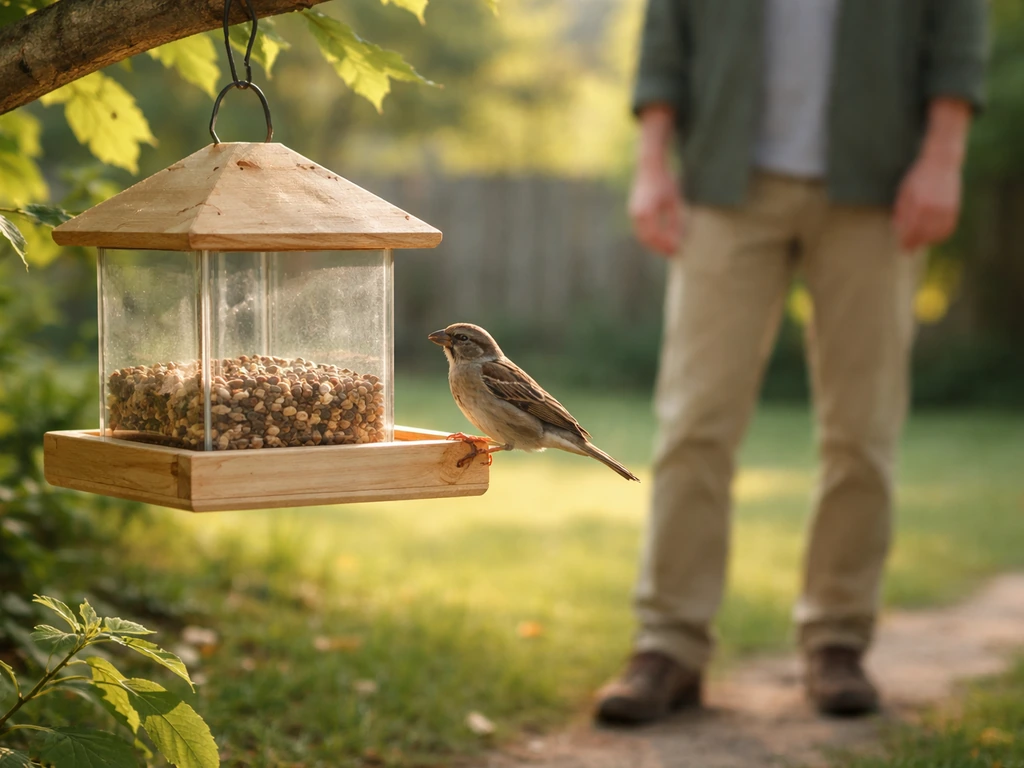
Fear is the primary driver. Wild birds have what researchers call a "flight initiation distance" (FID), which is essentially the threshold at which they decide a perceived threat is close enough to warrant escape. Studies in Scientific Reports confirm that the higher a bird's FID, the lower the probability it will eat from a human hand. That's not a personality flaw in the bird. It's survival. Every large, upright animal near a bird is a potential predator until proven otherwise through repeated, safe experience.
Food choice is the second big reason. Wild birds evolved on highly specific diets: insects, native seeds, berries, nectar, or prey animals depending on the species. Human foods, even well-intentioned ones, often don't match what a bird's gut is designed for. The U.S. Fish & Wildlife Service specifically warns that human-provided foods can cause malnutrition and weaken a bird's condition enough to increase predation risk. Offering the wrong food doesn't just fail to attract birds; it can actually harm them.
Placement matters more than most people realize. A feeder in the open, far from cover, puts the bird at risk from hawks and cats while it's focused on eating. A feeder too close to a window creates collision risk. A feeder in an unfamiliar or high-traffic spot adds novelty stress on top of fear. Research on house sparrows shows that neophobia (fear of novel things) is a real measurable barrier, and birds need repeated exposure to a feeding site before they treat it as safe. Season plays a role too: during spring and summer, insects and natural food sources are abundant, so birds have less reason to use your feeder at all.
Set up your environment to reduce stress before anything else
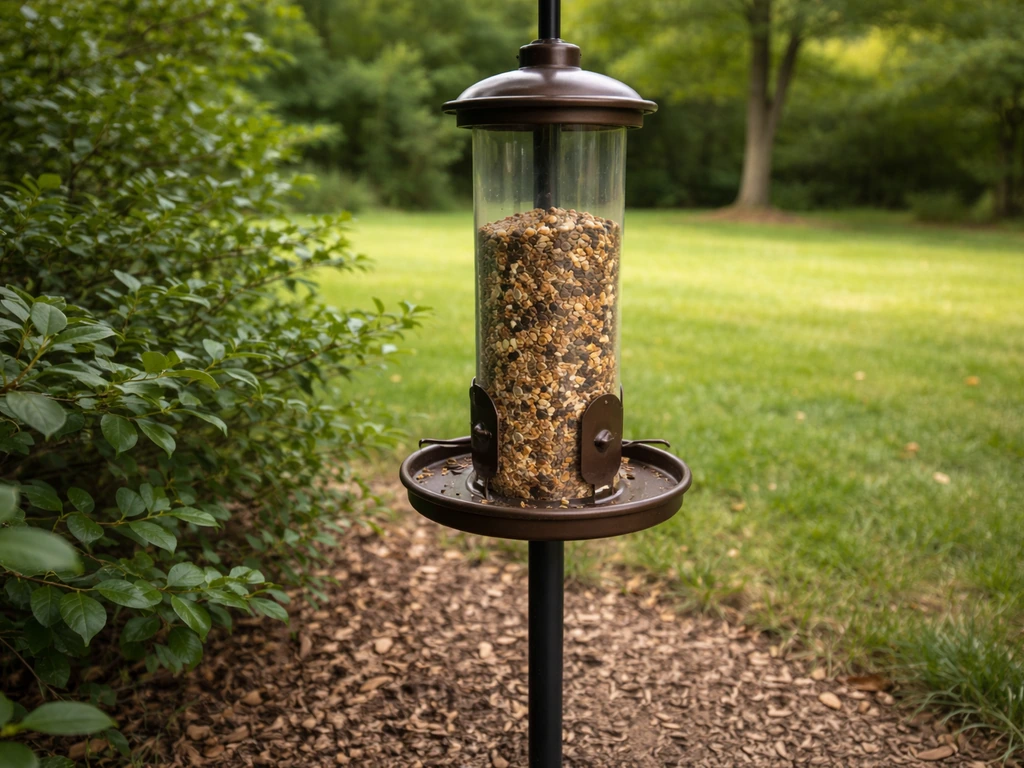
Before you try to interact with any wild bird, get the physical setup right. Place feeders or food within 10 to 15 feet of natural cover like shrubs, dense bushes, or low tree branches. This gives birds an escape route they trust, which paradoxically makes them more willing to approach. For window-collision safety, position any feeder either closer than 3 feet to a window or farther than 10 feet away. The middle range is the danger zone where birds build up enough speed to seriously injure themselves.
Choose a feeding spot that stays consistent. Moving the feeder around or changing the setup frequently resets the habituation clock. Birds need to recognize the spot as familiar and safe before they'll linger. Once you pick a location, keep it there. Then establish a routine: fill the feeder at the same time each day, ideally early morning when birds are actively foraging. After you fill it, stand or sit quietly about 10 to 15 feet away for 10 to 20 minutes. Don't make sudden movements, avoid direct eye contact with birds (predators stare), and keep noise minimal.
- Place feeders 10–15 feet from cover (shrubs, hedges, low branches)
- Keep feeders either under 3 feet or over 10 feet from windows to prevent collisions
- Pick one consistent spot and leave it there for weeks
- Fill at the same time each day, preferably early morning
- Sit or stand quietly 10–15 feet away after filling; avoid sudden movements
- Wear muted, consistent clothing so birds recognize you as a non-threat over time
What to feed and how to offer it safely
Black oil sunflower seed is the single best starting point for attracting the widest variety of backyard songbirds. It has a thin shell, high fat content, and appeals to finches, chickadees, nuthatches, cardinals, and sparrows among many others. Avoid seed mixes that contain red millet, oats, or other fillers. Birds sort through those and toss the filler onto the ground, creating waste and a mess that attracts pests. If you're targeting insect-eating species like robins or bluebirds, dried or live mealworms are far more effective than any seed.
Suet is excellent in cold weather because it's calorie-dense and metabolizes quickly, but skip it when temperatures rise above freezing for extended periods. Warm suet turns rancid, and the dripping fat can damage a bird's feather waterproofing. Fruits, jelly (for orioles), and grit or minerals round out the options for species-specific feeding. Never offer bread, crackers, or processed human food.
USDA APHIS similarly urges people to “Don’t Feed Wildlife,” noting that human food is not healthy for wild animals and can increase public health concerns and wildlife conflicts, including airport wildlife hazards Never offer bread, crackers, or processed human food.
Bread in particular has been linked to "angel wing" deformities in waterfowl, gastrointestinal problems in multiple species, and aspergillosis risk when it gets moldy. It genuinely has no nutritional value for birds.
Match your feeder type to the bird's natural feeding behavior. Ground-feeding birds like sparrows, juncos, and doves do best with a low tray or food scattered on the ground. Shrub and treetop feeders like finches and chickadees prefer hopper or tube feeders at eye level or higher. Woodpeckers, nuthatches, and chickadees also use suet feeders, which should be placed well off the ground and attached to a tree or post. Offering food in the right physical format reduces the bird's hesitation significantly.
| Food Type | Best For | Season Notes | Avoid When |
|---|---|---|---|
| Black oil sunflower seed | Finches, chickadees, cardinals, nuthatches, sparrows | Year-round | Mixing with low-quality fillers |
| Dried/live mealworms | Robins, bluebirds, wrens, warblers | Spring/summer especially | Moldy or stale |
| Suet cakes | Woodpeckers, nuthatches, chickadees | Fall/winter | Temperatures consistently above freezing |
| Fruit (berries, apple slices) | Orioles, thrushes, waxwings | Spring/summer/fall | Rotting or fermented |
| Jelly (grape) | Orioles, catbirds | Spring/summer | Artificial sweeteners or added preservatives |
| Nyjer (thistle) seed | American goldfinches, pine siskins | Year-round | Mixing with filler seeds |
On seasonal timing: the RSPB recommends pausing seed and peanut feeders from May 1 through October 31 because disease risk is higher in warmer months when birds gather more closely. If you're in the Northern Hemisphere and reading this in late spring or summer, focus on mealworms, fruits, and small amounts of suet rather than heavy seed feeding. Clean your feeders and water baths at least weekly, moving the feeder location slightly each week to prevent contaminated debris buildup underneath. Monthly deep-cleaning means scrubbing with warm soapy water then soaking in a 1 part bleach to 9 parts water solution for at least 10 minutes, rinsing thoroughly, and letting everything dry completely before refilling.
Step-by-step: building trust from comfortable nearby to eating from your hand
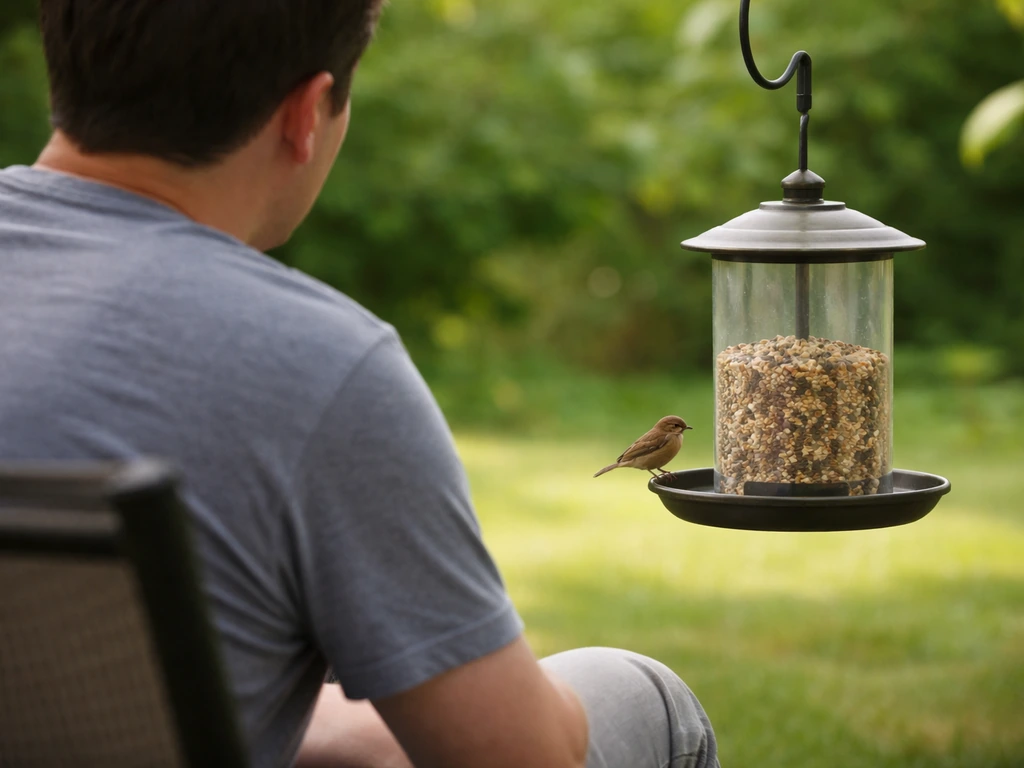
This process is measured in days and weeks, not minutes. Rushing any step resets the bird's trust. The goal in the early stages is simply to become a familiar, non-threatening presence associated with food. Hand-feeding is a final stage, not a starting point, and it's not always appropriate (more on that in the safety section).
- Week 1 – Establish the routine: Fill the feeder at the same time each morning. After filling, stand or sit 15 feet away, stay still, and watch quietly for 15–20 minutes. Do this every day. The goal is for birds to eat while you're present without flushing away.
- Week 2 – Shrink the distance slightly: Once birds are feeding comfortably while you're 15 feet away, move to about 10 feet. Same routine: still, quiet, no direct staring. If birds flush consistently, go back to 15 feet for a few more days.
- Week 3–4 – Move to 5–7 feet: Same approach. You're now close enough that the bird can clearly see you, identify you as a specific individual (birds recognize faces and body shapes), and still choose to feed. This is significant progress.
- Intermediate stage – Hold food near the feeder: Before attempting hand-feeding, stand near the feeder and hold some food in an outstretched, flat, open palm. Don't reach toward the bird. Be still. Let the bird decide. Some individuals never take this step and that's fine.
- Hand-feeding stage (advanced/optional): Replace the feeder contents with food in your palm only. The bird now has to come to you to eat. Stay very still, keep your hand at feeder height if possible, look away or slightly down. Many birds, especially chickadees and titmice, will take this step after several weeks of the prior stages.
- Maintenance: Once trust is established, don't break the routine. Missing days or changing location resets progress quickly, especially with more cautious species.
A useful tip for the hand-feeding stages: wear the same jacket or hat each time. Birds really do track visual cues about the person associated with food, and consistent clothing speeds up recognition. Some people also find that sitting rather than standing lowers the perceived threat level significantly, especially with smaller species.
Species-specific approaches: what works for which birds
Songbirds and small passerines (chickadees, titmice, nuthatches, finches)
These are your best candidates for the full trust-building progression, including eventual hand-feeding. Chickadees and titmice in particular are naturally curious and have relatively short flight initiation distances compared to more skittish species. Black oil sunflower seeds and mealworms are the go-to foods. Use tube or hopper feeders. These birds habituate quickly to a consistent human presence, and hand-feeding within 4 to 6 weeks of daily routine is realistic for many individuals. This is a beginner-to-intermediate effort.
Finches (goldfinches, house finches, purple finches)
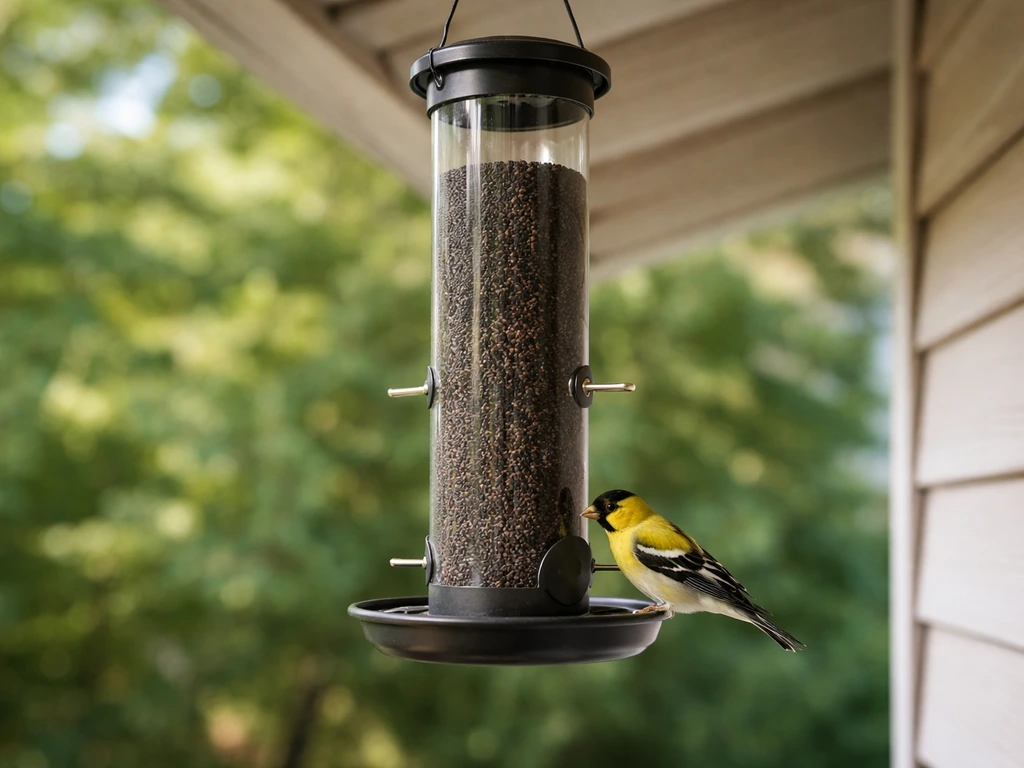
Finches are more skittish than chickadees and tend to stay at the feeder longer when undisturbed rather than approach a hand. Nyjer seed in a tube feeder is the most effective attraction method. Focus on getting them comfortable eating near you rather than from your hand. They're great feeder birds but poor candidates for close contact. Intermediate patience required.
Waterfowl (ducks, geese, swans)
Here's where I'd pump the brakes on the whole "feed from hand" goal. Feeding waterfowl creates real problems: it leads to unnatural congregation, increased competition, and birds that lose their natural fear of humans, which raises their risk from predators and road traffic. Bread, which is what most people throw at ducks, causes malnutrition, digestive problems, and the wing deformity "angel wing" in developing birds.
If you want to interact with waterfowl, your best approach is simply observing from a respectful distance. If you must offer food, cracked corn or leafy greens are far less harmful than bread. But honestly, most wildlife authorities actively discourage feeding waterfowl at all. This is a situation where "observe, don't feed" is the better call.
Raptors (hawks, owls, falcons)
Do not attempt to hand-feed or closely approach wild raptors. Full stop. Beyond the physical danger (talons cause serious injuries), raptors that become food-conditioned to humans are at severe risk. They lose their ability to hunt, become habituated to human spaces, and often end up in dangerous situations with cars and power lines. In most jurisdictions, intentionally feeding or handling a wild raptor without a wildlife rehabilitator license is illegal under federal and state/provincial migratory bird protections. If you find a raptor that's injured or won't fly, call a licensed rehabilitator. This is firmly in the "call for help" category.
Ground birds and doves
Mourning doves, pigeons, and similar ground birds respond well to scattered seed on a low tray or directly on the ground. They habituate to human presence reasonably well but are poor hand-feeding candidates because they feed in an exposed position and startle easily. A low flat feeder near your sitting area is more practical than attempting close contact. Millet, milo (sorghum), and cracked corn are good food choices for this group.
Troubleshooting when things aren't working
The bird visits but won't eat
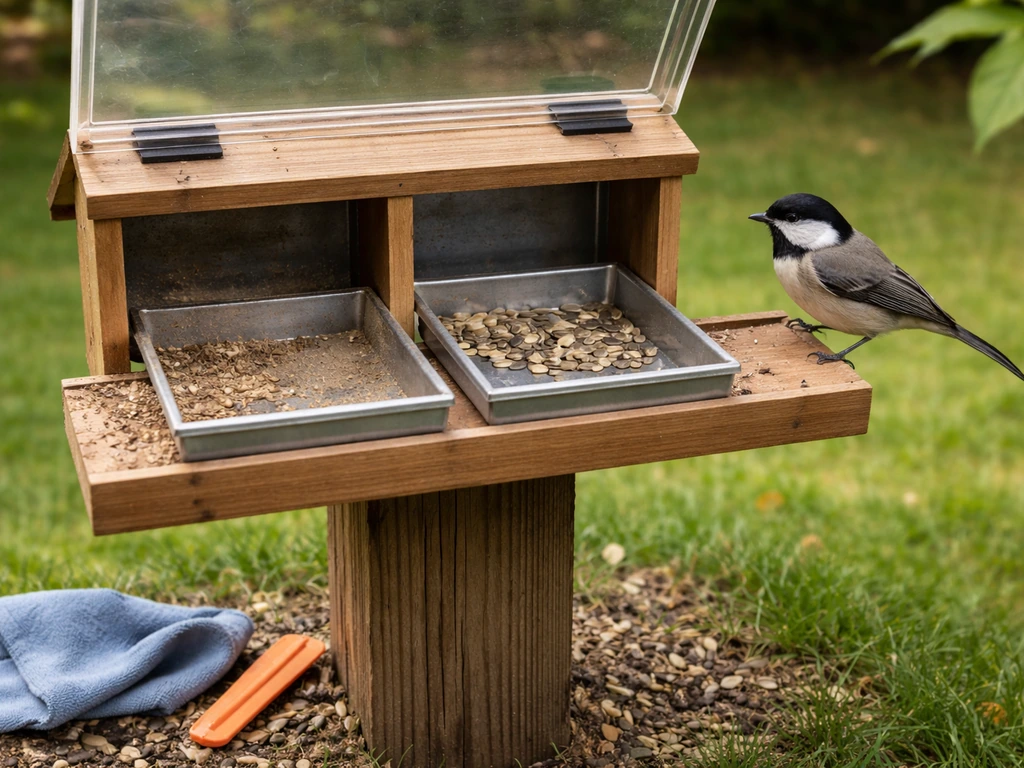
This usually means you're too close, the food isn't right, or the feeder design doesn't match the bird's natural feeding style. Check all three. Also consider predator pressure: if there's a cat in the area or a hawk hunting nearby, birds will land briefly and leave without feeding even when they're comfortable with you. A perching spot close to the feeder where birds can wait and assess before committing often helps.
Aggressive behavior (toward you or other birds)
Aggression from a wild bird toward a human is rare and almost always means the bird has a nest or chicks nearby and sees you as a threat. Back away, lower your profile, and give the bird space. This is not a training problem to push through; it's a welfare signal to respect. Aggression between birds at a feeder usually means the feeder is too small or crowded. Add a second feeding station or space feeders farther apart.
Wrong species showing up
If you're attracting pigeons, starlings, or house sparrows when you wanted finches or chickadees, adjust your food and feeder type. Nyjer seed in a finch-specific tube feeder is largely ignored by pigeons and sparrows. Switching from an open tray to a tube or caged feeder excludes larger, more dominant birds. Remove food from the ground if ground feeders are dominating.
Seasonal slowdowns
If birds suddenly stop visiting in late spring or summer, that's normal. Natural food is abundant, and your feeder is less necessary. Don't interpret this as failure. Keep the feeder clean and stocked at a reduced level, and activity will pick back up in fall. If you're trying to attract birds in winter, high-energy suet and black oil sunflower seed in a properly sheltered feeder are your best tools.
The bird won't progress beyond feeder feeding
Some individual birds simply won't hand-feed. This is especially common with finches, most sparrows, and birds that have had negative encounters with humans. That's okay. A bird comfortably eating at a feeder in your presence is a real, meaningful success. If your goal is how to make a bird eat, focus on safe feeder feeding first and avoid forcing close contact Eating near you. Don't force the next step. The goal is the bird's comfort, not a specific outcome for you.
Safety, health, and legal boundaries you need to know
Disease risk is real
Wild birds can carry Salmonella, avian influenza, and other pathogens while appearing completely healthy. The CDC is explicit: do not touch or hand-feed wild birds with your bare hands. If you do hand-feed (after the full trust-building process with appropriate small songbirds), use gloves or thoroughly wash your hands immediately after. Clean feeders and water baths at least weekly, and do a full bleach disinfection (1 part bleach to 9 parts water, 10-minute soak, thorough rinse) at least once a month. Wash your hands after any contact with feeders, baths, or the area beneath them, and keep pets away from wild bird feeding zones when possible.
Recognize when a bird needs professional help
A wild bird that allows you to walk up and pick it up is almost always sick or injured, not tame. Signs a bird needs a wildlife rehabilitator include inability to fly, trouble standing upright, tremors or loss of coordination, visible wounds, or a bird sitting on the ground in an exposed position for an extended period. If you suspect avian influenza (birds dying in groups, neurological symptoms), do not attempt to handle the bird yourself.
Call your state or provincial wildlife agency or a licensed wildlife rehabilitator. Trying to care for injured wildlife yourself, even with good intentions, is illegal without a permit in most U. S. states.
Minnesota DNR's guidance is representative: wildlife rehabilitation is only for licensed individuals caring for orphaned, sick, or injured animals for release back to the wild.
Know your local feeding laws
Feeding laws vary dramatically by species and location. Feeding deer, elk, and moose is now illegal in Washington State as of May 2025. Ohio administrative code prohibits intentionally feeding wild waterfowl or other birds in certain public areas without written approval from the area manager. Virginia law can make it unlawful to distribute food in ways that attract wildlife in numbers that endanger people or create public health concerns. Before setting up any outdoor feeding station, especially near parks or public land, check your state, provincial, or local wildlife authority's rules. The FWS classifies hand-feeding and actively encouraging approach as "intentional feeding," which carries its own legal implications separate from passive feeder use.
When "observe and feed" is the right goal, and when it isn't
For most backyard birds, the healthiest and most legal goal is a well-maintained feeder that supplements (not replaces) their natural diet, positioned safely, cleaned regularly, and stocked with appropriate food. Getting birds to eat comfortably near you is a legitimate and rewarding outcome. If you want to encourage chewing and calcium intake, a cuttlebone can help some bird species once they’re comfortable feeding near you.
Hand-feeding small songbirds that have built up genuine trust over weeks is low-risk and rewarding when done hygienically. Feeding raptors, waterfowl, or injured birds crosses into territory where you can cause real harm. If you're working with a bird that needs support beyond a feeder, like a fledgling that seems abandoned or an injured adult, connecting with a licensed rehabilitator is the right next step, not attempting to feed and care for it yourself.
If you need to administer medicine, work with a wildlife rehabilitator or an avian vet for the safest way to get a bird to accept it get a bird to take medicine. Topics like how to make a bird eat and how to get a bird to take medicine are different situations entirely and generally apply in a rehabilitation or captive-bird context rather than wild feeding.
Start today with the right food, the right feeder placement, and a quiet consistent presence. Give it two weeks before judging results. The birds aren't ignoring you; they're evaluating whether you're safe. Your job is to prove, one calm visit at a time, that you are. For teaching a bird to eat on its own, focus on species-appropriate food, safe feeder setup, and repeating the routine until it confidently approaches and feeds without your prompting teach a bird to eat on its own.
FAQ
How long should I wait before deciding the bird is not interested in my setup?
Give it at least two weeks if you keep food, location, and your routine consistent. If a bird has to re-assess danger each time (new feeder position, different food, louder presence), it may never reach the “lingers and feeds” stage, even if it is present daily.
Can I speed things up by offering the food closer right away or sitting farther away at first?
Avoid abrupt distance changes. Start around 15 feet from where you sit, then shorten gradually over many visits. Jumping directly to close range often increases flight responses because you are inside the bird’s perceived threat threshold before trust is established.
What should I do if the bird eats from the feeder but never approaches me?
Treat that as a valid endpoint. For many species, comfort eating near you is the success target, hand-feeding is optional and not necessary. If you want to attempt the next step, lower your profile (sit, not stand), avoid eye contact, and keep clothing consistent, but stop if the bird starts leaving quickly or only feeds briefly.
Is it safe to put food out if I have a cat or hawks nearby?
Yes, but expect reduced visits. If predators are active, birds may land briefly then leave without feeding. To help, place feeders so birds have cover to retreat to (shrubs or dense bushes within reach), and consider using a perching spot near the feeder so birds can assess before committing.
How do I stop birds from wasting seed or creating a messy ground pile?
Use the right feeder type for the species. Tube or caged feeders help reduce scatter from dominant birds, and avoiding blends with fillers like red millet or oats reduces waste because many songbirds ignore the filler. Also, clean spilled debris regularly so it does not become a pest and contamination hotspot.
My feeder attracts the wrong species. How can I adjust without starting over?
Change the food and the physical feeder format. For example, nyjer in a finch-specific tube feeder can help target finches, while switching from an open tray to a tube or caged feeder can limit access by larger, more dominant birds. If ground feeders dominate, remove food from the ground and rely on a low tray or tray-free setup as appropriate for your target species.
Should I put fresh food out daily or can I leave it until it runs out?
For hygiene and consistency, refill regularly rather than letting it sit. Stale or wet food increases mold and bacterial growth, which can make birds avoid the area. Keep a consistent time window for refilling so birds learn when to expect it, especially in the early stages.
What if I see droppings under the feeder, does that mean I should stop feeding?
Droppings mean birds are using the area, but buildup signals you should increase cleaning. Clean feeder components and the immediate area more often, and do not let wet, contaminated debris accumulate. If birds start disappearing, check whether moldy food or dirty water is the likely cause.
Can I offer mealworms or suet year-round?
Mealworms are generally best when natural insects are less available, but in warm months many birds still have abundant options, so visitation to feeders can drop naturally. Suet is most useful when temperatures are consistently below freezing, and it can turn rancid in prolonged warm periods, so switch to safer options during heat.
Is it ever okay to touch a wild bird if it comes to me?
No, do not handle wild birds. Even apparently healthy birds can carry pathogens. If a bird gets close, focus on non-contact feeding, and if you ever touch feeders or food areas, wash hands thoroughly afterward and keep pets away from the feeding zone.
What’s the safest way to know I should call a rehabilitator instead of trying to feed or coax the bird?
Call for help if the bird cannot fly, has trouble standing upright, shows tremors or loss of coordination, has visible injuries, or stays on the ground in an exposed position for an extended period. If you suspect avian influenza, for example birds dying in groups or neurological symptoms, do not attempt contact, contact local wildlife authorities or a licensed rehabilitator.