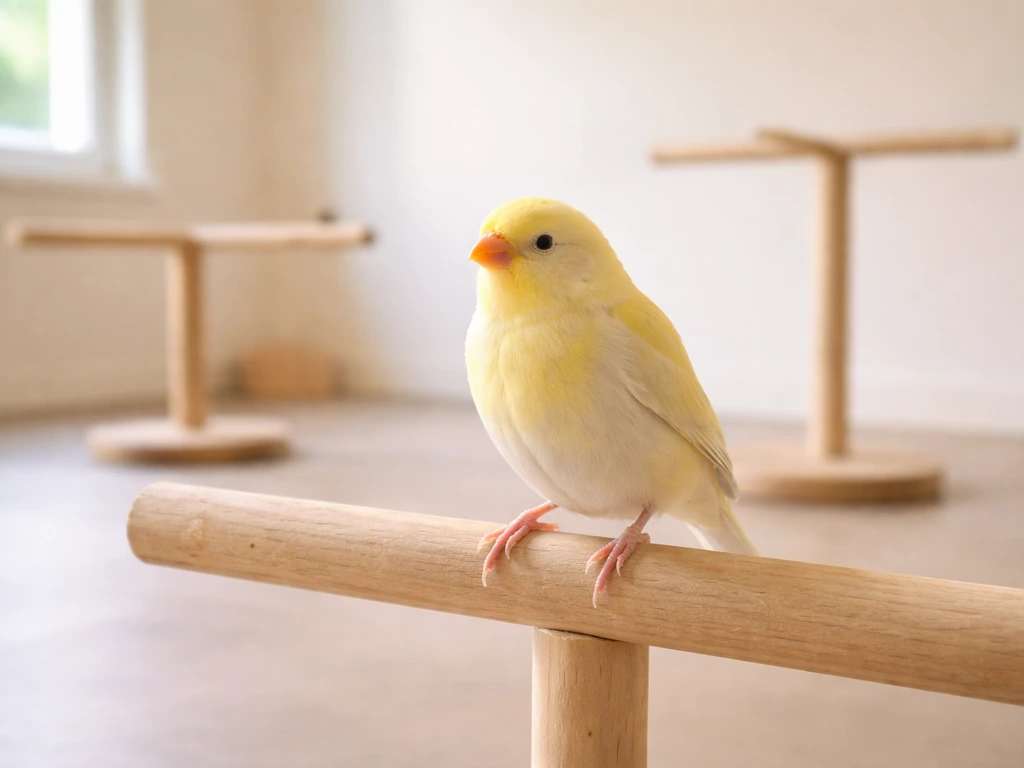
If your bird just flew away, here is what to do right now: stay calm, keep your eyes on the bird as long as possible, and start moving within the first few minutes. Every minute matters, but panicking will cost you more time than it saves. I have been through this, and the owners who get their birds back are the ones who act fast, stay steady, and work a clear plan.
What to Do If Your Bird Flies Away: Step-by-Step Plan

Maya Harris
9 Apr 2026
What to do in the first few minutes
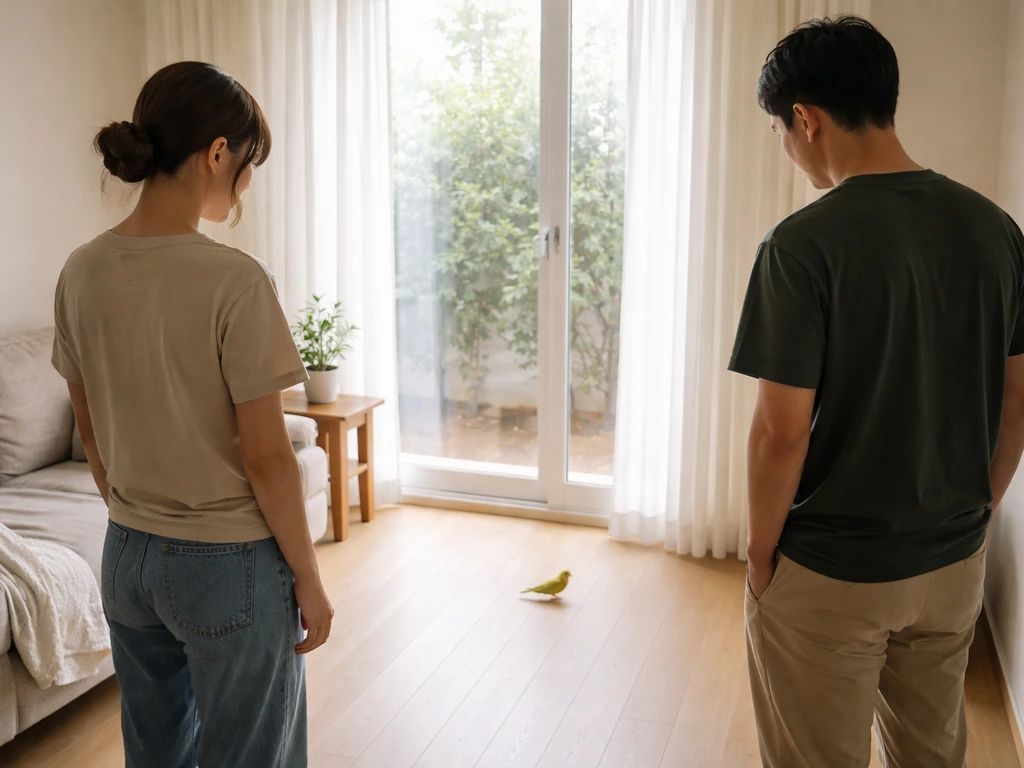
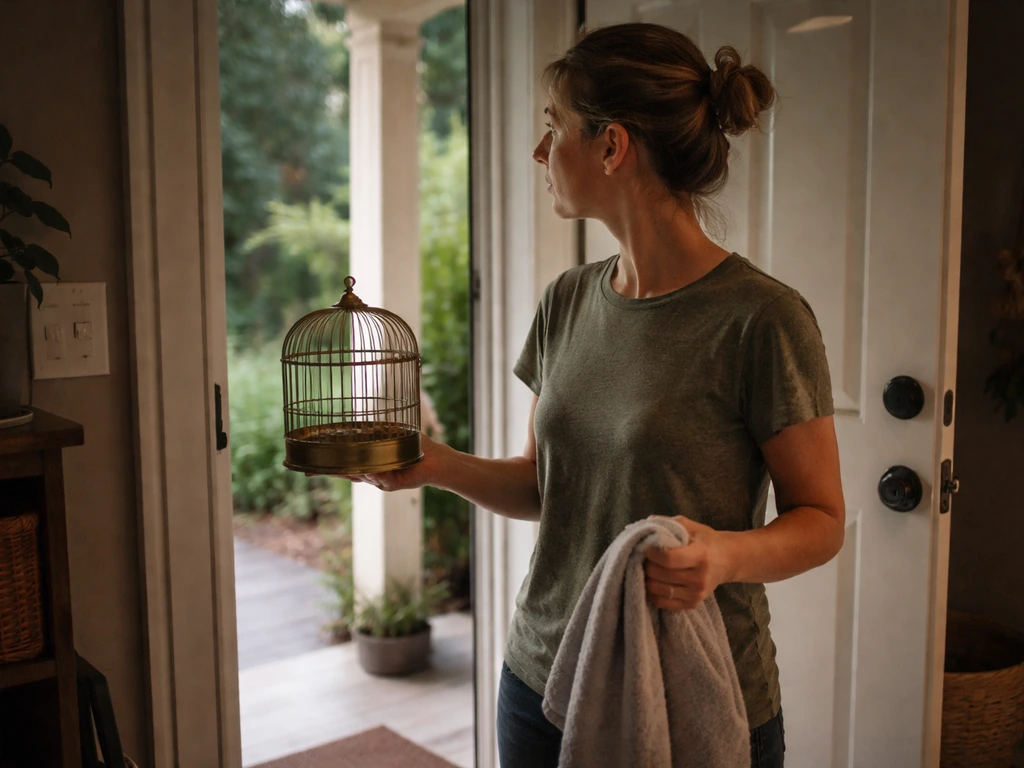
The moment you realize your bird is out, do not chase it. Your first job is to track it visually. If you saw the bird fly out, keep your eyes locked on it while someone else grabs supplies: the cage or a travel carrier, familiar food (seeds, a favorite treat), and something that makes a recognizable sound like a clicker or the bird's favorite toy. If you are alone, glance away just long enough to grab what you need, then get back on tracking.
Once you know where the bird landed, resist the urge to run at it. Approach slowly, stay low, and use a calm voice. Bring the carrier or cage outside and set it near the bird's position with the door open and food visible inside. The RSPCA advises using a suitably sized plastic pet carrier during bird training or handling transitions, and notes birds may be frightened when new objects appear suddenly near the cage or aviary Bring the carrier or cage outside. Place familiar items, like a perch or a piece of clothing that smells like you, near the entrance. Many pet birds will self-return to a familiar enclosure when they feel uncertain in a new environment.
If the bird flew into a tree, do not stand directly underneath it. Stand back at a distance so the angle of descent is easier for the bird to manage. Calling from directly below forces the bird into a near-vertical drop, which many birds will refuse. Step back 10 to 20 feet, crouch slightly, and call with whatever phrase or whistle the bird knows best.
- Keep eyes on the bird while someone else grabs the carrier and food
- Do not run toward or chase the bird
- Place the open carrier or cage near the bird with visible food inside
- Call using familiar phrases, sounds, or a clicker
- Stand back from the base of a tree so the bird can fly down at a manageable angle
- Stay calm: your tone directly affects how your bird responds
How to search effectively
Timing your search matters as much as where you look. Birds are most active and most likely to attempt a return flight in the early morning. Many flighted parrots, for example, are ready to move again around 8:30 to 9:00 AM after settling in overnight. If your bird flew away in the evening and you could not recover it before dark, be back out at first light. Searching at midday when the bird is resting in shade is often less productive.
Start your ground search downwind. Birds that are alarmed or disoriented tend to fly with the breeze until they find a landing spot. Work outward from the last known location in the downwind direction first, then circle back into the wind. Listen more than you look: pet birds will often call back if they hear a familiar voice, and you can locate them by ear before you see them.
If you have a companion bird at home, bring it outside in a separate, securely closed cage. The sound and sight of a flock mate is one of the strongest pulls a social bird has. Set the companion cage a little distance away from you so the escaped bird has somewhere to focus on other than the humans. Do not let the companion out; you do not want two loose birds.
Patience during the search is not wasted time. Standing quietly near the bird's last known location for 20 to 30 minutes, calling softly every few minutes, is often more effective than moving constantly. Movement and noise from a searching party can push a frightened bird further away. If you have helpers, space them out and keep communication quiet.
Getting your bird back safely once you find it
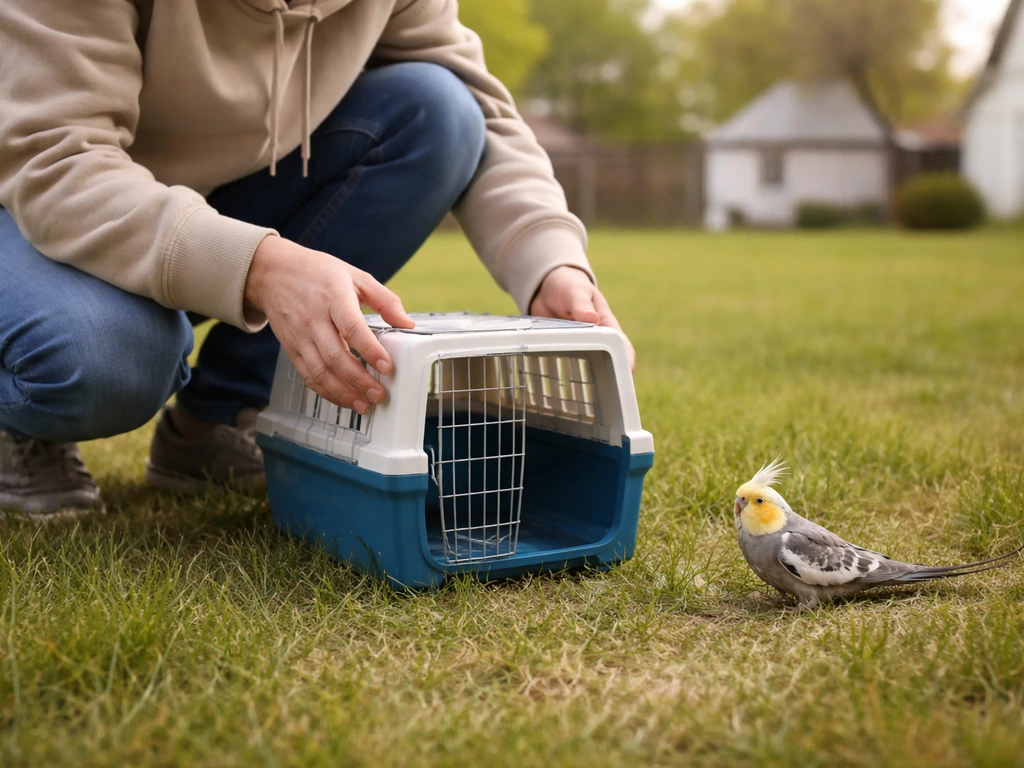
Finding the bird is only half the job. The capture step is where well-meaning owners often make costly mistakes. Do not try to grab the bird from above, do not throw anything at it, and absolutely do not spray it with a hose or use anything frightening to force it down. Frightening techniques almost always cause the bird to fly further away and increase the risk of injury from a panicked flight into traffic, wires, or windows. American Humane Society also advises against scaring or chasing a lost animal, because panic can cause it to run into traffic and become injured risk of injury from a panicked flight into traffic.
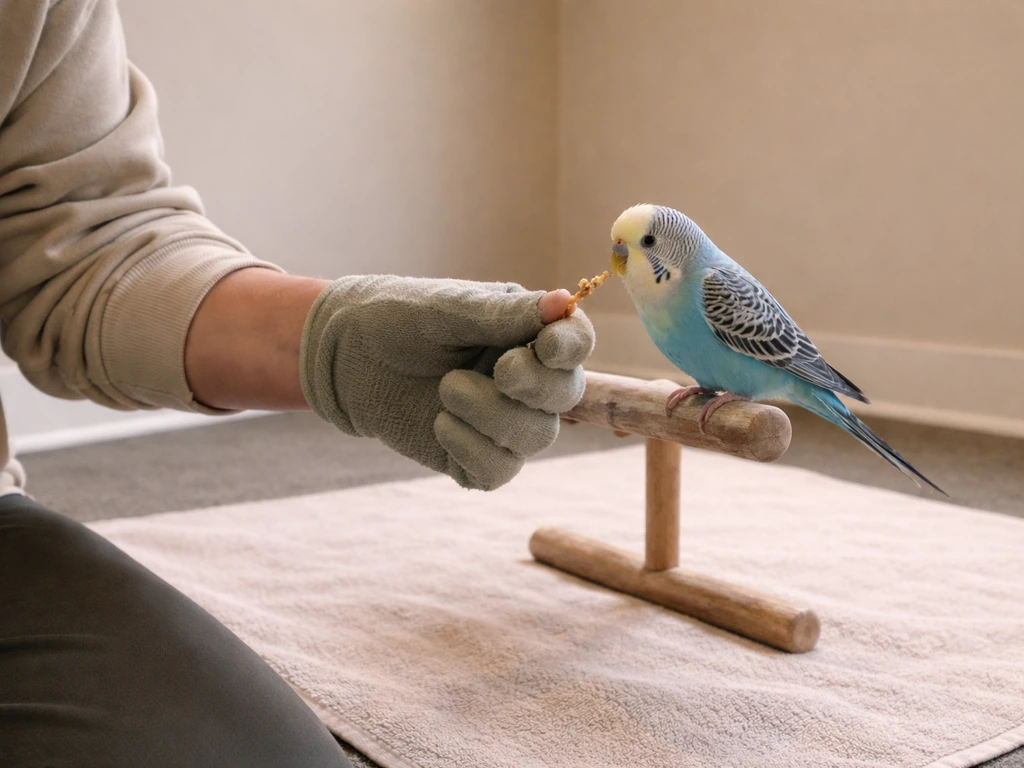
The safest approach is to let the bird come to you. Crouch down to reduce your size, extend an arm or a familiar perch, and wait. Use a step-up cue if your bird is trained to it. If the bird lands on the ground, move toward it very slowly, sideways rather than head-on, which is less threatening. Once it steps up or you can get your hands around it gently, move directly to the carrier and close the door before celebrating.
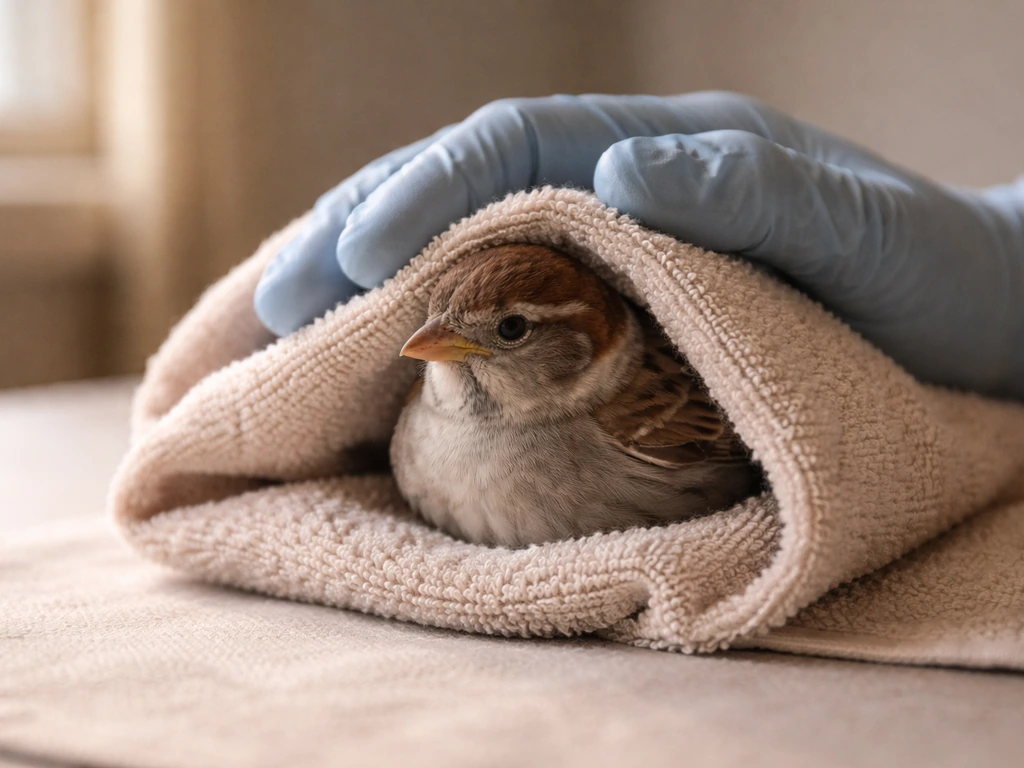
When you do need to handle the bird manually, use a light towel or blanket to reduce stress. Covering the bird briefly calms many species by reducing visual stimulation. Wrap loosely, support the body, and keep the head uncovered so the bird can breathe freely. Once secured, place it in the carrier with the cover still on and transport it inside or to a vet if it appears injured. This same towel-and-carrier method is recommended in avian first-aid practice because it minimizes struggling and secondary injury.
One more thing: make sure your bird knows how to return to you on command before another escape happens. Understanding how to train a bird to fly and come back is one of the most practical safety skills you can build, and it makes recovery dramatically faster when it counts.
Who to contact and when
If the bird does not return within the first hour, start making calls and posting while you or someone else continues searching. Do not wait until the end of the day to reach out. The faster you get the word out, the more eyes are working for you.
- Post on neighborhood apps (Nextdoor, local Facebook groups) with a clear photo, description, and your contact number
- Put up physical flyers within a two-to-three block radius of the escape point
- Call local avian vets and pet-supply stores: people who find birds often call these first
- Contact county animal control and local animal shelters to log a lost-bird report
- Call local pet shops and ask them to post a notice or mention the bird to customers
- Place a lost-bird listing on classified and lost-pet databases like PetRadar and America's National Lost and Found Pet Database
- Contact local bird rescues and avian rehabilitators: they receive found birds regularly and are a critical link
If your bird is banded or microchipped, lead with that information in every report. The leg band number or microchip ID is the fastest way for a shelter or vet to confirm the bird is yours once it is found. If your bird is microchipped, call the microchip company directly to flag the pet as missing and confirm your contact details are current. Do not assume the registry information is up to date.
Keep checking lost-and-found pages at shelters and animal control daily. Birds are brought in steadily, sometimes days after they went missing. A bird that went north from your house on Tuesday might be found three blocks east on Thursday. Persistent checking is part of the recovery process, not just a one-time task.
Reducing the risk of it happening again

Prevention comes down to two things: environment and training. On the environment side, double-door entryways (an interior door between living space and exterior doors) are the single most effective physical safeguard for birds that spend time outside their cage. Window and door screens should be checked regularly for tears or loose frames. Ceiling fans should be off whenever the bird is out, and mirrors near flight paths should be covered or repositioned.
On the training side, a reliable recall (flying back to you on command) is the most important skill a flighted bird can have. If you are working with a bird that is learning to fly, understanding how to teach a bird to fly with controlled, graduated steps will build both the physical skill and the bonding that makes recall reliable. Birds that have a strong recall return on their own far more often than birds without one.
Wing management is a topic that comes up in every escape conversation, and it deserves a straightforward mention. Clipping flight feathers reduces flight distance and can make an escaped bird easier to recover, but it also removes some of the bird's natural defense mechanisms and can affect confidence and behavior in some species. Free flying, when done with proper progressive training, gives the bird better recall and physical health. There is a middle ground many owners find useful: partial clips that limit lift without grounding the bird. If you are moving toward free-flight work, learning how to train a bird to free fly safely is the right starting point, rather than going fully unmanaged without preparation.
Harnesses are another option worth knowing about, especially for owners who want outdoor time without flight risk. A well-fitted, species-appropriate harness introduced gradually and positively can allow outdoor enrichment with much lower escape risk. For context on the physical factors that affect a bird's flight capacity and what supports it, it helps to understand what helps a bird to fly, so you can make more informed decisions about management for your specific bird.
Building a predictable daily routine also matters more than most owners realize. Birds that are handled daily, know their recall cues, and have a strong bond with their owner are less likely to bolt when startled and more likely to return when called. If you want to think about this from first principles, reviewing how to make a bird fly on cue gives you the foundation for making those cues reliable under real-world distractions.
Pet bird vs. wild bird: safety, welfare, and the law
Not every bird you encounter in a lost-bird situation is a pet. Knowing the difference matters, both for the bird's welfare and for your legal standing.
How to tell if a bird is a pet or wild
| Feature | Likely a Pet | Likely Wild |
|---|---|---|
| Behavior around humans | Calm, may step up, approaches people | Avoids humans, flees when approached |
| Plumage | Bright, unusual, or clipped feathers | Natural camouflage coloring for local species |
| Leg band | Often present (metal or plastic) | Rarely banded unless monitored by researchers |
| Condition | Well-fed, smooth feathers, calm demeanor | May be stressed, disheveled, or injured |
| Vocalization | May mimic speech or familiar sounds | Species-typical calls only |
| Location | Urban/suburban, near homes | Fields, forests, wetlands typical for species |
If you find a bird you believe is a wild species, the legal situation is clear and firm. The Migratory Bird Treaty Act (MBTA) and the Lacey Act are federal statutes that protect migratory birds and govern the taking, possession, and transport of covered species. Picking up and keeping a wild migratory bird, even with good intentions, can put you in legal jeopardy. The right move is to contact a licensed wildlife rehabilitator and hand the bird off to someone legally authorized to care for it.
If you find a wild bird that seems injured or stunned (from a window strike, for example), observe from a distance for up to an hour before intervening. A bird that is stunned but recovers will usually fly away on its own within 30 to 60 minutes. If it is still on the ground and does not fly when you approach after an hour, it most likely needs help. At that point, gently place it in a cardboard box (not a wire cage, which can cause feather and injury damage) with ventilation holes, keep it in a dark, quiet place, and transport it to the nearest wildlife rehabilitation center. Do not handle it with bare hands, do not offer food or water, and do not attempt to treat it yourself.
For your own escaped pet bird, the welfare priorities are the same: minimize stress, avoid aggressive capture techniques, and get veterinary attention if the bird was out for an extended period, encountered predators, or hit any surface during the escape. Cats and dogs can cause puncture wounds that are not always visible but can become life-threatening within 24 to 48 hours. If your bird had any contact with another animal, a vet visit is not optional.
Your action checklist for the first hour
- Keep eyes on the bird, send someone else for supplies
- Bring the carrier/cage outside with food and familiar items inside
- Call the bird with familiar phrases, whistles, or clicker from a non-threatening distance
- If in a tree, stand back from the base so the angle of return is manageable
- Bring a companion bird outside in a closed cage if you have one
- Search downwind first, listen actively, move quietly
- If bird is on the ground, approach slowly and sideways, offer step-up cue
- Use a light towel to handle if needed; transport in carrier with cover on
- If not recovered within an hour, start outreach: neighbors, shelters, vets, pet stores, social media
- Report leg band number or microchip ID in every lost-bird notice
- If the bird is wild, do not handle with bare hands, do not use a wire cage, contact a licensed rehabilitator
- Schedule a vet check if the bird had any contact with another animal or was out overnight
FAQ
What should I do in the first 10 minutes if I can’t immediately find my bird after it flies away?
Keep a running list of your timeline (time it escaped, last sighting location, weather, and whether it was calling). This helps you coordinate searchers, explain the situation to shelters or vets, and repeat the most productive call times instead of re-searching randomly.
How often should I call or whistle, and should I keep talking the whole time?
Use calls or whistles at controlled intervals, then pause to listen. Constant calling can exhaust you and may mask the bird’s replies, because many birds only vocalize briefly when they hear a familiar cue.
Is it better to search in one spot or split up if I have helpers?
Don’t rely on just one person searching one area, especially if there are multiple branches of flight. Assign helpers to different downwind zones and have one person stay near the last known point quietly, since birds often self-return to a familiar enclosure.
Can I use the carrier as a trap, and what’s the safest way to set it up?
Yes, but do it safely. Put the carrier or cage where the bird can see inside and food is visible, then step back. Avoid forcing the door open toward the bird, and never chase it into the container, since that can turn the enclosure into a fear trigger.
What should I do if my bird is stuck or perched very high (like in a tree)?
If your bird is high up, avoid moving directly underneath and avoid frantic crowding around the base. Instead, keep a steady caller at a distance and give the bird time to descend when it feels secure, especially if the bird can see familiar items from below.
My bird hit something, or I saw it collide. What should I check after I get it back?
If you suspect window or fan strike, assume there may be internal injury or concussion even if the bird looks alert. After retrieval, schedule an avian vet check promptly, and watch for breathing changes, persistent sitting, wobbling, bleeding, or reduced vocalization.
Can I let my other bird help by flying to the escaped bird?
To reduce risk, keep pets inside and secure, and do not bring other loose birds into the same area. If you use a flock mate, use a separate closed carrier and position it so the escaped bird has a target other than people, not a second escape opportunity.
Should I search downwind the whole time, or can my bird go against the wind?
Start with downwind and then shift, but don’t ignore the opposite direction if there’s cover. Birds sometimes land quickly in shade or behind structures and then call back, so incorporate brief upwind and crosswind sweeps based on where you hear calls.
What info should I include when I post about a lost bird so I don’t get the wrong person claiming it?
Assume it could be someone else’s lost bird claim if you later post, so be specific. Include unique identifying details like leg band number or microchip ID, color and markings, preferred perches, and exact escape time, and request photos before confirming ownership.
How long should I keep searching and checking lost-and-found listings?
If your bird is not found quickly, expand beyond immediate neighborhoods by contacting shelters, animal control, and local avian rescues daily. Many birds turn up days later, so treat updates as an ongoing process, not a one-time announcement.
What if I find a bird that might not be my pet, or I’m not sure whether it’s wild?
Treat a wild bird differently. If it seems migratory or you are unsure, do not attempt to keep it, transport it long distances, or feed it yourself, and instead contact a licensed wildlife rehabilitator for correct handling and legal requirements.
After I capture my bird with a towel or blanket, what should I tell the vet if I need one?
Document any retrieval issues. If capture required a towel wrap, record how long it struggled and whether it was breathing normally afterward. That timeline helps an avian vet assess stress level, possible injury, and hydration needs.