Teaching a bird to fly to you on cue is one of the most rewarding things you can do with a pet bird. It is also one of the most misunderstood. The short answer: if you have a pet bird, you absolutely can train a recall flight response using targeting, positive reinforcement, and a safe setup. If you have found a wild bird, your goal is the opposite: minimize contact, avoid any taming, and get it to a licensed rehabilitator as fast as possible. The two situations call for completely different approaches, and mixing them up causes real harm to the bird.
How to Teach a Bird to Fly to You Safely Step by Step
Maya Harris
3 Apr 2026
First, figure out what you're actually dealing with
Before you do anything, get clear on your bird's background and your actual goal. These two things will shape every step that follows.
A pet bird (parrot, cockatiel, lovebird, canary, dove, or similar) has already been living with humans. Your goal with a pet bird is to build or rebuild trust and then teach a reliable flight recall so the bird flies to you on cue. This is a training project. A wild bird, on the other hand, is a completely different story. If you have found an injured or grounded wild bird, your goal is not to tame it or teach it to fly to you. Your goal is to support its survival and safe release, ideally with professional help. Trying to train or bond with a wild bird does the opposite of helping it.
One quick way to tell if a bird might already be legally tracked: look for a small metal or plastic band on its leg. In the U.S., bird bands are used to uniquely identify and track individual wild birds, functioning like a license plate with a unique set of numbers registered through federal wildlife programs. If you see a band on a bird you found outside, that is a strong signal you are dealing with a monitored wild individual, not a lost pet. Do not attempt any training. Contact a wildlife authority or rehabilitator instead.
Also be honest about what "teach to fly" means for your specific bird. A young pet bird that has never flown much needs confidence-building and physical conditioning before recall training makes sense. A clipped bird recovering flight feathers needs a gradual return to flight. A bird that already flies but ignores your calls needs recall cue training specifically. Knowing which situation you are in saves you weeks of frustration.
Humane handling and welfare come before any training
Welfare-first is not just a philosophy here. It is also practical. A stressed, frightened, or unwell bird will not learn anything useful and may injure itself trying to escape. Before starting any flight training, run through this checklist.
- Check for illness first. Signs of a sick bird include open-mouth breathing, labored breathing, tail bobbing with each breath, and drooping wings. If you see any of these, training stops and a vet visit starts. A bird showing respiratory distress or drooping wings is not ready for any physical exercise.
- Never train a bird that is exhausted, recently stressed (new environment, loud noises, other pets chasing it), or visibly unwell.
- Handle gently and on the bird's terms. Forcing a bird to step up or grabbing it sets back trust and makes recall training harder.
- Keep sessions short: 5 to 10 minutes maximum for beginners. Birds lose focus fast and fatigue can make them associate training with discomfort.
- Always end on a positive moment. Stop before the bird loses interest, not after it starts refusing.
On the wing-clipping question: if you are just starting flight training, resist the urge to clip. Wing clipping can limit upward lift and is sometimes used for safety during early bonding, but it is a significant intervention. If you do choose to clip, have an avian vet or experienced groomer do it. Never cut the major primary coverts or secondary flight feathers, and never cut any pin feathers (blood feathers) since cutting a blood feather can cause life-threatening bleeding. A proper trim targets only the outermost primary feathers, trimmed about halfway between base and tip, and leaves the bird able to glide downward safely to prevent injury from a fall. For active flight training, most birds do better with full or near-full feathers.
Setting up a training space that actually works
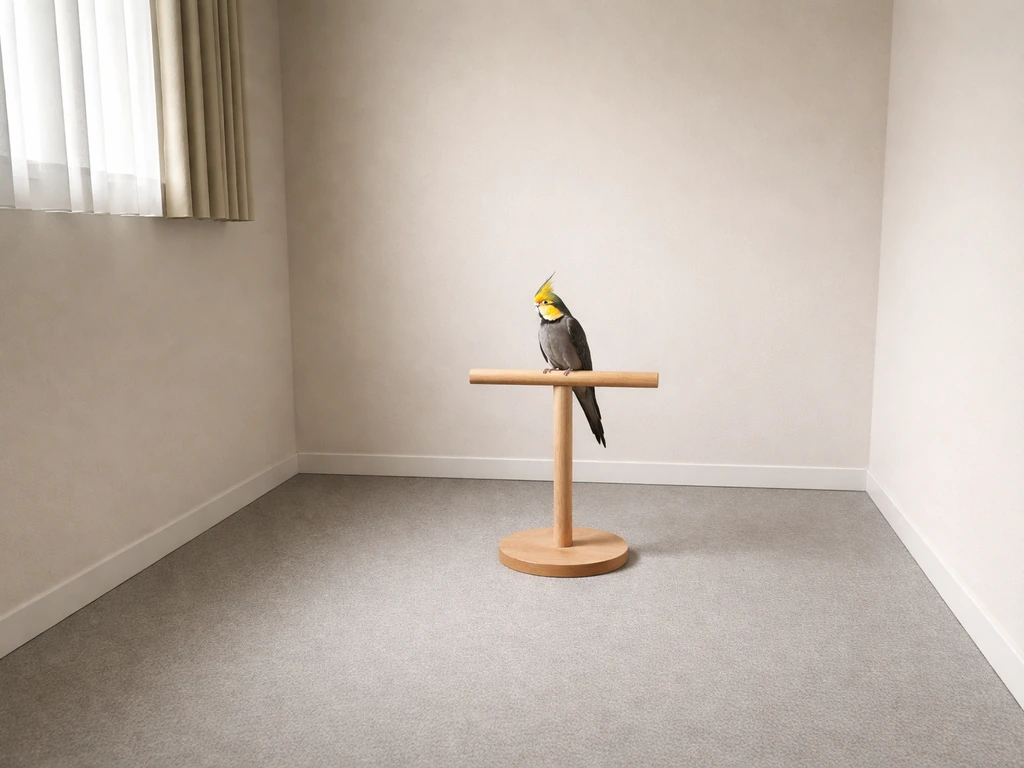
The right environment is not optional. A poorly set-up room will result in window strikes, escapes, or a panicked bird that associates flying with danger.
Start with a single, small, fully enclosed room. Close every window and door before the bird is out. Cover or screen large windows and mirrors because a clear window's reflection of sky or trees can look like open airspace to a bird, leading to a painful or fatal collision. One or two small stickers on a window are not enough. For real protection, most of the glass surface needs to be marked or covered with gaps no wider than a few inches, so the bird cannot attempt to fly through. Drapes, blinds, or temporary window clings work well for training sessions.
Switch off ceiling fans and any standing fans before the bird is loose. A bird flying into a moving fan blade is a genuine emergency. Remove or secure houseplants (many are toxic to birds), and make sure no other pets are in the room. These steps fall under what avian trainers call bird-proofing your space before you make a bird fly, and skipping them is the most common setup mistake I see beginners make.
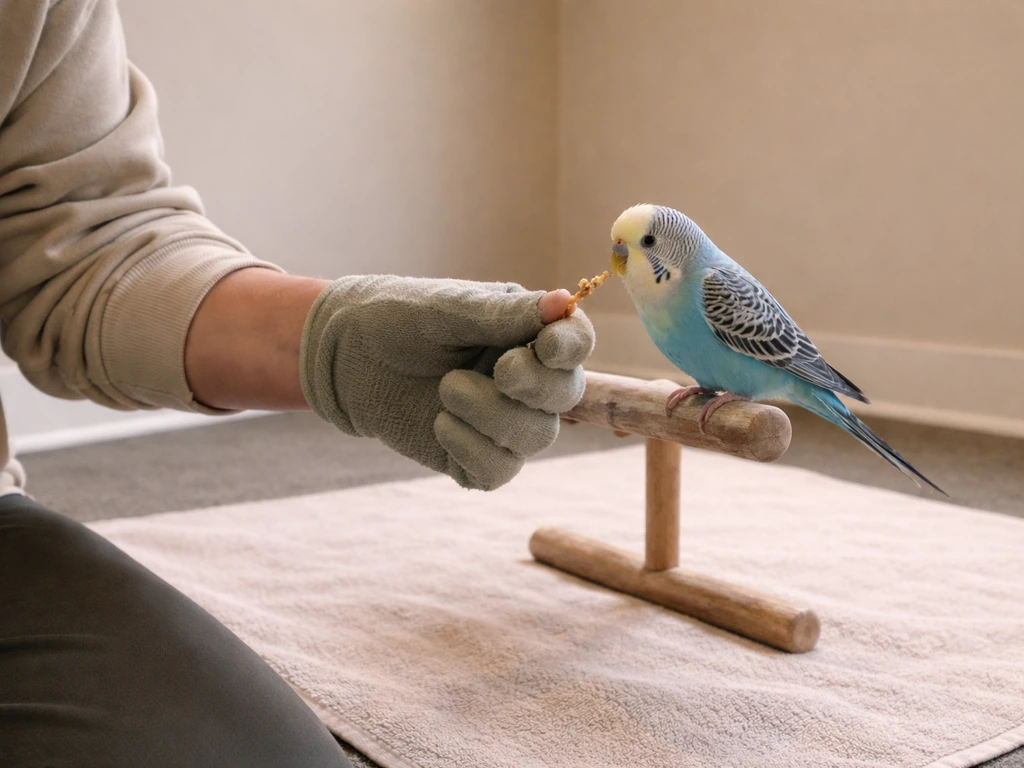
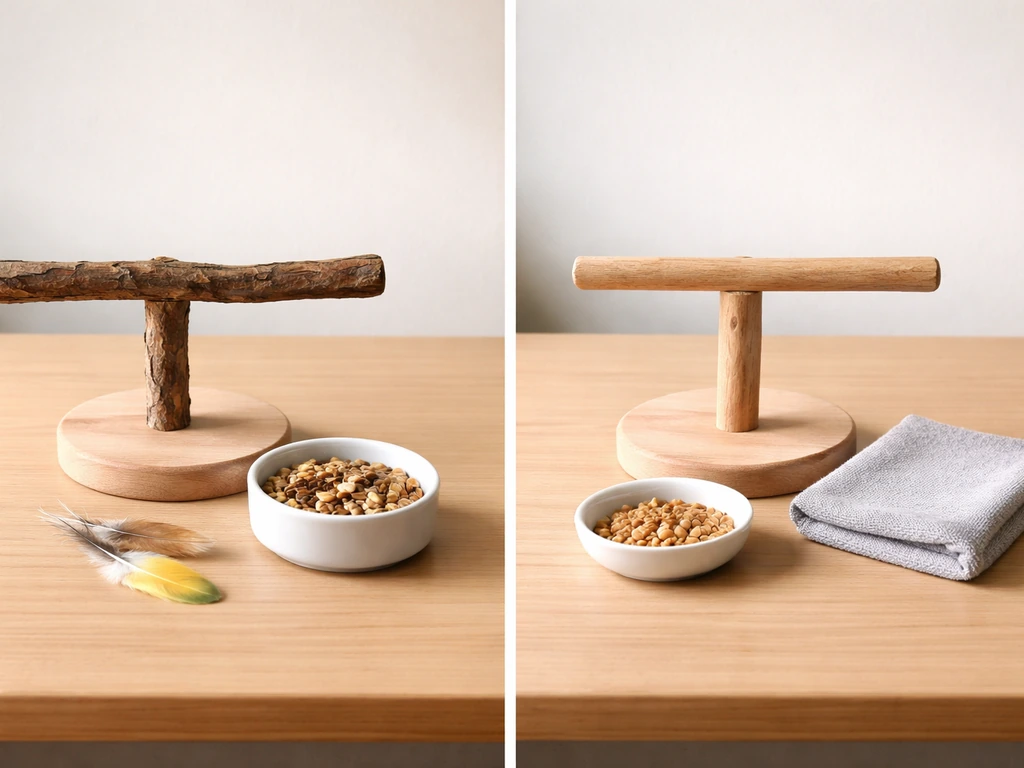
For gear, you do not need much to start. The essentials are: a target stick (a chopstick works fine), a clicker or consistent verbal marker like "yes," small high-value treats the bird loves, at least two stable perches or landing platforms positioned at the same height to start, and a quiet room with no escape routes. As you progress to longer flights, you can add T-stands at different distances. Keep the first landing targets simple and solid: the bird needs to feel confident landing before it will fly confidently.
Step-by-step: teaching the fly-to-you recall
This progression works for most pet birds, from cockatiels to larger parrots. Move to the next step only when the bird is succeeding confidently at the current one, not on a fixed schedule.
- Teach target training first. Hold the target stick near the bird's beak and click and reward the instant the bird touches it. Repeat 10 to 15 times per session until the bird is eagerly touching the target every time. This is your foundation. The bird is learning that touching a target = reward, which you will later extend across a distance.
- Introduce the recall cue. Choose a word ("come," your bird's name, or a specific whistle) and use it consistently every single time you present the target. Say the cue, present the target, reward the touch. The cue must always predict the same thing.
- Create a short-hop distance. Place the bird on one perch and hold the target 6 to 12 inches away on another perch or your hand. Cue, present target, reward when the bird hops or flutters to it. Do not lure with food held in your hand separately from the target; this creates confusion about what the cue means.
- Extend the distance gradually. Add 6 to 12 inches at a time over multiple sessions. Only move further when the bird is flying to the target confidently and without hesitation at the current distance.
- Fade the target. Once the bird is flying reliable distances, start sometimes presenting just your hand or arm instead of the stick with the cue. Reward just as enthusiastically. Eventually the cue alone brings the bird to you without needing the physical target every time.
- Proof in new situations. Practice in different spots of the training room, at different heights, and eventually in other bird-safe areas. Each new environment is essentially a new training challenge, so go back to shorter distances when you change locations.
A clicker is your best tool for the early stages because it marks the exact moment the correct behavior happens, which is much clearer to the bird than a verbal reward alone. The Gabriel Foundation describes this well: blank" rel="noopener noreferrer">the bird learns that touching the target is what earns the click and the reward, which makes the learning faster and more precise. Once the behavior is solid, the clicker can be phased out and replaced entirely with verbal praise and intermittent treats.
If your longer-term goal is outdoor or free-flight recall, the indoor recall is just the beginning. Check out this detailed guide on how to train a bird to fly and come back before you ever take your bird outside, because the stakes and the complexity increase dramatically outdoors.
Pet birds vs wild birds: completely different playbooks
Pet birds: bond first, then fly
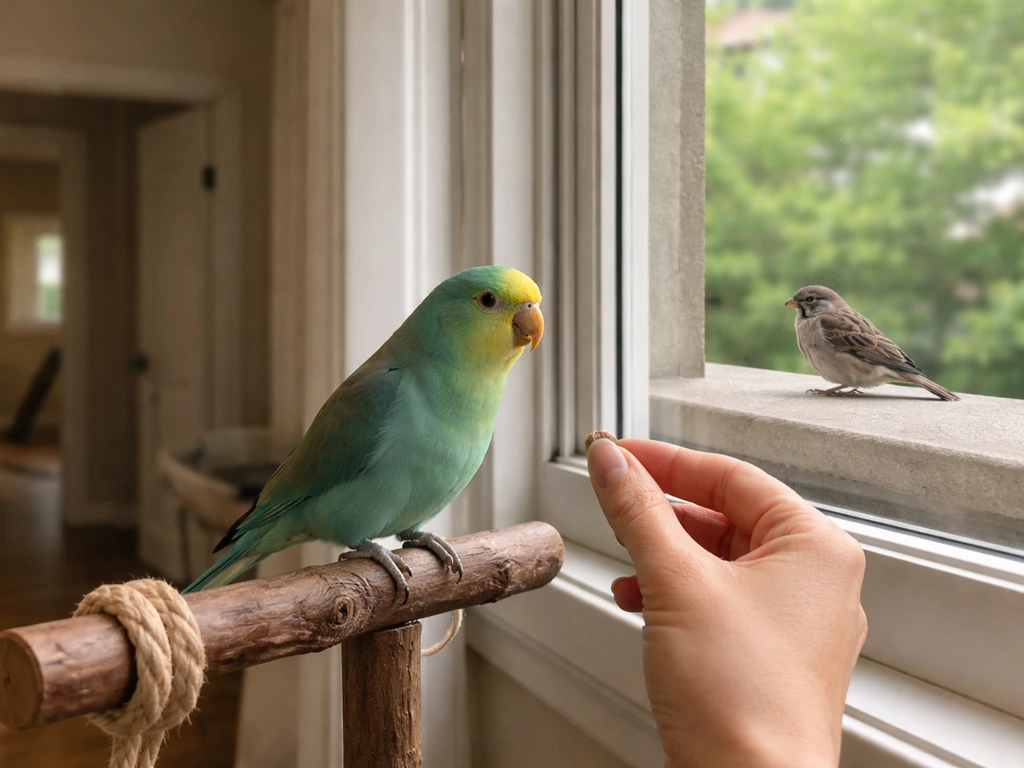
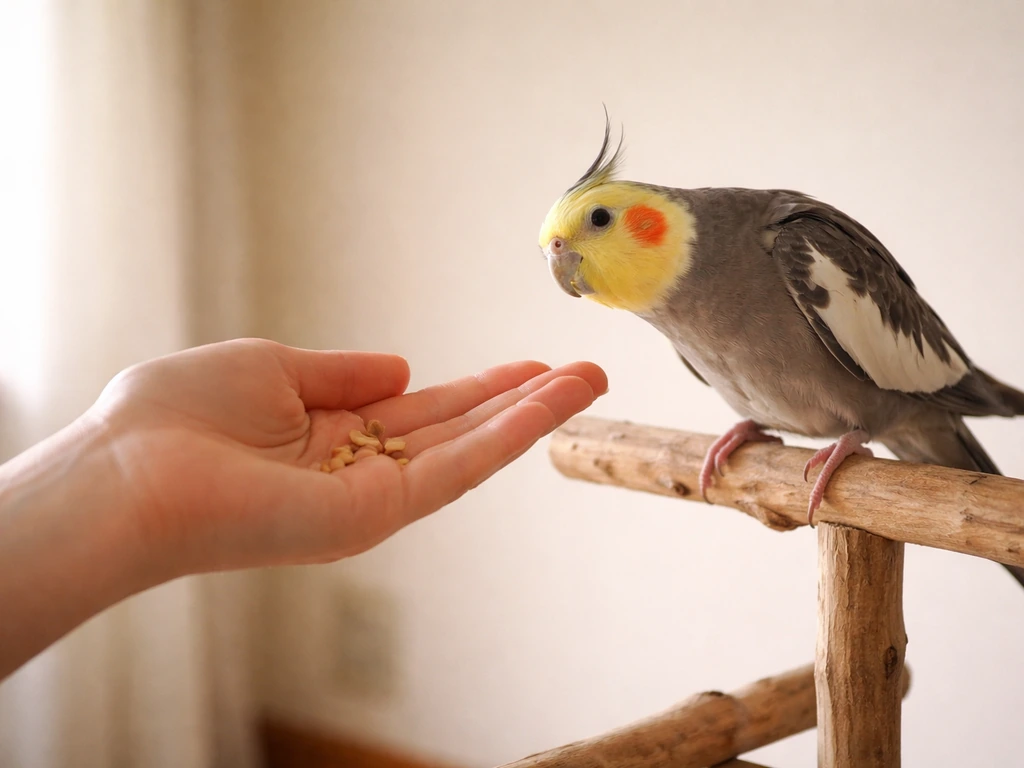
For a pet bird that is new to you, skittish, or has been clipped for a long time, bonding has to come before flying. Spend time at the bird's level, talk quietly, offer treats from your hand without any pressure to step up, and let the bird approach you on its own terms. A bird that trusts you will fly to you. A bird that tolerates you will avoid you when it has the option of flight. Rushing past bonding is the single biggest reason pet-bird recall training fails. Understanding what actually helps a bird fly, including physical conditioning and confidence, is as important as the training steps themselves.
Once trust is established, follow the step-by-step progression above. Species matter here: parrots like African Greys tend to be cautious and need more repetitions at each distance before advancing. Cockatiels and budgies are often faster to learn recall but can be more easily startled mid-flight. Larger macaws and cockatoos need more physical space and are best trained by someone with intermediate or advanced bird experience. For any species, shorter sessions with higher reward value move things faster than long, grinding sessions.
Wild birds: your job is not to train them
If you have a grounded or injured wild bird, the humane and legal thing to do is minimize handling and get it to a licensed wildlife rehabilitator. In the U.S., the Fish and Wildlife Service allows a "Good Samaritan" provision: any person who finds a sick, injured, or orphaned migratory bird may take possession of it only for the purpose of immediately transporting it to a permitted rehabilitator. That is the limit of what you are legally and ethically supposed to do.
The reason the law draws this line is not bureaucratic. It is biological. Young wild birds that receive too much human contact during a critical developmental window can imprint on humans, meaning they learn to identify with people rather than their own species. An imprinted bird cannot be released successfully. It may approach humans without fear, making it vulnerable to predators, and it will likely be unable to pair and breed with its own species. Wildlife rehabilitators take specific precautions to prevent this, including using species-appropriate surrogate birds and minimizing direct human contact for exactly this reason.
If you find a baby bird on the ground, do not automatically assume it needs your help. Many fledglings spend days on or near the ground as a normal part of development while their parents continue to feed them. Look for visible injury, labored breathing, or obvious distress before intervening. If the bird seems healthy, watch from a distance and see if a parent appears. If the bird is clearly injured or the nest is destroyed and you cannot return it, that is when you call a rehabilitator, not when you attempt training. The goal of every legitimate rehabilitation program is releasing animals back to suitable wild habitat in good health, not teaching them to interact with humans.
To find a licensed rehabilitator in your area, contact your state wildlife agency or search the National Wildlife Rehabilitators Association directory. Rehabilitators need both state and federal permits to legally work with migratory birds, so they are qualified and accountable in ways a well-meaning individual is not.
When it's not working: common problems and fixes
Recall training stalls for predictable reasons. Here is what to look for and how to fix it.
| Problem | Likely Cause | Fix |
|---|---|---|
| Bird refuses to fly toward you at all | Fear or insufficient trust | Go back to hand-feeding at the bird's perch with no flight ask. Rebuild trust before any distance work. |
| Bird flies away from you instead of toward you | Cue has been associated with something negative (grabbing, cage return, medication) | Retrain the cue with purely positive outcomes. Never use the recall cue right before something the bird dislikes. |
| Bird starts toward you then veers off | Distraction, not enough reinforcement, or landing surface feels unstable | Reduce distance, improve perch stability, increase treat value, and remove distractions. |
| Bird flies to you once then stops responding | Fatigue or satiation | Shorten sessions, use smaller treats so the bird stays hungry, and end each session before the bird loses interest. |
| Inconsistent response (works sometimes, not others) | Cue not proofed across environments or the reward is too variable | Re-proof in the specific environment where it fails. Keep reward delivery fast and consistent. |
| Bird flies to the target but lands short or overshoots | Lacks flight muscle conditioning or misjudging distance | Practice shorter distances more and let the bird build strength gradually over weeks. |
Weather and environment also matter more than most people realize. Even indoor birds can be affected by barometric pressure changes, unfamiliar sounds outside, or bright direct sunlight entering the room. If your bird is suddenly refusing a behavior it had reliably before, check what changed in the environment before assuming the training has broken down.
One mistake that derails progress more than any other: using the recall cue to catch the bird for cage-return, nail trims, or anything the bird finds unpleasant. Once the cue predicts something bad, it stops working as a recall. Use a completely separate neutral approach for catching or handling the bird for veterinary or grooming purposes.
Realistic timelines, species notes, and when to call for help
There is no universal timeline because species, individual history, and your training consistency all vary enormously. That said, here are realistic expectations:
| Bird Type | Target Training | Short Recall (1-3 feet) | Reliable Mid-Distance Recall (6-15 feet) | Notes |
|---|---|---|---|---|
| Budgerigar / Parrotlet | 1-3 days | 1-2 weeks | 3-6 weeks | Fast learners; very food motivated. Short sessions work best. |
| Cockatiel | 2-5 days | 1-3 weeks | 4-8 weeks | Sensitive to change; keep environment very consistent during training. |
| Conure (small to medium) | 2-5 days | 1-3 weeks | 4-8 weeks | High energy; can get overstimulated. Watch for biting as a fatigue signal. |
| African Grey Parrot | 3-7 days | 2-4 weeks | 6-12 weeks | Cautious; needs more repetitions per step. Highly consistent cues are critical. |
| Amazon / Eclectus | 3-7 days | 2-4 weeks | 6-10 weeks | Hormonal seasons can disrupt training. Pause rather than push through. |
| Macaw / Cockatoo | 3-10 days | 3-6 weeks | 8-16+ weeks | Best for intermediate-advanced owners. Large flight space required. |
| Canary / Finch | Not typically target-trained | Rarely reliable | Not typical goal | These species rarely form strong human recall bonds. Focus on safe enclosure management instead. |
These timelines assume daily short sessions with consistent cues and good reinforcement. Skipping days, changing cues, or pushing too fast can easily double or triple these estimates.
If you want to eventually take flight training beyond the living room, how to train a bird to free fly covers what that progression looks like and the additional safety skills your bird needs before flying in open or semi-open spaces. It is a significantly more advanced undertaking than indoor recall and requires a very solid foundation first.
Red flags: stop training and get professional help
Stop training immediately and contact an avian vet if you notice any of these signs in your pet bird: open-mouth breathing or labored breathing after minimal exertion, tail bobbing with each breath, drooping wings, loss of coordination in flight, crashing into surfaces repeatedly even in a familiar room, or sudden complete refusal to fly after previously doing so willingly. These can indicate respiratory illness, neurological problems, or injury that training will only make worse.
If you have been working with a pet bird for more than 8 to 12 weeks with no meaningful progress, consider consulting a certified parrot behavior consultant. Sometimes a trained outside observer can spot the specific breakdown point in minutes that an owner has been missing for months.
And if the bird in question is a wild one: do not wait. The longer a wild bird spends in your home, the greater the risk of habituation and the lower its chances of a successful release. Knowing what to do if your bird flies away is a useful parallel skill set for any bird owner, because preparation and quick response matter in both directions.
The bottom line: teaching a pet bird to fly to you is absolutely doable, and the process is genuinely enjoyable when you do it right. Set up safely, bond before you ask for flight, use a clear cue and a target, and build distance slowly. Keep wild birds wild and out of your training program. Stick to those principles and you will get where you want to go.
FAQ
My bird comes only if I have treats. How do I make recall reliable without constantly bribing?
If your bird only flies to you when it wants something, make the treats and praise more consistent during early recall and start separating “reward time” from “handling time.” In other words, call the bird to you, reward the landing instantly, then step away and let it leave on its own. This reduces the chance the recall cue becomes associated with restraint or end-of-fun handling.
What should I do if the bird starts flying toward me but doesn’t land correctly?
Don’t reward “halfway” attempts the same way you reward full landings. A common fix is to use your landing platform and perches as clear criteria, for example, click and treat only when the bird touches the target perch area. If the bird is missing, shorten the distance again so the bird can succeed, then rebuild accuracy before increasing range.
Can I ever use the recall cue to catch my bird for cage cleaning or vet appointments?
In training, replace any “forced” moments with a separate plan. If you need to move the bird to another location, use a different cue (or a time-free catch strategy) so the recall cue never predicts unpleasant outcomes like cage return, nail trims, or grabbing. Keep the recall cue only for predictable, positive flights and landings.
How do I transition from indoor recall to training in more open spaces safely?
Yes, but do it in stages and keep the first open-air attempts short. First, earn recall accuracy in a fully enclosed room, then switch to a safe semi-closed area such as an outdoor screened patio. Use strong window and escape prevention, and increase distance only when the bird is landing confidently every time at the current range.
Recall was working, then suddenly it stopped. What are the fastest ways to troubleshoot?
If the bird refuses after progressing, first check whether anything changed, then reduce difficulty immediately. Lower the standard by bringing the perches closer, shorten the session, and make the reward higher value. Also avoid repeating the cue over and over, because many birds learn that cue-spamming means you are not actually requiring the behavior.
How long should I use the clicker, and how do I switch to verbal cues without confusing my bird?
If you use a clicker, keep it consistent and only “click” for the exact behavior you want (target touch, then perch landing). If you phase it out, do it gradually, switching to a marker word at first plus intermittent treats. Never delay the marker, because a delayed click makes the bird guess what behavior earned the reward.
How long should each training session be, and should I push through when the bird seems distracted?
Shorter sessions usually beat long ones. Aim for a “stop while it’s still fun” approach, with multiple brief successes rather than repeated attempts that lead to frustration. If the bird is distracted, startled, or hesitating, pause and reset at the easiest step, then try again after a calm minute.
My bird has been wing-clipped for a long time. How should my recall training expectations change?
If a bird is clipped long-term, prioritize confidence and controlled glide first rather than expecting rapid recall flights. Use near targets and landing platforms at matching heights, reward any safe approach and landing, and consider having an avian vet assess overall fitness. Most clipped birds need more conditioning and gradual exposure before recall is fluid.
My bird seems to avoid flying to me when it thinks I’m going to grab it. How do I fix that?
Use a second person or a barrier strategy, not “cornering.” If you must catch the bird, do it separately from recall training, for example, use a different routine or cue and keep your body angle relaxed. If the bird associates your approach with being trapped, it will hesitate to come flying toward you even if the cue still predicts treats.
What are the most common setup mistakes that cause window strikes or escapes during recall training?
For indoor safety, treat reflections as open space and cover large glass areas so the bird cannot attempt a flight through them. Also remove ceiling and standing fans, secure houseplants, and block any other escape routes in the room. If you ever see repeated crashes in the familiar room, stop training and have an avian vet check for injury or neurological or respiratory issues.
My bird will not fly even though it lands near the target. When is it a health issue versus training difficulty?
If your bird won’t fly, confirm the bird is healthy before changing training. Refusal can mean respiratory illness, injury, or loss of coordination, and training will make it worse if the bird is unwell. If the bird is physically fine, reduce distance, increase landing stability, and reward earlier steps like approaching the target even if it does not fully take off yet.
I found a wild bird and it seems calm. Can I teach it to fly to me so I can release it later?
For wild birds, do not attempt training or bonding, and especially do not try to teach “recall to you.” If the bird is banded or appears monitored, contact the appropriate wildlife authority or rehabilitator immediately. The risk is habituation, imprinting, and reduced survival or release success.