Controlling a big bird safely comes down to three things: understanding why the bird is behaving the way it is, removing the immediate danger to both of you, and then building the trust and training that makes the situation manageable long-term. If you want the “how to act like a bird” part of this approach, focus on matching their calm body language and pace during your training sessions building the trust and training. Whether you're dealing with a large pet parrot that's gone hormonal, a backyard goose that's decided you're its enemy, or a wild raptor that's landed in your garage, the principles are the same: slow down, reduce panic, and work with the bird's instincts rather than against them.
How to Control Big Bird: Humane Steps for Safety and Training
Maya Harris
2 May 2026
First, what kind of "big bird" are we talking about?
"Big bird" means very different things depending on your situation, and the right approach depends entirely on which one you're facing. Before you do anything else, get clear on this, because handling a pet macaw and handling an injured wild heron require completely different legal, practical, and ethical responses.
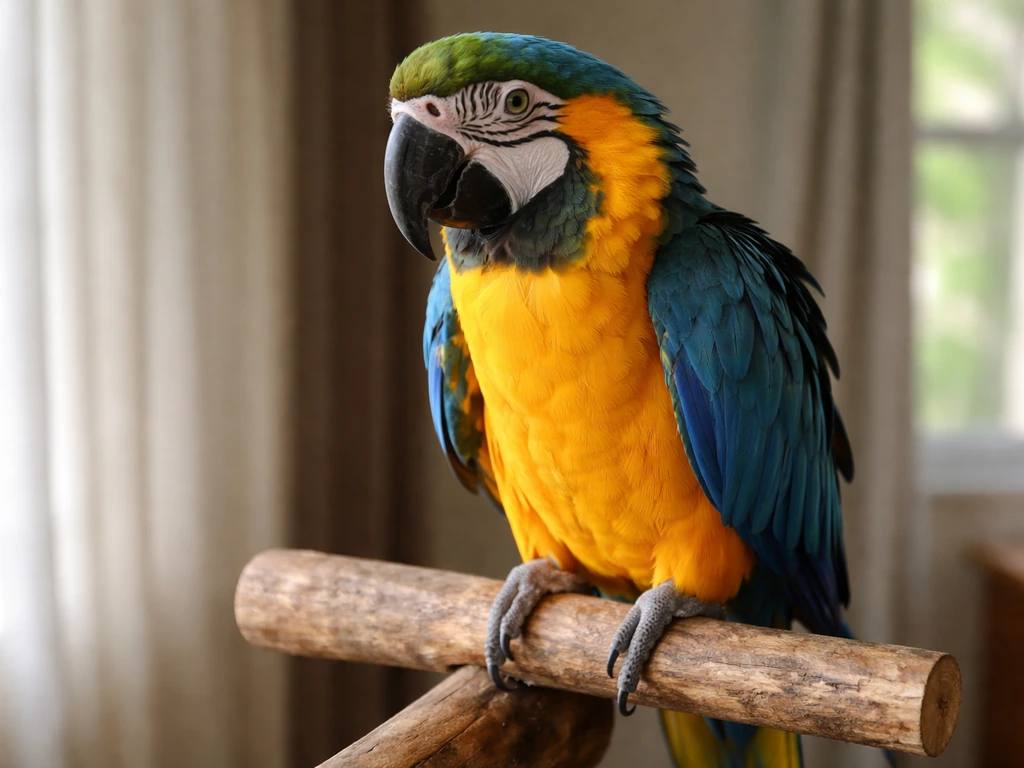
- Pet or captive large bird: This includes large parrots (macaws, cockatoos, Amazons, African greys), emus, large ducks or geese kept as pets, cassowaries, ostriches, or large poultry. You likely have some existing relationship with this bird and can work on training and behavior.
- Wild bird on your property: A large bird like a heron, raptor, goose, pelican, or crane that has wandered somewhere it shouldn't be, or appears injured. Your legal options are more restricted here, and the goal is usually safe containment for transport to a rehabilitator.
- Injured or sick wild bird: Same as above but with added urgency and specific handling steps. This bird needs professional care, not long-term management by you.
- A large bird that has escaped from captivity: Could be a pet, a farmed bird, or a zoo animal. Approach and containment are the immediate priorities before any training.
Once you know which category you're dealing with, everything else in this guide becomes much clearer. The training and behavioral sections below are primarily aimed at pet and captive birds. The wild bird sections cover safe immediate handling and legal requirements. If you're dealing with a wild bird long-term, skip ahead to the escalation section now, because keeping most wild birds without a permit is illegal in the US and many other countries.
Immediate safety steps: for you and the bird
Large birds can do real damage. A cassowary can disembowel you, a macaw can take off a fingertip, and even an angry goose can bruise bone. But panic on your part makes the bird panic too, which is when injuries happen. The moment you slow down and drop your energy, most birds calm measurably. This isn't advice, it's physiology. Birds read body language fast.
Approach without triggering a fear response
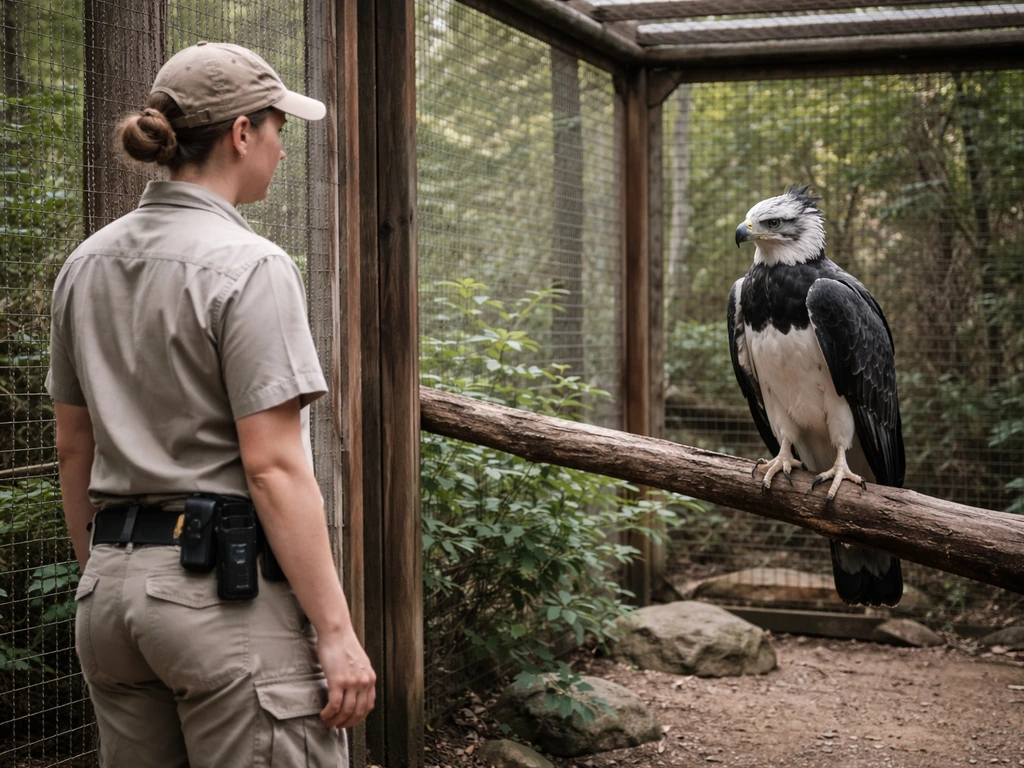
Move calmly and steadily, keeping your movements predictable. Avoid direct eye contact with unfamiliar or aggressive birds, especially raptors and corvids, who read a direct stare as a challenge. Don't rush toward the bird. Instead, angle your approach slightly sideways, reduce your height if you can (crouching feels less threatening), and speak in a low, even voice. If the bird is already against a wall or in a corner, do not advance further. Give it a moment to assess you.
Contain before you handle
The RSPCA's advice here is blunt and correct: don't handle an animal unless it's already safely contained and you're confident the handling will help, not harm. For a large bird loose in a room, close doors and windows first. Reduce the space it can move through without cornering it. For a wild bird outdoors, use a large cardboard box with ventilation holes and a towel lining as a transport enclosure. Darkness calms birds quickly, so a closed box is more humane than a wire cage for short-term containment.
Towel handling: the safest physical control method
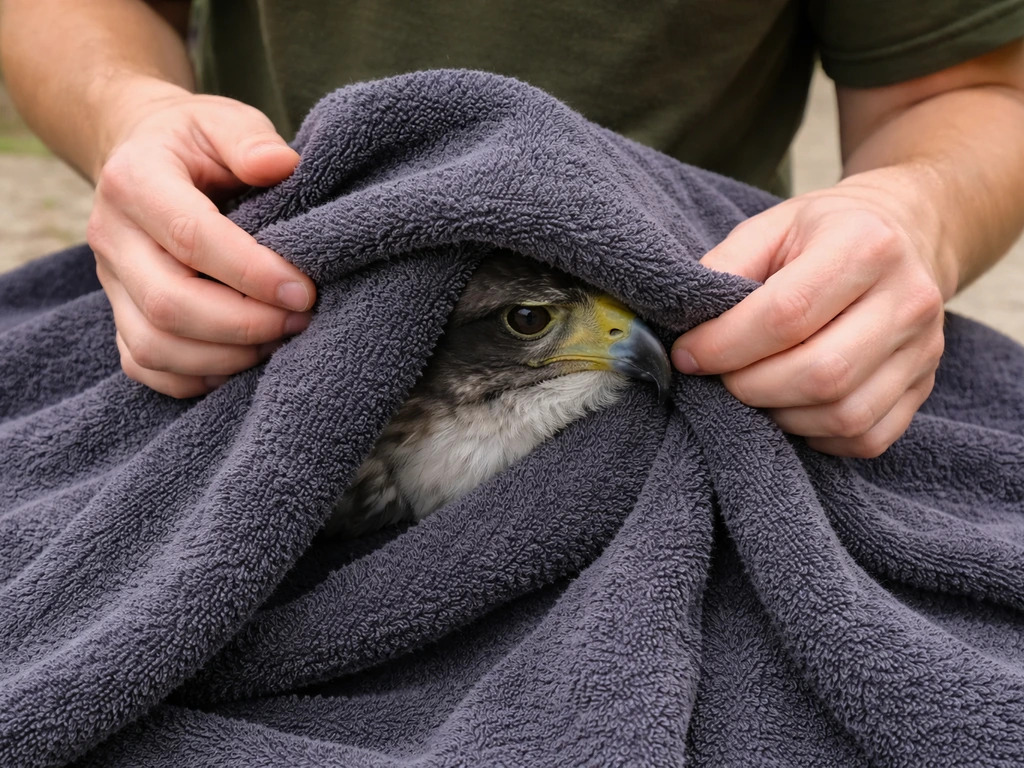
A thick towel is your best tool for physical control of a large bird you need to restrain. Drape it over the bird's body and most of its head, tuck the towel near the neck, and wrap the sides around the bird's body to keep wings against the sides. The key technique: secure the head gently but firmly (to prevent biting), keep wings immobilized against the body, and never compress the chest, because birds breathe by expanding their chest and restricting it can suffocate them quickly. Keep restraint as short as possible, minimize restraint time, use a quiet voice throughout, and let the bird calm down for a few minutes before you attempt any procedure if you can afford to wait. Spray-misting an unhandled or overweight bird before towel capture can make the process easier and safer.
For wild birds being transported, once the bird is towel-wrapped and in a dark, ventilated box, keep the environment quiet (no radio), don't offer food or water, and get it to a wildlife rehabilitator as fast as possible. For a sick or injured wild bird, Tufts Wildlife Clinic advises keeping it warm, dark, and quiet, using a box or crate for transport, and avoiding food or water while keeping the car quiet keep the environment quiet (no radio), don't offer food or water. Tufts Wildlife Clinic and Audubon both emphasize this: your job is safe containment and transport, not treatment or feeding.
Diagnose the problem: why is this bird "out of control"?
Before you try to fix the behavior, figure out what's driving it. A bird that seems aggressive or unmanageable is almost always responding to something real, and treating the symptom without finding the cause won't work. Here are the most common root causes in large birds, and how to tell them apart.
| Root Cause | Signs You'll See | First Step |
|---|---|---|
| Fear or past trauma | Cowering, thrashing against bars, biting when approached, screaming when restrained | Slow down all interactions, rebuild trust from scratch |
| Hormonal behavior (breeding season) | Charging, regurgitating, feather-fluffing, territorial aggression toward people or other birds | Reduce daylight hours, remove nesting materials, avoid petting back/vent area |
| Lack of training or socialization | Refuses step-up, bites unpredictably, unresponsive to cues | Start foundational targeting and step-up training |
| Pain or illness | Sudden behavior change, biting that seems out of nowhere, appetite loss, drooping wings | Veterinary exam first, before any behavior work |
| Overstimulation or fatigue | Biting after long sessions, vocalizing intensely, pupils pinning rapidly | End the session immediately, give the bird space |
| Territorial or dominance-related behavior | Guarding cage door, lunging when hand enters cage, charging at people near food | Environmental changes, consistent handling protocols |
| Boredom or under-stimulation | Screaming, feather destructive behavior, repetitive pacing | Enrichment overhaul, more out-of-cage time with structure |
PetMD makes an important point that's easy to overlook: biting is often misread as pure aggression when it's actually a fear or pain response. If a bird that was previously manageable has suddenly become aggressive, rule out a medical cause first. Birds hide illness well, and a behavior change can be the first visible sign of something physical. An avian vet visit before intensive training is not a detour, it's the correct first step.
Humane control methods that work without scaring the bird
Environmental management
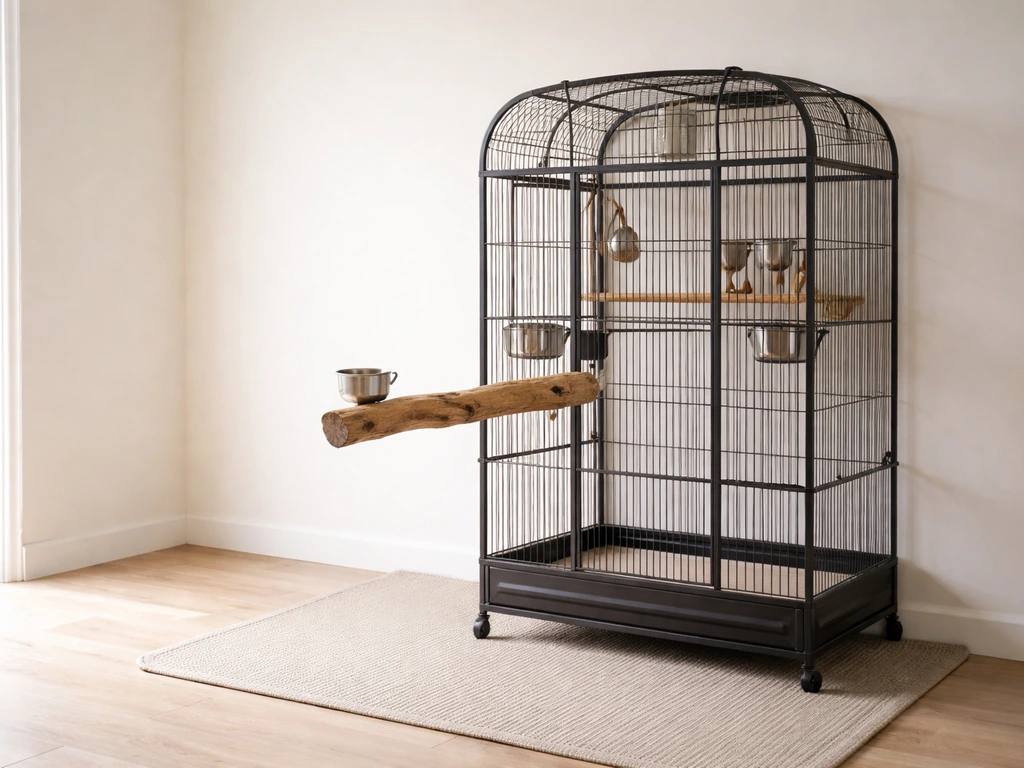
The setup of the bird's environment does a lot of the behavioral work for you before any training starts. For pet large birds, position the cage or perch station with the back against a solid wall and the top partially covered with a light-colored cloth. This removes threat perception from above and behind, which is where birds in the wild are most vulnerable to predators. A bird that feels physically secure in its space is significantly less reactive.
For outdoor aviaries, a safety porch or double-door entry is a non-negotiable feature if you have a bird that's an escape risk. You enter the first door, close it behind you, and then open the inner door. This prevents any bolting-out scenario and gives you a buffer zone for catching or guiding the bird if needed. The RSPCA recommends this as standard housing for outdoor birds, and it's genuinely the single best structural change you can make if escape is your biggest problem.
Covering the sides and back of a cage with pale cloth also helps during training sessions when a bird is reactive. It reduces visual stimulation from outside the cage, which can trigger territorial responses or panic. You don't need to cover the whole cage, just enough to block the bird's view of the most threatening angles.
Baiting and luring: low-conflict guiding
If you need a large bird to move from one location to another and physical handling isn't safe or necessary, use food to guide it. High-value treats (whatever this bird goes crazy for) placed at the destination or on a target perch can move most birds without any confrontation. This is especially useful for getting a bird back into its cage or aviary at the end of free-flight time. The key is consistency: use the same treat, the same cue word or whistle, and the same location every time. Over days, this becomes a reliable recall system.
Barriers and safe zones
For aggressive large birds that charge or bite when you enter their space, use a physical barrier to manage access. A simple wooden board, a thick piece of cardboard, or a training perch held in front of you creates a buffer and something the bird can focus on other than your hands. For birds like emus or large geese that charge at ground level, a broom held horizontally (not used to hit the bird, just to occupy the space in front of you) gives you something to guide the bird's direction with minimal contact.
Step-by-step training for large, difficult birds
Training a large bird that's currently uncontrollable doesn't start with the behavior you want. It starts with the bird tolerating your presence without stress. Work through these stages in order, and don't rush. Moving too fast is the most common reason training stalls or makes behavior worse.
Stage 1: Calm presence (beginner)
Sit near the bird's space without interacting. Read a book, work quietly, exist in the bird's environment without demanding anything from it. Do this for 10 to 15 minutes once or twice a day. You're teaching the bird that your presence doesn't equal threat. For very reactive birds, start further away and move slightly closer each session over several days. Drop a high-value treat near the bird without approaching directly. You're building a positive association before any handling begins.
Stage 2: Target training (beginner to intermediate)
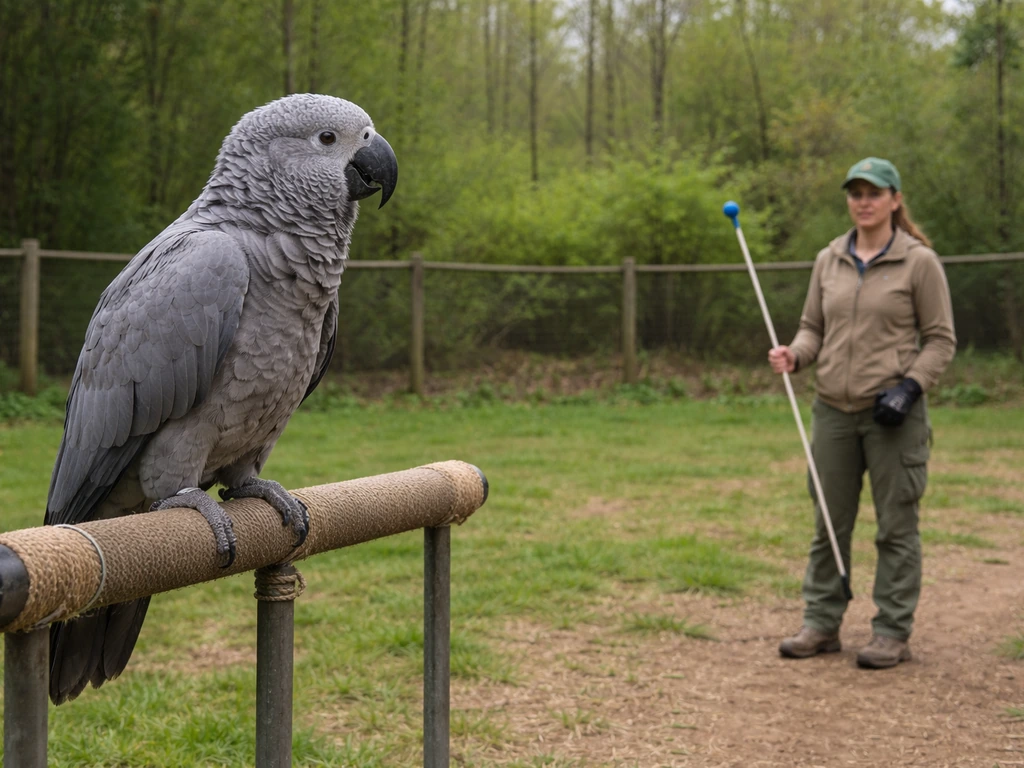
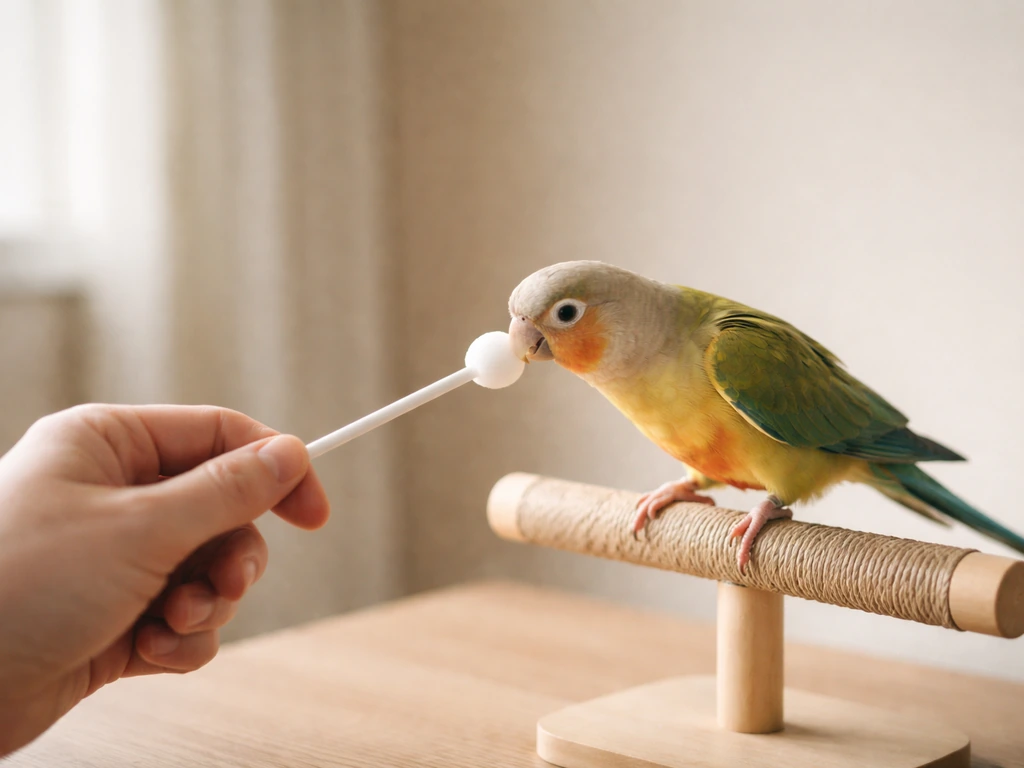
Target training is teaching the bird to touch a specific object (usually a stick with a ball or colored tip) with its beak. It's the foundation of almost all cooperative bird training because it gives the bird something clear to do in exchange for a reward, and it moves the bird where you need it without physical contact. Hold the target near the bird, wait for it to investigate (don't shove it at the bird), and the moment it touches it, click or say a marker word like "yes" and give a treat. Keep sessions to 5 to 10 minutes maximum. Parrots.org's targeting guide emphasizes keeping sessions short specifically to maintain the bird's engagement and reduce pressure, and this applies to large non-parrot species too.
Stage 3: Step-up training (beginner to intermediate)
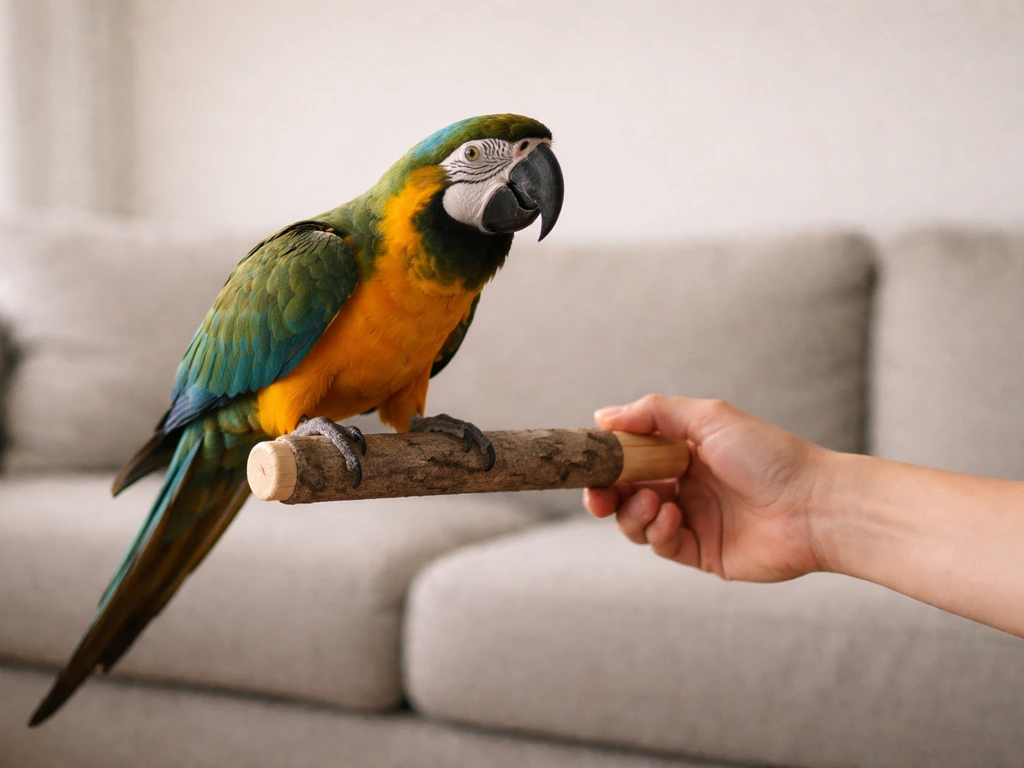
Step-up is the single most useful control skill for a pet large bird: the bird steps onto your hand, arm, or a handheld perch on cue. Start with a perch rather than your bare hand if the bird is biting. Hold the perch horizontally just below the bird's chest (at or slightly above foot level). Apply gentle pressure against the lower chest and say "step up" or your chosen cue. The moment the bird lifts a foot onto the perch, reward immediately. Move slowly throughout, reward generously, and never force the step. Petco's guidance here is practical: keep treats visible, move slowly, and reward every single successful step-up, especially in the early stages. Lafeber adds that you should progress step by step and let the bird become comfortable at each stage before moving forward.
Stage 4: Marker training and cooperative care (intermediate)
Once the bird reliably steps up and targets, add a clicker or consistent verbal marker to sharpen communication. The marker (click or word) tells the bird exactly which behavior earned the reward, which speeds up learning significantly. The Association of Avian Veterinarians describes this clearly: the marker signals that the correct behavior happened and a reward is coming. From here, you can train the bird to station (go to a specific perch and stay), to allow touch in specific areas, and eventually to participate in health checks and handling without stress. This is called cooperative care, and it transforms a difficult-to-handle large bird into one that actually chooses to participate in its own care.
Session length across all stages: keep it to 5 to 10 minutes, once or twice daily. Always end on a success, even if you have to make the last task very easy to guarantee it. Petco's training guide makes the point explicitly: ending on a positive note prevents the bird from associating training with confrontation or loss. If a session is going badly, drop back to something the bird does reliably, reward that, and stop. LafeberVet reinforces this: if the bird shows fear or aggression during a session, stop what triggered it and reassess.
Troubleshooting the most common big-bird behavior problems
Biting
Biting in large birds is almost always a warning sign, not a random attack. Look for what happened just before the bite: someone reached too fast, ignored body language cues (pinning eyes, raised feathers, lunging posture), or tried to handle the bird when it was overstimulated. Your job is to read the pre-bite signals and stop before they escalate. If a bird bites during step-up, use a thick handheld perch instead of your hand and slow the whole approach way down. If biting has suddenly increased without an obvious trigger, book a vet appointment before continuing training.
Charging and aggressive posturing
Charging is most common in breeding season or with territorial birds. Do not retreat dramatically (which rewards the behavior) or advance aggressively (which escalates it). Stand still, hold your ground calmly, and use a barrier or training perch to interrupt the charge. With large ground birds like emus or geese, turning sideways and avoiding eye contact while holding your position usually causes them to break off. Over time, establish a consistent leadership protocol: you always enter their space first, you control access to food, and you end interactions on your terms, not theirs.
Refusing to step up
If a bird that previously stepped up is now refusing, check whether something changed: new environment, new people, hormonal season, or a bad experience during the last handling session. Go back to target training and calm presence for a few sessions before reintroducing the step-up cue. If you force the step-up, you'll set back trust significantly. Patience here is not passive, it's the active strategy.
Uncontrolled flying or escape attempts
A bird in flight inside a building is a high-injury situation for the bird. The Schuylkill Center's wildlife clinic makes the important point that chasing a bird inside a building adds stress and makes self-injury more likely. Instead, darken the room as much as possible (birds orient toward light, so closing blinds and leaving one window slightly open with light coming through can guide the bird toward an exit). Move slowly, avoid loud noises, and if you need to catch the bird, wait until it has landed and is still before attempting towel capture. For pet birds, flight control comes from recall training (calling the bird back to you for a reward), clip decisions made with your avian vet, and ensuring the environment has no dangerous surfaces a flying bird could collide with.
Screaming
Screaming in large parrots and other vocal species is usually either a contact call (checking where you are), a boredom response, or an attention-seeking behavior that's been accidentally reinforced by people responding to it. Never reward screaming by rushing into the room. Wait for a brief pause in the noise, then enter and reward with attention. Increase enrichment, out-of-cage time, and foraging opportunities. For persistent screaming, rule out pain or illness first, then work on environmental enrichment and a structured daily routine.
When to stop trying to handle it yourself
There are situations where the right move is to hand off to a professional, and recognizing them early saves both you and the bird from serious harm. Here's when to escalate.
Call an avian vet when:
- Behavior has changed suddenly without an obvious environmental cause
- The bird shows any physical signs: drooping wings, changes in droppings, appetite loss, abnormal breathing, or visible injury
- Biting or aggression has increased rapidly and is out of character
- The bird is losing weight or showing signs of stress-related illness like feather destructive behavior
- You need a baseline health assessment before starting any training program
Call a certified avian behavior consultant when:
- Training has stalled despite consistent effort over several weeks
- The bird's behavior poses a genuine safety risk to people in the household
- You're dealing with a severe fear response, self-injurious behavior, or extreme aggression that isn't responding to basic positive reinforcement approaches
- You've ruled out medical causes and still can't identify the behavior trigger
Contact a wildlife rehabilitator when:
- You've found an injured or sick wild bird of any size
- A wild bird has been in your possession for more than a few hours and you don't have a wildlife rehabilitation permit
- The bird appears to need ongoing care beyond basic containment and transport
Audubon's guidance is clear: if you've found an injured wild bird, place it somewhere quiet and dark, and call a local wildlife rehabilitator. That's the appropriate role for most people, and it's the correct welfare-first response. Long-term management of wild birds by unlicensed individuals is both legally risky and typically harmful to the bird's chances of survival and release.
The legal picture for wild birds
In the United States, most wild birds are protected under the Migratory Bird Treaty Act of 1918. The USFWS is explicit: capturing, possessing, or transporting a protected migratory bird without prior federal authorization is illegal, even if your intentions are good. This includes large, common species you might not think of as "protected," like herons, egrets, and many raptors. Individual states add their own permit requirements on top of the federal layer. Michigan requires a DNR wildlife rehabilitation permit to possess, capture, or transport any native wild bird, and federally protected species may need additional federal authorization. Washington state makes the same point: possessing wild birds without a valid permit is illegal, regardless of the circumstances. If you're in another country, check your national and regional wildlife laws before attempting to handle or retain any wild bird. The short version: if it's wild, your job is containment, transport, and handoff to someone licensed to help it.
Building toward long-term control and trust
Real control of a large bird isn't about dominance or force. How to become the biggest bird is less about size and more about choosing strategies that build confidence and cooperation with the bird you have Real control of a large bird. It's about the bird choosing to cooperate because cooperating feels safe and rewarding. That takes time, consistency, and a genuine willingness to read the bird's communication and respond to it. If you want the bird to be more responsive and healthy for the long run, you can also apply these same training-and-trust principles to work toward how to be a fit bird. The birds that end up being the most manageable are almost always the ones whose handlers learned to read their body language, kept sessions short and positive, and never pushed past the bird's comfort threshold in a single session.
The RSPCA's training guidance emphasizes gradual, slow work so the bird can become genuinely accustomed to handling and restraint, not just tolerate it out of helplessness. There's a meaningful difference, and birds trained with patience rather than force tend to stay cooperative over the long term rather than getting harder to manage as they age. If you're interested in going deeper with your bird's behavior and communication, topics like species-specific enrichment, vocalizations, and movement can all feed into how well a large bird responds to your handling and cues over time. Understanding vocalizations is also a practical step toward learning how to sing like a bird.
Start with safety. Diagnose the root cause. Use the environment to set the bird up for success. Train in short, positive sessions. Know when to bring in a professional. That's the whole framework, and it works across species, across ages, and across skill levels. If you meant a literal transformation like how to turn into a bird, treat that as a totally different topic from handling and training a real large bird safely. If you want a deeper, step-by-step plan, see our guide on how to become a bird handler for big birds.
FAQ
What should I do first if a big bird is loose and I am not sure whether it is pet, captive, or wild?
Treat it as potentially dangerous and potentially protected. Focus on containment, keep doors and windows secured, and avoid trying to “capture” or restrain it until you can confirm whether it is someone’s pet (look for identifiers, microchip claims from the owner if present) versus a wild bird. If it is truly wild, your role is containment and rapid handoff to a rehabilitator, not handling for treatment.
Can I use a towel wrap on a bird that I think is injured or sick?
Only if you must prevent immediate harm and you can do it without compressing the chest or forcing prolonged restraint. If the bird is bleeding, overheating, or unable to hold posture normally, towel wrapping can add stress. In those cases, prioritize safe containment and contact a wildlife professional or avian vet for instructions rather than attempting procedures yourself.
How do I tell whether my bird’s aggression is pain or fear if it keeps reacting during training?
Look for sudden changes from baseline (new biting or charging without a clear trigger), guarding behavior around specific body areas, reduced appetite, fluffed posture, or lethargy. If the behavior change is abrupt or escalating, treat it as pain until an avian vet rules it out, then resume training more cautiously after treatment or management changes.
What is the safest way to prevent bites during step-up practice?
Use a handheld perch instead of bare skin, keep the perch just below foot level, and reward the moment the bird lifts a foot. Also, avoid reaching forward while you cue, and make sure your approach pace matches the bird’s calm state. If any biting happens, slow down and regress to easier targeting first.
My big bird charges when I enter the room, but it is calmer after I back up. Should I retreat or hold ground?
Don’t retreat dramatically and don’t rush in aggressively. Stand still with calm posture, use a barrier or training perch to interrupt access to your hands and torso, and let the bird’s charge dissipate. Over time, consistency matters more than intensity, so keep your entry and interaction predictable.
How do I handle it if the bird will not step up anymore after it had been doing well?
Assume something changed (hormonal cycle, new handling outcome, new person, new environment, or a negative experience). Temporarily return to calm presence and targeting sessions, and only reintroduce step-up when the bird is again accepting proximity without escalating. Do not force step-up, forcing it often locks in avoidance.
How long should I keep a training session going with a highly reactive big bird?
Keep it short, typically 5 to 10 minutes, once or twice daily. End on a success that is easy for the bird, even if that means repeating a simple targeting or station cue. If the bird shows fear or aggression, stop the triggering context, step back to something easier, and try again later.
What does “never compress the chest” mean in practice during restraint?
When towel-wrapping, immobilize wings by tucking them against the sides, and secure the head gently but firmly. Do not hold the bird in a way that squeezes the rib area or prevents normal chest expansion. If you cannot restrain without restricting breathing, stop and seek professional guidance.
If a bird is flying inside my house, is it okay to chase it until it lands?
Chasing increases stress and self-injury risk. Reduce harsh light and guide it with darkness, move slowly, and avoid loud noise. Wait until it has landed and is still before attempting any towel capture, and if it is a pet bird with recall training, call it calmly for a reward.
Should I offer food or water to a wild bird in a containment box?
Not right away. Keep the environment quiet and dark, and focus on safe transport to a licensed wildlife rehabilitator as quickly as possible. Feeding can be inappropriate for the species and can delay proper care, and your priority is minimizing stress during transport.
What are common mistakes that make training worse instead of better?
Rushing your approach, forcing step-up, ignoring pre-bite body language, and unintentionally rewarding escalation (for example, rewarding screaming by rushing in). Another common issue is sessions that are too long or too intense, which can exceed the bird’s comfort threshold and turn training into a repeated stressor.
When should I hand off to a professional instead of trying to fix it myself?
Hand off early if it is a wild bird (use containment and transport only), if the bird is injured or behavior suddenly changed without an obvious cause, or if you cannot safely manage handling without significant risk. In pet birds, an avian vet should be your first escalation step when aggression or biting increases suddenly, since medical issues are a frequent root cause.
Is it legal to keep or transport wild birds if I find them and mean well?
Usually no. In many places, wild birds are protected, and capturing, possessing, or transporting them without proper authorization is illegal even with good intentions. If you are unsure, follow the welfare-first approach (safe containment and rapid handoff to a licensed rehabilitator) and check local and national wildlife rules before doing anything beyond transport.
Next Articles
How to Be a Fit Bird: Safe Training, Fitness Plans
Welfare-first guide to safely condition pet or rehab birds with health checks, training routines, enrichment, and weekly
How to Turn Into a Bird in Real Life: Humane Steps
Learn humane, safe steps to bond with birds, build trust, and train bird-like behaviors for pet or wild settings.
How to Become a Bird: Bond, Train, and Care Safely
Humane guide for building trust with birds: bonding, body language, safe handling, training, and daily routines.