This guide is for beginners picking up their first parakeet, intermediate handlers who want to deepen a bond with a parrot or raptor, and anyone dealing with a wild or rehabilitated bird who needs a low-stress human presence. We'll cover the environment, body language, taming foundations, species-specific differences, and what to do when things go sideways.
Choose the right bird path before you do anything else
The first decision is which type of bird relationship you're actually building. Pet birds, rehabilitated wild birds, and truly wild birds require totally different approaches, different legal frameworks, and different realistic expectations.
Pet birds
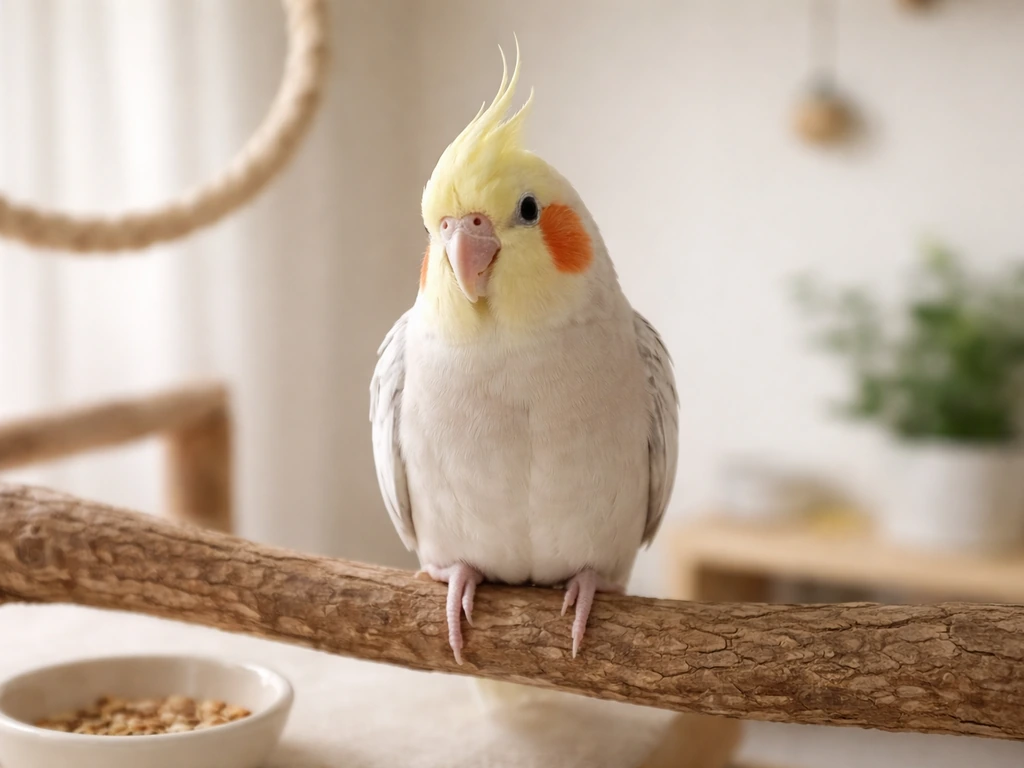
Captive-bred pet birds (parakeets, cockatiels, parrots, canaries, finches) are your most realistic starting point for a deep bond. They've been socialized around humans and can learn to enjoy handling when it's done right. If you want a bird that rides your shoulder and calls for you when you leave the room, this is your lane. The tradeoff is a long-term commitment: a cockatiel can live 20 years, an African grey can outlive you.
Rehabilitated wild birds
If you find an injured wild bird, your goal is short-term stabilization and a handoff to a licensed wildlife rehabilitator, not bonding. In the US, handling most wild birds without a federal permit is illegal under the Migratory Bird Treaty Act. Raptors require state and federal falconry or rehabilitation licenses. Knowing this before you pick up a grounded hawk can save you a fine and, more importantly, save the bird from being imprinted when it shouldn't be.
Wild birds in your yard or public spaces
Feeding and observing wild birds is legal and wonderful. Hands-on interaction with wild birds in public spaces falls under animal welfare management guidelines, and in monitored settings like wildlife parks, there are specific protocols around supervised interaction. Keep expectations low: wild birds should stay wild. Your job is to create a safe, enriched environment that attracts them, not to tame them. The USDA APHIS Animal Care framework specifically addresses public feeding and interaction with birds as part of responsible animal welfare management in those supervised contexts.
Build the environment before you touch the bird
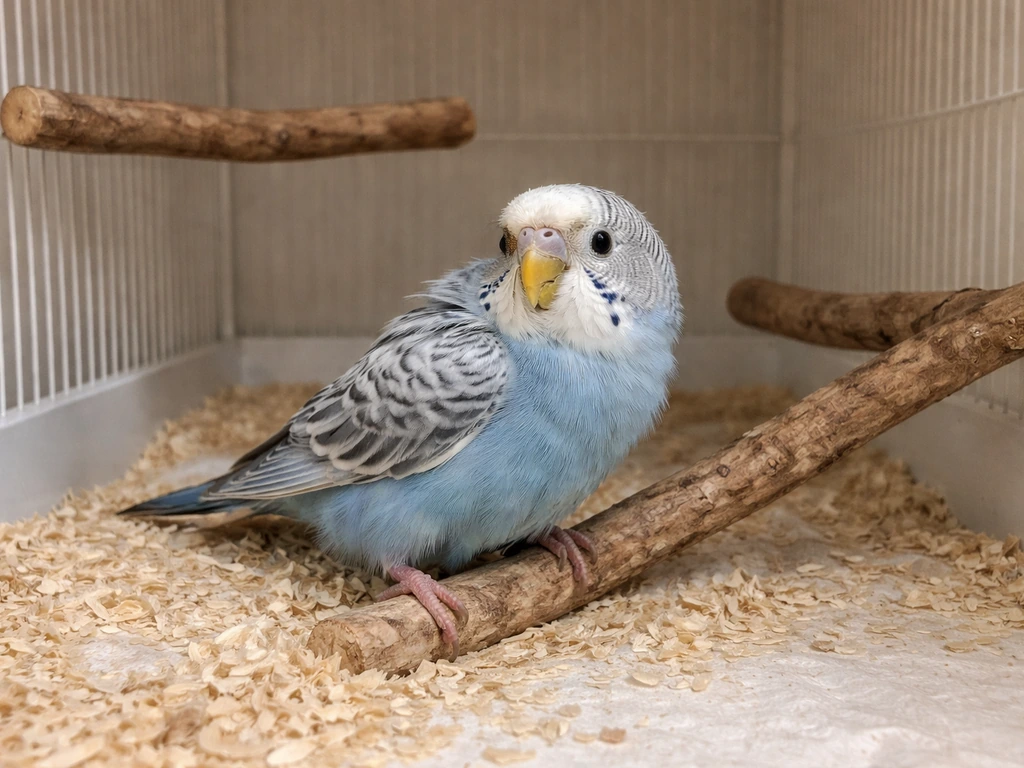
Trust is built in the environment long before your hand enters the picture. A bird that feels safe in its space is already 80% of the way to tolerating, and eventually welcoming, your presence.
Housing and perches
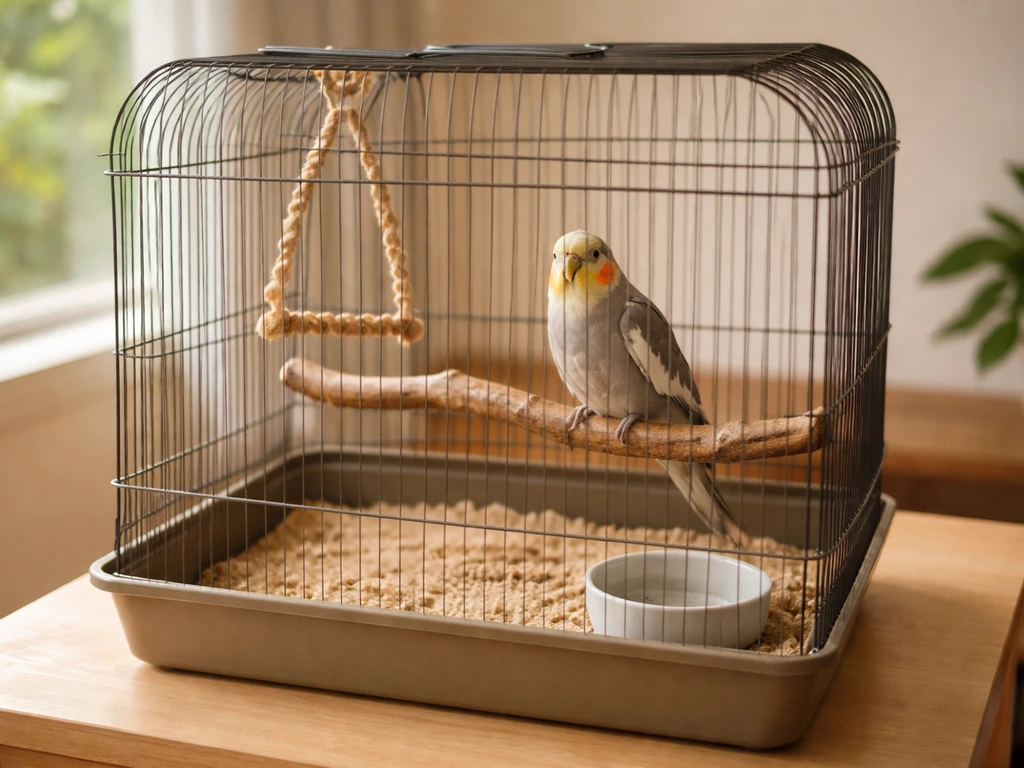
The cage or enclosure should be sized so the bird can fully extend both wings without touching the sides. For parakeets, that's a minimum of 18x18x18 inches, but bigger is always better. Perches should vary in diameter and texture: natural wood branches (apple, willow, manzanita) work well and double as enrichment. Avoid placing the primary perch at the very top of the cage where a bird feels cornered, and never place food and water directly under a perch where droppings will contaminate them.
Location, sound, and traffic
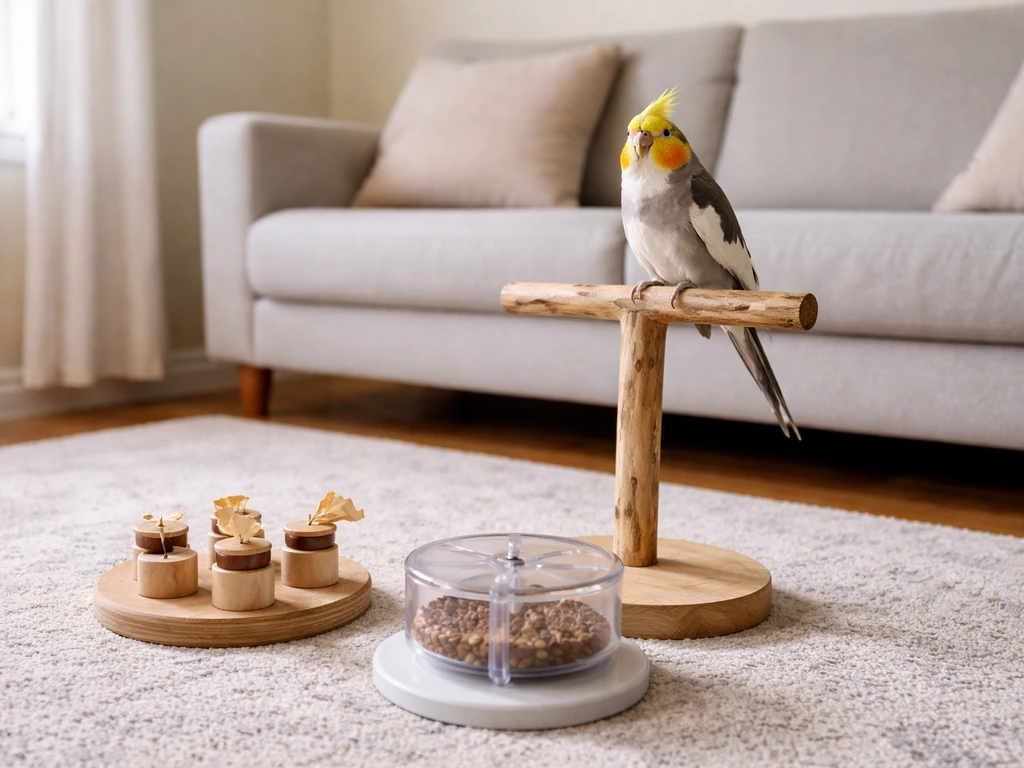
Place the enclosure in a room where the family gathers naturally, so the bird habituates to normal household sounds and activity without being overwhelmed. Avoid the kitchen (cooking fumes, Teflon off-gassing from non-stick pans can kill birds), and keep the enclosure away from drafts and direct sun. Introduce new sounds gradually: TV, music, conversation. A bird that has heard human voices daily from its first weeks at home is far easier to bond with than one kept in a quiet back room.
Enrichment essentials
- Foraging toys that hide food (shredded paper, small cardboard boxes, puzzle feeders)
- Rotating 3 to 5 toys so novelty is maintained without overwhelming the bird
- A dedicated out-of-cage play stand for supervised time outside
- Bathing options: shallow dish, misting bottle, or a light spray from a clean plant mister
- Consistent sleep schedule (10 to 12 hours covered or in a darkened room)
Learn to read a bird before you reach for one
Bird body language is the whole game. If you can read stress signals accurately, you will almost never get bitten by surprise, and you'll know exactly when to push forward and when to back off. This is the skill that separates people who say 'birds always bite me' from people who birds literally fly across the room to reach.
Stress and fear signals
- Feathers slicked tight against the body (not fluffed, but compressed)
- Wide 'bug eyes' with the irises fully exposed
- Leaning or stepping away from your hand
- Rapid, shallow breathing
- Open-beak threat display (usually accompanied by a hiss or growl in parrots)
- Biting or lunging (this is the last signal, not the first)
- Trying to flee, climb away, or take flight
Comfort and interest signals
- Feathers slightly relaxed or gently fluffed (not sick-fluffed, which is more dramatic)
- One foot tucked up (resting, relaxed)
- Gentle beak grinding (contentment, often before sleep)
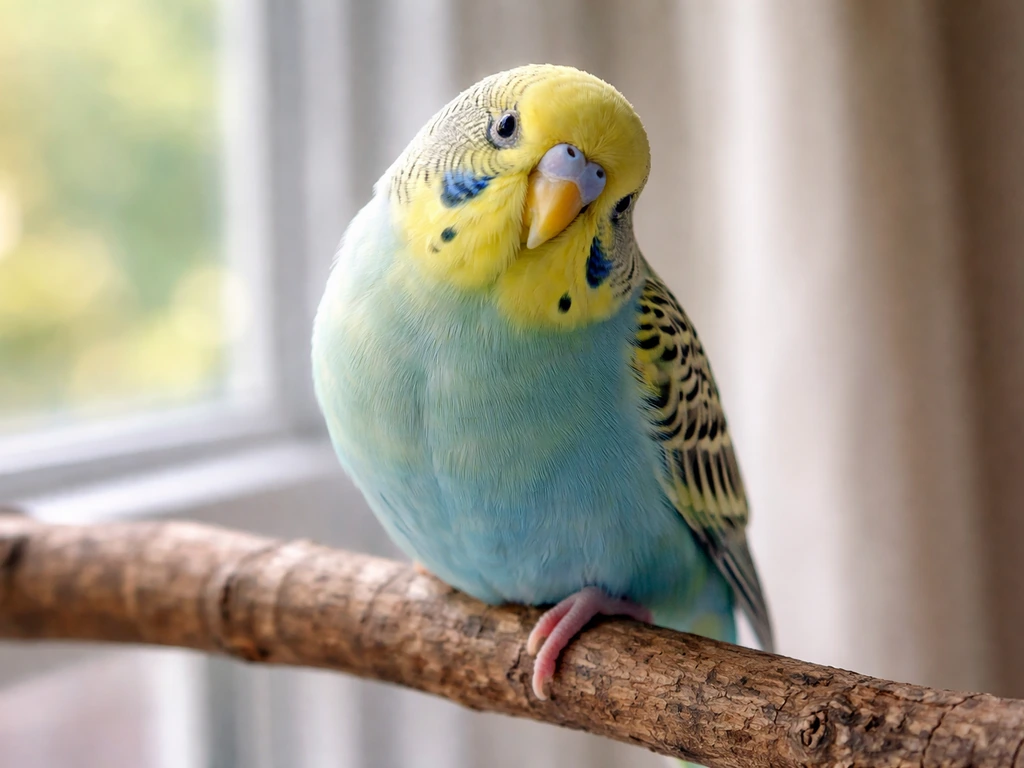
- Head tilted toward you, eye tracking with curiosity
- Bobbing head or soft vocalizations when you approach
- Leaning toward your hand or walking toward you unprompted
Consent matters here. A bird that leans toward your hand is giving consent for contact. A bird that leans away is not. Respecting that signal every single time builds the trust that makes future interactions easier. The LafeberVet psittacine behavior guidelines are direct on this point: frequent punishment or forcing contact dramatically increases the probability of aggression, generalized fear, and escape behaviors. If you see fear or anxiety, stop what triggered it, full stop.
Taming and bonding basics that actually work
You don't need expensive gear. You need time, consistency, and a willingness to let the bird set the pace. The Merck Veterinary Manual's guidance on handling pet birds is worth internalizing early: move slowly, speak in a quiet voice, minimize restraint time, and observe the bird before you touch it. That's the whole philosophy in four points.
Spend 10 to 15 minutes a day simply sitting near the enclosure, talking quietly or reading aloud. Don't reach in. Don't stare directly (direct eye contact reads as predatory to many birds). Let the bird get used to your voice, your smell, and your presence without any pressure to interact. Do this for at least three to five days with a new bird before progressing.
Step 2: Hand presence inside the cage
Open the cage door and rest your hand (palm up, fingers relaxed) just inside the opening without moving it. Don't chase the bird. If the bird approaches and sniffs or touches your hand, that's a huge win. Repeat this daily, always ending on a positive note (even just 'nothing bad happened'). Offer a small treat from your palm: millet spray works well for small parrots and finches, a piece of pine nut for larger parrots.
Step 3: The step-up cue
Once the bird is comfortable with your hand in the cage, present one finger horizontally just below the bird's chest feathers, applying very gentle upward pressure while saying 'step up' in a calm, consistent tone. The bird's instinct is to step up onto anything that touches its lower chest (the 'ladder reflex'). The moment one foot lands on your finger, praise quietly and offer a treat. If the bird bites instead of steps, your hand was too high or the bird wasn't ready. Back up a step.
Step 4: Target training (optional but highly recommended)
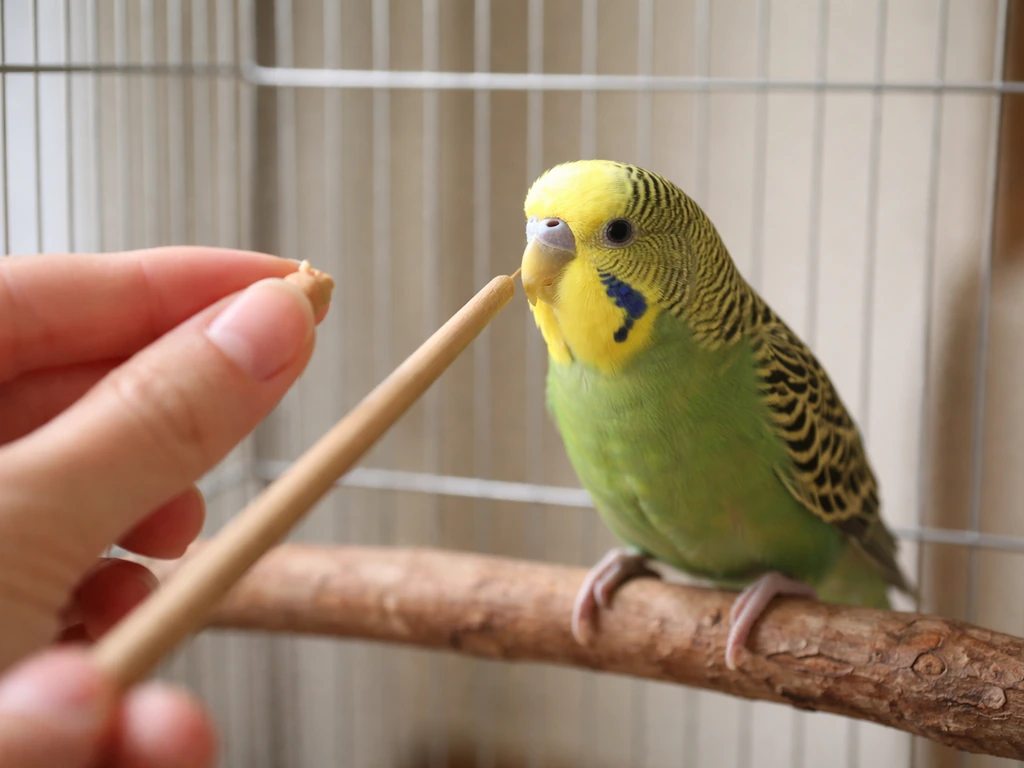
Target training, where you teach the bird to touch its beak to the end of a stick or chopstick for a reward, is the single most versatile bonding tool available. It gives you a way to direct the bird, build confidence, and get cooperation for handling without relying on physical pressure. Tap the stick near the bird's beak, the moment it touches it, mark with a verbal 'yes' or a clicker, and reward with a treat. Most birds pick this up in three to five short sessions.
Step 5: Desensitization to everyday handling
Once step-up is solid, practice short handling sessions: pick up, carry a few steps, return to the cage or stand, reward. Gradually extend the duration. Introduce your other hand, different rooms, different people. Every new stimulus should be introduced slowly, paired with treats and praise. This is how you build a bird that stays calm in the vet's hands, around kids, or in a travel carrier.
Species-specific notes: not all birds work the same way
The general principles above apply to almost any bird, but the timeline, methods, and realistic outcomes differ a lot by species. Here's a practical breakdown.
| Species Group | Bonding Timeline | Best Methods | Realistic Handling Goal | Key Watch-Out |
|---|
| Small parrots (budgies, cockatiels, lovebirds) | 2 to 8 weeks for a hand-raised bird | Step-up, target training, millet rewards, daily out-of-cage time | Shoulder bird, hands-on daily handling | Hormonal aggression seasonally; respect 'no' signals |
| Finches and canaries | Weeks to months; often never fully hand-tame | Presence habituation, feeding by hand at cage door | Calm around you; will eat from hand | These are observation birds first; forcing contact causes chronic stress |
| Large parrots (African grey, Amazon, macaw, cockatoo) | Months to years for full trust | Target training, foraging enrichment, consistent routines | Willing step-up, tactile bonding, trick training | Bites from large parrots break skin; read body language religiously |
| Raptors (falconry context only) | Weeks of manning (habituation) before any free-flight work | Manning, jesses, lure work; only under licensed supervision | Calm on glove, tolerates hood | Illegal to handle without permits; talons cause serious injury |
If you're working with finches or canaries and feel frustrated that they won't step up like a parrot, that's normal. Those species weren't built for hands-on interaction in the same way. Learning how to sing like a bird to mimic their vocalizations is actually one of the most effective ways to build rapport with species that communicate primarily through sound, especially canaries and many wild songbirds.
For large parrots especially, physical health is a direct factor in behavior. A bird that is nutritionally depleted, overweight, or under-exercised is harder to train and more prone to aggression. Building a routine around how to be a fit bird (exercise, flight time, proper diet, mental stimulation) will make every training session more productive.
Troubleshooting the most common problems
The bird bites every time you reach in
Biting is almost always a communication failure, not a personality flaw. Go back to hand presence without contact. Make sure you're not reaching directly toward the bird's face. Use a perch or target stick instead of your bare hand until the bird is more comfortable. Never 'push through' a bite or punish it, both responses make the next bite more likely.
The bird is terrified of everything
Fear-based behaviors (chronic flapping at the cage walls, self-injury, constant alarm calls) often indicate a bird that was not well-socialized early or has had negative handling experiences. Slow everything down dramatically: no hands in the cage for a week, just presence. The Association of Shelter Veterinarians' handling guidelines reinforce this clearly: resistance to handling is most often rooted in fear, and the response is to minimize stress and build positive associations gradually, not to push harder.
The bird won't step up reliably
Inconsistency is usually the culprit. If step-up sometimes results in being put back in the cage (which the bird may see as a punishment if it was enjoying out-of-cage time), the bird learns that stepping up ends the fun. Practice 'neutral' step-ups: pick up, walk two feet, set back down on the play stand (not in the cage). Keep sessions short and end while the bird is still happy to cooperate.
The bird escaped or flew away
Flight escapes are a serious welfare risk. Never take an unclipped, flight-ready bird outdoors without a harness (which must be trained separately with a gradual desensitization process) or a fully enclosed aviary. If a bird has escaped, put its cage outside with the door open, play recordings of its own species' calls, and alert local bird-finding networks immediately. Indoor flights should always happen in a room with windows covered or blocked.
The bird is aggressive toward one specific person
Parrots often bond strongly to one person and treat others as competitors or threats. The solution is to have the 'disfavored' person become the exclusive source of treats and feeding for a period, while the 'favored' person steps back from interactions. This rebalances the social dynamic gradually without forcing contact.
Wild bird found injured: what to do right now
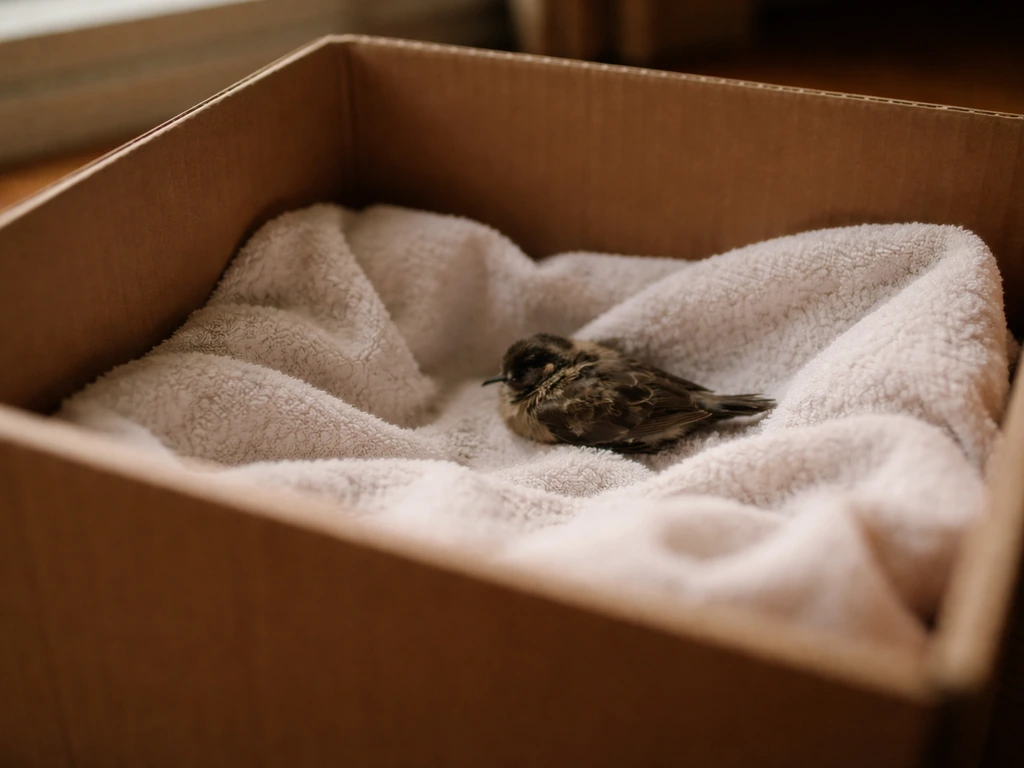
If you've found an injured wild bird, contain it gently in a cardboard box lined with a cloth (no slick surfaces), keep it in a quiet, dark, warm place, and do not offer food or water until you've spoken with a wildlife rehabilitator. Trying to rehab a wild bird yourself, especially a raptor, without a license is illegal in most US states and causes more harm than help. Contact your local wildlife rehabilitation center or the US Fish and Wildlife Service for a referral. Your role is stabilization and transport, not bonding.
When to call in a professional
Some situations genuinely need expert help. Call an avian vet if the bird shows signs of illness (puffed feathers for more than a few hours, discharge from eyes or nostrils, changes in droppings, loss of balance). Call a certified parrot behavior consultant if you're dealing with chronic feather-destructive behavior, severe aggression, or a bird that has been abused and is not responding to months of patient work. These are not failures. They're the right next step.
If you're working with a particularly large or powerful species and want to understand what confident, experienced handling actually looks like, it helps to study how skilled handlers control big bird species safely, because the techniques for managing a large macaw or a great horned owl in rehab are meaningfully different from handling a budgie.
Building toward a real bird life
The best bird handlers aren't the ones who are boldest or loudest. They're the ones who made themselves smaller, quieter, and more patient than they thought they could be. If you genuinely want to turn into a bird in the behavioral sense, that's exactly the practice: slowing your movements to a deliberate pace, lowering your voice, reading micro-signals in posture and feather position, and responding to what the bird actually communicates rather than what you want it to do.
Some people who go deep into this work develop genuine ambitions around it. If you've ever thought about what it would take to become the biggest bird keeper in your community, meaning the person with the most knowledge, the best-socialized birds, and the strongest reputation as a welfare-first handler, the path is exactly what's described here, just repeated consistently over months and years. No single session is transformative. The relationship is built in five-minute increments, every day, with patience as the only non-negotiable ingredient.
Start with presence. Build from there. The bird will tell you when you're ready to move forward.