Taming a bird comes down to one thing: earning trust, not forcing compliance. Whether you have a nervous parrot, a flighty finch, or a wild bird in a rehabilitation situation, the method is the same, go slow, read the bird's body language, reward every tiny step forward, and never push past what the bird is comfortable with. Most taming problems come from moving too fast, not from the bird being 'difficult.' With short daily sessions, the right treats, and a clear progression, most birds will make noticeable progress within days to weeks.
Bird Taming Tips: Humane Trust Training for Beginners
Maya Harris
18 May 2026
What 'taming' actually means for birds
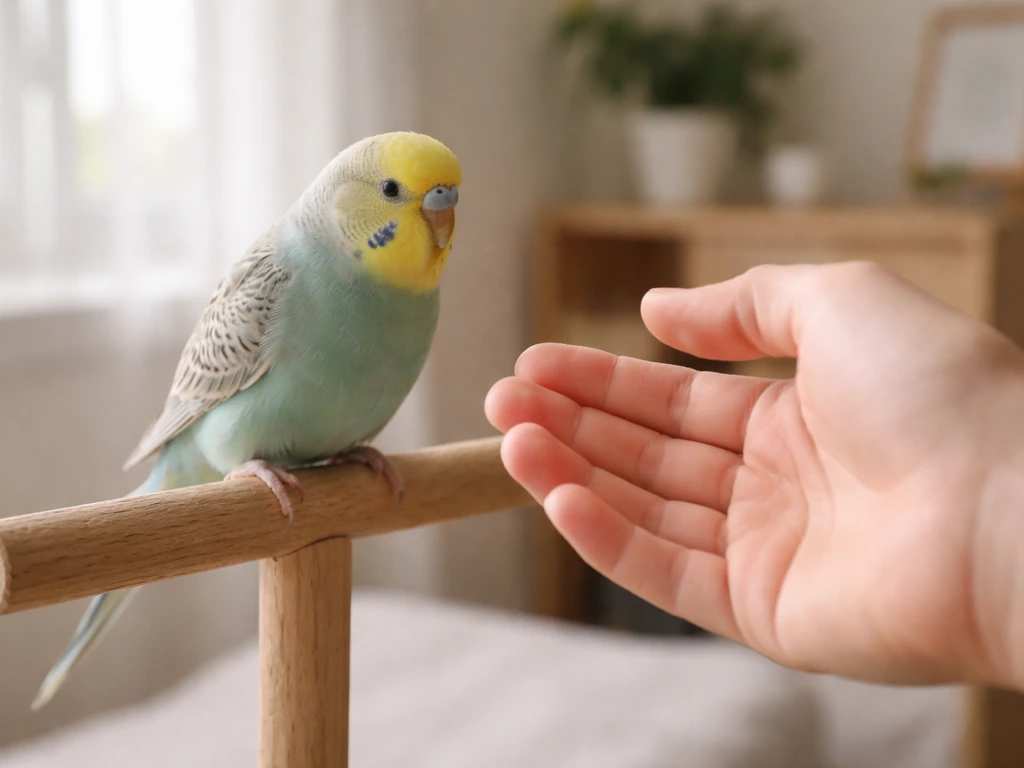
Taming isn't about making a bird do what you want through repetition or pressure. It's about changing how the bird feels about you and about handling, so that it chooses to engage rather than flee or fight. The technical terms for this are desensitization (gradually reducing a fear response through structured, low-level exposure) and counterconditioning (pairing something the bird is nervous about with something it genuinely likes, like food, so the emotional response shifts from fear to anticipation). These aren't just training jargon. They describe exactly what's happening in the bird's brain when taming works.
If you have to use force at any point, stop and rethink your approach entirely. Force doesn't build trust, it teaches the bird that your hands are a threat, which makes everything harder. Consent-based handling means the bird can always move away, and it chooses not to. That's the goal. A bird that steps up because it wants to is a fundamentally different animal than one that tolerates handling because it has no other option. If you want to transfer these trust-building, consent-based principles into dog training, see how to train a lab to be a bird dog for a practical progression. If you need to address a bird dog that is overly excited or struggling with breaks, focus on calm, gradual exposure and clear progression rather than force bird dog break.
Reading your bird's body language
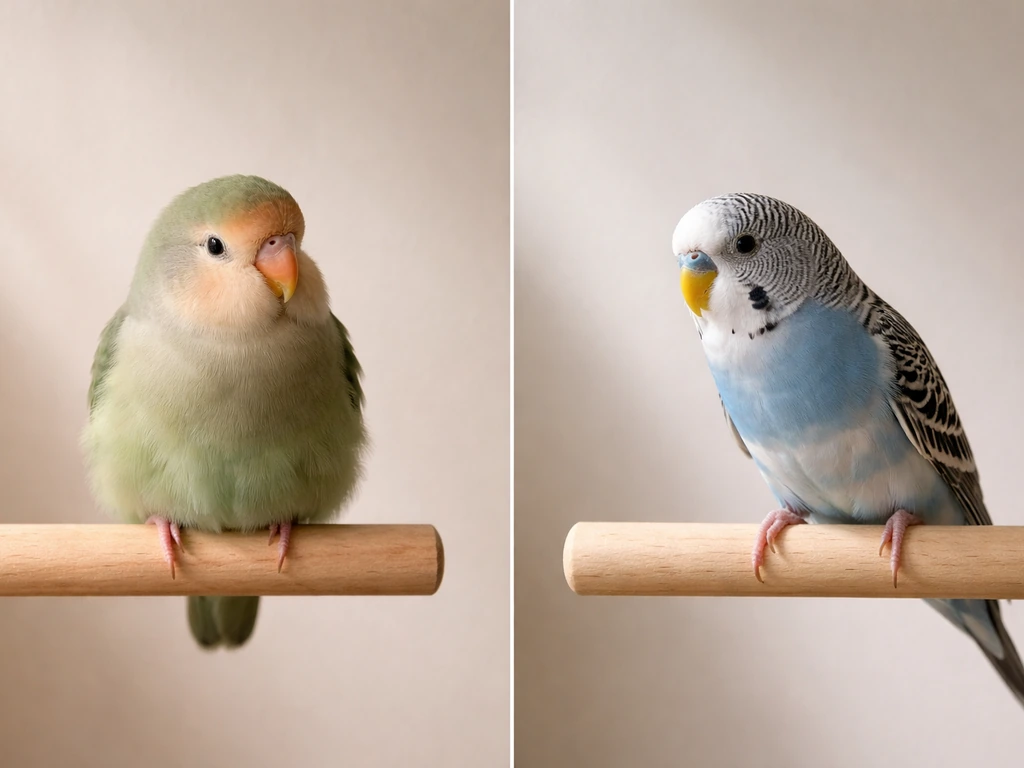
Before you start any taming session, spend a few minutes just watching. A bird that is relaxed will have loose, slightly fluffed feathers, move around calmly, and may make quiet vocalizations. A bird that is afraid or uncomfortable will show very different signals, and learning to recognize these will save you from pushing past the bird's threshold and losing days of progress.
Fear signals to watch for
- Leaning or moving away from your hand or body
- Tense, slicked-down feathers (the opposite of relaxed fluffing)
- Tail held unusually high or clamped tightly
- Rapid, shallow breathing or panting
- Wide, pinned eyes (in parrots, rapidly cycling pupils can also signal high arousal)
- Crouching low or freezing completely
- Frantic wing-flapping or bouncing against cage walls
Aggression vs. fear: they often look similar
A bird lunging forward with its beak open is often described as aggressive, but in most cases this is a fear response, not a dominance display. The bird has learned that lunging makes the scary thing (your hand) go away, so it keeps doing it. True aggression driven by territorial behavior or hormones looks similar but tends to happen in specific contexts, like near a nest box or during breeding season. Either way, the response is the same: don't push through it, back off, and return to an earlier step in the progression. Never punish a bird for biting or lunging; it only increases the fear and distrust.
Setting up for success every day
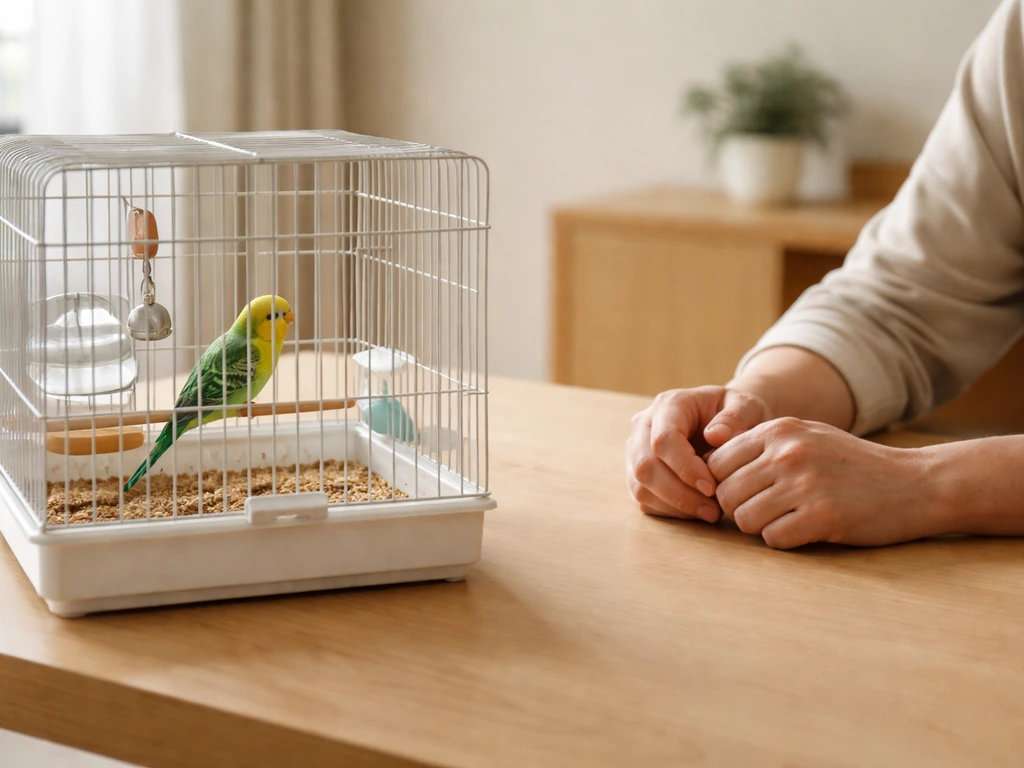
Your environment and routine matter as much as the training technique itself. A bird that is tired, hungry, overstimulated, or in a noisy room will have a much harder time learning. Set up your taming sessions so the conditions are working with you, not against you.
Environment
- Choose a quiet room with no sudden sounds, other pets, or distractions
- Keep the lighting calm — bright overhead lighting can startle birds
- Sit or crouch at the bird's level rather than towering over it
- Remove mirrors and other highly stimulating cage accessories during early sessions
- Make sure the bird can't escape to a space you can't safely retrieve it from
Routine and session length
Short, frequent sessions work far better than long, infrequent ones. Aim for one to two sessions per day, each lasting five to ten minutes. VCA hospitals also advises starting with one or two sessions per day, about 5 to 10 minutes each, using positive reinforcement for allowing handling and training Aim for one to two sessions per day, each lasting five to ten minutes.. Some experienced trainers do two or three very short passes a day, which is even more effective for nervous birds because the frequent low-stress exposure adds up fast. Always end the session on a positive note, even if that means deliberately backing up to something easy the bird will do confidently. Ending on success matters.
Choosing the right treats
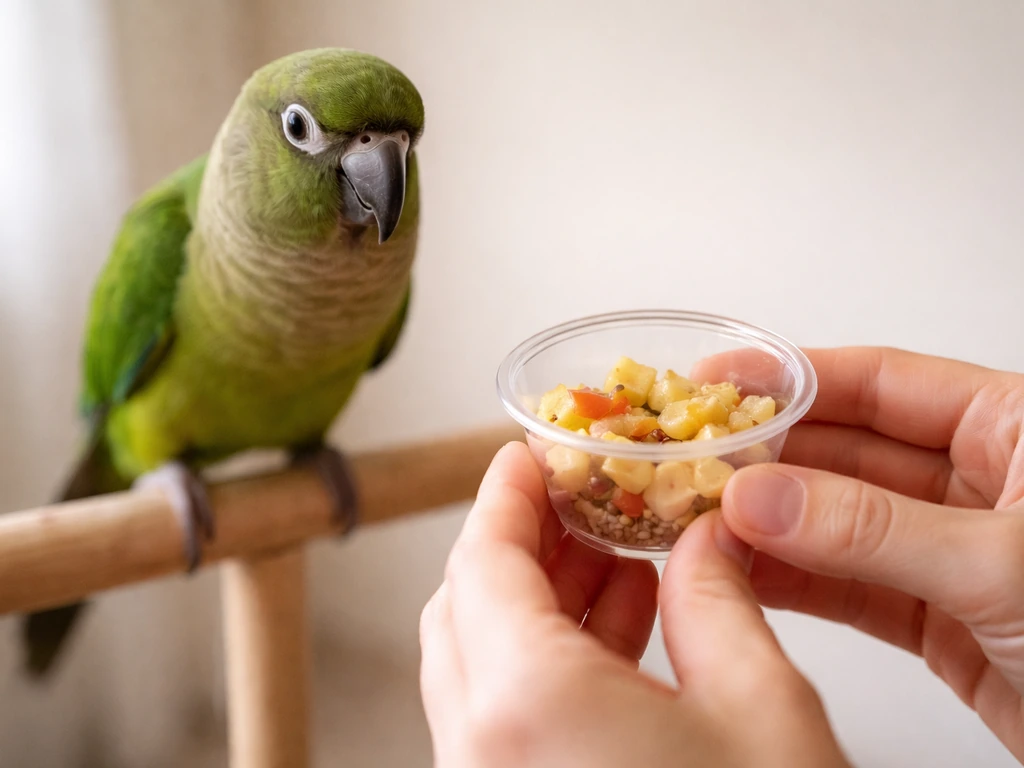
Find what your bird finds genuinely exciting. For most parrots this is a high-value food they don't get free access to, small pieces of fruit, millet spray, a specific seed, or a nut. For finches and canaries, millet held between your fingers is often the gateway. The treat needs to be small (so the bird doesn't fill up quickly and lose interest), easy to deliver immediately after the behavior, and something the bird will reliably work for. Do a short 'treat test' by offering several options and seeing which one the bird moves toward most eagerly.
Handling safety basics
- Move slowly and deliberately — no sudden gestures near the bird
- Approach from the side or below rather than from directly above (overhead approach mimics a predator)
- When you do make contact, never press on the bird's chest — this can restrict breathing
- Keep early physical contact to just a few seconds before removing your hand and rewarding
- Wash hands before and after handling, especially with wild or rehab birds
Step-by-step taming progression
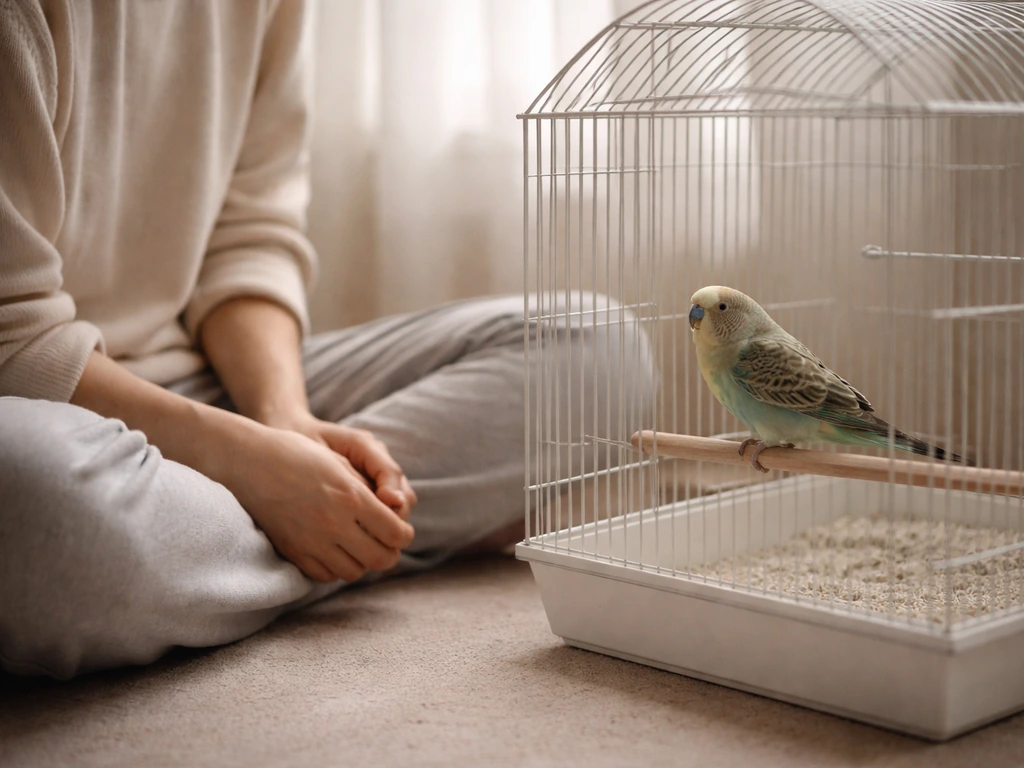
This progression works for most birds. Move to the next step only when the bird is clearly comfortable at the current one, loose body posture, not moving away, possibly leaning toward you. If you rush this, you'll have to go back anyway, so patience here genuinely saves time overall.
- Presence and passive exposure: Sit near the cage without making any requests. Read a book, talk quietly, just exist near the bird. Do this for several days until the bird shows relaxed body language in your presence. Birds can be suspicious of new things appearing near their space, so let this become normal first.
- Hand near the cage: Begin placing your hand flat near (not inside) the cage door while offering a high-value treat through the bars. No grabbing, no sudden movements. The goal is for the bird to approach and take food from your fingers without showing fear signals. Repeat until this is easy and reliable.
- Hand inside the cage: Move your open hand inside the cage, resting it on the cage floor or a low perch. Don't reach toward the bird — let the bird come to you. Hold a treat in your fingers. Wait. Some birds take this step in minutes; others need several sessions at this stage.
- Target or lure to the hand: Once the bird approaches confidently, you can introduce a target stick (a chopstick, wooden dowel, or pencil works fine) and teach the bird to touch the tip with its beak for a reward. This makes the next steps much cleaner because you're directing movement without using your body directly. Alternatively, hold the treat against the back of your hand or fingers so the bird has to step forward to get it.
- Step-up request: With a treat visible, bring your hand up gently against the bird's lower chest, just above the feet. Many birds will step onto your finger or hand at this point to get closer to the treat. The moment a foot makes contact, mark it with a calm 'good' and reward immediately. Keep this first contact to just a few seconds, then lower your hand and let the bird step off. Repeat, gradually extending the time.
- Gentle handling and desensitization: Once step-up is reliable, begin introducing light touch — a finger along the back, under the wing, near the feet. Always pair each new type of touch with a reward, and always watch for stress signals. Progress from brief, gentle contact to more sustained touch over multiple sessions.
Species-specific things to know
Pet parrots (parakeets, cockatiels, African greys, amazons, etc.)
Parrots are highly social and intelligent, which means taming can go very well, but it also means they pick up on your anxiety, impatience, or inconsistency instantly. Clicker training or a verbal marker like 'yes' pairs beautifully with the step-by-step progression above. Target training is especially useful for parrots because it gives the bird a clear task to focus on and builds confidence quickly. Be aware that parrots can go through hormonal phases (usually in spring) where even well-tamed birds become more reactive or nippy, this is normal and temporary, not a training failure. Stick to short sessions and back off any handling that the bird is clearly resisting during these periods.
Finches and canaries
Finches and canaries are not naturally hands-on birds, and most will never become lap birds the way a parrot might. That's fine, 'taming' for these species usually means reducing terror of your presence enough to allow basic care without extreme stress. Handle canaries with particular caution; they are delicate and can injure themselves or go into shock if mishandled. The focus with finches and canaries should be on getting them comfortable with your presence in the room, your hand near the cage, and brief, careful hand contact for health checks, not on developing a step-up relationship. Millet is almost universally effective as a lure for both species.
Wild and rehabilitation birds
Wild birds in a rehab context are an entirely different situation from pet birds, and the goal is almost the opposite of pet taming. You want the bird to tolerate necessary handling for medical care while staying as wild and fearful of humans as possible, so it can be successfully released. Minimize all non-essential contact. Don't talk to the bird in an affectionate way, don't make eye contact during handling, and avoid anything that might cause the bird to associate humans with safety or food. Imprinting, especially in young birds, is a real and serious problem that can make a bird unreleasable. See the legal and safety section below for more on this.
Troubleshooting common problems
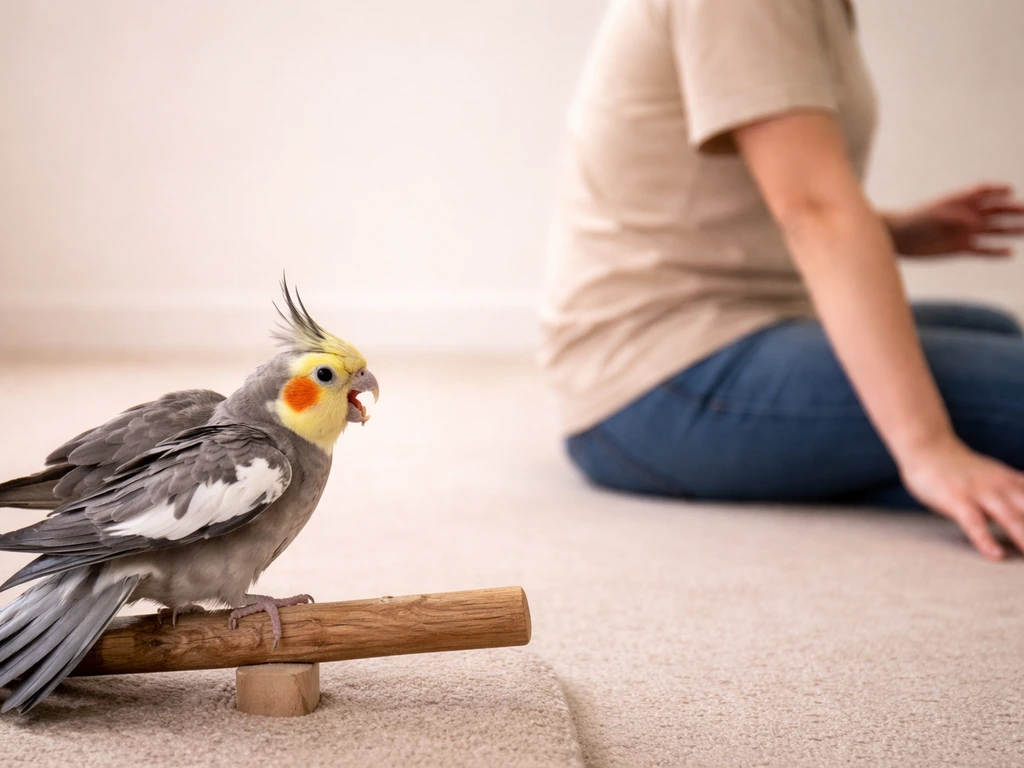
The bird bites or lunges every time you approach
Go back to step one of the progression and slow down. If the bird is biting, you moved too fast somewhere. When a bite does happen, stay completely calm, remove your hand without reacting dramatically, and leave the bird's sight for a couple of minutes. Coming back calmly after a short break teaches the bird that biting doesn't result in prolonged attention or drama. Never yell, jerk your hand back sharply, or try to physically restrain the bird, all of these escalate the fear and make future sessions harder.
The bird panics and flaps frantically
This is a sign you're above the bird's threshold, meaning the level of exposure is too intense. Stop immediately, move away slowly, and give the bird time to settle. RSPCA guidance advises stopping immediately, moving away slowly, and giving the bird time to settle when it panics or shows signs of distress Stop immediately, move away slowly, and give the bird time to settle. For a bird that panics easily, your first several sessions might just be sitting in the same room doing nothing. That's valid progress. Moving to a smaller, quieter space can also help because the bird has less room to exhaust itself if it does flap.
The bird screams when you leave or when training ends
Contact calling and separation screaming are normal in flock birds like parrots. The mistake most people make is returning to the bird when it screams, which immediately teaches the bird that screaming works. Instead, wait for even a two-second pause in the noise, then return and reward the quiet. Over time, extend the quiet period required before you return. This takes consistency, but it works.
The bird refuses treats from your hand
Either the treat isn't motivating enough, or your hand is too close and the fear is overriding the hunger. Try a different, higher-value food. Also try placing the treat farther away, on the cage floor near your hand rather than in your fingers, and gradually bring the food closer to your hand over multiple sessions as the bird's comfort grows.
The bird seemed to be doing well but suddenly regressed
Regression is normal and doesn't mean you've failed. A new person in the house, a rearranged room, a vet visit, a change in routine, or even a change in season can reset a bird's confidence. When this happens, go back two or three steps in the progression rather than pushing through. The bird will usually recover faster than it did the first time because the learning is still there, it just needs to be reactivated in the new context.
Safety and legal considerations
Pet birds
For pet birds, the main safety concerns are your hands (bites from larger parrots can be serious) and the bird's physical safety during handling. Never carry a bird near open windows, other pets, or ceiling fans. Clip nails before handling sessions if the bird's grip is injuring you. If a bird's behavior is escalating despite consistent, patient training, consult an avian vet to rule out pain, illness, or hormonal issues before assuming it's a training problem, behavioral changes are often the first sign of illness in birds.
Wild and rehab birds: know the law and when to step back
In the United States, most wild birds are protected under the Migratory Bird Treaty Act, which means you cannot legally capture, keep, or attempt to rehabilitate them without a permit. If you find an injured or orphaned wild bird, the right first step is to contact a licensed wildlife rehabilitator. Don't attempt to feed or handle the bird until you've gotten expert guidance, well-intentioned handling can cause additional injury and may make the bird unreleasable. The U.S. Fish and Wildlife Service has resources for finding permitted rehabilitators in your area. Similar protections exist in the UK, Australia, Canada, and most other countries.
Imprinting is one of the biggest risks when hand-rearing wild birds. Young birds that imprint on humans fail to develop normal species-appropriate behaviors and can't be released. If you're working in a licensed rehab context, follow your organization's specific protocols for minimizing human imprinting, this typically means using puppets or species-appropriate visual cues during feeding, keeping human contact strictly functional and brief, and housing young birds with conspecifics whenever possible.
Tracking progress and planning ahead
Keep a simple log of each session: what you tried, how the bird responded, how long it took the bird to settle, and where you ended up. This doesn't have to be elaborate, even a few notes on your phone will do. Tracking matters because progress in bird taming is nonlinear, and it's easy to feel like nothing is changing when in fact the bird is tolerating your presence at closer distances or showing calmer body language than it was two weeks ago.
Realistic timeframes by starting point
| Starting situation | Typical timeline to step-up | Key milestone to look for first |
|---|---|---|
| Young, hand-fed parrot (already socialized) | Days to 1 week | Takes treats calmly from fingers |
| Parent-raised pet parrot (untouched, young) | 2 to 6 weeks | Doesn't retreat when hand enters cage |
| Adult parrot with fear history or past bad handling | 2 to 6 months (sometimes longer) | Chooses to approach your hand voluntarily |
| Finch or canary (basic tolerance goal) | 3 to 8 weeks | Doesn't fly into cage walls when you approach |
| Wild rehab bird (tolerance for necessary handling) | Variable; minimum contact is the goal | Settles within 30 seconds of being placed in carrier |
Signs you're on track
- The bird watches you approach without moving away
- Body posture is loose and relaxed during sessions (not slicked, tense, or crouched)
- The bird takes treats confidently and without hesitation
- Sessions are ending on completed behaviors rather than stress responses
- The bird initiates interaction or approaches you at the cage door
Where to go from here
Once your bird is reliably stepping up and tolerating gentle handling, you have a foundation to build on. Once your bird is reliably stepping up and tolerating gentle handling, you have a foundation to build on, and if you're wondering how to train an upland bird dog next, the same trust-first, step-by-step mindset applies. From here you can work on recall training (coming to you on cue from a distance), desensitization to specific objects like towels or carriers, and more advanced cooperative care behaviors like voluntary nail filing or stepping on a scale. If you've been working with a parrot, this is also when formal positive reinforcement training and trick training become accessible and genuinely fun for both of you. The same reward-timing principles that got you to step-up apply to everything that comes next. Bird training tips for more advanced behaviors follow naturally once trust is solid, the hard part is usually this early taming work, and if you've made it through, the rest builds quickly.
FAQ
How can I tell the difference between fear behavior and pain or illness before I continue bird taming tips?
If body language changes abruptly, the bird is unusually quiet, refuses normal food, fluffs up for long stretches, or shows breathing changes, pause training and contact an avian vet. Fear learning should look consistent with your exposure level, while illness often causes off-pattern posture, appetite changes, or rapid escalation despite very low-stress sessions.
What should I do if my bird takes treats but still refuses stepping up?
That usually means food motivation is working, but your proximity or the handling cue is still above threshold. Keep treats coming from your hand without asking for step-up, then gradually reduce the distance and only add the step-up request when the bird is leaning toward you and staying loose-bodied. Never force contact to “prove” readiness.
Is it okay to end sessions when the bird is still excited or asking for more?
Yes, but only if excitement is relaxed (soft posture, no lunging, no frantic pacing). If the bird is getting more intense, overstimulated, or starting to lunge, end earlier on an easier behavior the bird can succeed at, like approaching the treat spot near the cage floor or touching a target.
How do I choose the right treats if my bird won’t engage with the first option?
Run a treat test with multiple small options, then commit to the top two for several days so the bird learns quickly. Also check delivery timing, the treat should appear immediately after the desired micro-behavior (turning toward your hand, lowering the head calmly, quiet posture), otherwise the bird may stop associating you with good outcomes.
What if my parrot screams during training and I keep failing to wait for a quiet pause?
Start smaller by rewarding quieter moments that are clearly shorter, even one to two seconds. If silence is rare, temporarily change the goal to “calm body posture while the bird is vocalizing” and only move to longer quiet requirements once the bird can offer it consistently.
Can I use a clicker or marker word if my bird is already hand-tame?
Yes, marker training can still help, but keep the first goal simple and ensure the marker predicts a reward within a second. Avoid marking during stressful moments, and use short sessions so the bird does not associate the marker with pressure or handling.
How far should my hand be from the bird during early desensitization?
Go to a distance where the bird can notice you and remain loose-bodied, not frozen, fluffed hard, or actively lunging. If you are unsure, start farther away than you think you need to be, then adjust by millimeters to inches over sessions until you see consistent relaxed posture.
What’s the safest way to handle a bird that suddenly lunges or bites during a step-up attempt?
Back off immediately and do not try to “recover” the attempt in the same moment. Remove your hand without jerking, wait a few minutes while the bird settles, then resume at an earlier step (often treat placement near the cage rather than requesting contact). Escalation in the same session usually means the exposure is too intense.
Should I take my bird out of the cage for taming sessions?
Not at first. Many birds do better with lower-risk access, sessions near the cage or inside the cage where the bird can choose to move away. If you later progress to out-of-cage work, keep the area small and safe, and stop immediately if the bird panics or ramps up in fear.
How do I prevent my routine from accidentally undoing progress?
Use consistent session timing, avoid sudden schedule shifts, and keep the same starting conditions (same perch or same side of the cage, similar lighting and noise). When changes are unavoidable, regress two or three steps as soon as you notice the bird is less tolerant, then rebuild gradually.
What if my bird is hormonal and suddenly less cooperative in spring, summer, or breeding season?
Reduce handling demands and shorten sessions, focus on low-level comfort behaviors like accepting treats from the same distance. Avoid adding new tasks during these periods, and only increase difficulty when the bird is again loose-bodied and voluntarily accepting contact.
For wild birds or rehab birds, what counts as “non-essential contact” to avoid imprinting?
Non-essential contact is anything that trains the bird to associate humans with comfort, food, or safety. In practice, limit human interaction to required care only, avoid affectionate vocalizing and eye contact during handling, use organization protocols for feeding methods (often visual cues or tools), and house young birds with conspecifics when permitted.
Do finches and canaries ever become “tame,” or is it unrealistic?
They usually do not become lap or step-up birds like many parrots. A realistic taming goal is reduced fear enough for regular care, short, careful health checks, and predictable acceptance of a lure like millet held between fingers, with gradual progression at the bird’s pace.
How long should I expect bird taming tips to take before I see real results?
Many birds show noticeable improvement within days to weeks with short daily sessions, but progress can plateau. If you have consistent low-stress sessions and no change after a couple of weeks, reassess treat value, session timing, and your proximity level, and consider a vet check if behaviors suggest discomfort.
Is it safe to clip nails or do other husbandry tasks as part of taming?
You can build cooperative care after trust is established, but start with tiny steps and keep the bird in control (voluntary approach to the target, brief tolerance of touch, then stop). If nail grip causes injury to you, clip before sessions only when advised for the species, and stop any session that causes escalating fear or struggling.
Next Articles
How to Train a Lab to Be a Bird Dog: Step-by-Step Plan
Step-by-step humane plan to train your Lab for bird-dog work, including obedience, retrieves, steadiness, and troublesho
How to Whoa Break a Bird Dog: Humane Step by Step Guide
Humane, step-by-step how to teach bird dog whoa and fix creeping, chasing, breaking point, and inconsistency with reward
How to Teach a Bird to Fetch Step by Step Guide
Humane, step-by-step training to teach your bird to fetch safely, with targets, rewards, troubleshooting, and gradual re