"Domesticating" a bird is not a single event. It is a process of building enough trust, routine familiarity, and handling tolerance that a bird chooses to engage with you rather than flee or freeze. Whether you have a surrendered parrot with a rough history, a hand-fed cockatiel that has gone feral after months of neglect, or a pigeon you rescued off the street, the path forward is the same: patience, consistency, and reading the bird's body language at every step. This guide gives you a welfare-first, day-by-day framework for doing that correctly.
How to Domesticate a Bird: Humane Step-by-Step Guide
Maya Harris
14 Apr 2026
What 'domesticate' actually means for a bird
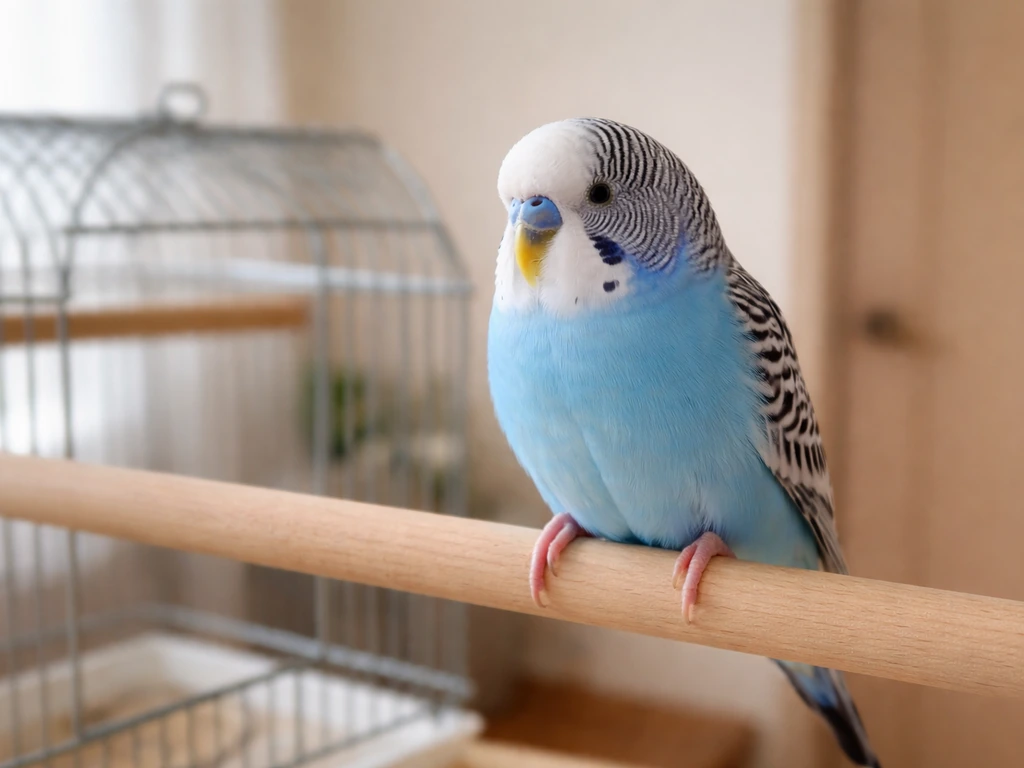
True biological domestication is a multigenerational breeding process. Dogs, chickens, and budgerigars are domesticated because selective breeding over centuries shaped their genetics for life alongside humans. A single bird you work with today cannot become domesticated in that sense, no matter how skilled you are. What you can do is tame a bird: reduce its fear responses, teach it to tolerate and eventually seek out human presence, and build a reliable set of behaviors through positive reinforcement. Most people searching "how to domesticate a bird" are really asking how to tame one, and that is exactly what this guide covers.
There is a practical distinction worth keeping in mind. A tame bird has learned through experience that humans are safe and that certain interactions predict good things. A domesticated breed (like a domestically bred cockatiel or dove) may still arrive in your home with high fear levels if it was not socialized early. So the starting point varies by individual bird, not just by species. Your job is to assess where this particular bird sits on the trust spectrum and work forward from there.
Legality, ethics, and safety: get this right first
Before you handle any bird, you need to know whether you are legally allowed to keep it. In the United States, virtually all native wild birds are protected under the Migratory Bird Treaty Act. Keeping, transporting, or attempting to tame a protected species without the correct permits is a federal offense. To rehabilitate a migratory bird legally, you typically need both a state wildlife rehabilitation permit and a federal rehabilitation permit, and many states further restrict which species a permit holder may work with based on their qualifications and facility standards. If you found an injured songbird, hawk, owl, or waterfowl, your first call should be to a licensed wildlife rehabilitator in your area, not a training session.
The AVMA's position is clear: if you are not authorized to keep a wild or exotic species, you must work with appropriate state, federal, or tribal wildlife authorities, or a legally authorized organization, for proper disposition. The International Wildlife Rehabilitation Council similarly warns that possessing wildlife without a permit may be illegal even if you are simply trying to help. For raptors specifically (hawks, eagles, owls), possession without federal and state falconry or rehabilitation permits is illegal regardless of intent.
For pet-breed birds (parrots, cockatiels, budgies, finches, domestically bred doves and pigeons), there is generally no permit required for ownership, but welfare laws still apply. The USDA Animal Welfare Act governs humane handling and care standards for regulated birds. Beyond legality, ethical handling means you never force contact when a bird is showing active distress, you keep sessions short, and you always let the bird set the pace. This is not just compassion, it is also safer for you: even friendly parrots may bite if they feel threatened, and a bite from a larger parrot or raptor can cause serious injury.
If you are still in the early stages of figuring out whether bird ownership is right for you, it helps to read through guidance on how to own a bird before committing to the taming process, since the legal and logistical responsibilities start from the moment a bird is in your care.
Assess the bird before you do anything else
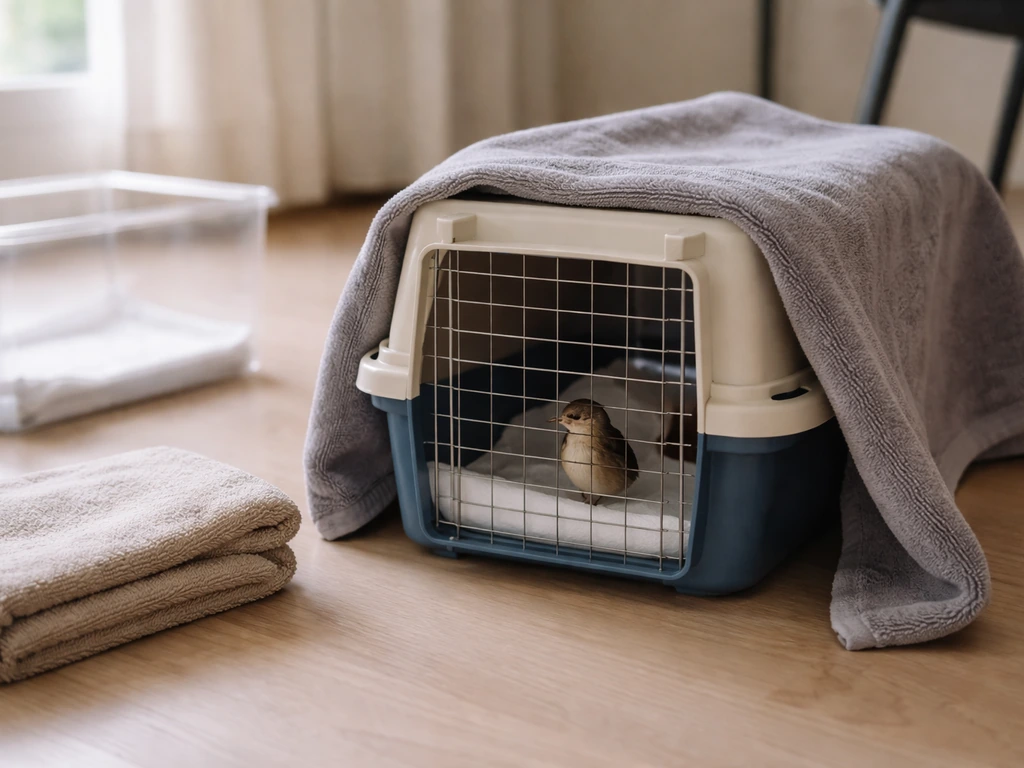
Spend the first 24 to 48 hours just watching. Put the bird in a calm, safe space and observe from a distance. You are looking for several things at once: species identity and likely origin (pet-breed vs. wild-type), visible health status, stress signals, and baseline fear level. The Association of Avian Veterinarians describes a cluster of Fear, Anxiety, and Stress (FAS) indicators that you should know before any handling begins. Watch respiratory rate, posture, feather position, eye brightness, and general alertness.
- Open-mouth breathing or labored breathing at rest: urgent veterinary concern, do not attempt taming sessions
- Panting or rapid shallow breaths after minimal movement: high FAS, prioritize rest and quiet before any training
- Fluffed feathers, eyes half-closed, tail bobbing: possible illness or extreme stress, vet check before training
- Alert, bright-eyed, moving around cage, eating and drinking: safe baseline to begin slow trust work
- Lunging, biting the bars, screaming consistently: high FAS or territorial behavior, needs slow desensitization first
If there is any respiratory concern (open-mouth breathing, clicking sounds, increased effort), stop and call an avian veterinarian. MSPCA-Angell lists these as red flags requiring urgent attention, and emergency guidance from avian clinics recommends minimizing handling and placing a distressed bird in a dark, quiet carrier while you arrange veterinary transport. Taming can wait. Health cannot.
Once you are confident the bird is physically stable, assess the following four factors to build your training plan:
- Species and breed: A domestically bred cockatiel and a wild-caught cockatoo need completely different timelines and approaches
- History: Hand-fed from birth, parent-raised but socialized, or no human contact at all
- Health: Cleared by an avian vet or at minimum showing no acute illness signs
- Your realistic goal: Companion bird that sits on your shoulder, a rehab bird that will be released, or a pigeon/dove that lives in an outdoor loft
Set up the right environment before training starts
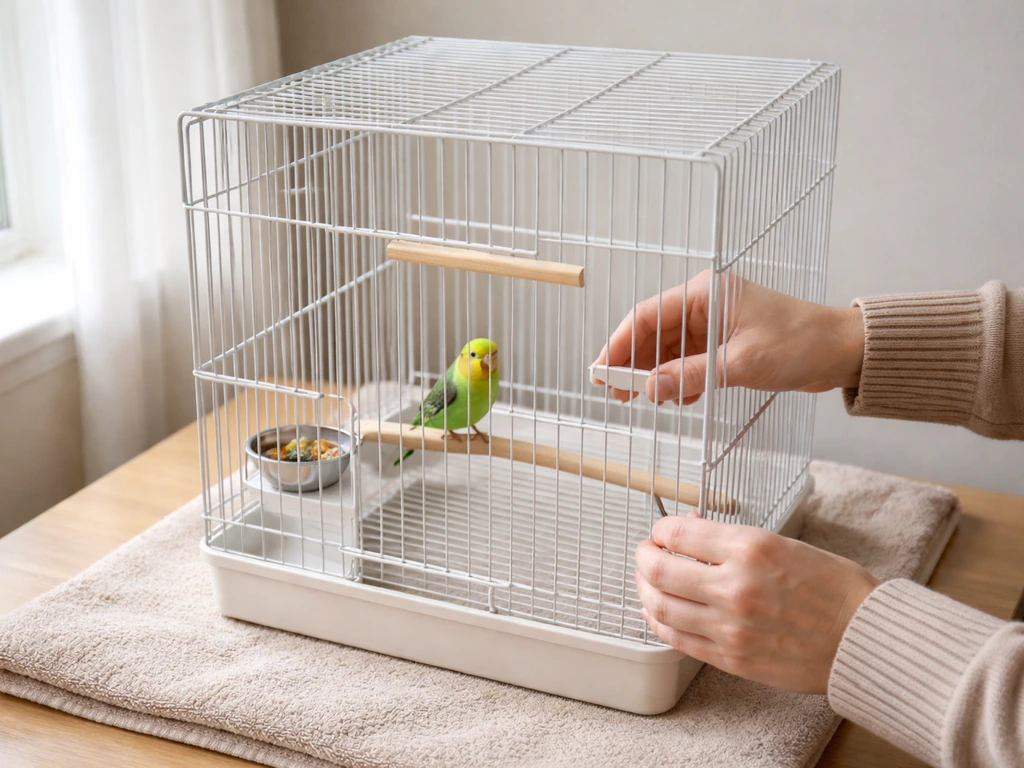
Environment does most of the work in the early stages. A bird that feels physically safe in its space will calm down faster and show stress behaviors less frequently. Place the enclosure at roughly human chest height (not on the floor, which feels exposed and predator-vulnerable, and not so high the bird looks down on you and develops territorial dominance habits). Position the cage so the bird can see the room but also has a back corner with visual cover, like a partial cage cover or dense perch area, where it can retreat. Avoid placing the cage near air vents, drafts, or in direct sustained sunlight.
Keep early-stage human traffic calm and predictable. The bird should start to associate your presence with neutral or positive events: food appearing, calm talking, no sudden movements. Establish a consistent daily schedule: lights on and off at the same time, feeding at the same times, your presence at predictable windows. Routine is underrated in taming work. Birds that can predict what happens next show lower baseline stress levels much faster than birds in chaotic environments.
Species-specific environment notes
| Species group | Key environment need | Common mistake |
|---|---|---|
| Parrots (psittacines) | Large cage with foraging enrichment, social visibility | Isolating in a back room to 'keep it quiet' |
| Songbirds / finches | Aviary or large flight cage, pairs or small groups preferred | Keeping as a solo bird with no auditory contact with conspecifics |
| Pigeons and doves | Ground-level feeding access, nest box options, calm handling from day one | Over-handling early, which increases flight panic |
| Raptors (permitted rehab only) | Mews or hack box, no unnecessary human contact, specialized facilities | Any attempt to tame without falconry or rehab credentials |
Day-by-day training: presence, feeding, and first contact
The first week is entirely about presence, not touching. Sit near the cage daily, speak quietly, and let the bird get used to your face, voice, and movement patterns. Read a book, answer emails, or just sit there. You are not trying to make anything happen yet. When the bird relaxes (loose feathers, normal posture, eating while you are present), that is your first real training milestone.
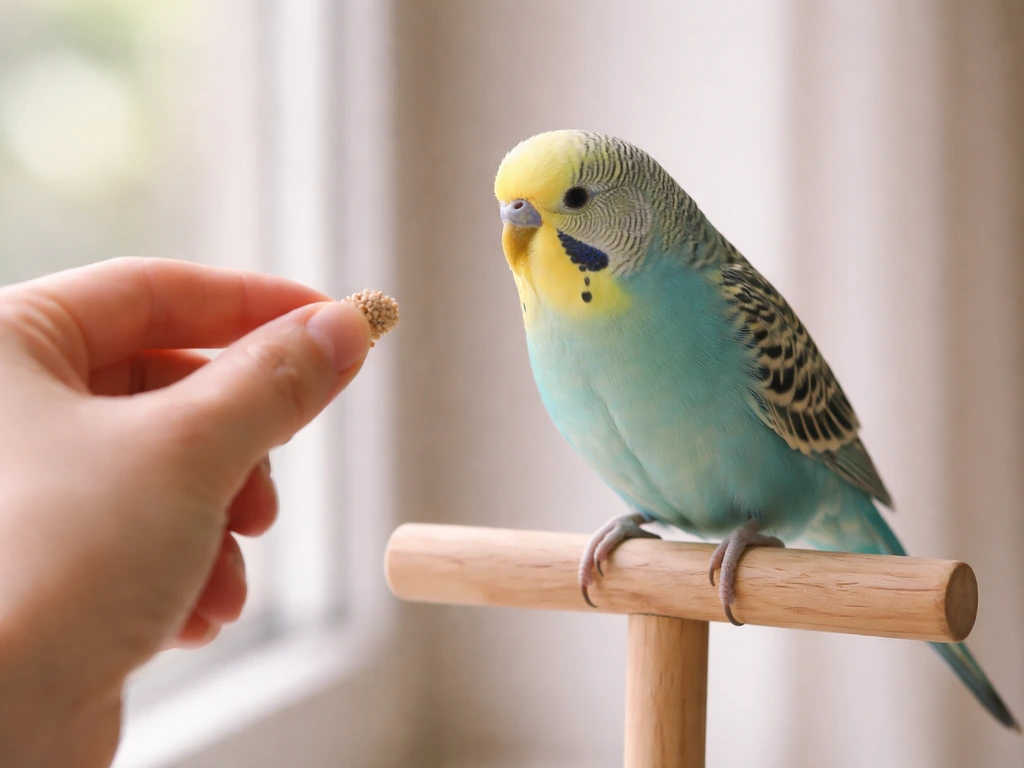
By days 4 to 7 for most pet-breed birds, start offering high-value food through the cage bars or door. For parrots, millet spray, small pieces of fresh fruit, or a favorite pellet works well. For songbirds, mealworms or specific seeds for that species. For doves and pigeons, small seeds or peas offered from a flat palm. The goal is that the bird takes food while you are present and eventually takes it from your hand. This is the first real positive reinforcement loop: your presence predicts good food.
Once hand-feeding is reliable (the bird takes food calmly from your hand at least three sessions in a row), introduce target training. Parrots.org also describes teaching target behavior using a target stick such as a chopstick as a step in behavior and training blank" rel="noopener noreferrer">target training. A target stick is simply a chopstick, pencil, or dowel with a small ball or piece of tape on the end. Present the target, and the moment the bird touches it with its beak, mark the behavior (a clicker or a clear verbal marker like "yes") and immediately deliver a treat. The Psittacine Welfare Institute's training materials emphasize this kind of least-coercive, consent-based shaping as the foundation for all further handling work, and it applies well beyond parrots to doves, corvids, and many songbird species in rehabilitation.
Keep sessions short: 3 to 5 minutes maximum for small birds, 5 to 10 minutes for larger parrots. The Fear Free avian certification program stresses that sessions should end when the bird's interest wanes, not when you decide you are done. In a r/parrots discussion on taming, people also emphasize keeping sessions short and aiming for the first couple of weeks to be as stress-free as possible by ending on a positive note sessions should end when the bird's interest wanes. Ending on engagement rather than frustration keeps the bird primed for the next session.
Gradual handling and the step-up: consent first, always
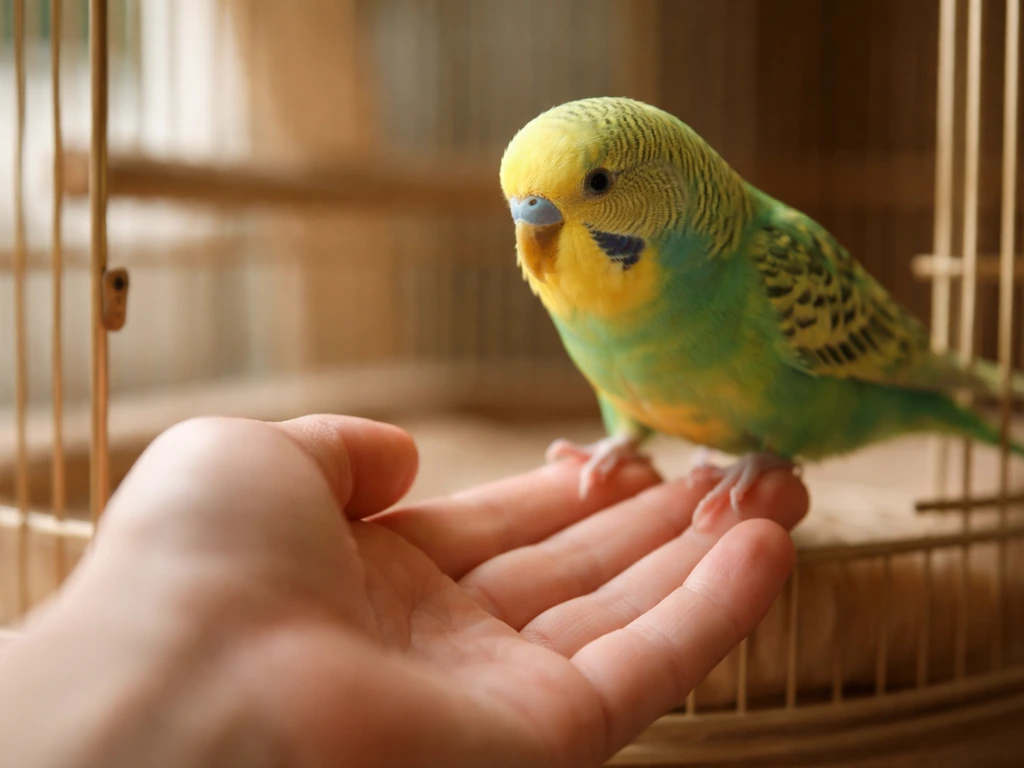
The step-up is the foundational handling behavior: a bird that steps confidently onto your finger or hand on cue is a bird you can move, examine, and interact with safely. Teaching it through consent-based training takes longer than forcing it, but the result is a bird that actively chooses to engage, which makes every future interaction easier and safer.
Start by presenting your hand (palm up, finger extended or flat palm for larger birds) inside the cage with a treat visible. Do not move toward the bird. Let the bird come to the hand for the treat. Repeat this until the bird steps onto your hand voluntarily to reach the food. Once that happens consistently, add a verbal cue like "step up" the moment the bird's foot touches your hand, then mark and reward. You are teaching the cue after the behavior happens, then gradually cuing it earlier until the bird steps up on the word alone.
Watch body language at every step. Stress indicators to watch for during handling include pin-point pupils (dilation or rapid cycling in parrots), flattened feathers, crouched posture, tail fanning, rapid shallow breathing, and vocalizations that differ from the bird's normal calls. A 2023 peer-reviewed paper in Today's Veterinary Nurse specifically identifies vocalizations and open-mouth breathing in the absence of upper-airway pathology as stress indicators during handling. If you see any of these, stop, set the bird down or step away, and give it a few minutes before trying again.
For birds with a more fearful baseline, use a graduated approach:
- Hand visible inside cage (no contact) for several sessions
- Hand with food, bird approaches voluntarily
- Bird steps onto hand for food, inside the cage
- Hand step-up practiced at the cage door
- Step-up outside the cage in a small, bird-safe room
- Gradual increase of duration, movement, and environmental variation
LafeberVet notes that prey species and wild-leaning birds can have stress responses from handling that are physiologically harmful, and in severe cases, even fatal. This is not meant to frighten you but to reinforce that skipping steps in this graduated approach is never worth it. Physical restraint should be a last resort for medical necessity, not a training tool.
Troubleshooting common behavior and stress problems
Biting
Biting is communication. A bird that bites during handling is telling you it has exceeded its comfort threshold. The most common mistakes are moving too fast through the graduated steps, misreading body language warnings before the bite, or attempting to push through the bite because "they need to learn." They do not learn from being pushed through bites. They learn that biting works and do it faster next time. Step back in the training sequence, make sessions shorter, and use the target stick to keep your hands at a safer distance while you rebuild confidence.
Screaming and persistent vocalizing
Parrots especially may scream when left alone or when they want attention. Never return to the room or respond while the screaming is happening, as this teaches the bird that screaming summons you. Instead, return only during quiet moments and heavily reward calm behavior with your presence and food. This takes consistency across everyone in the household.
Refusal to step up
If a bird that previously stepped up reliably stops doing so, look for environmental changes, health issues, molting (which makes birds more sensitive to touch), or a recent negative experience. Do not drill the cue repeatedly. Go back two steps in the sequence, use higher-value treats, and shorten sessions until confidence returns.
Fear biting and flightiness
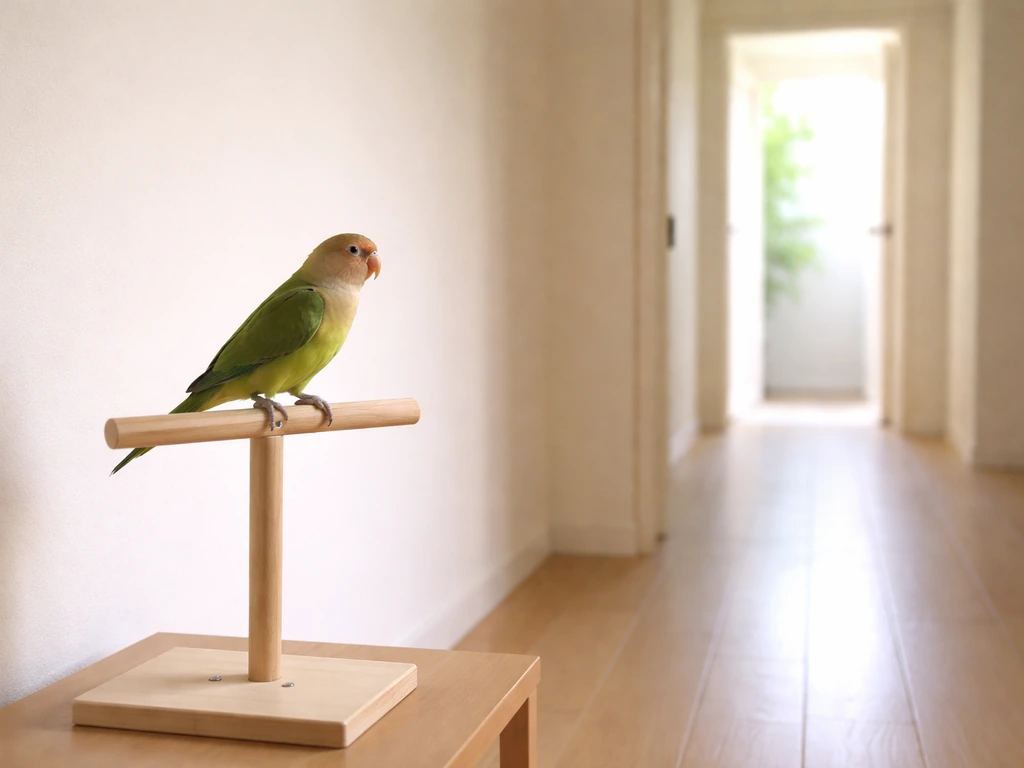
Fear biting looks different from territorial biting: the bird is trying to escape first and bites only when cornered. The fix is giving the bird more control, not less. Always let the bird choose to approach. Use slow, low-body-language movements. If a bird is clipped and cannot escape, it is more likely to bite because flight is not an option, so handling a clipped bird requires even more careful consent-based pacing.
Reduced responsiveness during molt
Molting birds are physically uncomfortable, as pin feathers are sensitive and sometimes painful when touched. Expect your bird to be touchier, less tolerant of handling, and potentially more aggressive during active molt. Reduce handling, avoid touching the head and back where pin feathers are common, and wait for the molt to finish before pushing any new training milestones.
When to get help and what to do today
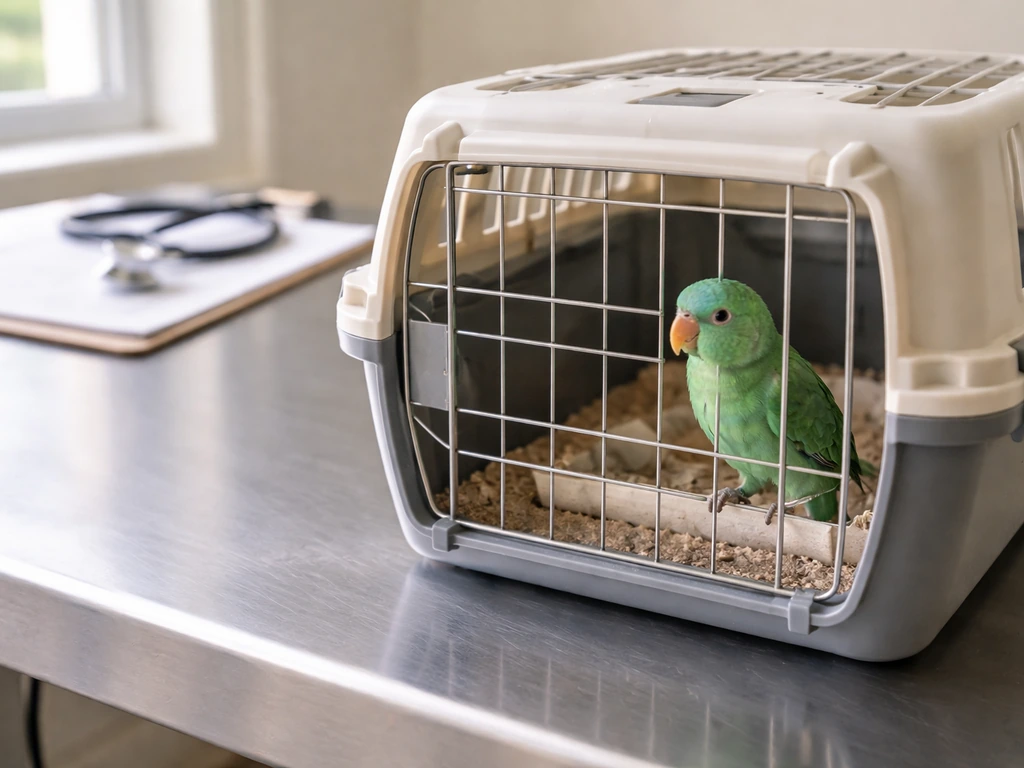
Some situations call for a professional. If a bird has not eaten in 48 hours, is showing any respiratory distress, has injuries, or is deteriorating despite your best efforts, contact an avian veterinarian immediately. The Association of Avian Veterinarians maintains a directory of board-certified and experienced avian vets and provides bird owner educational resources covering welfare, illness signs, and core species care, which is worth bookmarking before you ever need it in an emergency.
If the behavior problems are complex (severe aggression, self-mutilation, feather destruction, extreme fear that does not improve after weeks of careful work), an avian behaviorist or certified parrot behavior consultant is the right next step. This is not a failure. It means the bird has a history or a need that requires specialist support. For wild birds, an appropriate licensed wildlife rehabilitator is always the right call if you are not permitted to hold the species yourself. CDC advises that you should not adopt wild animals or bring wildlife into the home, because wildlife can pose health risks and require proper handling.
If you are still in the process of sourcing your bird and want to start on the right foot, reading up on how to adopt a bird from a rescue or shelter can help you identify a bird whose history and socialization level matches your experience, which makes the taming process significantly easier from day one.
Your starter plan for today
- Confirm legality: verify your bird's species and confirm you are legally permitted to keep and train it
- Health check: book an avian vet appointment if you have not had one; look for any respiratory red flags right now
- Environment audit: adjust cage height, add visual cover, and set a daily schedule for lights, feeding, and your presence sessions
- Gather supplies: a target stick (a chopstick works), high-value treats for your species, and a clicker or verbal marker
- Day 1 session: sit 3 feet from the cage for 10 minutes, speak quietly, do not attempt any contact, and observe body language
- Keep a log: note what the bird does, what it reacts to, and any stress signals so you can track progress week by week
If you are just beginning and have not yet brought a bird home, it is worth spending time learning how to get a bird from a reputable source, since a bird that has been properly socialized by a responsible breeder or rescue is going to respond to taming work far faster than one from an unknown or stressful background.
One more thing worth knowing: some people look into alternative ways to have a bird temporarily in their life, and for those situations, understanding how to rent a bird for short-term experiences or educational programs is a legitimate option that avoids the full commitment of ownership while still letting you learn bird handling in a supervised setting.
Taming a bird is slow work measured in weeks and months, not days. The birds that end up genuinely bonded to their people are the ones whose people were willing to let the bird set the pace. Every session where the bird chooses to engage is a win, even if it looks small from the outside.
FAQ
How can I tell whether I’m actually “taming” a bird versus accidentally teaching it fear?
Taming shows up as the bird staying calm while you are present, approaching food, and relaxing its posture or feathers. If the bird only behaves when you stop moving, swallows stress quickly, or escalates right before you try something new, you are likely pushing too fast, so pause and reduce handling to only presence plus food.
What should I do if my bird takes food from my hand, but refuses to step up?
Treating it first means you are close, but stepping up adds a new element (weight transfer and proximity). Return to a couple of days of hand-feeding, then use a target to get the bird’s beak and head near your hand, move the target slightly upward, and reward any foot movement toward your hand without forcing contact.
Can I use the same food for training every time, or should I vary it?
You can use one reliable high-value food, but variation helps prevent “preference fatigue” and can clarify what motivates your bird. Keep portions small, monitor stool consistency, and avoid sudden diet changes, especially for birds that are recovering from stress or illness.
How long does it usually take before a bird is reliably comfortable with handling?
There is no fixed timeline, but most birds need multiple weeks to become consistently comfortable with your presence, then additional weeks to generalize handling to new locations, different family members, and short touch sessions. If there is no improvement after several weeks of structured, low-pressure sessions, it is time to reassess health, environment, and training pace.
Should I train every day, or can I do fewer sessions?
Short, predictable sessions are better than frequent long ones. Aim for consistency (for example, once daily) and stop while the bird is still engaged, typically 3 to 5 minutes for small birds and 5 to 10 minutes for larger parrots. If daily training spikes stress, switch to every other day.
What if my bird is friendly with me but aggressive toward other household members?
Generalization often lags. Start with “outsider neutrality” by having one calm person do only presence plus food, using the same schedule and the same approach style. Gradually add the other person to only one interaction at a time, and avoid having multiple people crowd the bird during early progress.
Is it okay to reach into the cage to grab the bird if it won’t step up yet?
It is usually a common mistake. Reaching in to capture or restrain can quickly raise fear and make step-ups harder. Prefer consent-based methods, such as luring to a perch with target training or using a familiar, low-stress routine, and only handle physically for medical necessity.
My bird bites during training. How do I know whether it is fear biting or “attention” biting?
Fear biting often looks like attempts to escape, crouching, tail tension, or biting at the moment the bird is cornered or blocked. Attention biting often increases when you are responsive to the behavior, especially if the bird bites and then gets interaction. In either case, reduce pressure immediately, but the solution differs, so observe what happens right before the bite and what the bird gets after.
What if my bird screams when I leave the room, and I’m worried I’m rewarding the noise?
Do not return during active screaming, then reward only calm moments by quietly entering, offering a small treat, and leaving again after brief neutral contact. Make departures and arrivals predictable and low-drama, and practice short absences to build tolerance rather than long gaps.
How should I handle molting and pin feathers without making my bird more aggressive?
During active molt, reduce touch, avoid touching high sensitivity areas like the back and head, and extend sessions only if your bird shows comfort around your presence and feeding. Use target training and step-up cues from a distance to keep progress without triggering pain or defensive behavior.
What should I do if my bird stops stepping up after it worked well before?
Treat it as information, not regression. Check for health changes (including appetite, droppings, breathing, and feather condition), recent negative experiences, and environmental shifts like temperature, new scents, or cage placement changes. Go back two steps, shorten sessions, use higher-value treats, and rebuild the cue gradually rather than repeating the cue repeatedly.
When is the right time to involve an avian veterinarian or behavior specialist?
Seek veterinary help immediately for not eating for 48 hours, any respiratory signs, injuries, or rapid decline. If there is severe aggression, self-harm behaviors, feather destruction, or persistent extreme fear that does not improve over weeks despite appropriate training and a stable environment, a qualified avian behavior professional is a practical next step.
Does clipping a bird’s wings change how I should approach training and consent?
Yes. When flight is not an option, the bird cannot escape the same way, so its comfort threshold may be lower and bites may increase. Expect to slow the pacing, increase distance during training, rely more on target and step-up readiness, and avoid forcing situations where the bird feels trapped.
Next Article
How to Rent a Bird: Humane Options, Prep, and Next Steps
Humane, legal steps for short-term bird care or fostering: permits, setup, handling, costs, contracts, and stress troubl