
Getting an emotional support bird really comes down to two things: choosing the right individual bird for your lifestyle, and then doing the patient, consistent bonding work that makes a bird genuinely calming to be around. There is no shortcut certificate or special breed that does it automatically. The bird needs to trust you, feel safe in your home, and develop predictable, calm behaviors through daily interaction. When that happens, the comfort a bird provides is real and meaningful. This guide walks you through every step, from what the term actually means, to picking the right species, to the daily routines and training that get you there.
How to Get an Emotional Support Bird: Bonding and Training Steps

Maya Harris
26 Apr 2026
What an 'emotional support bird' actually means
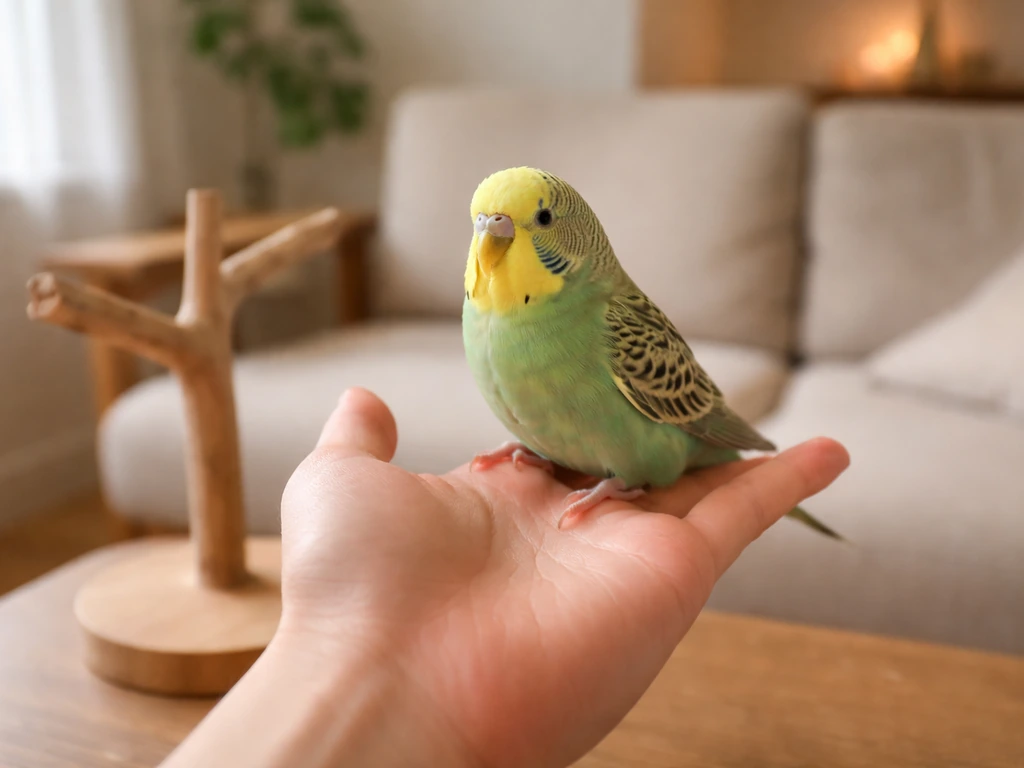
The phrase means two different things depending on context, and mixing them up causes real problems. The first meaning is practical and personal: a bird you bond with deeply, that provides genuine comfort, helps regulate your mood, and fits into your daily life as a calming presence. No paperwork required. This is the version most people actually want, and it is what this guide focuses on.
The second meaning is legal. Under the Fair Housing Act, an emotional support animal (ESA) is a type of assistance animal that provides emotional support alleviating one or more identified effects of a disability. HUD's Notice FHEO-2020-01 is the current governing guidance, and it gives landlords a framework to evaluate reasonable accommodation requests for assistance animals, including ESAs. This means a properly documented ESA bird can, in many cases, allow you to keep a bird in a no-pets housing situation. However, air travel is a different story: since the DOT's final service animal rule (December 2020), airlines are no longer required to recognize emotional support animals as service animals, so ESA documentation no longer gets your bird into the cabin.
For the legal ESA route, you need documentation from a licensed mental health professional stating that you have a disability and that the animal provides support related to that disability. No registry, certificate, or vest does this for you. Stick to a letter from your actual provider. But remember: the legal designation does not make your bird emotionally supportive on its own. The bonding and training work below is what actually delivers the benefit, with or without paperwork.
A quick note on wild and rehabilitated birds
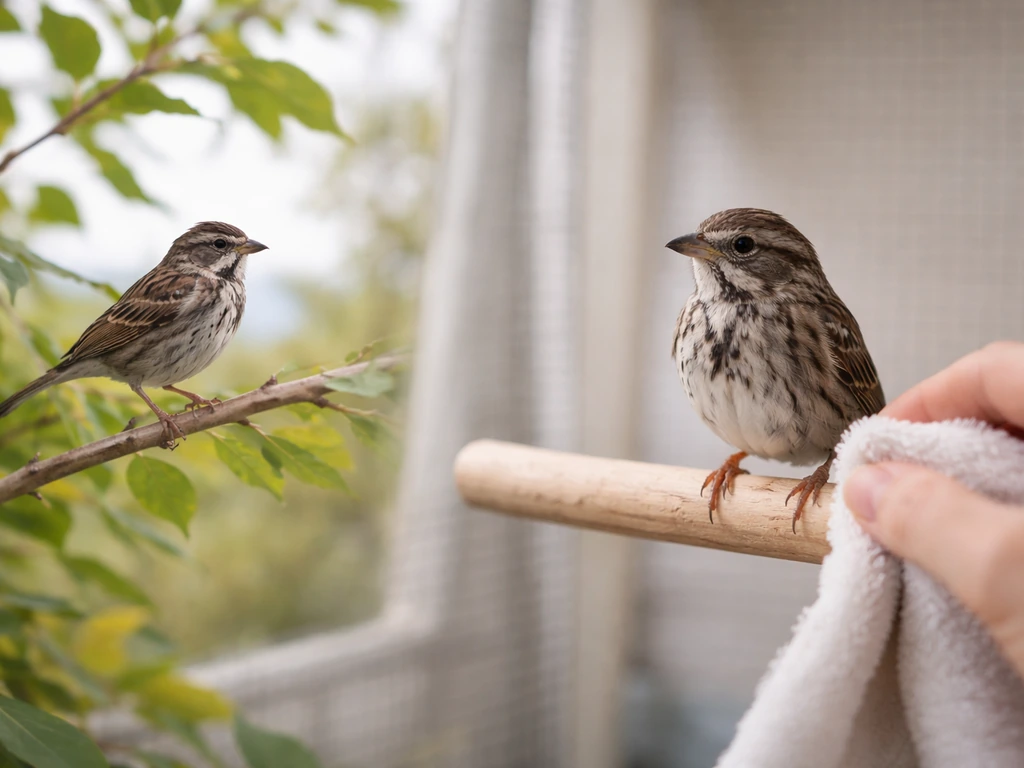
If you were thinking about keeping a wild bird you found, or a rehabilitated bird, this needs to be said clearly upfront: in the United States, keeping most native wild birds as pets is blank" rel="noopener noreferrer">illegal under the Migratory Bird Treaty Act, regardless of ESA paperwork. The Animal Legal & Historical Center explains that, unless authorized by regulations, it is unlawful to pursue, hunt, take, capture, kill, possess, or transport migratory birds, including parts, nests, or eggs Migratory Bird Treaty Act. Rehabilitated wild birds that cannot be released are typically placed with licensed facilities, not private owners. A wild bird that appears 'tame' is usually stressed or injured, not genuinely comfortable with humans, and forcing that relationship is harmful to the bird. Emotional support requires a willing, relaxed animal. Wild birds very rarely meet that bar in a home setting. Focus on a captive-bred pet bird from a reputable source, which is both legal and genuinely better for you and the bird.
Choosing the right species and individual bird
Species matters enormously. The most affectionate bird in the wrong environment will cause stress for both of you. Match the bird's natural temperament and needs to your actual lifestyle, not your ideal lifestyle.
Species by lifestyle fit
| Species | Noise Level | Social Need | Handling Tolerance | Best For |
|---|---|---|---|---|
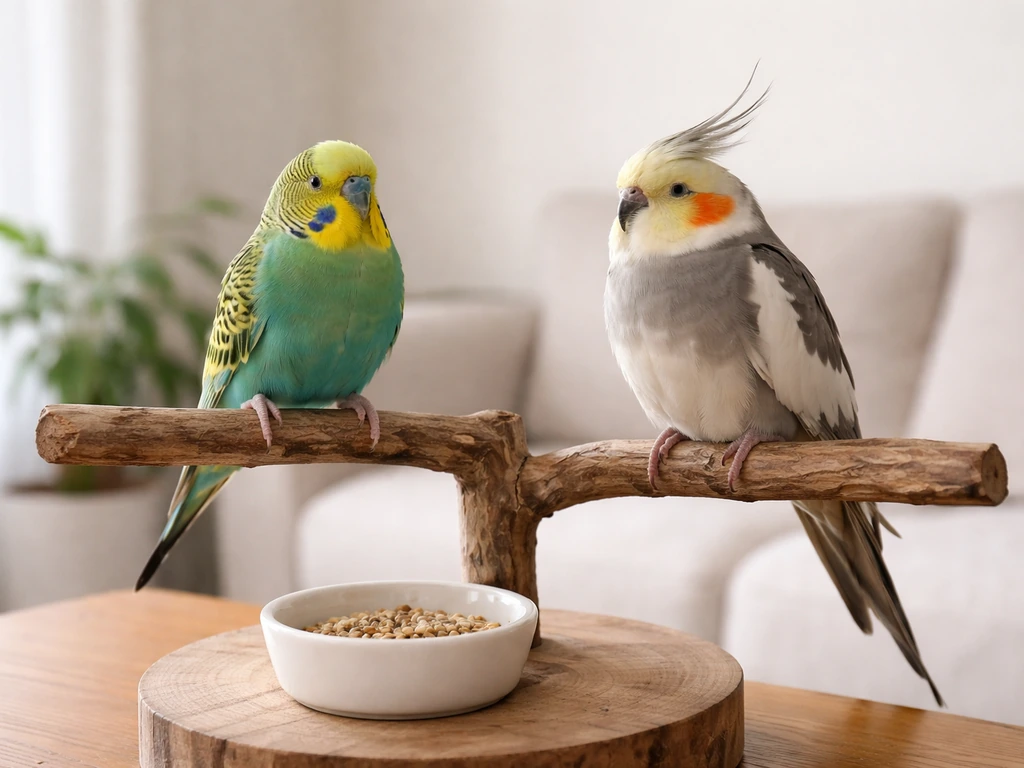
| Budgerigar (budgie) | Low-moderate | Moderate (better in pairs) | Good when hand-tamed | Beginners, apartments, quieter households |
| Cockatiel | Moderate | High (bonds closely to owner) | Excellent when socialized | Beginners and intermediate owners wanting lap-bird behavior |
| Lovebird | Moderate | Very high | Can be nippy; needs daily handling | Dedicated owners with time for interaction |
| Conure (green cheek) | Moderate | Very high | Cuddly but vocal | Active owners who want a snuggly bird |
| Conure (sun/nanday) | Very high | Very high | Affectionate but screams | Tolerant owners in detached homes only |
| African grey parrot | Moderate | Very high | Deep bonds, sensitive to change | Experienced owners; long-term commitment |
| Cockatoo | Very high | Extreme (velcro bird) | Intense bonding; high welfare demand | Expert owners only; serious time commitment |
| Dove (ringneck) | Low | Moderate | Calm, gentle | Beginners, anxious owners, small spaces |
If you are new to birds and want a reliable, calming companion, start with a cockatiel or a budgie. Cockatiels in particular are well documented as gentle, affectionate, and highly responsive to patient handling. Ringneck doves are underrated and genuinely excellent for anxious people: they are quiet, soft, and naturally calm. Avoid cockatoos as a first bird. Their emotional needs are so high that welfare problems and owner burnout are extremely common.
Picking the right individual
Within any species, individual personality varies. When choosing a bird, spend time with it before committing. Look for a bird that is alert but not frantic, that does not immediately flee to the far corner of its enclosure, and that shows curiosity about your hand or voice. A bird that has already been hand-fed or handled by the breeder or rescue will have a significant head start. Ask about the bird's history: how it was raised, what its daily routine has been, and whether it has been handled regularly. Avoid a bird that is visibly feather-destructive, unresponsive, or breathing abnormally. Those are welfare red flags that need veterinary attention, not bonding work.
Source matters too. A reputable avian breeder or a bird-specific rescue organization is your best starting point. Avoid pet store chains where birds often receive minimal handling. Ask the breeder or rescue to see where the bird is kept and how it interacts with humans daily.
Humane bonding basics: your daily routine, consent, and safety
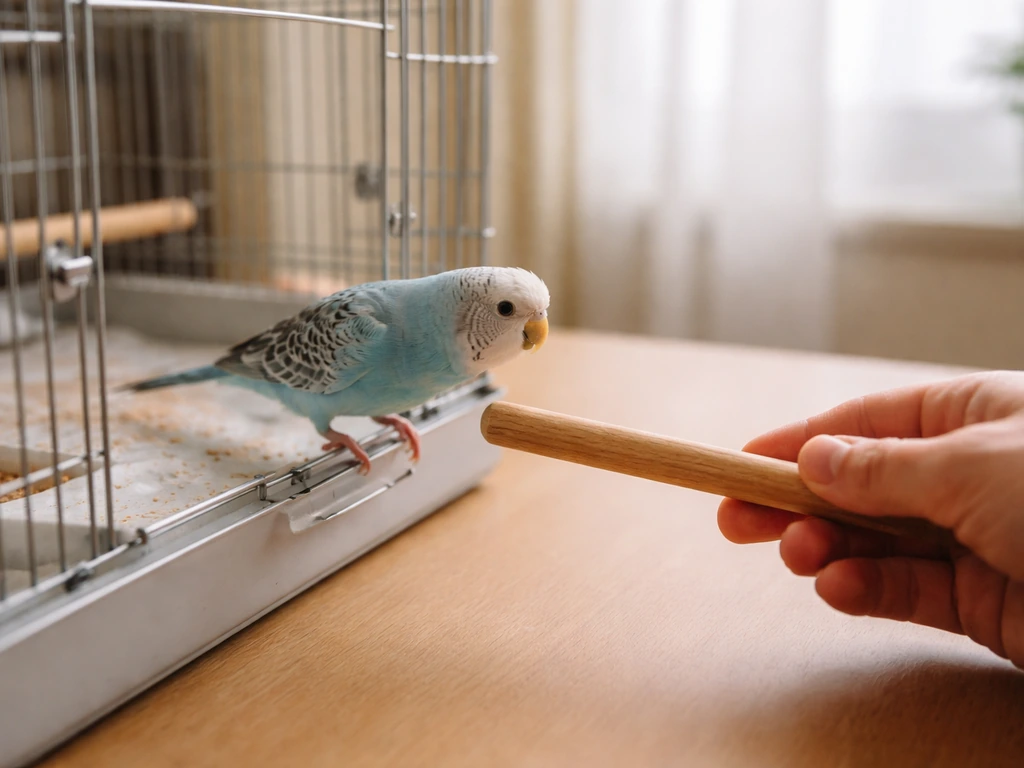
Consent-based bonding is the foundation of everything. This means you never force the bird into contact. You offer your hand, your presence, your voice, and you let the bird decide to engage. This sounds slow, but it builds the kind of trust that results in a bird that actively seeks you out, which is exactly the quality that makes them emotionally supportive. A bird that tolerates you is not the same as a bird that comforts you.
Setting up for success from day one
- Place the cage in a room where you spend most of your time, at roughly eye level, not in a corner or a high-traffic area with sudden loud noises.
- Keep a consistent daily schedule: same wake time, same feeding times, same lights-out. Birds are creatures of routine and predictability is calming for them.
- Cover the cage partially at night to signal sleep time, but leave ventilation and never fully enclose an anxious bird during the day.
- Spend the first 3 to 7 days just existing near the cage: talking softly, going about your routine. No forced handling. This is called acclimation and it is not wasted time.
- Always move slowly around the cage, especially from above. Birds are prey animals and sudden overhead movement triggers fear responses.
- Have an avian vet appointment booked before or shortly after bringing the bird home. A wellness check is not optional.
Daily routine structure
A predictable daily structure is one of the most powerful tools you have. Birds that know what to expect are calmer, less reactive, and more available for bonding. A simple structure looks like this: uncover and greet the bird at the same time each morning, offer fresh food and water, allow supervised out-of-cage time during the day, engage in one or two short training or bonding sessions (5 to 15 minutes each), return the bird to its cage for rest periods, and cover it at the same time each evening. If you want to take this routine structure further, the humane, consent-based skills outlined in how to become a bird handler are the next related step. Consistency matters more than perfection.
Step-by-step trust building by species level
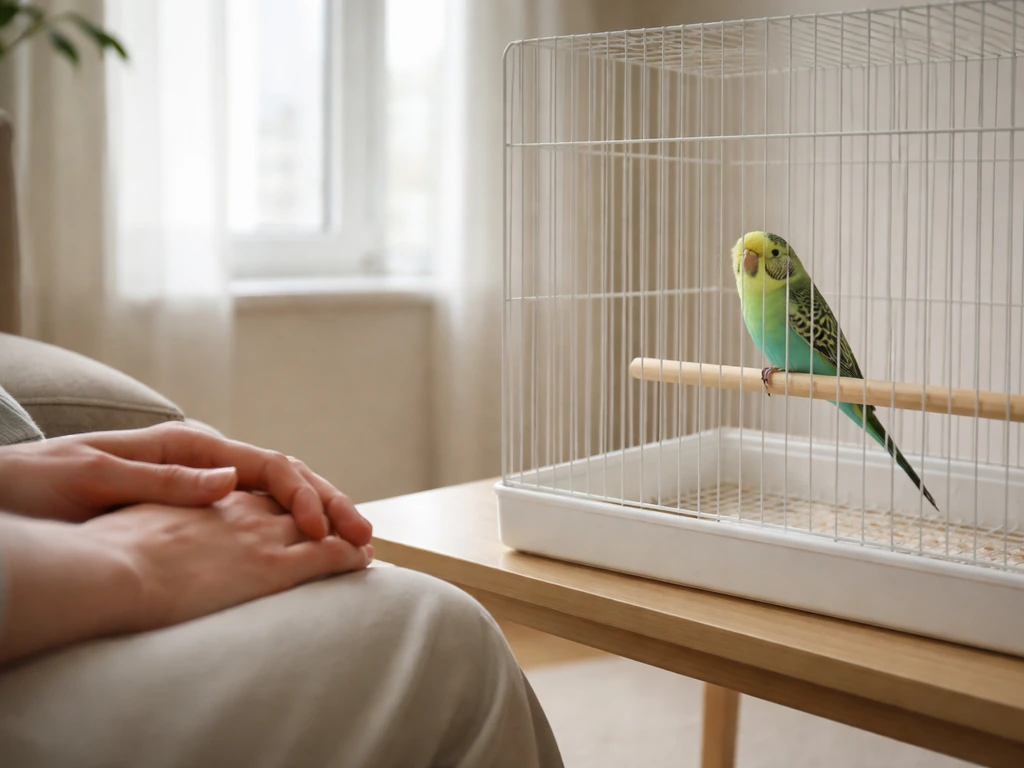
The taming process is not the same for every bird. Adjust based on where your individual bird is starting from, not just its species.
Beginner birds: budgies, cockatiels, doves
- Acclimation period (days 1 to 7): Sit near the cage, talk softly, read aloud, or play calm music. Do not open the cage yet. Let the bird observe you as non-threatening.
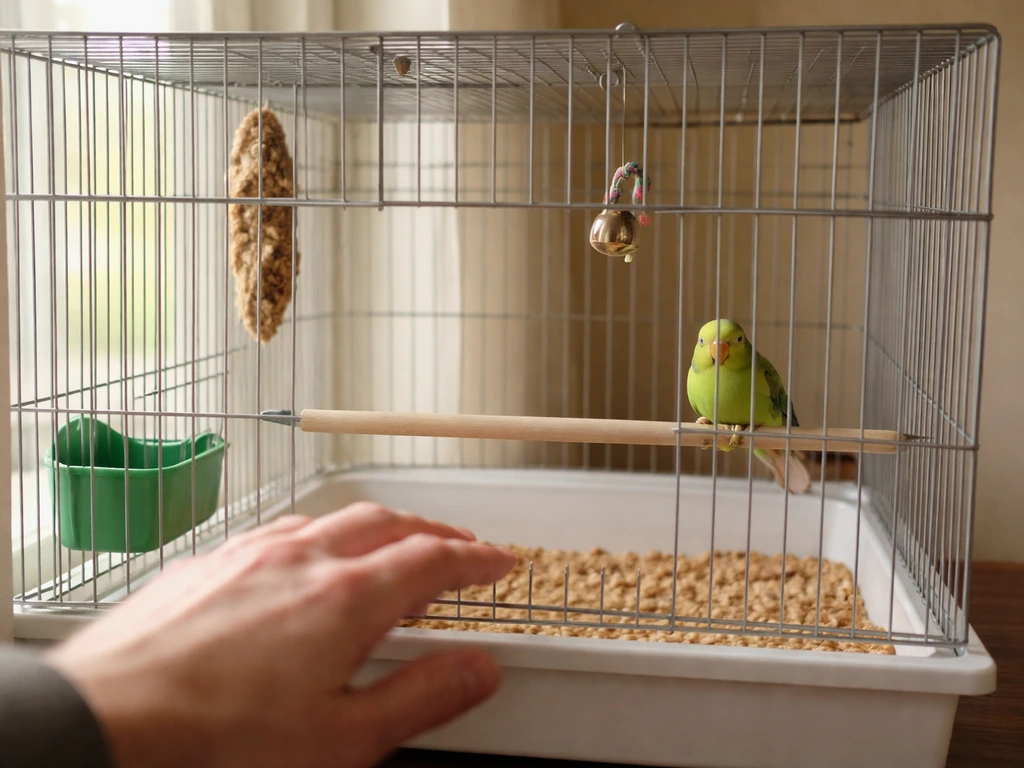
- Hand presence (days 5 to 14): Open the cage door and rest your hand just inside the opening without reaching toward the bird. Hold still. Repeat daily for 5 minutes. The bird may come to investigate.
- Millet or treat on hand (days 10 to 21): Offer a sprig of millet or a favorite treat resting on your palm inside the cage. Do not chase or corner the bird. Wait for voluntary contact.
- Step-up introduction: Once the bird is comfortable eating from your hand, present a finger or perch just below the bird's chest and gently press upward while saying 'step up.' Reward immediately when the bird steps on.
- Short out-of-cage sessions: Start with 5 to 10 minutes in a small, bird-safe room. Stay calm and seated. Let the bird explore at its own pace.
- Build duration gradually: Extend sessions as the bird shows comfort. A relaxed bird will preen near you, make soft contact calls, or fall asleep on your shoulder.
Intermediate birds: lovebirds, green cheek conures
These species bond intensely but can also develop fear responses or territorial biting if the trust-building phase is rushed. Follow the same numbered steps above, but be especially patient with the hand-presence phase. Lovebirds can take three to four weeks before tolerating hand proximity without alarm calling. Never punish a bite. Simply withdraw your hand calmly and try again later. If the bird is already a bonded pair, expect it to be less focused on human bonding, since its social needs are partly met by its companion.
Advanced birds: African greys, larger parrots
African greys and large parrots like Amazon parrots are sensitive, highly intelligent, and can carry trauma from previous handling. The acclimation phase can last weeks. Watch for body language signals: a fluffed, hunched bird that is not sleeping is stressed. A bird with pinning pupils (rapidly dilating and contracting) while looking at you is excited or threatened. Go slower than you think you need to. With these species, earning trust once creates extraordinary bonds, but breaking trust once can set you back months. If you are new to birds, consider working with an avian trainer for the first few months with a large parrot.
Training comfort behaviors: settling, calm contact, and routines
Once your bird trusts you enough to step up and spend time outside its cage calmly, you can begin training the specific behaviors that make a bird genuinely comforting. These are not tricks. They are practical behaviors that support emotional regulation for you.
Settling on cue
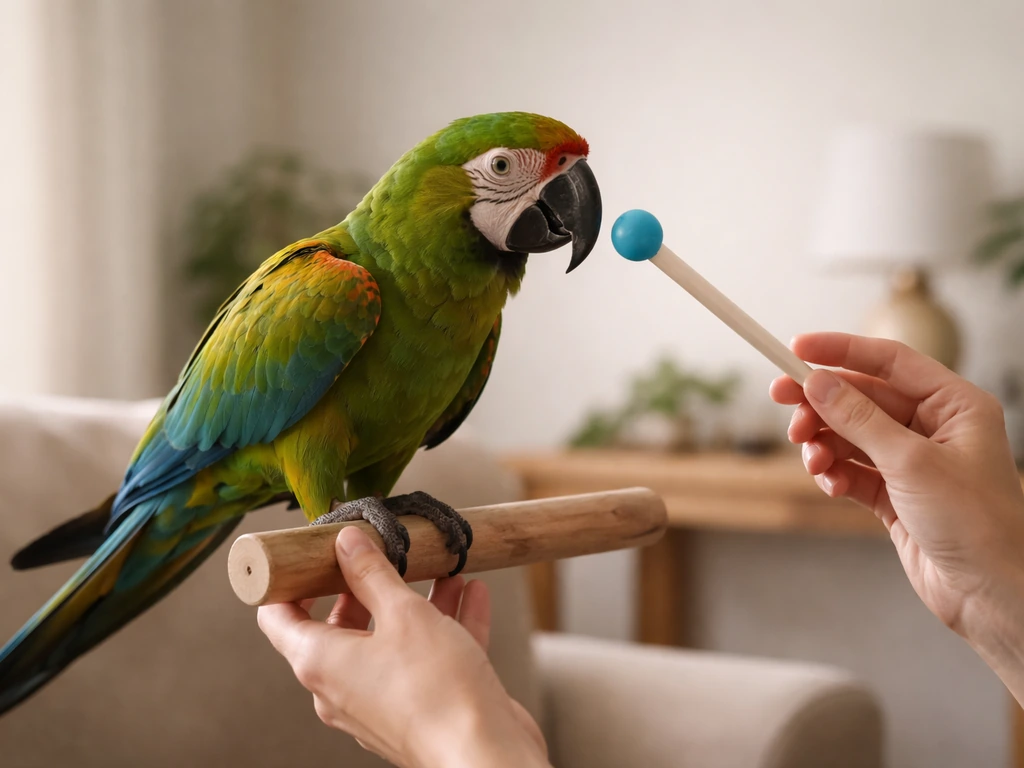
This is the most useful behavior: teaching your bird to perch quietly on your shoulder, hand, or a dedicated perch near you for an extended period. Start by rewarding any calm perching that lasts more than 30 seconds. Use a simple verbal marker (the word 'good' or a clicker) the instant the bird is still and calm, followed immediately by a small treat. Gradually extend the duration before marking and rewarding. Over weeks, pair a verbal cue like 'settle' with the moment you position the bird and reward calm staying. The goal is a bird that, when placed on a shoulder perch during a hard moment, stays quietly and warmly present.
Calm proximity and contact habits
Some birds enjoy being stroked on the head and neck (stick to head and neck only with parrots, as stroking body feathers can trigger hormonal behavior). Teach your bird to lean into gentle head scratches by offering them only when the bird's body is relaxed, and stopping immediately if it shows any tension. Over time, the bird will actively solicit this contact, which is a deeply rewarding interaction for both of you. Cockatiels, for example, will lean their heads down and flatten their crest to signal they want head scratches once they trust you fully.
Predictable interaction routines
Routine itself is a comfort behavior. A bird that knows you will sit with it every morning while you have coffee, or every evening while you wind down, becomes a living anchor for your own daily rhythm. This predictability benefits you and the bird equally. You can reinforce this by keeping the interaction time consistent and calm, putting away your phone, and simply being present with the bird during those windows.
Handling, welfare, and enrichment: the support cannot cost the bird its wellbeing
A stressed bird does not provide emotional support. Its welfare and your benefit are directly linked, so this section is not optional reading.
Minimum welfare requirements
- Cage size: The bird must be able to fully extend and flap its wings without touching the sides. Bigger is always better.
- Diet: Species-appropriate fresh foods alongside a quality pelleted base diet. Seed-only diets are linked to significant health problems in most parrot species.
- Sleep: 10 to 12 hours of uninterrupted dark, quiet sleep per night. Chronic sleep deprivation makes birds irritable and unhealthy.
- Out-of-cage time: A minimum of 2 hours daily of supervised free time for social, active species like cockatiels, conures, and parrots.
- Avian vet care: Annual wellness checks with a certified avian vet, not just a general-practice vet. Birds hide illness very effectively.
- Feather and skin health: No direct airflow from fans or air conditioning vents onto the cage. Avoid non-stick cookware fumes (PTFE), candles, aerosols, and scented plugins around birds.
Enrichment keeps your bird behaviorally healthy
Enrichment is how you prevent boredom-driven behavior problems like feather plucking, screaming, and aggression. Rotate foraging toys so the bird has to work for some of its food daily. Offer chewable wood toys for species that chew. Provide a variety of perch textures and diameters so feet stay healthy. Puzzle feeders, paper to shred, and safe natural branches (from bird-safe trees like willow, apple, or eucalyptus) all count as enrichment. Budget around 20 to 30 dollars per month for rotating toys. You can also reuse and refill foraging toys to stretch costs.
Reading your bird's body language
Knowing what your bird is telling you is central to humane handling. A relaxed bird has smooth feathers, a calm posture, and may grind its beak gently (a sign of contentment when resting). A stressed or threatened bird will pin its feathers tightly against its body, lean away, hiss, or lunge. A bird showing these signals is telling you it needs space. Responding correctly by backing off and trying again later builds trust faster than pushing through resistance.
Common problems and how to work through them
Fear and avoidance
If your bird consistently flees to the far end of its cage when you approach, you are moving too fast. Go back to the acclimation phase. Spend a week just sitting near the cage doing something quiet, without any direct engagement attempts. Lower your voice and your body position. Sitting on the floor rather than standing can dramatically reduce a fearful bird's stress response. Progress will come, but only if you let the bird set the pace.
Biting
Biting is communication, not defiance. The bird is telling you it is uncomfortable or overstimulated. Never yell, jerk your hand away dramatically, or punish a bite. A calm, slow withdrawal of your hand, followed by a pause and a reset, is the right response. Identify what triggered the bite: was it a particular body part you touched, a sudden movement, or the end of a play session when the bird is tired? Eliminating the trigger breaks the pattern. If biting is frequent and escalating, consider consulting an avian trainer.
Screaming
Contact calls (short, repeated calls to locate you) are normal bird behavior. True problem screaming, which is prolonged and occurs whenever the bird is alone, is usually driven by insufficient social time, boredom, or inadvertent reinforcement: if you rush to the bird every time it screams, you have taught it that screaming summons you. The fix is twofold: increase enrichment and predictable social time so screaming is less needed, and only return to or acknowledge the bird during quiet moments. This takes consistency over days to weeks. Never punish or cover the cage as a punishment; it damages trust and does not address the cause.
Bonding plateau or regression
Sometimes a bird that was making good progress pulls back, becomes nippy, or seems less interested in interaction. Common causes include seasonal hormonal changes (spring and fall in many species), a change in your schedule or household, an illness, or simply that the bird has reached its natural social limit for the day. Check for health issues first with a vet visit if the regression is sudden. If the bird is healthy, reduce session length, go back to low-pressure bonding (just sitting nearby), and resume gradual progress. Most plateaus resolve within a few weeks.
Separation distress
A bird that screams, destroys its cage, or feather-plucks when you leave has developed an unhealthy level of dependence. This is more common in species with very high social needs (cockatoos, African greys) and can happen when a bird has become the owner's only source of connection too. Prevention is easier than treatment: from the beginning, teach the bird to be comfortable alone for short periods by building up absences gradually, and ensure it has enrichment that engages it independently. If distress is already established, the process of desensitization requires patient, systematic short departures over weeks. A veterinary behaviorist or certified avian trainer can be genuinely helpful here.
Your action plan starting today
Here is what you can do right now, in a realistic sequence. To learn the full path, see the step-by-step guidance on how to become a bird trainer. If you do not have a bird yet, spend this week researching reputable breeders or avian rescues in your area, and visit in person before committing. If your goal is how to become a bird handler, focus on humane bonding basics, consent-based daily routines, and learning to read stress signals early. If you are asking how to get a job as a bird, start by finding bird-related training opportunities and building experience through reputable programs. If you meant helping animals instead of keeping one, focus on learning how to become a bird rehabilitator and finding a licensed facility to volunteer with. Narrow down your species choice using the table above and your honest assessment of your noise tolerance, time availability, and experience level. Book an avian vet to have on file before the bird arrives. Set up the cage in your main living area at eye level before you bring the bird home. Then give the bird a full week of low-pressure acclimation before any handling attempts. From there, follow the step-by-step trust-building sequence above, keeping sessions short and positive. If you are looking to become a bird sitter, focus on learning gentle handling, predictable routines, and how to spot stress signals so you keep every bird comfortable. If you are also interested in the legal ESA designation for housing purposes, that conversation belongs with your licensed mental health professional, who can determine whether a letter is appropriate for your situation.
The birds that genuinely change people's days are not the ones with the fanciest cages or the most tricks. They are the ones whose owners put in the quiet, consistent work of earning real trust. That investment is entirely within your reach, and it starts with one calm session at a time. If you specifically mean becoming an emotional-support bird handler for housing or travel conversations, you should also understand the legal ESA basics covered earlier. If you are pursuing a service-style role for your bird, focus on building the same steady trust and comfort behaviors that a qualified trainer can help you formalize calm session at a time.
FAQ
Does an emotional support bird need training even if I have an ESA letter?
An ESA bird letter does not replace welfare work, and it also does not make the bird automatically safe to fly, visit, or be around strangers. Even if paperwork is for housing, you should still train predictable calm behaviors (quiet perching, step up on cue, settling during routine handling) so the bird can genuinely stay regulated in real-life situations.
What if I have allergies or breathing issues, can I still get an emotional support bird?
If you have a history of allergies or asthma, plan for a trial period before bringing a bird home. Ask the breeder or rescue if you can meet a bird in the same environment, and if possible keep the new bird in a separate room for the first week while you monitor symptoms, then gradually integrate it once you know you are tolerating the dander and dust.
Can an emotional support bird work if I’m away from home for most of the day?
Yes, but only with a careful mismatch check. Many birds startle or escalate with sudden transitions, so if you work long shifts, choose a species and setup that can handle independent enrichment, and build “alone time” from day one using short absences. If your bird later screams or destroys when you leave, that is a sign the schedule needs adjusting, not that you should intensify attention during the worst moments.
How do I know my bird is helping my emotional state, not just being calm in general?
A good comfort bird is one that can stay calm during handling and while you are emotionally “up,” not just calm when you are relaxed. When bonding, practice shoulder or nearby-perch settling during low-demand times first, then gradually add mild stressors (for example, quiet music, household sounds, slower breathing exercises) so the bird learns to remain regulated as your routine shifts.
What should I do if my bird seems friendly but won’t step up or engage?
If your bird refuses contact at first, go back to consent-based proximity rather than forcing step-up. Use a quiet “near the cage” week, reward calm attention only, and avoid adding new distractions. A sudden push toward frequent handling is a common reason trust stalls or reverses.
Why does my bird regress when we have company or when the house gets noisy?
Avoid “trigger stacking,” meaning you should not combine cage cleaning, loud guests, extra touching, and sudden schedule changes in the same day. Use the birds’ stress cues to pick one variable to change at a time, and if fear signals show up (pinning, leaning away, prolonged frantic fleeing), pause the session and return to acclimation level.
How long should I expect it to take before my bird can stay calmly on my shoulder?
For shoulder comfort, it is normal to start with very short sessions and increase slowly, but it is not normal to push through attempts where the bird is scrambling, biting, or flattening the crest into a tense posture. If the bird struggles, reduce duration, reposition the perch option so it feels secure, and reward any calm stillness instead of rewarding struggle or compliance.
What are the most common causes of biting during emotional-support bonding?
Do not use punishment for bites, and also do not interpret a bite as “dominance.” Instead, identify whether the bite happens at specific body locations (hands near face, sudden head movements, grabbing over the cage), or at a specific time (end of play session, when the bird is tired). Fixing that single trigger is often faster than repeating generic bonding.
When should I treat behavior changes as a health problem instead of a training issue?
A regular health check matters, because respiratory issues and pain can look like irritability or “bad behavior.” If aggression, fear, or change in vocalization appears suddenly, schedule an avian vet visit before you assume it is a bonding problem, and watch for signs like abnormal breathing, reduced appetite, or unusual sleep patterns.
Can I get real comfort from a bird that is already bonded to another bird?
If your bird is already bonded to a mate, you may still build comfort with you, but the expectation should shift. Pair bonding with short predictable “co-regulation” windows and avoid competing for constant attention. Some birds prefer to remain near you rather than perch on you, and that can still provide meaningful emotional support if the bird stays calm.
Next Articles
How to Become a Bird Handler: Steps, Skills, and Safety
Learn how to become a bird handler with welfare-first steps, safety skills, legal checks, and practice milestones for pe
How to Make My Bird a Service Animal: Legal and Training Guide
Bird service animal guide: legal steps, suitability checklist, humane training for public tasks, and troubleshooting if
How to Become a Bird Trainer: Step-by-Step Guide
Step-by-step, welfare-first path to become a bird trainer, with safe practice, skills, safety laws, and next actions.