The fastest, most effective way to increase bird population in your yard or care environment is to fix the habitat first: native plants, clean water, reliable food, and safe nesting spots do far more than any single feeder or gadget. If you’re working with a captive bird and need pinioning guidance, follow a qualified process and species-appropriate handling steps how to pinion a bird. From there, you layer in smarter feeding, nest box support, and mortality reduction (cats, windows, pesticides, disease) and track your results so you know what's actually working. Whether you're trying to bring more wild birds to your backyard or improve breeding success for birds in your care, the same core principles apply: reduce what's killing them, give them what they need to thrive, and stay on the right side of wildlife law.
How to Increase Bird Population: Practical, Humane Steps
Start here: know your goal and your species
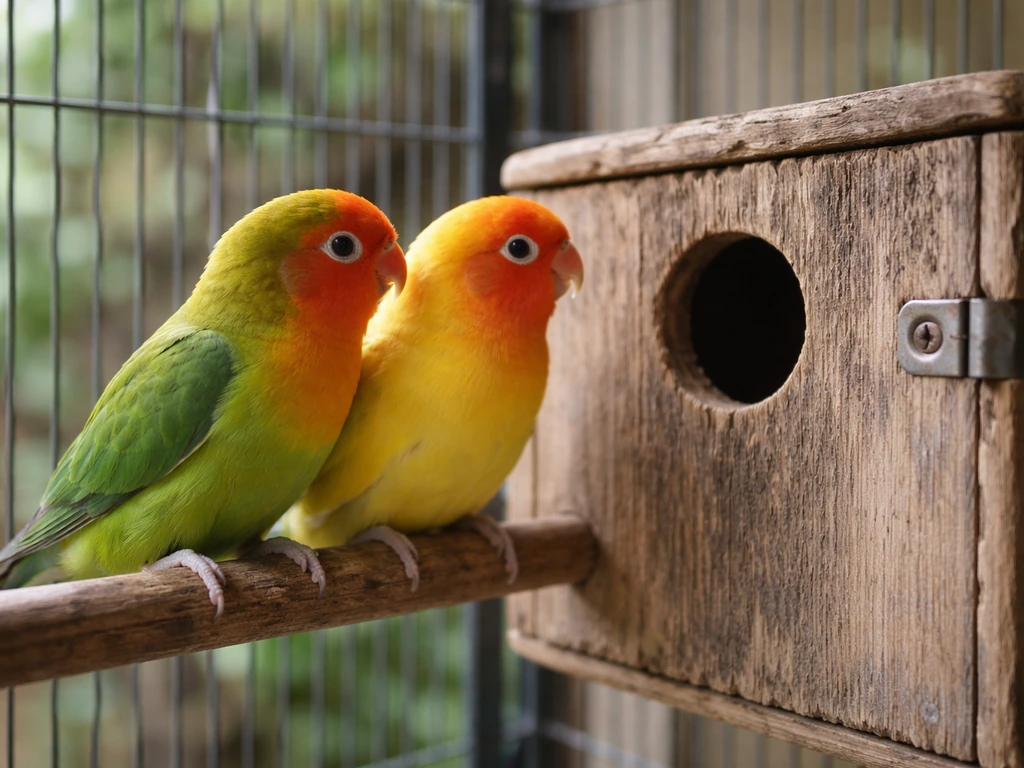
Before you buy a single feeder or nail up a nest box, get clear on what you're actually trying to do. Are you trying to attract and support more wild birds in your backyard or local green space? Or are you working with birds in your care, like a breeding pair of lovebirds, quail, or Java finches, and trying to improve their reproductive success? If you want to learn how to breed quail bird successfully, focus on species-specific setup, diet, and nesting conditions that match their breeding cycle breeding pair of lovebirds, quail, or Java finches. If you are specifically planning Java bird breeding tips, double-check species-specific nesting conditions and pair setup so you do not rely on generic guidance Java finches. The tactics overlap, but the details differ considerably. Wild-bird habitat work is broad and habitat-driven. Captive or semi-captive breeding is species-specific and environment-controlled.
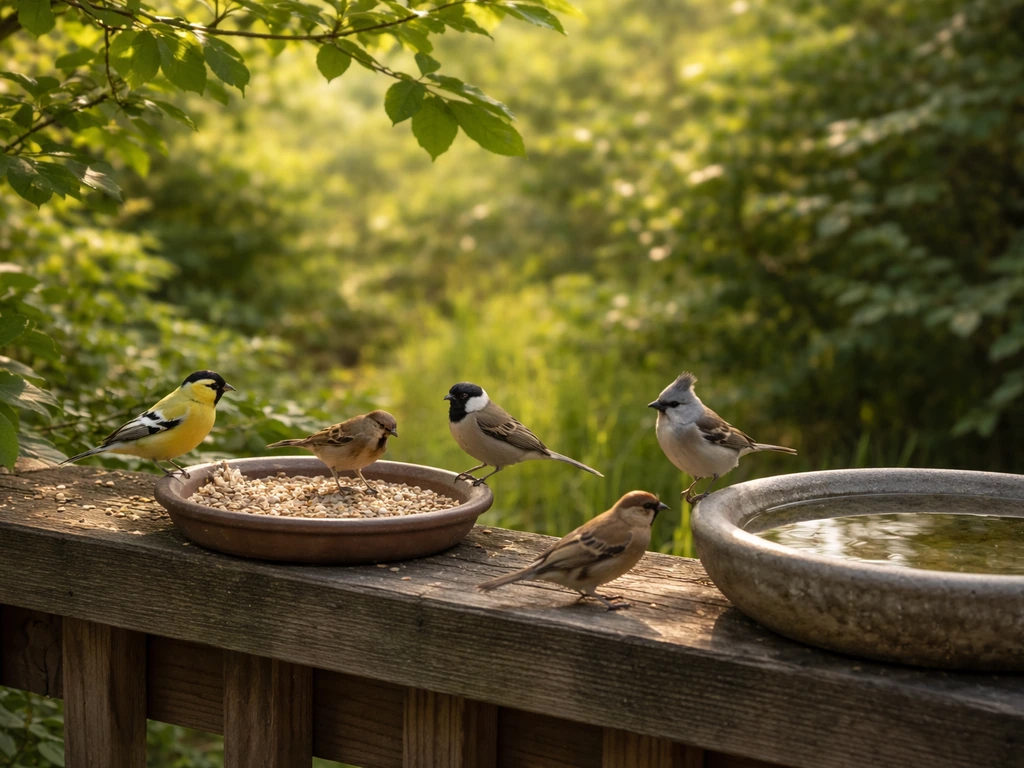
For wild birds, start by identifying which species already visit your area and which ones you'd realistically like to support. A yard in suburban Virginia is not going to attract the same birds as a rural property in the Pacific Northwest. Use eBird or a local field guide to get a baseline of what's possible in your region. This matters because native plant choices, nest box dimensions, and food types are all species-dependent. A nest box sized for a bluebird will be ignored by a chickadee, and vice versa.
For captive breeding situations, species selection and goal-setting are even more critical. Conures, lovebirds, quail, and Java finches each have very different social structures, nesting needs, and triggers for breeding behavior. If you want to start emu bird farming, the essentials are choosing breeding stock, setting up a secure shelter and fencing, and planning a consistent feeding and care routine how to start emu bird farming. Mixing goals (for example, trying to breed birds in a communal aviary while also trying to socialize them as pets) usually undermines both. Pick one clear goal per setup.
Fix the habitat before anything else
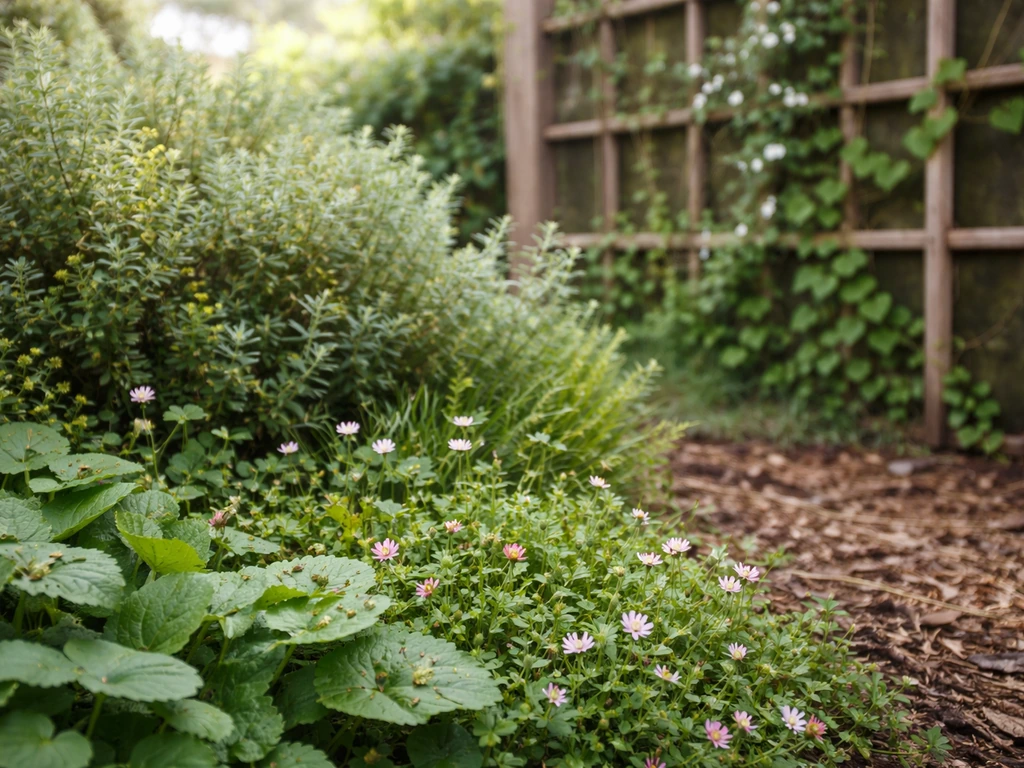
Audubon is direct about this: native plants beat even the best bird feeder. That's not hyperbole. A single native oak tree can support hundreds of caterpillar species, which are the primary food source for most songbird chicks. Native shrubs like serviceberry, elderberry, and dogwood provide berries across different seasons so birds have food when feeders run empty. Native grasses and wildflowers support insects, provide seed, and offer dense cover for ground-nesting and foraging species.
The Smithsonian recommends layering your vegetation from ground cover up through vines, shrubs, and trees. That vertical diversity isn't just aesthetic; it mirrors natural habitat structure and allows different species to occupy different niches in the same small yard. Even a modest suburban lot can support a surprising range of bird life if planted thoughtfully.
Water is equally important and often overlooked. A shallow birdbath (no more than 2 to 3 inches deep) kept clean and filled consistently will attract birds that never touch feeders. Moving water, like a small dripper or solar-powered fountain, is even more attractive because birds detect it by sound. Place baths in open spots with a clear sightline so birds can watch for predators while drinking.
- Plant species native to your specific region, not just North America broadly
- Aim for at least three vegetation layers: ground cover, shrubs, and one or more trees
- Provide a shallow, clean water source and refresh it every two to three days
- Leave some leaf litter and brush piles; these support insects and offer ground-level shelter
- Avoid tidying up dead standing trees (snags) if safe; they are critical nesting and foraging habitat
A humane, bird-friendly feeding plan
Feeders work best as a supplement to habitat, not a substitute for it. That said, a well-run feeder can genuinely help birds through harsh winters and migration periods when natural food is scarce. The key word is well-run. A dirty, overcrowded feeder does more harm than good.
What to feed and when
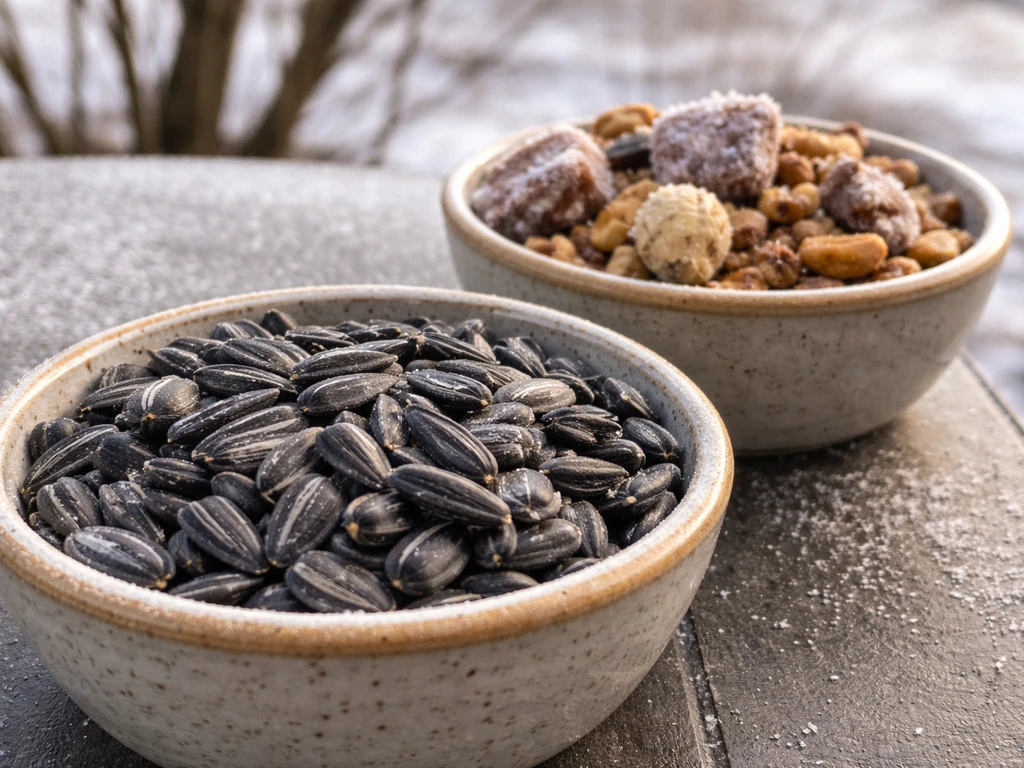
Black-oil sunflower seed is the single best all-purpose choice: it's high in fat and energy, has a thin shell most birds can crack, and attracts the widest variety of species from finches to nuthatches to cardinals. Nyjer (thistle) seed draws goldfinches and siskins. Peanuts (unsalted, shelled or whole depending on species) work well for jays, woodpeckers, and titmice. Suet cakes are especially valuable in winter when birds need high-fat fuel. Avoid cheap filler mixes loaded with milo or wheat; most birds will toss it aside, and waste seed on the ground creates sanitation problems.
Timing matters. Feeders are most critical during winter and early spring when natural food is depleted. During summer, many birds shift to insects and fruit, so you may see feeder traffic drop. That's normal and healthy. Don't feel compelled to pile on food year-round; focus your effort on the seasons when supplemental feeding actually makes a difference.
Feeder hygiene is non-negotiable
Disease is one of the most underappreciated threats at busy feeders. Diseases like trichomoniasis and salmonellosis spread easily when infected birds feed alongside healthy ones, especially in crowded conditions. Clean seed feeders every two weeks minimum, and more often during warm weather or if you see sick birds. Use a dilute bleach solution (one part bleach to nine parts water), scrub thoroughly, rinse well, and let the feeder dry completely before refilling. Hummingbird feeders need to be cleaned every two to three days in summer, every four to five days in cooler weather.
Do not scatter loose seed directly on the ground, decks, or patios. Virginia DWR specifically advises against this because it accelerates disease spread and attracts rodents, which then attract predators that threaten birds. If you want to feed ground-feeding species like towhees or sparrows, use a low platform feeder with drainage holes and clean it frequently. Providing multiple feeders spaced apart also helps reduce crowding and competition, which lowers disease transmission risk.
Feeder placement for safety
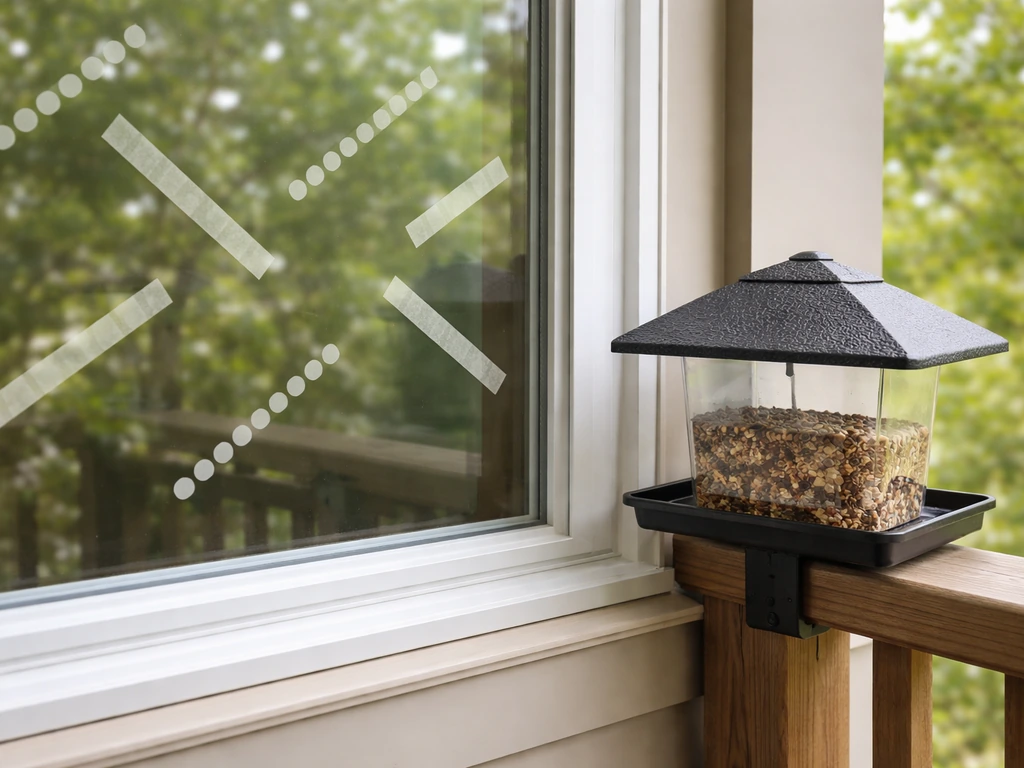
Window collisions are a major killer, and feeder placement plays a direct role. Place feeders either within 3 feet of a window (so birds can't build up dangerous speed if they flush) or more than 30 feet away. The middle distance, 5 to 25 feet, is the danger zone where birds accelerate enough to cause fatal impacts. Place feeders in spots that are visible and open so birds can see approaching predators, but with some nearby shrub cover (not a dense bush right underneath that a cat can hide in).
Nest support and breeding success
Adding nest boxes is one of the highest-impact things you can do for cavity-nesting species like bluebirds, chickadees, wrens, swallows, and woodpeckers. Natural tree cavities are in short supply in most managed landscapes, so purpose-built boxes fill a genuine gap. Box dimensions, hole size, and mounting height all need to match your target species, so don't just buy a generic birdhouse. A bluebird box needs a 1.5-inch entrance hole and should be mounted 4 to 6 feet high on a pole with a predator baffle. A wood duck box needs a much larger cavity and should be placed over or near water.
Placement matters as much as design. Orient the entrance hole away from prevailing wind and rain (generally facing east or southeast in most of North America). Mount boxes on poles rather than trees where possible; it's much easier to add a predator baffle to a pole. Keep boxes away from dense foliage right at the entrance, which gives predators a launch point.
How to monitor nests without causing harm
NestWatch's monitoring code is clear: nest monitoring should never jeopardize the safety or well-being of birds. That means keeping visits brief, not lingering near the box, and choosing the right interval. Weekly checks are a reasonable starting point for most cavity-nesting species. NestWatch notes that weekly nest checks can still yield valuable data when more frequent monitoring isn't possible, and emphasizes avoiding excessive disturbance. Check quickly (lift the lid, glance in, close it, move away), and do it in the middle of the day when adults are likely foraging rather than during the critical incubation hours of early morning. If you see a bird sitting tight on the nest, close the box gently and come back another day. Never check in the last few days before fledging; you can cause premature fledging, which sharply reduces chick survival.
For captive or aviary breeding situations, similar principles apply. If you are looking for how to breed bird at home or in an aviary, start by choosing the right species and setting up a species-specific breeding setup captive or aviary breeding situations. Whether you're working with lovebirds, conures, or Java finches, excessive checking of nest boxes causes stress that can lead to nest abandonment or egg destruction. Once eggs are laid, keep disturbance to a minimum and monitor from a distance where possible.
Cut the preventable deaths
Increasing bird population isn't just about adding birds; it's about reducing the rate at which they're lost. The four biggest preventable mortality sources in most yards are cats, window collisions, pesticide exposure, and disease at feeders. Address all four and you'll see a real difference.
Cats
The National Wildlife Federation is unambiguous: the only 100% effective solution is keeping cats indoors. Free-roaming cats are the single largest human-caused source of bird mortality in North America. If keeping cats indoors isn't possible for your situation, minimize hunting opportunities by placing feeders and birdbaths well above cat-reach height, away from low shrubs or fences that cats use as stalking cover, and on baffled poles that cats can't climb. The RSPCA recommends at least 2 meters of clear space around feeders and baths to give birds enough reaction time to escape.
Window collisions
The Iowa DNR and U.S. Fish & Wildlife Service both confirm that residential windows account for a very large share of collision fatalities. Decals and tape patterns applied to the exterior surface of glass are effective when spaced correctly: vertical stripes no more than 4 inches apart, or horizontal stripes no more than 2 inches apart. The key is that the pattern must be dense enough that birds perceive the glass as a solid surface rather than open air. Decals placed only on the interior side of the glass are much less effective during daylight because birds don't see them through the reflective exterior surface. External films, screens, or fritted glass are the most reliable long-term solutions.
Pesticides and rodenticides
Pesticide use in your yard has a direct, compounding effect on bird populations because it reduces the insect base that most birds depend on, especially during nesting season when chicks require protein-dense food. The EPA recommends using pesticides only when necessary, treating only targeted areas, and avoiding blanket applications. If you use rodent bait products, use enclosed bait stations that limit access to target species, and promptly remove and dispose of any rodent carcasses. Birds of prey and corvids readily eat poisoned rodents, which causes secondary poisoning that can kill eagles, hawks, and owls.
Track your results and adapt by season
One of the most common mistakes in backyard bird work is making changes without tracking what's happening. You can't know if your efforts are increasing bird populations if you don't have a baseline and a consistent counting method. This doesn't have to be complicated.
Project FeederWatch, run by the Cornell Lab of Ornithology, is the easiest entry point. You commit to counting birds at your feeder site on two consecutive days every one to two weeks throughout the winter season (November through April). The counting method is simple: record the maximum number of each species you see at one time during your count period (not a running total). Cornell uses this data to track winter bird abundance across North America, and you get access to your own trend data over time. This is how you know whether you're actually increasing bird presence or just seeing the same birds more often because you're watching more carefully.
Seasonal adaptation matters too. Spring is the time to clean and mount nest boxes before birds begin scouting. Summer calls for more attention to water sources and feeder hygiene as temperatures rise. Fall is when you add high-fat suet and calorie-dense seeds to support migrants. Winter is when supplemental feeding has the most direct survival impact. Keep a simple notebook or phone note with dates, species, and any changes you make to habitat or feeding so you can see patterns over multiple seasons.
| Season | Priority action | Why it matters |
|---|---|---|
| Spring | Install/clean nest boxes, reduce feeder crowding | Breeding birds are scouting; disease risk rises with warmer temps |
| Summer | Focus on water, limit ground feeding, reduce pesticides | Insect food chain is critical for raising chicks; heat speeds feeder contamination |
| Fall | Add suet and high-fat seeds, plant native shrubs | Support migrating birds building energy reserves; new plantings establish over winter |
| Winter | Maintain feeders consistently, keep water unfrozen | Food and water scarcity are highest; this is when feeders have the most survival impact |
Stay legal and keep welfare first
Most wild birds in the United States are protected under the Migratory Bird Treaty Act, which means you cannot capture, hold, transport, or possess wild birds (or their eggs or nests) without federal permits. If you are wondering how to get bird eggs, the answer for wild birds is that it is illegal without the right federal permits. This applies even if your intent is to help. If you find an injured bird, the correct step is to contact a licensed wildlife rehabilitator, not to attempt treatment yourself. Attempting to rehabilitate migratory birds without a permit is a federal violation, regardless of intent.
Nest monitoring is legal and encouraged by programs like NestWatch, but there are limits. You can observe and record, but you cannot move eggs, add nest material to active nests, or intervene in nesting outcomes without appropriate authorization. If you're working with non-native or domestic species (like Java finches, lovebirds, or quail in a controlled setting), you have much more latitude, but you still need to comply with any state or local regulations on keeping those species.
On the ethics side, the welfare-first principle means your actions should never prioritize numbers over individual bird wellbeing. Overcrowded feeders that spread disease, nest boxes checked so often that pairs abandon clutches, or breeding programs that produce more birds than can be properly housed or placed are all counterproductive. More birds is only a good outcome if those birds are healthy, safe, and living in conditions that meet their needs.
If you're working toward captive breeding specifically, whether with quail, conures, lovebirds, or other species, pair compatibility, appropriate diet, correct photoperiod, and species-specific nesting setups are all variables you can control and optimize. If you're looking for love bird breeding tips, pay close attention to pair compatibility, diet, photoperiod, and the nesting setup for lovebirds. For conure bird breeding tips, focus on species-specific diet, proper photoperiod, and safe, correctly sized nesting setups conures. Each species has its own triggers and requirements, and going deep on those specifics will get you further faster than any general approach.
What to do today, right now
- Walk your yard or space and identify the single biggest gap: is it food, water, shelter, or nesting sites?
- If you have feeders, check when they were last cleaned. If it's been more than two weeks, clean them today before refilling.
- Move any feeder that sits between 3 and 30 feet from a window to either closer than 3 feet or further than 30 feet.
- Look up one native plant species appropriate for your region and soil type and order or source it for spring planting.
- Sign up for Project FeederWatch if it's between November and April, or bookmark it to join in the fall and start your baseline count.
- Check your property for rodent bait products and switch to enclosed bait stations if you're using open trays or blocks.
- If you're interested in nest boxes, identify one target cavity-nesting species for your area and look up the exact box specifications for that species before buying anything.
FAQ
How long does it usually take to see an increase in bird population after improving habitat and feeders?
You may see changes within days for water and feeders, but population trends usually show over weeks to months. Native plant establishment is slower, and nest boxes often take a full breeding season to attract residents. Use a consistent count method and compare at least one winter and one spring to judge whether your changes are actually increasing presence.
Is it better to add more feeders or focus on native plants first?
Start with habitat, especially native plants and water, because they support insects and nesting cover, not just adult feeding. Feeders can supplement in winter and migration, but they cannot replace caterpillars, dense cover, and safe nesting habitat during chick-rearing.
What feeder locations should I avoid to reduce disease and predation risk?
Avoid placing feeders or birdbaths where birds must fly from cover to a clear open area, since they have fewer escape options. Also avoid ground-seeding and avoid putting feeders right next to dense cover that cats can use as a launch point. Spacing multiple feeders farther apart can reduce crowding, which lowers disease spread.
How do I know if my feeder setup is causing more harm than good?
Look for signs like visible sick birds congregating at a single feeder, rapid buildup of droppings under perches, and frequent feeder clogs that prevent birds from getting clean access to seed. If you see these, reduce crowding (more spacing), clean on a stricter schedule, and consider temporarily pausing feeders until sanitation and traffic improve.
Can I feed during summer, or should I stop when insects are available?
You do not have to stop, but you should expect lower traffic, since many species switch to insects and fruit. If you keep feeding, prioritize cleanliness and avoid overfilling, because warm temperatures increase microbial growth. Seasonal focus works best: emphasize winter and early spring for supplemental survival support.
What should I do if I want ground-feeding birds but I am worried about rodents?
Use a low platform feeder with drainage holes and clean it frequently instead of scattering seed. Place it where you can access it for regular maintenance, and avoid creating large seed-stress zones under decks or in corners. Reducing waste seed lowers rodent attraction and therefore reduces predation pressure.
Are decals or window films enough, or do I still need to adjust feeder placement?
Window treatments help, but feeder placement still matters. Keep feeders outside the collision “danger distance” band, and ensure the pattern is applied correctly on the exterior surface so birds can perceive the glass during daylight. Combining placement rules with films or screens usually performs better than either method alone.
What pesticide approach is safest for birds if I must treat my yard?
Avoid blanket spraying, and treat only targeted areas when needed. Consider alternatives that protect the insect base, because nesting birds depend heavily on protein-rich prey. If you use rodent baits, use enclosed stations and promptly dispose of carcasses to reduce secondary poisoning risk for raptors.
How should I monitor bird results without causing disturbance?
Track presence with brief, infrequent checks and follow a consistent schedule. For nest-related monitoring, observe from a distance and avoid late-season visits near fledging. Record what you see (dates, species, max count when appropriate) but do not hover around active areas for extended periods.
What is a practical baseline counting method if I do not have a formal program like winter feeder watch?
Choose one or two fixed locations (a specific feeder site or yard section), then count at the same time of day on a regular cadence. Record the highest number of each species seen at one moment during each count window, and do it for multiple weeks to smooth out daily variation.
Do birdhouses increase bird population automatically, or do I need to manage them?
They can help cavity nesters, but only if the box matches the target species and is mounted correctly. You may need to adjust box size, entrance hole diameter, mounting height, and predator protection to prevent predators from easily accessing nests. Place boxes away from dense foliage right at the entrance and orient holes to reduce wind and rain exposure.
How often should I check a nest box, and what should make me stop checking?
A reasonable starting point is about weekly for most cavity-nesting species, with quick checks that minimize time at the box. Stop checking and come back later if you notice adults are stressed, if the nest site appears fragile, or if birds are tight-sitting, especially as hatching and fledging approach.
What is the biggest mistake people make when trying to increase bird population with feeders?
They overfill and under-clean. Dirty feeders, overcrowding, and wasted seed can increase disease and attract rodents, which then raises predation risk. A smaller, better-maintained setup with correct seed choices and proper spacing is usually more effective than large amounts of mixed, filler seed.
Is it legal to collect eggs or move nests if my goal is conservation or increasing bird population?
For wild birds, it is generally not legal without the proper federal permits, even if your intent is supportive. If you find an injured bird, contact a licensed wildlife rehabilitator rather than attempting at-home care. Nest observation is usually allowed, but moving eggs, adding material to active nests, or intervening in nesting outcomes is not.
If I am breeding birds in a controlled setting, how do I avoid undermining reproduction?
Keep the breeding plan species-specific, minimize disturbance after eggs are laid, and avoid frequent nest checks that can lead to abandonment or damage. Also ensure adequate space, compatible pair setup, and a breeding-trigger environment (including correct light cycles) because “generic” aviary or household methods often fail.
Love Bird Breeding Tips: Safe Step-by-Step Guide
Humane, step-by-step lovebird breeding tips on pairing, nesting, incubation, chick care, biosecurity, and troubleshootin