
Keeping your bird entertained while you're at work is completely doable, and it doesn't require expensive gadgets or elaborate setups. The short answer: build a safe, stimulating environment before you leave, rotate enrichment so it stays novel, and create a consistent before-and-after routine that keeps your bird emotionally anchored to you. The rest is just details, and those details matter a lot for your bird's welfare.
How to Keep Your Bird Entertained While at Work

Maya Harris
22 Apr 2026
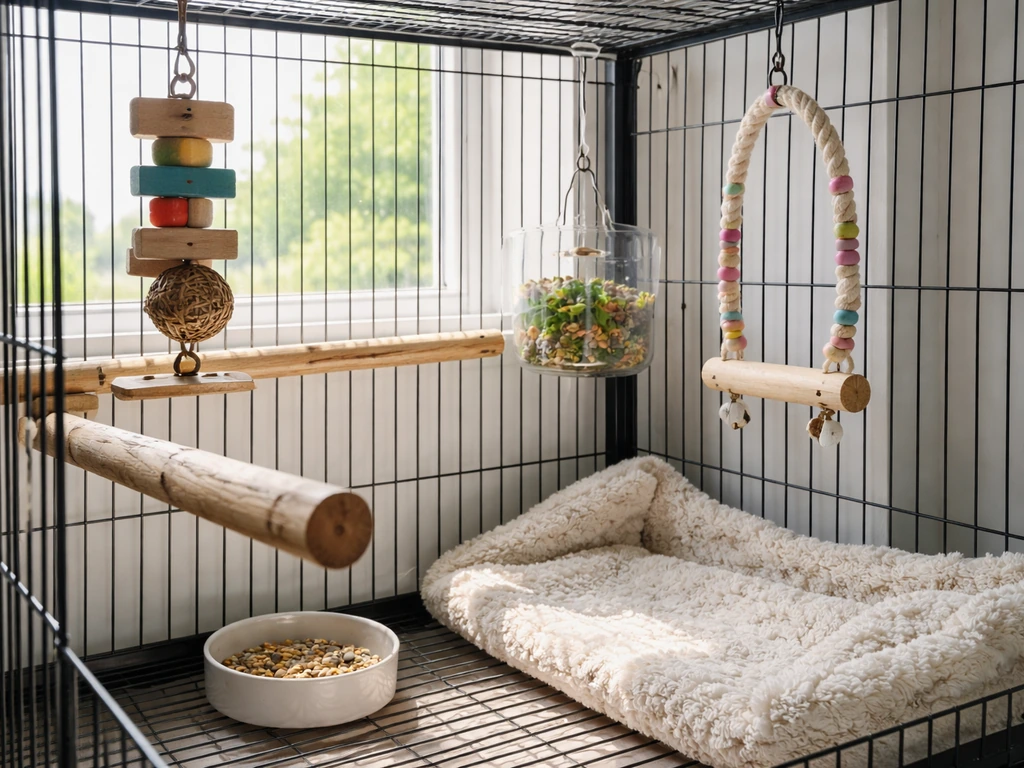
Start by matching enrichment to your bird's needs and species
Not all birds need the same kind of stimulation, and throwing a pile of random toys at a cage isn't enrichment, it's clutter. Before you plan anything, think about what your specific bird actually does when it's engaged and happy. A budgie shreds and climbs. A cockatiel forages and sings. A conure chews aggressively and wants physical interaction. An African grey solves problems and gets anxious with unpredictability. A macaw needs physically demanding activities and large foraging challenges. Getting this right is the foundation of everything else.
Environmental enrichment for parrots and pet birds is specifically about modifying their caged environment so they can express natural behaviors, including foraging, climbing, chewing, vocalizing, and problem-solving. When those needs go unmet, the research is clear: birds develop stereotypic behaviors like repetitive wire chewing, pacing, object-directed screaming, and feather destruction. These aren't personality quirks, they're signals that the environment isn't meeting the bird's behavioral needs.
Here's a simple framework for matching enrichment to your bird before you design anything:
- Small birds (budgies, lovebirds, parrotlets): focus on shredding materials, foraging in multiple small locations, climbing variety, and background sound. These birds do well with lots of small, busy activities.
- Medium birds (cockatiels, conures, caiques, ringnecks): foraging puzzles, wood chewing, shredding, and some foot-toy play. Conures especially need physical chew outlets or they redirect onto cage bars.
- Large parrots (African greys, Amazons, eclectus): puzzle feeders, problem-solving foraging devices, shredding/foraging combo toys, and auditory stimulation. African greys in particular benefit from predictable routines and novelty in controlled doses.
- Extra-large parrots (cockatoos, macaws): heavy-duty wood chewing, large foraging puzzles, and physical activity. Macaws need serious chewing material or destructive behavior escalates fast.
- Cockatiels and cockatoos: both are highly social and prone to separation stress, so sound enrichment and pre-departure routines matter more for these species than almost any other.
Also factor in your bird's individual temperament. A confident bird with a secure attachment style handles alone time better than a bird that's already anxious or has a history of stress behaviors. If your bird already shows feather plucking, excessive screaming, or repetitive movements, those behaviors are telling you the current setup needs to change, and this guide will help you work through that.
Set up the workday cage environment
Think of your bird's cage during your work hours as a dedicated daytime habitat, not just a holding pen. The goal is a space that feels calm, safe, and interesting all at once. Get the physical setup right and everything else works better.
Cage size and perch variety
Your bird needs enough space to move between perches, spread its wings without hitting cage walls, and access enrichment items without everything feeling cramped. For most medium to large parrots, the cage should be wide enough that the bird can extend both wings horizontally. Vertical space matters too, since birds instinctively prefer to move up and feel safer at higher positions. Use perches of varying diameter and texture (natural wood branches, rope perches, and platform perches) so foot muscles stay healthy and the bird has genuine climbing decisions to make.
Cage placement and environmental hazards
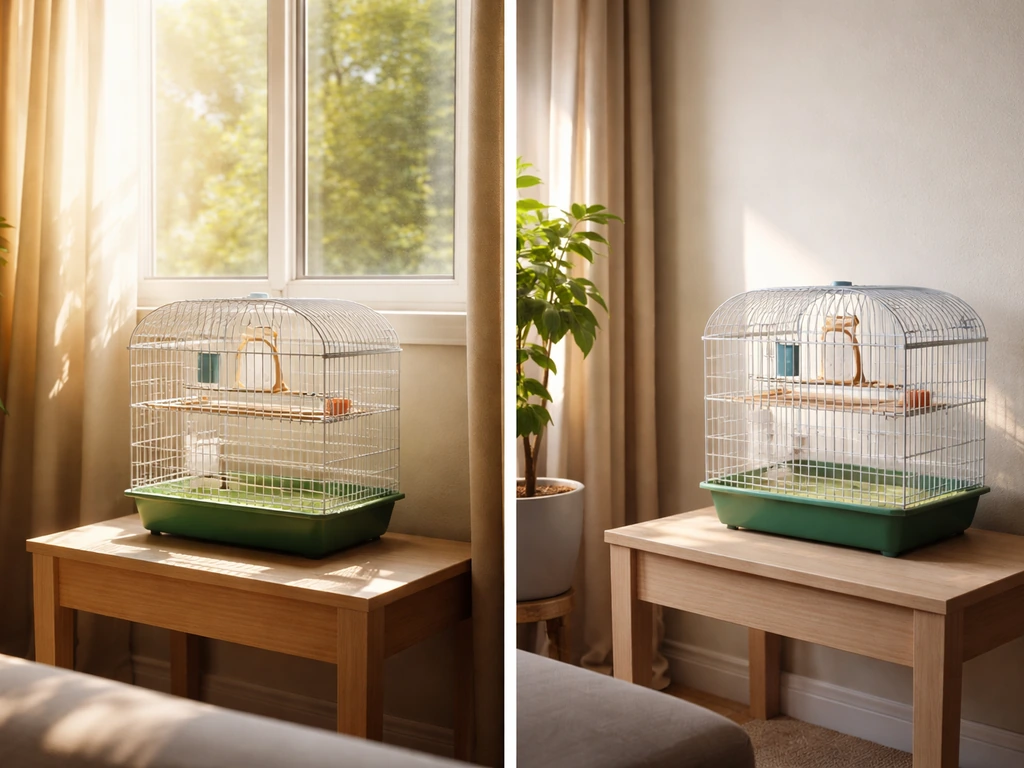
Where you place the cage during the day matters for both safety and stress levels. Place the cage against a wall on at least one side so your bird has a sense of security rather than feeling exposed on all sides. Avoid placing the cage in direct sunlight through a window, since temperatures inside the cage can spike quickly and cause heat stress. Similarly, avoid drafty windows and exterior walls in cold climates.
Air quality is one of the most critical safety factors for birds while you're not home to intervene. Birds have extremely sensitive respiratory tracts and can be harmed by fumes that you'd barely notice. Before you leave for work, make sure the kitchen area is well-ventilated if your bird is nearby, or better, keep the cage away from the kitchen entirely. Overheated non-stick cookware releases fumes that have killed birds at temperatures as low as 396°F (202°C), which is easily reached during normal cooking. Do not use air fresheners, aerosol sprays, scented candles, or plug-in diffusers in any room your bird occupies. These are real risks, not overstated ones.
Also think about what your bird can reach through cage bars. Toxic houseplants, electrical cords, cleaning products, and any painted or treated surfaces near the cage should all be moved before you leave.
Temperature and light
Most pet birds do well at room temperatures between 65 and 80°F (18 to 27°C). If your home drops below that during winter days or rises above it in summer, make adjustments before you leave. A full-spectrum light on a timer (roughly 10 to 12 hours of light per day for most species) supports natural rhythms and can positively affect mood, especially in winter months or rooms without much natural light. Chewy notes that many pet birds do best with about 10, 12 hours of darkness each night and benefit from some exposure to natural light 10 to 12 hours of light per day.
Foraging-based entertainment: feeders, puzzles, and shredding
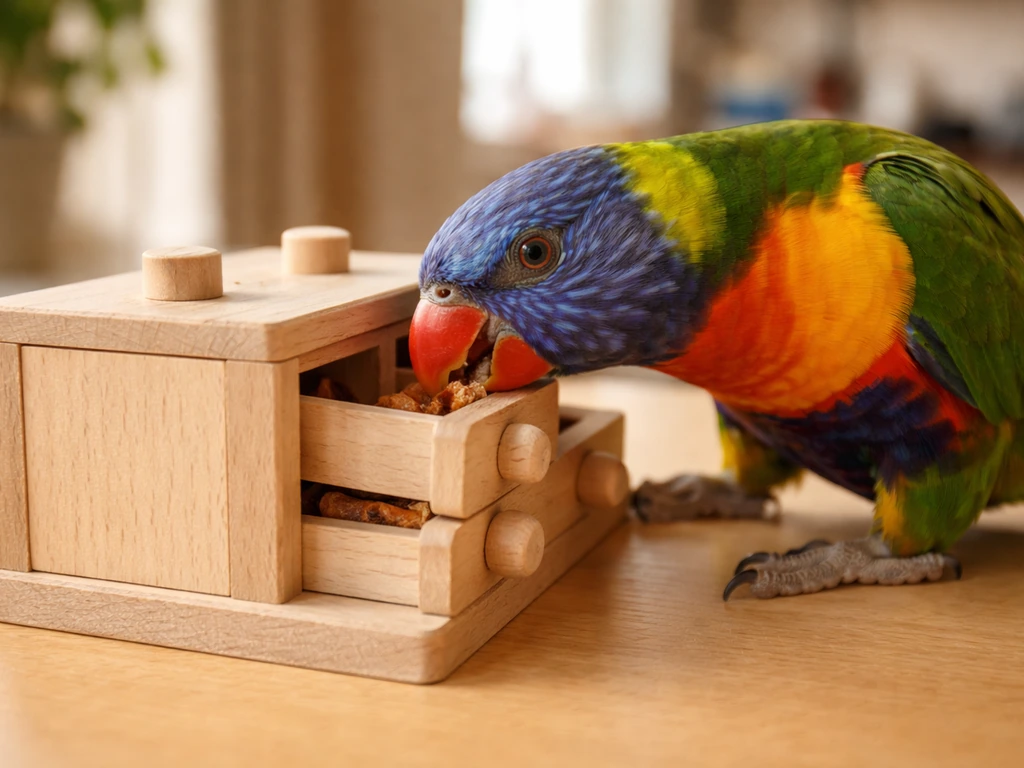
Foraging is the single most powerful enrichment tool you have for a bird left alone during the day. For more ideas beyond food, you can also use sound, light, and rotating toys to keep your bird engaged all day entertain a bird. In the wild, parrots spend a huge portion of their waking hours searching for and processing food. In captivity, food served in a bowl takes maybe five minutes. That gap between what their brain expects to do and what they actually do is a major driver of boredom and abnormal behavior. Research with puzzle feeders and foraging devices has shown foraging time in grey parrots can increase to around two hours per day with the right setup, compared to a few minutes with a regular food bowl.
The practical goal is to replace or supplement the food bowl with foraging activities that take time and mental effort. Here are the options that work best:
Puzzle feeders
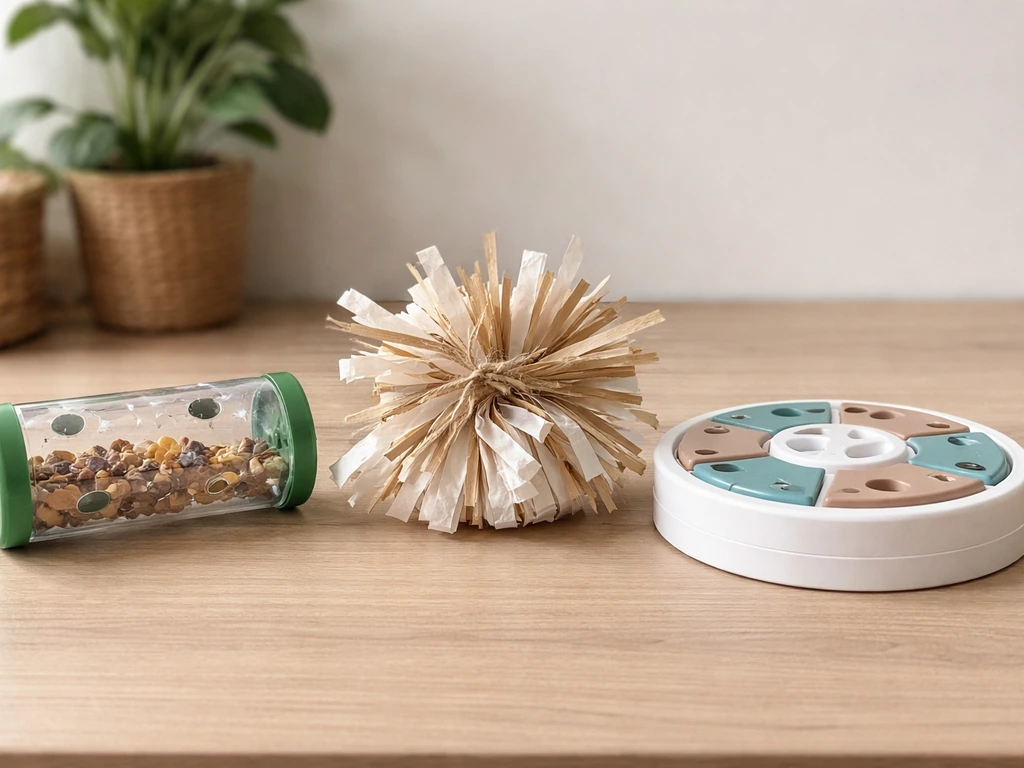
Puzzle feeders are containers that require the bird to manipulate them to access food. Start simple if your bird hasn't used one before, because a puzzle that's too hard becomes frustrating rather than engaging, and your bird may give up and scream instead. For beginners, try a clear acrylic box with a single sliding door, or a cup with a loose-fitting lid. For more experienced birds, layer the difficulty: a transparent box with multiple compartments, or a honeycomb-style acrylic feeder where each cell has to be opened individually. You can also hang a small foraging pouch filled with crinkle paper and a few pellets or seeds.
Shredding toys and DIY options
Shredding satisfies both the foraging instinct and the need to chew and manipulate materials. Safe shredding materials include untreated wood blocks, popsicle sticks, tree rounds with bark, corrugated cardboard, egg cartons, toilet paper rolls, and paper cup holders. You can stuff a cardboard tube with shredding paper and a few treats inside to combine shredding and foraging in one toy. These are sometimes called foraging shred tubes and they're very effective for budgies, cockatiels, conures, lovebirds, and small-to-medium parrots. For larger birds like African greys or macaws, scale up the materials so the physical challenge matches their beak strength.
Always verify materials are untreated and non-toxic. Avoid dyed papers, painted wood, or anything with adhesives unless you can confirm they're bird-safe. Natural sisal, cotton rope (no synthetic fibers that unravel into long strands), and palm leaf also work well as shredding additions.
Food-based foraging ideas
Beyond puzzle feeders, you can make the entire cage a foraging environment. Wrap pieces of food in paper, tuck them into natural wood crevices, thread vegetables through cage bars, or hang a skewer of fruits and veggies at different heights. Use a mix of foods your bird values differently so there's something to find quickly (lower-value) and something to work for (higher-value, like a small nut or a piece of fruit). This layered approach keeps the bird engaged for longer stretches.
Interactive and rotating toys: keeping things fresh while you're away
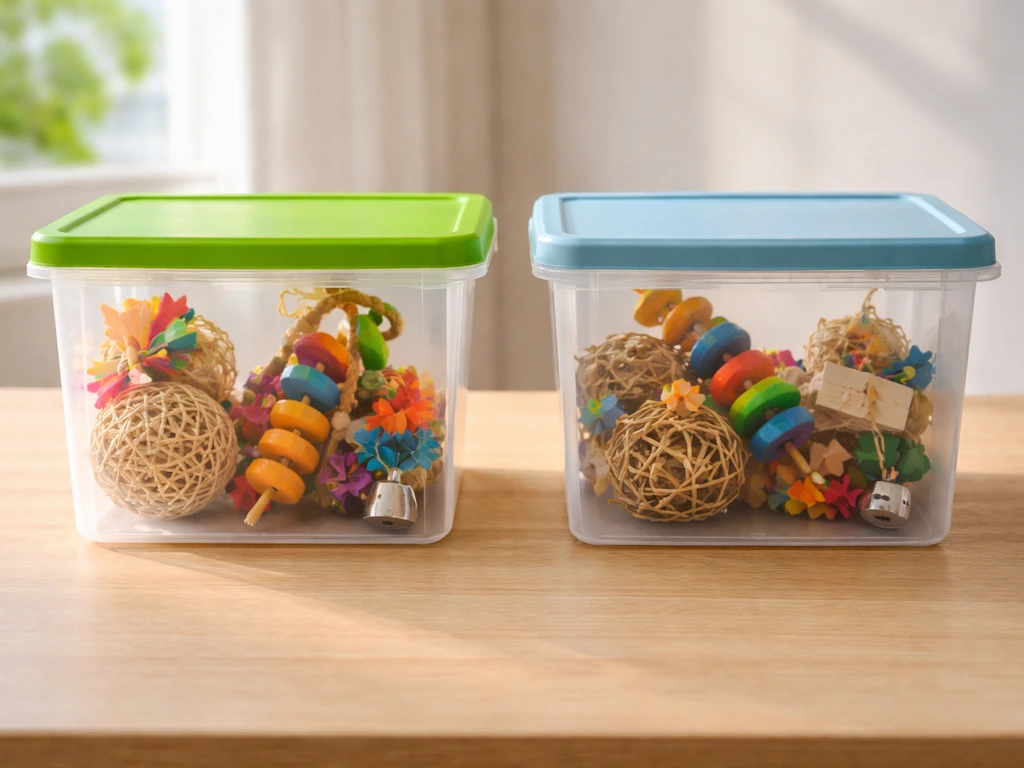
Novelty is what keeps toys working. A bird that sees the same three toys in the same positions every day stops engaging with them within a week or two. The fix is a simple rotation system: keep six to ten toys in total and swap two or three of them every few days. When a toy comes back after a two-week absence, it's interesting again.
For the workday specifically, focus on toys that don't require you to be present for them to work. Good categories include:
- Foot toys: small blocks, rings, or rolled paper balls the bird can pick up, carry, and manipulate independently
- Chew toys: untreated wood pieces, leather strips (vegetable-tanned only), or hard plastic rings for birds that need beak activity
- Puzzle/foraging toys: anything that hides or requires effort to access food
- Shredding materials: cardboard, palm leaf, or paper-based toys that the bird can destroy progressively throughout the day
- Mirrors (use cautiously): fine as a short-term diversion for some small birds, but can cause obsessive behavior or territorial aggression in others, especially parrots, so monitor the response before leaving a mirror unsupervised
Hang toys at different cage heights so the bird has to move around to access them. This adds light exercise and decision-making to the routine. If your bird still seems restless after you refine enrichment, you can also explore how to exercise your bird as an adjacent training and activity option light exercise. Placing a foot toy or foraging item near a favorite perch and another in a less-frequented area encourages exploration.
Check toys regularly for safety. Look for frayed rope ends long enough to catch a toe or neck, broken acrylic with sharp edges, and any toy part small enough to be swallowed. Replace anything that shows significant wear. Rubber Kong-type toys are a durable option for birds that need heavy chewing without the destruction hazard of softer materials.
Adding sound, light, and social connection safely
Birds are social animals and complete silence for eight or nine hours can increase stress, especially for species that flock in the wild and use constant contact calls to stay connected. Adding background sound is one of the easiest and most effective things you can do.
Background sound: what works and what doesn't
A TV or radio left on at a moderate volume can provide both auditory stimulation and a sense of activity in the house. Nature documentaries, calm talk radio, or classical/acoustic music work well for most birds. Avoid anything with loud sudden noises, heavy bass, or aggressive audio, since excessively loud noise causes stress rather than comfort. Set the volume low enough that you'd consider it background noise rather than active listening, typically around 50 to 60 decibels, roughly the level of a quiet conversation. Nature soundscapes (birdsong recordings, rainforest ambient audio) are a great option if you want something specifically designed for animal enrichment.
If you want more targeted sound enrichment, you can record your own voice talking or singing and play it back on a timer during the day. Some birds respond very positively to the owner's voice and will vocalize back, which counts as genuine social engagement even in your absence.
Light management
Avoid placing the cage where direct sun beams through a window for hours, since this can overheat the cage and cause distress. A room with indirect natural light is ideal. If the room is dark during the day, a full-spectrum bird lamp on a simple outlet timer provides consistent lighting and helps maintain your bird's natural circadian rhythm.
Social connection for multi-bird households
If you have more than one bird, positioning cages where they can see and hear each other (but not physically access each other unsupervised) provides passive social stimulation throughout the day. Research on cockatoos found that birds became more social and engaged when housed near areas of visible activity. You don't need birds in the same cage to benefit from each other's presence. That said, introduce this setup gradually and watch for stress responses like excessive alarm calling or aggressive posturing at the cage bars.
How to prepare your bird before you leave and reconnect after work
What you do in the 15 to 20 minutes before you leave and the 15 to 20 minutes after you return matters more than most people realize. This bookend routine is your most direct tool for reducing separation-related stress and maintaining your bond.
The before-work routine
Keep your departure calm and consistent. Frantic goodbyes or dramatic farewells can signal to your bird that leaving is an event worth being anxious about. Instead, build a short, pleasant routine: spend five to ten minutes interacting with your bird (talking, light handling, or a brief training session if your bird is trained), set up fresh foraging activities and swap out one or two toys, top up the water, and then leave without fuss. If your bird is mean or reactive, start with the same approach: build foraging, safety, and routine so it has fewer triggers and more positive outlets. That same combination of calm, enrichment, and routine is also the practical way to make your bird happy while you're at work. Say a consistent, calm phrase like 'I'll be back later' if you want a verbal cue, but keep your energy matter-of-fact. Birds read your emotional state very accurately.
Set up the foraging activities right before you walk out the door so everything is fresh and engaging at the moment when your bird is most alert and watching you leave. This gives the bird something to do immediately rather than pacing after you.
The after-work reconnection
When you get home, give your bird some dedicated attention before you do anything else if possible. If you want to build on that attention, this guide on how to play with a bird in a cage can help you choose cage-safe games and enrichment. If you want more ideas beyond enrichment toys, browse fun things to do with your bird for additional in-cage activities and play options. A few minutes of calm interaction, out-of-cage time if your bird is accustomed to it, and light training or play signals that the day is over and the social part of your bird's day is starting. This is also the right time to observe your bird's behavior and assess how the day went: check for signs of stress, look at whether foraging toys were used, note the bird's energy level and vocalization patterns. Over time this gives you real data on what's working.
If you're working on bonding or training, the after-work window is your primary opportunity. Birds left alone during the day aren't going to self-train, and expecting enrichment toys to replace the bonding relationship would be a mistake. The toys handle the stimulation; you handle the relationship. Both matter.
Troubleshooting boredom and stress behaviors
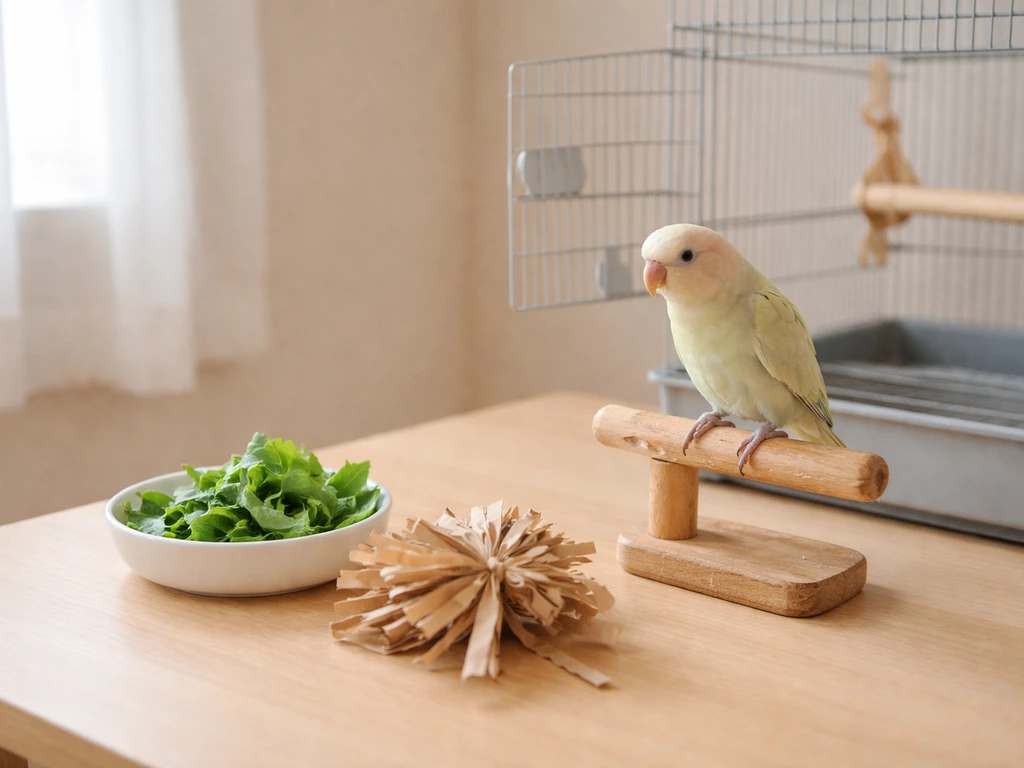
If your bird is showing stress behaviors during the workday, that's information, not a character flaw. The behaviors themselves will tell you what kind of enrichment or change is missing. Here's how to read the signs and what to try first.
| Behavior | What it usually signals | First adjustment to try |
|---|---|---|
| Feather plucking or barbering | Chronic boredom, inadequate social contact, or medical issue | Add foraging complexity; schedule a vet check to rule out medical causes; review cage placement and social setup |
| Repetitive screaming or contact calling | Social isolation or a learned attention-seeking pattern | Add background sound; do not rush back to reward screaming; ensure the pre-departure routine is calm |
| Wire chewing or bar chewing | Under-stimulated beak/oral need; possible nutritional gap | Add wood chewing toys and shredding materials; review diet with an avian vet |
| Pacing or repeated route-tracing | Insufficient physical space or locomotor boredom | Increase perch variety and cage space; add climbing structures; consider out-of-cage time before/after work |
| Destructive chewing of cage parts or toys too quickly | Insufficient physical challenge for beak strength | Upgrade to harder wood and more complex puzzle feeders appropriate for the species size |
| Lethargy or disinterest in enrichment | Enrichment items are too familiar, or bird is stressed/unwell | Full toy rotation; introduce a novel food item; vet check if lethargy persists |
Stereotypic behaviors (repetitive, purposeless actions like incessant screaming at a specific object, sham chewing, or fixed pacing routes) are a sign that the environment has been under-stimulating for long enough that the behavior has become habitual. These can be reduced but take consistent enrichment improvements and time to shift. Don't expect one new toy to solve a months-long pattern. Work on all the layers: physical space, foraging, sound, social routine, and toy rotation together.
If feather plucking is present or worsening, always start with an avian veterinarian visit. Feather plucking is multifactorial and can have medical causes (parasites, skin conditions, nutritional deficiencies) alongside behavioral ones. Treating only the behavioral side while a medical cause goes unaddressed won't work.
A quick enrichment audit checklist
If you're not sure where to start, run through this list. Any 'no' answer is something to fix:
- Does your bird have at least one active foraging activity available every workday (not just a food bowl)?
- Are toys rotated at least every one to two weeks so there's always something relatively new?
- Is background sound playing at a comfortable level during the day?
- Is the cage placed away from drafts, direct intense sunlight, the kitchen, and aerosol sources?
- Do you have a consistent, calm pre-departure routine?
- Do you spend at least 15 minutes of focused interaction with your bird after work before the evening winds down?
- Are all toy materials confirmed bird-safe (untreated wood, no toxic dyes, no long-strand synthetic fibers, no small ingestible parts)?
Getting all of these right is the practical definition of keeping your bird entertained and well while you're at work. None of it is complicated, and most of it is free or very low cost. The real investment is consistency, paying attention to your bird's responses, and adjusting what isn't working. That feedback loop, over time, is what builds a genuinely happy, behaviorally healthy bird.
FAQ
How long can I realistically leave my bird alone at work without risking boredom or stress?
It varies by species and temperament, but you can’t use “hours” alone to judge safety. Watch for early warning signs like increased pacing, panic screaming at the same times daily, and reduced foraging when you return. If those appear, shorten the alone window by adding a mid-day check, or increase foraging duration and sound/social cues before adjusting anything else.
Should I keep the lights on all day, or use a night-like darkness period while I’m away?
Use a consistent photoperiod, not random switching. If you use a timer, aim for roughly the daily light span the species normally experiences, and provide a darker rest period at night. If your home is bright 24/7 or you constantly open curtains, many birds get less restful sleep, which can worsen daytime pacing and screaming.
My bird is still screaming during work. Does that mean the enrichment is wrong, or could it be calling for me?
Both can be true, and the pattern helps you tell which. If screaming starts right after you leave and peaks until you return, it may be separation distress. If screaming continues even after the bird has foraged and engaged, it’s often an unmet behavior need or a toy setup problem (too hard, too few foraging options, or limited climbing routes). Track whether foraging toys are used before you change everything.
Can I leave my bird alone with a “live” toy like a small foraging paper wad or crinkle material?
Crinkle and shreddable materials are great, but you need containment and inspection. Use pieces sized so they don’t become swallowable fragments, avoid anything that unravels into long string-like strands, and remove items that get heavily damaged or wet. Replacing before-work is safer than relying on “it should be fine,” since frayed bits can appear overnight.
How do I know if my puzzle feeder is the right difficulty (not too easy, not too frustrating)?
A good puzzle keeps the bird actively engaged, with repeated attempts, without rapid escalation into distress. If the bird ignores it after a few tries, it may be too hard or not rewarding enough. If the bird solves it immediately and then loses interest, it may be too easy. Adjust by adding one extra step, smaller compartments, or slightly higher-value food reward.
Is background TV or music always helpful, or can it become a stress trigger?
It can become stressful if it includes sudden loud moments, aggressive audio, or consistently high volume. Treat it like “ambient coverage,” not entertainment. If you notice louder, sharper vocalizations during certain programs or spikes in pacing, switch to steady sound (nature ambience or calm instrumental) and keep volume low enough that you would call it background noise.
What temperature range is safest while I’m at work, and what should I do if my home swings a lot?
Many pet birds do well around room temperatures in the mid-60s to upper-70s Fahrenheit, but the key is avoiding extremes and sudden swings. If your home drops or rises quickly when HVAC cycles, use a stable, draft-free setup like a dedicated room corner away from vents, and consider a monitored backup heat or cooling strategy suitable for birds. Always prioritize avoiding direct sunlight hitting the cage.
My bird destroys toys. How can I enrich without increasing the risk of swallowing parts or getting hurt?
Choose tougher, bird-appropriate designs and supervise the “destruction stage.” Inspect daily when possible, and replace immediately if there are sharp edges, loosened fasteners, frayed rope long enough to snag toes or neck, or small detachable pieces. For heavy chewers, durable rubber-style chew toys can reduce hazards compared with softer materials that break down into many fragments.
Can I use seeds as the only foraging items while at work, or do I need variety?
Variety helps because birds value foods differently and you want foraging to stay motivating across days. Use a mix of lower-value and higher-value items so the bird gets short-term success quickly, then works for the bigger reward. Also rotate food “types” (pellets versus small nuts versus fruit pieces) so boredom doesn’t set in after repeated successful foraging.
What if my bird seems attached and gets worse when I leave the cage near the kitchen or living areas?
Proximity can help some birds with social presence but hurt others if the area is noisy or full of movement. If stress behaviors increase when the bird is near high-traffic areas, move the cage to a calmer section that still provides safe passive cues. Always keep the bird away from cooking fumes and avoid scented products, since those risks apply regardless of location.
How should I introduce another bird’s cage nearby if I have two birds?
Do it gradually and watch body language at the bars. If you see excessive alarm calling, lunging, or sustained aggressive posturing, separate them and try again later with more distance. Also ensure physical separation prevents access to each other’s toys, feet, or beaks, since “seeing and hearing” should not become unsupervised contact.
Is there a safer alternative to leaving a whole bunch of toys when I’m gone for long stretches?
Yes, fewer well-matched items often work better than lots of clutter. Keep a small rotation system, and prioritize foraging and climbing routes that create purposeful activity. Place items at different heights so the bird must move and choose, which reduces the chance that it will get stuck in one anxious routine.
What should I do immediately if I discover I used something unsafe, like an aerosol or non-stick fumes?
If exposure to fumes is suspected, treat it as urgent. Remove the bird from the area to fresh air and contact an avian veterinarian or emergency avian service right away. Don’t wait for symptoms to appear, because bird respiratory tissue can be affected before owners notice anything.
When I come home, how do I avoid accidentally making the stress worse?
Use the same bookend principle, keep your tone calm, and start with a quick check for water and foraging remnants before intense handling. If your bird is already worked up, give a short quiet period first, then offer a gentle transition into interaction. Jumping straight into high-energy play can reinforce “you leave and I get chaos,” which can worsen separation responses.