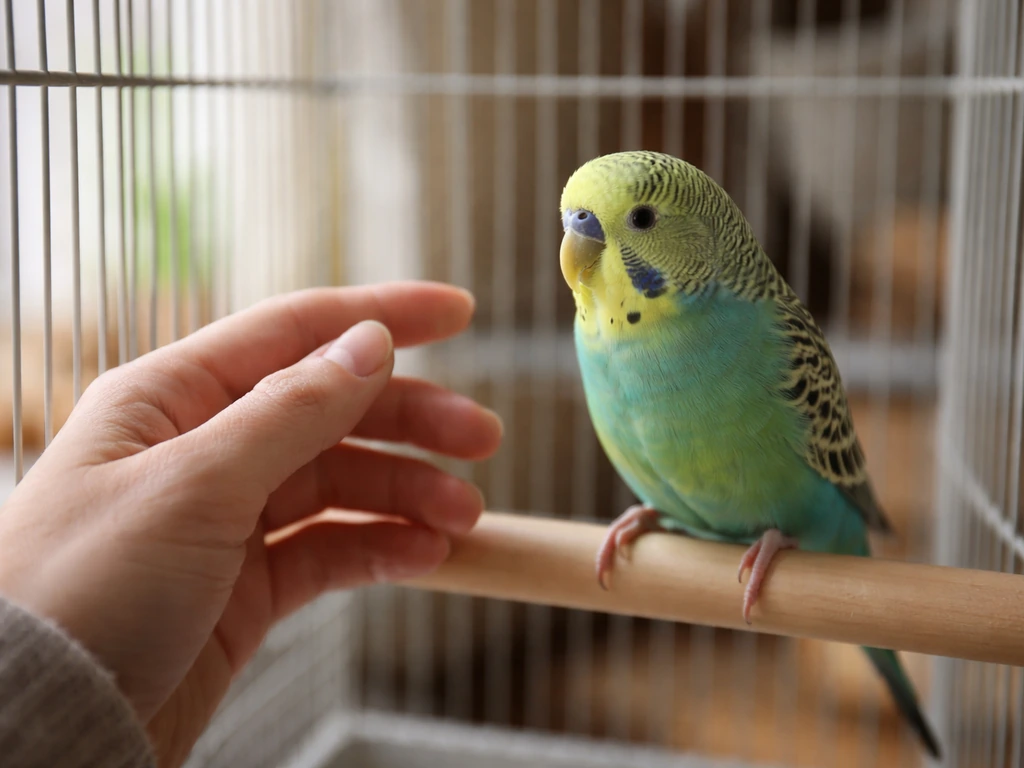
You can absolutely train a canary bird, and the process is more rewarding than most people expect. Canaries are not parrots, so they won't typically talk or perform complex tricks, but they can learn to step up onto your hand, perch calmly on your shoulder, follow a target, and sing on cue with the right encouragement. The key is patience, consistency, and letting the bird set the pace. If you push too fast, you'll break trust and have to start over. If you go slowly and keep sessions positive, most canaries will come around within a few weeks.
How to Train Canary Bird: Step-by-Step Trust and Cues
Maya Harris
12 Apr 2026
Set up the right environment before you start any training
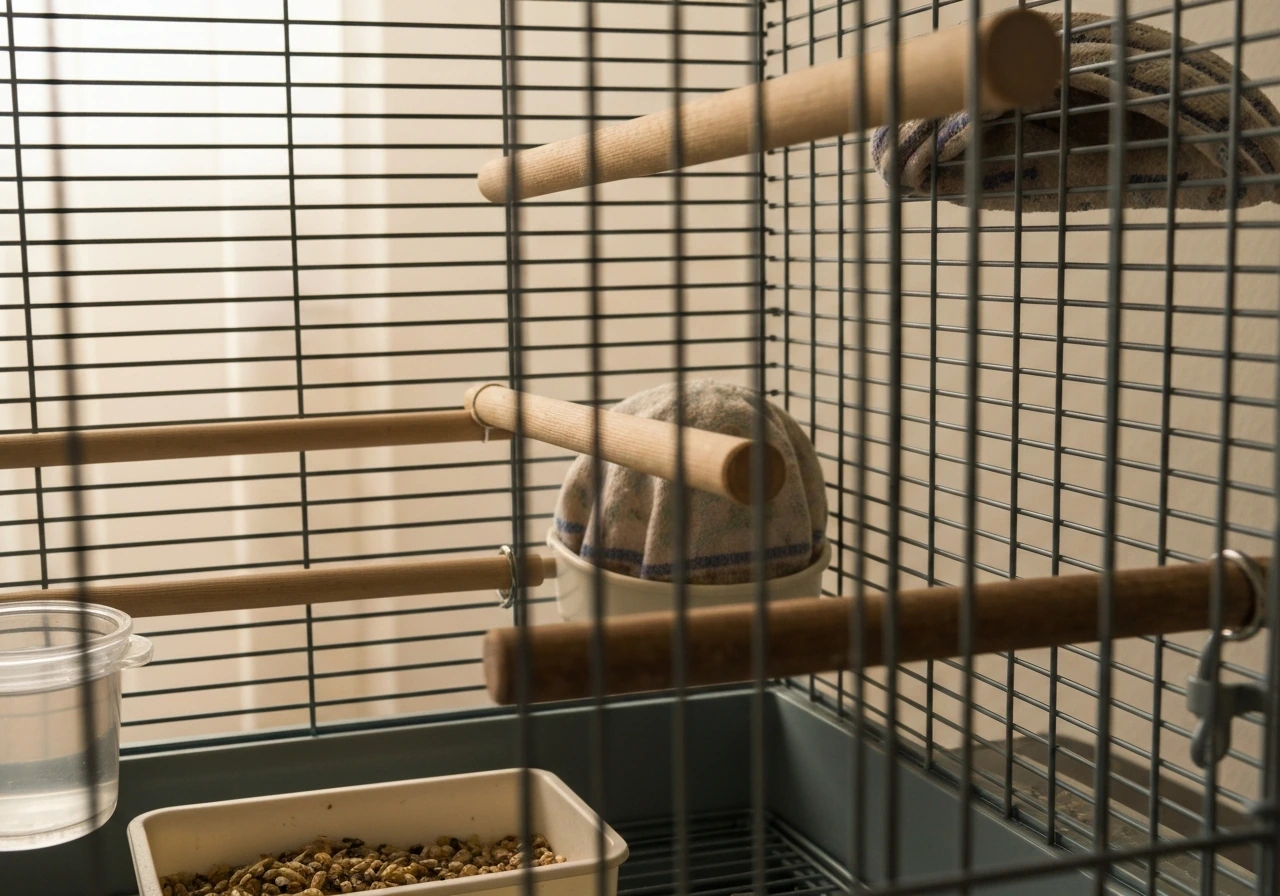
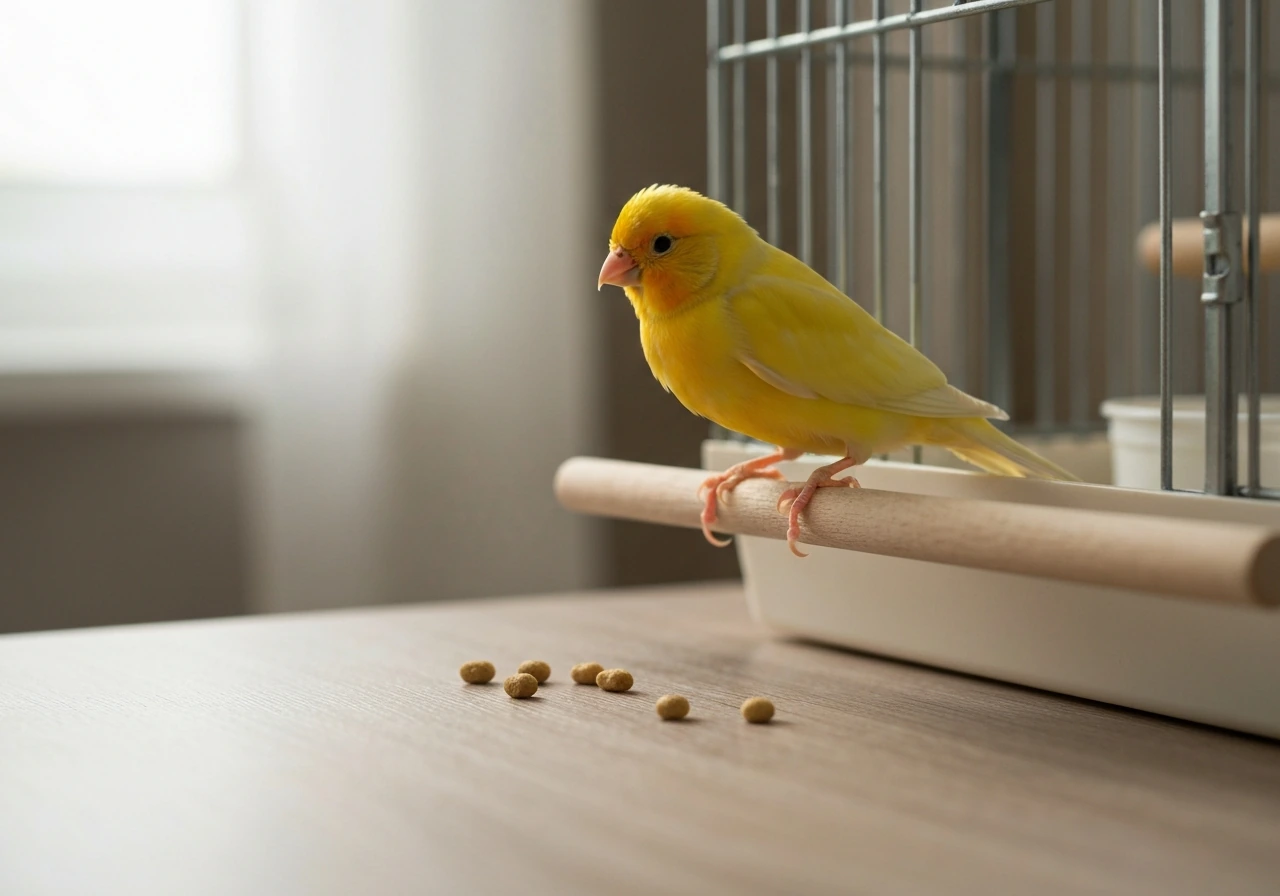
The training foundation is built before you ever reach into the cage. A canary that feels safe in its space will make progress ten times faster than one that's stressed by its environment. Get this part right first.
Cage size matters more than almost anything else. For canaries, bar spacing should be no wider than 1/2 inch to prevent escapes or the bird getting stuck. Give your canary at least two to three perches at varying heights so it can move around freely and choose where to land. Natural wood perches of slightly varied diameter are better for foot health than uniform dowels.
Position food and water away from perches to prevent contamination, and consider adding a shallow bird bath or offering a gentle misting a few times a week since canaries genuinely enjoy bathing and it supports feather health.
PetSmart’s canary care guide also says canaries prefer not to be handled, and if your bird likes showers you can gently mist it with warm water 2, 3 times a week consider adding a shallow bird bath or offering a gentle misting a few times a week since canaries genuinely enjoy bathing and it supports feather health. .
Routine is your most underrated training tool. Canaries are highly sensitive to their environment, and a predictable schedule helps them feel secure enough to engage with you. Cover the cage each night and keep a consistent light/dark cycle that mirrors natural day length, typically 10 to 12 hours of darkness in a quiet room. Keep the cage in a spot where the bird can see household activity without being overwhelmed by noise, sudden movement, or cold drafts. A calm bird is a trainable bird.
Add a small amount of enrichment from day one. Foraging toys designed for small birds, where the canary has to work slightly to access food, give the bird mental stimulation and reduce boredom-related stress. Introduce any new enrichment item outside the cage first so the bird can see it without being trapped with it, then place it inside once the bird seems unbothered.
Hand-taming basics: building trust before you touch
Most canaries come to new owners already a little wary of hands. That's normal. Your job in the first week or two is simply to become familiar and non-threatening, not to handle the bird yet. Sit near the cage daily, talk softly, and move slowly. High-pitched, fast, or loud movements are processed as predator cues by small birds, so keep everything low and deliberate.
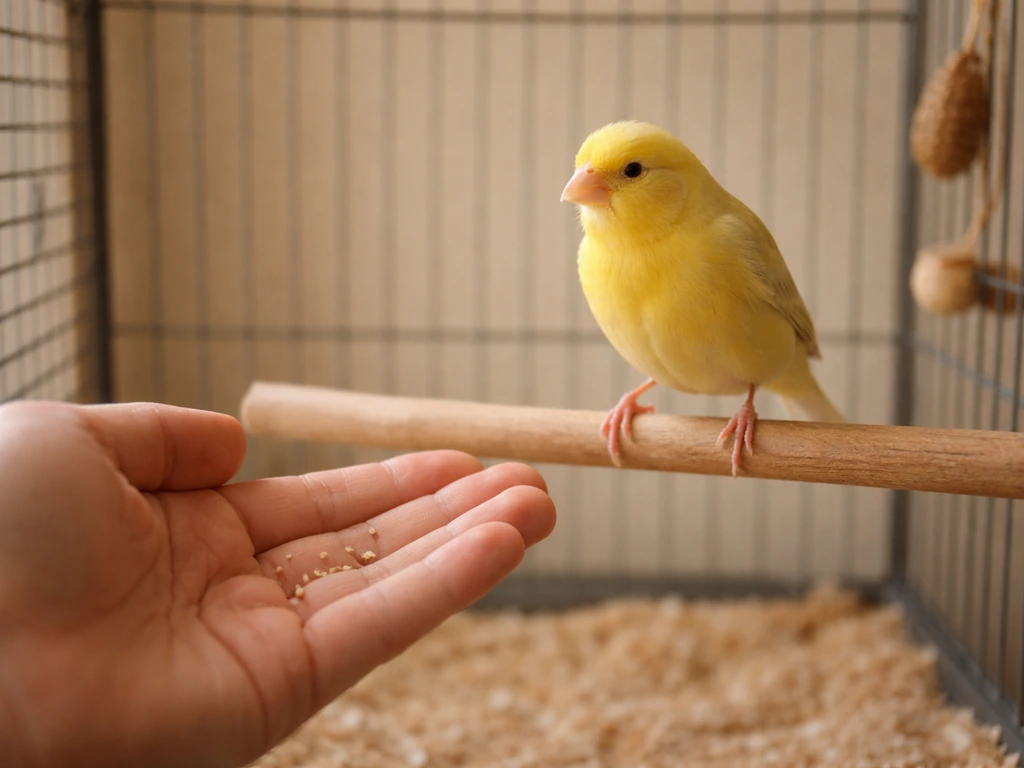
Start bringing treats to the cage door by hand. Spray millet works extremely well for this because canaries love it and you can hold a sprig through the bars without the bird needing to come close. When the canary hops toward your hand to eat, that's a win. Don't try to grab or touch at this stage. You're simply teaching the bird that your hand predicts something good.
After several days of successful treat delivery through the bars, begin opening the cage door and offering the treat from just inside the opening. Keep your hand still and your body relaxed. If the canary retreats, pull back slightly and try again the next day. Minimize restraint, speak in a quiet voice, and move slowly throughout all of this. Any rushing here will set you back significantly.
Teaching step-up, perching, and targeting
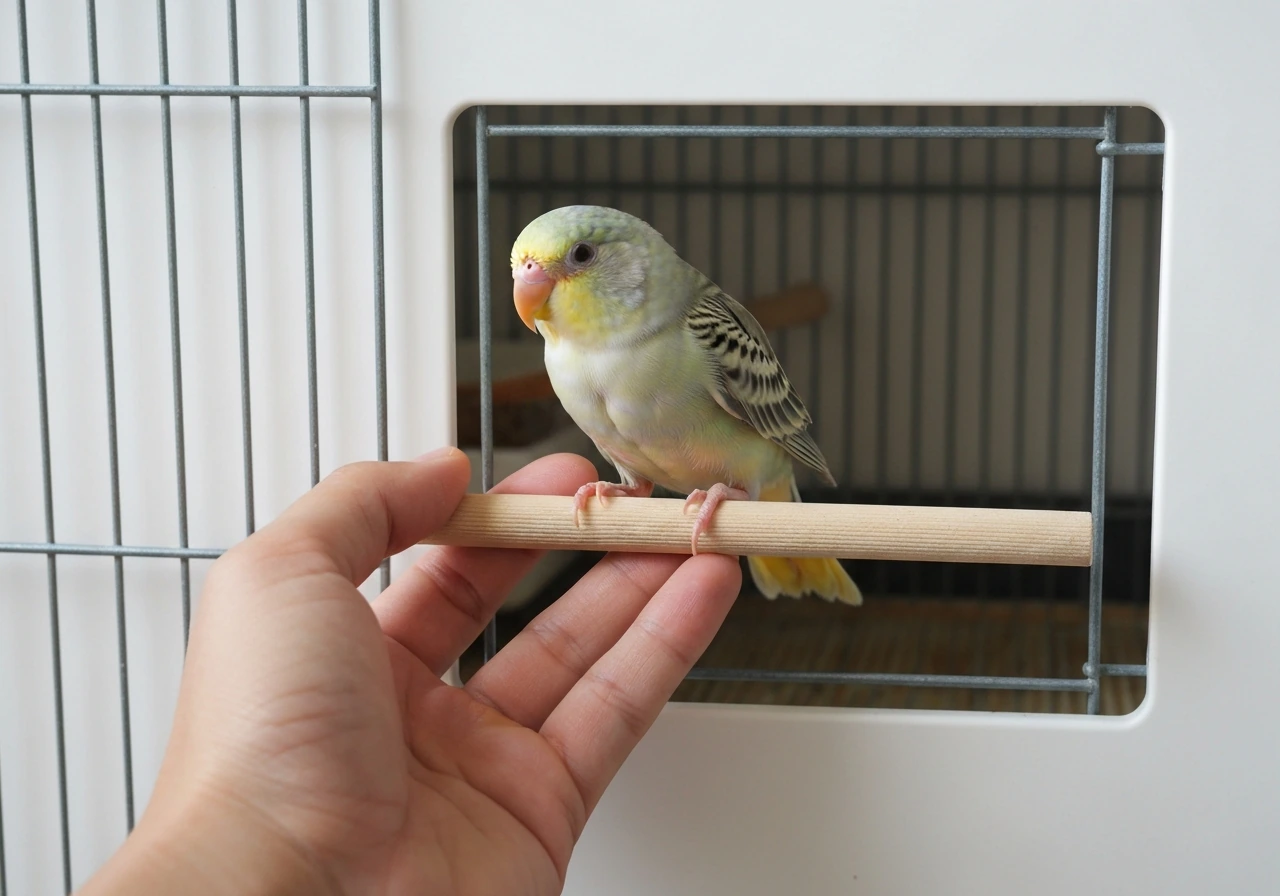
Step-up
Once your canary is comfortable eating from your hand inside the cage door, you can begin step-up training. Hold your index finger (or a short perch dowel if the bird isn't ready for bare skin) just slightly above the bird's feet and very gently press it against the bird's lower chest or belly. This contact triggers a natural reflex to step up. The goal is voluntary movement, not forced lifting. If the bird steps up even for a second, reward immediately with a piece of millet and let the bird step back off. Keep sessions under five minutes.
Position and hand steadiness matter a lot here. A shaky or moving hand makes the bird feel unsteady and it will jump off immediately. Practice holding your hand still before you even involve the bird. Over multiple sessions, the step-up will become more confident and the bird will hold the position longer. Never grab the bird if it refuses to step up. That kind of forced interaction teaches fear, not cooperation.
Targeting
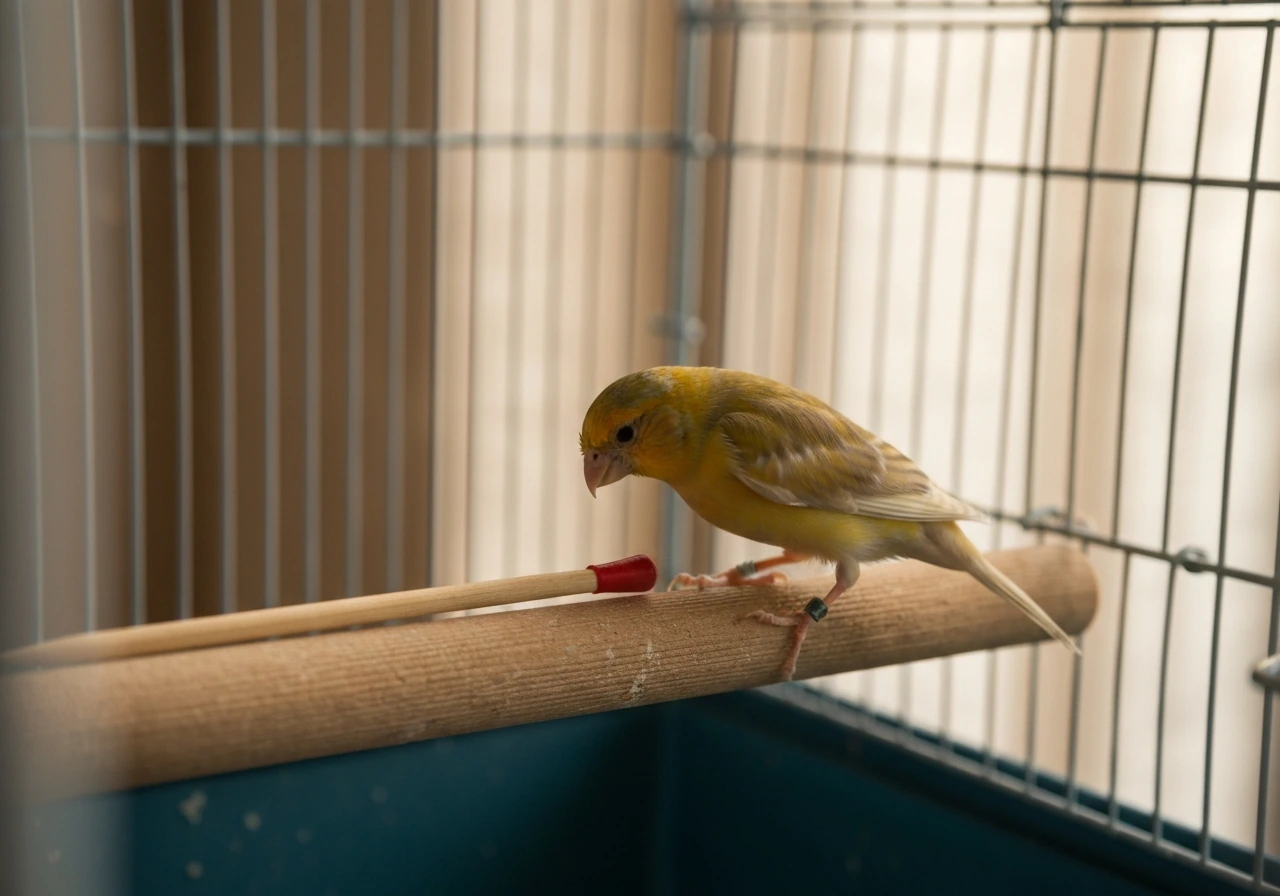
Targeting is one of the best tools for working with canaries that are still hesitant about hands. A target is just a small stick or chopstick with a colored tip that the bird learns to touch with its beak. Start by presenting the target just in front of the bird's face. The moment the bird investigates it or touches it, reward with a treat.
Once the bird is consistently touching the target on presentation, you can use it to guide the bird toward your hand, a new perch, or a travel carrier, all without any physical contact until the bird is ready. Change only one variable at a time during target training. If you're increasing distance, don't also increase speed. Keep one thing consistent while you build the other.
Targeting is especially useful for cage-bound canaries that seem reluctant to leave their familiar space. You can learn more about how this technique applies to other small birds like finches, since the approach translates well across species with similar temperaments.
Encouraging singing and building natural enrichment
Singing is the behavior most canary owners care about, and the good news is you don't really teach a canary to sing so much as you create the conditions where it wants to sing. Male canaries sing naturally, especially during the spring and summer months when daylight hours are longer. A canary that feels safe, well-fed, and unstressed will sing more consistently than one living in a chaotic or threatening environment.
To encourage singing, keep the light schedule consistent and natural. Expose the bird to gentle ambient sound, a radio playing softly in the background works well, and allow supervised out-of-cage time when the bird is ready for it. Some canaries will start singing more once they have a view of the outdoors or other birds, though keep in mind that seeing a predator outside (even a cat walking by) can suppress singing for days.
You can reinforce singing with a blank" rel="noopener noreferrer">verbal marker like a soft whistle or a quiet "good" the moment the bird begins a song, followed eventually by a treat. This pairing over time can create an association between your cue and the start of singing, though this takes weeks of consistent work. Don't try to cue singing during training sessions when the bird is already focused on step-up or targeting. Keep the two goals in separate parts of the day.
Foraging enrichment also supports healthy mental engagement. A foraging tube sized for small birds, placed near a favorite perch, gives your canary a natural problem-solving challenge and keeps it occupied between your training sessions. Rotate enrichment items so the bird doesn't habituate to them.
Positive reinforcement: what works and what to avoid
Positive reinforcement means you add something the bird likes immediately after a desired behavior, which makes that behavior more likely to happen again. Timing is everything. Reward within two seconds of the behavior or the bird won't connect the treat to what it just did. If you're finding the timing tricky, introducing a clicker or a short verbal marker like a soft click of your tongue can bridge the gap between the behavior and the reward.
Spray millet is the gold-standard training treat for canaries and finches because it's nutritious, easy to deliver precisely, and most canaries go absolutely nuts for it. Small pieces of apple or leafy greens can work as well, but millet is the most universally motivating. Keep treat portions tiny, just a peck or two, so the bird stays motivated and doesn't fill up mid-session.
Punishment, including loud noises, finger flicks, cage shaking, or forced holding to "teach the bird a lesson," does not work and causes significant harm. Techniques like these build fear, not trust, and you'll end up with a bird that panics every time you approach. Desired responses built through positive means are the only foundation that lasts.
Foods to never use as training rewards include blank" rel="noopener noreferrer">chocolate, avocado, onion, garlic, and anything with caffeine. These are genuinely toxic to birds, with avocado toxicity having no known antidote. Stick to bird-safe produce and species-appropriate treats. When in doubt, check with your avian vet before introducing a new food.
Quick reward comparison
| Reward Type | Effectiveness | Notes |
|---|---|---|
| Spray millet (small piece) | Very high | Most canaries are highly motivated; easy to deliver precisely |
| Small piece of apple | Moderate | Good for variety; some birds prefer it over millet |
| Leafy greens (kale, spinach) | Moderate | Nutritious, but less immediately exciting for most birds |
| Verbal praise alone | Low at first | Can become meaningful over time when paired with treats |
| Chocolate, avocado, onion | Never use | Toxic to birds; can be fatal |
Troubleshooting: biting, panic, and training setbacks
Biting
If your canary bites during handling, it's almost always a sign that you've moved too fast. Canaries bite as a last-resort communication signal: they're telling you they need more space. Don't pull away dramatically (that rewards the bite with a reaction and can encourage more of it), but do calmly set the bird down, end the session, and go back one step in your training plan. Give the bird a couple of days of lower-pressure interaction before trying again.
Panic during handling
A bird that thrashes, screams, or tries desperately to escape during handling is in genuine distress. Stop the session immediately. Avoidance escalation happens when birds feel trapped or coerced, and continuing through panic causes lasting setbacks. Let the bird settle, revisit the environment setup (noise, light, routine), and go back to simply sitting near the cage with treats for a few days before attempting contact again.
Refusal to train or approach
Some days your canary just won't engage. If the bird is turning away, puffing up, or ignoring treats it normally loves, don't push through it. Birds commonly need rest, and a puffed-up bird may be feeling under the weather. If low motivation persists for more than two or three days, watch for other signs of illness and consider contacting your avian vet. Otherwise, if the bird seems healthy but disinterested, shorten sessions to one to two minutes and try training at a different time of day. Many canaries are most active and engaged in the morning.
Training plateau
If progress stalls, resist the urge to skip steps. Go back to the last behavior the bird performed confidently and build forward again from there. Sometimes the environment has changed (new furniture, a new pet, a change in routine) and you simply need to let the bird re-stabilize before asking for new behaviors. Training a budgie through similar plateaus follows the same logic: consistency and patience outlast any shortcut.
Safety, health checks, and the wild bird question
Daily health checks
Before every training session, do a quick visual check. A healthy canary sits upright, has smooth feathers (unless preening), has bright eyes, and is active. Droppings should be formed with a white urate component. Puffed feathers, lethargy, loss of appetite, or labored breathing are red flags that mean training stops and a vet call happens. Never train a bird that seems unwell, the stress of a session can push a sick bird into crisis.
Out-of-cage safety
When your canary is ready for supervised out-of-cage time, prepare the room first. Close windows and doors, turn off ceiling fans, cover mirrors, and remove toxic houseplants. Make sure no other pets are present. Some canaries will explore a room freely while others prefer to perch on a hand or shoulder, and both are fine. Never leave a canary unsupervised outside its cage.
Wild canaries and legal considerations
If you've found an injured or wild bird and are wondering whether these training and handling techniques apply, the answer is: not without proper authorization. In the United States, possessing most wild bird species without a wildlife rehabilitation permit is illegal under state and federal law. Even well-intentioned care of a migratory bird without the proper permit can carry legal consequences. If you find a wild bird that appears injured, the right step is to contact a licensed wildlife rehabilitator in your area, not to attempt home care or training.
The canaries sold in pet stores are domesticated birds, not protected wild birds, so all of the guidance in this article applies to them without legal concern. If you're ever unsure about the status of a bird you've encountered, your state wildlife agency can clarify what's protected and what permits are required. Some states, like Texas, have their own protected species lists that may go beyond federal protections, and the U.S. Fish and Wildlife Service requires separate authorization for migratory birds even when state-level rehabilitation permits exist.
Canaries versus other small pet birds
Canaries are quieter and more independent than most parrots, but they're more trainable than many people assume. If you're interested in comparing training approaches across small pet birds, the methods for canaries overlap significantly with what works for parakeets and conures, though those species are generally more physically interactive and vocal in response to training. Training a parakeet follows many of the same positive reinforcement principles, though you'll typically see faster step-up progress with parakeets than with canaries. For something a bit more bold and energetic, training a conure is worth reading as a comparison point for understanding how personality differences between species change your approach.
Your next steps today
If you're starting from scratch, here's exactly what to do this week. Don't try to do everything at once. Focus on one phase at a time and let your bird's comfort level guide how fast you move forward.
- Check your cage setup: bar spacing at or under 1/2 inch, at least two to three perches, fresh water, a bathing option, and a consistent day/night light schedule.
- Spend five to ten minutes sitting near the cage daily without attempting interaction. Talk softly. Let the bird get used to your presence.
- On day three or four, introduce spray millet through the bars. Reward any approach toward your hand, no matter how small.
- After several successful treat-through-bars sessions, begin offering the treat from inside the open cage door. Keep your hand still.
- Once the bird is comfortable eating from your hand inside the cage, introduce step-up by pressing a finger gently against the lower chest. Reward every attempt immediately.
- Introduce a simple target stick. Reward any beak contact. Use the target to guide the bird toward your hand or a new perch over multiple sessions.
- Keep all sessions under five minutes. End every session on a success, even a small one.
Canary training is genuinely enjoyable once you stop trying to rush it. The birds are smart, observant, and capable of real trust with a patient owner. Stick with positive reinforcement, keep sessions short and low-pressure, and give your bird a setup that makes it feel secure, and you'll be surprised how quickly things click.
FAQ
Can I train my canary using a travel carrier and reduce stress during vet trips?
Yes, but only if the bird is already stable and comfortable. Wait until it can reliably take spray millet from the cage door opening without retreating, then do 1 to 2 minute sessions with the carrier placed inside the room (not immediately used to transport). Use targeting to ask for voluntary steps into the carrier, and stop before the bird panics. If the canary fights the carrier or freezes, you are asking for too much too soon.
How do I teach a cue for singing if my canary already sings spontaneously?
If your canary “sings on its own,” you still can reinforce the timing of singing, but avoid treating singing during other training goals. Use a consistent cue only after the bird has shown it will sing when calm and unstressed, then pair your verbal marker with singing once the song starts. Expect cueing to take weeks, because daylight and emotional safety strongly control the behavior.
Are there better training treats than spray millet for hesitant canaries?
Usually no. Spraying millet works through bars because the canary stays in its comfort zone. If you use foods like apple pieces or leafy greens, you may need to present them the same way, but many owners find those rewards fall off or require the bird to approach closer than a sprig. If hand-feeding causes hesitation, go back to through-the-bars delivery for a few days.
What should I do if my canary gets puffed up or refuses treats during training?
Replace the session with low-pressure “proximity work” until the bird returns to normal posture and appetite. Puffed feathers or ignoring treats during a training attempt often means stress or mild illness, and pushing can create an association of your presence with discomfort. A practical reset is 2 days of sitting near the cage, calm voice, and millet at the door only, then reintroduce step-up later if the bird seems improved.
My canary bites when I try step-up. How do I handle it correctly?
A canary that bites is not “being aggressive,” it is communicating that you moved too fast or too close. Do not pull your hand away dramatically while the bird is biting, because it can look like a game and reward biting with attention. Calmly set the bird down to its perch, end the attempt, and repeat the previous step (treat from the door) for a couple of days before trying again.
Can I practice step-up and singing training at the same time?
Yes, but you need to separate goals and times. Step-up and targeting can be practiced together only briefly if the bird is already comfortable, then keep singing encouragement in a different window of the day when the bird is relaxed. If you try to cue singing while the bird is focused on cooperating for step-up, many canaries will shut down or switch attention.
What if my canary steps up briefly but immediately hops off during step-up training?
Start with your “least scary” contact, meaning touch-free targeting first, or step-up with a dowel when bare-skin pressing feels too intense. If the canary jumps off, shorten sessions and reduce the height or pressure only enough to keep it voluntary. Avoid holding the bird in place, the goal is for it to choose step-up even if it happens for just a second.
Why does my canary stop targeting when I increase difficulty?
Use one setup variable at a time, including distance, speed, and which object you present. For example, if you are teaching targeting, keep the target at the same distance and only increase distance after the canary touches it consistently. Changing multiple things together often causes the bird to stop responding even if your overall plan is right.
My canary seems unwell. Should I pause training or can it continue briefly?
Don’t ignore it. If you see lethargy, labored breathing, loss of appetite, or abnormal droppings patterns, stop training immediately and contact an avian vet. Even if the bird seems “a little off,” training stress can worsen underlying issues, so it is safer to prioritize health over progress.
What room changes make out-of-cage training safer for canaries?
No, and mirrors are a common issue. Cover mirrors, because some birds interpret their reflection as another bird and may become territorial or highly stressed, which reduces trust-building. Also remove ceiling-fan drafts and keep the room free of potential chase triggers like other pets, then do supervised out-of-cage time only when the bird is calm inside the cage.
Next Article
How to Train a Budgie Bird: Step-by-Step Beginner Guide
Step-by-step, welfare-first budgie training for bonding, calm handling, step up, and target cues with safe tips and trou