You can train a pet parakeet to step up, target, and respond to cues reliably using positive reinforcement, short daily sessions, and a lot of patience. Most beginners see real progress within two to four weeks if they start with trust-building before touching any formal training. The key is going at the bird's pace, not yours.
How to Train a Parakeet Bird: Bonding and Step-Up Guide

Maya Harris
20 May 2026
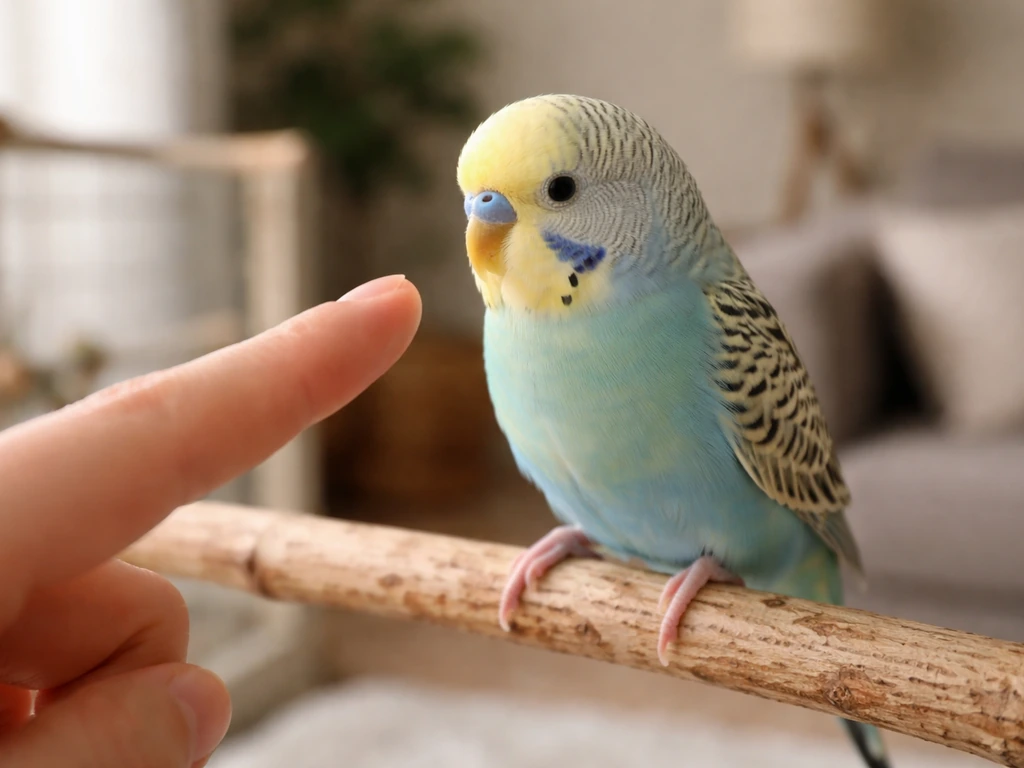
Getting started: welfare-first setup and reading body language
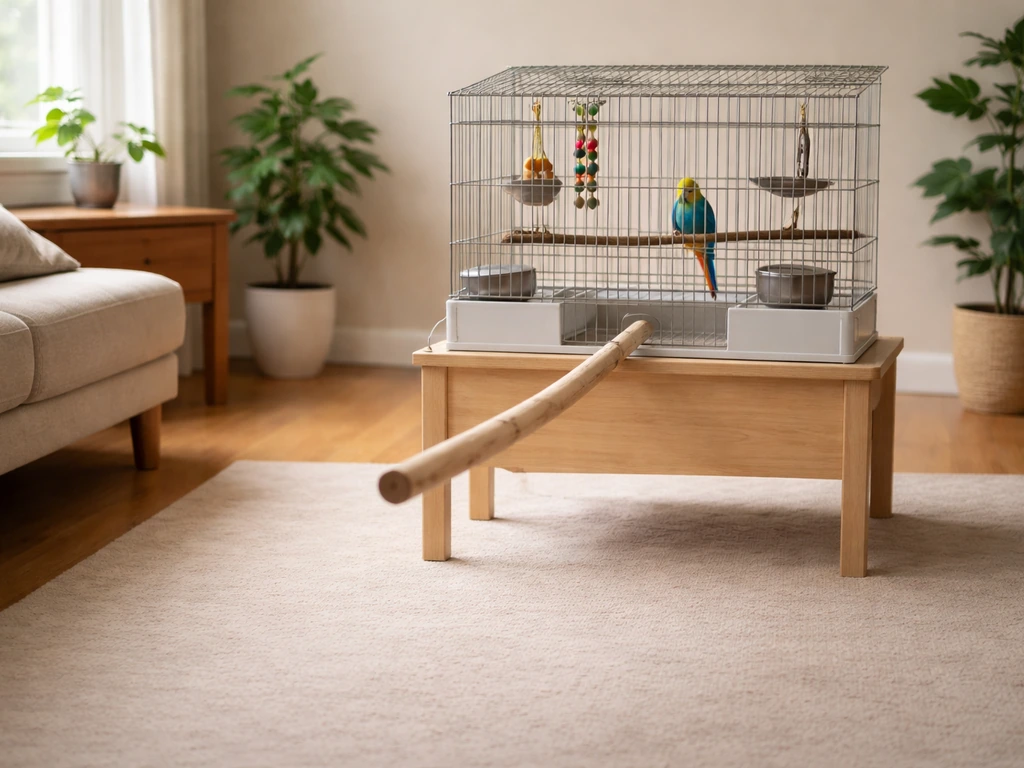
Before you ask your parakeet to do anything, set up the environment so training feels safe rather than stressful. Place the cage at eye level or slightly below in a low-traffic area where the bird can see the room without being startled by sudden movement. Avoid positioning it near windows where outdoor predators (cats, hawks) could cause constant background stress. Good lighting and a consistent temperature also matter since a cold or dim space puts birds on edge.
Learn to read what your parakeet is telling you before every session. A relaxed bird has slightly fluffed feathers, moves freely around the cage, and makes soft chirping sounds. A stressed or fearful bird shows clear warning signals that you need to respect immediately.
- Leaning or moving away from your hand or face
- Tense, sleeked-down body posture with feathers held flat
- Rapid, shallow breathing
- Lunging forward or snapping without contact (a warning, not an attack)
- Freezing completely still (often mistaken for calmness, but can indicate fear)
If you see any of these signs, stop what you are doing and give the bird space. Continuing when a parakeet is clearly stressed does not speed up training. It slows it down and can permanently damage trust. The RSPCA is direct about this: stop if your bird seems distressed, full stop. That rule applies to every single session, every single day.
One practical setup tip before you begin: keep training sessions away from the cage interior at first. The cage is the bird's safe zone. Early training near or inside the cage can make the bird feel cornered. Once trust is established, you can work anywhere, but in the beginning, let the cage stay a pressure-free retreat.
Bonding and trust building
Trust takes longer to build than any specific skill, so invest most of your early time here. The goal for the first one to two weeks is simply getting your parakeet comfortable with your presence, your voice, and your hands near the cage without anything scary happening.
Routine and voice
Parakeets are routine animals. Feed, cover, and uncover the cage at the same times each day so your bird starts predicting your behavior. Talk softly and consistently whenever you are near the cage. It does not matter what you say. What matters is that your voice becomes familiar and associated with calm, normal events like food appearing or the room brightening. Avoid loud, sudden talking or laughing near a new bird.
Treats and approach distance
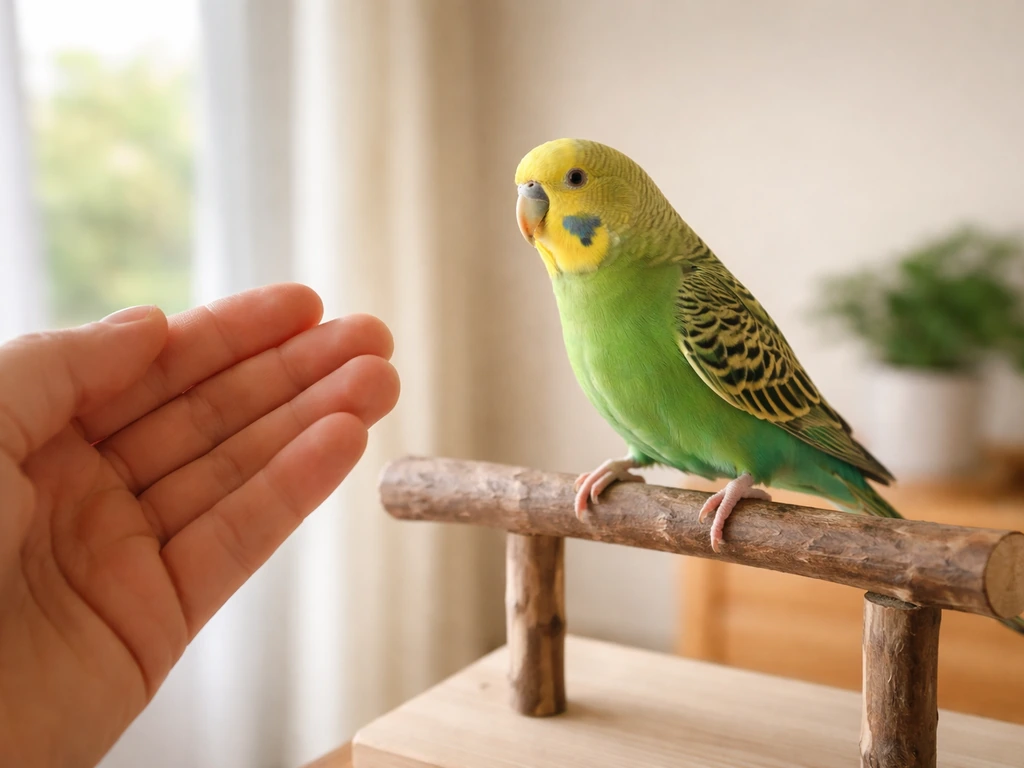
Find out what your parakeet finds genuinely exciting, not just tolerable. Millet spray works for most parakeets, but some prefer a small piece of apple, carrot, or leafy greens. Test a few options by placing them near the food dish and watching whether the bird goes straight for it or ignores it. The treat you use for training needs to be something the bird actively wants, not just accepts.
Start by offering treats through the cage bars without asking for anything in return. When the bird takes the treat comfortably, move to offering it through the open cage door, then slowly with your hand closer over several days. Never rush this progression. The RSPCA recommends spreading new stimuli introduction across two or three short sessions over several days because birds are naturally suspicious of sudden changes near their space.
Approach and hand confidence
Move slowly and deliberately around your parakeet. Avoid fast hand movements from any direction. Approach from the front where the bird can see you, not from above, which mimics a predator strike. Keep your body relaxed. Birds are extremely good at reading tension, and a stiff, anxious handler creates a stiff, anxious bird. Aim to spend ten to fifteen minutes a day just being near the cage, talking, and offering treats with no demands attached.
Core skill training: step-up and positive reinforcement basics
The step-up is the foundation skill for almost everything else you will ever want your parakeet to do. It means the bird voluntarily steps from one surface onto your finger or hand when asked. Voluntary is the key word. Forced handling teaches the bird that hands are something to escape from, which is the opposite of what you want.
How to teach step-up, step by step
- Wait until your bird is calm and alert, not eating, sleeping, or stressed. A focused, curious bird learns fastest.
- Hold your finger horizontally and press it gently against the bird's lower chest, just above the feet, while saying 'step up' in a calm, consistent tone.
- The moment the bird shifts its weight onto your finger, even partially, mark the behavior with a short verbal cue like 'good' and immediately offer the treat.
- Let the bird eat the treat on your hand. Do not move your hand away suddenly once it steps up.
- After a few seconds, gently lower your hand toward a perch and say 'step down' (or just let the bird choose to step back).
- Repeat three to five times per session, then end on a success and put the bird back in its cage.
Keep each session to five minutes or less in the beginning. Short, frequent, and positive beats long and exhausting every time. If the bird bites or moves away instead of stepping up, do not push harder. Back your hand off slightly, wait a moment, and try again with a treat visible. If it still is not working, end the session with something easy the bird already knows (even just taking a treat from your fingers) so you finish on a positive note.
Mark and reinforce: the core positive reinforcement loop
The AVSAB describes positive reinforcement as a process where a cue signals an opportunity to earn reinforcement, and the animal's cooperation is built through rewarding desired behavior rather than punishing unwanted behavior. In practice, that means you mark (with a word or clicker) the exact moment the bird does what you want, then deliver the treat within two to three seconds. Timing is everything. If you hand over the treat five seconds after the behavior, you are reinforcing whatever the bird is doing at that moment, not the step-up. Be precise.
Targeting and voluntary participation: perch and go-to behaviors
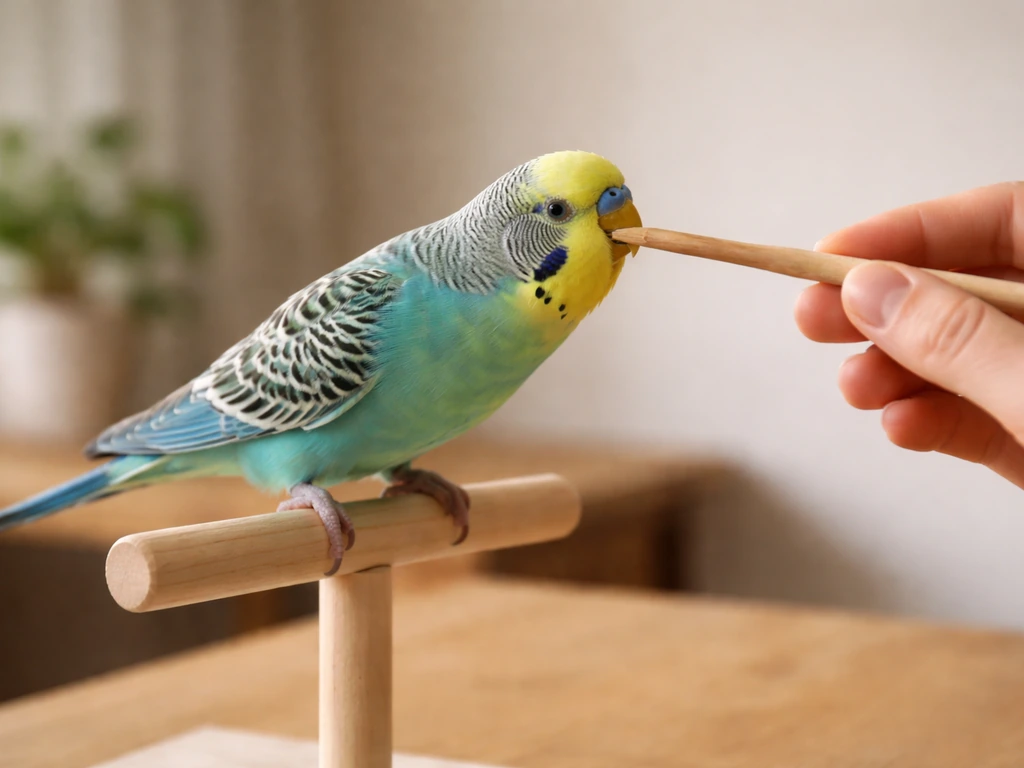
Target training is one of the most useful skills you can teach a parakeet, and it naturally leads into go-to or recall behaviors. The idea is simple: you teach the bird to touch a specific object (the target, usually a stick or the eraser end of a pencil) with its beak, and then you use the target to guide the bird from place to place without physically moving it.
How to introduce the target stick
- Start by presenting the target stick near the bird's eye level. Do not poke it toward the bird. Just hold it still within a few inches.
- Use 'watch and wait': stand still with your arms relaxed at your sides and let the bird choose to investigate. Curiosity is natural in parakeets.
- The moment the bird moves toward or touches the stick, mark and treat immediately.
- If the bird seems wary of the stick, pair it with treats first. Hold the stick near a treat so the bird approaches both together. After several repetitions, the stick itself becomes associated with good things.
- Gradually require that the bird actually touch the stick with its beak before getting the treat.
- Once the bird reliably touches the target, start moving it slightly so the bird follows it from perch to perch or across a surface.
According to the World Parrot Trust's target training protocols, this approach works because the bird is making a voluntary choice to engage. It is not being lured with food held in an awkward position, and it is not being pushed. The result is a bird that participates actively in training rather than simply tolerating it. That difference in the bird's emotional state shows up clearly in how quickly it learns and how enthusiastic it becomes about sessions.
Go-to and recall basics
Once your parakeet follows the target reliably, you can start building a go-to or perch cue. Choose a specific perch, stand, or your hand as the destination. Guide the bird to it with the target stick, mark and treat the moment it lands. After many repetitions, introduce a verbal cue like 'go here' or 'come' just before you present the target. Over time, the bird will start responding to the verbal cue alone. Recall in a small room or contained space is achievable for most pet parakeets with consistent practice, but it takes several weeks of foundation work before the verbal cue alone is reliable.
Troubleshooting common problems
Biting
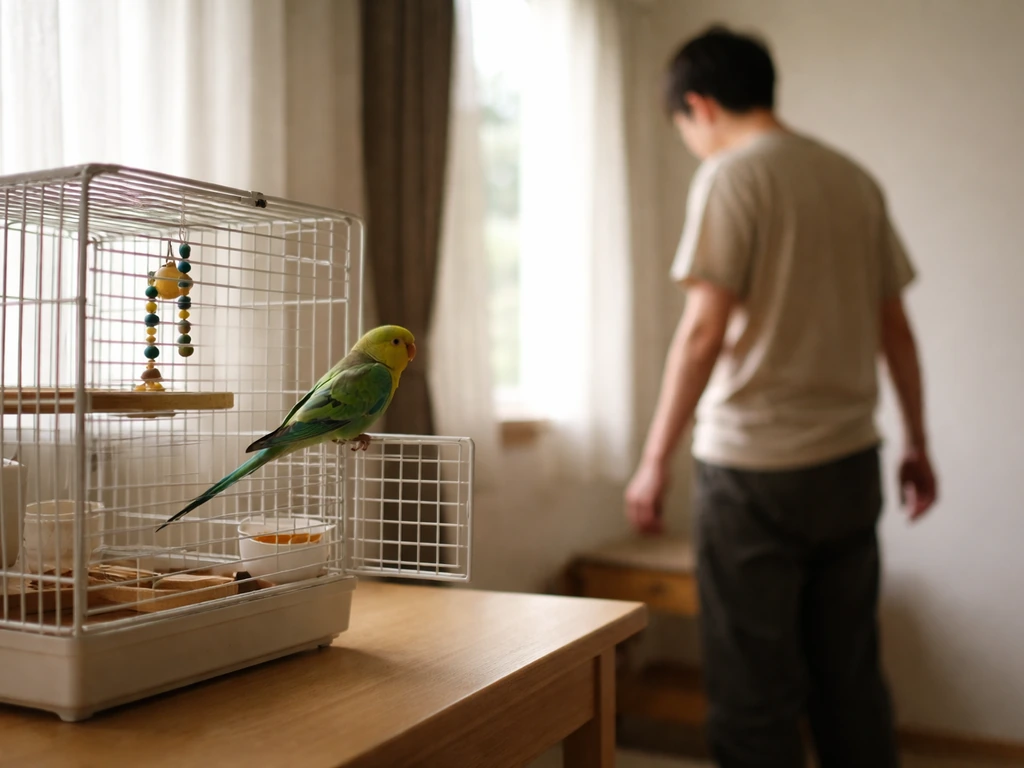
Biting almost always communicates something: fear, overstimulation, pain, or frustration. It is rarely random aggression. The worst thing you can do after a bite is yell, pull away sharply, or strike toward the bird. Yelling can accidentally reinforce the biting because the bird learns that biting controls the handler's behavior, and pulling away fast teaches the bird that biting ends unwanted contact. Instead, try to keep your hand steady for a moment (do not press in further, just hold), stay calm, and then slowly withdraw. St. Charles Veterinary Hospital advises waiting until the bird is fully calm again before attempting another step-up. Give it five to ten minutes, let the bird resettle, and try again at a lower-pressure level.
If biting is frequent, go back to basics. You may have moved through bonding stages too quickly. Spend a few days just doing treat-through-the-bars interactions again with no step-up attempts, then build back up more slowly.
Fear of hands
Some parakeets have had bad experiences with hands before you got them, or were simply never socialized to human contact. The fix is a slow, systematic desensitization process: treat near the hand, then treat from the hand, then hand in the cage doing nothing, then hand near the bird doing nothing. Each step can take several sessions. Do not skip ahead because the bird seems 'okay' with the previous step. Real comfort takes repetition.
Screaming
Loud contact calls are normal for parakeets, especially if they can hear but not see you. Screaming becomes a problem when it is reinforced by you rushing into the room every time it happens. The most effective approach is to enter the room before the screaming starts, reward quiet and calm behavior with attention, and avoid responding to screaming with immediate engagement. If the bird screams because it is bored or under-stimulated, more out-of-cage time and foraging enrichment during the day will reduce it more reliably than any direct training intervention.
Refusing treats or not responding to cues
If your parakeet stops taking treats during a session, it is almost always a sign of stress, satiation, or distraction. End the session. If treat refusal happens consistently, try training before the bird's main meal rather than after, and try a higher-value treat. If cue responses fade after working well, you have likely moved too fast or practiced so rarely that the association weakened. Return to shorter, more frequent sessions and temporarily lower your criteria.
Adolescence and setbacks
Parakeets between roughly four and twelve months often go through a phase of testing boundaries, increased hormonal behavior, and apparent regression in trained skills. This is normal. Keep sessions short, keep criteria consistent, and do not introduce new challenges during this period. Patience here pays off later.
Pet parakeets vs wild or rehab birds: important differences
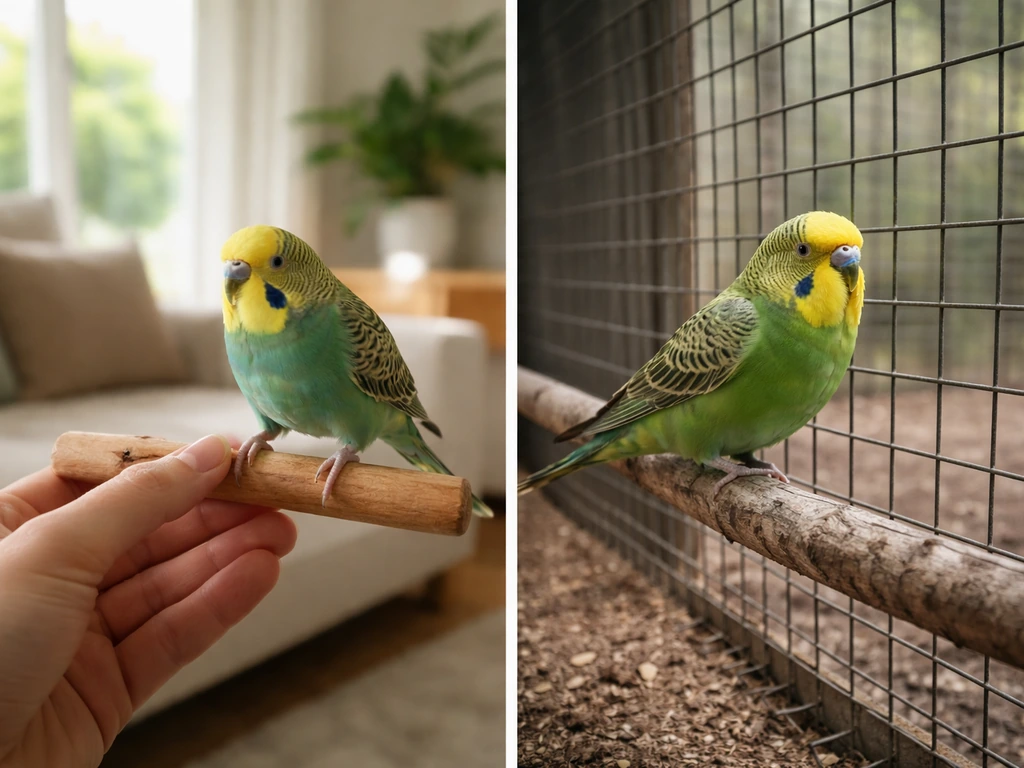
Everything in this guide is written for pet parakeets raised or kept in captivity with the goal of building a cooperative, comfortable relationship with humans. The rules change significantly if you are working with a wild-caught or rehabilitation parakeet.
Wild and rehab parakeets need the opposite of what pet training produces. Rehabilitation programs emphasize reducing human imprinting, encouraging natural behaviors like autonomous foraging and perching, and minimizing the bird's association of humans with food or safety. A parakeet that is too comfortable with people has a higher risk of being recaptured, approaching dangerous situations, or failing to survive after release. Training these birds to step up or target is counterproductive to their long-term welfare and survival.
If you are working with a wild parakeet in a rehabilitation context, your handling goals should be minimal, health-focused, and time-limited. Avoid food-based bonding, extended handling sessions, and any behaviors that increase the bird's attraction to humans. Contact a licensed wildlife rehabilitator in your area before attempting any hands-on work with a wild bird, as there are also legal protections in many jurisdictions that apply to native and non-native parakeet species.
| Factor | Pet Parakeet | Wild or Rehab Parakeet |
|---|---|---|
| Training goal | Build voluntary cooperation with humans | Reduce human association; preserve wild skills |
| Handling approach | Positive reinforcement, step-up, targeting | Minimal, health-focused only |
| Food use | Treats used to reinforce desired behaviors | Food not used for bonding; natural foraging encouraged |
| Desired outcome | Comfortable, trusting companion bird | Self-sufficient, releasable wild bird |
| Legal considerations | Standard pet ownership rules apply | Wildlife laws may apply; licensed rehabilitator required |
| Human imprinting | Acceptable and desirable | Actively avoided |
It is also worth noting that training goals for parakeets differ somewhat from goals you might have for other small birds. Budgies (very closely related to parakeets) share most of the same techniques, while canaries and finches are generally not handled the same way and require different approaches entirely. Canaries and finches need different training approaches than parakeets, so look up a finch-specific guide to get the best results.
If you are wondering how to train a canary bird, the welfare-first approach and gentle, step-by-step reinforcement principles still apply, but the handling and socialization methods need to be adapted to their species-specific needs canaries and finches. These same training ideas also apply when you learn how to train a budgie bird, with the same welfare-first, trust-building approach Budgies (very closely related to parakeets) share most of the same techniques.
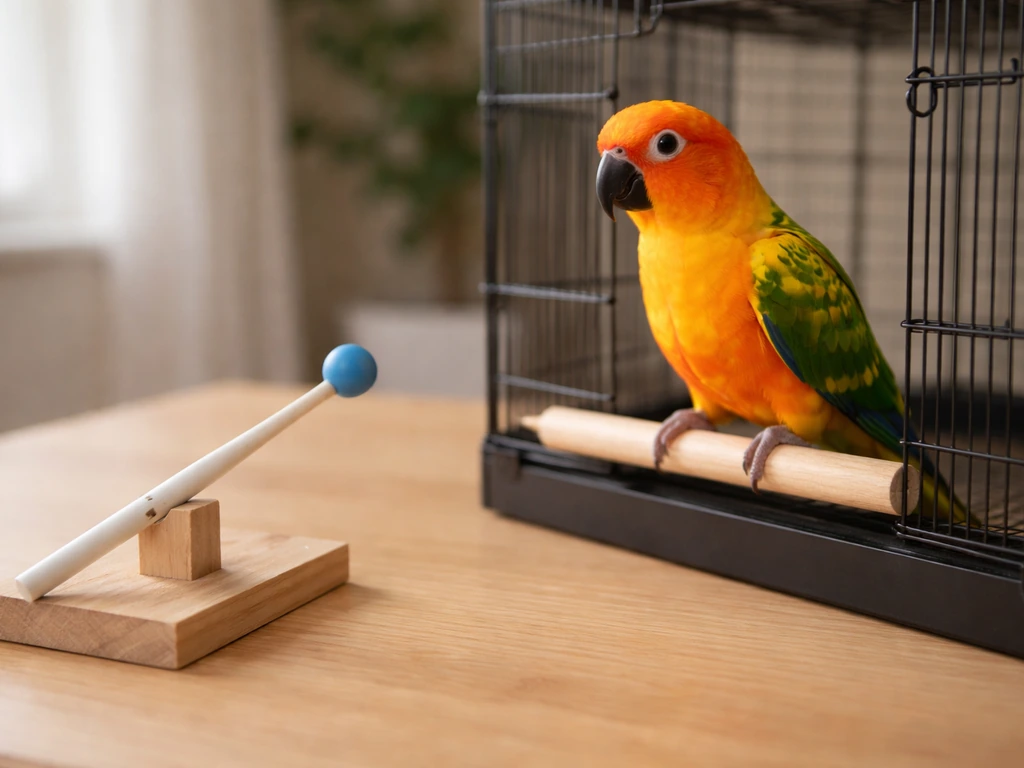
Conures share many parakeet-style training methods but tend to be more vocal and food-motivated, which affects session dynamics. Conures share many parakeet-style training methods, but if you want species-specific guidance on how to train a conure bird, follow the conure-focused training steps next.
Your daily training plan and how to measure progress
Structure matters more than duration. Five minutes of focused, positive training twice a day beats one thirty-minute session that exhausts the bird and ends on a bad note. Here is a realistic schedule and what to expect at each stage.
| Week | Focus | What success looks like |
|---|---|---|
| Week 1 | Environment setup, body language reading, voice and presence habituation | Bird does not retreat when you approach the cage; accepts treats through bars |
| Week 2 | Hand near cage, treat from open hand, brief cage-door interactions | Bird takes treats from your fingers without leaning away or tensing |
| Week 3 | Step-up introduction on perch or open cage door | Bird places feet on your finger voluntarily at least once per session |
| Week 4 | Consistent step-up with cue word, brief step-up outside the cage | Bird steps up within 3 to 5 seconds of cue most of the time |
| Week 5-6 | Target stick introduction, following target across short distances | Bird reliably touches target and follows it to a second perch |
| Week 7-8 | Go-to cue building, verbal recall practice in contained space | Bird responds to go-to verbal cue with or without visible target in familiar space |
Track progress by keeping a simple log: date, session length, what you worked on, and how the bird responded. You do not need formal metrics. Just note whether the bird seemed relaxed and engaged, whether it took treats freely, and whether it offered the target behavior. Patterns in those notes will tell you when to advance and when to slow down.
When progress stalls
If you have been consistent for three to four weeks and your parakeet is still showing significant fear responses or refusing all food during sessions, it is worth a vet check before continuing. Health issues, pain, and nutritional deficiencies can all make birds reluctant or aggressive in ways that look like training problems but are not. A good avian vet can rule out physical causes quickly.
If health is fine but progress has plateaued, consider whether your treat value is high enough, whether sessions are too long or too frequent, or whether something in the environment has changed (new pet in the home, cage moved, schedule disrupted). Any of these can reset a bird's confidence significantly. Go back one step in the training plan, rebuild that foundation again, and advance more gradually the second time.
Safety reminders for every session
- Never restrain a parakeet around the chest. Birds breathe using sternum movement, and compressing the chest even briefly can be fatal.
- Always close windows and doors before letting a bird out of its cage.
- Remove ceiling fans, uncovered water containers, and other household hazards before free-flight sessions.
- If a bite breaks skin, clean the wound normally and do not punish the bird. Assess what triggered the bite and adjust your approach.
- Stop any session the moment you see fear body language. Progress made under stress is fragile and often reverses quickly.
Training a parakeet is genuinely one of the most rewarding things you can do as a bird owner. The relationship you build through consistent, patient, positive sessions is completely different from a bird that simply tolerates being handled. Stick with the process, trust what the bird's body language is telling you, and you will get there.
FAQ
Can I train my parakeet outside the cage from day one?
Yes, but only if you set it up as a choice, not a requirement. Pick a consistent “training perch” (often the same spot on top of the cage) and start with treat-through-the-bars or treat-at-door, then ask for step-up only when the bird is relaxed and already reaching toward the hand for treats. If you introduce the hand while the bird is hungry but wary, you can accidentally turn training into a high-pressure situation.
What should I do if my parakeet stops responding to step-up or target cues?
If the bird ignores your cue, your timing is usually off or your criteria are too hard. Before you change anything else, check that you mark the exact moment the bird does the target behavior (step on, touch target, or land on the destination), then deliver the treat within a couple seconds. Also reduce difficulty, for example use a closer target distance or lower the height of the step-up surface.
Should I use a verbal cue and a hand cue at the same time?
Not exactly, because parakeets can learn multiple cues at once, and “random success” often creates confusion. After a cue works, stick to one cue wording and one body position for several days, then add a verbal cue only after the target or step-up is reliably happening without the voice. Mixing cues too soon can make the bird hesitate when it hears the new sound.
Is it okay to train right after my parakeet is very excited or loud?
Try to avoid it. A bird that is already over-aroused can bite more and learn less because it cannot process the association between behavior and reward. If you notice frantic pacing, tail-fanning, or repeated sudden lunges, pause the session, offer a calmer treat-through-the-bars, and resume later when the bird is settled.
What if my parakeet won’t take treats even though I know it is food-motivated?
Use “high-value” targets to prevent treat refusal. Since many birds take less when they are full, schedule training before the main meal, keep sessions short (under five minutes early on), and experiment with treats the bird actively chooses (not just what you think is healthy). If the bird still refuses even at the start of the day, stop and reassess stress level or possible illness.
How do I handle biting during step-up without accidentally rewarding it?
If it bites and you withdraw, do it calmly and consistently without escalating. The more you startle the bird or yank away, the more you risk teaching biting as an “off switch” for your handling. If you are consistently seeing bites when you ask for step-up, go back to treat-through-the-bars, then treat with the hand near the bird, and only reintroduce step-up when the bird can calmly accept touch near the feet.
When is biting serious enough that I should stop training and get help?
A bite that hurts enough to bruise or draws blood is a sign to pause and switch to a safety-first approach. Cleanly separate, give the bird time to calm in its safe space, and do not attempt another step-up for that session. For repeated painful bites, book an avian vet check and consider a qualified trainer review, especially if the bird also shows changes in appetite, droppings, or posture.
Can I speed things up if my parakeet seems to learn quickly?
Yes, but keep it structured. Decide in advance what “success” means (for example, foot on finger with no bite attempt), and only reward that. If the bird steps up inconsistently, reduce pressure by lowering your hand, using a closer step surface, or lengthening the bonding phase. Sudden changes like moving the cage or introducing new pets can also make you appear to be losing progress.
Why does my parakeet seem to regress for no obvious reason?
Sometimes, but you should treat it as a sign to reset rather than push forward. If the bird is normally comfortable and suddenly becomes avoidant, check for a hidden stressor (cage moved, new noise, a different person training, changes in lighting or temperature). Then go back one stage in the process and focus on quiet presence and easy treat-taking before asking for cues again.
Can I practice training in multiple rooms?
Yes, but do not switch environments abruptly mid-training. Birds often treat “new room, new sounds, new scents” as a new context, which can reduce cue reliability. If you want to practice outside the cage, first do very short sessions in the same familiar room and gradually change one factor at a time (same handler, similar lighting, consistent target location).
My parakeet is new to me, how should I adapt step-up training?
If it is the first time the bird is being handled or the bird was previously traumatized, start with “no touch” training. Goal zero is simply letting the bird see and approach the hand while you offer treats. Touching comes later, in tiny steps like hand near the beak, then near the feet, then brief step-up attempts. Skipping ahead is one of the most common reasons new birds bite.
How long does it usually take, and how can I tell if I’m on track?
For most pet parakeets, you should plan on gradual progress over weeks, not days, but you can estimate whether you are on track by behavior quality. Look for increasing calm around your hands, consistent treat acceptance, and step-up attempts that happen without tense body language. If none of these are improving over a month, reassess health, session length, treat value, and the environment.
Next Articles
How to Train a Conure Bird: Step-by-Step Plan
Step-by-step conure training plan for bonding and taming, using humane methods, routines, and bite or fear troubleshooti
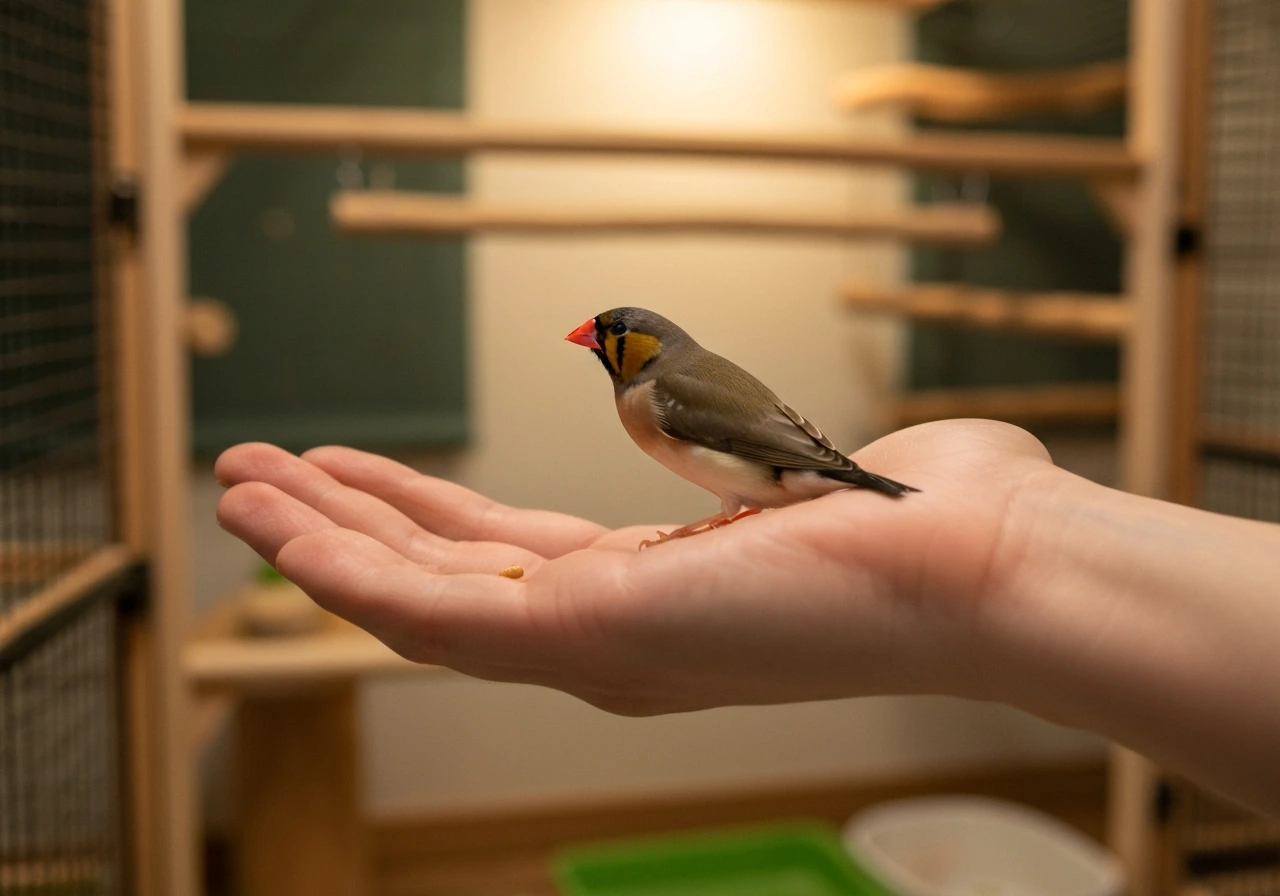
How to Train Finches: Step-by-Step Taming and Behaviors
Welfare-first step-by-step finch training: taming, step-up and target cues, reduce fear, stress, and setbacks with safe
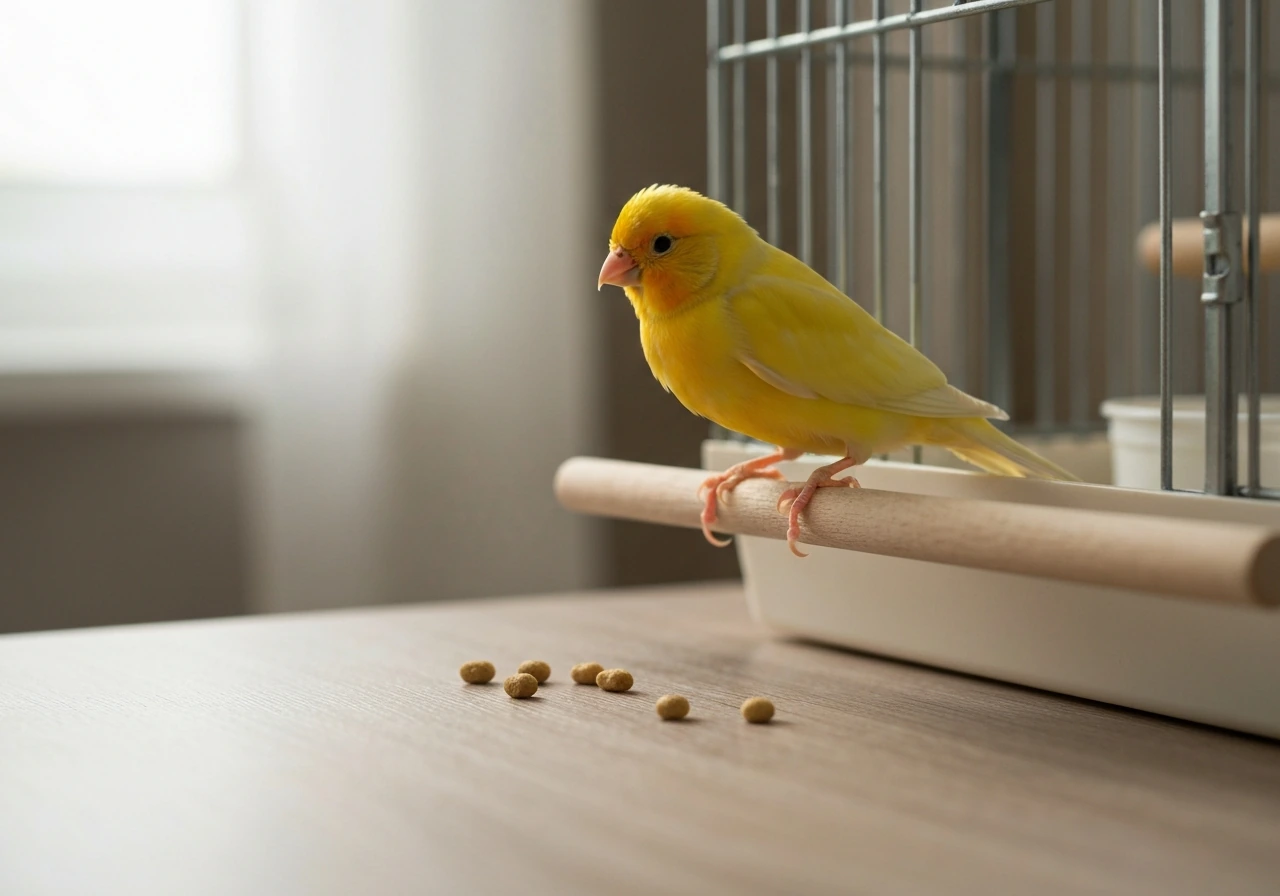
How to Train Canary Bird: Step-by-Step Trust and Cues
Step-by-step, welfare-first canary training: trust, step-up, simple targets, positive rewards, and fixes for biting or f