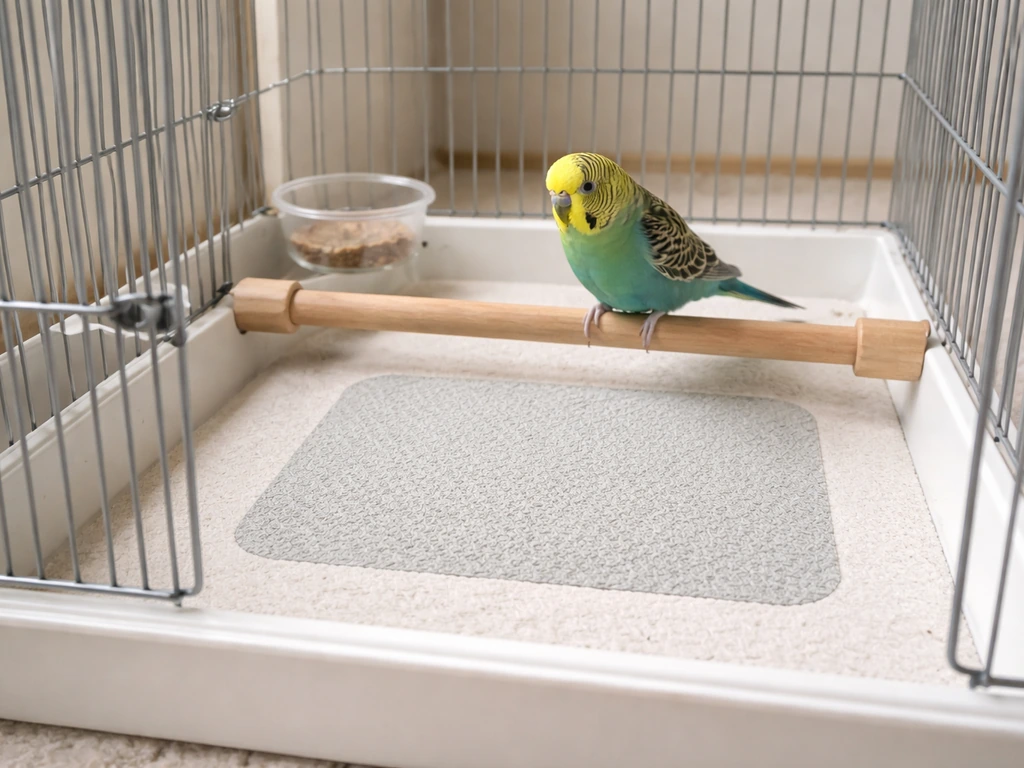
You can house train most pet birds to eliminate in a specific spot, and the process is more straightforward than people expect. It works by combining observation, timing, and consistent positive reinforcement. You watch for your bird's natural elimination rhythm, introduce a verbal or visual cue right as they go, reward immediately after, and then gradually use that cue to direct them to your chosen potty spot before they need to go.
How to House Train a Bird Step-by-Step Guide

Maya Harris
13 May 2026
Most birds pick this up within two to eight weeks of daily practice, and some pick it up faster. It is not magic, and it is not perfect: birds will still have accidents, especially during stress, excitement, or travel. But a reliable routine makes a real difference in how cleanly your bird lives with you in your home.
What "house training" actually means for a bird
House training a bird does not mean teaching them to never poop outside a specific spot. Birds eliminate frequently, anywhere from every 5 to 30 minutes depending on species and size, and that is completely normal physiology. What you are actually training is a conditioned behavior: the bird learns that a particular cue means "go now, in this spot, and good things happen." Success looks like a bird that reliably responds to the cue and uses the designated area most of the time, and that can hold elimination for short periods when you ask. You are not aiming for perfection. You are aiming for predictability.
This is meaningfully different from expecting a bird to "know" not to go on you or the furniture. Birds do not feel shame about eliminating anywhere, and punishment after the fact teaches nothing useful. A house-trained bird has simply learned a conditioned cue that aligns their natural rhythm with your household's needs. Keep that realistic frame in mind as you start, and you will be far less frustrated along the way. If you are also curious whether you can train a bird to poop specifically in the cage rather than during out-of-cage time, that is a closely related goal that follows the same foundation.
Set up the right environment before you start
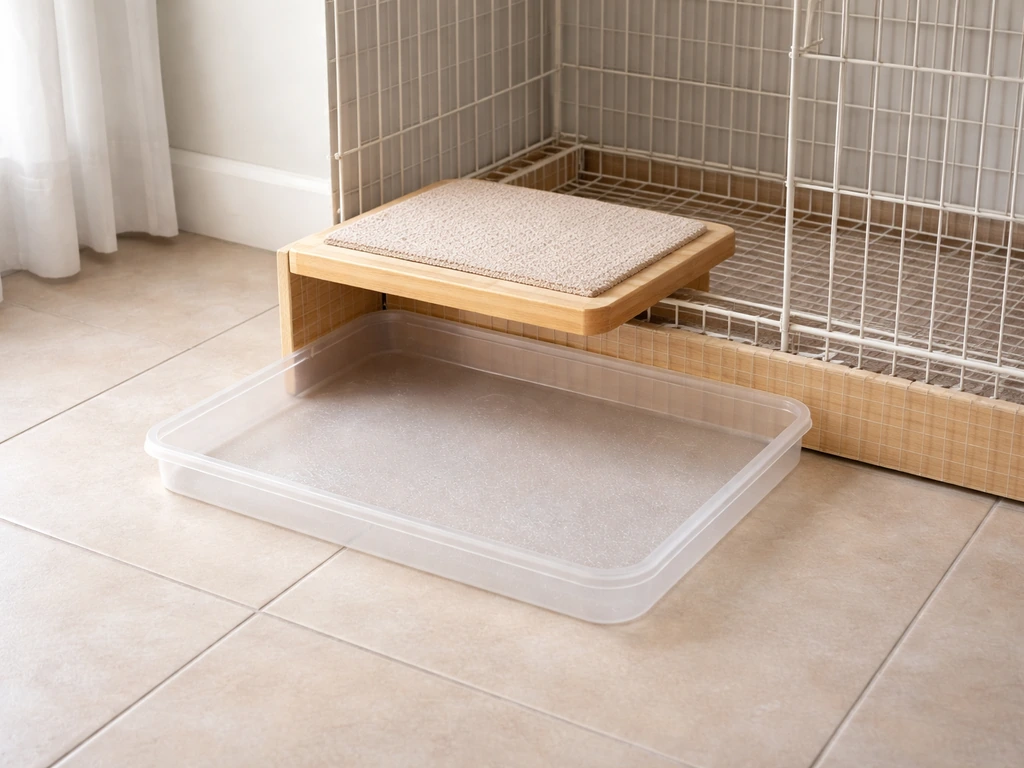
Your setup does more than half the work. Before you ever introduce a cue, you want a physical space that makes the right behavior easy and the wrong behavior less likely.
Choose and mark a designated potty spot
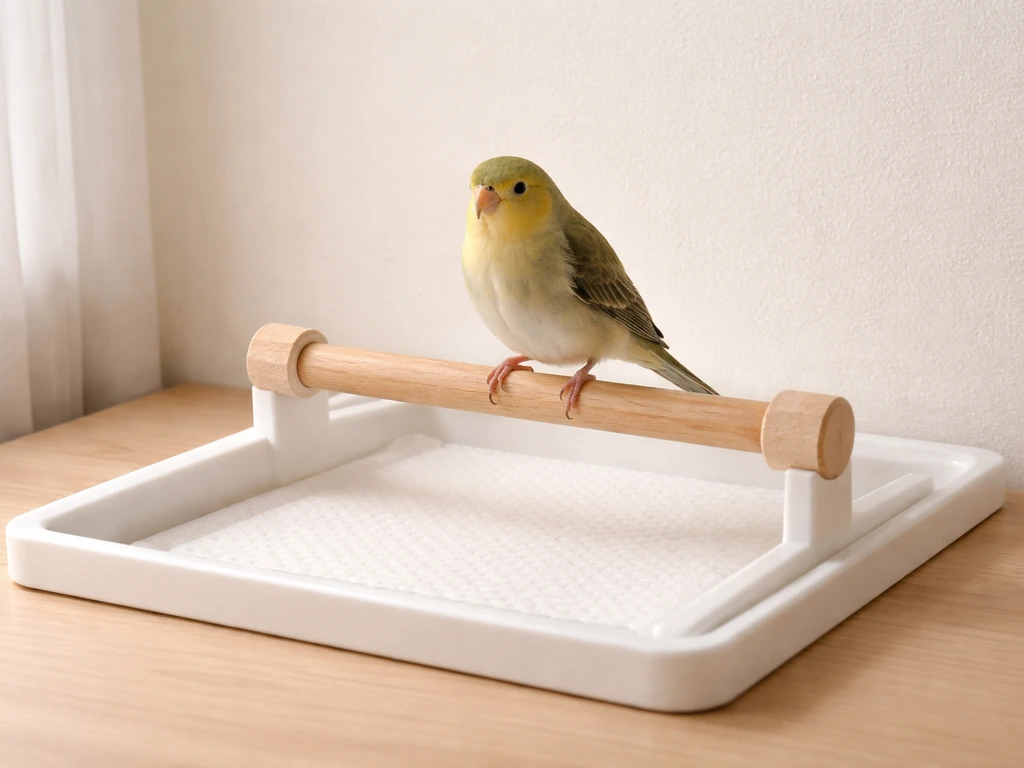
Pick one primary potty spot and stick with it. For most pet bird owners, this is a dedicated perch or stand positioned in a consistent location, often near or just outside the cage door. A T-stand, a simple dowel perch clamped to a shelf, or even a specific corner of a training stand all work well.
The spot should be easy for your bird to reach quickly from their usual perches, easy for you to clean, and positioned where you can redirect the bird within a few seconds. If you are wondering can you train a bird to use a litter box instead, the same cue-and-timing approach applies, just with a suitable litter setup designated potty spot. Place paper, a puppy pad, or a tray underneath to catch droppings and make cleanup simple.
Organize the cage and play area to support the routine
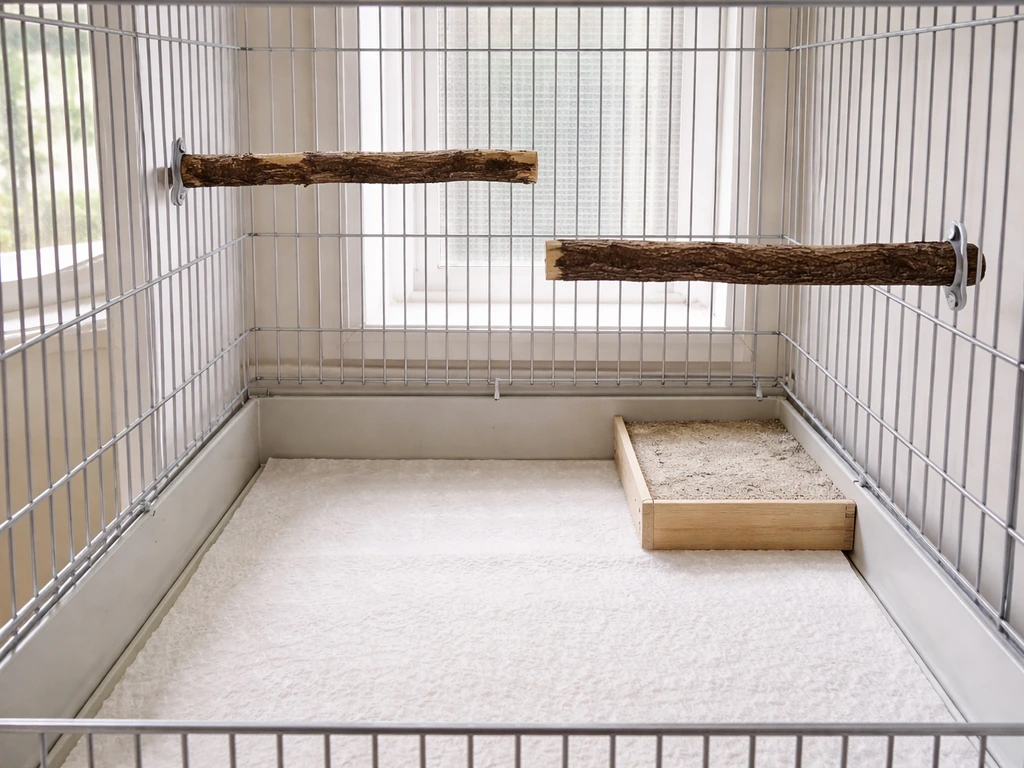
Inside the cage, position perches so your bird has clear, comfortable spots to sleep and rest. Avoid cluttering the bottom of the cage in ways that make it harder to monitor droppings, since tracking your bird's output is genuinely important both for training and for health monitoring. A clean cage liner (newspaper, butcher paper, or paper towels) makes it easy to observe droppings each morning. Outside the cage, limit the out-of-cage area to a manageable zone when you are first training. A smaller, well-supervised play area reduces accidents and makes it easier to catch cues and redirect quickly.
Gather your tools
- A designated potty perch or stand with a catchment tray or pad underneath
- Small, high-value treats your bird reliably works for (a tiny piece of a favored fruit, nut, or seed)
- A clicker or a consistent verbal marker word like "yes" or "good" (you will use this as a bridge signal)
- Paper liners for the cage bottom so you can observe droppings easily
- A bird-safe cleaner for spot-cleaning accidents (enzymatic pet cleaners that are fragrance-free and non-toxic to birds; avoid bleach-based products or anything with strong fumes near your bird's breathing zone)
- A small notebook or phone note to log timing patterns for the first week
Build a routine around timing and observation
Birds are creatures of rhythm. Most parrots and pet birds eliminate within 30 to 90 seconds of waking up, within a few minutes after eating, and frequently when moving between perches or during active play. Watching for these windows is the core of the whole method. Spend the first three to five days doing nothing but observing and logging. Note what time your bird typically wakes, when they eat, and how many minutes pass before they eliminate after each event. Merck Veterinary Manual emphasizes observing birds’ normal behaviors and timing care and handling around predictable daily elimination windows to support humane, species-appropriate routines predictable daily patterns. Most birds settle into a recognizable pattern within a few days of consistent observation.
Once you know the rhythm, you can start anticipating it. If your bird reliably goes about four minutes after stepping up onto the play stand, you know to position them over the potty perch at the three-minute mark. You are not reacting to accidents anymore. You are predicting and redirecting before the behavior happens, which is far more effective and far less stressful for both of you.
Morning is the highest-leverage training window. Once your bird is reliably eliminating on cue in the morning, you can start extending the same routine to other training goals, like learning how to train a bird to deliver mail Morning is the highest-leverage training window.. Most birds will eliminate almost immediately when first placed out of the cage in the morning. Position your bird directly on the designated potty perch as the very first step of their morning routine, before offering food or attention. Wait for elimination, cue it (see next section), and reward. That single daily repetition, done consistently, builds a strong association fast.
Step-by-step: the actual training process
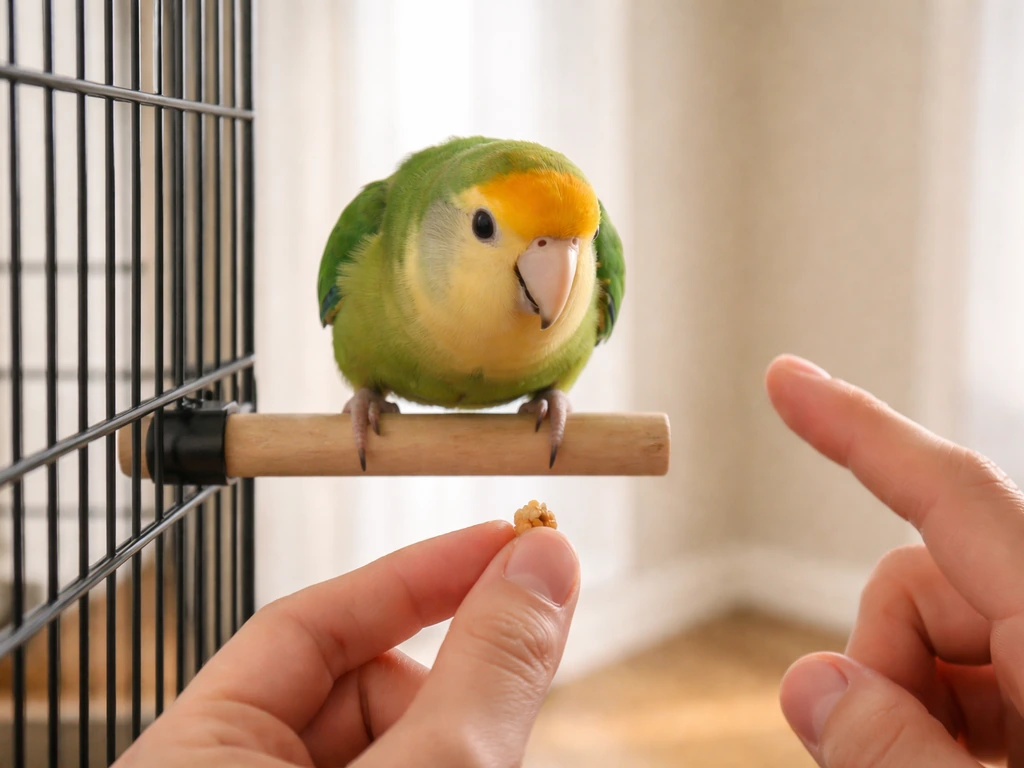
- Start in the cage. Before moving training to the potty perch, introduce your cue word (something short and distinct like "go potty" or "bombs away") every time you observe your bird eliminating naturally in the cage. Say the cue as the bird is mid-elimination, then immediately mark with your clicker or marker word and offer a small treat. Repeat this every time you catch the behavior for at least three to five days. You are charging the cue: the bird learns that this specific word predicts elimination and leads to a reward.
- Move to the potty perch at high-probability windows. Once the bird is responding visibly to the cue in the cage (you will notice they may crouch or shift posture when they hear it), start placing them on the designated potty perch during the windows you identified in observation. Give the cue, wait calmly (up to about 60 seconds), and reward immediately if they eliminate. If they do not go within 60 seconds, bring them back to the cage or play area, wait two to three minutes, and try again.
- Reinforce every success, every time. In the early weeks, reward every single elimination on the potty perch. Use a high-value treat and a warm, enthusiastic marker. Consistency here is what builds speed of learning. Do not skip rewards because it feels repetitive; that consistency is the whole mechanism.
- Extend the cue to other locations. Once the potty perch behavior is solid (typically two to four weeks of consistent daily sessions), you can begin cueing the bird to eliminate before moving them to other areas of the room, before stepping up onto your hand, or before entering a carrier. Place the bird on the potty perch, give the cue, reward the elimination, and then move on to the next activity. This teaches the bird that "go before we go" is a predictable part of your routine.
- Handle accidents with calm redirection only. If the bird eliminates somewhere other than the potty spot, say nothing (no scolding, no reaction), move the bird calmly to the potty perch, and clean up the accident site thoroughly with a bird-safe cleaner. The only feedback an accident should get is zero attention and immediate relocation. Punishment or negative reactions do not communicate location preference to a bird; they only build anxiety around the behavior, which makes training harder.
- Gradually increase intervals and locations. As the bird becomes reliable, you can start asking them to hold slightly longer before cueing, and you can introduce secondary potty spots in other rooms or in a carrier. Always start a new location with easy, frequent rewards before increasing the challenge.
Troubleshooting: when the bird is not cooperating
The bird is not responding to the cue at all
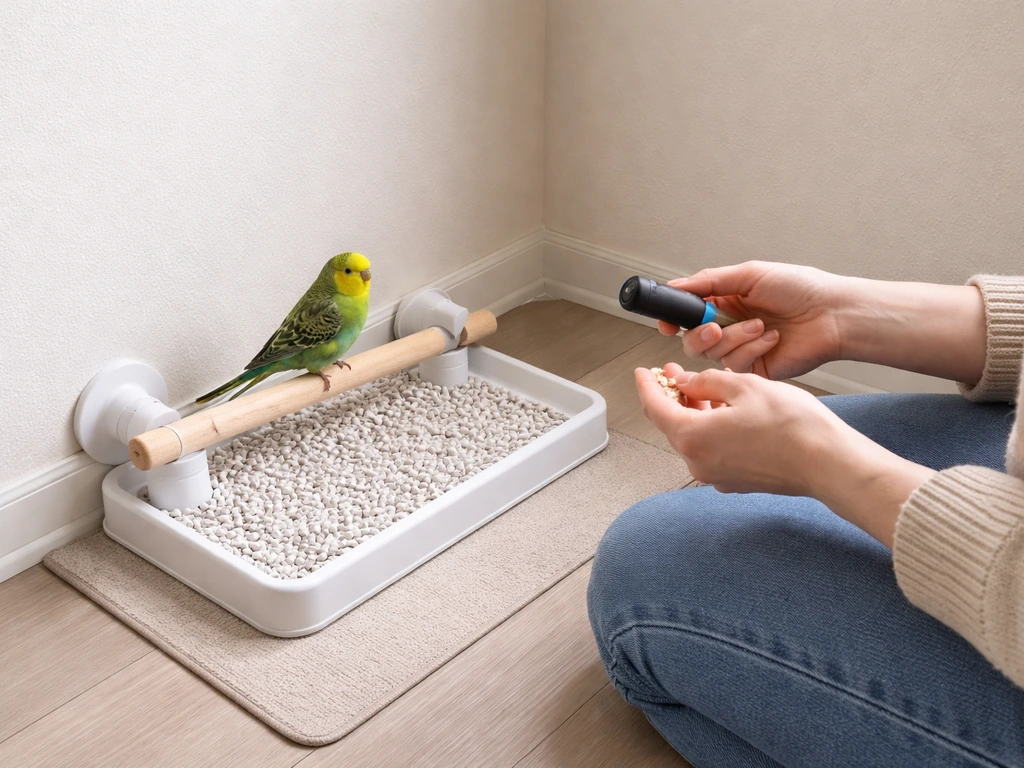
Go back to basics and check whether the cue is actually charged. Are you marking and rewarding reliably every time the bird eliminates at the cue? If you have been inconsistent, the cue has not built enough value yet. Also check your treat: some birds are not motivated enough by the offered reward to work for it. Try a more valued option. Sunflower seeds, a small piece of almond, or whatever your individual bird finds most exciting will work better than a treat they only mildly like.
The bird refuses to use the potty perch
The spot may feel insecure or unfamiliar. Make sure the perch is stable, at a comfortable height, and positioned somewhere the bird does not feel exposed or stressed. Try placing the potty perch closer to the cage initially, and reward the bird simply for stepping onto it before you ever ask for elimination. Build positive associations with the spot itself before combining it with the cue. Target training (using a stick or finger target to guide the bird to the perch) can help here if your bird already knows basic target behaviors.
The bird does great in training but has frequent accidents during free-flight or free-roam time
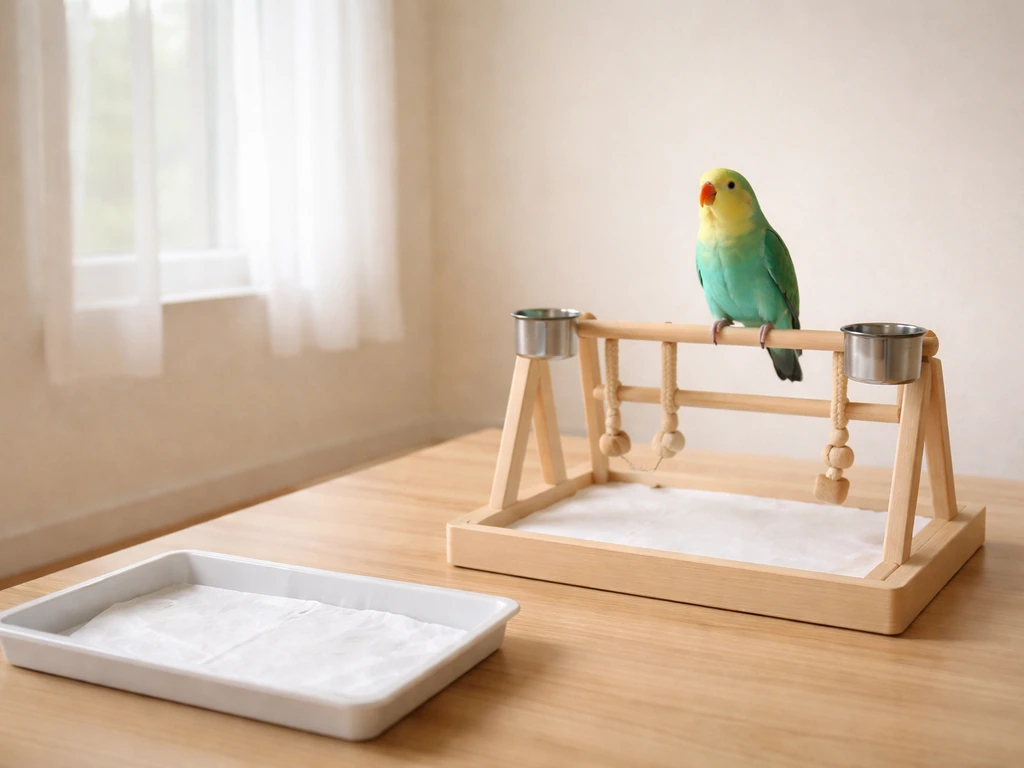
This is almost always a timing problem. Either the bird is getting too much unsupervised time before the routine is solid, or the potty windows are not being used consistently enough. Scale back unsupervised out-of-cage time and schedule more frequent potty perch check-ins. Match the frequency of check-ins to how often the bird actually eliminates (every 10 to 15 minutes for smaller birds like budgies and cockatiels, every 20 to 30 minutes for medium parrots, every 30 to 45 minutes for larger macaws or cockatoos).
Busy households and multiple birds
With multiple birds, train each bird individually at first. Group out-of-cage time makes it nearly impossible to track individual elimination patterns, so stagger out-of-cage sessions during the early training phase. In busy households where consistent timing is hard, focus on the highest-leverage moments (morning, post-meal) and accept that the rest of the day will be less structured. A partially trained bird that reliably goes on the perch in the morning is still dramatically better than no training at all.
Stress and travel trigger accidents
Birds often eliminate more frequently when stressed, excited, or in a new environment. Before travel, cue elimination at the potty perch right before placing the bird in a carrier. During travel or vet visits, expect more accidents and do not interpret them as a regression. Line carriers with paper towels and bring a bird-safe cleaning wipe. Resume the normal routine once you are home and the bird has had time to settle.
Species and age matter: adjusting your approach
The basic method works across species, but the timeline and approach need to flex based on who you are working with. Here is a practical breakdown.
| Species / Situation | Elimination Frequency | Training Notes |
|---|---|---|
| Budgies and parrotlets | Every 5 to 10 minutes | Frequent check-ins required; high-value tiny treats; very fast learners with consistent reward timing |
| Cockatiels | Every 10 to 20 minutes | Often motivated by millet; highly routine-oriented, making timing-based training very effective |
| Conures and caiques | Every 15 to 25 minutes | High energy means more accidents during active play; short, frequent sessions work best |
| African greys and Amazons | Every 20 to 35 minutes | Intelligent and sensitive; build slowly to avoid stress; once learned, recall-to-perch behaviors can become very reliable |
| Macaws and cockatoos | Every 30 to 45 minutes | Larger droppings are more manageable in frequency; strong social bond means they often respond quickly to routine cues |
| Young fledglings or recently weaned birds | More frequent than adults | Often easier to shape early habits; keep sessions brief and low-pressure |
| Rescue or rehab birds | Varies | Prioritize welfare and trust-building before any training goals; do not rush elimination training until the bird is calm and eating normally |
| Older birds with established habits | Adult frequency for species | Takes longer but is achievable; increase session consistency and do not expect week-one results in week one |
For birds in a rehabilitation or recovery context, house training is typically not a priority until the bird is medically stable, eating and drinking normally, and comfortable with basic handling. Trying to introduce training protocols to a stressed, ill, or recently injured bird adds unnecessary pressure. Wait until the bird shows relaxed, normal behaviors before beginning any structured training.
Safety, welfare, and when to call the vet
Keep training stress-free
blank" rel="noopener noreferrer">Never use punishment during house training, and that includes scolding, tapping, squirting water, or any form of physical correction. You might also be wondering, can you brush a bird, and that is a different kind of care question with its own safety steps. These approaches do not teach location preference; they teach the bird that elimination in your presence is dangerous, which makes training dramatically harder and damages your relationship. Positive reinforcement is not just the kinder option here. It is the more effective one. Mark and reward the behavior you want, ignore or quietly redirect everything else.
Clean up accidents safely
Use bird-safe enzymatic cleaners for accident sites. Avoid bleach-based products, products with strong fragrances, and aerosol sprays anywhere near your bird's breathing space. Birds have highly sensitive respiratory systems, and common household cleaners that are safe for dogs and cats can cause serious respiratory distress in birds. Clean accidents in a ventilated space, allow surfaces to dry fully before your bird returns, and store all cleaning products out of reach.
When training is not the issue: medical red flags
If your bird's droppings have changed suddenly in color, consistency, volume, or frequency, or if the bird is straining without producing droppings, that is a health issue, not a training issue. Common signs that need immediate veterinary attention include: tail-bobbing or labored breathing, a soiled or inflamed vent, sitting on the cage floor with fluffed feathers, a swollen or discolored abdomen, complete absence of droppings for several hours, or visible straining with no output. These symptoms can indicate egg binding, cloacal prolapse, infection, or gastrointestinal obstruction, all of which are medical emergencies. Do not try to manage these situations with training adjustments. Contact an avian vet right away.
It is also worth a vet check if your bird's elimination pattern changes significantly after house training begins. Sometimes training-related stress can affect digestion and elimination patterns. If the bird seems anxious, is eating less, or behaves differently during or after training sessions, slow down the pace and give the bird more low-pressure recovery time between sessions.
Your training checklist and a realistic timeline
Before you start: materials and setup
- Designated potty perch or stand chosen and placed in its permanent spot
- Catchment tray or pad positioned under the potty perch
- High-value treats identified and portioned into small, training-ready pieces
- Marker (clicker or consistent verbal word) chosen and ready
- Paper liners in cage for daily dropping observation
- Bird-safe cleaner on hand for accidents
- Observation log ready (notebook or phone note)
Week-by-week progress markers
| Timeframe | What You Should Be Doing | What Success Looks Like |
|---|---|---|
| Days 1 to 5 | Observe and log elimination timing patterns; no formal cueing yet | You can predict within 2 to 3 minutes when your bird will eliminate after waking or eating |
| Days 6 to 14 | Introduce cue word during natural eliminations in the cage; mark and reward every time | Bird shows a posture or movement response when cue is given |
| Weeks 3 to 4 | Begin redirecting bird to potty perch at high-probability windows; reward every success | Bird eliminates on potty perch at least 50% of cued attempts |
| Weeks 5 to 6 | Extend cueing to before step-up and before out-of-cage activities | Bird reliably responds to cue on potty perch; accidents during supervised time decrease noticeably |
| Weeks 7 to 8 | Begin introducing secondary potty locations; start extending intervals slightly | Bird uses at least one primary spot reliably; accidents are occasional, not constant |
| Month 3 and beyond | Maintain routine; continue rewarding periodically even after behavior is solid | Routine is embedded; bird redirects to perch with minimal prompting in familiar environments |
Accident response plan
- Say nothing and show no reaction to the bird
- Move the bird calmly to the designated potty perch
- Wait briefly to see if the bird eliminates there; if yes, mark and reward
- Return to what you were doing
- Clean the accident site with bird-safe cleaner, out of the bird's immediate breathing space
- Note the timing of the accident in your log and adjust your next potty perch window to be slightly earlier
House training a bird takes patience and consistency more than any special skill. The birds that make the fastest progress are the ones whose owners track timing carefully in the first week, reward immediately and reliably in the second and third weeks, and stay calm and low-key about accidents throughout. Start with that morning potty perch routine today, log what you see for the next five days, and you will already have what you need to build from there. If you are wondering whether you can train a bird to steal money, it is important to remember that behaviors like theft and elimination both depend on reinforcement, timing, and clear cues accidents.
FAQ
What should I do if my bird freezes or refuses to step onto the potty perch?
Go back one step and reward for any movement toward or onto the perch, keep sessions short (30 to 90 seconds), and make the perch stable and comfortable height. If needed, use target training to guide the step first, then only later pair the cue with elimination. Avoid repeating the cue over and over, it can become noise and increase stress.
How do I handle a bird that eliminates right after I remove them from the potty perch?
Use a “stays close” plan for the first weeks. Keep the bird on or immediately adjacent to the perch for a brief period after a successful go, then cue and reward again only if another elimination happens within a normal window. If they go as soon as you move them away, shorten transitions and reposition them before you interrupt the elimination rhythm.
Can I train at night, or does house training only work in the morning?
Morning is the highest-leverage window, but you can train at night by catching the first elimination after lights out, typically within minutes of winding down. Keep the environment quiet, dim if possible, and use the same cue and reward timing. Avoid waking your bird repeatedly, if you cannot check frequently, focus on preventing accidents during the overnight period with better supervision and a consistent routine.
What if my bird only uses the potty spot when I’m watching, but goes elsewhere when I leave the room?
That usually means the “cue value” is not generalized yet. Increase supervision until the behavior is consistent, then gradually extend distance and duration (sit nearby, then one room away, then short errands). If accidents spike when you’re gone, reduce out-of-cage freedom and enlarge the allowed space only after you see predictable use of the perch.
How many times per day should I practice, and how long should each training session be?
Practice is essentially frequent micro-check-ins, not long sessions. Aim for short, repeated cycles tied to real elimination windows, then stop while the bird is still calm. If you are cueing and rewarding but nothing happens, wait longer and check the timing from your observation log rather than extending the session.
My bird has a health issue or is recovering, can I still do house training?
Only if the bird is medically stable, eating and drinking normally, and handling well. If the bird is stressed, ill, or shows pain, prioritize veterinary care and comfortable routine first. When you resume training, use lower-pressure check-ins, shorter time out of the cage, and expect progress to be slower during recovery.
What is the best treat strategy if my bird doesn’t care about the reward?
Test higher-value options during the first training phase, a tiny piece of something they strongly prefer, like a small almond sliver or a favored seed amount, then scale back as the cue becomes reliable. Keep rewards immediate and consistent, also use small portions so you do not accidentally reduce motivation by overfilling.
How do I clean accidents so my bird won’t repeat the behavior on the same spot?
Use bird-safe enzymatic cleaners and remove any lingering odor that can act as a cue for elimination. Clean with good ventilation, allow complete drying, and avoid aerosol products near the bird’s breathing space. If the spot is on a perch or surface you can’t fully sanitize, consider temporarily blocking access until odor is fully gone.
If my bird is straining or not producing droppings, how can I tell training failure from a medical problem?
Straining without output, a fluffed posture while sitting on the cage floor, labored breathing, an inflamed or soiled vent, or sudden major changes in droppings are red flags. Do not interpret these as “not trained yet,” contact an avian vet immediately, since the cause can be urgent (like egg binding or obstruction).
Should I cue elimination in the same way every time (same words and same timing)?
Yes, consistency prevents confusion. Use one simple cue (a single word or a consistent hand signal) and deliver it right when the bird is about to go, not minutes earlier. Keep the reward schedule reliable, if you delay rewards or change cues, your bird may stop associating the cue with the potty spot.
How do I house train when I have multiple birds but only want one to learn first?
Train individually at first by staggering out-of-cage sessions and separating birds during the early stage when you are tracking elimination patterns. If birds share the same play area, they can “sync” to each other’s routines, making timing data unreliable. Once the first bird is reliably using the potty perch, you can introduce supervised group time gradually.
Next Article
How to Train Your Bird to Poop in the Cage
Humane, step-by-step method to train a bird to poop in a specific cage spot using cues, placement, and rewards.