
Yes, you can train a bird to carry out a delivery-style behavior, but what you're really teaching is a chain of skills: recall to a base station, target touching, and eventually carrying or dropping a lightweight object on cue. It's absolutely achievable with the right species, patient groundwork, and positive reinforcement, but it's not a weekend project. Realistically, a well-bonded parrot or corvid-type bird can learn a solid return-to-base with a small item in four to twelve weeks of consistent daily sessions, depending on how much trust you've already built.
How to Train a Bird to Deliver Mail Safely and Humanely

Maya Harris
15 May 2026
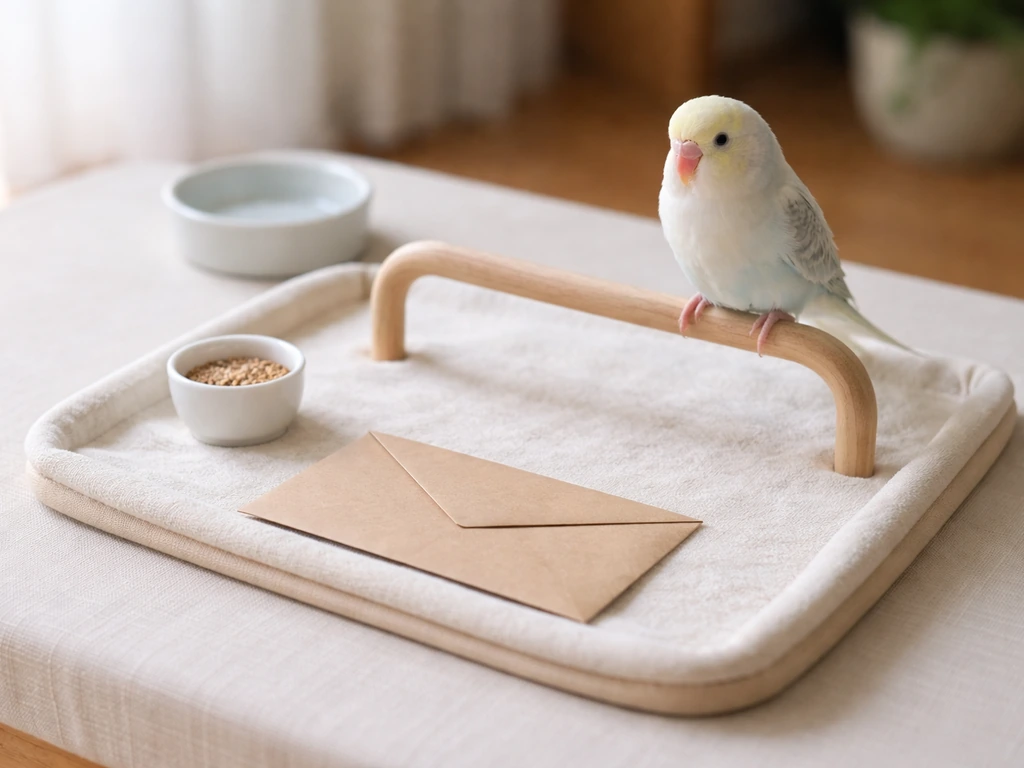
Is this actually possible, and should you do it?
The short version: yes, it's feasible for the right bird in the right setup, but your bird's welfare has to come first at every single step. Mail-delivery training is essentially a multi-behavior chain, and chains can become a source of chronic stress if you rush them or if the bird isn't motivated, bonded, or physically suited. The goal is a bird who finds the whole exercise fun and rewarding, not one who complies out of anxiety or learned helplessness.
This kind of training draws on the same foundation as recall training, target training, and carrier readiness. If your bird already has a solid step-up, targets reliably, and recalls from across the room, you're in a strong position. If you're starting from scratch with a nervous or untamed bird, build those foundations first before even thinking about delivery behaviors.
Which birds can actually learn this, and what do you need?
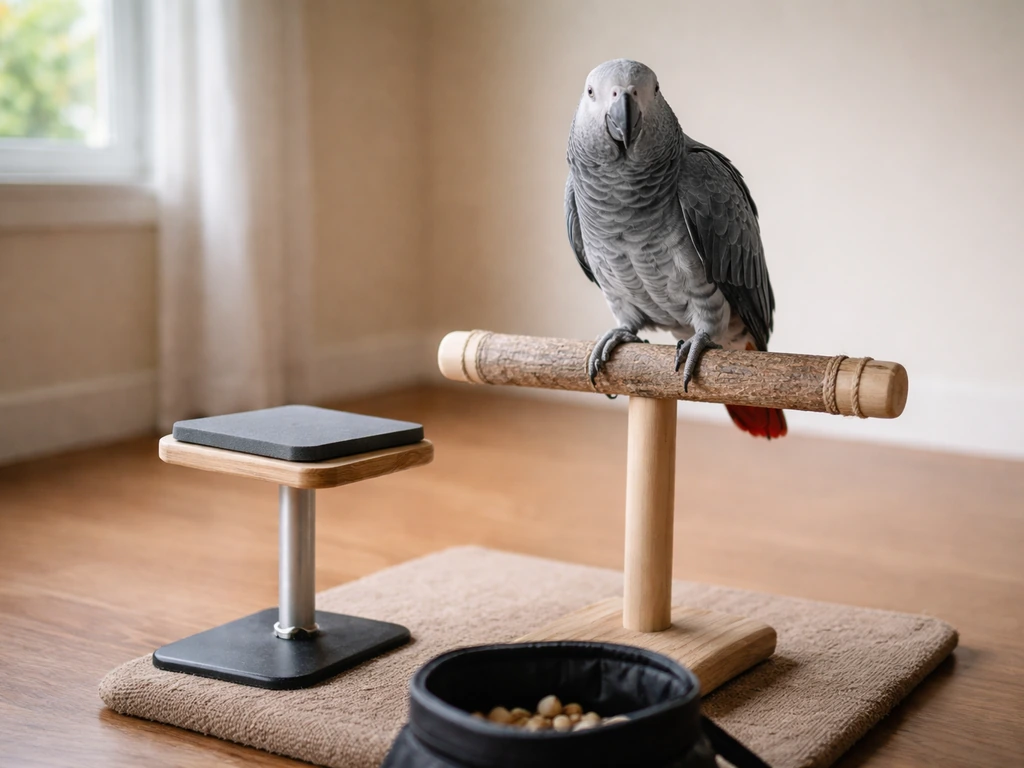
Not every species is a good candidate. The best results come from birds with high food motivation, strong human bonding, and natural retrieval or flying curiosity. African Greys, Amazon parrots, cockatoos, and corvids (crows and ravens, where legally kept) are the top picks. Cockatiels and some conures can learn simplified versions of the behavior. Pigeons have a centuries-old history with message delivery and remain genuinely excellent at homing-based return tasks. Avoid pushing raptors into this kind of training unless you have advanced falconry experience, and don't attempt it at all with wild-caught birds or any species you don't already have a strong bond with.
- A designated base station: a perch, T-stand, or cage-top platform that the bird strongly associates with rewards
- A clicker or consistent verbal marker (a single word like "Yes" works fine)
- High-value treats: small pieces of a favorite food that can be delivered in under two seconds
- A lightweight target stick (a chopstick or wooden dowel works perfectly)
- A small, very light "mail" item, such as a folded piece of paper, a mini envelope, or a lightweight wooden token weighing under 10 grams for smaller birds
- A quiet indoor training space with minimal distractions during early sessions
Keep the training environment consistent at first. Same room, same time of day, same perch positions. Birds learn faster when environmental variables are predictable, and reducing distractions early on prevents the most common source of session failure.
Build trust and handling before anything else
No delivery training works without a foundation of genuine trust. Before your first targeting session, spend time just being near your bird without asking for anything. Let the bird approach you. Offer treats from your palm without making eye contact at first. Read your bird's body language carefully before every session: if you see feathers pulled tight to the body, wide eyes, a low crouch, leaning away, or an open beak with head rocking, that bird is telling you it's not ready. Stop, give it space, and try again later. The Association of Avian Veterinarians specifically flags these signals as fear indicators, and starting a training session over a bird's stress signals will set your progress back significantly.
Aim for a daily five-to-ten minute bonding session before any formal training begins, at least for the first one to two weeks if you're working with a bird you haven't fully tamed yet. For birds who are already comfortable on your hand and recall reliably, you can move into targeting much faster, sometimes within a day or two.
One thing worth noting here: PetMD advises that birds should not be taken outdoors unless in a secure carrier or wearing a properly fitted harness. Birds are prey animals and can startle and flee even after years of being hand-tame. Keep all training indoors or in a fully secured outdoor aviary until every behavior in the chain is rock-solid.
The step-by-step delivery training plan
Stage 1: Target training (days 1 to 7)
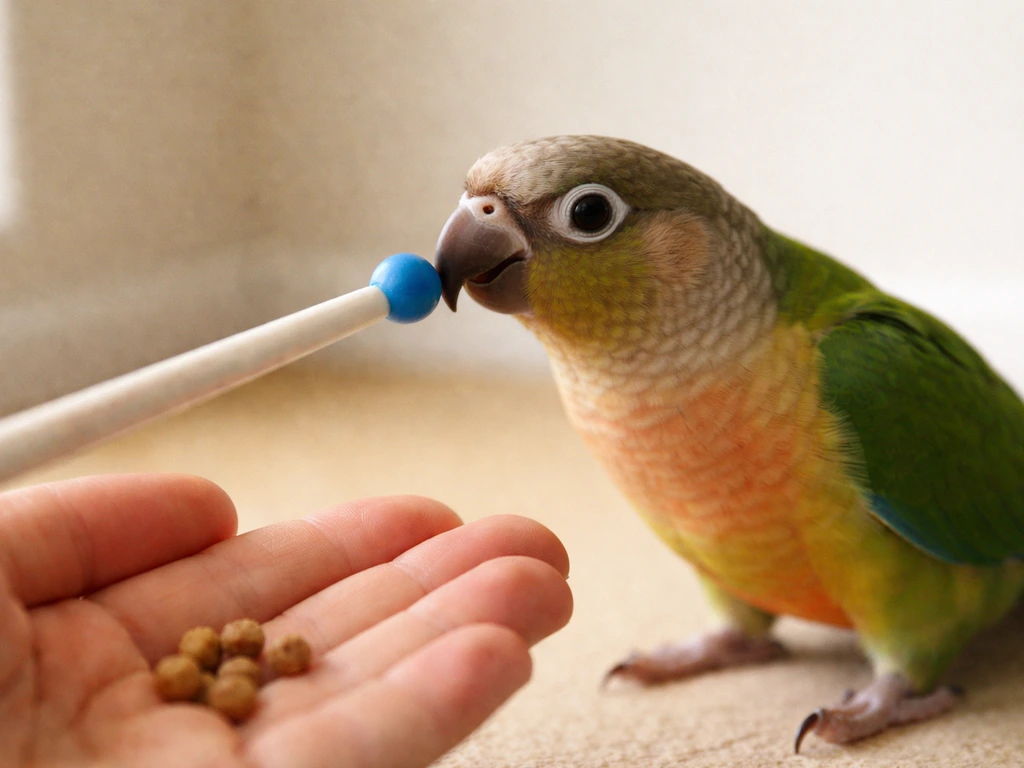
Target training is the engine of almost all complex bird behaviors. Almost all animal training begins with targeting, and it lets you direct your bird precisely where you want it without physical pressure. Place your bird on its home perch, hold the target stick out so the bird has to lean slightly toward it, and the moment the beak or foot touches the target, click and immediately offer a treat. Keep sessions to three to five minutes maximum. Within a few sessions, most birds will be deliberately touching the target to earn the click-and-treat.
Once the bird is touching the target reliably (eight out of ten attempts in two consecutive sessions), start moving the target to different positions: higher, lower, left, right, slightly farther away. This teaches the bird that the rule is "touch the target wherever it is," which you'll use later to guide it between two stations.
Stage 2: Recall to base station (days 5 to 14)
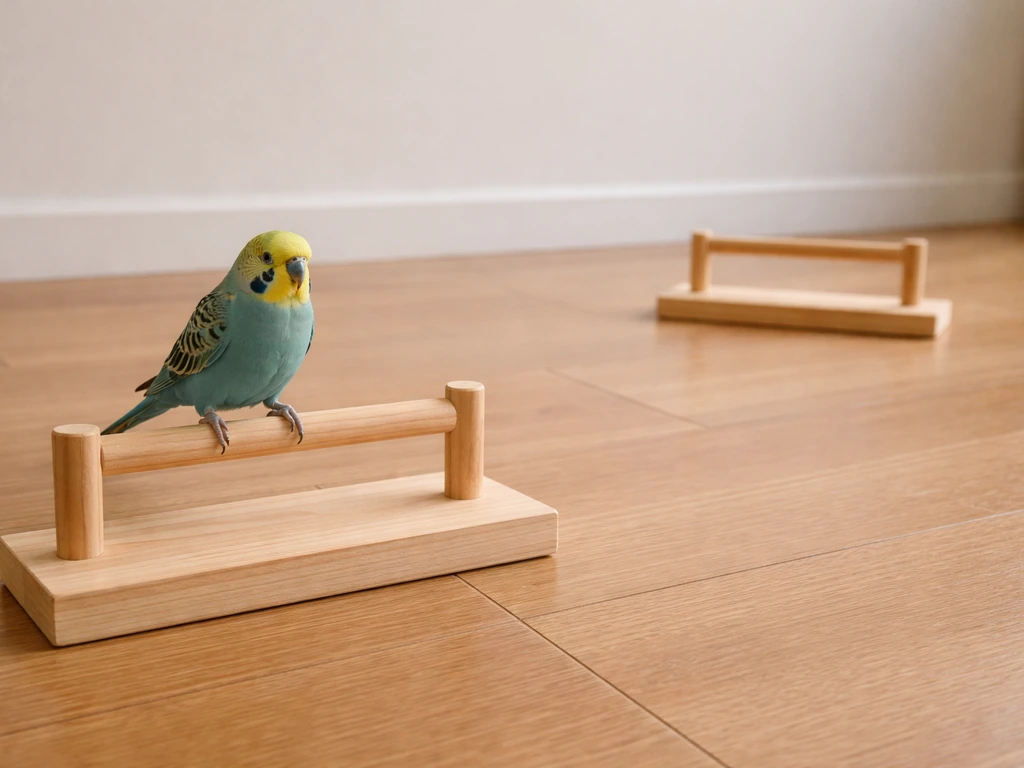
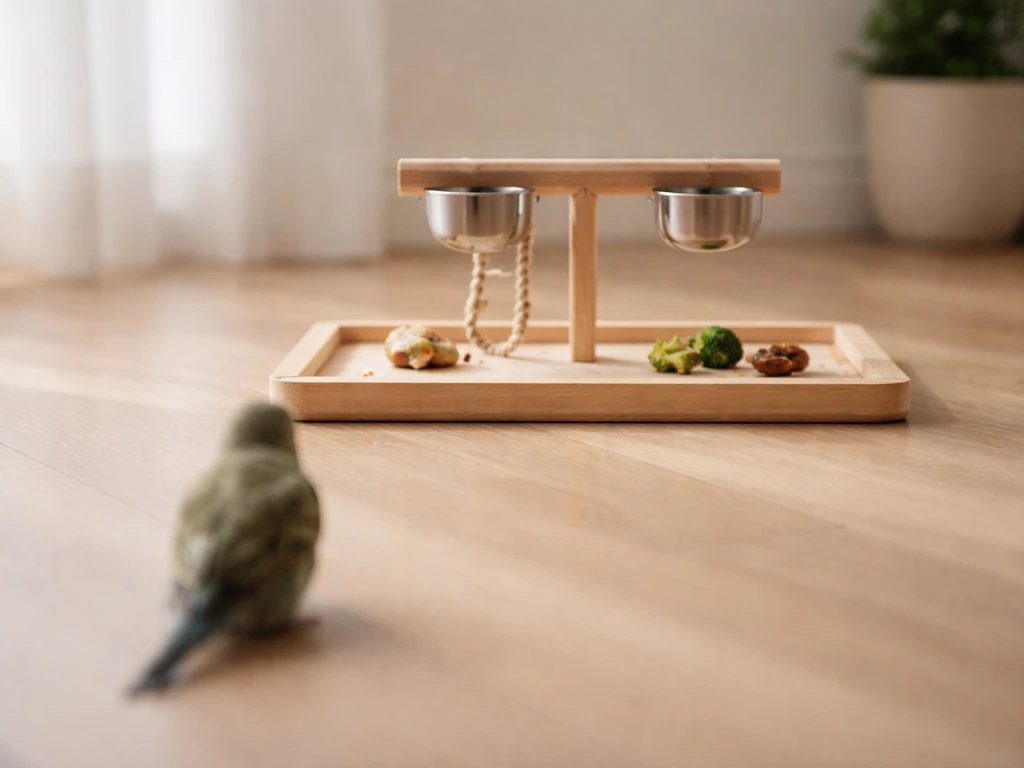
Set up two perches: a starting perch and a base station (the "delivery" end). Start with them just two feet apart. Put the bird on the starting perch, hold the target at the base station, and when the bird flies or hops over and touches the target, click and treat. This is the core of your delivery return-to-base behavior. If you want a bird to do this kind of delivery-style action, it helps to know the cue and object steps before you try testing real “carry” behavior delivery return-to-base behavior. Think of this like lure training in falconry: the bird learns that flying toward the base station and landing there earns a reward.
Increase the distance between the two stations gradually, adding about one foot every two to three sessions once the bird is succeeding at least eight out of ten times. If you hit a wall, move back to the previous distance and consolidate before progressing. Do not rush this stage. A bird who returns reliably from six feet is more valuable to your training plan than one who sometimes returns from fifteen feet.
For birds flying free (rather than hopping between perches), a falconry-inspired technique works well here: start with a "creance" approach, meaning you train in a hallway or narrow room so the bird has a clear flight line to the base station with minimal chance of veering off. This controlled-distance structure is the same concept used in creance training, which keeps the bird in a safe flight path while the behavior becomes reliable.
Stage 3: Introducing the mail object (days 10 to 21)
Now you introduce the object. Start by simply placing the lightweight item near the bird on the starting perch and rewarding any interaction with it: sniffing, touching, picking it up briefly. Click and treat the moment the bird makes contact. Do not ask for the delivery behavior yet. Just build a positive association with the object itself over three to five sessions.
Once the bird regularly picks up the object, hold off on the treat for a beat and wait. Most birds will hold the object slightly longer, and you click and treat for that. Gradually shape the behavior so the bird is holding the object while turning toward the base station. You can use the target stick held at the base station to encourage the bird to move toward it while carrying the object.
Stage 4: The delivery chain (days 18 to 35)
This is where the chain comes together. Bird starts at the origination perch with the object nearby, picks it up, travels to the base station (guided by the target or verbal recall cue), and lands. At this point you have two options for the "drop": you can cue the bird to release the object by presenting your hand (it drops into your palm), or you can train the bird to drop into a small box or slot at the base station. For the hand drop, wait until the bird lands, present your palm close to the beak, and when the bird releases the object, click and give a jackpot treat (several pieces in a row). For the box drop, use a shallow dish at the base station and shape the bird to release over the dish using the same waiting-and-clicking approach.
At this stage, run the full chain only once or twice per session. Ending on a successful repetition matters more than the number of reps. Short sessions with clear wins build confidence much faster than long, grinding sessions.
Reinforcement schedules and knowing when to progress
In early learning, reward every single correct behavior. This is called continuous reinforcement, and it builds the behavior quickly. Once a behavior is solid (the bird succeeds eight or more times out of ten in two to three consecutive sessions), you can start shifting to intermittent reinforcement: reward roughly every second or third success, then vary the ratio unpredictably. ScienceDirect Topics notes that reinforcement schedules can start as continuous and then move to intermittent schedules, which can be structured by fixed or variable ratio or by time interval concepts like variable-interval schedules continuous reinforcement and then intermittent reinforcement. Intermittent reinforcement makes behaviors more durable and persistent, meaning the bird keeps trying even when a reward isn't immediately given.
Your progression criteria for each stage should be explicit before you move forward. A rough guide:
| Stage | Move On When... | Approx. Timeline |
|---|---|---|
| Target training | Bird touches target 8/10 attempts, two sessions in a row | Days 1 to 7 |
| Recall to base (short distance) | Bird returns to base 8/10 attempts at 2 feet | Days 5 to 10 |
| Recall at full distance | Bird returns reliably at your target distance for 2 sessions | Days 10 to 14 |
| Object interaction | Bird picks up object voluntarily without hesitation | Days 10 to 21 |
| Full chain with drop | Bird completes pickup, travel, and drop 6/10 times in one session | Days 18 to 35 |
Keep a simple log of each session: date, distance, success rate, and any notable behavior. Patterns in your log will tell you exactly where the chain is breaking down when things go sideways.
Safety, humane limits, and the legal side of bird delivery
Training a bird to perform any behavior that involves carrying or transporting items raises genuine welfare and legal questions, especially if you ever imagine taking this beyond a home hobby. If what you really mean is teaching a bird to steal money, the same delivery-style training chain can be adapted, but you still need to prioritize welfare and safety can you train a bird to steal money. In the United States, the Animal Welfare Act (AWA), enforced by USDA APHIS, requires humane treatment of regulated birds during any transportation in commerce. blank" rel="noopener noreferrer">Federal regulations under 9 CFR Part 3 Subpart G set specific standards for primary enclosures, ventilation, clean substrates, food and water (at minimum every 12 hours for weaned birds), and monitoring (at least once every four hours during surface transport). If you're operating any commercial setup involving birds, you need to understand those standards and likely need a USDA license.
For home-based training, the key legal issue is your local and state exotic animal ordinances. Using a bird for a fee-based service, even informally, can trigger commercial-use definitions under AWA. When in doubt, contact your state agriculture department or an avian veterinarian familiar with your area's regulations.
From a welfare standpoint, never attach an item to your bird using tape, string, glue, or any adhesive. Only use training items the bird can freely pick up and drop. Never ask the bird to carry anything that causes it to hold its wings differently or changes its center of balance during flight. Stop any session immediately if you observe open-mouthed breathing at rest, tail bobbing with each breath, fluffed feathers combined with lethargy, or any dull or abnormal feather changes. These are illness signs that need veterinary attention, not training adjustments. Purdue and VCA both flag open-mouthed breathing at rest as a serious concern requiring prompt veterinary assessment.
Also worth mentioning: keep outdoor delivery sessions off the table until the full indoor chain is extremely reliable. Even harness-trained birds can be startled and injured. PetMD explicitly recommends birds not go outside without a carrier or properly fitted harness, and even then, outdoor sessions add variables (wind, predators, strange sounds) that can undo months of indoor training.
When things go wrong: fixing the most common problems
The bird won't return to the base station
This almost always means the base station isn't rewarding enough relative to wherever the bird is going instead. Make the base station the most exciting place in the room: jackpot treats, your enthusiastic presence, and favorite toys. Reduce the distance back to where the bird last succeeded reliably, rebuild the return at that distance for several sessions, and then move forward more slowly. If the bird is consistently flying to you instead of the station, temporarily step out of sight during the flight phase so the station itself becomes the destination.
The bird gets distracted mid-flight or mid-carry
Distractions mean your training environment has too many variables. Go back to a smaller, quieter space. Close doors, turn off background noise, and remove visual distractions from the bird's line of flight. Once the behavior is reliable in a sterile environment, introduce distractions one at a time and gradually, treating the bird for completing the chain despite each new distraction.
The bird drops the object too early
This means the "hold" part of the behavior hasn't been trained strongly enough as a standalone step. Go back to Stage 3 and spend more sessions shaping a longer hold before movement is added. Use the target stick to cue travel only once the bird is holding the object confidently for at least three to five seconds at rest.
The bird seems stressed or reluctant to start sessions
Watch for the body language signals: tight feathers, wide eyes, leaning away, low crouching. A bird who isn't choosing to engage is telling you something. Drop back to pure bonding time with no training demands for a few days. Shorten sessions to two to three minutes maximum. Make sure you're not training when the bird is tired, hungry to the point of desperation, or right after any stressful event. The bird should approach the session area voluntarily or at least with relaxed posture before you begin.
The bird won't touch or pick up the mail object
Some birds are cautious about novel objects. Start with the item far from the bird's perch and reward any orientation toward it. Over several sessions, move it closer. Try wrapping the object around something the bird already likes (a favorite toy or a treat) so the first interaction is with something familiar. Never force the bird to contact the object. Patience here pays off enormously later in the training chain.
Where to start today
If you're reading this and wondering what to do right now: grab your clicker or pick your verbal marker, cut up a few pieces of your bird's favorite treat, and spend ten minutes doing nothing but target training. That single skill, done well, is the foundation for every behavior in this guide. If your bird doesn't target yet, start there and come back to the rest once you've got reliable touches. If it already targets well, set up your two-station recall setup today and run five to ten recall repetitions at close range.
This kind of training overlaps naturally with other useful everyday behaviors. If you've already worked on getting your bird comfortable going back to its cage on cue, or taught it where it's appropriate to spend time in your home, those foundational recall and station behaviors will transfer directly into this plan. If you want a practical behavior like using a litter box, you can also shape it with targeting and clear reinforcement so the bird learns exactly what earns rewards. Teach your bird a cue for going back into the cage, because reliable cage returns make cleanup and litter training easier to shape. The skills stack on top of each other, and each new behavior you train makes the next one easier.
Take it one stage at a time, keep sessions short and positive, and let your bird's success rate tell you when to move forward. Done right, this is one of the most rewarding training projects you can do with a bird, and your bird will clearly enjoy every step of the process.
FAQ
How much space do I need indoors to train a bird to return to a base station?
Aim for a clear, predictable “flight line” with enough room to complete short flights without banking into walls or furniture. If you cannot keep a straight path, start with hops between perches (short distance) and only scale up once the bird’s return rate is stable at that exact geometry.
What size and weight should the object be for early delivery training?
Use a lightweight item the bird can pick up comfortably without changing posture, wing position, or grip tension. A practical rule is to test it first as an interaction reward near the bird, if the bird hesitates, drops immediately, or looks strained, switch to a smaller or lighter item before attempting any carry and travel.
Is it okay if the bird carries the object but refuses to release it at the base station?
Yes, but you need a separate release step. First, strengthen dropping into your palm without requiring flight, then add the box or slot release after the bird can reliably release within a second of presenting your hand or dish. Keep the release cue distinct from recall so the bird is not “guessing” what you want.
How do I choose between teaching the bird to drop into my hand versus into a box?
Hand drops are usually faster for bonded birds because you can give an immediate jackpot at the beak level, but they require safe distance and consistent timing. Box or slot drops are safer when you cannot reliably present your hand at the right moment, however you must shape the release target as its own precision behavior before expecting consistent drops.
What if my bird keeps flying to me instead of the base station?
Reduce your “value” during the travel phase so the station is the clear destination. You can step out of sight or turn slightly away when the bird is in the air, and make sure the base station produces the highest-value reward every time, so the bird learns that arriving at the station is what pays.
Should I use treats at every step, even in the later chain stages?
Use the article’s progression logic, but also consider timing. In the full chain, reward the bird for landing and releasing more strongly than for intermediate steps like touching the object, then only thin rewards after the entire sequence succeeds at a high rate, so the bird does not lose motivation during the carry.
My bird targets fine, but it won’t pick up the object. Why?
The object may be novel, too slippery, too large, or positioned in a way that reduces the bird’s confidence. Build association by rewarding orientation toward it first, then contact, then pickup duration. If the bird approaches but refuses to grasp, try a different material or a design that gives the feet and beak a natural grip.
How do I handle setbacks after a good streak of successful deliveries?
Do not keep pushing the full chain. Drop back one stage, usually to the last distance or the last object-hold criteria where success was high, then rebuild forward gradually. Your session log becomes your decision tool, if success fell suddenly, treat that as a cue to reduce distance, distractions, or hold duration immediately.
What are the most common welfare mistakes people make with delivery-style training?
Most issues come from rushing the chain, training while the bird is tired or hungry, or using unsafe restraints. Avoid tape, string, glue, or anything attached to the bird, and stop if you notice stress signals or any breathing or lethargy concerns, because those are not solved by more practice.
Can I train this outside if I keep the bird on a harness or in a carrier?
Keep outdoor practice off the table until the indoor chain is extremely reliable, and even then expect wind, visual changes, and unpredictable sounds to disrupt the bird’s flight path. If you do any outdoor work later, use a fully controlled setup with secure containment, and treat each interruption as a reason to return indoors for consolidation.
How do I prevent the bird from learning the wrong cue or the wrong behavior order?
Use one clear cue per step and avoid cue stacking. For example, do not say the recall cue while also moving the target at the base station, because the bird may link the words to the wrong stage. If you use a clicker or verbal marker, keep it consistent and only apply it when the targeted behavior you want occurs.
Is it ever unsafe to train a wild-caught or not-fully-bonded bird to deliver items?
Yes, it can be unsafe and counterproductive. A not-fully-bonded bird is more likely to show fear signals and attempt escape, which increases risk of injury and chronic stress. For those birds, prioritize bonding and targeting first, then only consider delivery behaviors once body language is consistently relaxed during short sessions.
Next Articles
How to House Train a Bird Step-by-Step Guide
Step-by-step guide to house train a bird: set up bathroom spot, schedules, cues, reinforcement, and troubleshooting for
How to Train Your Bird to Poop in the Cage
Humane, step-by-step method to train a bird to poop in a specific cage spot using cues, placement, and rewards.
Can You Brush a Bird Safely No or Yes by Species
Can you brush a bird safely? Species-specific grooming steps, safe tools, stress signs, and when to stop or seek help.