Target training teaches your bird to touch a specific object (usually the tip of a stick) with its beak on cue, and you mark that exact moment with a click or a word like 'yes,' then immediately reward with a treat. That's the whole mechanic. What makes it so powerful is that the bird is choosing to participate rather than being handled or forced, which means it builds trust and a cooperative working relationship far faster than most other approaches. Once your bird reliably touches a target, you can use that behavior to guide it to new positions, onto your hand, into a carrier, or anywhere else you need it to go without a single stressful grab.
How to Target Train a Bird: A Step-by-Step Guide

Maya Harris
23 Apr 2026
What target training actually is and why it works so well
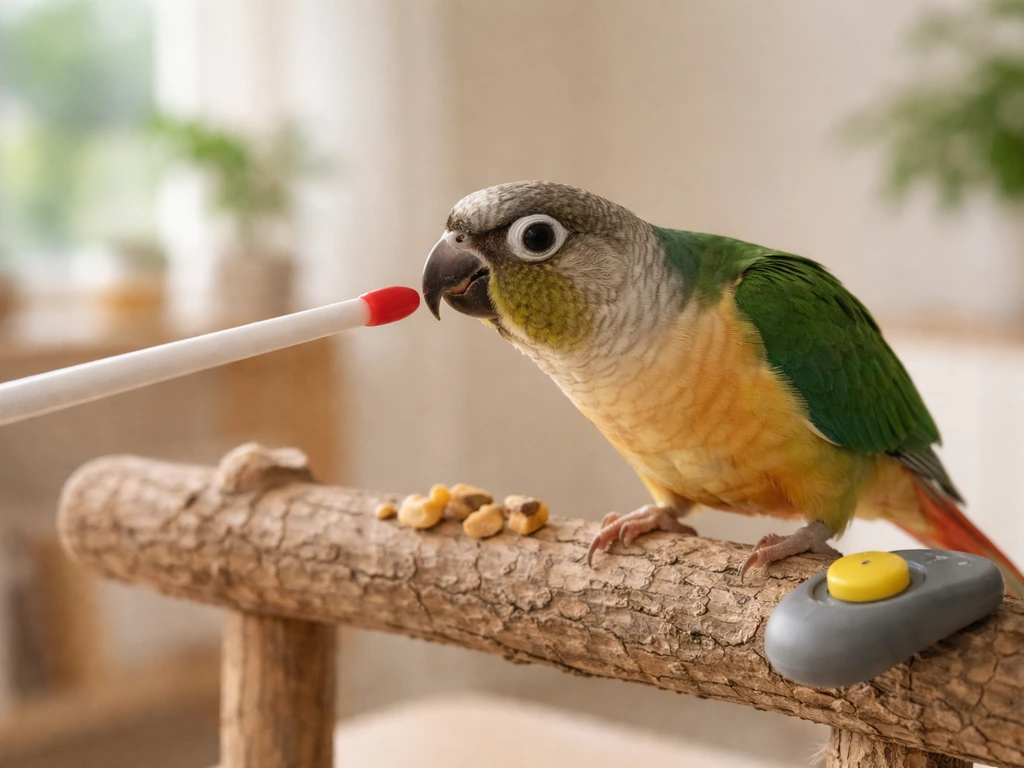
Target training is a specific application of operant conditioning. You're teaching your bird that touching a particular object (the target) produces a marker signal and then a reward. That marker, whether it's a click from a blank" rel="noopener noreferrer">clicker or a short spoken word, pinpoints the precise instant the bird did the right thing.
AKC also explains that marker training relies on using a marker to communicate correctness and timing, so the animal learns exactly which moment and behavior produced the reward pinpoints the precise instant the bird did the right thing. The bird quickly learns to repeat whatever it was doing at the moment of the click.
Because the bird is figuring this out on its own terms and getting paid for correct choices, it stays engaged and the learning sticks.
The reason target training works as a foundation for so many other behaviors is that it's entirely hands-off in the beginning. The bird never has to be grabbed or physically steered. That's huge for birds with hand fear, past trauma, or any tendency toward biting. Instead of the handler forcing contact, the bird moves voluntarily toward the target and, eventually, toward the handler's hand, a perch, or a carrier. The behavior gets generalized from 'touch this stick' to 'follow this stick wherever it goes,' which is where the real-world utility comes in.
Setting up safely before you start
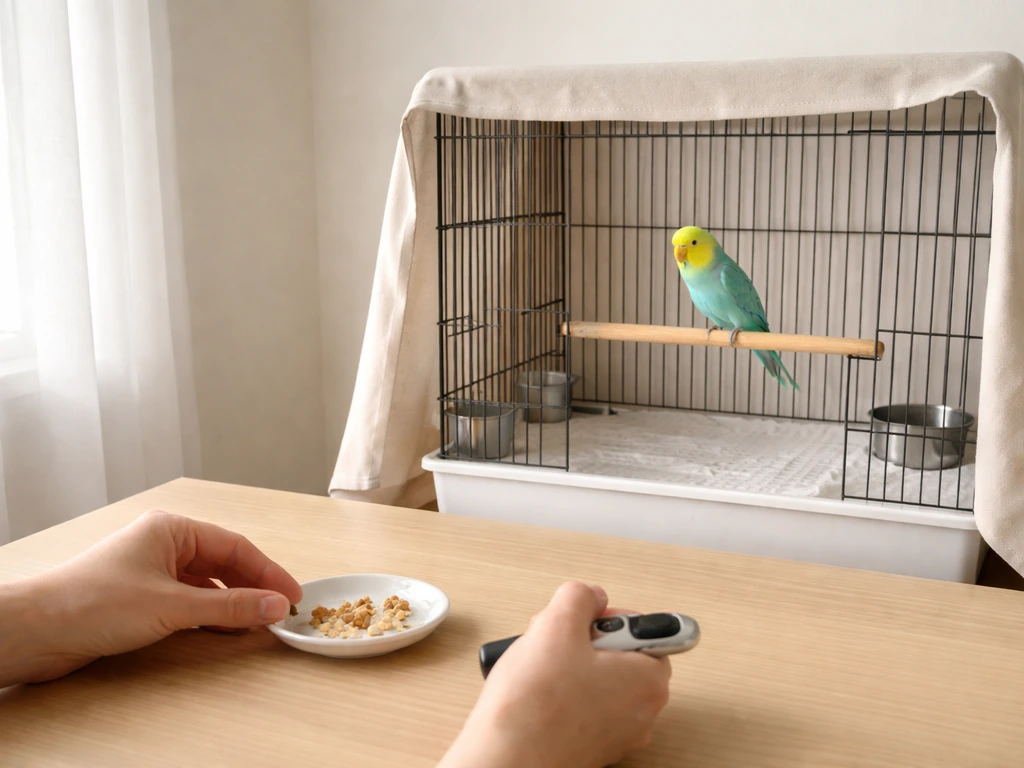
Good setup makes the first sessions much easier. The environment should be calm, quiet, and free of distractions. Pick a time when your bird is alert but not overstimulated, usually mid-morning or early afternoon, and definitely not right after a big meal when treats won't motivate it. Keep initial sessions to two to five minutes maximum. Short, frequent sessions beat long, exhausting ones every time. If engagement drops before your timer goes off, end the session anyway. You want the bird to finish wanting more, not feeling pressured.
Before introducing the target, you need to make sure your marker means something. If you're using a clicker, spend a session or two simply clicking and immediately handing over a treat so the bird learns that click equals reward. If you want the exact steps for clicker timing and your bird's first target touches, see how to clicker train a bird. If you're using a verbal marker like 'yes,' do the same thing. This step is called charging the marker, and skipping it slows everything down later. The marker only works as a precision tool if the bird already understands it predicts a treat.
Equipment you actually need
- A target stick: a chopstick, a pencil with a small ball of bright tape on the tip, a commercial bird target stick, or any thin rod with a distinct tip the bird can focus on. Make sure it's bird-safe since your bird will likely investigate it with its beak.
- A marker: a clicker or a short, consistent spoken word like 'yes' or 'good.'
- High-value treats cut into tiny pieces (smaller than your fingernail). Use something your bird goes wild for, not its regular pellets.
- A treat pouch or small bowl to keep treats accessible without fumbling.
- A stable perch or surface at a comfortable working height for both of you.
Welfare-first ground rules
- Training is always voluntary. If your bird turns away, fluffs up, or moves to the back of the cage, the session is over for now.
- Never punish an incorrect response. Just withhold the marker and try an easier version of the task.
- Watch your bird's body language constantly. Relaxed feathers, forward posture, and eye brightness mean you're good. Pinned eyes, raised crest (in crested species), or leaning away mean back off.
- Keep the target and your hands out of the cage initially unless the bird is completely comfortable. Work at the cage door or on an open perch first.
- End every session on a successful repetition so the bird finishes with a win.
Step-by-step: teaching the first target touch
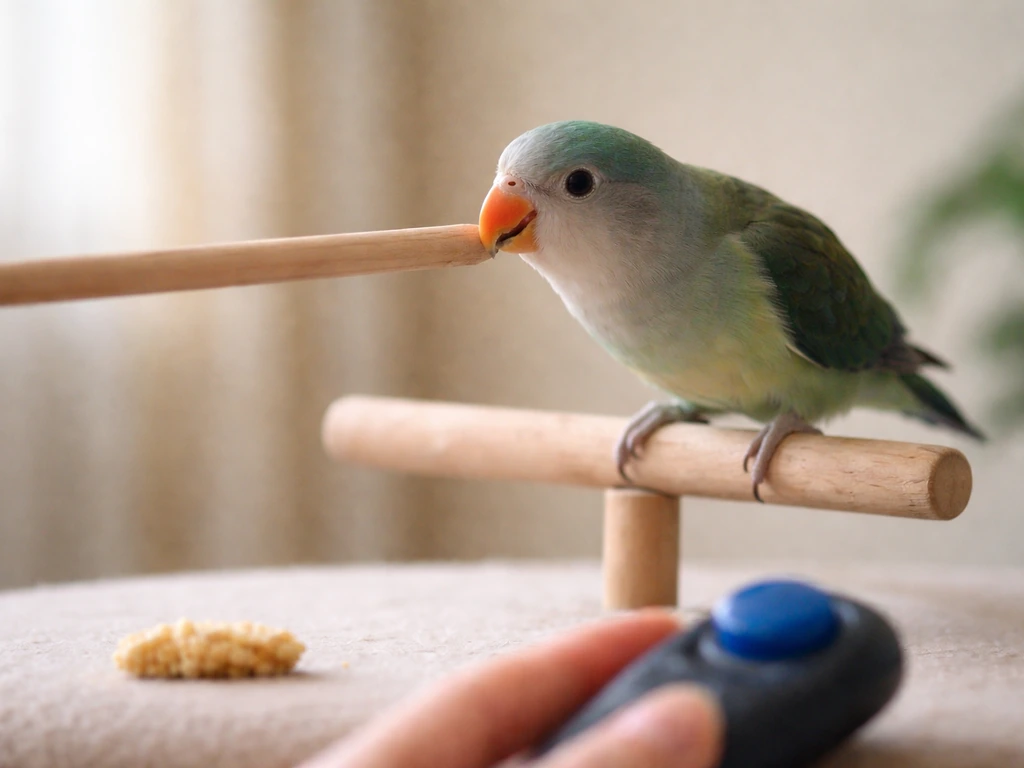
These steps work for most pet birds. Go at your bird's pace, not a predetermined schedule. Some birds nail step one in thirty seconds; others need several sessions to get comfortable just looking at the stick. Both are normal.
- Introduce the target passively. Hold the stick still near your bird (not in its face) and just let it look at it. If the bird leans toward it or looks at it with curiosity, mark and reward that. You're reinforcing interest, not the touch yet.
- Reinforce any movement toward the target. If the bird shifts its weight forward, stretches its neck, or moves a foot closer, mark and reward. You're building approach behavior through a process called shaping.
- Capture the first touch. The moment the bird's beak contacts the target tip, mark immediately and deliver a treat. If the bird doesn't touch on its own, you can put a tiny smear of soft treat on the tip to encourage the first contact, then fade that lure after one or two sessions.
- Repeat until the touch is consistent. Run five to ten repetitions per session. When the bird touches the target reliably (roughly eight out of ten tries), you're ready to progress.
- Add the cue word. Once the behavior is solid, say 'touch' or 'target' just before you present the stick. The word becomes the signal for the behavior. Don't add the cue while the bird is still figuring out what earns the treat, or the cue becomes meaningless noise.
- Remove the treat lure completely if you used one. The target stick itself should prompt the behavior now, with the treat arriving after the marker, not before.
A quick note on timing: the marker must happen the instant beak meets target, not a second later. If your timing is off, the bird gets confused about what exactly earned the reward. Video yourself from time to time to check your marker timing. It's one of the most common mechanics issues and an easy fix once you see it.
Building reliability: distance, angles, and new targets
Once your bird touches the target consistently in one position, start changing things up gradually. The goal is a bird that will follow the target wherever it goes, not just touch it when it's held right in front of its face.
Adding distance
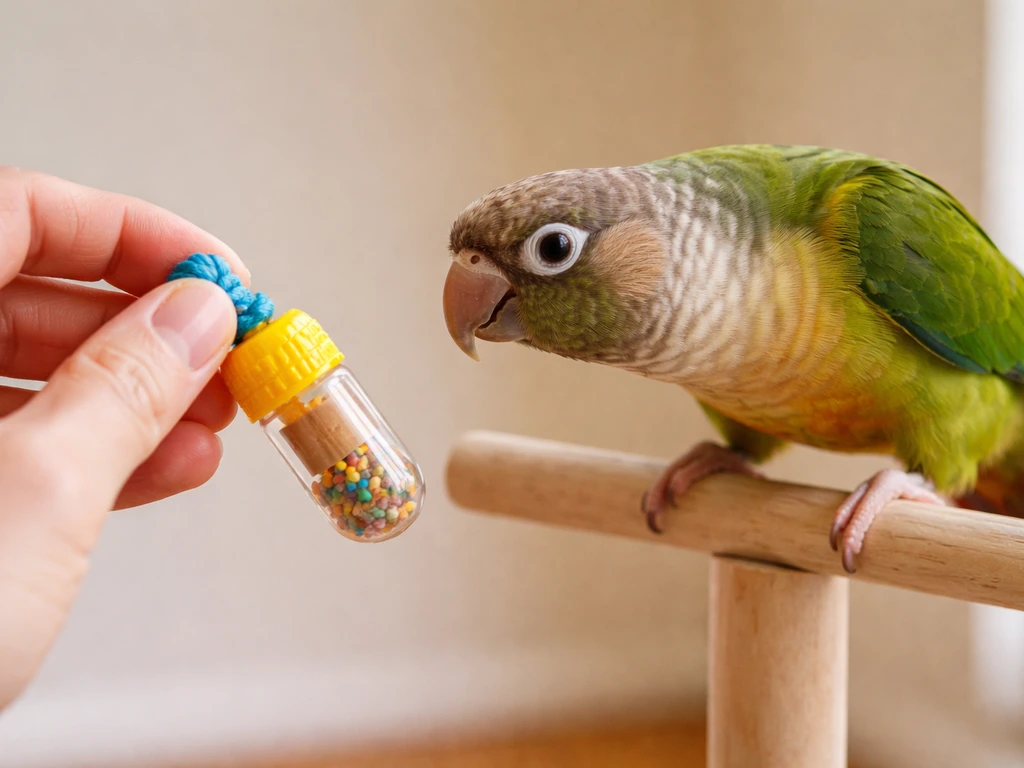
Hold the target a few centimeters farther away than you have been. The bird should lean or take a small step to reach it. Mark and reward the touch. Increase the gap incrementally over multiple sessions. If the bird stops engaging, you moved too fast. Drop back to an easier distance and rebuild. The rule of thumb is to only increase one variable at a time: distance, angle, or duration, never all three at once.
Changing angles and positions
Present the target to the left, right, above, and below where you normally hold it. Each new angle is a tiny challenge for the bird. This step is important for real-world use, where you'll need the bird to follow the target in different directions to guide it onto your hand or into a carrier. Require one step of movement toward the target before marking. Then two steps. Build gradually.
Switching to a new target
If you want the bird to generalize the 'touch' concept to more than one object (useful for cooperative husbandry or scale training), introduce a new target after the behavior is rock solid on the original one. Present the new object the same way you introduced the first, using the same shaping steps. Most birds pick up a second target much faster because they already understand the game.
Troubleshooting when things go sideways
Bird shows no interest in the target
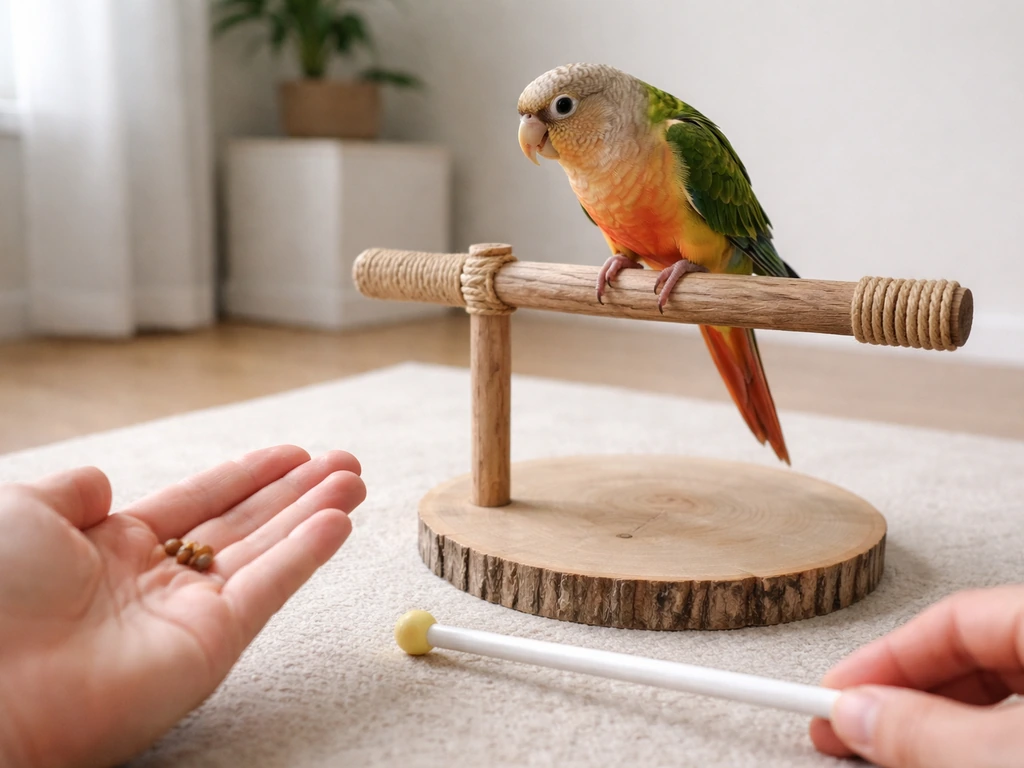
First, check whether your treats are actually motivating. If the bird turns down the treat, try something higher value. If it accepts the treat but ignores the stick, you may be presenting the target too abruptly. Try holding it farther away and reinforcing even a glance in its direction. Some birds need to see the target across the room a few times before curiosity kicks in. Also check the bird's overall state: a tired, sick, or overstimulated bird won't engage with anything.
Bird is biting or lunging at the target
Some birds, especially parrots, initially grab and chomp the stick rather than touching it with a quick beak tap. Only mark and reward a gentle touch, not a bite or lunge. If the bird grabs the stick, calmly remove it, wait a moment, and try again. Adjusting the angle of presentation can help: hold the stick so the tip is slightly angled away and the bird has to make a deliberate contact rather than a grab. Consistency is everything here. If a bite ever moves the target or produces a treat by accident, you'll reinforce the wrong behavior.
Bird seems fearful of the target
Put the target down on a surface and let the bird observe it from a comfortable distance without any pressure. Reinforce calm behavior near the object. Gradually move it closer over multiple sessions. Never push the target toward a frightened bird. The goal is for the bird to approach the target, not the other way around. If the bird is scared of the color or shape, try a different target material. Brightly colored tips (like a small ball of tape) work better than plain wood for visibility but may alarm some birds initially.
Bird is confused about what earns the treat
This usually means marker timing is off. If you're marking a second after the touch, the bird may think something else earned the reward. Slow down. Present the target, wait for the touch, mark the instant of contact, then deliver the treat. It helps to practice your marker timing without the bird first, so the click or word is reflexive. Also make sure you're not accidentally marking approach rather than contact.
Bird only targets when you're very close
This is a distance-generalization problem and it's common. The bird has learned to touch the target but hasn't learned to follow it. Go back to very short distances and reinforce the touch there, then move the target one small increment at a time. Make sure you're also varying the horizontal position of the target so the bird understands it's the tip of the stick it's following, not just your hand.
Bird stops responding when you change the target
This is normal. Treat the new target like a brand-new session and go back to step one of the shaping process. Most birds generalize quickly after the first session with the new object. If not, you can place the new target right next to the familiar one so the bird can touch either, then gradually make the familiar one less prominent.
Turning target training into real handling and bonding goals
Target training becomes genuinely useful when you apply it to everyday situations. Here's how to bridge from 'touches a stick' to practical cooperation. Next, you can use the same target and marker ideas to teach recall, so your bird will come to you on cue rather than only follow the stick.
Voluntary step-up
Once the bird follows the target over short distances, hold the target just above and slightly beyond your flat palm or wrist. The bird will naturally step onto your hand to reach the stick. Mark the moment its foot lands on your hand, deliver the treat, then present the target again from your hand to keep it there. You're using the target as a bridge to the step-up without any forced contact. This is far less stressful for hand-shy birds than repeated direct attempts to get them onto your hand.
Moving between locations
Use the target to guide your bird from its cage to a training perch, from a perch to a carrier, or between family members. Move the target in small increments, marking and rewarding each successful follow. This technique is closely related to recall training, where the bird learns to fly toward you on cue. Once your bird can reliably follow the target, you can shape that into how to recall train a bird recall training.
This same idea can support flight recall too, so the bird learns to fly toward you on cue recall training. Then, once your bird understands the target cue, you can shape it to come to you when called recall training. The target gives the bird a clear destination rather than a vague request.
Cooperative husbandry
Target training is excellent for teaching birds to participate in their own care. Once you can reliably have your bird touch a target, you can shape that same cue into “come” from farther away. Use the target to position the bird so you can check its feet, trim nails with less stress, or guide it onto a scale for weight monitoring. The bird learns that these interactions follow a predictable, low-pressure pattern and will often start offering cooperative positioning once the routine is established.
Redirecting unwanted behavior
If your bird is escalating (getting nippy, overexcited, or bouncy), a familiar target cue can interrupt the pattern and redirect it into a behavior that earns reinforcement instead. This works because the bird already has a strong positive history with the target. Asking for a few target touches gives the bird something constructive to do and usually de-escalates the situation quickly. Think of it as a pressure valve, not a punishment.
Adapting for different birds and experience levels
Parrots (beginner handlers)
Parrots are naturally curious and beak-driven, which makes target training intuitive for them. Beginners should start with a simple chopstick or dowel with a small colored ball taped to the tip. Keep treats tiny, sessions short (two to three minutes), and let the bird drive the pace. African Greys, cockatoos, and macaws can be sensitive to new objects initially, so spend an extra session or two on the passive introduction phase before expecting a touch.
Parrots (intermediate to advanced handlers)
Once your bird has a solid touch, start chaining target training with other behaviors. You can use the target to set up positions for stick training, clicker training sequences, or as the first step in a flight recall routine. If you specifically want to stick train a bird, start with the first target touch and then follow the stick cue using the same marker and reward timing stick training. Advanced handlers can teach the bird to touch multiple different targets on cue, distinguishing between them by color or shape, which builds impressive cognitive flexibility and enriches daily interaction significantly.
Small birds: finches, canaries, and budgies
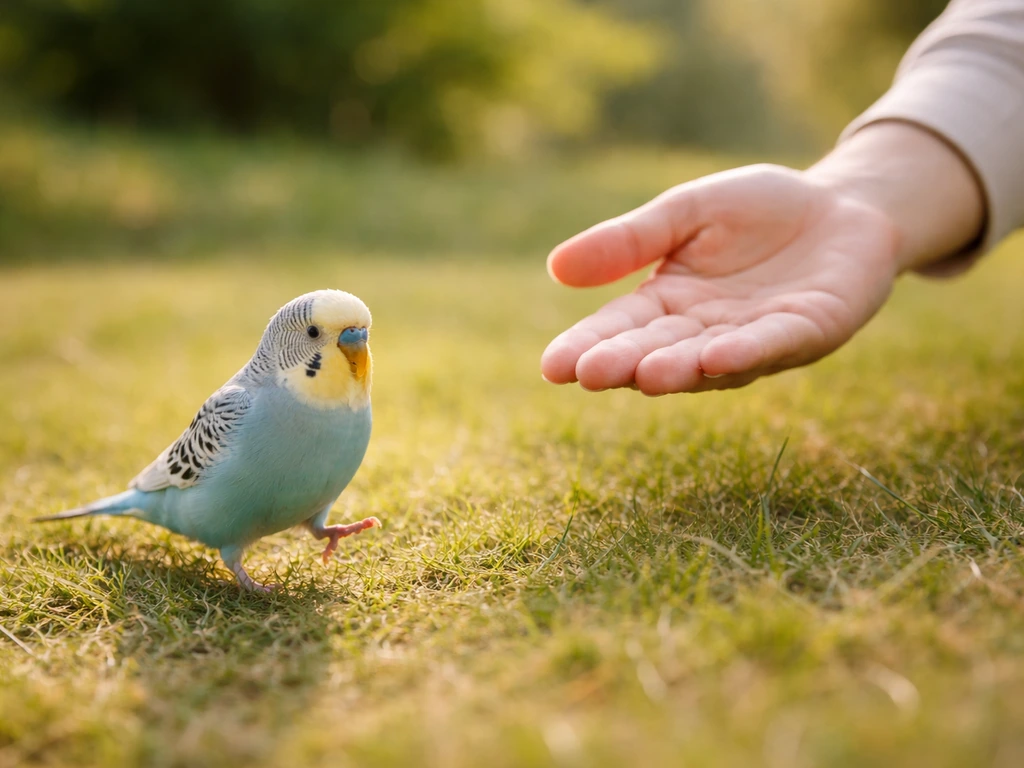
Smaller birds have shorter attention spans and move quickly, so session length should be one to two minutes at most. Use a very thin target stick (a toothpick or thin skewer works well) so it's proportionate to the bird's size. Treats should be tiny seed fragments or a small millet strand. Finches and canaries are less likely to interact with a hand-held target initially, so placing the stick on a perch and letting the bird approach it on its own terms works better than holding it. Budgies are often quicker to engage than people expect and respond well to target training once they trust the handler.
Rehabilitation birds
Target training has genuine applications in wildlife rehabilitation, where reducing handling stress is critical to successful release. For rehab birds, the goal is not bonding but reducing fear of necessary husbandry. Keep human contact minimal outside training sessions, use the target only for specific cooperative tasks like positioning for examinations, and avoid cueing behaviors that would make a wild bird comfortable approaching humans in the field. Always follow your jurisdiction's regulations around handling and training protected species.
Your practical starting routine for today
Here's a simple structure you can start with today and build on over the next two weeks.
| Day Range | Session Goal | Success Checkpoint |
|---|---|---|
| Days 1-2 | Charge the marker: click/word, then treat, repeat 10 times per session | Bird looks at you anticipatorily after the click |
| Days 3-4 | Introduce the target passively, reinforce curiosity and approach | Bird reliably looks at or leans toward the target |
| Days 5-7 | Shape the first touch, mark and reward any beak contact with the tip | Bird touches the target 8 out of 10 tries per session |
| Days 8-10 | Add small distance increments and angle changes | Bird takes one to two steps to reach the target |
| Days 11-14 | Add the cue word just before presenting the target | Bird begins moving toward the target as the cue is given |
| Day 15+ | Begin applying the target to a real goal: step-up, position change, or carrier entry | Bird follows the target onto your hand or to a new location voluntarily |
Progress checkpoints matter more than the calendar. If your bird is still working on step one at day five, that's fine. The schedule is a rough guide, not a deadline. Rushing the progression is the most common reason target training stalls, and the fix is always the same: slow down, make the task easier, and let the bird succeed more often. Consistent short sessions done daily will always outperform long irregular ones.
FAQ
How do I know my bird is “touching” correctly and not learning the wrong behavior?
Define success as a quick beak tap that contacts the target tip without grabbing. If your bird lunges, the marker should not fire, remove the target calmly, and reset. You can also slightly angle the stick so the bird has to line up for a light tap rather than hooking it.
What if my bird keeps stepping toward me instead of following the target?
That’s often a cue-positioning issue. Put the target closer to the bird’s normal movement path and re-establish the behavior at very short distances first. Then gradually move the target horizontally so the tip location, not your body, becomes the destination.
Can I target train without a clicker?
Yes. Use a consistent verbal marker that you deliver at the exact instant of contact, then immediately follow with a treat. Spend one short “marker-only” session where you say the word and treat, so the bird learns the sound predicts food.
How long does it usually take before my bird follows the target reliably?
It varies widely. Some birds generalize quickly within a few sessions, while others need repeated angle and distance work before following confidently. The practical checkpoint is when your bird touches and then moves its body to follow as you relocate the target by small increments.
What should I do if my bird suddenly stops taking treats mid-training?
First check conditions, timing, and state. Avoid training right after meals, then shorten sessions to two minutes. If the bird still won’t engage, stop and reassess for stress, fatigue, or illness, because forcing sessions when motivation is low often creates avoidance.
My bird bites the target and then I give a treat. How do I fix that?
Stop reinforcing biting immediately. Remove the target without reacting, wait briefly, then present again so the bird can choose a gentle touch. Keep the target tip oriented to reduce the chance of grabbing, and only mark contact you want (the beak tap), not lunge or contact that causes the target to move.
Why is my timing off even though I feel confident?
Many handlers unintentionally mark after the bird has already moved away. A simple fix is to practice “marker reflex” without the bird first (click or say the marker, then immediately treat at your chosen time), and record a session to visually confirm the marker occurs at beak-tip contact, not during the approach.
What if the bird touches the target, but won’t move one step to reach it when I increase distance?
Go back to the last distance where it succeeded reliably, then increase distance more slowly. Increase only one variable at a time, and require the step movement gradually (touch for a moment, then mark one small step) so you are not demanding too much too fast.
Can I use the same target training for step-up onto my hand?
Yes, but use the target to guide foot placement rather than pushing contact. Hold the target just above or slightly beyond your hand so the bird steps onto your hand to reach it, mark the moment the foot lands, then keep the target there or re-present it to maintain engagement.
How do I stop my bird from “anticipating” and touching too early?
If the bird starts touching before the target is placed where you intend, shorten the motion and slow your presentation. Ensure you present the target in a consistent position and only mark when contact happens after the target is actually available, then reinforce the correct timing.
Is it okay to train target behaviors in a cage or should I always train outside it?
Both can work, but start in the environment where the bird feels safest and most stable. If the bird is distracted in-cage, use a calmer section of the room. If the bird is fearful outside the cage, build the behavior in a familiar space and only then transition locations gradually.
What’s the best way to introduce a new target object without confusion?
Treat it like a fresh shaping problem. Introduce the new object using the same passive introduction steps, then require the same type of contact, and keep sessions short. If progress stalls, temporarily place the new object right next to the familiar one so the bird can succeed while learning the difference.
How can I use target training to de-escalate a nippy bird without rewarding bad behavior?
Keep the cue familiar and neutral, then ask for a few correct touches only. Do not mark biting or lunging, and deliver reinforcement only for the calm, cooperative touches. This works best when the target has already been associated with predictable rewards before the escalation starts.
Can I train very small birds or finches to target?
Often yes, but the approach may differ. For very small or skittish species, place the target on a perch or in a stationary spot so the bird can approach voluntarily. Use a proportionate, thin target and tiny treats, and keep sessions extremely short to match attention span.
Is target training suitable for wildlife rehabilitation birds?
It can be useful when the goal is cooperative positioning for necessary husbandry, not comfort with humans. Keep human contact minimal, use the target only for specific tasks (like examination positioning), and avoid training that increases “field-friendly” comfort around people. Follow all local regulations for protected species.
Next Articles
How to Stick Train a Bird: Humane Step-by-Step Guide
Humane step-by-step stick or target training to teach approach, station, and cue following safely for pet birds.
How to Clicker Train a Bird Step by Step (Bird-Safe)
Step-by-step bird clicker training with bird-safe timing, target or step-up, trust building, troubleshooting, and safety
How to Train a Bird to Come When Called Step by Step
Humane step by step bird recall training: teach cue response safely, build trust, reward timing, and fix distractions.